Obama CIA chief gives murderous Islamic terrorist a PR makeover — in New York City
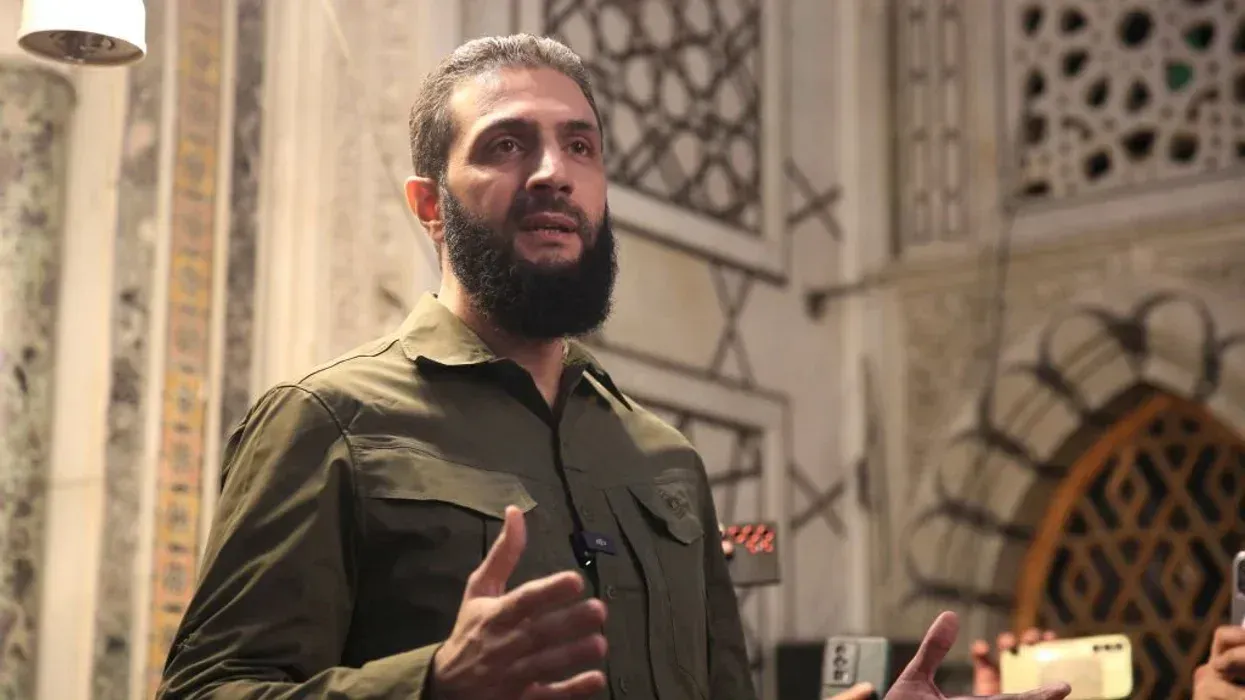


Ahmed al-Sharaa, the Islamic radical who was previously designated a terrorist by the State Department and who founded the al-Qaeda affiliate al-Nusra Front and now serves as Syria's president, received a warm welcome on Monday in New York City, just five miles away from where his comrades killed 2,753 people on 9/11.

While al-Sharaa, also known as Abu Mohammad al-Jolani or Muhammad al-Jawlani, was in town for the United Nations General Assembly, he also took part in a "fireside discussion" with ex-CIA Director David Petraeus on the sidelines of the general assembly at the 2025 Concordia Annual Summit.

'Sometimes in a person's journey, there are some mistakes.'

Ahead of the discussion, Baihas Baghdadi of Baghdadi Capital provided the terrorist with a glowing introduction, painting him not only as a liberator — a characterization that some Syrian Christians and other religious minorities might find questionable — but as "the hero, the man that brought freedom back to Syria."

Before it was taken down, the State Department's Rewards for Justice $10 million bounty page for al-Sharaa stated:

Under al-Jawlani’s leadership, ANF has carried out multiple terrorist attacks throughout Syria, often targeting civilians. In April 2015, ANF reportedly kidnapped, and later released, approximately 300 Kurdish civilians from a checkpoint in Syria. In June 2015, ANF claimed responsibility for the massacre of 20 residents in the Druze village of Qalb Lawzeh in Idlib province, Syria.

Al-Sharaa's terrorist group claimed responsibility for multitudes of other terror attacks throughout Syria, including 600 attacks in its first year of operation, and worked in concert with ISIS.

In 2017, al-Sharaa merged al-Nusra with other Islamic extremist groups to form Hayat Tahrir al-Sham, a group that was linked in its formative years to the late leader of ISIS, Abu Bakr al-Baghdadi, and was recognized by the U.S. as a foreign terrorist organization until July.

RELATED: Syria's terrorist regime just killed an American citizen — more Christians, Druze are next
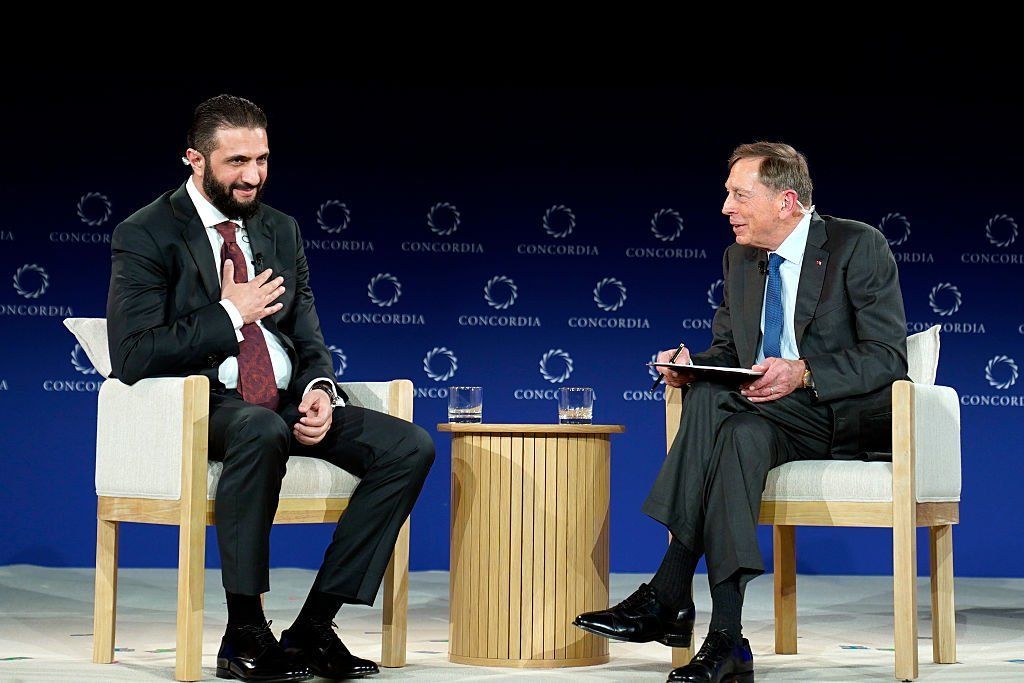
Photo by Riccardo Savi/Getty Images for Concordia Annual Summit

After HTS-led forces overthrew the Assad regime, al-Sharaa took power in Damascus.

"Together, we acknowledge all the sacrifices you have made to return Syria to all Syrians," Baghdadi said on Monday of the murderous terrorist. "It is our time to ask ourselves what we can do for Syria now that you, Mr. President, brought back Syria to all of us."

Although Petraeus, the former commander of U.S. forces in Afghanistan whose extramarital affair blew up his CIA directorship, admitted at the outset of the discussion that he and the terrorist were on different sides during the American surge in Iraq, the retired general similarly characterized al-Sharaa as a liberator.

Al-Sharaa told Petraeus, "We cannot judge the past based on the rules of today, and we cannot judge today based on the rules of the past."

The terrorist suggested further that his intent has long been to protect and defend people and human rights and to combat "injustice."

"Perhaps there was some mistakes," the terrorist said. "Sometimes in a person's journey, there are some mistakes, but what's important is to focus on defending people from the threats that they face."

RELATED: How did a terrorist in a tailored suit get Trump’s stamp of approval?
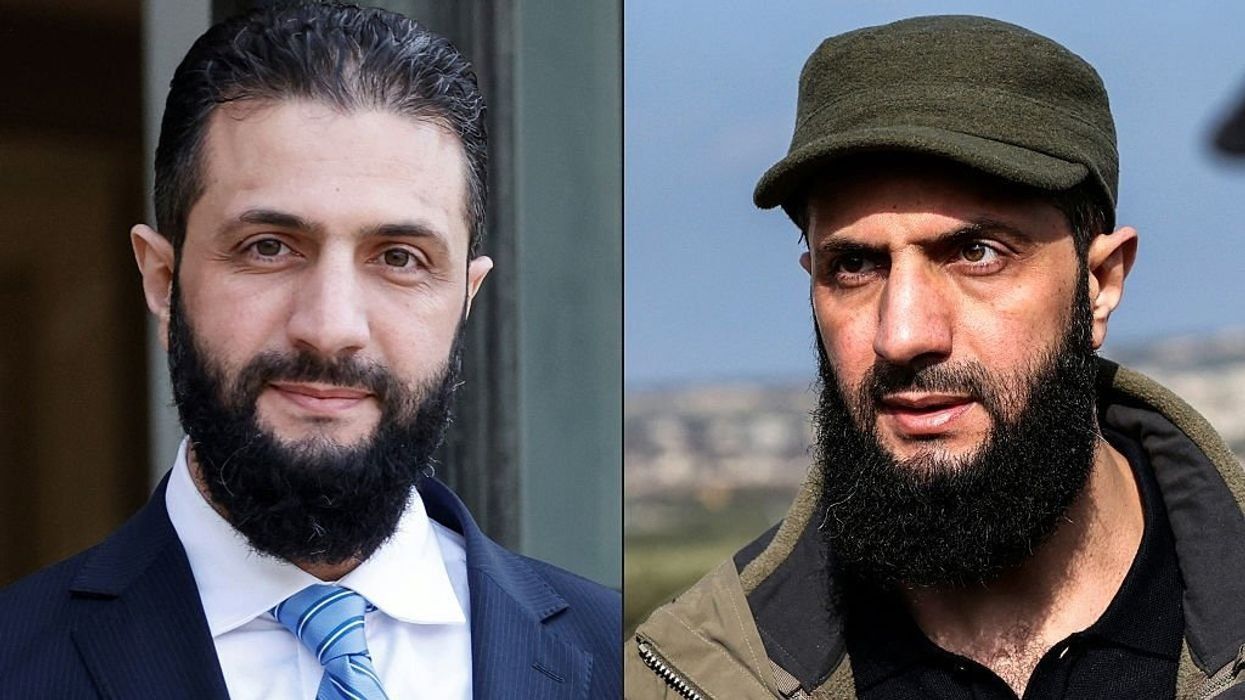
Photo by LUDOVIC MARIN,OMAR HAJ KADOUR/AFP via Getty Images

In addition to reportedly committing scores of massacres since taking power, the supposed humanitarian's regime has supported some of those Sunni radicals who have in recent months engaged in massacres, bombings, rapes, and kidnappings, including those who executed an American citizen, Hosam Saraya, in July.

Petraeus — who, while CIA director, proposed a covert program of arming radicals like al-Sharaa in Syria in a regime-change operation that became known as Timber Sycamore — said that he felt validated by the terrorist's rise to power and claimed both that al-Sharaa's "vision is powerful and clear" and that his success "is our success."

Al-Sharaa appeared interested in more than just a PR makeover. He impressed upon Petraeus and the audience his desire to see the Trump administration lift America's remaining sanctions on Syria, namely those under the 2019 Caesar Syria Civilian Protection Act.

"Just lift the sanctions, and you will see the results," al-Sharaa said.

President Donald Trump signed the Caesar Act into law on Dec. 20, 2019. The act imposes sanctions on those who provide various goods or services to Syria, such as aircraft for its military, items on the U.S. Munitions List, and items Trump believed were being used to commit human rights abuses against the Syrian people.

Secretary of State Marco Rubio noted after meeting with al-Sharaa on Monday that they "discussed implementing President Trump's historic announcement on sanctions relief and the importance of Israel-Syria relations."

When pressed for comment about the sanction talks with Syria, a State Department spokesperson told Blaze News that as a general matter, they do not comment on private diplomatic discussions.

Like Blaze News? Bypass the censors, sign up for our newsletters, and get stories like this direct to your inbox. Sign up here!
Margaret Brennan Suggests Israel Is Aggressor In War Against Hamas: All The Questions From Face The Nation

Packaged around the interview is a report showing the difficult conditions in Gaza, but no Israeli perspective.
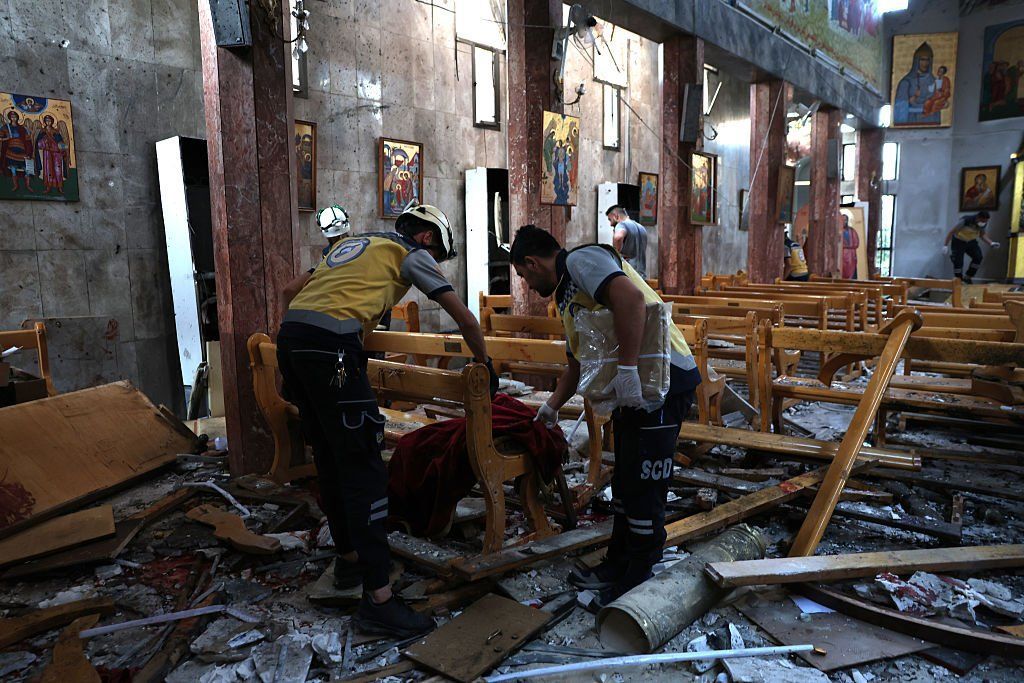
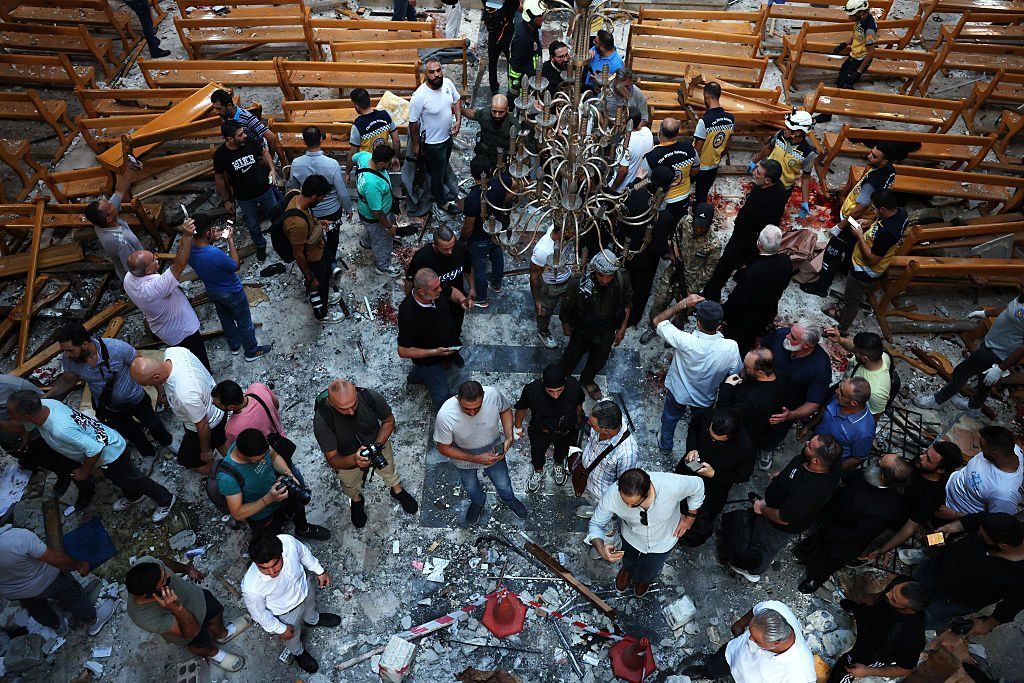
'Blown to bits': Suicide bomber targets Christian church in jihadist-controlled Syria


Multitudes of Syrian Christians gathered for mass Sunday evening inside the Greek Orthodox Church of the Prophet Elias in Damascus — and dozens of them never returned home.

Their prayers were interrupted by a jihadist who opened fire on the faithful, then detonated an explosive vest, killing at least 25 Christians and wounding 63 others. The explosion reportedly caused extensive damage to the structure of the church.

This terrorist attack — yet another reminder of the unrelenting persecution of Christians worldwide — was supposedly executed by a member of ISIS.

Syrian President Ahmed al-Sharaa — the Islamic terrorist also known as Abu Mohammad al-Julani, who rose through the ranks of the Islamic State of Iraq before founding an Al-Qaeda affiliate in Syria, Jabhat al-Nusra — condemned the attack and expressed condolences, reported the state-owned network Alikhbaria Syria.

Al-Sharaa called the attack a "heinous crime" that serves as a reminder of the importance of solidarity and unity of the regime and people in the face of security threats.

Christian persecution watchdogs have warned in recent months that the al-Sharaa regime cannot be trusted. After all, the regime is largely composed of and led by elements of Hay'at Tahrir al-Sham, an Al-Qaeda spinoff terrorist organization linked in its formative years to the late leader of ISIS, Abu Bakr al-Baghdadi, and whose current leader was until recently a specially designated global terrorist who fought against American forces in Iraq.

Jeff King of International Christian Concern, for instance, noted after the reported massacre of Syrian Christians by regime-aligned jihadists in March that the government is "Al-Qaeda and ISIS in a new guise."

Despite his personal history with ISIS and Al-Qaeda, it is nevertheless in al-Sharaa's interest to respond forcefully to the attack, not only to remain on good terms with President Donald Trump — who vowed to "protect persecuted Christians" ahead of the 2024 election and whose administration lifted U.S. sanctions last month — but to counter the internal threat to his rule. After all, ISIS now regards the Hay'at Tahrir al-Sham-led regime as illegitimate.

RELATED: Progressives' Middle East meddling keeps costing innocent lives

Photo by Ali Haj Suleiman/Getty Images
Al Jazeera reported that ISIS has repeatedly attacked government forces in recent months, labeling the government an "apostate regime."

Mazhar al-Wais, the Syrian minister of justice, called the bombing a "cowardly crime targeting the unity of Syrians," suggesting that al-Sharaa's regime would not tolerate terrorism.

A senior U.S. official told Blaze News, "This is just another reminder that global jihadists see innocent unarmed Christians as legitimate targets."

"The new government in Damascus will be measured in large part by its willingness to protect minorities and neutralize groups like ISIS," added the official.

Ever distrustful of the regime, the Syrian Network for Human Rights insisted Sunday that "protecting the crime scene at Mar Elias Church is a necessary first step toward establishing the truth and achieving accountability."

'People were praying safely under the eyes of God.'

The watchdog group suggested that extra to securing the site's perimeter and preventing unauthorized entry and tampering with evidence, it is essential that Syrian authorities "regulate the movement of personnel and media to ensure that only authorized forensic teams are allowed to work on site" and to "implement accurate documentation procedures."

The Greek Orthodox Patriarchate of Antioch said in the immediate wake of the attack, "The treacherous hand of evil struck this evening claiming our lives, along with the lives of our loved ones who fell today as martyrs during the evening Divine Liturgy at the Church of the Prophet Elias in Dweilaa, Damascus."

Ecumenical Patriarch of Constantinople Bartholomew I asked Patriarch John X, the primate of the Greek Orthodox Patriarchate of Antioch and All the East, to convey his heartfelt condolences and support to the families of the victims, and prayed to "the All-Good God to rest the souls of the innocent victims of the attack."

RELATED: Why are Islamists targeting Catholic priests?

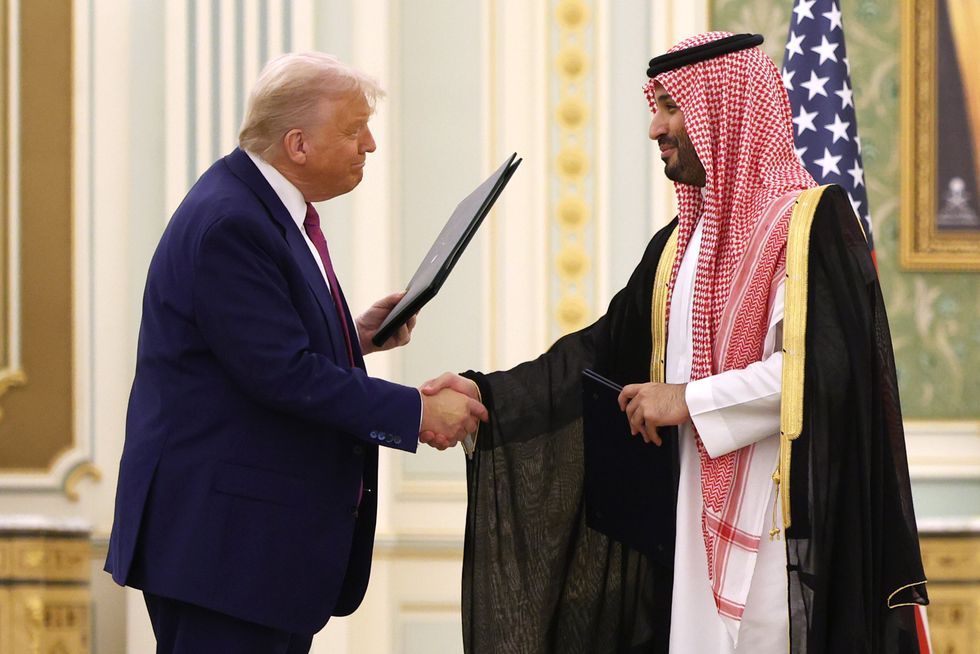
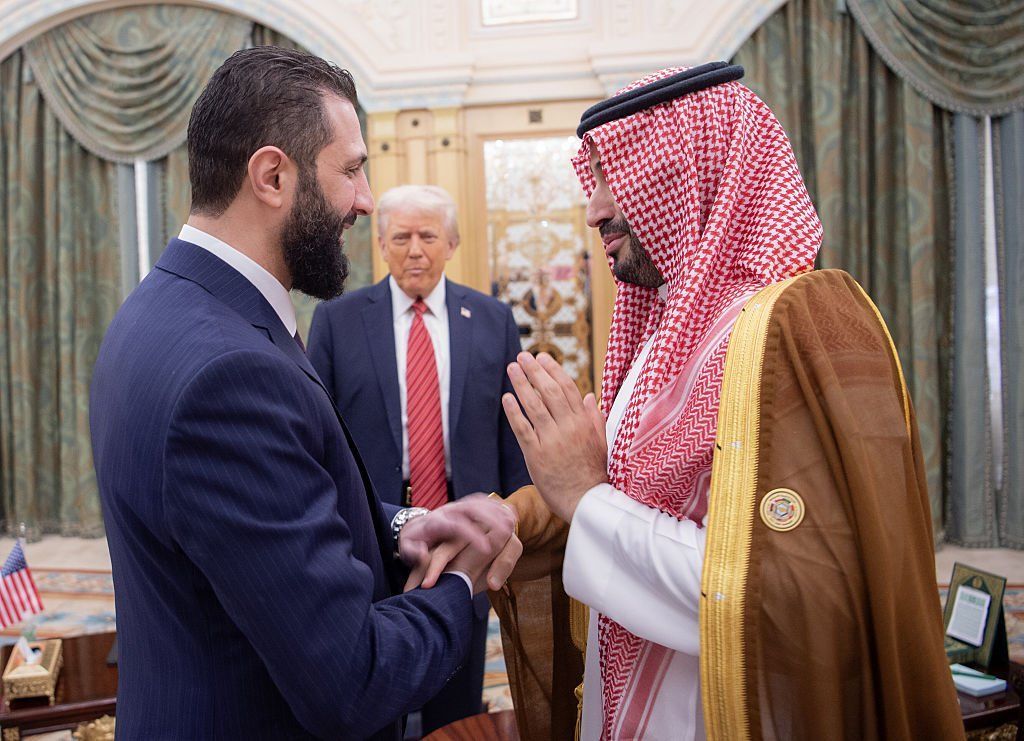
US President Donald Trump meets with Syrian President Ahmed al-Sharaa (L) along with the Saudi Crown Prince Mohammed bin Salman Al Saud (R) on May 14, 2025. Photo by Bandar Al-Jaloud/Saudi Royal Court/Handout/Anadolu via Getty Images)
Witnesses indicated that when the suicide bomber entered the church and began firing, parishioners heroically charged him, reported the Associated Press. Once confronted, the masked terrorist detonated his vest.

"People were praying safely under the eyes of God," said Fr. Fadi Ghattas, who was present when at least 20 Christians were killed by the explosion. "There were 350 people praying at the church."

Issam Nasr, a witness who was praying inside the church, said he observed some victims get "blown to bits."

"We have never held a knife in our lives," said Nasr, underscoring the defenseless nature of the Christians targeted in Damascus. "All we ever carried were our prayers."

According to International Christian Concern, parish priest Fr. Youhanna Shehata assisted in carrying the remains of over 20 victims out of the church in the wake of the attack.

Blaze News reached out to the White House for comment but did not immediately receive a response.

Like Blaze News? Bypass the censors, sign up for our newsletters, and get stories like this direct to your inbox. Sign up here!

Here’s Everything You Missed From Trump’s Historic Trip To The Middle East

By breaking with tradition and visiting the Middle East, and the Gulf Arab States in particular, President Trump has shown he sees them as pivotal in changing the current dynamic.
Russia, Ukraine resume talks for first time in years — all thanks to Trump


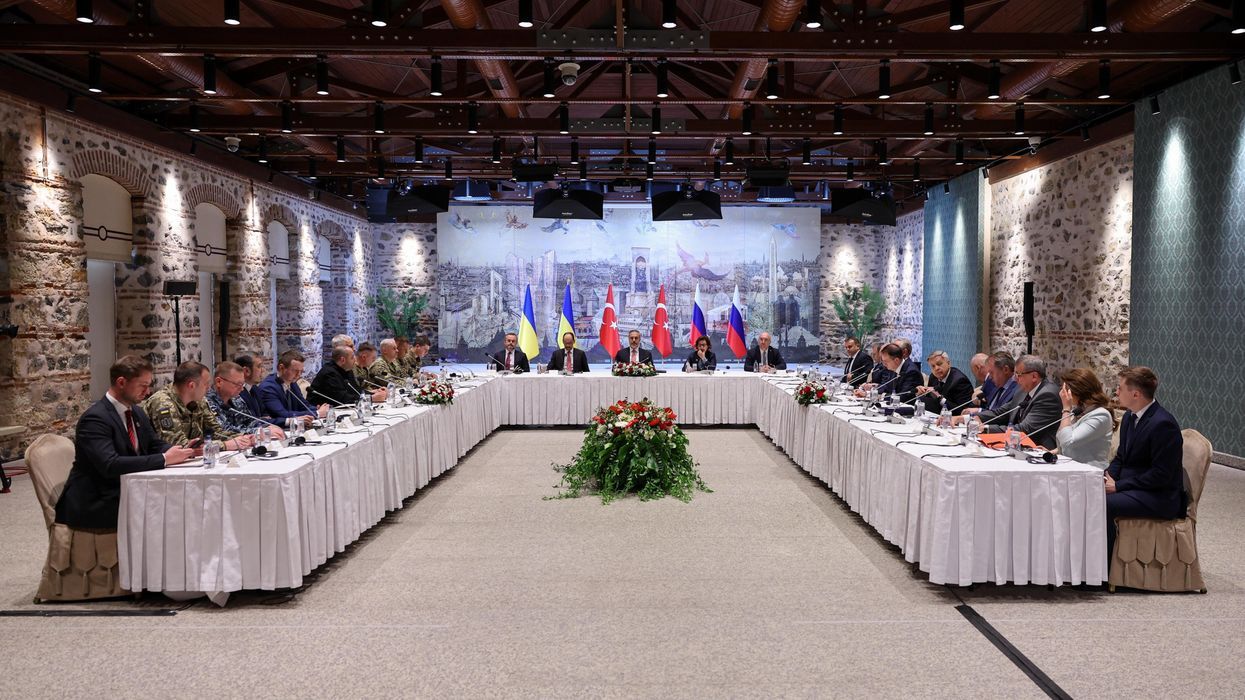
Negotiators from Russia and Ukraine met in Istanbul, Turkey, on Friday, marking the first meeting between the two countries since 2022 due to mounting pressure from President Donald Trump.

Turkish Foreign Minister Hakan Fidan addressed the negotiators at Dolmabahce Palace on Friday, urging the two countries to reach a ceasefire agreement as soon as possible.

"There are two paths ahead of us: One road will take us on a process that will lead to peace, while the other will lead to more destruction and death," Fidan said. "The sides will decide on their own, with their own will, which path they choose."

'Although tensions ran high, progress has been made.'

RELATED: Trump earns unlikely praise from House Democrat: 'I got to give him some kudos there'

(Photo by Andrew Harnik/Getty Images

The war officially began under former President Joe Biden, but there was little movement throughout his term. Now, Trump has taken the lead to resolve the conflict.

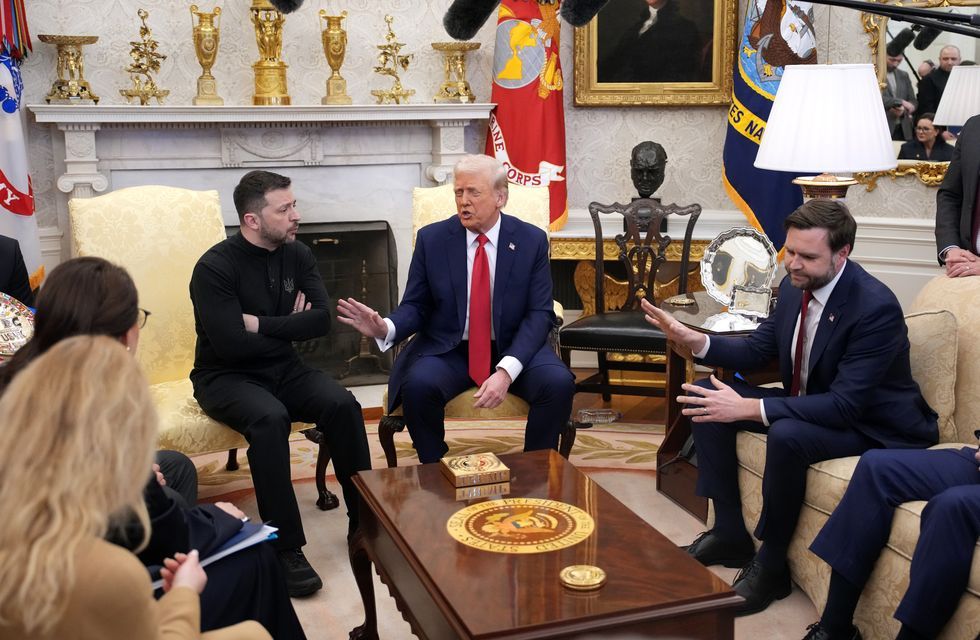
Up until Trump's inauguration in January, Ukraine was essentially bankrolled by the United States. That all changed during the infamous Oval Office meeting with Trump, Vice President JD Vance, and Ukrainian President Volodymyr Zelenskyy.

Although tensions ran high, progress has been made with various proposed peace deals, though none have yet been agreed to by all parties involved.

RELATED: Trump pledges to lift 'brutal and crippling' sanctions on Syria, pushes for Middle East peace talks

Photo by BRENDAN SMIALOWSKI/AFP via Getty Images
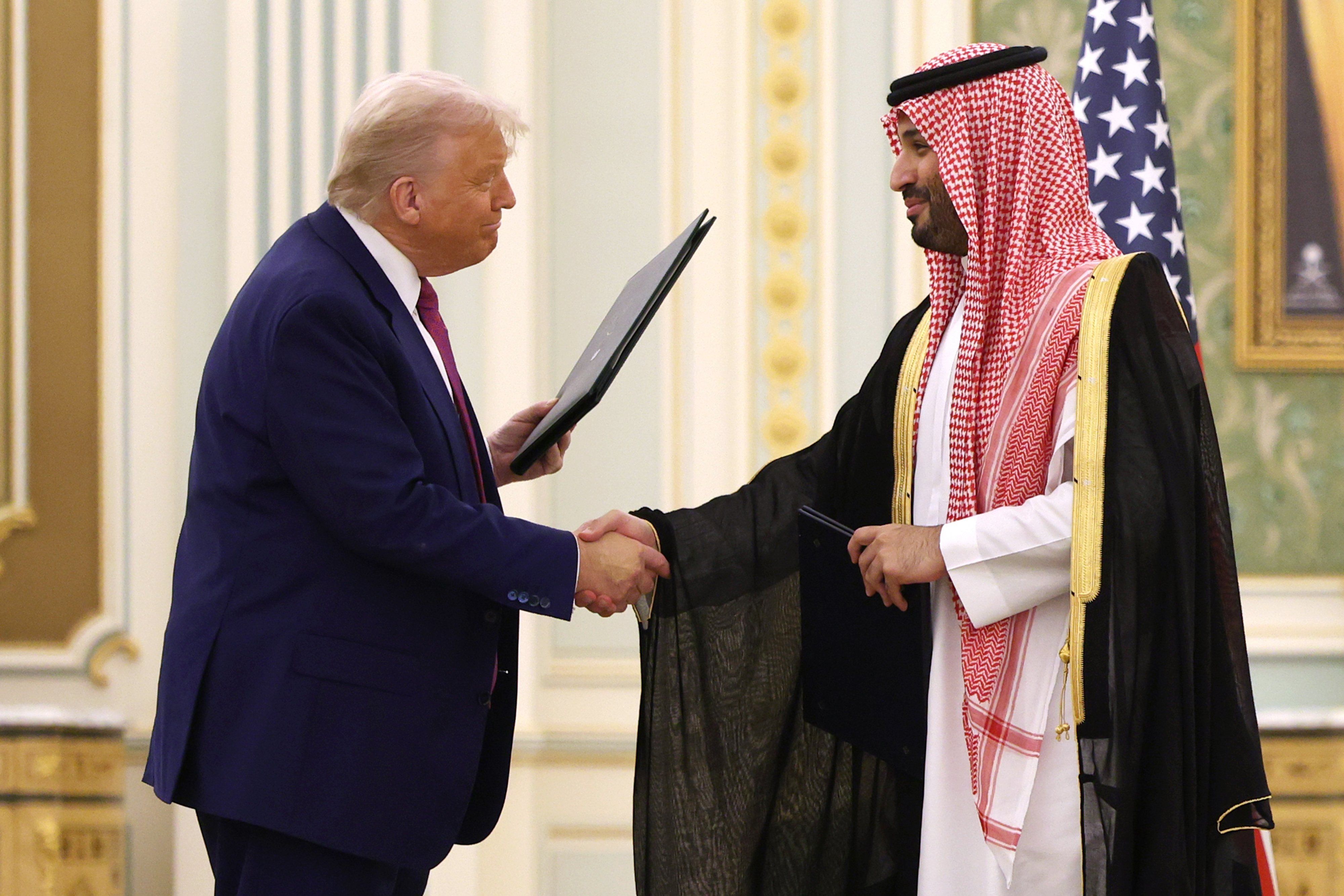
The Russia-Ukraine War is not the only conflict Trump is trying to resolve. The president spent the week touring the Middle East and meeting with various leaders, like President Ahmed al-Sharaa of Syria, Crown Prince Mohammed bin Salman of Saudi Arabia, and President Recep Tayyip Erdogan of Turkey.

During these meetings, Trump encouraged the leaders to sign onto the Abraham Accords alongside Israel in order to restore peace in the Middle East. Trump also urged the leaders to expel foreign terrorists from Syria, to deport Palestinian terrorists, to aid the United States and prevent the resurgence of ISIS, and to take responsibility for the ISIS detention centers in Syria.

Like Blaze News? Bypass the censors, sign up for our newsletters, and get stories like this direct to your inbox. Sign up here!

Trump earns unlikely praise from House Democrat: 'I got to give him some kudos there'


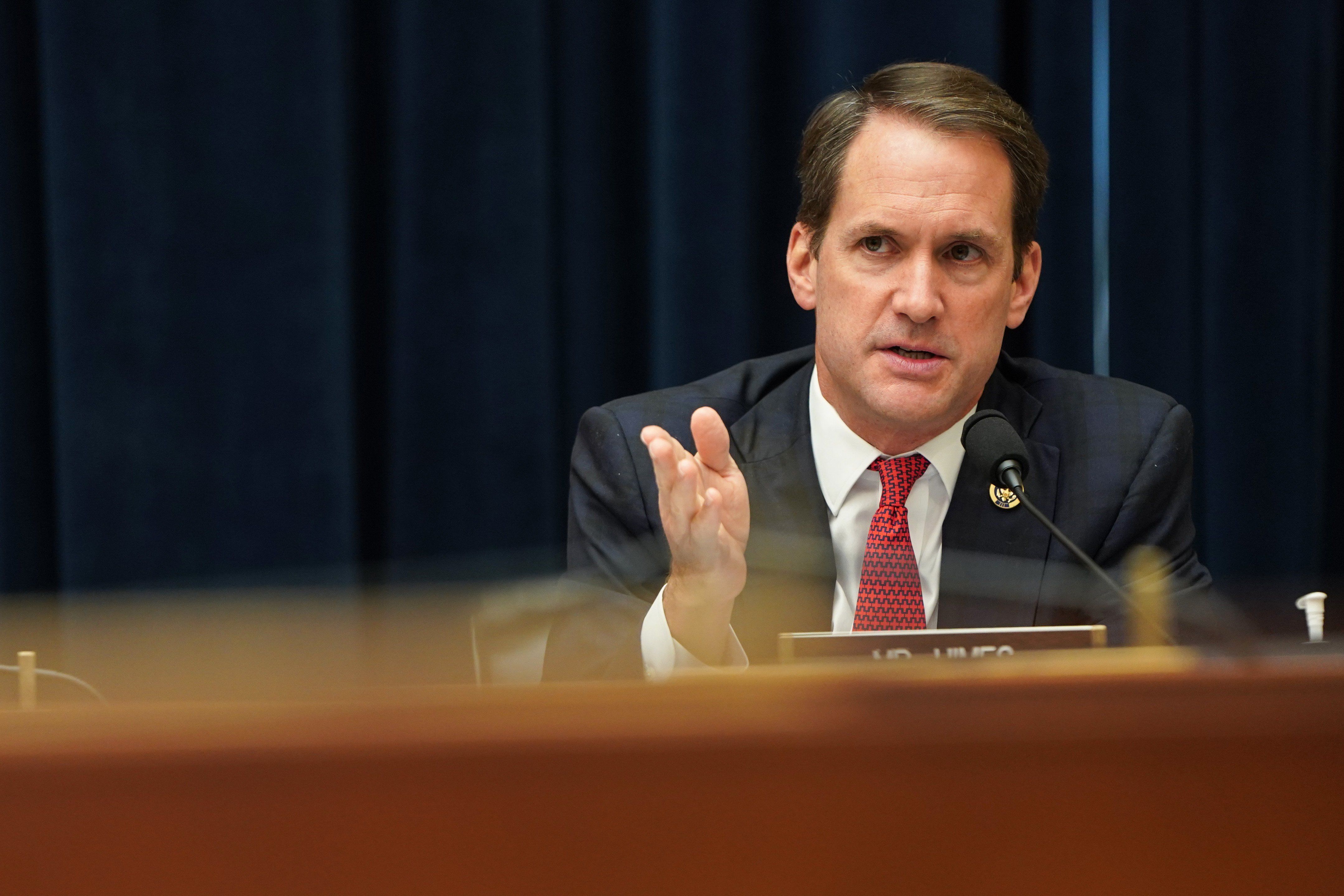
President Donald Trump is no stranger to criticism from the left, but even Democratic Rep. Jim Himes of Connecticut admits that his foreign policy is praiseworthy.

Trump has spent the last few days meeting with foreign dignitaries in the Middle East, including President Ahmed al-Sharaa of Syria, Crown Prince Mohammed bin Salman of Saudi Arabia, and President Recep Tayyip Erdogan of Turkey. Trump even announced he would be lifting sanctions on Syria, inching closer and closer to a peace deal.

'Himes admits that he is optimistic about Trump's handling of the Middle East this week.'

RELATED: Trump pledges to lift 'brutal and crippling' sanctions on Syria, pushes for Middle East peace talks

Photo by Win McNamee/Getty Images

Trump's dovish approach to foreign policy has been praised by some political allies in the Republican Party, but Himes chimed in with a rare message of support from across the aisle.

"I'm not in the habit of praising Donald Trump," Himes said in an interview Thursday. "But I got to tell you ... I think the president has, in this last week or so, played the Middle East pretty darn well."

Himes said he went into the week concerned that Israeli Prime Minister Benjamin Netanyahu was "hell-bent" on going to war with Iran. He also expressed skepticism about Trump's negotiations with the new Syrian leadership. But so far, Himes admits that he is optimistic about Trump's handling of the Middle East this week.

RELATED: Vance tells Glenn Beck Congress needs to 'get serious' about codifying DOGE cuts

Photo by Win McNamee/Getty Images

"My guess is that the prime minister of Israel is cooling his heels a little bit on planning for Iran," Himes said. "My guess is that he's probably thinking through a better situation than he otherwise might want for Gaza, and look, it appears we're going to give al-Sharaa a chance in Syria. That's pretty good stuff."

"Again, not in the habit of praising this president, but I got to give him some kudos there," Himes added.

Like Blaze News? Bypass the censors, sign up for our newsletters, and get stories like this direct to your inbox. Sign up here!

Trump pledges to lift 'brutal and crippling' sanctions on Syria, pushes for Middle East peace talks


President Donald Trump announced Tuesday that he will be lifting sanctions on Syria as he kicks off his tour in the Middle East.

After the fall of the Assad regime in December, Syria's new leaders, like President Ahmed al-Sharaa, hoped America would loosen its grip and lift the sanctions. After Trump announced the sanctions would be lifted, he met with al-Sharaa and Crown Prince Mohammed bin Salman of Saudi Arabia, with President Tayyip Erdogan of Turkey joining them over the phone.

RELATED: Biblical warnings fulfilled: The rising persecution of Christians foreshadows global instability

'When Syria is contemplating its future under new leadership, we should want a seat at the table.'

Photo by Win McNamee/Getty Images

During the meeting, Trump urged the leaders to sign onto the Abraham Accords with Israel in an attempt to inch toward peace in the Middle East. Trump also insisted they tell foreign terrorists to leave Syria, to deport Palestinian terrorists, to assist the United States and prevent the resurgence of ISIS, and to take responsibility for the ISIS detention centers in northeastern Syria.

RELATED: Trump rips into reporter for implying Qatar gift is a bribe: 'You should be embarrassed asking that question!'

"Syria, they've had their share of travesty, war, killing in many years," Trump said. "That's why my administration has taken the first steps toward restoring normal relations between the United States and Syria for the first time in more than a decade."

Photo by Amadeusz Mikolaj Swierk/Anadolu via Getty Images
"The sanctions were brutal and crippling and served as an important, really an important function, nevertheless, at the time," Trump added. "But now it's their time to shine. So I say, 'Good luck, Syria.' Show us something very special."

RELATED: GOP Rep. Cory Mills explains why he was married by a radical Islamic cleric

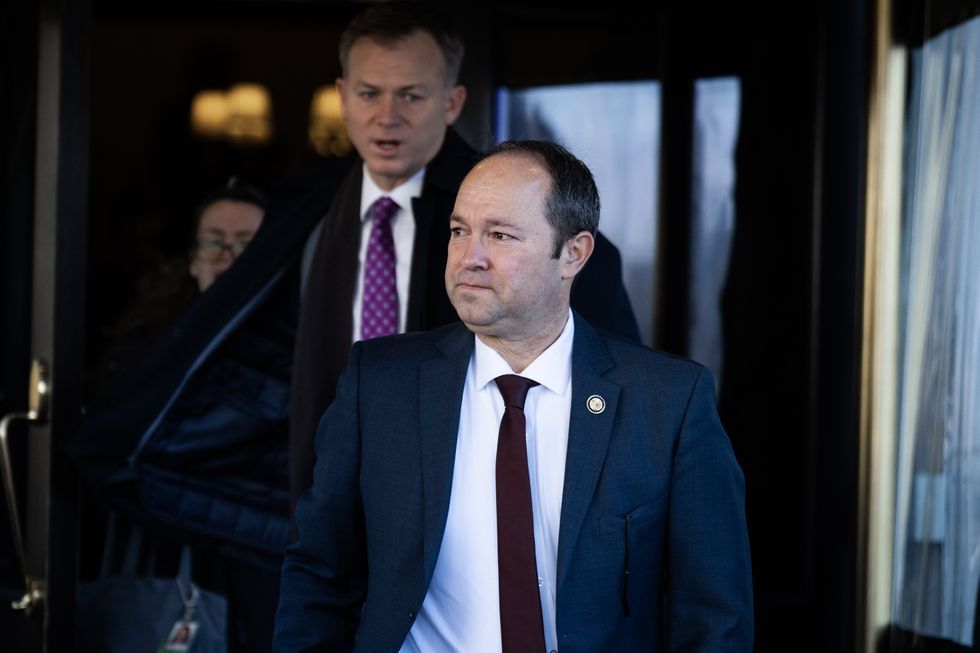
The United States has designated Syria as a terrorist state for decades. But under the new leadership, some lawmakers like Republican Rep. Marlin Stutzman of Indiana said Syria is potentially shaping up to become a key ally.

Tom Williams/CQ-Roll Call, Inc via Getty Images
“When Syria is contemplating its future under new leadership, we should want a seat at the table," Stutzman, who met with al-Sharaa in April, told Blaze News. "President al-Sharaa has welcomed the West, allowed women into his Cabinet, and even recognized Israel as a sovereign nation."

"President Trump should be meeting with him not only to help Syria be prosperous, but also to weaken the influence of Russia and China and create another ally and trade partner in the region," Stutzman added.

Like Blaze News? Bypass the censors, sign up for our newsletters, and get stories like this direct to your inbox. Sign up here!

Syria’s new rulers: From jihadist terror to ‘moderate’ media rebrand


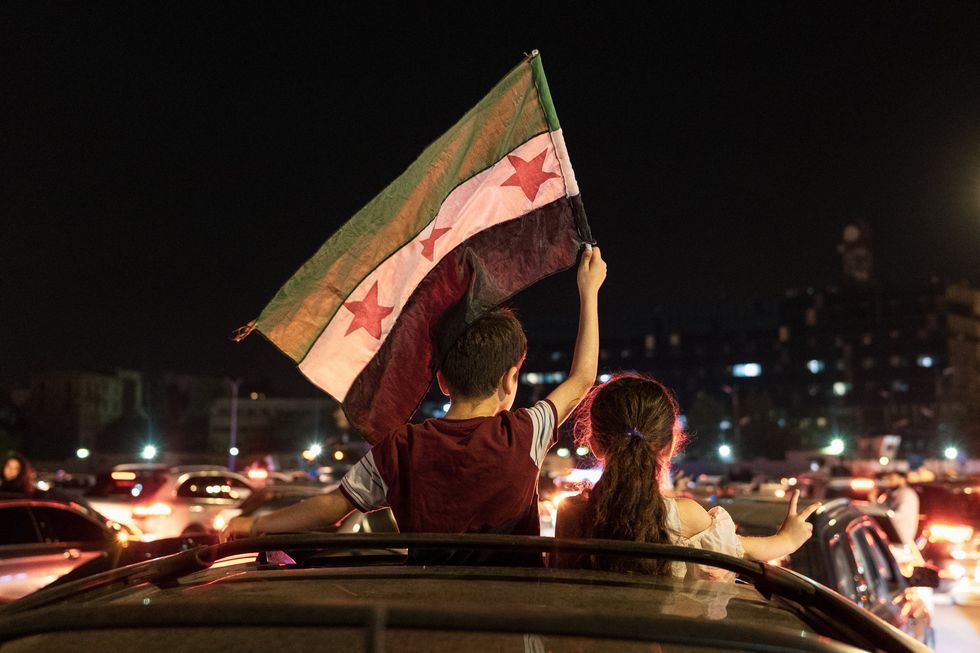
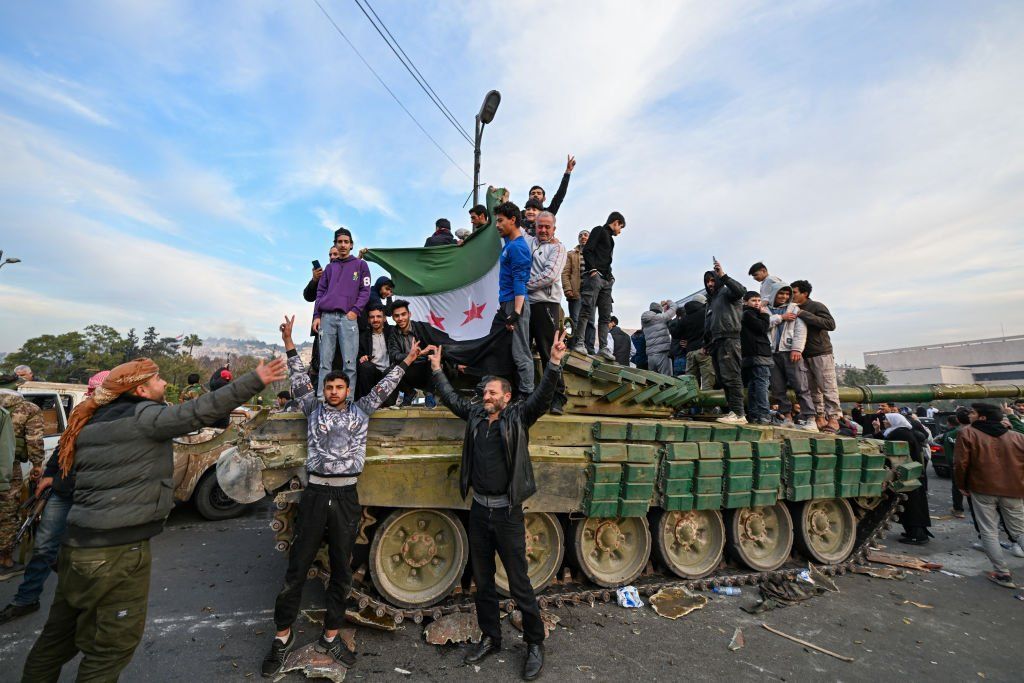
Syrians across Europe rejoiced at the news of Bashar al-Assad’s overthrow in December. Crowds filled the streets of Paris, celebrating the downfall of a dictator who ruled Syria with an iron fist and killed thousands of opponents. In Germany, migrants — many with faces painted in their host country’s colors — sang in support of Hayat Tahrir al-Sham, the Islamist rebels who ended the Assad family’s five-decade rule. Car horns in Berlin, home to Europe’s largest Syrian diaspora, drowned out chants of “free at last.”

In Damascus, a similar scene unfolded. Residents tied a fallen statue of former President Hafez al-Assad to a truck and dragged it through the streets. Yet this collective euphoria remains an illusion. Behind carefully crafted media spectacles of controlled spontaneity, thousands of Syrian Christians live in fear, weighing whether to flee the country to save their lives.

The fall of Bashar al-Assad marks the end of a brutal era. But the jihadist rebels who toppled him warrant extreme caution.

Syria has one of the world’s oldest Christian communities, dating to the first century. According to tradition, the apostle Paul converted on the road to Damascus, and Christians in the remote mountain village of Ma’lula still speak Aramaic, the language of Jesus. Before the Muslim conquest of the Levant and the establishment of Islam in the seventh century, Christians made up roughly 80% of Syria’s population.

Determining the exact number of Christians in Syria is difficult. The country has not conducted a census in more than 60 years. Before the civil war, estimates suggested Christians made up about 10% of Syria’s 22 million people. That number has dropped significantly due to Islamic terrorism, violence, persecution, and forced expulsions. Only a few hundred thousand Christians are believed to remain.

Since taking control on Dec. 8, Hayat Tahrir al-Sham spokesmen have claimed they will protect Syria’s ethnic and religious minorities. Their statement came just weeks before Christmas, the most significant holiday in the Christian calendar. On Christmas Eve, footage posted to social media showed masked individuals setting fire to a large Christmas tree in the main square of Suqaylabiyah, a Christian-majority town in central Syria.

When Syria's civil war began, Christians were not initially targeted. In April 2013, however, armed militants kidnapped and murdered two prominent Christian leaders — Bishop Yohanna Ibrahim of the Syrian Orthodox Church and Bishop Boulos Yaziji of the Greek Orthodox Church. While the exact motives remain unknown, reports suggest the al-Nusra Front was responsible.

The fall of Bashar al-Assad marks the end of a brutal era. The “Butcher of Damascus” ruled with bloodshed, and few will mourn his downfall. But the jihadist rebels who toppled him warrant extreme caution.

Hayat Tahrir al-Sham’s current leader, Abu Muhammad al-Julani, previously served as an emir of the al-Nusra Front, al-Qaeda’s Syrian affiliate. The group openly declared its goal of transforming Syria into an Islamic state governed by Sharia law. When Islamist forces take control of a region, Christians typically face three choices: convert to Islam, accept dhimmitude — a subordinate status that, if violated, can result in death — or face execution. In some cases, rulers allow exile as an alternative.

In 2013, the U.S. State Department designated Julani as a “specially designated global terrorist” with a $10 million reward for information leading to his capture. Nevertheless, Western foreign policy often operates under the principle that “the enemy of my enemy is my friend.” Many Western elites, eager to celebrate Bashar al-Assad’s downfall, have tacitly approved of HTS. Former British intelligence chief Sir John Sawers even referred to HTS as “a liberation movement.”

Since seizing power, Julani has undergone a media rebrand. Now known as Ahmed al-Sharaa, he appears in blazers instead of combat fatigues. CNN and other outlets present him as a transformed figure, as if trading a militant’s uniform for a suit instantly converts a radical Islamic terrorist into a peaceful revolutionary. The BBC refers to this shift as “moderate jihad.” As long as HTS pledges to form an “inclusive” government, the United Nations is considering removing it from its list of banned terrorist organizations.

This narrative is absurd. Julani is nothing if not a media-savvy jihadist. His past is well documented — he was a member of al-Qaeda and ISIS, mentored by Abu Bakr al-Baghdadi, the former leader of ISIS. He founded the al-Nusra Front, pledged allegiance to al-Qaeda, swore an oath to Osama bin Laden, and was radicalized by the events of 9/11.

Yet his makeover appears to be working. Western leaders and media figures suggest that swapping battlefield fatigues for tailored suits and parroting liberal talking points absolve him of his past. By courting sympathetic Western governments, HTS aims to gain ideological influence and establish itself as a legitimate force in Syria’s political landscape.

When al-Julani promises to protect the “rights” of minorities based on law, he is referring to the “rights” granted to dhimmis under Sharia law. This is what happened in 2015 when ISIS forced Syrian Christians to convert to Islam or sign a dhimmi contract.

Under HTS, Syrian Christians face a bleak future.