Anduril's new Army helmets have 'X-ray' vision — how is that possible?
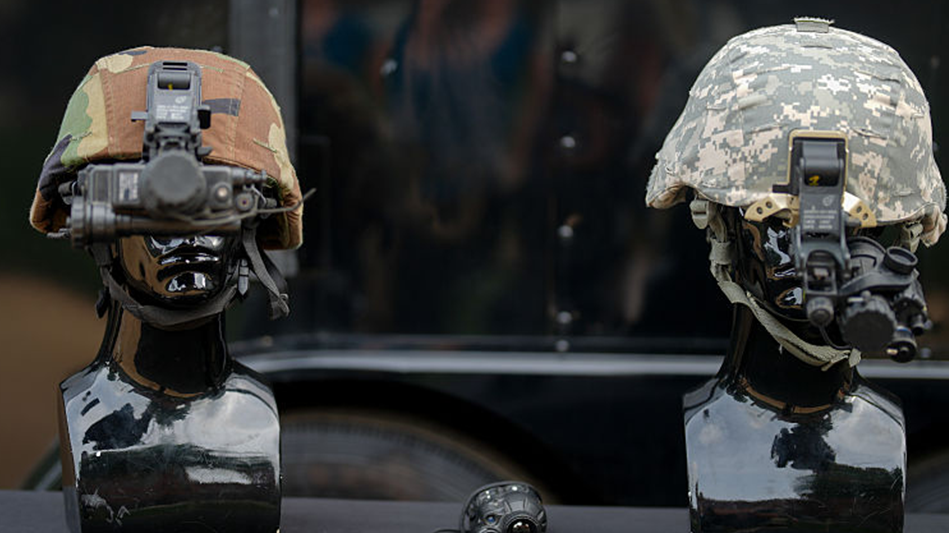


The incoming equipment for U.S. military members is so advanced that it not only looks like a video game but seems like the user is cheating.

The standard helmet for the Army has remained largely the same in the last few decades, save for key updates in blunt force protection. While there may have been additions that allow for microphones and night-vision attachments, nothing has even come close to what is on the horizon.

'Think of it almost like a hive mind.'

Leaning more toward what a fighter pilot's helmet is capable of, the new Eagle Eye warfighter helmet from Anduril Industries uses technology that is pretty hard to explain.

The company recently released a stunning display that looks like the first-person view of a video game. Providing a directional map in the bottom corner of the soldier's view, the optics are immediately recognizable to anyone who has played a video game of that genre; a young man in the Army probably has.

A heads-up display reveals nearby enemies with a red blip, and the soldier digitally selects a tactical strike with a drone on an encroaching vehicle in seconds, all while chatting with other soldiers on his team.

The new helmets make this possible by using a "hive mind" technology that connects soldiers on the battlefield with drones, cameras, surveillance, and their squad mates on the ground; the results are fairly shocking.

RELATED: 'Insane radical leftists' are gone: Zuckerberg and Palmer Luckey reunite for US military project

— (@)

"The ability to have night vision, thermal vision, but also the ability to see where all the bad guys are, see where all the good guys are by fusing everyone's view together. Think of it almost like a hive mind," inventor Palmer Luckey recently told Joe Rogan.

"If I'm able to see something, you should be able to see it. If a drone can see it, you should be able to see it. Even if it's on the other side of a building, you should be able to see it and effectively have X-ray vision. And I should be able to command and control all these other systems using this heads-up display interface," Luckey continued.

Using "intelligence sensors," the Eagle Eye helmets can detect cellphone signals, radio signals, and even where gunshots were fired, revealing their distance from the soldier.

The Anduril CEO showed Rogan that with a pair of connected augmented reality glasses, the soldier can see all the data being captured by the helmet and show it in real time to the user. This, in conjunction with any drones, cameras, or other soldiers wearing the tech, combine to form a network of data that Anduril says gives America the advantage in an "unfair fight."

What this results in is the soldier being able to see everything at once, effectively seeing through walls or over hills; if anyone or anything on his team can see it, so can the individual.

Luckey showed off a sample video where a soldier could use the X-ray vision to track his allies through a sea can while engaging enemies, displaying them as skeletal-like figures. Once the allies saw the enemy, the user could see them through a wall too.

RELATED: You can now buy a real-life Jetsons vehicle for the same price as a luxury car

Additionally, the helmets not only have thermal sensors, night-vision censors, and hearing protection, they also have sound amplification. Tactical technology allows the wearer to hone in on sounds coming from a certain direction, while canceling out noise from other directions to better focus on the target.

Anduril boasts that it used no taxpayer dollars to create Eagle Eye and is certainly pushing advanced military technology in the right direction.

The advancements come at the same time the company has revealed its anti-drone technology, in the form of a mobile kit for soldiers on the ground. Drone strikes have become an often-used instant-casualty tactic in the Russia-Ukraine war and are a constant threat for those operating without cover.

These products show that Luckey has put a very real focus on protecting the individual American fighter in attempt to prevent loss of life.

Like Blaze News? Bypass the censors, sign up for our newsletters, and get stories like this direct to your inbox. Sign up here!
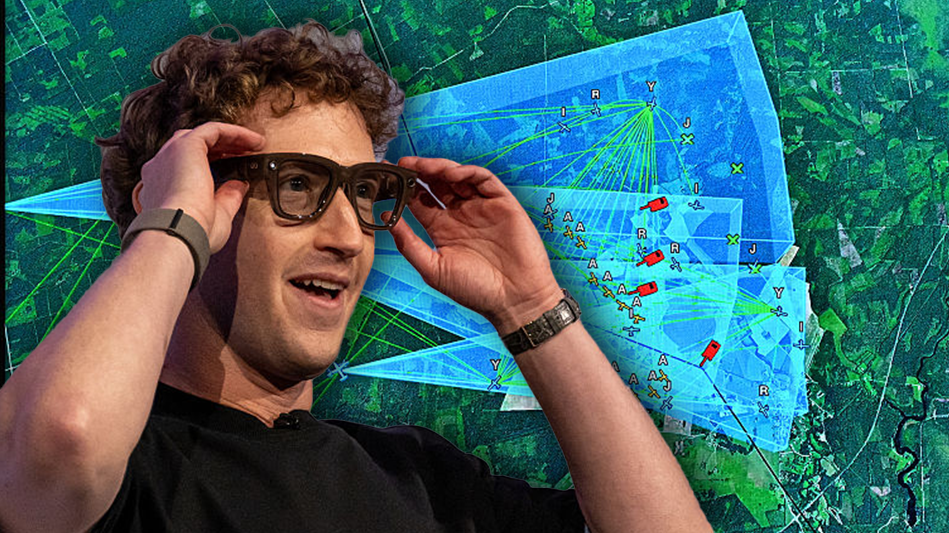

Zuckerberg's vision: US military AI and tech around the world


Mark Zuckerberg's Meta is sharing the wealth with U.S. allies in Europe and NATO.

Since late 2024, Zuckerberg's tech giant has made Llama — its own large language model — available to foreign countries within the Five Eyes security partnership between the U.S., Australia, Canada, New Zealand, and the United Kingdom. Now, Meta is expanding the access to other countries while partnering with advanced-AI military contractors.

'We're building for completely on-device deployment of AI.'

Wearable products, AI programs, and other tools are being shared with allies in France, Germany, Italy, Japan, and South Korea, in order to enhance "decision-making, mission-specific capabilities, and operational efficiency," Meta wrote.

The technology includes a partnership with Anduril, Palmer Luckey's industry-leading augmented reality defense company.

Calling the effort the "largest of its kind," Meta's partnership is meant to equip soldiers with enhanced decision-making capabilities. This is apparent with Anduril's recently released EagleEye, an AI/AR warfighter helmet.

RELATED: 'Swarms of killer robots': Former Biden official says US military is afraid of using AI

EdgeRunner AI is used on a military laptop. Image provided to Blaze News courtesy of EdgeRunner
EagleEye represents the best of what the video game world has to offer, brought to life.

Not only does the helmet display directional mapping as if belonging to a gamer dropped into a first-person shooting game, but it also provides a form of X-ray vision that allows users to see allies and enemies on the map through coordinated data.

The AR tech also utilizes spatial audio and frequency detection to alert operators of hidden threats. Rear and flank sensors also ensure that the allied soldier is not ambushed.

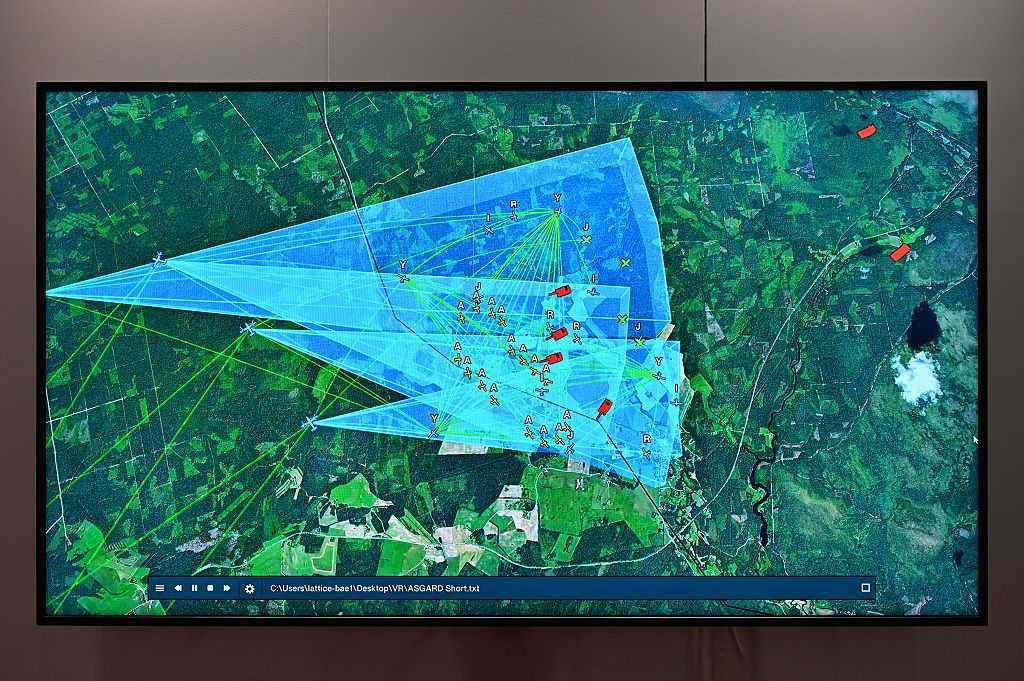
Anduril's Lattice AI is also making waves, and it too looks like something gamers will recognize.

Using data from drones, sensors, and satellites, it creates a real-time 3D battlefield map. The program boasts a wide range of deployable formats, including detecting battlefield threats or intrusions on border security.

In November 2024, Meta opened-sourced its Llama model for the U.S. military and its contractors to build upon. That move is now paying off, as Meta will now share what the company EdgeRunner has built, a closed-ended chatbot for soldiers.

RELATED: 'Insane radical leftists' are gone: Zuckerberg and Palmer Luckey reunite for US military project

Anduril Lattice battlefield software. Photo by John Keeble/Getty Images

EdgeRunner AI is essentially a search function for soldiers; it can be run as a local program on almost any consumer-grade device, and according to Meta, it can be used to identify safe locations for aircraft or even accurately translate languages.

"This is all part of our joint effort to ensure the warfighter has access to advanced AI technology at the tactical edge," an EdgeRunner spokesperson told Return. "What's especially unique about our work with Meta is that we're building for completely on-device deployment of AI, meaning it's running locally on your laptop, workstation, or smartphone, disconnected from the cloud."

This method avoids the necessity for uninterrupted cloud connectivity, which helps keep the data out of the enemy's hands, too.

The AI program has an all-encompassing goal and is specifically designed to be adaptable to different job titles. This means it will be coupled with logistics, maintenance, and combat roles.

Meta is spreading its footprint worldwide and said because of this, it hopes allies will deploy the AI ethically, responsibly, and in accordance with "relevant international law and fundamental principles."

Like Blaze News? Bypass the censors, sign up for our newsletters, and get stories like this direct to your inbox. Sign up here!

The government's anti-drone energy weapons you didn't know existed


Drone defense systems are far more developed than the average person may be aware of.

In December 2024, there were estimates of over 5,000 reports of drone sightings off the East Coast of the United States, including huge clusters in New Jersey.

'We're going to start to see the increasing development of ... directed-energy weapons or high-powered microwave systems.'

Despite the mass confusion surrounding the mystery drones, citizens were told there existed no national security threat and even, at times, that what they saw was probably just a plane.

However, the Joe Biden administration did not seem to let Americans know at the time that the Department of Defense (now Department of War) is far more equipped to handle drone swarms than is commonly understood.

This was made apparent by Jake Adler, the biotech entrepreneur behind the clay-based hemostatic Kingsfoil. The young businessman revealed to Blaze News that drone warfare has prompted the use of direct-energy weapons that are being quickly developed to lower defense costs.

The ongoing threat has resulted in a type of "escalation tax," Adler explained, in which the constant use of drones has necessitated the creation and deployment of cheaper defense mechanisms.

Adler referred to companies like Allen Control Systems, which have taken massive strides in developing new methods of knocking drones out of the sky. Some companies are even using microwave technology.

RELATED: Chinese informant allegedly alerted FBI to Wuhan lab leak in early 2020: Report

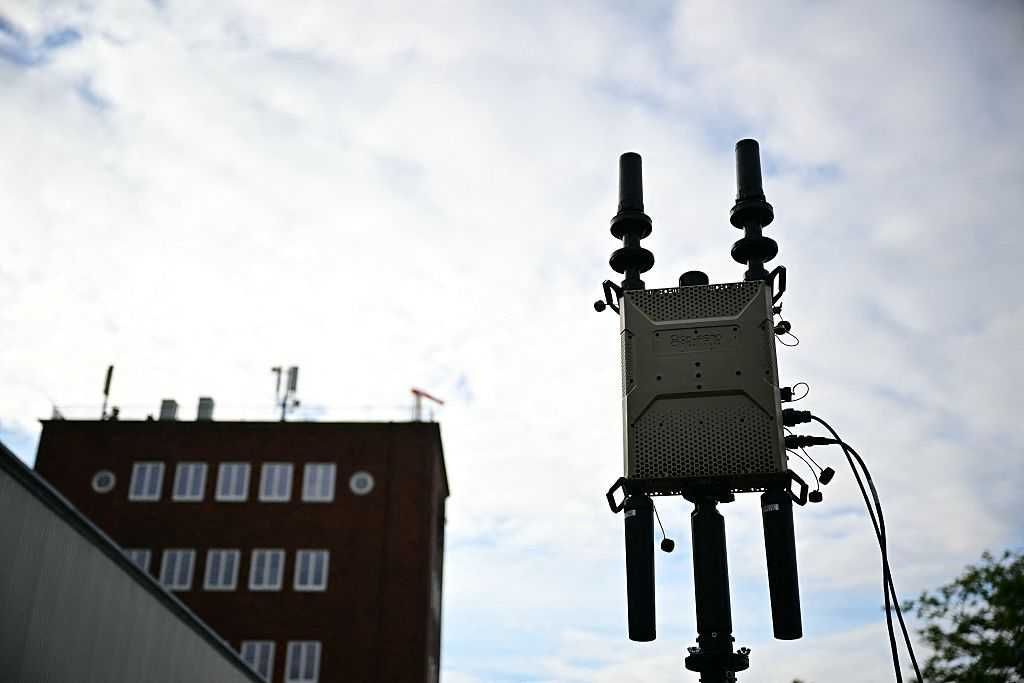
A RADIS radio detection intervention system of the German armed forces. Photo by TOBIAS SCHWARZ/AFP via Getty Images
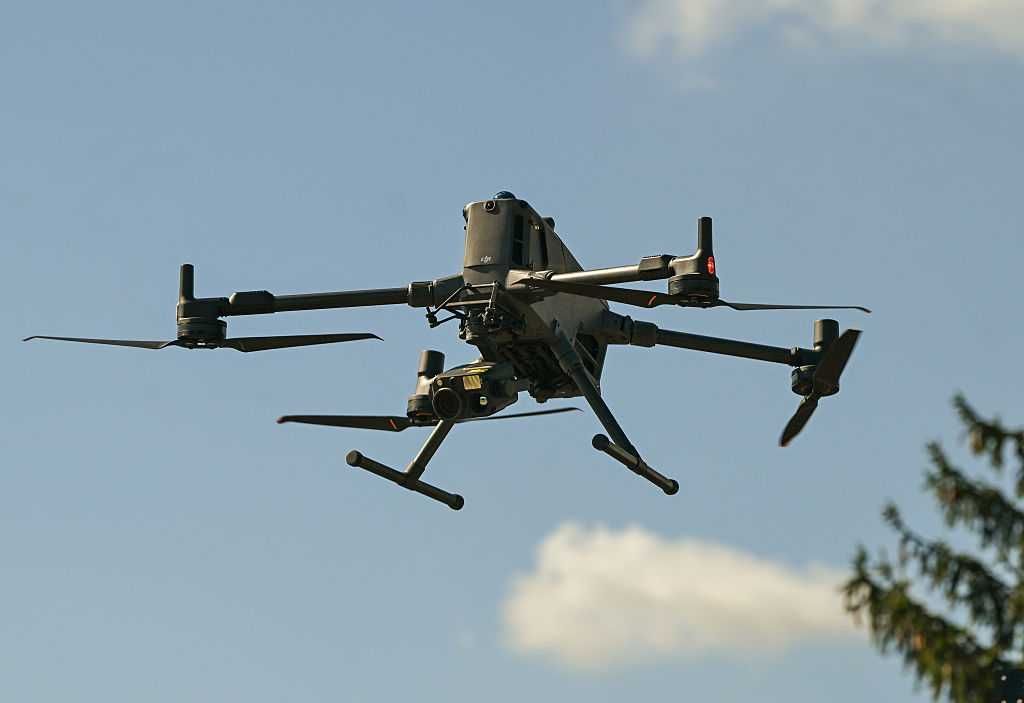
ACS' Bullfrog system is fairly simple: an autonomous weapon targets unidentified aerial vehicles and blows them away with high-caliber rounds, all while being exceptionally portable, at just 165 pounds for some models.

Then there's Epirus, which offers "long-pulse high-power microwave systems with AI and advanced electronics to protect and sustain civilization."

Simply put, Epirus uses energy weapons to neutralize dozens of drones at a time and has successfully completed trials in which it took out 49 of 49 and 61 of 61 targets successfully and simultaneously.

"We're going to start to see the increasing development of countermeasure systems coming from companies like Eperis, which are doing directed-energy weapons or high-powered microwave systems," Adler noted. "So we're kind of seeing the development of novel platforms that can more effectively knock down, you know, a hundred drones for five cents."

The use of these systems tied into Adler's broader point that the neutralizing of drone threats forces a reliance on human fighters.

RELATED: The government is monitoring your feces — to protect you, of course

A Chinese drone used by Polish Army soldiers during a training exercise. Photo by Artur Widak/NurPhoto via Getty Images


Adler's company Pilgrim has been focusing on bolstering soldier capability in the battlefield, and in addition to its medical technology, he has long looked to target another sensitive area: sleep.

'Warfighters have really bad sleep," Adler offered. "A great deal of them are sleep-deprived. One of the challenges is that you're taking an 18-year-old ... and putting them into a highly stressful environment where the expectation is, realistically, very limited sleep. And that's sort of around the age where sleep patterns are still getting reinforced, right? So you're kind of disrupting the natural evolution or really the natural growth of the brain, which can kind of create challenges around combat effectiveness [and] accuracy."

This "laundry list" of externalities that are affected by sleep are on Adler's to-do list, and he has looked to get away from the use of pharmaceuticals (stimulants and sedatives) in order to tackle those issues.

Through a previous project called NeuSleep (now officially on pause), Adler had soldiers use a sleeping mask equipped with brain stimulation and monitoring devices for heart rate, blood oxygenation, and sleep stages. The device would stimulate the brain to modify sleep patterns, allegedly making three-hour naps feel more like five or six hours of sleep.

"We'd be able to monitor if you were in REM or if you're in light sleep. ... We could basically shock you and improve your sleep quality. The joke that we had internally was that we were shocking people to sleep, which didn't really get very far in terms of marketing," he laughed.

Adler, like many others, solidified the idea that the Trump administration has placed increased emphasis on developing its network of companies that place high importance on advanced technologies for the individual and treat the soldier as the focus.

Companies like Pilgrim, Anduril, and EdgeRunner AI are moving at light speed, and the general populace is blissfully unaware. Systems that are in place to protect citizens are now under scrutiny from young entrepreneurs who have signaled that a lot of military and defense tech is slow-moving or out of date, and they want to do something about it.

Like Blaze News? Bypass the censors, sign up for our newsletters, and get stories like this direct to your inbox. Sign up here!

Biotech founder sliced open his own legs on camera to prove his product is safe for US troops


Jake Adler, founder of the medical startup Pilgrim, was willing to bleed to show investors he was serious about his product.

At just age 21, the biotech entrepreneur is so convinced his product has legs that he wounded his own.

In a video sent to investors, Adler sterilized his thighs before reminding viewers that his product is intended to undergo proper and rigorous clinical investigations. But that didn't stop him from testing it on himself first.

'I'm allowed to do anything to my own body.'

Adler reportedly numbed his legs with lidocaine before using a medical device, a punch biopsy tool, to create two "scientifically precise wounds."

Adler then applied his product, called Kingsfoil, to one of the open wounds. The other wound was left undressed as a control subject.

Kingsfoil is a clay-based hemostatic dressing that turns into a gel-like matter when it touches the skin. It is designed to help close wounds and aid in healing.

The product seemingly stalled the bleeding on the wound it was applied to, according to Business Insider, which reviewed the video.

"I was very cautious," he told the outlet.

"When I looked through the laws, there was nothing that inherently said I couldn't do a test on myself."

Adler added, "In the same way you can get a tattoo, I'm allowed to do anything to my own body."

With a warning not to try this at home, Adler showed he was willing to go to any length to get his product to market. A few huge investments later, the young entrepreneur is pushing toward what he has been primed to do for years.

RELATED: Bioscience secrets reveal you need to chew harder — and use better gum

Photo by Ezra Acayan/Getty Images

Adler got a head start in 2023, acquiring a Thiel Fellowship just a year after graduating high school. The fellowship, backed by billionaire Peter Thiel, funds young people who "want to build new things instead of sitting in a classroom."

"Two years. $200,000. Some ideas can't wait," the website reads.

By March 2025, Pilgrim had acquired $3.25 million in investments, capital that has since ballooned to $4.3 million in seed funding at the time of this writing.

Now, Adler openly recognizes how his fellowship was able to eat up some of the initial costs that cause so many startups to stumble out of the gate. Adler says that while it can take most companies many more months to gain approval, Kingsfoil is able to accelerate its timeline thanks to partnerships with the Department of Defense.

RELATED: This 'Star Wars' vehicle is now real, and you don't need a license to fly one

Adler named Kingsfoil after the healing herb in "The Lord of the Rings."

The tech space is rife with these types of references to the J.R.R. Tolkien corpus; Alex Karp's Palantir is named after a seeing stone, Palmer Luckey's tech company Anduril refers to a sword, and Luckey's cryptobank startup Erebor is a mountain in the same lore.

While Adler admits that most of his ideas can be credited to works of fantasy, the unofficial banner under which these startups are named immediately evokes the expectation of an elevated standard. When a startup in this orbit uses one of these fantasy-themed monikers, it is expected to be both serious and promising.

Photo by Chung Sung-Jun/Getty Images

Adler explained in a March interview that his aspirations are focused on helping U.S. armed forces increase their readiness when it comes to defense, not weaponry.

For example, in addition to Kingsfoil, he has looked into the possibilities of controlling "sleep architecture" so that soldiers can feel as if they have slept for five hours when they have only slept for three. Adler does not want soldiers to rely on pharmaceuticals for rest or alertness.

The biotech entrepreneur also said he wants to build soldier readiness when it comes to chemical threats and create a system that can detect airborne pathogens or poisons. According to Business Insider, that system, dubbed ARGUS, would be coupled with Voyager, an inhaled mist to help the body neutralize chemicals (such as nerve agents) before they reach the bloodstream.

Pilgrim is just a five-person team, however, and these products are still prototypes or in the research and development stages.

As for Kingsfoil, its only current known side effect is minor skin irritation.

Like Blaze News? Bypass the censors, sign up for our newsletters, and get stories like this direct to your inbox. Sign up here!

Robo-billionaire Palmer Luckey brings the 'hype' train to American manufacturing


The American hype train is real, according to Anduril founder and billionaire Palmer Luckey.

Appearing at the Reindustrialize Summit, Luckey seemingly proved the power of positivity makes nearly anything possible, and not in a cringey, motivational speaker sort of way, either. Rather, it is in the create robots, video games, and military warfighter technology kind of way.

In fact, Luckey found a way to corroborate his belief at the summit and showed it off in such a manner that was far more interesting than the movie "Real Steel."

'Hype is what allows you to get investment in these problems.'

With a Hawaiian shirt, khaki shorts, and an unsightly wig, Luckey delivered a 20-minute speech on the conference stage by remotely controlling a robot using virtual reality.

While the bot seemed a bit primitive by today's expectations, basic movements were controlled by the billionaire from afar using just VR goggles.

"I finally pulled off my long-standing goal of speaking at a conference via VR telerobotics!" Luckey wrote on X. "Thousands of miles of travel saved, and no chance of Luigi."

While the robot's ability to shake a hand was suspect, Luckey's message was not as static. The entrepreneur emphasized his goal of making a "Star Trek" future and said a lot of the ability to make that happen comes from "hype."

RELATED: Palmer Luckey-led crypto bank promises startups a capital hoard safe from scheming feds

I finally pulled off my long-standing goal of speaking at a conference via VR telerobotics! Thousands of miles of travel saved, and no chance of Luigi. https://t.co/9WqZAxOFEW
— Palmer Luckey (@PalmerLuckey) July 17, 2025

A lot of hype is "bad if you really let it break your thinking," Luckey told author Ashlee Vance on stage.

While the billionaire explained that over-hyping a project and forgetting prime directives can result in "really playing yourself," he clarified, "hype is what allows you to get investment in these problems."

"Investors don't want to hear, 'It's going to be a 20-year slog, and it's probably not going to work out for us, it's probably our other companies that are going to win,'" Luckey continued.

To that end, the Anduril boss said the "enormous power" of optimism can help drive innovation forward and produce real results. The example he provided was exactly the technology Luckey was showing off.

"I think the hype around virtual reality and augmented reality in the early 20-teens led to tens of billions of dollars in research and development. It would not have happened if people had been ... a little less on the hype train."

Luckey has indeed ventured into AR military equipment with this mindset and recently revealed his first project would be a military helmet called Eagle Eye, which gives Army soldiers access to advanced augmented reality systems that make them "superhuman."

Luckey added at the conference, that while some will downplay the hype, he finds it hard to "get too upset" about hype happening "in a space like American manufacturing."

RELATED: 'Insane radical leftists' are gone: Zuckerberg and Palmer Luckey reunite for US military project

- YouTube

As for Luckey's robotic stand-in, look no further than the Phantom robot from company Foundation.

Founder Sankaet Pathak said on X in early 2025 that his company has no issue with being at the forefront of the weaponization of robotics.

"Unlike most humanoid robot companies in the U.S., which have committed to non-weaponization, we believe it's essential for our robots to master these tasks to support human expansion," Pathak said, per MikeKalil.com.

Like Blaze News? Bypass the censors, sign up for our newsletters, and get stories like this direct to your inbox. Sign up here!

Palmer Luckey-led crypto bank promises startups a capital hoard safe from scheming feds


Billionaire Palmer Luckey is dipping his toe into the financial sector with a banking venture focused on helping tech entrepreneurs.

The company is known as Erebor, yet another entry in Luckey's portfolio that follows the Thiel-world pattern of referencing lore from the tales of J.R.R. Tolkien. Just as Anduril is a reference to a character's sword, and Palantir to a magical seeing stone, Erebor refers to the mountain in "The Hobbit" where the dragon Smaug hoards his gold away from would-be slayers and thieves.

While the moniker is not final, according to the New York Post, the venture is serious in its ability to reshape banking forever.

Deliberate federal interference in the nascent crypto banking market provoked the very crisis the feds purported to solve.

Luckey is partnering with Joe Lonsdale, a venture capitalist who co-founded Palantir Technologies and other software companies. Together, they will help tech startups build their businesses instead of maximizing returns like a traditional bank, insiders told the Post.

The key difference is that Erebor will work with stablecoins, a type of cryptocurrency tied to relatively stable assets like the U.S. dollar or gold. This is done to limit the volatility of a coin without sacrificing its benefits, creating investment opportunities far in excess of simply purchasing and holding, say, Bitcoin.

Even the president is working with stablecoins, particularly USD1, which is attached to the U.S. dollar.

RELATED: Big Tech execs enlist in Army Reserve, citing 'patriotism' and cybersecurity

Joe Lonsdale, at the Montgomery Summit in Santa Monica, California, on Wednesday, March 8, 2017. Patrick T. Fallon/Bloomberg via Getty Images

The Post reported that Erebor was born out of the collapse of Silicon Valley Bank in 2023, caused by a slew of management errors, "investment missteps, market volatility, and regulatory changes," according to Investopedia. The Biden administration ended up guaranteeing all deposits into SVB, despite the bank's ruin.

But as Castle Island founding partner Nic Carter explained last year, deliberate federal interference in the nascent crypto banking market provoked the very crisis the feds purported to solve. "Biden bank regulators made it impossible for banks serving a particular legal industry to operate," Carter wrote. "And in doing so, they actively caused the collapse of certain banks, namely Silvergate and Signature. These banks did not die by suicide but by murder. This remains a gigantic scandal, and no one has ever faced any responsibility for it."

It is unknown who else is involved with the launch of Erebor; it is still in its early stages and has no public start date. Luckey's representative did not immediately respond to Blaze News' request for information regarding founders or key development points.

In that regard, Lonsdale's venture firm 8VC has led a $225 million fundraising round, which will reportedly be used to meet federal regulatory requirements that are necessary for starting a bank, not for backing deposits.

Luckey is not expected to hold an executive role or be involved in day-to-day operations, but he would be adding "bank operator" to his laundry list of titles, which include defense contractor and handheld-gaming manufacturer.

RELATED: Who's stealing your data, the left or the right?

The tech titan has increasingly been involved in larger-than-life projects, including advanced technologies for U.S. military equipment. His open-to-debate style has caused him to become a darling of the Silicon Valley class, and his prominent criticisms of Facebook/Meta (he has since buried the hatchet with Mark Zuckerberg) have helped his image as a palatable billionaire, a dynamic with echoes of Mr. Burns and his one-time rival Arthur Fortune.

"Cryptocurrency is so powerful and investable because it's the most advanced tech ordinary Americans can use right now amongst themselves to create and grow wealth," said James Poulos, Blaze Media's editor at large.

"But it's still not clear how exactly to transition the U.S. from a dollar backed by American global, economic, and military dominance to one backed by computational power," he added. "While stablecoins weaken the ability of regular people to use Bitcoin free from government pressure and control, they strengthen the ability of Washington and Silicon Valley to transition the dollar stably away from the unsustainable 'money printer' model toward a dollar backed by energy itself, in the form of watts used to power compute. That's why a bank like Erebor is basically inevitable."

Like Blaze News? Bypass the censors, sign up for our newsletters, and get stories like this direct to your inbox. Sign up here!

'Insane radical leftists' are gone: Zuckerberg and Palmer Luckey reunite for US military project


Billionaire entrepreneur Palmer Luckey says Meta is a very different company than it used to be, and he's ready to work with Mark Zuckerberg again after being fired from Facebook in 2017.

Luckey, the creator of virtual reality goggles called Oculus Rift, was fired by Facebook allegedly for donating $10,000 to a pro-Donald Trump group. Almost 10 years later as founder of Anduril, a military tech company, Luckey announced on X that he was ready to reunite with Zuckerberg to create VR and augmented reality systems for the U.S. military.

'The people who conspired to oust me, they're not even there anymore.'

"Anduril and Meta have teamed up to make the world's best AR and VR systems for the United States Military," Luckey wrote on X, alongside a photo with Zuckerberg. "Leveraging Meta's massive investments in XR technology for our troops will save countless lives and dollars."

Luckey revealed the first project would be a military helmet called Eagle Eye, equipment that would give Army soldiers access to advanced augmented reality systems that makes them "superhuman."

"My mission has long been to turn warfighters into technomancers, and the products we are building with Meta do just that," Luckey said in a press release.

RELATED: Oculus creator fires back at 'politically obsessive journalists' as hit-piece culture dies

Mark Zuckerberg is seen at UFC 298 at Honda Center on February 17, 2024, in Anaheim, California. Photo by Sean M. Haffey/Getty Images
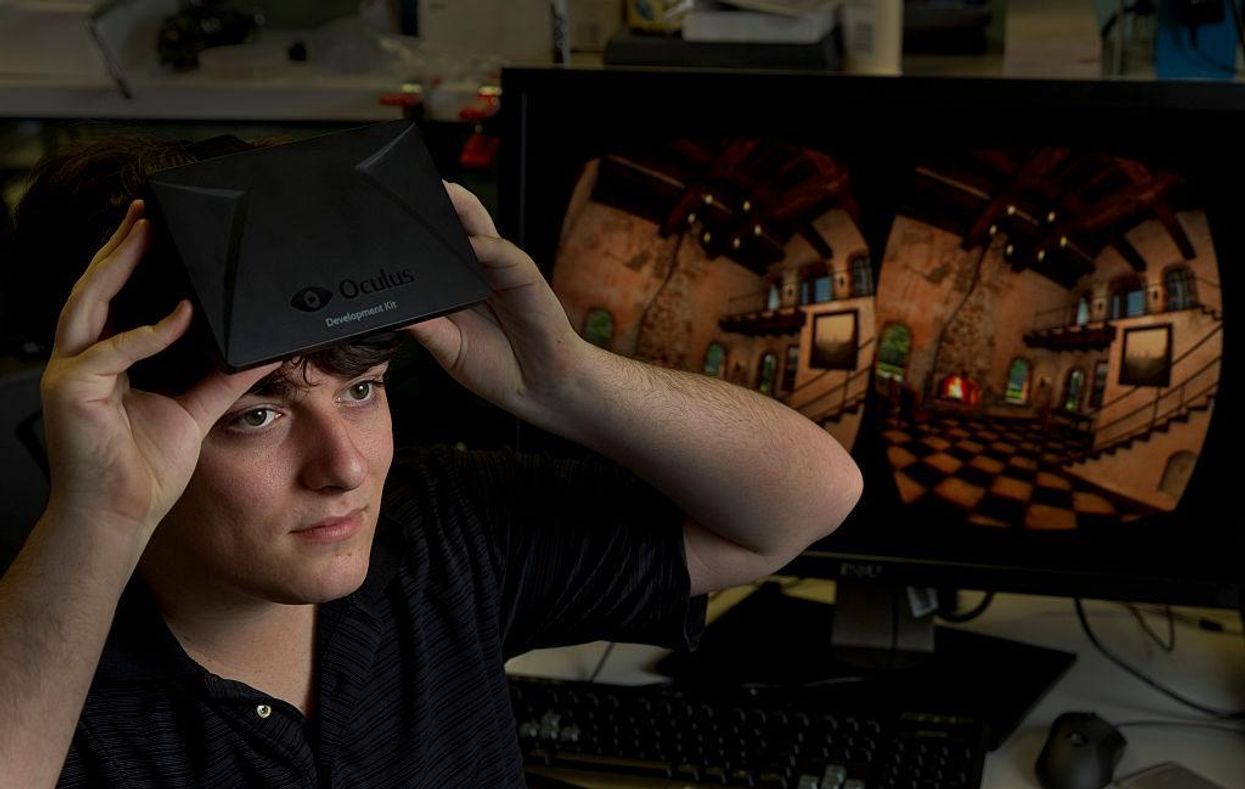
On the podcast "Core Memory," Luckey explained what was long thought to be the real reason behind his exodus from Facebook: an impending revolt from an army of tech-leftists ideologically opposed to his political donations.

"Meta is a very different company than it was nine years ago when they fired me," Luckey told the host. "I don't mean in tenor or tone. I mean it's literally different people."

Luckey claimed that while Zuckerberg still likely approved of his firing, it was more so his subordinates who orchestrated his removal.

"When your people that you task with making decisions come up and say, 'This is what we've decided we have to do. There's no other way out of this huge PR and internal problem. Our employees are insane radical leftists who are going to quit en masse if we don't get rid of Palmer,' like, what are you really gonna do?"

"The people who conspired to oust me, they're not even there anymore," Luckey added.

RELATED: Back to the future? Palmer Luckey's Chromatic does nostalgia right

Return's James Poulos asked if America is actually ready for the advanced "techomancers" Luckey speaks of.

"It may be too late to ask. The specter of China’s immense production capabilities and verve for systematization presents America with a much different threat profile than its two great Axis enemies," Poulos stated.

“It would be a harsh lesson indeed to discover that the only way to compete militarily with China is to lose our own identity here at home. That’s a problem no tech alone can solve," he added.

Luckey seemingly found solace in the reconciliation with Meta and its now apparently right-wing CEO Zuckerberg. Almost talking himself into it, the Anduril boss said it was likely more productive for him to accept that he "won the persuasion argument" and should be happy he received apologies from Meta's top brass.

"If people end up coming to your side, you shouldn't shove them back and say 'Hey, f**k off. You had different beliefs 10 years ago.' You should say, 'Come on in, the tent's big, and I'm happy to have you.'"

Like Blaze News? Bypass the censors, sign up for our newsletters, and get stories like this direct to your inbox. Sign up here!

Oculus Rift creator debuts VR headset that blows users' brains out if they die in game


Palmer Luckey, the billionaire founder of Oculus and military technology company Anduril, has invented a new VR headset. The device is not novel on account of better graphics or an improved frame rate, but rather because it is capable of blowing a smoking hole through the user's noggin. Should the device ever make it to market, it may be enough to prompt some gamers to reconsider playing on hard mode.

More than a headache

In a Sunday blog post, Luckey described the new device, which he has called "NerveGear."

NerveGear is a virtual reality headset that looks like a transmogrified Oculus Rift, only this time the black goggles have three protuberances that jut out above the eyes, which together are "capable of killing the user."

"The idea of tying your real life to your virtual avatar has always fascinated me," Luckey wrote. "You instantly raise the stakes to the maximum level and force people to fundamentally rethink how they interact with the virtual world and the players inside it."

\u201c"This might be a game, but it is not something you play."\n\nTo commemorate the Sword Art Online Incident of November 6th 2022, I made the OQPNVG, the first virtual reality device capable of killing the user - if you die in the game, you die in real life.\n\nhttps://t.co/F3nkP5EU61\u201d
— Palmer Luckey (@Palmer Luckey) 1667775396

The inspiration for the suicide headset came from the Japanese novel series entitled "Sword Art Online" by Reki Kawahara, which originally ran from 2002 to 2008 and was adapted into a television series in 2012.

In the show, set in 2022, thousands of people become trapped in a virtual massively multiplayer online role-playing game on Nov. 6, 2022. The protagonist, Kirito, tries ardently to escape.

Luckey noted that if the trapped and mentally dislocated gamers' "hit points dropped to zero, their brain would be bombarded by extraordinarily powerful microwaves, supposedly killing the user."

In lieu of powerful microwaves, Luckey elected to use three explosive charge modules, each tied "to a narrow-band photosensor that can detect when the screen flashes red at a specific frequency, making game-over integration on the part of the developer very easy."

"When an appropriate game-over screen is displayed, the charges fire, instantly destroying the brain of the user," he added, noting that he has "not worked up the balls to actually use it [himself]."

Luckey stated that the "good news is that we are halfway to making a true NerveGear. The bad news is that so far, I have only figured out the half that kills you. The perfect-VR half of the equation is still many years out."

Until it is completed, the NerveGear "is just a piece of office art, a thought-provoking reminder of unexplored avenues in game design."

Escapism and bombs

Luckey, a dropout from California State University, sold Oculus to Facebook for nearly $2 billion. The 30-year-old entrepreneur reportedly netted nearly $600 million of the sale. Facebook fired Luckey three years later.

The Wall Street Journal reported that Luckey's firing came after his colleagues raged about the VR wizard's $10,000 donation to anti-Hillary Clinton group Nimble America during the 2016 presidential election.

Although Facebook CEO Mark Zuckerberg testified to Congress that Luckey's departure had nothing to do with politics, it later turned out that the Oculus inventor's support for former President Donald Trump was a major factor behind his exit.

After his firing, which resulted in Luckey securing a payout of at least $100 million, he fundraised for Sen. Ted Cruz (R-Texas) and then founded the defense contractor Anduril.

CNBC reported that Anduril is behind the Anvil quadcopter drone, which can fly 100 miles per hour and was purchased by the U.S. military for use by special forces soldiers.

Luckey's company also makes the Ghost, which can weigh up to 55 pounds and hit speeds of 85 miles per hour.

Last month, the Verge detailed the company's first weapon system, a loitering munition called the ALTIUS (Agile-Launched Tactically-Integrated Unmanned System) that hovers in a designated area ahead of striking either ground or airborne targets.

According to Anduril, ALTIUS drones are able to "accomodate multiple seeker and warhead options."

The company has contracts with the Department of Defense, Department of Homeland Security, and the U.K. Royal Marines.

While NerveGear may not be braining anyone any time soon, Luckey's other inventions certainly will.