Smoke-free surge stalled by feds clinging to old habits



The U.S. nicotine market is undergoing a historic shift — one that should be celebrated as a major public health breakthrough. A new Goldman Sachs report forecasts that smoke-free nicotine products will surpass cigarettes in consumption by 2025 and come close to matching them in revenue and profit by 2035.

This shift isn’t the result of government policy. It’s happening because consumers are making better choices. Yet federal regulators appear determined to stand in the way.

Nicotine may be addictive, but it isn’t what causes cancer, heart disease, or emphysema. The culprit is combustion.

The data couldn’t be clearer. Millions of smokers are abandoning cigarettes for reduced-risk products like vaping devices, nicotine pouches, and heated tobacco. Cigarette sales are plummeting — from 12.9 billion packs in 2016 to a projected 2.7 billion by 2035.

This trend should give public health agencies a reason to cheer. Instead, the Food and Drug Administration is dragging its feet, imposing policies that make it harder — not easier — for adult smokers to switch to safer alternatives. The FDA’s obstruction risks slowing one of the most promising developments in decades for reducing smoking-related deaths.

Free market for the win

Despite the flood of misinformation, the market is succeeding where decades of public health campaigns have failed: It’s making cigarettes obsolete. Given the choice, consumers are ditching smoke for safer alternatives that deliver nicotine without combustion’s deadly byproducts. This isn’t just progress — it’s a landmark victory for harm reduction.

The free market deserves credit for this shift. While government anti-smoking efforts have leaned heavily on punitive tactics — higher taxes, grotesque warning labels, and outright bans — real declines in smoking have come where reduced-risk nicotine products are legal and accessible. In the United States, this transformation is unfolding not because of regulators, but in spite of them.

At the heart of the problem lies the FDA’s Pre-Market Tobacco Application process. Supposedly designed to vet new nicotine products, the PMTA system has become a bureaucratic bottleneck. It’s opaque, glacial, and unreasonably strict. The result? A legal market riddled with uncertainty — and an illegal one thriving in its place.

Today, more than 60% of e-vapor sales come from illicit, unregulated products. That’s not because consumers prefer them. It’s because the FDA has made it nearly impossible for legitimate companies to get reduced-risk products approved and onto shelves. The agency has created a regulatory vacuum — and the black market has filled it.

Federal foot-dragging

The dysfunction doesn’t stop with vaping. Heated tobacco products and nicotine pouches — both widely recognized abroad as effective harm reduction tools — face the same bureaucratic purgatory. Meanwhile, traditional cigarettes remain widely available and profitable. If public health were truly the FDA’s goal, it would fast-track reduced-risk alternatives, not prop up the very products causing the most harm.

But the FDA’s foot-dragging has real consequences. More Americans will stay hooked on cigarettes longer than they otherwise would. The data is in: Alternative nicotine products help people quit smoking. Blocking legal access to them doesn’t protect public health — it prolongs addiction and guarantees more smoking-related deaths. By stalling the shift to safer products, the FDA is effectively locking millions into a habit that kills roughly half its users.

Regulatory inertia also risks stifling competition in the industry. Cigarettes still generate 66% of industry revenue and 70% of profits. The companies leading the charge toward a smoke-free future — those that don’t sell cigarettes — face the stiffest regulatory headwinds. In effect, the government is shielding the cigarette market rather than accelerating its collapse.

A better way exists. Federal regulators could champion this shift instead of obstructing it. The FDA should fast-track approvals for products with significantly lower health risks than cigarettes. Doing so would give consumers legal access to safer options while shrinking the black market.

The public also deserves the truth. Nicotine may be addictive, but it isn’t what causes cancer, heart disease, or emphysema. The culprit is combustion. And the longer that confusion persists, the more smokers the FDA leaves behind.

Outcomes or optics?

Federal regulators should stop protecting the tobacco industry and start supporting companies that are moving the U.S. away from combustible cigarettes. That means giving independent vape makers and harm-reduction innovators a fighting chance, instead of letting Big Tobacco tighten its grip through regulatory capture.

Regulation should make cigarettes less appealing — not safer alternatives harder to get. Risk-proportionate rules would prioritize public health by nudging smokers toward lower-risk products, not driving them into the black market or back to Marlboro.

Goldman Sachs’ latest data shows the market is doing what public health campaigns never could: making smoking obsolete. If regulators got out of the way — or better yet, helped — the fall of Big Tobacco could come even faster.

Cigarettes are dying. The FDA can either help bury them or keep dragging out their final act. The question is whether public health officials care more about optics or outcomes. The market has already chosen. It’s time for the government to catch up.

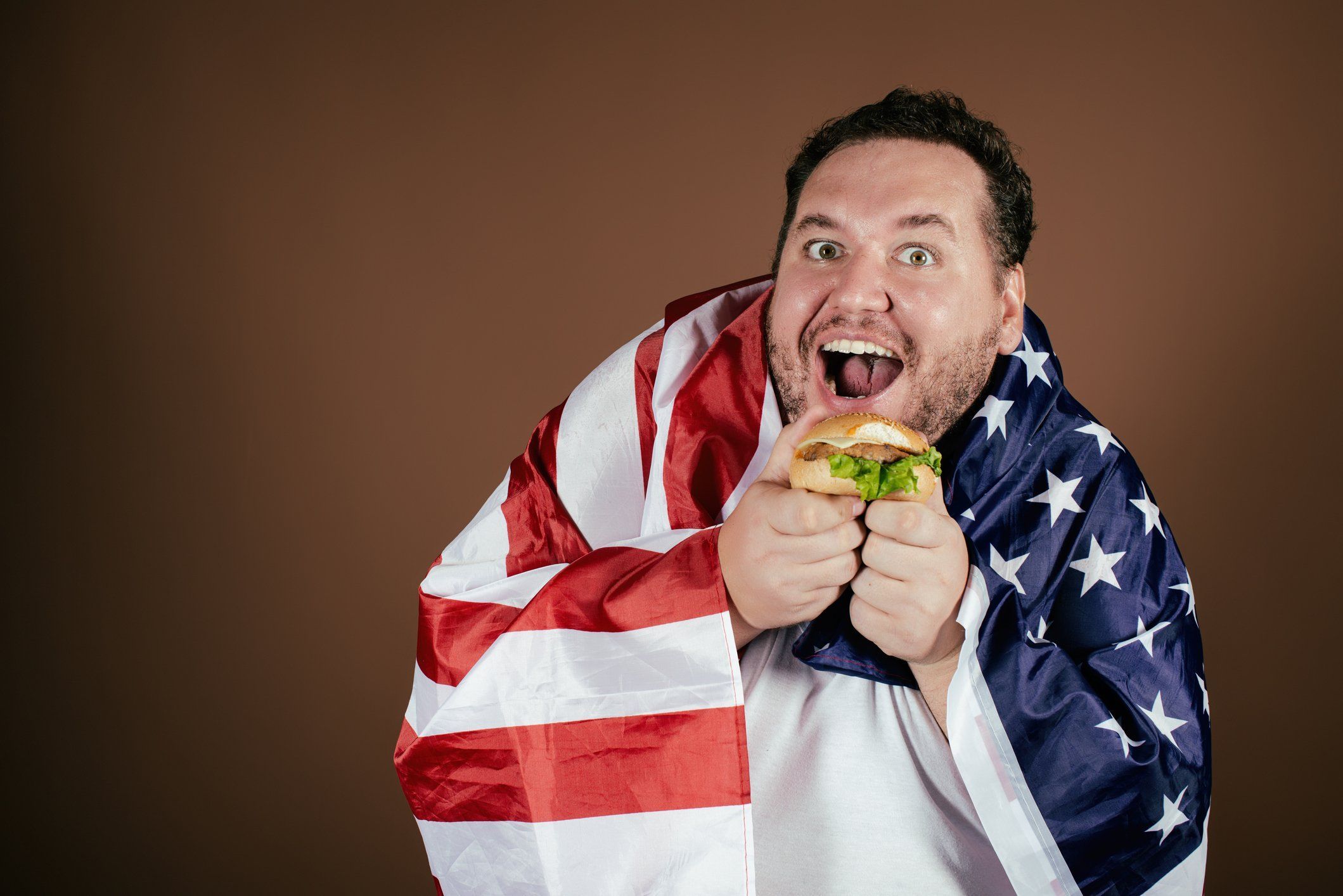
Poisoned for profit: The invisible hands controlling your children’s health


In the 1990s, the two largest food companies were R.J. Reynolds and Philip Morris — both of which also still make highly addictive cigarettes to this day.

So it’s no wonder that our food, like cigarettes, is also incredibly addictive.

“I mean, they took scientists to make our food addictive and have thousands of chemicals that they’ve co-opted the scientific agencies like the FDA and the USDA to let them in,” White House adviser Calley Means tells James Poulos on “Zero Hour.”

“Our food is literally weaponized to be addictive,” he adds.


“The science has become absolutely just a PR mechanism for industries that want us sick,” he continues, noting that 77% of Americans of military age are not able to join the military because of poor metabolic health.

But it’s not just food that’s making Americans sick.

“I think one of the big issues with health and metabolic health is that a lot of the things that threaten us, I think threaten us to an existential degree, are part of modern innovation. Like you look at artificial light, it’s actually really disruptive,” Means explains.

“It’s really disruptive to our hormone system,” he continues. “If you have a light on in a chicken coop, they lay two times more eggs. That’s just one input. You look at all the technology, being on our phone all day, the food that we have, all this disruption to our circadian rhythm, our chronic stress.”

These advancements in technology, Means says, have “led us to get detached from nature” and “detached from the awe and curiosity of our bodies.”

And these industries making us sick have zeroed in on children.

“The invisible hand of the incentives of these industries,” Means explains, “from tech that wants our kids addicted to their phones all day, to food which wants kids addicted, to the pharmaceutical industry that wants kids on drugs, there’s really, I think, an invisible hand that’s been against kids.”

“There’s millions and billions and hundreds of billions and trillions of dollars to be made from getting a kid sick, from getting them addicted, from keeping them in fear,” he continues. “This is something that the Trump administration, just in modern society today, we have to balance, because we do want to unleash responsible innovation, but we have lost touch of common sense.”

“And I think that’s kind of the message that Bobby Kennedy and Trump have really resonated on. It’s really a getting back to basics message,” he adds.

Want more from James Poulos?

To enjoy more of James's visionary commentary on politics, tech, ideas, and culture, subscribe to BlazeTV — the largest multi-platform network of voices who love America, defend the Constitution, and live the American dream.

Americans must step up to ‘Make America Healthy Again’ in 2025


We must all take responsibility for transforming the health care system if we want to make America healthy again.

Americans who believe Robert F. Kennedy Jr., the government, or anyone else can fix their health for them are setting themselves up for failure. Relying on outside solutions will only doom new White House initiatives, leading to the same fate as Michelle Obama’s “be the change” campaign against obesity — another well-intentioned but ineffective federal effort to improve the nation’s health.

The number of Americans genuinely committed to their health should be far higher.

Americans are understandably anxious about their health — and anyone who isn’t should be. Health care remains a key issue in every presidential election, for good reason. Despite ranking as the top global economy with nearly $5 trillion in health care expenditures, the United States ranks 49th in life expectancy. Are Americans getting any healthier? Hardly.

According to the Centers for Disease Control and Prevention, more than 40% of U.S. adults over age 20 are obese and nearly 74% are at least overweight. This means those at a healthy weight are now a minority. Meanwhile, obesity significantly increases the risk of chronic diseases, which already affect four in 10 Americans, with many suffering from at least two conditions.

Are more Americans simply giving up on their weight? Possibly. The corporate-driven “body positivity” movement, explored in my new book with conservative wellness writer Gina Bontempo, suggests a growing sense of personal apathy. But in “Fat and Unhappy,” we also examine a more likely explanation: Americans have been misled about nutrition for decades by public health authorities.

What appears to be widespread negligence in maintaining metabolic health is, in reality, the result of three consecutive generations following a deeply flawed dietary regimen.

The low-fat diet emerged in the 1960s as a supposed preventive measure against heart disease. The American Heart Association promoted polyunsaturated fats — such as those found in seed oils — over saturated fats from beef and salmon, following substantial financial contributions from food manufacturers seeking to industrialize the American diet. But the low-fat craze, still endorsed by public health officials today, has been disastrous. Americans replaced healthy fats with hyper-processed carbohydrates marketed as “healthy” alternatives, with devastating consequences.

Between 1909 and 1999, U.S. soybean oil consumption increased more than a thousand-fold, while grain consumption has risen nearly 30% since the 1970s. Today, 73% of the American food supply consists of ultra-processed products, primarily engineered by the tobacco industry for maximum addiction. Despite the clear consequences, these nutrient-deficient foods continue making Americans sick.

Meanwhile, pharmaceutical companies profit from the damage, developing generations of weight-loss drugs that sustain a cycle of dependence. Instead of addressing the root causes of poor health, the system incentivizes lifestyles that keep health care dollars flowing into Big Pharma’s pockets.

Any effort to make America healthy again must address the widespread presence of seed oils in the food supply, which the federal government still “recognize[s] as safe.” We need responsible regulation to reform an industry that thrives on public ignorance.

While this may be a key pillar of Robert F. Kennedy Jr.’s health campaign, real change depends on individual action. Whistleblowers may have exposed Big Tobacco’s role in lung cancer, but quitting smoking ultimately remained a personal decision. Americans are responsible for their own health, and by now, most people know the choices they should be making.

Unfortunately, recent polling doesn’t inspire much confidence that they’re willing to make them. A December YouGov survey found that roughly one in five Americans resolved to improve their physical health in the new year, whether by exercising more or eating better. These wellness goals are common post-holiday commitments, but the real problem is that many Americans treat every day like a holiday. U.S. sugar consumption averages 17 teaspoons per day, contributing to widespread obesity and disease.

The number of Americans genuinely committed to their health should be far higher. Even if Kennedy were to remove seed oils from the food supply tomorrow, national health wouldn’t improve significantly if people continue to drink sugary sodas daily and make poor dietary choices.

Too many Americans want a quick fix. A recent survey by the digital health care platform Tebra found that more than a quarter of respondents are turning to weight-loss drugs like Ozempic and Wegovy to meet their goals. As we discuss in “Fat and Unhappy: How ‘Body Positivity’ Is Killing Us (and How to Save Yourself),” these medications provide a long-term treatment for a problem that already has a clear solution. If Americans truly want to reclaim their health, they must adopt sustainable lifestyle changes, focusing on proper diet, sleep, and exercise.

The reality is no one person or government agency can make America healthy again. Americans will have to make themselves healthy again.