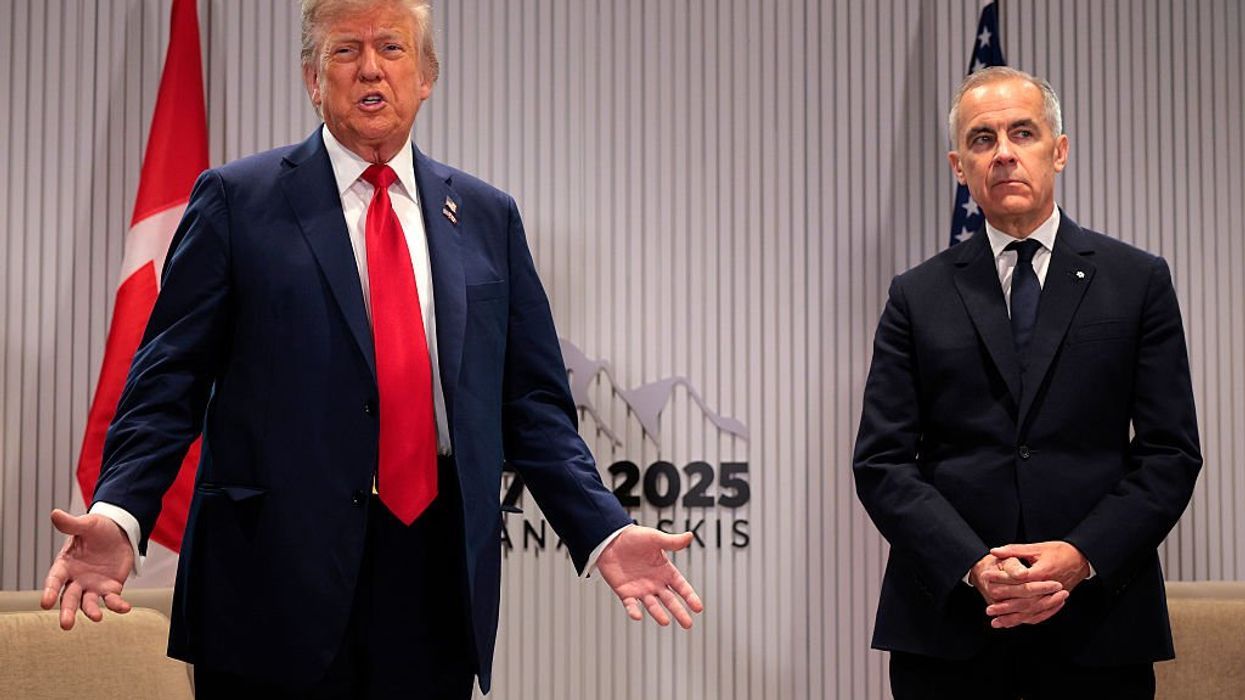
'Another capitulation': Canada caves to Trump, dropping retaliatory tariffs
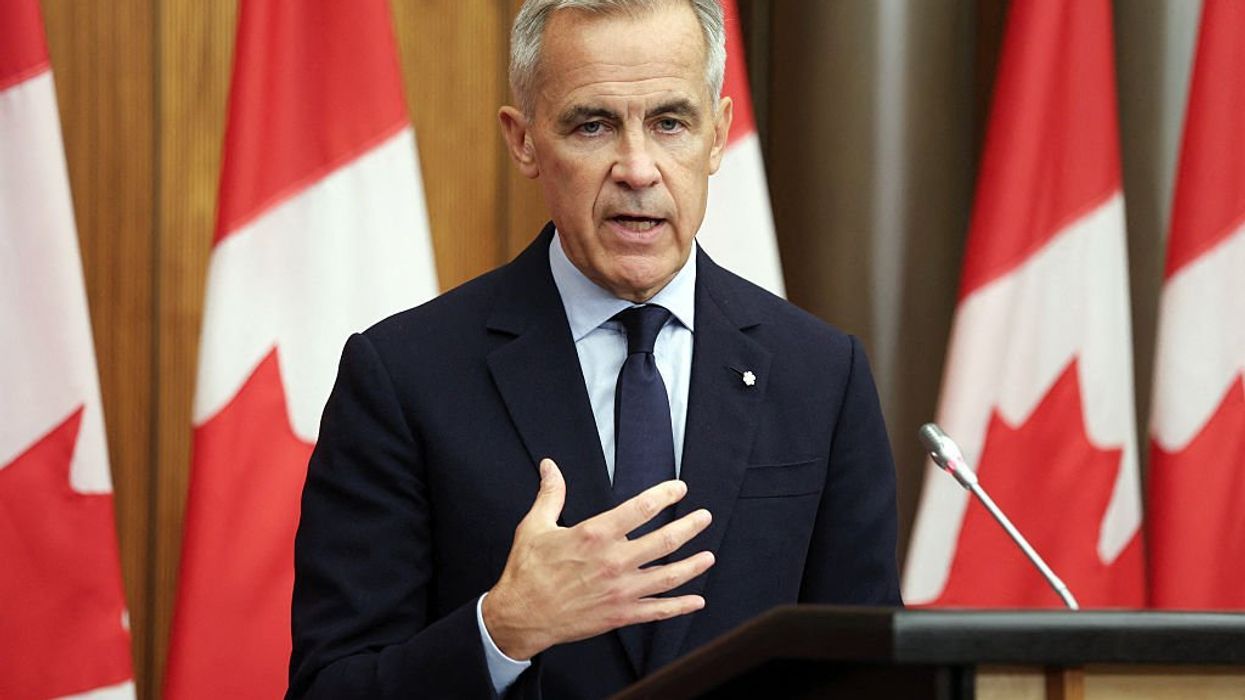


Months after scrapping its digital service tax in the face of threats from President Donald Trump, Canada's liberal government has caved once again.

This time, Canadian Prime Minister Mark Carney — who put on quite the show about defying the U.S. while campaigning for office earlier this year — announced on Friday that Canada is dropping retaliatory tariffs on a number of American products in hopes of improving both relations with the White House and outcomes in future trade talks with the United States.

Canada was one of the only countries in the world that retaliated against Trump's tariffs, imposing three rounds of retaliatory measures, reported the Globe and Mail. These measures included a 25% tariff on roughly $21 billion of American goods including orange juice and motorcycles and a 25% tariff on American cars.

Citing Trump's tariffs under the International Emergency Economic Powers Act, "substantial trade actions" on the Canadian lumber industry, Trump's reciprocal and sectoral tariffs, and recent deals struck between the U.S. and other countries, Carney noted that "the breadth and depth of the changes in U.S. trade policy have become more fully apparent."

"Under the new U.S. approach, countries must now 'buy access to the world’s largest economy' through tariffs, investments, unilateral trade liberalization, and policy changes in their home markets," said the prime minister.

Carney attempted to put a positive spin on the situation, stating that as a result of America's reaffirmation that Canadian exports to the U.S. that are compliant with the Canada-United States-Mexico Agreement won't be subject to IEEPA tariffs, the "actual U.S. average tariff rate on Canadian goods is 5.6% and remains the lowest among all its trading partners, and more than 85% of Canada-U.S. trade is now tariff-free."

RELATED: Trump's policies are stifling transgender activists in Canada, and there's nothing they can do about it

STEFAN ROUSSEAU/POOL/AFP via Getty Images

In the interest of preserving what Carney framed as "the best trade deal with the United States," the prime minister said that effective Sept. 1, Canada will remove all of its tariffs on American good specifically covered under the CUSMA.

Canada, like the U.S., will, however, retain tariffs on steel, aluminum, and automobiles.

'He is showing extraordinary weakness.'

"The United States is the world’s largest, most dynamic economy, and Canada is one of its most important commercial partners," said Carney.

"Canada is the second-largest foreign investor in the U.S., and many of our companies are essential to the complex supply chains that drive American competitiveness," continued the prime minister. "Canada is embarking on a transformation of our military and security capabilities to defend Canadians — investments that will create multiple opportunities for new defense and security partnerships."

Trump told reporters in the Oval Office on Friday that he had a "very good call with Prime Minister Carney of Canada yesterday morning," that "we want to be very good to Canada," and that the removal of the tariffs was "nice."

Canadian Conservative Party Leader Pierre Poilievre mocked Carney, calling the tariff removal "another capitulation and climbdown by Mark Carney," reported Canadian state media.

"Today, he removed even almost all the tariffs on the United States and got none lifted for Canada," said Poilievre. "He is showing extraordinary weakness."

Like Blaze News? Bypass the censors, sign up for our newsletters, and get stories like this direct to your inbox. Sign up here!
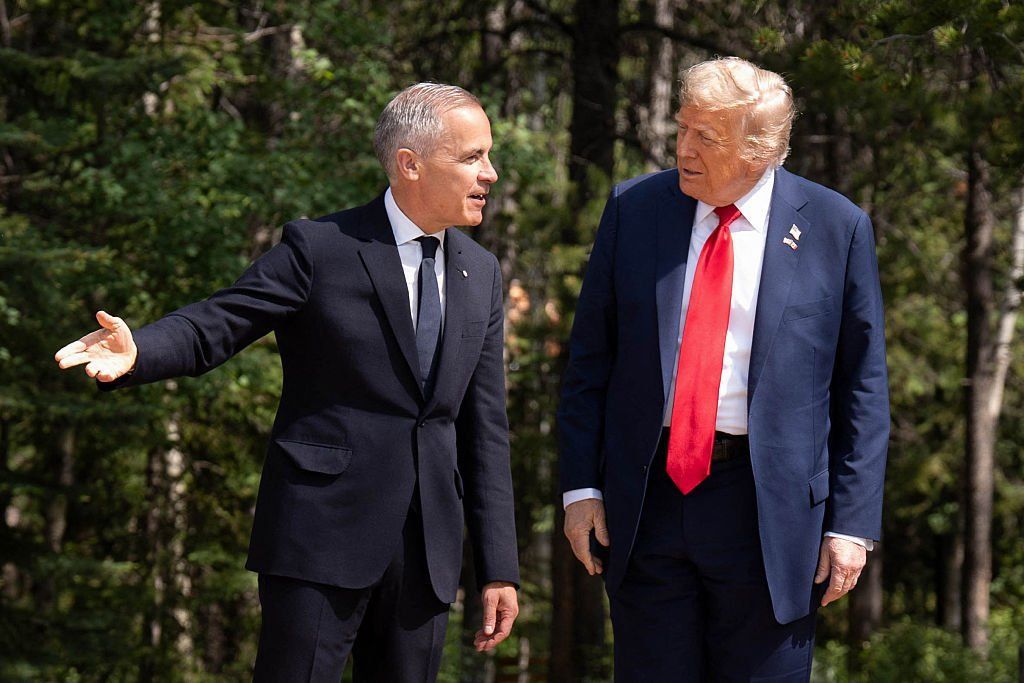
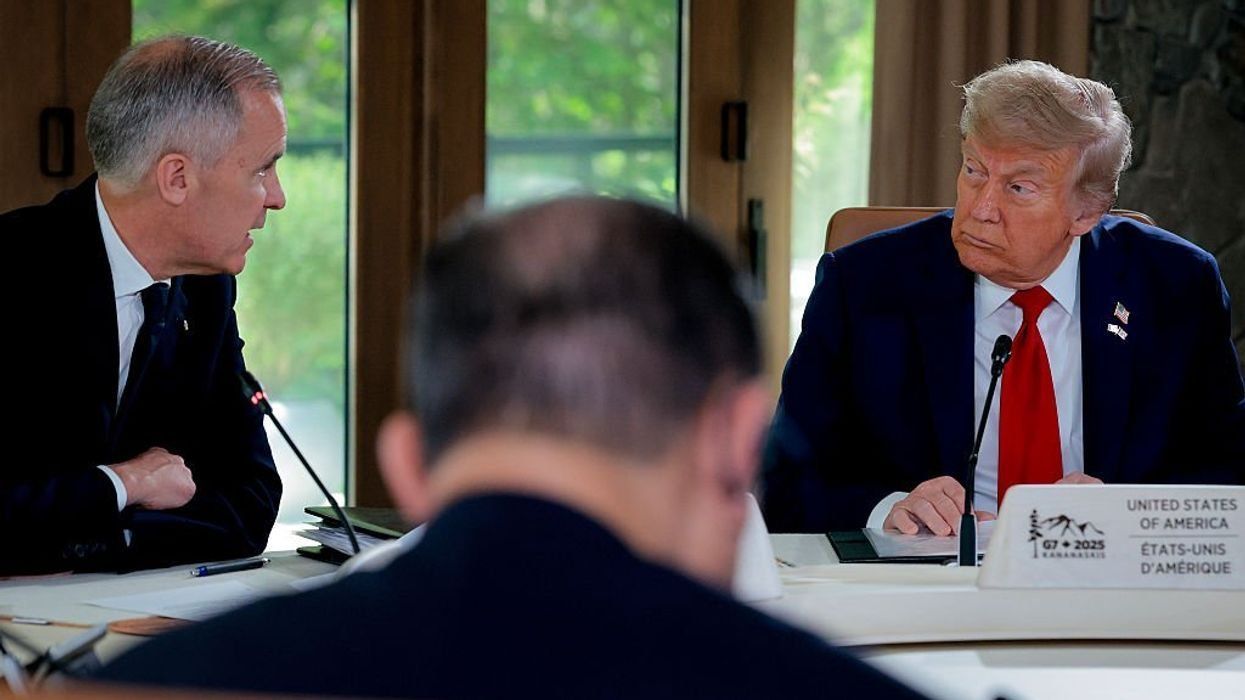
'51st state': Trump teases annexation again after Canada quickly caves on major tax


President Donald Trump threatened U.S.-Canada trade talks on Friday over the northern nation's digital services tax, which required foreign and domestic large businesses such as Netflix, Amazon.com's Prime Video, and Spotify to pay a levy of 3% on revenue earned from offering online services to users in Canada.

"We have just been informed that Canada, a very difficult Country to TRADE with, including the fact that they have charged our Farmers as much as 400% Tariffs, for years, on Dairy Products, has just announced that they are putting a Digital Services Tax on our American Technology Companies, which is a direct and blatant attack on our Country," Trump noted in a Truth Social post.

"They are obviously copying the European Union, which has done the same thing, and is currently under discussion with us, also," continued the president. "Based on this egregious Tax, we are hereby terminating ALL discussions on Trade with Canada, effective immediately."

'Canada is a very tough country to deal with.'

Canada — the top buyer of American goods, importing $349.4 billion last year, and 75.9% of whose total exports went to the U.S. — made abundantly clear that it wasn't too attached to the tax, which the Parliamentary Budget Office estimated would increase federal government revenues by over $5.2 billion over five years.

Within hours of Trump's post, the Department of Finance Canada announced that it was rescinding the digital services tax to advance broader trade negotiations with the United States.

Canadian Finance Minister François-Philippe Champagne noted that "rescinding the DST will allow the negotiations to make vital progress and reinforce our work to create jobs and build prosperity for all Canadians."

U.S. Commerce Secretary Howard Lutnick thanked Canada on Monday for removing the tax, noting that it was "intended to stifle American innovation and would have been a deal breaker for any trade deal with America."

RELATED: Canada's solution to reliance on US? Increasing commitments in Europe

Chip Somodevilla/Getty Images

"In our negotiations on a new economic and security relationship between Canada and the United States, Canada's new government will always be guided by the overall contribution of any possible agreement to the best interests of Canadian workers and businesses," said Canadian Prime Minister Mark Carney. "Today’s announcement will support a resumption of negotiations toward the July 21, 2025, timeline set out at this month’s G7 Leaders’ Summit in Kananaskis."

The Canadian Liberal Party under former Prime Minister Justin Trudeau first promised the tax ahead of the 2019 federal election, saying it would "make sure that multinational tech giants pay corporate tax on the revenue they generate in Canada," even though critics indicated that Canadian consumers would end up paying the taxes.

The Digital Services Tax Act went into force on June 28, 2024, prompting condemnation stateside as well as an official complaint under the Canada-U.S.-Mexico Agreement from former U.S. Trade Representative Katherine Tai.

John Dickerman, vice president of the Washington, D.C.-based Business Council of Canada, suggested to Canadian state media days after Trump's re-election that the tax was likely doomed.

"The first Trump administration ... was very clear on digital services taxes. They believed that digital services taxes were a very clear indication that a country was specifically targeting the U.S. and targeting U.S. companies. It will be a 'with us and against us' scenario," said Dickerman. "I think there will be very little room for negotiation on DST."

Trump leaned on Canada to axe the tax just in the nick of time. The first payments were due on Monday and retroactive to 2022, meaning a number of American corporations were on the hook for billions of dollars.

The Canadian government indicated that Carney and Trump have agreed to resume negotiations "with a view towards agreeing on a deal by July 21, 2025."

"Canada is a very tough country to deal with, I will say that," Trump told Fox News' "Sunday Morning Futures." "Hopefully we'll be fine with Canada. I love Canada. Frankly, Canada should be the 51st state."

Blaze News has reached out to the White House for comment.

Like Blaze News? Bypass the censors, sign up for our newsletters, and get stories like this direct to your inbox. Sign up here!

Trump touches down in Canada for G7 summit. Here's what's on the menu.


The Group of Seven is an informal bloc of first-world nations consisting of Canada, France, Germany, Italy, Japan, the United Kingdom, and the U.S. that has met since the 1970s to coordinate on matters of international security, human rights, economic governance, and technological matters.

Amid rising military tensions between Israel and Iran, unresolved tensions between Ukraine and Russia, and ongoing extranational vexation over his tariff strategy, President Donald Trump touched down in Canada on Sunday for this year's summit in Kananaskis, an unincorporated Alberta community in the Rocky Mountains.

Leaders from various non-G7 member nations will also be present at the summit, including leaders from Australia, Brazil, India, Mexico, and Ukraine.

A senior U.S. official told Blaze News that Canada "worked with G7 colleagues to craft short, action-oriented leaders' statements on key issues of common interest. Working discussions will, but not limited to, cover trade and the global economy, critical minerals, migrant and drug smuggling, wildfires, international security, artificial intelligence, and energy security."

These topics correspond to the priorities for the summit identified by Canadian Prime Minister Mark Carney's office earlier this month. The prime minister's office noted that other discussions will include a "just and lasting peace for Ukraine and other areas of conflict around the world."

"The president is eager to continue to pursue his goals in all of these areas, including making America's trade relationships fair and reciprocal, unlocking new markets for American energy exports, and positioning the U.S. to be the world leader and international partner of choice on AI technologies," the senior American official told Blaze News.

The official added, "We appreciate Canada’s cooperation in the planning of this summit and their choice of a gorgeous location in Kananaskis for these important conversations."

RELATED: Listen up, America: Everything you've been told about Canada is a lie

Photo by BRENDAN SMIALOWSKI/AFP via Getty Images

Officials from the host country, which Trump has slapped with numerous tariffs in recent months and repeatedly suggested should become the 51st state in the union, appear keen to ensure that the president has a good time to avoid a repeat of the kind of breakdown of goodwill that followed the 2018 G7 summit in Quebec.

Trump left that summit early after reportedly suggesting to the late Prime Minister Shinzo Abe that an injection of 25 million Mexicans into Japan would lose Abe his next election and telling French President Emmanuel Macron during a conversation on Iran and terrorism that Macron had a special familiarity because "all the terrorists are in Paris." Trump then remotely torpedoed a joint G7 statement on account of what he claimed were "false statements" from former Canadian Prime Minister Justin Trudeau, who he emphasized was "weak."

'Press reports stress that the participating countries are trying to bend over backward to avoid antagonizing President Trump.'

"The backdrop to this G7 are the tensions between the U.S. and the other G7 members," Christopher Layne, professor of international affairs at the Bush School of Government and Public Service at Texas A&M University, told Blaze News. "The leading causes of division are Ukraine, President Trump's tariffs, and the administration's apparent break from the institutions and norms upon which the post-1945 liberal rules-based international order rested."

Layne noted that the G7s Trump attended in his first term were "openly acrimonious."

"In an attempt to avert a rupture this time, Canada, the host country, determined that there will be no joint communique issued when the meeting ends," continued Layne. "Press reports stress that the participating countries are trying to bend over backward to avoid antagonizing President Trump. In this atmosphere, it is unlikely that the meeting will produce any major breakthroughs, though the U.S. will seek progress on several issues, including trade/tariffs, drug smuggling, and migration flows."

Carney — the self-identified "European" World Economic Forum regular who all but guaranteed British economic decline while governor of the Bank of England, then replaced Justin Trudeau to become Canadian prime minister in March — met Sunday with British Prime Minister Keir Starmer in Ottawa and agreed to establish an economic and trade working group and to strengthen military cooperation both bilaterally and through NATO.

RELATED: The Great Reset just got a North American enforcer in Ottawa

Trump at the G7 in Charlevoix, Canada, in 2018. Photo by Jesco Denzel /Bundesregierung via Getty Images

Carney then headed west for his one-on-one meeting Monday morning with Trump ahead of the official start of the summit.

A day after Secretary of State Marco Rubio and Anita Anand, the Canadian minister of foreign affairs, affirmed the "important relationship" between their respective nations, Carney welcomed Trump to the summit, wishing both the president and the U.S. Army happy belated birthdays and emphasizing the importance of American leadership at the G7, which is apparently celebrating its 50th birthday.

'I'm sure we can work something out.'

Trump once again bemoaned the removal of Russia from the G8 following its invasion of Crimea, noting that talks about Russia would be easier with it representatives at the table.

"The G7 used to be the G8. Barack Obama and a person named Trudeau didn't want to have Russia in," said Trump. "And I would say that that was a mistake, because I think you wouldn't have a war right now if you had Russia in, and you wouldn't have a war right now if Trump were president four years ago."

— (@)

Concerning the immediate talks ahead, Trump told reporters, "Our primary focus will be trade, and trade with Canada."

"I'm sure we can work something out," said the president, emphasizing that he's a "tariff person," while Carney "has a more complex idea but also very good."

Carney's office did not immediately respond to Blaze News' request for comment.

Professor Layne suggested to Blaze News that "even though this is not formally a NATO conference, President Trump is certain to push for increased defense spending from U.S. allies in East Asia and Europe."

"President Trump approaches multilateral fora with extreme skepticism," Rachel Rizzo, a senior fellow at the Atlantic Council's Europe Center, told CNN. "He does not view these organizations as ways to deepen and expand American power and influence. He sees these fora as constraining America, and I think that’s something to remember as he goes into this. He is skeptical towards the G7’s consensus-driven approach."

Like Blaze News? Bypass the censors, sign up for our newsletters, and get stories like this direct to your inbox. Sign up here!