Another young woman brutally murdered by a repeat offender — who should have been behind bars


The horrifying case of Ukrainian refugee Iryna Zarutska — in which the young woman was brutally stabbed to death by a career criminal on a train in Charlotte, North Carolina — is unfortunately just one of many.

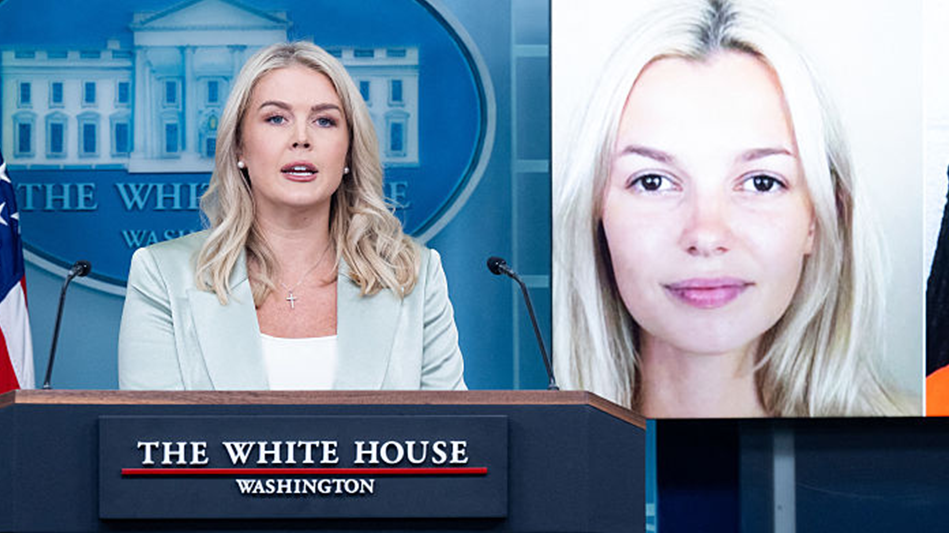
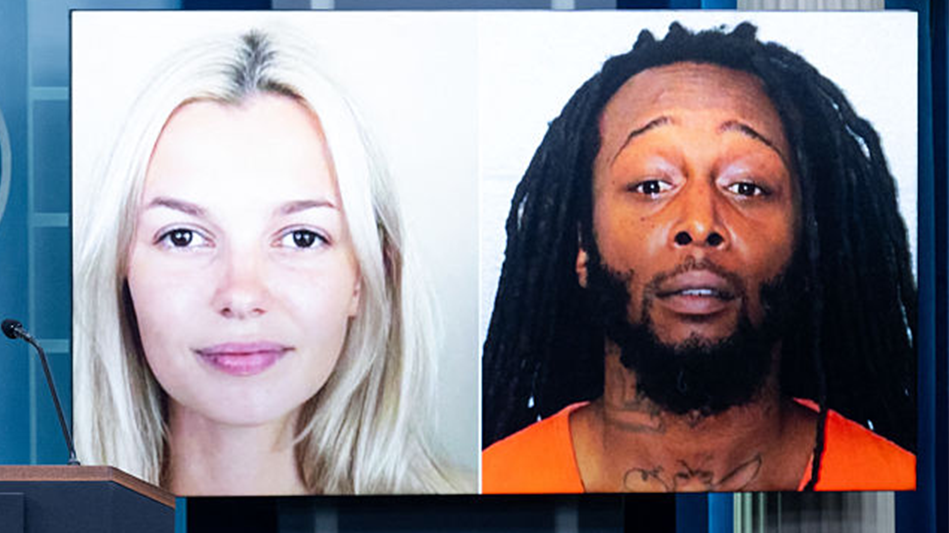
“I’d like to tell you about another woman who I don’t think got the same coverage, but should have — Logan Federico. She was brutally murdered, shot to death back in May in South Carolina,” BlazeTV host Sara Gonzales reports.

“This was a repeat offender who allegedly broke into the house that she was in, dragged her out of bed, and murdered her in cold blood,” she adds.

“We’re talking about a guy, Alexander Dickey, who was arrested 39 times, okay, in 10 years. You know, 25 felonies. And I keep saying this. I mean, he was committing more crimes on average a year than most people do in a lifetime,” Stephen Federico, Logan’s father, tells Gonzales.


“But for him to only spend a little over 600 days in prison in 10 years — he’s only 30 years old. He started his crime spree when he was 15,” he explains.

And while there’s no getting his daughter back, Federico does believe there’s a way to prevent more murders like hers.

“I think you kind of have to reboot. I think you have to reboot the DA, the solicitor process altogether, and who’s cutting deals, who’s qualified to cut the deals. That includes judges. I think we need to reboot it and start from scratch,” he says.

“I’m sure there’s some really good magistrate judges out there. I’m sure there really are. But I think we have to start from the beginning,” he adds.

Want more from Sara Gonzales?

To enjoy more of Sara's no-holds-barred take to news and culture, subscribe to BlazeTV — the largest multi-platform network of voices who love America, defend the Constitution, and live the American dream.

Second chances kill innocents


Republicans might finally take me seriously after years of warning: America suffers not from mass incarceration, but from mass under-incarceration. The system needs tougher sentences, not softer ones.

The brutal murder of 23-year-old Ukrainian refugee Iryna Zarutska, allegedly at the hands of career criminal Decarlos Brown Jr. on a Charlotte commuter train, didn’t reveal anything new. It shocked the nation precisely because it put on camera what has become routine in our cities since the bipartisan “criminal justice reform” wave dismantled Reagan-era tough-on-crime policies.

Legislators will have a choice when they reconvene: Pass strong reforms like these or watch more innocent people die.

For every man like Brown who slipped through the cracks, at least 10 more walk free when they should be locked up for life.

Brown had been arrested 14 times since 2007. His record included assault, felony firearms possession, robbery, and larceny. He didn’t see the inside of a prison until 2014, when an armed robbery conviction earned him a mere four years. He racked up more arrests after his release in 2020, but neither prison nor psychiatric commitment followed. The justice system looked the other way.

The result was predictable. Brown’s obvious mental instability made him even more dangerous than an ordinary criminal. Yet over the last 15 years, Republicans and Democrats alike embraced “reform” that made second chances for the violent and insane a top priority. They weakened sentencing, gutted mandatory minimums, downgraded juvenile crimes, eased up on drugs and vagrancy, and abandoned broken-windows policing. Hard-won gains against crime and homelessness evaporated.

The final insult: Brown was last released on cashless bail by North Carolina Magistrate Judge Teresa Stokes, allegedly affiliated with a pro-criminal “second chances” group. But violent offenders don’t just get second chances. They get third, fourth, and 15th chances. Most criminals never even face charges. Prosecutors downgrade cases. Convicts skate on early release. The cycle spins on.

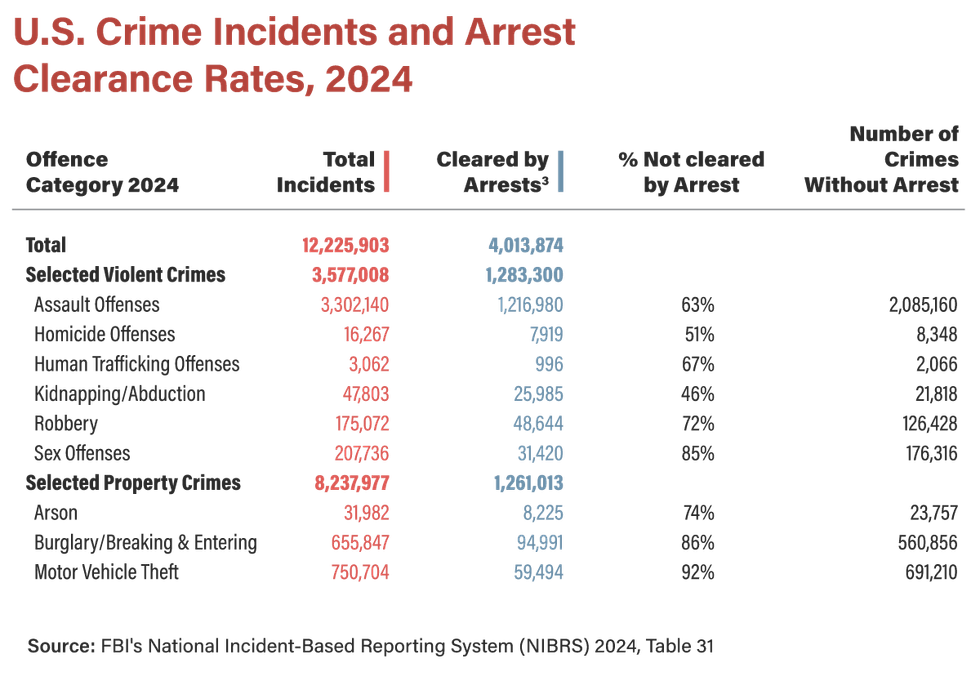
Look at the numbers. In 2024, the FBI’s incident-based reporting system logged over 12.2 million crimes. Strip away drug and gun cases, and the picture remains grim: 2.4 million violent crimes with no arrest. Another 1.25 million serious property crimes — arson, burglary, motor vehicle theft — with no arrest. Every year, more than a million offenders escape justice. Meanwhile, the nation’s prison and jail population sits at roughly 1.9 million.

Even when police make arrests, punishment rarely follows. In 2021, only 15,604 people went to prison for robbery despite 121,000 reported incidents. Just 4,894 went away for car theft out of 550,000 cases. Even homicide convictions lag far behind — just 6,081 murderers entered prison against more than 15,000 killings.

This isn’t a statistical fluke. It’s a system that fails to punish violent crime year after year.

RELATED: Iryna Zarutska’s name should shame the woke

Screenshot/Charlotte Transit Authority

So what needs to change? Here’s a checklist every state legislature should adopt in the next session:

  1. Ban public encampments on streets, sidewalks, and public property; allow lawsuits against localities that fail to enforce.
  2. Elevate porch piracy penalties, following Florida’s lead.
  3. Impose stiff punishments for organized retail theft and flash mobs.
  4. Tighten “truth-in-sentencing” laws to ensure violent offenders serve their full terms.
  5. Pass anti-gang statutes that cross county lines, fund prosecutions, and mandate enhanced sentences for gang-related crimes.
  6. Let prosecutors, not judges, decide whether to try violent juveniles as adults.
  7. Set mandatory minimums for carjackings, especially for repeat offenders.
  8. Impose harsh sentences on felons caught with firearms, and harsher still when they use them.
  9. Require parole violators to finish their sentences.
  10. Hold repeat offenders without bond; revoke pretrial release when new crimes are committed.
  11. Fund prosecutors’ offices to clear the backlog of violent felony cases.
  12. Strengthen “three strikes” laws to eliminate loopholes.
  13. Apply the death penalty to fentanyl traffickers.
  14. Mandate quarterly public reporting of judges’ sentencing records in a searchable database.
  15. Criminalize squatting and streamline removal.

Legislators will have a choice when they reconvene: Pass strong reforms like these or watch more innocent people die.

Social media outrage won’t fix this crisis. Neither will empty calls for “accountability.” As Iryna’s grieving family warned, “This could have been anyone riding the light rail that night.”

That’s the truth — and unless lawmakers act, it will be the truth again tomorrow.

If mental health experts can’t identify murderers, what’s the backup plan?


A profound mental health crisis lies at the heart of violence in America. Decarlos Brown Jr., the suspect in the brutal stabbing death of the Ukrainian woman Iryna Zarutska in Charlotte, North Carolina, was in a mental hospital earlier this year and was diagnosed with schizophrenia. But doctors wouldn’t have released him if they had viewed him as a danger to himself or others.

Similarly, the killers at Minneapolis’ Annunciation Catholic School and Nashville’s Covenant School both struggled with mental illness. Nearly all mass shooters also battled suicidal thoughts.

Our mental health system cannot serve as the last line of defense — too many mistakes slip through.

“We will never arrest our way out of issues such as homelessness and mental health,” Charlotte Mayor Vi Lyles warned after the stabbing death. “Mental health disease is just that — a disease. It needs to be treated with the same compassion.” After the Minneapolis attack, House Speaker Mike Johnson underscored the issue: “The problem is the human heart. It’s mental health. There are things that we can do.”

Yet despite the fact that more than half of mass public shooters over the past 25 years were already under the care of mental health professionals, not a single one was identified as a danger to themselves or others. An entire body of academic research now explores why mental health experts so often fail to predict these attacks.

What’s the plan?

When professionals cannot identify threats before atrocities are committed, society must ask: What is the backup plan?

The Minneapolis school murderer admitted: “I am severely depressed and have been suicidal for years.” After the Nashville school shooting, police concluded the killer was “highly depressed and highly suicidal throughout her life.” Yet even with regular psychiatric care, experts found no signs of homicidal or suicidal intent.

The 2022 Buffalo supermarket killer showed the same pattern. In June 2021, when asked about his future plans, he answered that he wanted to attend summer school, murder people there, and then commit suicide. Alarmed, his teacher sent him for evaluation by two mental health professionals. He told them it was a joke, and they let him go.

Later he admitted: “I got out of it because I stuck with the story that I was getting out of class, and I just stupidly wrote that down. It was not a joke; I wrote that down because that’s what I was planning to do.”

Many well-known mass killers saw psychiatrists before their attacks. U.S. Army Maj. Nidal Malik Hasan, who murdered 13 people at Fort Hood in 2009, was himself an Army psychiatrist. Elliot Rodger, the UC Santa Barbara "incel" shooter, had received years of high-level counseling, but like the Buffalo killer, Rodger simply knew not to reveal his true intentions. The Army psychiatrist who last saw Ivan Lopez (the second Fort Hood shooter) concluded there was no “sign of likely violence, either to himself or to others.”

Aurora movie theater shooter James Holmes’ psychiatrist did warn University of Colorado officials about Holmes’ violent fantasies shortly before his attack, but even she dismissed the threat as insufficient for custody. And both a court-appointed psychologist and a hospital psychiatrist found Virginia Tech shooter Seung-Hui Cho posed no danger to himself or others.

Psychiatrists have every incentive to get these diagnoses right. Beyond professional pride and the desire to help, they face legal obligations to report threats. Families of victims have even sued psychiatrists for failing to recommend confinement. Despite this, psychiatrists consistently underestimate the danger.

The problem runs deep enough to generate a whole academic literature. Some experts suggest psychiatrists try to prove their fearlessness or become desensitized to risk. Additional training in unusual cases may help, but predicting such rare outcomes will always remain extremely difficult.

Hindsight makes the warning signs look obvious. Before the attack, even to experts, they rarely do. And while addressing mental illness, we should not stigmatize it. Mentally ill people are far more likely to become victims of violence than perpetrators. Only a tiny fraction ever commit murder.

Take schizophrenia: More than 3.5 million Americans live with the disorder, yet only one schizophrenic has committed a mass attack since 2019. That makes the odds of such a crime less than 1 in 3.5 million — extremely rare.

Victims left defenseless

No one wants dangerous individuals to access weapons. Are we going to disarm all mentally ill people, even though they themselves are at increased risk of violent crime? One woman we know saw her husband murdered in front of her by her stalker. She was very depressed but feared that in seeking mental help she would be denied the right to own a gun (which she needed to protect herself).

Another factor that makes these attacks difficult to stop is that they are planned long in advance, with six months being about the shortest. The Sandy Hook massacre was planned for over two and a half years, allowing the perpetrator plenty of time to obtain weapons.

RELATED: If ‘words are violence,’ why won’t the left own theirs?

Photo by wildpixel via Getty Images

These killers, like the recent attacker in Minneapolis, often state outright in their manifestos and diaries that they target “gun-free zones.” They may be crazy, but they aren’t stupid. They expect to die, but they want attention when they do. They know that the higher the body count, the more media coverage they’ll receive. That’s why they choose places where no one can fight back.

Weapons bans won’t work

The attack in Charlotte happened in a gun-free zone. The woman had no chance to defend herself when the attacker struck from behind, and no one on the train intervened. Bystanders may have hesitated out of fear — after all, the killer was a large man armed with a knife, even though knives are also banned on public transportation. Someone with a firearm possibly could have stopped the assault, just as a Marine veteran in July did in a Michigan Walmart, where at gunpoint he forced a knife-wielding attacker to drop his weapon. Others who tried to stop the attacker without a gun were stabbed.

Our mental health system cannot serve as the last line of defense — too many mistakes slip through. If mental health professionals can’t reliably stop these attackers before they strike, we must ask: What’s the backup plan? Leaving targets unprotected isn’t the best option.

Editor’s note: This article was originally published by RealClearPolitics and made available via RealClearWire.

Could passengers have SAVED Iryna Zarutska?


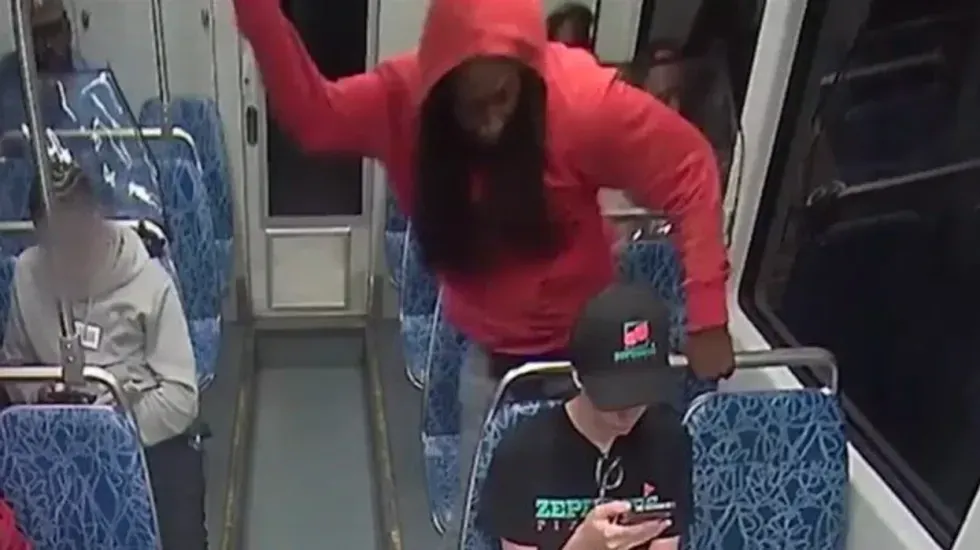
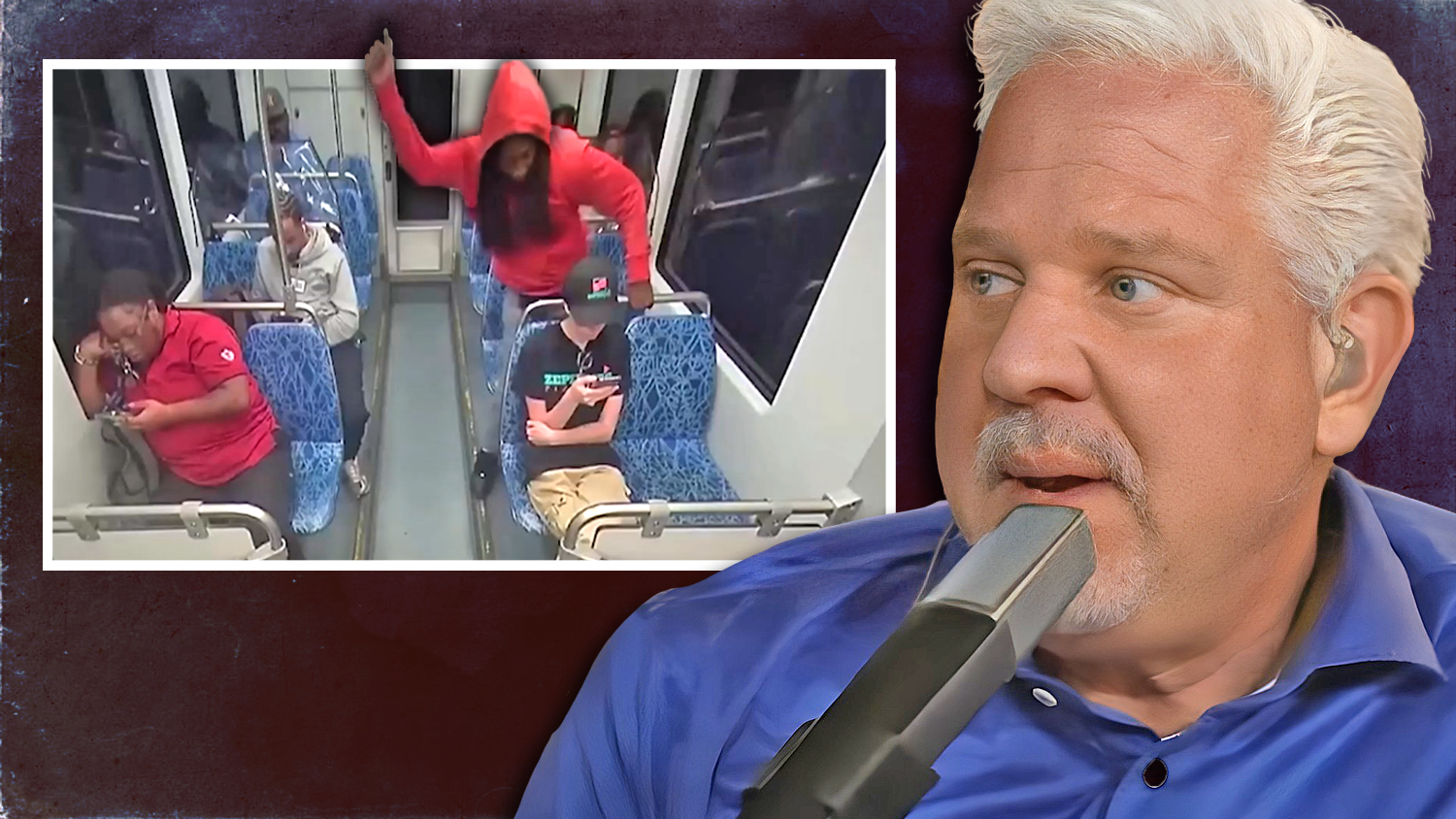
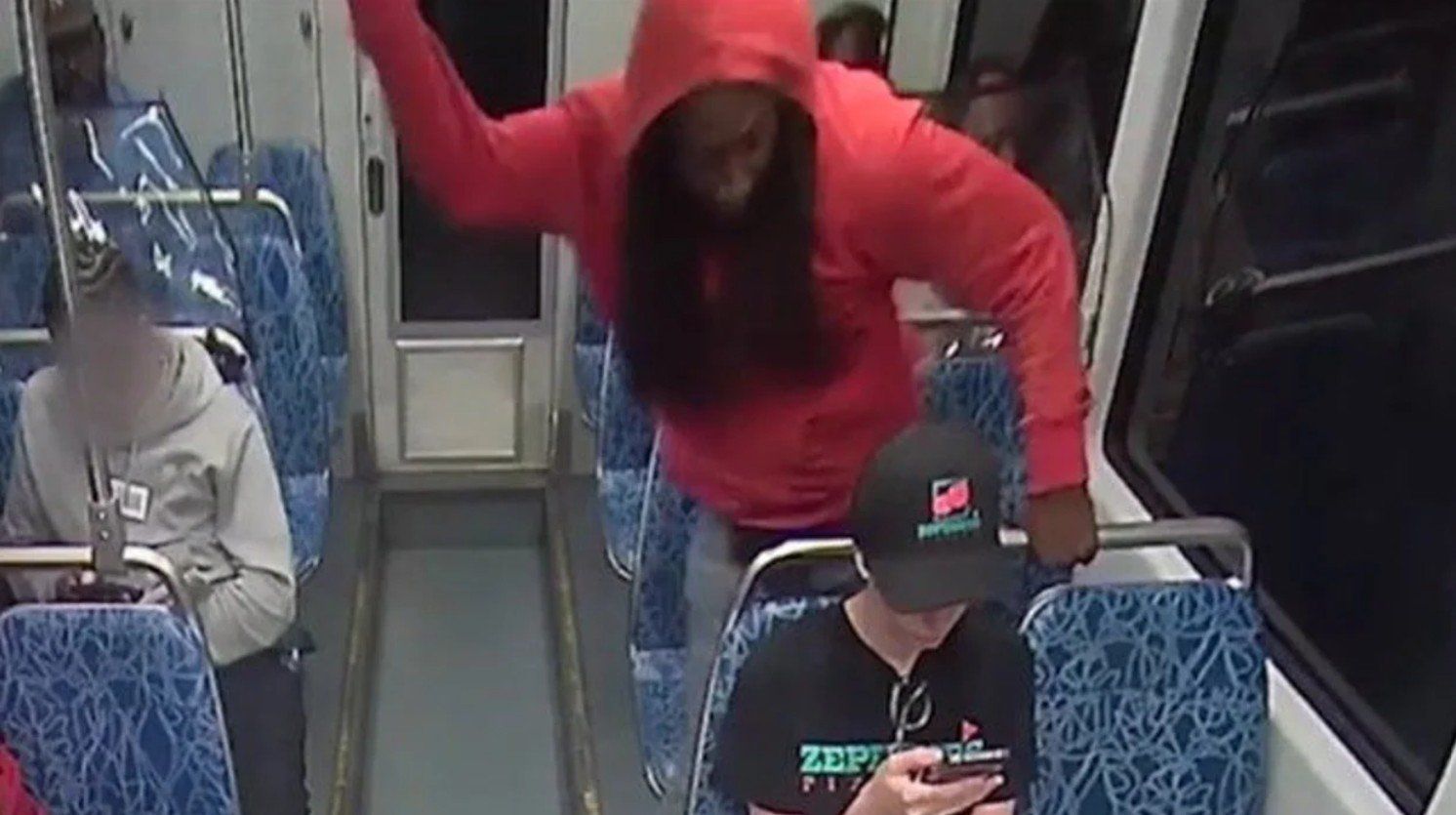
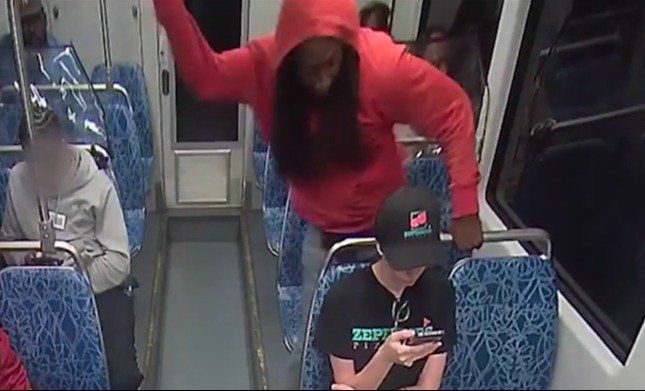
Surveillance footage of the murder of Ukrainian refugee Iryna Zarutska in Charlotte, NC, reveals that the other passengers on the train didn’t help her until some time had passed — and Blaze media co-founder Glenn Beck doesn’t believe it’s his place to judge.

“I’m torn about how I feel about the people on the train because my first instinct is, they did nothing. They did nothing,” Glenn says.

“What would I have done? What would I want my wife to do in that situation?” Glenn asks.

However, after Glenn and BlazeTV host Stu Burguiere imagine their wives in the same situation, they realize it’s not their place to judge.


“It’s tough to put yourself in that situation. It’s very easy to watch a video on the internet and talk about your heroism. Like, everybody can do that very easily on Twitter,” Stu says.

“When you’re in a vehicle that doesn’t have an exit with a guy who just murdered someone in front of you, has dripping blood off of a knife that’s standing 10 feet away from you, 15 feet away from you, there is probably a different standard there that we should all kind of consider,” he continues.

“When I’m thinking of my wife, my advice to my wife would not be to jump into the middle of that situation at all costs,” Stu says.

While Glenn agrees, he does hope he himself would have taken action.

“I would hope that I would have gotten up and at least tried to help her, you know, help her up off the floor, at least be there with her as she’s seeing her life, you know, spill out in under a minute,” Glenn says.

“And that’s the other thing we have to keep in mind. This all happened so rapidly,” he adds. “A minute will seem like a very long period of time in that situation, but it’s a very short period of time in real life.”

It’s time to call Charlie’s and Iryna’s murders what they are: DEMONIC


The unprovoked murder of Ukrainian refugee Iryna Zarutska and the horrific attack on Annunciation Catholic School that killed two children were still bleeding wounds when the news of Charlie Kirk’s death hit like a tidal wave. The martyring of our fellow conservative warrior and brother in Christ was like acid poured into those gashes.

We’re not just grieving — we’re angry and salivating for justice.

But as we move toward worldly justice, like sentences for the criminals and policy reforms, we need to keep one thing in mind.

“You cannot address spiritual issues and solve spiritual problems with secular, worldly solutions,” says Rick Burgess, BlazeTV host of “Strange Encounters.”

The gruesome attacks on innocent people that have dominated the news of late are at their core spiritual issues, which means they must be fought with spiritual weapons.

That doesn’t mean that worldly justice isn’t important; it just means that the harshest of consequences for the alleged murderers, enhanced security at political events, and regulations for online extremism won’t do a thing to counter the demonic forces at the root of these heinous attacks.

But what does it look like for Christians to fight back spiritually against the spreading evil in our nation?

First, it demands we understand the difference between demonic possession and mental illness.

“The brain is part of our body. Just like you would have problems with your heart, your kidneys, sometimes our brain is sick. Sometimes it has issues. We see this in Alzheimer’s and dementia,” Rick says.

But people our culture euphemistically dubs “mentally ill” who are clearly out to “kill, steal, and destroy” are in a category of their own. Their brains aren’t sick; their spirits are sick with demonic possession.

Dacarlos Brown Jr., who’s been officially charged with murdering Iryna Zarutska, “is possessed of a demon,” Rick says, “and we can put him in jail as many times as we want to. ... But until the demonic possession of this man is addressed in the holy name of Jesus, he is always going to be dangerous.”

Tyler Robinson, Charlie Kirk’s alleged assassin, as well as Robin (formerly Robert) Westman, the transgender-identifying biological male who shot and killed the two children at Annunciation Catholic School, are in the same category as Brown, Rick says. They’re dealing not primarily with mental illness and political radicalization but with demons.

Like vultures to a rotting carcass, demons will go where sin flourishes, and we have fostered a culture of death in this country, Rick explains. Whether it’s violent video games, abortion, or the transgender movement that butchers healthy bodies and inverts God’s design, we have forgotten “how valuable human life is.”

These atrocities that society has whitewashed or even called good are equivalent to “handing out an invitation for demons to come into our lives,” he says. The horrific violence that took Charlie Kirk, Iryna Zarutska, and the Catholic children’s lives is evidence of this.

“Until we stop the things that keep giving them an invitation, the darkness will only grow,” Rick warns.

This truth is something “we’ve got to apply to today’s headlines.”

But secular society that’s heavily driving our culture of death isn’t just going to wake up suddenly and reverse course. Christians must be willing to wade into the darkness with the truth of the gospel.

“Those of us that are redeemed, we’re going to have to stop being so apathetic. The only hope for this society is the church — the salt and the light,” Rick says, “but sitting around doing our programs and turning the church into a spiritual social club, that’s not going to battle.”

“We’re going to have to get back to where we take the holiness of God serious. We’re going to have to get back to where we take Jesus Christ’s commandment to go and teach the world all that He’s commanded — to go be disciples and make disciples — [serious].”

“Until the church starts bringing the salt and light into the darkness, nothing’s going to change.”

To hear more of Rick’s commentary, watch the full episode above.

Want more from Rick Burgess?

To enjoy more bold talk and big laughs, subscribe to BlazeTV — the largest multi-platform network of voices who love America, defend the Constitution, and live the American dream.

Charlotte stabbing victim's family speaks out: 'This could have been anyone'


The family of stabbing victim Iryna Zarutska says she texted her boyfriend that she was on her way home on the night of her death.

Zarutska was stabbed to death on August 22 on a Lynx Blue Line train in the south end of Charlotte in a brutal murder that resulted in blame being levied at not only the accused, Decarlos Brown Jr., but also the judicial system.

Brown has a lengthy rap sheet, and a woman believed to be his sister has claimed he has never received proper help for his mental conditions.

'This could have been anyone riding the light rail that night.'

Speaking through an attorney, Zarutska's family decided to speak out on Tuesday about the awful incident.

"We are heartbroken beyond words. Iryna came here to find peace and safety, and instead her life was stolen from her in the most horrific way," the family said, according to WSOC-TV's Hunter Saenz. "No family should have to go through this."

"This could have been anyone riding the light rail that night,” Saenz said the family also expressed. "We are committed to making sure this never happens again."

Adding to the tragic evening was the way the Zarutska family became aware of the victim's death.

RELATED: Iryna Zarutska’s name should shame the woke

— (@)

The family stated that on the night in question, Zarutska texted her boyfriend that she was going to be home soon. Sadly, her family became worried when she did not get to her apartment at the "anticipated time."

So the family checked Zarutska's phone location, which showed her still at the train station. The family hurried to the station, but upon arrival, the attorney said, the family was "devastated to learn that Iryna had died at the scene."

The family is also reportedly seeking changes to the way the Charlotte rail system is operated, pointing to what they believe to be failures that contributed to Zarutska's death.

These included: "a lack of visible or effective security presence," a failure in oversight in the contracts of professional security services, and an "absence of adequate safety measures that could have prevented this tragedy."

RELATED: Charlotte stabbing suspect reportedly makes bizarre statements from jail: 'The material used in my body stabbed the lady'

According to reporter Saenz, the family is also calling on Charlotte city officials to "publicly address their failures and enact reform."

They are also asking for full investigations by the responsible security teams, while hoping the public and media can "show restraint and compassion" by not further spreading the footage of the tragic killing.

Like Blaze News? Bypass the censors, sign up for our newsletters, and get stories like this direct to your inbox. Sign up here!
Charlotte stabbing suspect reportedly makes bizarre statements from jail: 'The material used in my body stabbed the lady'


The man allegedly seen on video stabbing Iryna Zarutska on a train in Charlotte, North Carolina, has reportedly provided an explanation for his actions.

Decarlos Brown Jr. has a lengthy criminal past that includes charges for simple assault, resisting a public officer, communicating threats, theft, and more, according to WBTV.

Brown has also been charged with murder for a stabbing that happened on August 22 on a Lynx Blue Line train in the south end of Charlotte.

'They lashed out on her. Whoever was working the material, they lashed out on her.'

A 33-year-old woman claiming to be Brown's sister, Tracey Brown, spoke to the Daily Mail and claimed that she had a phone call with Brown six days after he was arrested, on August 28.

In the recording, the man reported to be Brown is heard telling the woman believed to be Tracey, "I hurt my hand stabbing her. I don't even know the lady."

He continued, "I never said not one word to the lady at all. That's scary, ain't it? Why would somebody stab somebody for no reason?"

The rest of the alleged phone call with Brown made its way onto social media sites like X, in which Brown claims "materials" inside his body forced him to stab the woman.

"So, you said something in your body did what?" Tracey is heard asking.

"The material used in my body stabbed the lady," Brown replied.

"You know, that's not me. I'm talking about just for no reason. Well, since they did that, since they did that, now they got to investigate the material my body was exposed to. Since they want to do all that, now they got to investigate."

Tracey, trying to find reason within her brother's answer, then asked, "I'm just trying to understand, out of all people, why her?"

"Hey, I don't have nothing," Brown said back, referring to something in his body as "they."

"They just lashed out on them, and that's what happened. They lashed out on her. Whoever was working the material, they lashed out on her."

The sister also asked her brother what he was doing on the train that day and where he was going, according to the audio.

"I was going downtown to the hospital to tell them ... that I'm trying to get rid of the material ... to stop going crazy," Brown replied.

Blaze News could not independently verify the authenticity of the audio or the identities of the speakers on it.

RELATED: Iryna Zarutska’s name should shame the woke

Speaking with the Daily Mail on Tuesday, Tracey, an Amazon delivery associate, said Brown has gone from a "protective" older brother to a person who believes the government is controlling his brain with a microchip that was inserted while he was asleep.

Brown also allegedly believed 23-year-old Zarutska was reading his mind at the time of the stabbing.

Tracey said Brown has tried to get admitted into the hospital several times over the last few years, including calling police about the alleged implant in his body.

These claims are corroborated via a January 2025 charge for misusing 911, with court filings showing that Brown believed he was given a "man-made" material that controlled his eating, walking, and speech.

RELATED: Van Jones claims there's 'NO EVIDENCE' of racial animus in Charlotte stabbing. Audio in murder footage suggests otherwise.

Screenshot/Charlotte Transit Authority

"I strongly feel like he should not have been on the streets at all," Tracey told the Daily Mail. "I'm going to be honest. I'm not blaming anyone for his actions, except for the state. I'm blaming the state for letting him down as far as seeking help."

The sister continued, "When you have mentally ill people seeking help, and you're running tests on them, and you clearly see that you are dealing with a psychosis on an acute level, you do not let them go back into society."

She added, "He was a high risk. He was not in his right mind. He was not safe for society. ... And now an innocent woman is dead."

Tracey provided several pictures to the U.K. outlet, claiming they are of her and her brother, Brown. She also claimed that she visited Brown at Mecklenburg County Jail last week and spoke to him through a glass window.

Like Blaze News? Bypass the censors, sign up for our newsletters, and get stories like this direct to your inbox. Sign up here!
Iryna Zarutska’s name should shame the woke


The brutal murder of Iryna Zarutska on a Charlotte train shocked the city and the nation. Yet, the reaction from Mayor Vi Lyles revealed something deeper — and more troubling — about the worldview now shaping our institutions.

Instead of calling it what it was — a violent crime committed by “a mentally deranged lunatic” and “well-known career criminal,” as President Trump described the suspect — Lyles chose to label it a “tragic event.” The tragedy, she suggested, was not the victim’s death so much as society’s failure to provide resources for the killer.

We cannot blame 'the system.' We cannot blame God. Facing consequences for our actions is not oppression — it is humanizing.

That rhetorical move matters. It echoes the same radical philosophy that has taken over higher education and increasingly influences our politics. In this worldview, criminals are not moral agents. They are victims of circumstance.

The death of free will

As a humanities professor, I have heard this refrain for decades. Subjects meant to explore the human condition and the pursuit of wisdom have been hijacked by an ideology that insists “marginalized” individuals cannot be held responsible for their actions.

The logical problem should be obvious. If the “oppressed” are not responsible for their actions, then they lack free will. That is a dehumanizing philosophy. It strips away moral agency and reduces people to products of “the system.”

Yet, radical professors advance this philosophy because it props up political causes that would collapse under scrutiny. Their favorite tool is the fallacy of appealing to pity: “Don’t hold me accountable, I had a hard life.” But if failure is always the system’s fault, then so is success. The DEI professor will tell you that bad outcomes come from oppression — and good outcomes come from privilege. Individual responsibility vanishes.

Crime 'happens' to the criminal

In this view, crime happens to the criminal. The system, not the sinner, makes the choice. The remedy? Education and therapy. Punishment for evil is rejected outright.

Take two examples.

First, Chicago’s Mayor Brandon Johnson (D). Listen to him describe gun violence and you’d think guns sprout legs and walk into the city from other states. Who are the human beings pulling the triggers? That question is avoided, because the system supposedly forced them into crime.

Second, watch the recent Jubilee video featuring Patrick Bet-David. Anti-capitalist students invoked the plight of the single mother. To hear them tell it, single motherhood simply “happens.” No choices, no responsibility. Just victims of capitalism who have no choice but to work four jobs. The notion that having unprotected sex outside marriage is a choice is brushed aside.

This isn’t compassion, let alone justice. It’s a simple refusal to acknowledge reality.

Complaints against God

Charlotte’s racial equity policies rest on this same rejection of free will. And beneath that rejection lies something even deeper: complaints against God Himself.

Christianity teaches that God created men and women with real differences and that He governs the circumstances into which we are born. Radical critics call this unfair. Why can’t Bet-David be a single mother? Why should people be born rich or poor? Why does God still hold us accountable?

RELATED: Trump DOJ takes action against violent thug accused of savagely murdering Ukrainian refugee

Maxiphoto via iStock/Getty Images

The apostle Paul anticipated this very objection in Romans 9:19: “Then why does God still find fault? For who resists His will?” The ultimate complaint is against divine providence.

But denying free will is absurd. Many born into hard circumstances have learned to be wise and seek God. Many born into privilege have chosen evil. Our choices define us.

The humanizing truth

We cannot blame “the system.” We cannot blame God. Facing consequences for our actions is not oppression — it is humanizing. It reminds us that we have the dignity of free will and the responsibility to choose between good and evil.

And here is the one solution the radical professor will never offer: There is forgiveness for our sin, freely given in Christ. That is the antidote to a culture that excuses evil and denies accountability.