Drones shut down airports in NATO countries as suspicion falls on Russia


An unexplained drone incursion shut down the largest airport in Scandinavia on Monday evening, prompting officials to question whether Russia was responsible.

Danish officials reported that a "professional actor" was likely responsible for flying multiple drones over the Copenhagen Airport, causing a four-hour shutdown. Large drones have been spotted at five regional airports in Denmark.

'We have seen drones over Poland that should not have been there. We have seen activity in Romania. We have seen violations of Estonian airspace.'

Monday's incident marks the latest in a series of drone sightings to cause a significant disruption to transportation infrastructure in NATO countries.

"It's definitely not a coincidence. It looks systematic," Defense Minister Troels Lund Poulsen stated during a Thursday press conference.

Prime Minister Mette Frederiksen called the incident "the most serious attack on Danish critical infrastructure to date."

The same evening, a separate drone incident interrupted operations at Norway's Oslo Airport.

RELATED: Xi, Putin, and Modi join forces to reject West’s fading world order

Photo by STEVEN KNAP/Ritzau Scanpix/AFP via Getty Images

Danish police Chief Superintendent Jens Jespersen stated that it is too soon to say whether the incidents in Denmark and Norway were linked.

While officials have not stated who was responsible for the drone incursions in Denmark, there is speculation that Russia may have been responsible, considering that earlier this month, Poland shot down several Russian drones and Russian fighter jets violated Estonian airspace.

"I cannot rule out that it is Russia," Frederiksen stated. "We have seen drones over Poland that should not have been there. We have seen activity in Romania. We have seen violations of Estonian airspace."

RELATED: Trump defends Zelenskyy against Russian official: 'It's all bulls**t'

Photo by SERGEI GAPON/AFP via Getty Images

The Kremlin called the speculation "unfounded."

Moscow's ambassador to Denmark, Vladimir Barbin, claimed that the incident "clearly reflects an attempt to provoke NATO countries into direct military confrontation with Russia."

NATO Secretary General Mark Rutte said that it is "too early to say" who is responsible.

Like Blaze News? Bypass the censors, sign up for our newsletters, and get stories like this direct to your inbox. Sign up here!

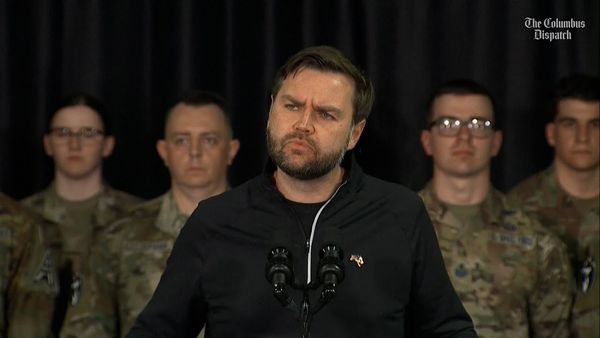
Trump Pentagon Cans Greenland Colonel Who Subverted JD Vance

'I do not presume to understand current politics'

The FDA just made Ozempic even more expensive — here’s how


While Americans struggle to afford life-changing medications, the Food and Drug Administration has effectively forced U.S. patients to subsidize Denmark’s booming economy. The agency’s recent declaration that the semaglutide shortage is “over” represents a staggering policy failure that benefits foreign pharmaceutical giants at the expense of American patients and health care innovation. Semaglutide, a GLP-1 receptor agonist, is the key ingredient in weight loss and diabetes medications that are reducing obesity nationwide.

The numbers tell the story: Novo Nordisk, the Danish pharmaceutical giant behind Ozempic and Wegovy, became the largest company in Europe at the end of 2023 after demand for Ozempic skyrocketed. This meteoric rise has transformed not just the company but an entire nation. Novo Nordisk was responsible for more than half of Denmark’s private sector job growth, which now boasts one of Europe’s fastest-growing economies. Pharmaceutical exports are driving half of the country’s 2.5% GDP growth in 2023, with anticipated growth of 3% in 2024 and 2.9% this year.

Americans pay the highest prices in the world for medications that fuel another nation's economic boom.

The tiny Danish port town of Kalundborg, home to fewer than 17,000 residents, has become an unlikely boomtown. Novo Nordisk is investing an eye-watering $8.6 billion in expanding its facilities there. While Danes enjoy lower interest rates, expanded public amenities, and a robust job market thanks to the influx of American dollars, Americans face impossible choices about whether they can afford medication at all.

Americans foot the bill

Novo Nordisk relies heavily on the American market, with more than half of its sales coming from the United States. This dominance helped sustain Denmark’s economy, preventing a recession.

The company's dependence on U.S. consumers is reflected in its steep pricing. Ozempic costs $900 per month, while Wegovy is priced at $1,300 — a prohibitive expense for many Americans. For a time, an affordable alternative existed. When the federal government declared a semaglutide shortage, compounding pharmacies were allowed to produce lower-cost versions, offering them for hundreds of dollars less than the brand-name drugs.

That changed in February. Holdovers from the Biden administration declared the shortage over and set a deadline for compounding pharmacies to stop selling semaglutide alternatives. This move effectively drove the drug’s cost from under $200 back to more than $1,000.

The FDA’s blunder

The FDA's decision carries devastating consequences for Americans who depend on these medications. Rural and underserved communities, which often relied on telehealth and compounding pharmacies when brand-name options were unavailable or inaccessible, will be disproportionately affected. Countless patients will be forced to abandon treatment due to cost barriers, leading to worsening health conditions and higher long-term health care costs.

The FDA's decision represents a profound failure of regulatory policy. Rather than protecting American interests, it has sacrificed affordable access to critical medications to boost a foreign pharmaceutical giant’s profits and another country’s economic growth.

A better approach would balance legitimate safety concerns with the need for market competition to control prices. The FDA should immediately reassess its shortage determination and restore the ability of American compounding pharmacies to produce affordable alternatives. Insurance reforms should expand coverage for these medications, and policies need to ensure Americans aren't paying premium prices that subsidize European health care systems.

Putting American patients first

Regulatory agencies must prioritize the health and financial well-being of American patients over the economic interests of foreign corporations and governments. Americans already pay the highest drug prices in the world, and their money should not be fueling another nation's economic growth.

Policymakers must take action. Americans deserve access to affordable, life-changing medications without being forced to bankroll Denmark’s economic success. The FDA’s decision on semaglutide is more than bad health care policy — it is a failure to protect American consumers in favor of subsidizing foreign prosperity.

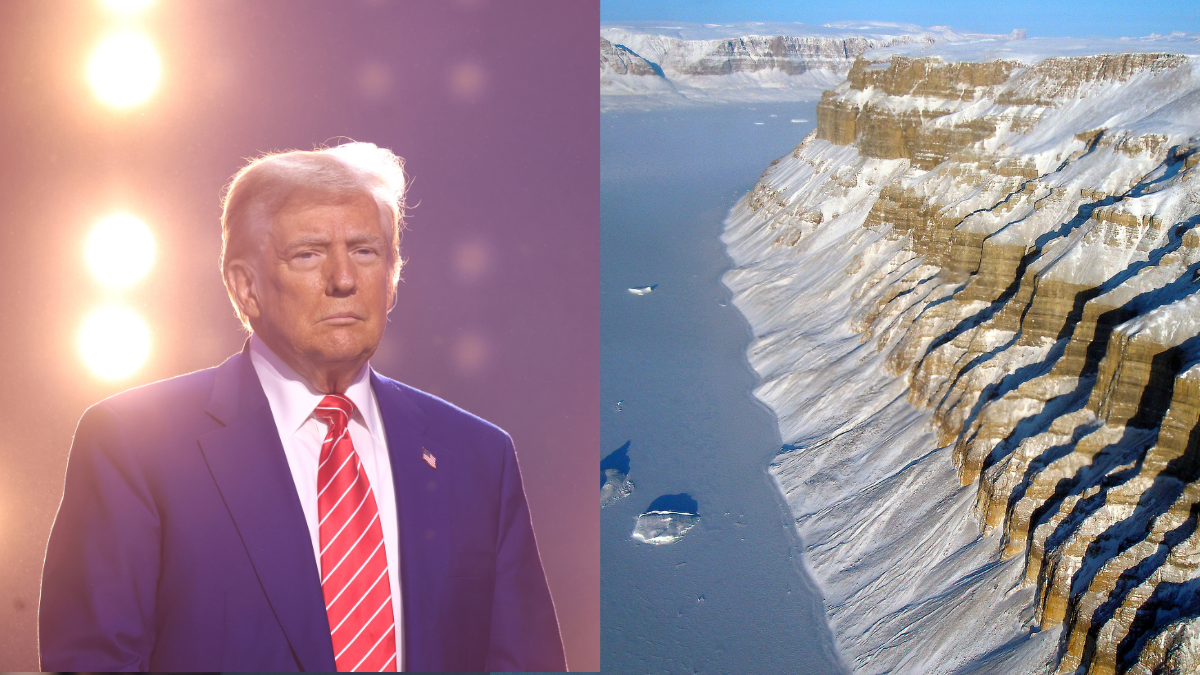
Greenland election results likely to make Trump happy


The results of a snap election in Greenland are likely to please President Donald Trump since they signal a strong desire for independence from Denmark.

The massive island of Greenland — with its strategic location, abundant mineral deposits, tiny population of about 55,000, and U.S. Air Force base — has long been on Trump's mind, dating all the way back to his first term. Now that he's back in office, he has reignited discussions about acquiring Greenland in some capacity.

"We need Greenland for national security," Trump said in his address to Congress last week. "One way or the other, we’re gonna get it."

'We want to be Greenlanders. ... And we want to build our own country by ourselves.'

Because of the renewed American interest in the country, which enjoys relative autonomy even though Denmark continues to control its defense and foreign policy, then-Prime Minister Múte Egede last month called for a snap election.

"We are in the midst of a serious time," he posted to Facebook on February 4. "A time we have never experienced in our country."

At the time, Egede expressed optimism about the results, and his party — Inuit Ataqatigiit, described as a "pro-independence democratic socialist political party" — was largely expected to win. "I am again more than ready to work for you and to lead our country," he pledged.

However, Inuit Ataqatigiit garnered just 21% of the vote, a significant decline from the 36% it received just four years ago. By contrast, two pro-independence parties — the Demokraatit party and the Naleraq party, which strongly aligns with Trump — surged from their respective 9% and 12% showings four years ago to carry the day. The Demokraatit party came in first, with about 30% of the vote, while Naleraq earned about 25%.

Though the Demokraatit party carried the largest share of the vote, 30% is not enough to govern alone, so members will have to form a coalition with other parties to advance their goals.

An alliance between the Demokraatit and Naleraq parties could lead to full independence from Denmark, though the Naleraq prefers a more aggressive move toward independence while the Demokraatit prefers a slower, more measured approach.

'A big victory for the Naleraq Party will be seen as a victory for Donald Trump.'

Before anyone on the Trump team gets too excited though, 33-year-old Demokraatit leader Jens-Frederik Nielsen, now the incumbent prime minister, stated plainly that Greenland is not "for sale."

"We don’t want to be Americans," Nielsen said Tuesday. "No, we don’t want to be Danes. We want to be Greenlanders. And we want our own independence in the future. And we want to build our own country by ourselves, not with his hope."

Still, the outcome is undoubtedly a win for Trump. Even NBC News had to admit begrudgingly that the results "may be taken as a positive in Washington."

The gains for the Naleraq party in particular should give the president and his team hope, according to Jon Rahbek-Clemmensen, an associate professor at the Royal Danish Defence College. A day before the vote, Rahbek-Clemmensen claimed, "A big victory for the Naleraq Party will be seen as a victory for Donald Trump."

Thus far, Trump has not publicly weighed in on the results in Greenland, and a representative for the president did not respond to a request for comment from Blaze News.

For his part, former Prime Minister Egede seemed to accept the electoral defeat with grace, posting to Facebook:

Thank you to everyone who showed up for the election[.] Special thanks to all of you who voted for me personally[.] We respect the outcome of the election. Now the work begins in the new election period. And we're excited to hear what the parties will offer for the negotiations - We're ready.

Danish Prime Minister Mette Frederiksen called the election "a joyful day and a celebration of democracy."

Like Blaze News? Bypass the censors, sign up for our newsletters, and get stories like this direct to your inbox. Sign up here!

Trump’s Greenland and Gaza moves: Wise strategy or pure madness?


“Amateurs study tactics; professionals study logistics.” But winning wars requires both to support a larger, coherent strategy. President Trump’s push to extend U.S. control to Greenland and Gaza follows a calculated method, not madness.

To win a war, the first step is understanding the enemy and his strategic objectives. The post-World War II order and the Cold War rivalry with the Soviet Union no longer pose the primary threat to U.S. interests. Today, China wages covert information and economic warfare while openly preparing for military action to seize Taiwan and dominate key shipping lanes in the South Pacific.

With Greenland, we gain strategic positioning and critical resources. With Gaza, we gain security leverage and economic opportunity.

Russia and Iran support China’s ambitions but play a secondary role. Tactics include sabotage, terrorism, Houthi-led attacks on shipping, and grinding attrition in Ukraine. Meanwhile, far-left movements work to undermine the U.S. from within, often using federal funding to do so. Decades of massive deficit spending have further weakened the U.S. dollar’s status as the world’s reserve currency.

That is the threat. How can the U.S. effectively respond after years of economic decline, military stagnation, and the erosion of its workforce’s education?

Trump’s DOGE initiative and other efforts aim to rebuild America’s military and workforce by cutting wasteful spending and reforming domestic programs. But those steps alone do not address shifting global power dynamics or the role of rapidly advancing technology in shaping future conflicts.

That’s where Greenland and Gaza come in.

Urgent, evolving threats

For decades, most NATO countries have ignored their commitments to shared defense. Instead, they built welfare states while cozying up to Russia and China, sidelining Israel, and attempting to control U.S. and global policies through institutions like the United Nations, the World Economic Forum, and the European Union.

These nations felt secure in their defiance because the U.S. deep state, well entrenched within the bureaucracy, believed it could manipulate global geopolitics through unaccountable dark money. Often, this shadowy influence conflicted with the policies of elected leaders.

Those days are over — just in time.

A new and more urgent threat has emerged: China’s dominance in emerging technology and its implications for national security and defense. For decades, China has fast-tracked its most promising students into advanced science and technology programs. This strategy has fueled major breakthroughs in artificial intelligence and quantum computing, each posing serious risks to U.S. military capabilities, infrastructure, and cybersecurity.

China’s AI capabilities, applied to vast amounts of American personal and government data that it has stolen, provide key insights into U.S. vulnerabilities. Meanwhile, quantum computing threatens to break the encryption methods that currently protect critical systems and sensitive information.

The US must secure new strategic territory and key material sources while rapidly advancing technological capabilities at home.

Beyond technological advancements, China has also engaged in large-scale intellectual property theft, targeting key military and national security designs. This theft, enabled by America’s well-intentioned but often naïve embrace of Chinese students and researchers in universities and corporations, has accelerated China’s ability to project power across the globe.

Now add in policies in which we allowed China to dominate mining and sale of rare-earth minerals necessary for advanced semiconductor and sensor equipment in the name of environmental green virtue here at home and, for many, in the name of globalism. China can and will cut off our access to those minerals completely, thereby crippling short-term attempts to rebuild and rehome semiconductor and related industries in the United States.

Also factor in advances such as new low-horizon missiles for which existing detection systems are weak.

Territorial opportunities

These threats are real, and the war for dominance is already under way. How do we counter them?

First, the U.S. must secure new strategic territory and key material sources while rapidly advancing technological capabilities at home.

Greenland presents a major opportunity for two reasons. Controlling Greenland would allow the U.S. to deploy advanced missile detection and counter-missile systems, strengthening defense against Chinese and Russian movements in the northern seas. Additionally, Greenland holds valuable raw materials essential for developing advanced technology.

It is no coincidence that many top tech entrepreneurs and venture capitalists now support Trump. They understand the growing tech threat firsthand and recognize that only his proposed policies can effectively address both economic and national security concerns.

How do we know their support is genuine? Consider this: Google recently reversed a long-standing policy that explicitly barred the use of its technology for military or defense purposes.

That shift marks a seismic change in Silicon Valley, triggering outrage and panic among progressives — a good sign.

Meanwhile, the Pentagon is advancing its Proliferated Warfighter Space Architecture, increasingly relying on SpaceX’s Starlink constellation for critical communications across U.S. military ships and installations.

Why Gaza?

Under President Trump’s direction, the Missile Defense Agency has also solicited proposals for an advanced Iron Dome-style defense system to protect U.S. territory from missile attacks.

Israel currently uses the Iron Dome to defend against rockets and missiles, which brings the conversation to Gaza.

Conservatives and liberals reacted strongly to Trump’s shocking announcement earlier this month, standing alongside Israeli Prime Minister Benjamin Netanyahu, that the United States would acquire Gaza, clear it of terrorism, and transform it into a prosperous resort destination.

It’s a bold strategy aimed at ending the decades-long cycle of Palestinian terrorism against Israel. But can it work — and what’s in it for the United States?

For this plan to succeed, neighboring countries would need to accept the permanent relocation of Palestinians — something they have long resisted. Many Arab nations use the Palestinian issue to pressure Israel, while others simply do not want Iranian proxies or an influx of an uneducated, indoctrinated population within their borders.

Beyond political resistance, rebuilding Gaza would be a long and complex process. Clearing debris, systematically removing mines and explosives, and assessing the damage caused by Hamas’ extensive tunnel network could take years. In many areas, underground tunnels may have compromised the structural integrity of the land, further complicating new construction.

Not so crazy?

But there’s a strategic reason why this plan might be worth pursuing. Consider the Abraham Accords, which the Biden administration actively sought to undermine.

During Trump’s first term, his first foreign visit was to Saudi Arabia, where he was welcomed with honor by the Saudi king — the Custodian of the Two Holy Mosques. Most Arab nations recognize that Iran is their greatest threat, and they understand the urgent need to diversify their economies beyond oil production. The Abraham Accords laid the groundwork for economic partnerships between Israel and these nations, offering technological collaboration in exchange for recognition of Israel’s legitimacy.

Meanwhile, Iran — funded by the Obama-Biden administration — has sought to derail these efforts by fueling terrorism in Israel and threatening maritime security through the Houthis. If the U.S. takes control of Gaza, it would directly disrupt Iran’s destabilization strategy.

Though Trump has stated the plan does not include U.S. troops or ships in the region, he has left the door open for military intervention if provoked. The message to Tehran, Turkey's Recep Tayyip Erdogan, and Syria is clear: America is watching.

Beyond geopolitics, Israel is a global hub for tech innovation. Partnering more closely with Israel would allow the U.S. to accelerate technological advancements while countering Iran’s sabotage efforts.

With Greenland, we gain strategic positioning and critical resources. With Gaza, we gain security leverage and economic opportunity.

Maybe Trump’s plan isn’t so crazy after all.

FACT CHECK: No, Denmark Didn’t Offer To Buy California For A Trillion Dollars

A post shared on Facebook claims Denmark offered to buy California for a trillion dollars. Verdict: False There is no evidence this occurred. The origin appears to be satire. Fact Check: Social media users are claiming that Denmark proposed to buy California for a trillion dollars. President Donald Trump has pushed for Denmark to sell Greenland to […]

FACT CHECK: Is Denmark Planning To Charge Americans A 500% Tariff On Ozempic?

A screenshot of an X post shared on Instagram claims Denmark is purportedly planning to charge Americans a 500% tariff on Ozempic.   View this post on Instagram   A post shared by Cromwell (@realcromwell606) Verdict: False According to USA Today, the claim stems from LinkedIn and is satire. The outlet also pointed out that […]

Trump Is Right — America Needs Greenland And Access To Its Critical Resources

Greenland isn’t just an Arctic landmass — it’s a North American strategic economic and military asset that America cannot afford to ignore. The time to secure it is now.
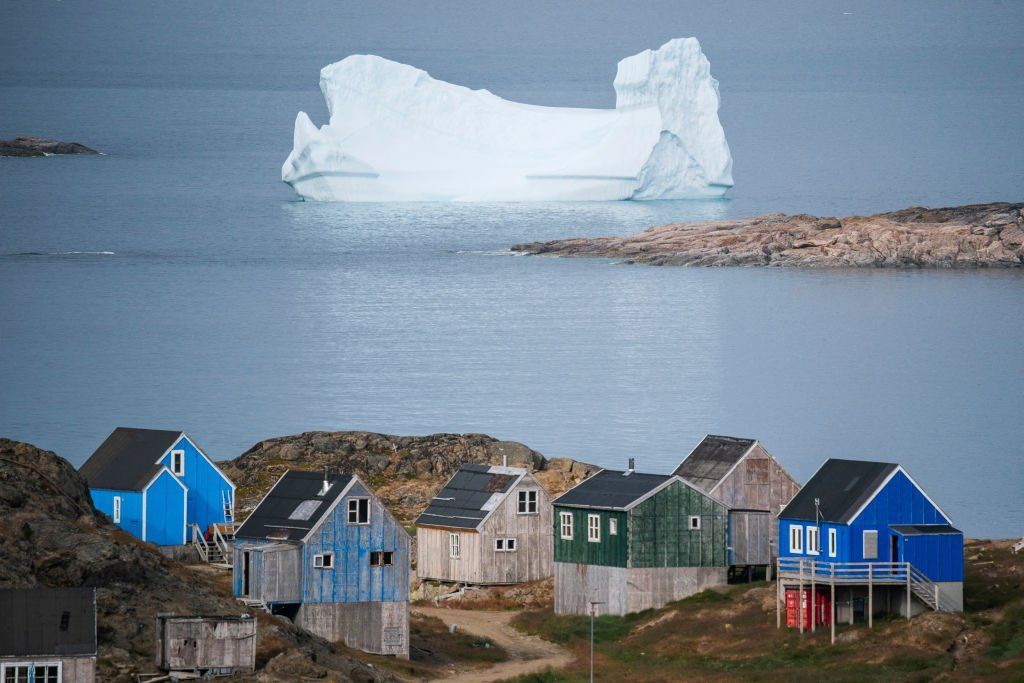
How the Arctic could define America’s next century


When President Trump recently announced on Truth Social that “ownership and control of Greenland is an absolute necessity,” critics immediately jumped to conclusions. Democrats and media outlets spun wild narratives, suggesting this would somehow give Russia and China carte blanche to annex territories of their own. The Guardian went so far as to accuse Donald Trump Jr. of inviting homeless people and drug dealers off the street in Greenland and giving them a free lunch to make it look like there are a bunch of native Trump fans. The hysteria is as predictable as it is ridiculous.

Let’s set the record straight: America is not going to invade Greenland. But if we’re serious about securing our national interests in the Arctic — and the world — then we cannot afford to ignore Greenland any longer.

If Greenland becomes independent, its need for economic and military partnerships will be greater than ever. The United States should be at the front of that line.

Greenland has been a strategic partner to the U.S. for over 80 years. During World War II, Nazi Germany’s occupation of Denmark prompted the United States to establish a presence in Greenland to prevent the island from falling into enemy hands.

That presence solidified in 1951 when the Pentagon built Pituffik Space Base, a critical military position in the Arctic. This air base, located 750 miles north of the Arctic Circle, remains vital for deterring Russian aggression and detecting potential missile threats. Even as recently as 2017, the U.S. invested millions in upgrading its radar systems there to deter Russian intercontinental ballistic missiles.

In 1946, President Harry Truman offered Denmark $100 million in gold bullion to buy Greenland, recognizing its immense strategic value. Denmark declined, but the geopolitical importance of Greenland has only grown. The Arctic is no longer considered a “frozen wasteland” on the map — it’s a battleground for influence, resources, and security.

The stakes in the Arctic

Why does Greenland matter so much? The U.S. Geological Survey estimates that the Arctic holds 30% of the world’s undiscovered natural gas and 13% of its undiscovered oil. Additionally, Greenland’s vast deposits of rare earth minerals — essential for technology, vehicles, and national defense — are virtually untapped. These are the resources that will power the 21st-century economy, and right now, China has a stranglehold on them. The U.S. imports 72% of its rare earth minerals from China. That is not just unsustainable; it’s dangerous.

China and Russia understand Greenland’s importance. Beijing has already attempted to secure mining rights and infrastructure projects on the island. Moscow, too, has been eyeing the Arctic as it ramps up its military activities in the region. If Greenland were to become independent without U.S. involvement, it’s easy to imagine these two adversaries stepping in to fill the void.

A path forward?

Critics have mocked Trump’s interest in purchasing Greenland, likening it to a real estate scheme. But this isn’t about buying beachfront property. It’s about securing America’s future.

Greenland’s push for independence from Denmark is gaining momentum. Its prime minister recently called for creating a framework for full independence, citing the “colonial era” treatment by Denmark. If Greenland becomes independent, its need for economic and military partnerships will be greater than ever. The United States should be at the front of that line, ensuring Greenland’s security while building a mutually beneficial economic relationship.

This doesn’t necessarily mean a direct purchase of Greenland, as Truman proposed. Instead, we could forge a comprehensive partnership that strengthens Greenland’s autonomy while aligning its future with American interests. Expanding trade, investing in infrastructure, and collaborating on resource development are all ways to deepen our ties with Greenland without stepping on Denmark’s toes.

A linchpin for Arctic security

Acquiring or partnering with strategic foreign lands like Greenland isn’t just a Trump idea; it’s a commonsense principle that has been adopted by presidents over the past 100 years.

In 1917, President Woodrow Wilson — hardly a conservative hero — purchased the Danish West Indies (now the U.S. Virgin Islands) to protect American interests in the Caribbean. That purchase, made for $25 million, was driven by fears that Germany might use the islands as a naval base during World War I.

The same logic applies to Greenland today. Its strategic location makes it a linchpin for Arctic security, and its resources are vital to America’s energy independence and technological future.

By prioritizing Greenland, President Trump is thinking beyond short-term political wins. He’s positioning America to lead in the Arctic while countering the growing influence of China and Russia. This is the kind of bold, visionary leadership that America needs — and it’s why the left hates it so much. The left would rather focus on short-term optics and partisan squabbles than confront the real challenges facing our nation.

The Arctic is the new frontier, and Greenland is the gateway. President Trump’s focus on Greenland isn’t some outlandish idea — it’s a strategic imperative. Whether through a purchase, a partnership, or a deeper alliance, America must act now to secure its interests in this critical region. This is about more than politics or headlines. It’s about ensuring that America remains strong, secure, and free for generations to come.

Want more from Glenn Beck? Get Glenn's FREE email newsletter with his latest insights, top stories, show prep, and more delivered to your inbox.