Americans Who ‘Learned To Code’ At Obama’s Behest Can’t Find Jobs Now
 'Learn to code' turned out to be one of the most misguided pieces of career advice, and college grads are bearing the brunt of it.
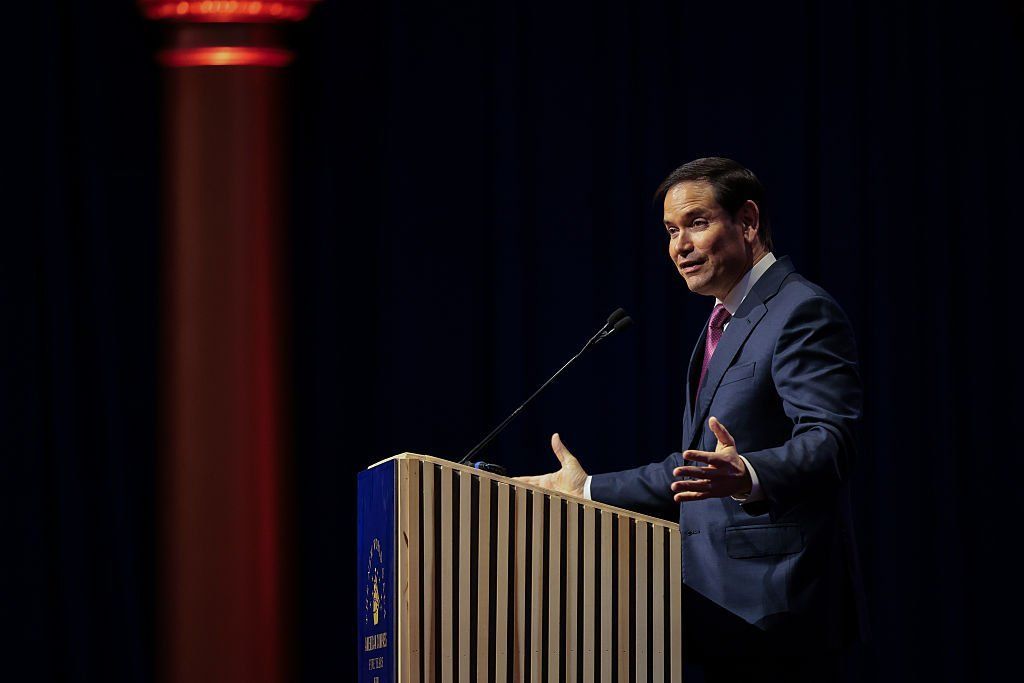
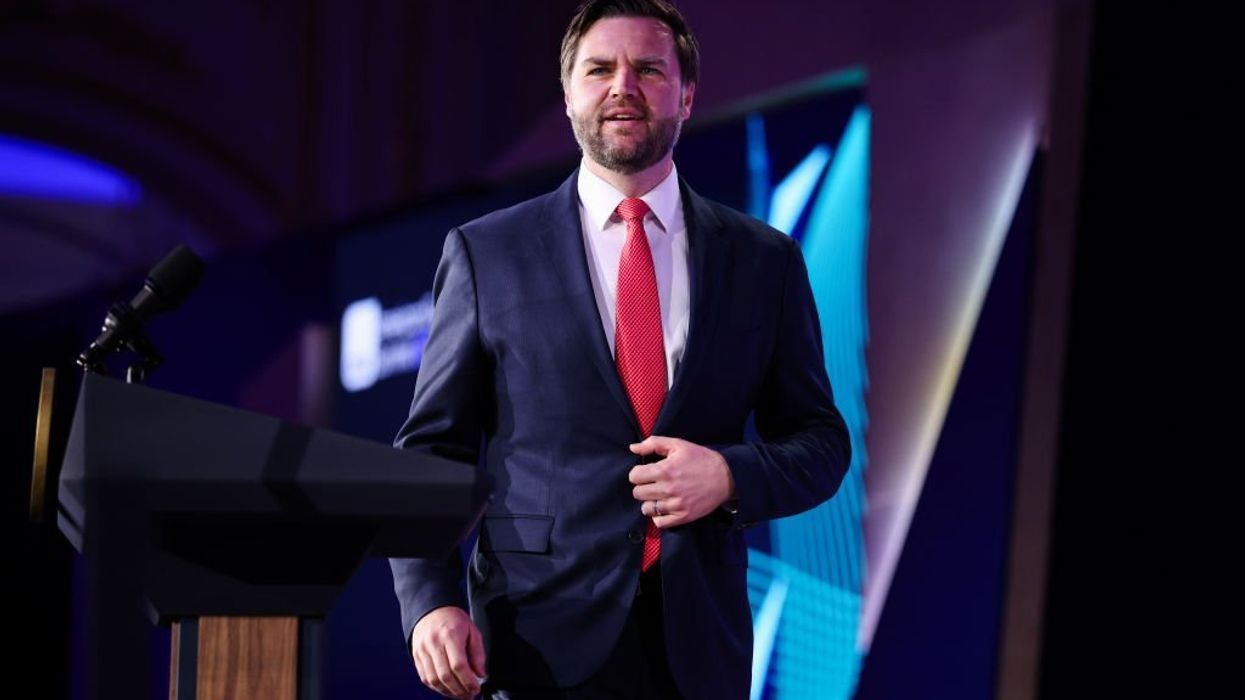
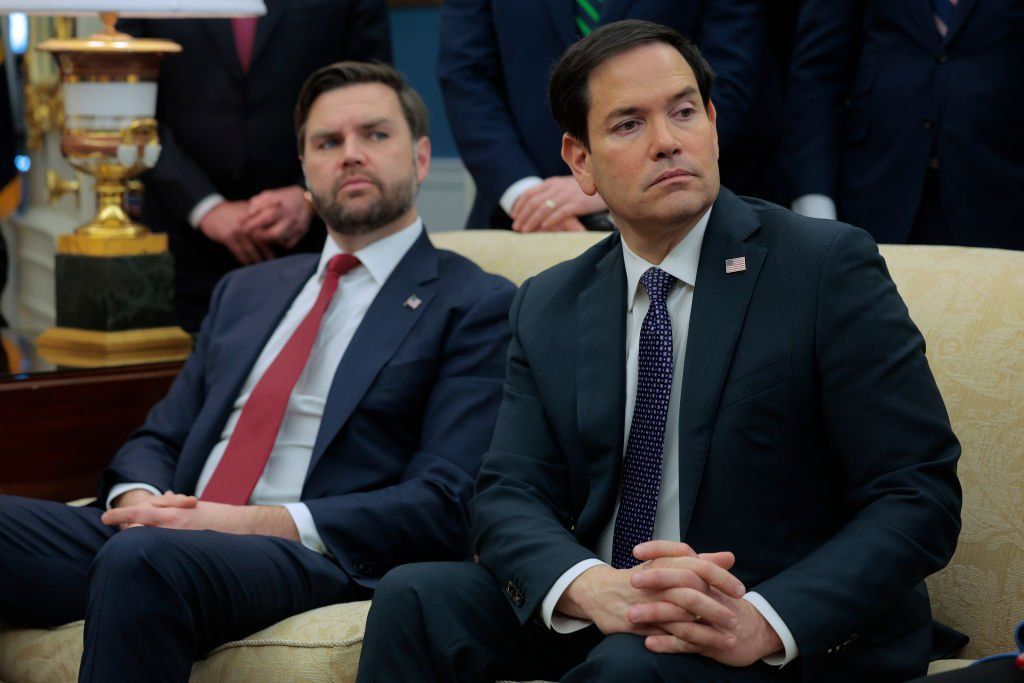
Vice President JD Vance and Secretary of State Marco Rubio discussed ways forward for the country under the Trump administration and beyond at the American Compass New World Gala on June 3.
Although the two Republicans, who appear to be contenders in the 2028 presidential election, hit different beats, they were largely singing the same tune about prioritizing Americans, strengthening the country, and abandoning the failed globalist thinking that has undermined security, prosperity, and dignity in the United Sates.
Their outlooks on the future provided some indication of the staying power of President Donald Trump's vision as well as how it might evolve in the years to come.
Rubio kicked off his speech by countering the progressive notion that human nature changes over time, stressing that "technologies change, the clothes we wear change, even languages change, governments change — a lot of things change, but the one thing that is unchanged is human nature."
Rubio suggested that this static nature accounts for why history often repeats itself and helps explain humans' unshakable "desire to belong," which naturally scales up to nationalism, despite nationhood being a relatively "new concept" in the grand scheme of things.
"If you put humans anywhere — a handful of people anywhere — one of the first things they start doing is trying to create things that they can join or be a part of," said Rubio. "The advent of the nation-state is a normal evolution of human behavior because people think it's important to belong to something, and being part of a nation is important. And I think that's really true, obviously, increasingly in how geopolitical decisions are made."
'We've undermined our position in the world.'
Despite man's immutable desire to belong and the naturalness of this desire's expression in nationalism, Rubio suggested that many in the West nevertheless entertained the fantasy that the dissolution of the Soviet Union meant the inevitable and imminent universalization of liberal democracy — that "the entire world is going to become just like us"; that "nationhood no longer mattered when it came to economics"; "that right now the world would no longer have borders"; and that it didn't matter where things were made.
Rubio noted that this idealistic outlook "became part of Republican orthodoxy for a long time," which accounts for why the GOP long proved indifferent to the outsourcing of labor and the offshoring of productive capacity.
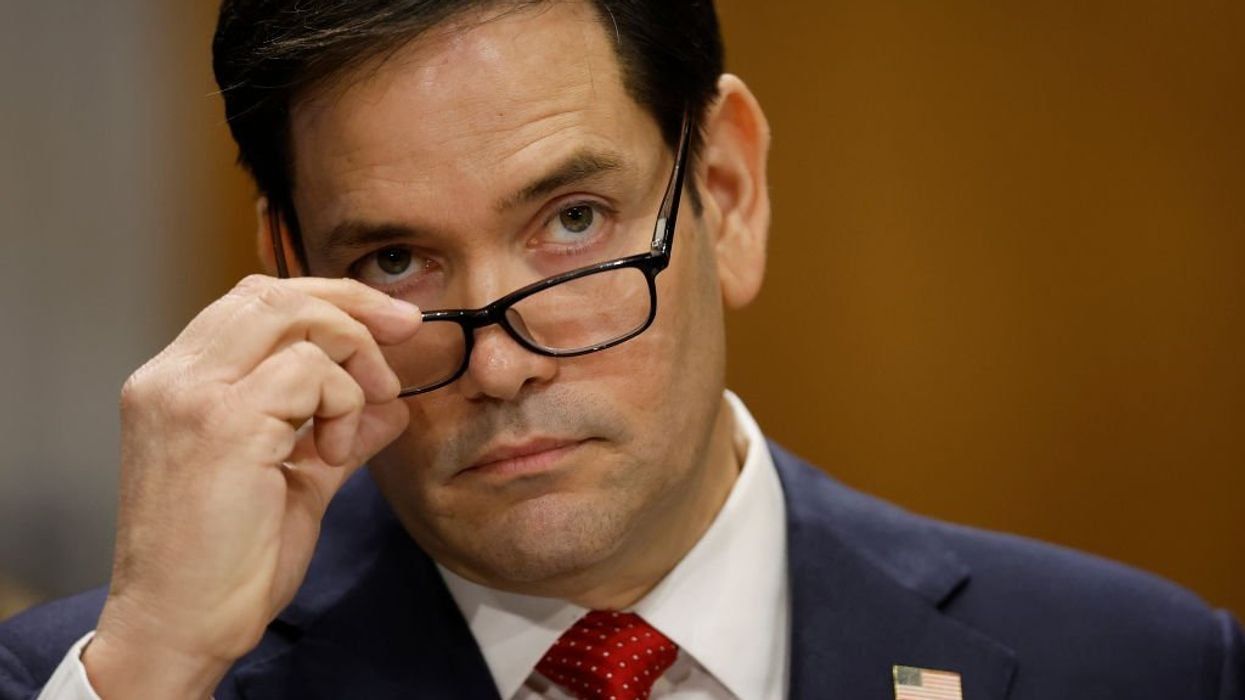
The decades-long flirtation with liberal globalism "robbed a nation of its industrial capacity, of its ability to make things," thereby hurting the economy, hurting the country, robbing people of jobs, and eating away at the social fabric of the nation, suggested Rubio.
"What you find is because of all of those years of neglect, because of the loss of industrial capacity, we didn't just undermine our society, we didn't just undermine our domestic economy — we've undermined our position in the world," said the secretary of state, whose department recently signaled an interest in taking up the mantle of Western civilization.
'You can never be secure as a nation unless you're able to feed your people.'
Now that America and the rest of the world are facing a "crunch," the days of illusion are over, and geopolitics are adjusting accordingly.
Rubio indicated that the Trump administration is undertaking a reorientation of domestic and foreign approaches "to take into account for the fact that you can never be secure as a nation unless you're able to feed your people and unless you're able to make the things that your economy needs in order to function and ultimately to defend yourself."
Accordingly, Rubio suggested that the country moving forward needs to:
While this direction is possibly good news for the American people, it bodes poorly for stubborn champions of the globalist dream.
New York Times opinion columnist Jamelle Bouie, for instance, recently complained about the MAGA vision for the future.
The MAGA movement is waging war on the nation's economic future, rejecting two generations of integration and interdependency with the rest of the world in favor of American autarky, of effectively closing our borders to goods and people from around the world so that the United States might make itself into an impenetrable fortress — a garrison state with the power to dictate the terms of the global order, especially in its own hemisphere. In this new world, Americans will abandon service-sector work in favor of manufacturing and heavy industry.
After presenting the possibility of a powerful, indomitable, and reindustrialized America as a terrifying prospect, Bouie stumbled upon the truth of the project under way, stating, "The aim, whether stated explicitly or not, is to erase the future as Americans have understood it and as they might have anticipated it."
Oren Cass, founder of American Compass, pressed Vance about the project of "reshoring and reindustrialization" that the Trump administration is pursuing.
Vance noted that at its core, the project is about addressing "stagnating living standards" affecting normal Americans "who just want to start a family, work in a decent job, earn a livable salary, and have dignified work."
'The complete disconnect between their views on foreign policy and economic policy made me realize, again, that we're governed by people who aren't up to the job.'
The vice president suggested that the offshoring of industry, an under-investment in technology, heavy industrial regulation, and high energy costs are among the factors that have made it difficult for "normal people who work hard and play by the rules to have a good life."
He also identified a "misalignment between the ... normal Americans and the talking heads in Washington" and an unworkable separation of the making of things from the innovating of things — a issue he raised in his March speech at the American Dynamism Summit — as problems warranting remedy.
RELATED: Vance: Trump’s growth plan ditches cheap labor for real jobs that will fuel American greatness
Blaze News previously noted that in his American Dynamism speech, Vance suggested that the Trump administration plans to help innovators wean off cheap foreign labor and begin on-shoring industry, partly by incentivizing manufacturing and investment inside the United States with tax cuts and other policy instruments; by erecting tariff walls around critical industries; by reducing regulations and the cost of energy; and also by enforcing immigration law and securing the border to drain the pool of cheap illegal alien labor.
In his conversation with Cass on Tuesday, Vance reiterated that America needs to effectively get innovators and labor back on the same page and in the same country and to ensure that educational institutions are equipped to supply them with talent.
Vance also criticized "pro-globalization" elements of the leadership class who are indifferent to "whether a given part of the supply chain existed here, or China, or Russia or somewhere else" yet frequently champion foreign entanglements fought with outsourced munitions and technologies.
"The complete disconnect between their views on foreign policy and economic policy made me realize, again, that we're governed by people who aren't up to the job," Vance told Cass, "until four months ago when the American people actually gave the country a government it deserved. And obviously we're in the very early days, but I think that we've done more in four months to solve these problems. But this is not a five- or a 10-year project. This is a 20-year project to actually get America back to common-sense economic policy."
When asked by NBC News' Kristen Welker last month whether he figured the MAGA movement could survive without him as its leader, President Donald Trump said, "Yes, I do. ... I think it's so strong. And I think we have tremendous people. I think we have a tremendous group of people. We talked about a number of them. You look at Marco, you look at JD Vance, who's fantastic."
Trump added that Vance is "a fantastic, brilliant guy" and "Marco is great."
A straw poll conducted at the Conservative Political Action Conference in February reportedly found that 61% of the over 1,000 attendees said they would support Vance as the future GOP standard-bearer.
Like Blaze News? Bypass the censors, sign up for our newsletters, and get stories like this direct to your inbox. Sign up here!
In yet another attack on freedom of speech, a court-appointed trustee in Alex Jones’ bankruptcy proceedings has disclosed plans to effectively shut down Jones’ media platform, Infowars, and liquidate its inventory to pay some of the $1.5 billion he owes to the Sandy Hook victims’ families.
This news comes in the wake of the recent verdict that Jones’ personal assets would be liquidated to contribute toward paying the astronomical judgment for spreading “misinformation.”
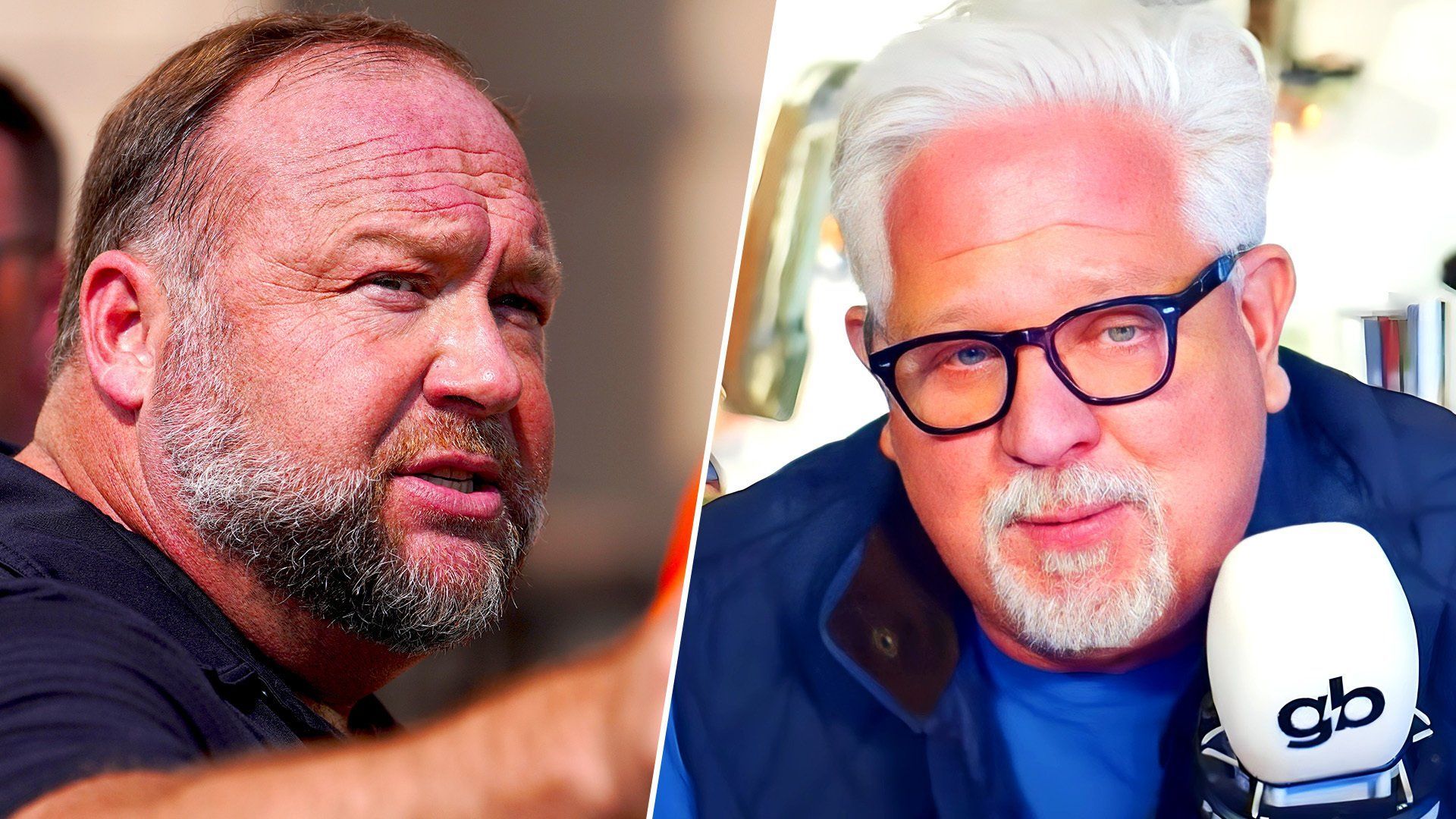
Today he joins Glenn Beck to share his side of the story.
The END of Infowars: What's Next? | Glenn Beck INTERVIEWS Alex Jonesyoutu.be
“This is very historic,” says Jones. “The quote ‘families’ who are represented by high-power Democrat Party law firms, the same ones suing Elon Musk right now for defamation … went on CNN last week and said, ‘We do not want money. We want [Infowars] immediately closed.”’
“They don't want to sell the millions of dollars of inventory – books, films, T-shirts, supplements, water filters. They don't want anything; they want it immediately shut down, and they said ‘because we want to stop his speech,’” he tells Glenn. “It’s just outrageous how transparent this is.”
Jones recalls when two years ago, two judges, one from Texas, the other from Connecticut, found him liable for “failure to give any discovery.” However, Jones swears he “gave them everything,” but “there was just no evidence of what they said [he] did,” so he was declared “guilty in default.”
“I was not allowed to put on defense; I was not allowed to respond,” says Jones, adding that his lawyers “weren't allowed to [defend him].”
Jones says he agreed to an “orderly liquidation,” so that “the stuff actually gets sold off,” which might allow him to give his employees some severance.
However, “they immediately ran to the same judge that found me guilty without a jury trial in Texas and just in a summary hearing [with] no evidence said, ‘Seize all the assets,”’ Jones tells Glenn. “So now the federal trustee is in a fight with them trying to block them today, grabbing the bank accounts and having the sheriff’s department … come and lock the doors.”
When Jones informed the public of the situation, the media, once again, deemed him “a conspiracy theorist.”
“They've admitted in the Wall Street Journal, the New York Times, CNN – everywhere – that they're going to use this precedent against me in lawfare,” he says.
“I'm guilty of plenty of stuff, I made plenty of mistakes, but I did not say 99% of what they said I said, but I couldn't defend myself,” Jones admits, adding that he did say the shooting was “totally staged” but “never sent anybody to [the families’] houses” and “never peed on graves.”
According to Jones, after “the media [created] this illusion” that he was guilty of a long list of atrocities, they made it impossible for him to respond.
“Every nightly news channel” and “hundreds of publications” were “saying things I never said, [but] I was unable to respond, so that's what's so scary about the situation,” he says.
To hear Glenn’s response, check out the clip above.
To enjoy more of Glenn’s masterful storytelling, thought-provoking analysis, and uncanny ability to make sense of the chaos, subscribe to BlazeTV — the largest multi-platform network of voices who love America, defend the Constitution, and live the American dream.
Researchers have been on a quest to find the most sustainable and environmentally friendly alternative to meat and other animal-based products. Nature Communications recently published a study that suggested our dystopian future could feature genetically engineered mold as a prime source of nutrition, according to the Debrief.
Researchers at Lawrence Berkeley National Laboratory reportedly led the study, and they demonstrated "how the edible fungus, Aspergillus oryzae, can be bioengineered to enhance its nutritional value and sensory appeal as a meat substitute."
Researchers were able to use synthetic biological tools to modify the fungus' genome, raising the production of key nutrients and flavor molecules, according to the study. The researchers said that their method brought the substance closer to mirroring the texture and taste of real meat.
The lab reported that fungi could be the future of our daily nutritional intake, as they include "a huge range of tasty and nutritious proteins, fats, antioxidants, and flavor molecules." Vayu Hill-Maini — a chef-turned-bioengineer — has been investigating the possibilities for new textures and tastes that can be produced by modifying the genes in fungi.
“I think it’s a fundamental aspect of synthetic biology that we’re benefiting from organisms that have evolved to be really good at certain things,” Hill-Maini said, who is a researcher at UC Berkeley in the lab of bioengineering expert Jay Keasling.
“What we’re trying to do is to look at what is the fungus making and try to kind of unlock and enhance it. And I think that’s an important angle that we don’t need to introduce genes from wildly different species. We’re investigating how we can stitch things together and unlock what’s already there.”
Keasling, a senior scientist at the Berkeley lab, said that "these organisms have been used for centuries to produce food, and they are incredibly efficient at converting carbon into a wide variety of complex molecules, including many that would be almost impossible to produce using a classic host like brewer’s yeast or E. coli.”
“By unlocking koji mold through the development of these tools, we are unlocking the potential of a huge new group of hosts that we can use to make foods, valuable chemicals, energy-dense biofuels, and medicines. It’s a thrilling new avenue for biomanufacturing.”
However, it is unclear how soon it could be before consuming fungus becomes a mainstay of our dystopian diet.
Like Blaze News? Bypass the censors, sign up for our newsletters, and get stories like this direct to your inbox. Sign up here!
The global elites and left-wing media have done their best to paint everything they’re planning as a “conspiracy theory.”
However, many of us aren’t gullible enough to believe it.
Glenn Beck is one of those people, and he argues that those “conspiracy theories” are actually “conspiracy FACTS.”
Doug Casey is another man who knows the truth, and Glenn reads one of his articles, titled “11 Assumptions About The Future.” The article can be used to guide our actions moving forward, and it lines up perfectly with the warnings Glenn gave in his latest book, “Dark Future.”
Casey’s first assumption is that there will be “less freedom of movement.”
The global elites will attempt to restrict and regulate our ability to move. Whether through vax passports, increased visa requirements, or 15-minute city initiatives, there will be restrictions that we all need to prepare for.
His second assumption is that there is a central bank digital currency on its way. Casey believes that “cash will be eliminated” and that “major economies are working to be ready to deploy [the CBDC] by 2025.”
Third, the “digital ID is already here.” He writes that “[b]iometrics are the future,” and if you have a government-issued ID associated with your photograph, you’re in the system already.
Number four is “the Greater Depression,” about which Casey cites Simon Hunt. “Hunt suggests a market pullback of up to 30% between now and early 2024 followed by a pump and a deflationary wipeout in 2025.”
His fifth assumption is that most “financial assets will disappear at some point.” Whether because of inflation, bank bail-in, market wipeout, or "the great taking," Casey believes “physical assets are where I need to be, ultimately.”
“Increasing crime and disorder” is his sixth assumption. The increase in crime will “lead to greater physical threats to our lives and property from our fellow man.” Casey warns that avoiding urban environments is likely a safer bet.
Seventh is that “supply constraints are increasing around all commodities,” and globally, people will have a much harder time affording everything from food to energy.
His eighth assumption is that “WWIII is coming” and may have already begun, while his ninth assumption is that “censorship and digital control will enter a new phase” that includes “debanking.”
Casey’s 10th assumption is that the “U.S. election – regardless of the outcome – is an inflection point and potentially a flash point,” and he’s not even sure there will be a 2024 election.
Last and unfortunately not least, “There is a war happening today” and “it’s a war on us.” Casey writes, “If/When we see a move toward kinetic force, we should be alarmed because we will have entered a new and more dangerous phase.”
To enjoy more of Glenn’s masterful storytelling, thought-provoking analysis and uncanny ability to make sense of the chaos, subscribe to BlazeTV — the largest multi-platform network of voices who love America, defend the Constitution and live the American dream.
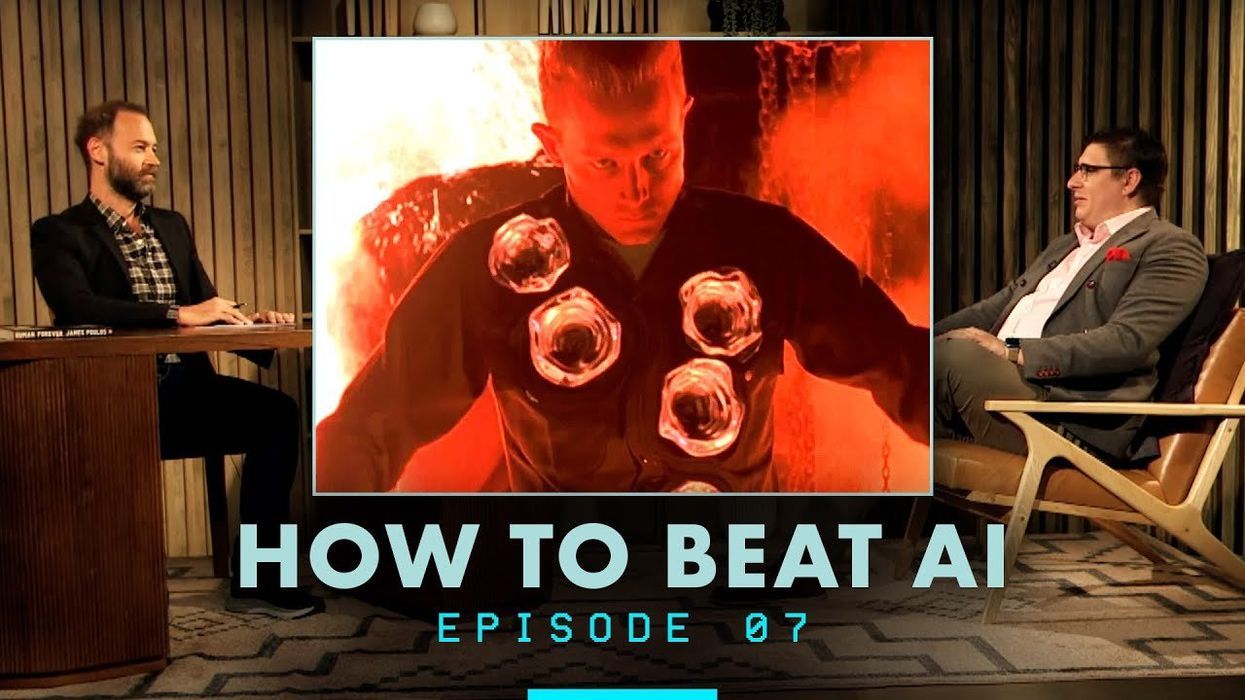
One thing most people agree on is that an artificial intelligence takeover is inevitable. Whether or not that will be beneficial for society, however, continues to be divisive.
Author, professor, and activist Jon Askonas joins James Poulos to discuss the harrowing implications of artificial intelligence when it comes to our future and what we must do when the takeover arrives.
Skeptics are highly suspicious of AI and immediately write it off as inherently evil, while proponents believe that it will solve all our problems and essentially save us.
But Jon and James do not fall into either camp.
They rather believe that thriving in a world dominated by AI will require a unique approach that neither entirely rejects nor submits to technology.
They also agree that people, especially Christians, must accept that AI is not just a super-science; it’s also a deeply spiritual matter.
“It's a powerful technology that will be used in spiritual warfare for good and for evil … but it’s still part of creation and so, like any part of creation, has to be grasped for its good uses,” Jon explains.
James agrees, adding, “One of the things that really sort of bums me out the most about this whole experience we’re going through is people who look at technology … as an evil god.”
The best way to survive the impending AI takeover is to “pray and pay attention to the world that surrounds you … cultivate [technology] and curate it intentionally as a site of spiritual warfare,” adds Jon.
To hear more of their fascinating conversation, watch the full episode below.
To enjoy more of James's visionary commentary on politics, tech, ideas, and culture, subscribe to BlazeTV — the largest multi-platform network of voices who love America, defend the Constitution, and live the American dream.
 Just roughly 1 in 5 Biden supporters believe society would be better off by prioritizing marriage and children, according to Pew.




 www.theblaze.com