Did Cleveland Browns head coach just hint he regrets signing Shedeur Sanders?
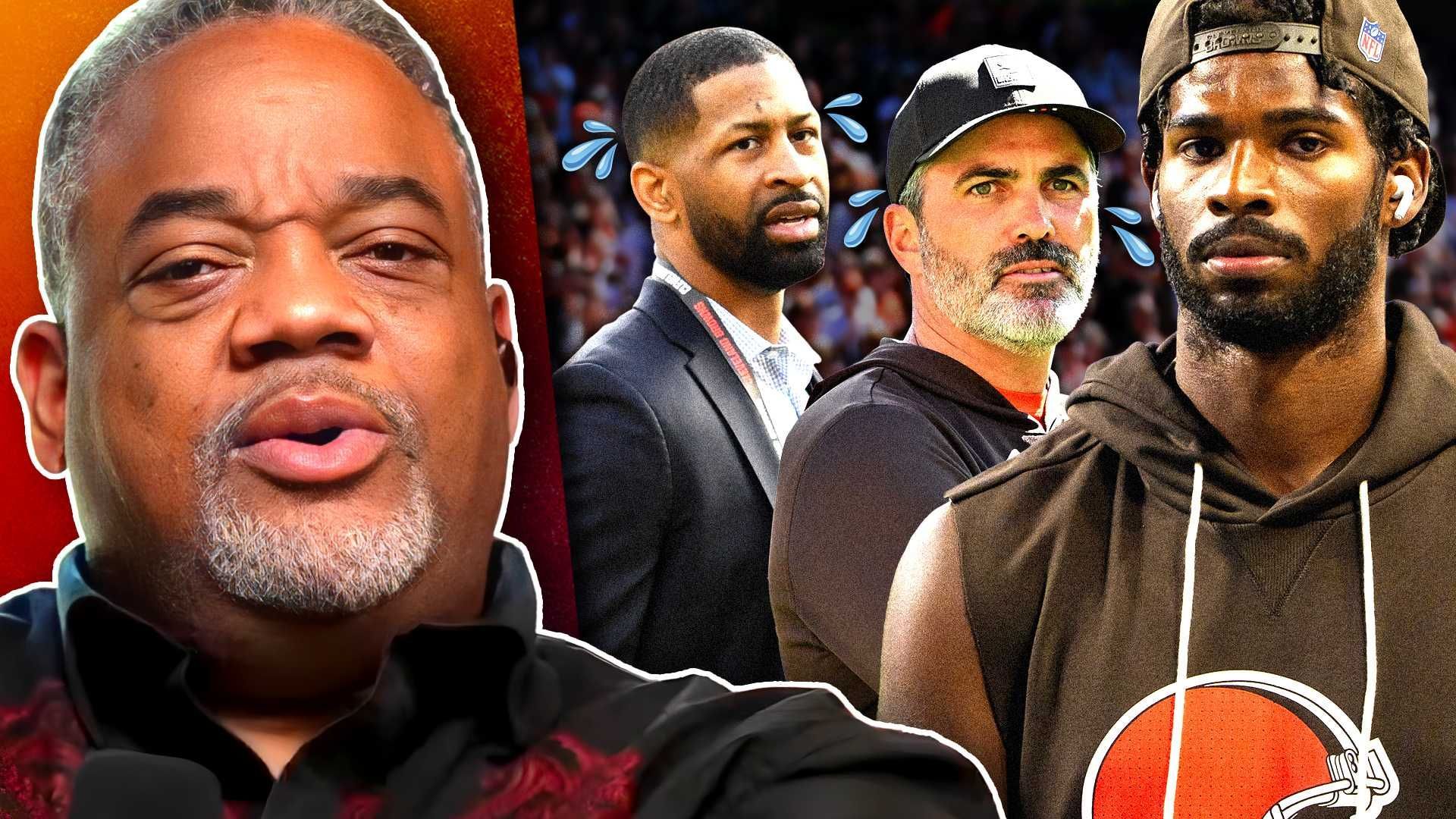


Many football fans complain that Shedeur Sanders is a nepo baby — someone who has achieved prominence due to family connections (nepotism) rather than merit. They argue that his famous father, Deion Sanders, has laid a golden path for him, leading Shedeur to undeserved success.

Whether it was installing him as the starting quarterback at Jackson State University and later at the University of Colorado Boulder, where Deion ensured Shedeur was named the team’s quarterback without competition, or leveraging his own fame to secure high-profile NIL deals and public endorsements for Shedeur, Deion has consistently paved the way for his son’s success in football and beyond.

Maybe it worked for a while, but now that Shedeur is in the NFL playing for the Cleveland Browns, it seems Daddy’s influence is beginning to backfire, as it becomes clear that Shedeur isn’t the superstar Deion has made him out to be.

On October 7, the Browns traded first-string quarterback Joe Flacco to the Cincinnati Bengals, pushing rookie quarterback Dillon Gabriel to first string and Shedeur to second string. But during a press conference, head coach Kevin Stefanski avoided directly naming Shedeur as the clear QB2 behind Gabriel.

When asked by a reporter if Shedeur would now be the backup quarterback, he said, “I’ll let the week play out, make a decision later on that.”

For a few days, there was speculation that Bailey Zappe, who plays on the Cleveland Browns’ practice squad, could be promoted to the QB2 spot over Shedeur, but earlier today, Stefanski officially named Sanders as the backup quarterback behind Gabriel.

Even still, his hesitancy speaks volumes.

Jason Whitlock, BlazeTV host of “Fearless,” reads between the lines: The Browns don’t have a ton of faith in Shedeur Sanders.

“This is a no-win situation. If [Shedeur] succeeds, everyone’s gonna say, ‘Why didn’t he play to begin with?’ But if he fails, it’s like, ‘Well, they put him in a position to fail,”’ contributor Steve Kim says. “I think Stefanski’s in a real catch-22 here.”

Jason sees Stefanski’s reluctance to immediately confirm Shedeur as the number two quarterback as “an indictment of Shedeur Sanders and an indictment of the Browns organization.”

“What it really says is, ‘We shouldn’t have kept this guy,”’ he says.

“They’re keeping Shedeur out of some sort of political or fear factor or some other agenda other than what’s best for [the Browns’] roster.”

To hear more of the conversation, watch the video above.

Want more from Jason Whitlock?

To enjoy more fearless conversations at the crossroads of culture, faith, sports, and comedy with Jason Whitlock, subscribe to BlazeTV — the largest multi-platform network of voices who love America, defend the Constitution, and live the American dream.
LeBron’s toughest opponent yet? Fatherhood


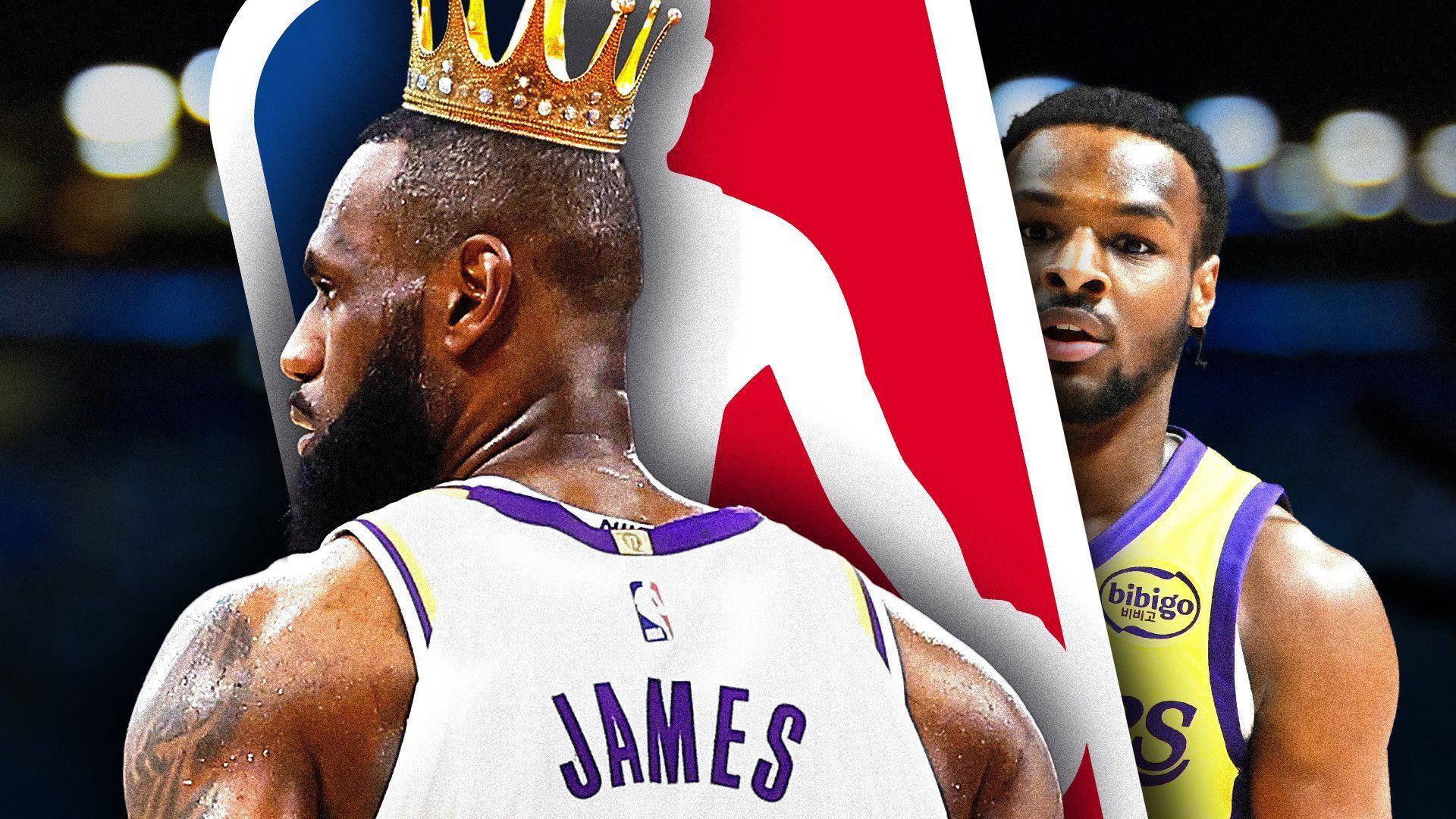
The public feud between Stephen A. Smith and LeBron James shows no signs of dying down after the ESPN personality recently went on a popular basketball podcast to talk about his confrontation with the NBA superstar.

Smith claims LeBron confronted him during a Lakers home game over criticism directed at his son Bronny. Smith maintained, however, that his criticism has always been about LeBron’s role in getting his son into the league.

Bronny needs what every man in a highly competitive field desires: respect.

It is easy to understand why LeBron was upset. He has been the face of the NBA for the better part of 20 years. He is a four-time champion, and many believe he is the greatest basketball player of all time. He has never been in trouble with the law and has maintained a public image as a solid family man throughout his career. Playing on the same team as his son was clearly an important career goal, especially considering he grew up without his father.

One of life’s most valuable lessons is that experiencing scarcity in childhood often drives indulgence in adulthood. For example, people who become successful after growing up poor often give their kids all the toys, clothes, and gifts they didn’t receive. Most people understand this impulse, but that doesn’t change the reality that children who get everything they want can quickly become spoiled and entitled. Parents sometimes make well-intentioned decisions that stunt the development of their children.

Bronny’s challenge

LeBron’s place in NBA history is cemented, but the same cannot be said for his son.

Bronny needs what every man in a highly competitive field desires: respect. It is the one thing his father’s wealth cannot buy. It also cannot be secured through social pressure, coercion, or intimidation. Not even “King James” can bequeath the legacy he’s built in the NBA to his oldest son.

Respect must be earned through a person’s hard work and accomplishment. Without it, Bronny will spend his entire career fighting the perception he’s a privileged kid who took someone’s roster spot. His opponents will use that narrative to get under his skin and try their hardest to embarrass him on the court.

No one is rooting against Bronny, but his path to the league and Lakers leaves sports journalists no choice but to talk about his game and the role his father played in securing him a spot on the roster. It’s hard enough to make the transition to the NBA after one year of college for once-in-a-generation players with physical gifts like Zion Williamson. It’s even harder to make the case that a freshman who averaged five points a game at USC is ready for the professional game.

Parental instincts

But this issue is bigger than basketball. Talking about the confrontation between LeBron James and Stephen A. Smith makes for entertaining content, but this entire situation is really about the relationship between fathers and sons.

Sons begin emulating their fathers at a young age. They wear their clothes and mimic their mannerisms. As they get older, some boys go even further by attempting to walk in their father’s professional footsteps. It’s difficult enough for the average kid to do this successfully. The challenge is amplified exponentially when your father is a global icon who has been at the top of his profession for decades.

LeBron and Bronny should’ve sat down with Denzel Washington and his son John David to discuss the challenges of being a son in a superstar father’s shadow. Professional sports and acting are not the same, but Denzel probably would have been criticized if he had pulled his son out of a small community theater where he struggled to memorize his lines and demanded that he receive a role on Broadway.

The elder Washington knows his name and reputation carry a lot of weight. He also likely knows that publicly pulling strings to help his son when it’s clear he is not ready for the big stage would do more harm than good. That’s because men must learn how to stand on their own two feet, which means the parental instinct to protect a child — even when he’s an adult — must be balanced with age-appropriate encouragement toward independence. Children learn this at a young age, which is why they'll eventually turn to their parents and say, “I’ve got this, Mom,” or, “I can do it, Dad.”

The pursuit of independence is the unofficial rite of passage into manhood. Anyone or anything — regardless of how well-intentioned — that interrupts that pursuit does a young man a disservice. No father wants to see his son struggle needlessly, but part of raising children is understanding the role obstacles play in building character.

LeBron James has reigned over the NBA for 20 years, but Bronny will never feel like a king as long as he is treated like a privileged prince in constant need of protection.

First lady of Oregon announces struggles with alcoholism, mental illness as accusations of nepotism swirl


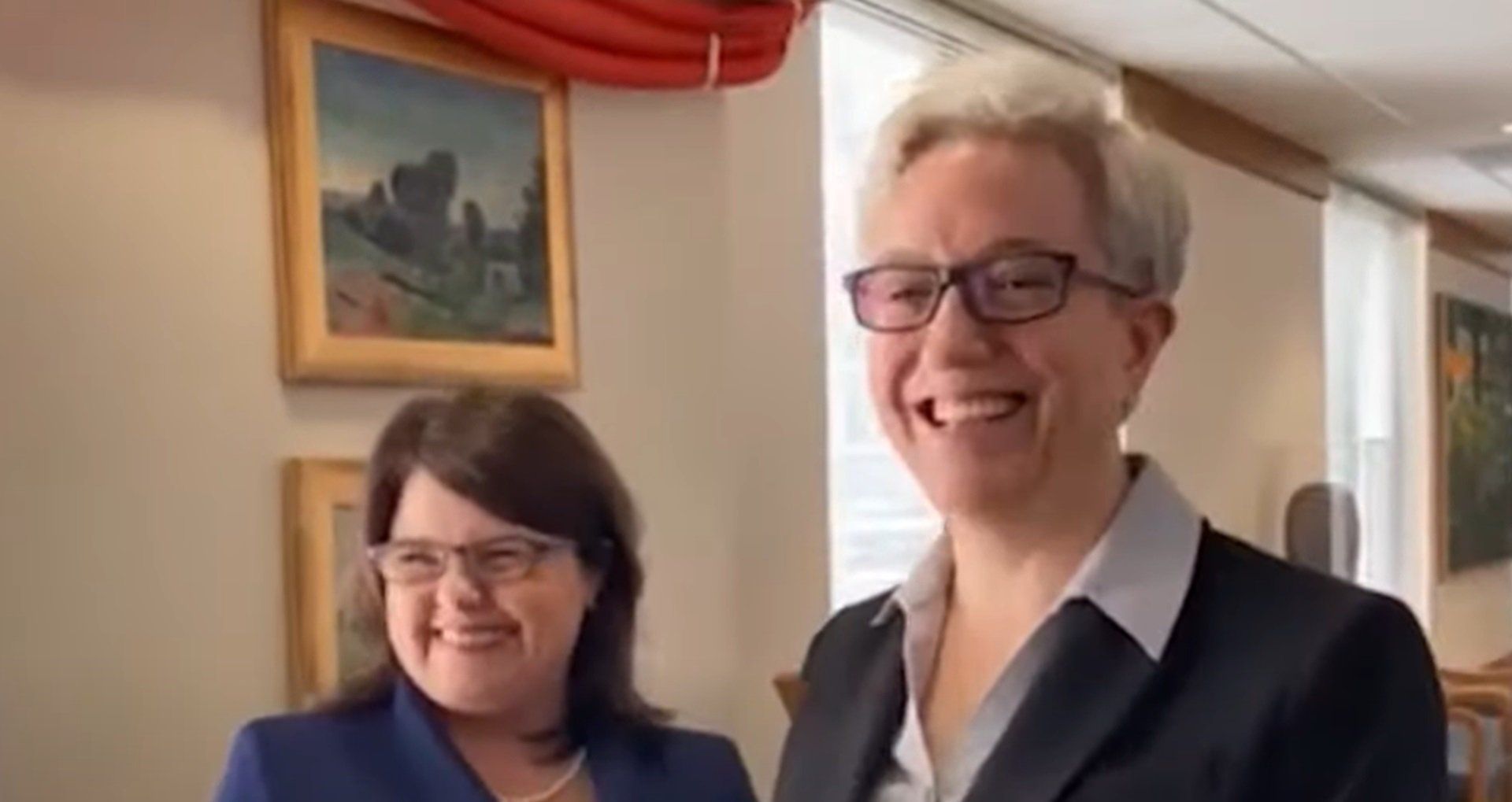
The legal partner of Democrat Oregon Gov. Tina Kotek has announced that she is in recovery for addiction and mental illness amid questions about her growing influence in the governor's office.

On Tuesday, Oregon first lady Aimee Kotek Wilson, 47, admitted her struggles with alcoholism. "I share this information about myself now, and have in the past, in the hopes it will make a difference and reduce stigma," Wilson said in a statement. "Far too often, individuals have remained silent about their experience because of shame, pain, and fear. ... And, that is why it is so important for me to do my part to reduce the stigma around addiction and mental health."

Wilson has not indicated the nature of her mental illness or how long she has been in addiction recovery, Oregon Live reported.

Her announcement also comes in the wake of heavy criticism about her newly expanded role in the governor's office. Though technically working as an unpaid volunteer, Wilson was recently given a private office in what Willamette Week described as "the governor’s crowded suite of offices."

Wilson likewise accompanied Kotek on a recent international tour and spoke with mental-health practitioners. As part of her work, Wilson has been issued extra security detail as well, paid for out of Kotek's existing budget.

Gov. Kotek is even exploring the possibility of opening an official Office of the First Spouse and onboarded Meliah Masiba, previously of the Oregon Department of Administrative Services, earlier this week to serve as a short-term adviser in connection with it. Masiba will "also assist and support the current first spouse in her official capacity in support of the administration," according to a statement from governor spokesperson Elisabeth Shepard.

Masiba will remain as an adviser for six months and receive $72,000 for her work during that time. After the six months have expired, another individual will rotate into the position.

Though other states, including California and Maryland, already have an Office of the First Spouse, Oregonians may be leery of opening one in their state after a governor in recent memory was forced to resign at least in part because of his fiancée's influence-peddling.

In February 2015, just one month into his fourth term, Gov. John Kitzhaber (D) resigned after his fiancée, Cylvia Hayes, who attended official meetings and helped promote environmental policies, allegedly earned $118,000 in fellowships from environmental groups that had significant interest in the policies Hayes was promoting. There are also indications that Hayes failed to report that money on her tax filings. She eventually agreed to pay $44,000 in ethics violations.

No such allegations of financial impropriety have been made against Wilson, but three executive advisers will leave the governor's office in the next week or so, all reportedly on account of their strained relationships with Wilson.

Jeff Barker, a former Democratic lawmaker from Washington County, claimed he was "surprised" that Kotek would allow Wilson to wield so much influence in light of the Hayes scandal that plagued Kitzhaber's final years in office. "It looks too much like nepotism," Barker said.

"I can’t believe they are opening this can of worms," said another Democrat former lawmaker. "Very little upside and lots of downside."

On Monday, the Oregon Government Ethics Commission confirmed it had received a complaint about Kotek regarding Wilson's role as first lady. Details about the complaint have not been released.

"We will review and respond to any complaint upon receipt, consistent with Oregon state ethics laws," said Shepard, Kotek's spokesperson. "We have no further comment, as this is a pending complaint."

In a separate statement, Shepard claimed, "The governor makes all policy decisions on behalf of the office."

Like Blaze News? Bypass the censors, sign up for our newsletters, and get stories like this direct to your inbox. Sign up here!