Trump bets big on AI to make America dominant again
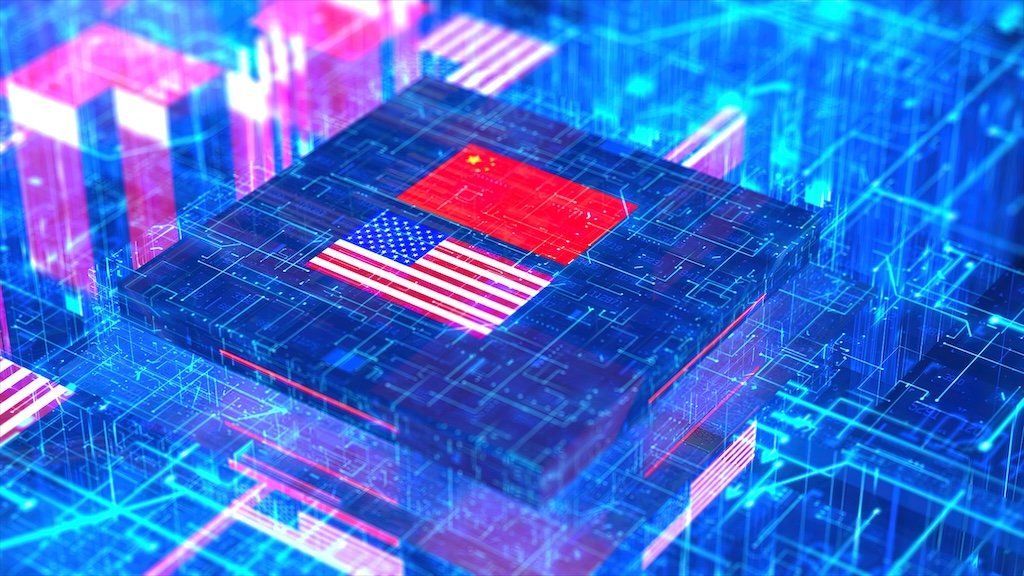


The Trump administration is preparing to launch a sweeping series of executive orders aimed at securing America’s position as the world’s leader in artificial intelligence. If carried out properly, these efforts could help spark a new era of economic prosperity and technological dominance.

The forthcoming executive actions would radically streamline federal approvals for AI-related infrastructure, vastly expand energy resources devoted to artificial intelligence development, and prioritize the construction of new transmission and data projects critical to powering America’s AI future.

Artificial intelligence could be the single most important economic engine of the 21st century.

It is a remarkable development — and one desperately needed.

Trump’s AI infrastructure revolution

The expected executive orders outline sweeping changes. One key measure would create a national Clean Water Act permit tailored to speed up environmental approvals for AI-related infrastructure — especially energy and data facilities.

Another directive would push the federal government to prioritize “shovel-ready” transmission projects, helping the electric grid expand quickly enough to meet the demands of AI growth.

The orders would also unlock federally managed land for rapid development of the infrastructure needed to power and support artificial intelligence operations.

Finally, the administration plans to increase dramatically the energy resources dedicated to AI development, treating the technology as a national priority.

These changes aim to eliminate major regulatory and logistical obstacles slowing AI advancement. By streamlining permitting, securing energy access, and opening federal land, the orders would lay the groundwork for building and deploying large-scale AI systems nationwide.

A critical change

Each of these reforms matters. The numbers make that clear.

An article published earlier this year in MIT Technology Review summarized estimates from multiple researchers analyzing AI’s future impact. One study from Lawrence Berkeley National Laboratory projected that by 2028, powering AI in the U.S. could require between 165 and 326 terawatt-hours of electricity annually.

RELATED: The One Big Beautiful Bill Act hides a big, ugly AI betrayal
Douglas Rissing via iStock/Getty Images

That would exceed the total power consumption of all U.S. data centers today. It’s enough to supply more than 20% of American households.

Put another way, the article noted that AI’s energy demand could create emissions equivalent to driving 300 billion miles — roughly 1,600 round trips between Earth and the sun.

This isn’t a modest technological shift. It’s an industrial revolution, and it’s already under way.

The global AI race

China’s leaders understand the potential benefits and costs of artificial intelligence, too, which is why they have approved dramatic increases in energy development in recent years.

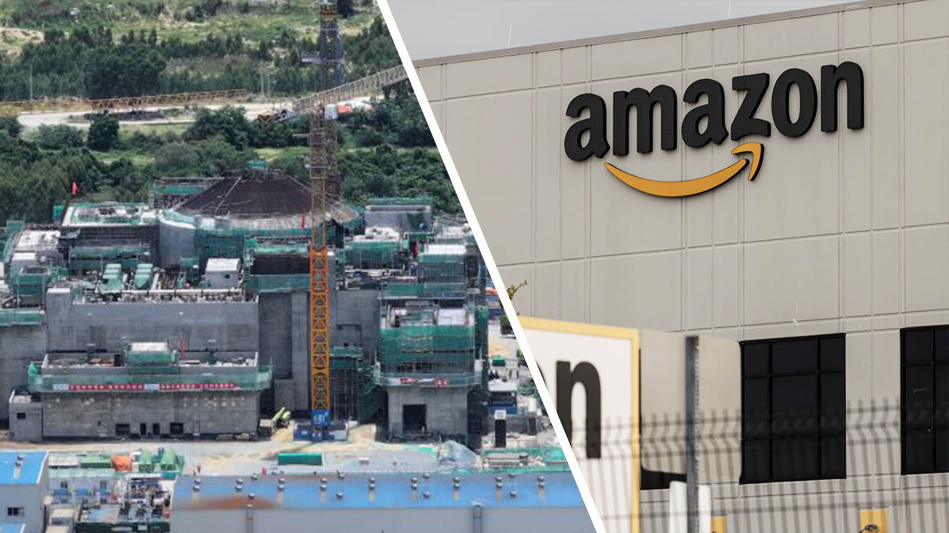
In May, the Chinese government approved a plan to build 10 new nuclear reactors at a cost of $27.7 billion. If implemented, it would make China the planet’s largest generator of nuclear power by 2030.

China also invested more than $900 billion in renewable energy sources in 2024, nearly matching global investment in fossil fuels.

China is taking its energy needs seriously, and the Trump administration appears committed to ensuring that the United States doesn’t fall behind.

AI’s $13 trillion opportunity

Artificial intelligence is not just a futuristic novelty. It is the key to unlocking one of the greatest economic booms in modern history.

The McKinsey Global Institute estimates that AI could generate as much as $13 trillion in additional global economic productivity by 2030. That is the equivalent of adding three new economies the size of India’s. Nations that lead in AI development will enjoy a productivity surge, revolutionizing manufacturing, logistics, transportation, health care, finance, and nearly every other sector.

For the United States, this means the potential to revitalize American industry, re-shore critical supply chains, and create millions of high-wage jobs. AI could supercharge small business growth, empower entrepreneurs, and streamline government services. It could give America the edge in military technology, scientific research, and global competitiveness.

In short, it could be the single most important economic engine of the 21st century.

But to get there, America needs to act quickly. Building the infrastructure necessary to power AI’s massive growth, both physically and digitally, will require bold and aggressive leadership. That is exactly what Trump’s new executive orders represent.

Protecting liberty

Artificial intelligence will transform nearly every part of American life — our economy, schools, military, and medical system.

The upside is immense. With the right leadership, AI could spark a new American golden age, driving productivity and innovation beyond anything in living memory. That’s the future President Trump aims to deliver. If his initiative succeeds, it could define America’s 21st-century revival.

But the risks are real.

So far, Congress and most state legislatures have done practically nothing to safeguard Americans’ basic freedoms in the age of AI. No national guardrails exist to stop this technology from being used to suppress free speech, erode religious liberty, or undermine economic independence.

Without decisive action, the very tools that promise prosperity could become the greatest threat to liberty in American history.

That’s why the Trump administration and Congress should tie any pro-AI legislation to strong protections for individual rights. If America plans to lead the world into the AI future, it must lead with freedom front and center.
Amazon invests $500M in mini nuclear reactors to power AI operations


Amazon announced a $500 million investment in projects in Virginia and Washington state to power its data centers.

Through an agreement with Virginia utility company Dominion Energy, Amazon Web Services will develop small modular nuclear reactors near the energy company's existing North Anna nuclear station. The small reactors will be built with technology from X-energy, a company out of Maryland.

The announcement comes less than a month after Amazon posted a job listing looking for a nuclear engineer to assist with this same type of technology.

Amazon joins a long list of companies that are shifting toward SMRs in order to power their massive computing and data needs, pushing concerns from green activists to the side by sporting this newer "clean energy."

These companies include Microsoft, which signed a 20-year, 835-megawatt deal with Constellation Energy, which will reactivate a reactor at the infamous Three Mile Island in Pennsylvania.

Data company Equinix signed its own 500-megawatt agreement with Oklo in April. Oklo also agreed to build a small modular reactor for data company Prometheus Hyperscale in May, providing 100 megawatts.

As well, computer technology company Oracle announced in early September that it would be building a 1-gigawatt data center campus powered by three small modular reactors.

Google also recently publicized an SMR purchase for its data center, with a target date of 2030 to bring the reactor online.

'We must bring clean, safe, and reliable electrons onto the grid.'

At the same time, Amazon announced a deal with Energy Northwest out of Washington, which will own and operate the new nuclear reactors, adding energy to its own grid while powering Amazon's operations.

Energy Northwest has the option to build more than 12 nuclear modules, with Amazon getting priority to buy electricity from the first four.

"Amazon and X-energy are poised to define the future of advanced nuclear energy in the commercial marketplace," said X-energy CEO J. Clay Sell, per CNBC. "To fully realize the opportunities available through artificial intelligence, we must bring clean, safe, and reliable electrons onto the grid with proven technologies that can scale and grow with demand."

Amazon's plans include a whopping $35 billion investment in Virginia by 2040 for data centers across the state. Virginia is home to about half of all American data centers, establishing a region called Data Center Alley in Loudoun County.

Virginia Governor Glenn Youngkin (R) recently said that SMRs will "play a critical role in positioning Virginia as a leading nuclear innovation hub."

"Amazon Web Services' commitment to this technology and their partnership with Dominion is a significant step forward to meet the future power needs of a growing Virginia," Youngkin added.

Overall, Amazon is developing a massive web of data center campuses and local power networks. In March, the company spent $650 million to acquire Talen Energy's campus next to the Susquehanna Steam Electric Station nuclear power plant in Pennsylvania.

There, Amazon will develop 15 data centers as part of a 1,600-acre rezoning projection.

Like Blaze News? Bypass the censors, sign up for our newsletters, and get stories like this direct to your inbox. Sign up here!

Elon Musk says he will 'eat locally grown food' at one of world's worst nuclear sites in order to demonstrate how important it is for Europe to begin nuclear power output


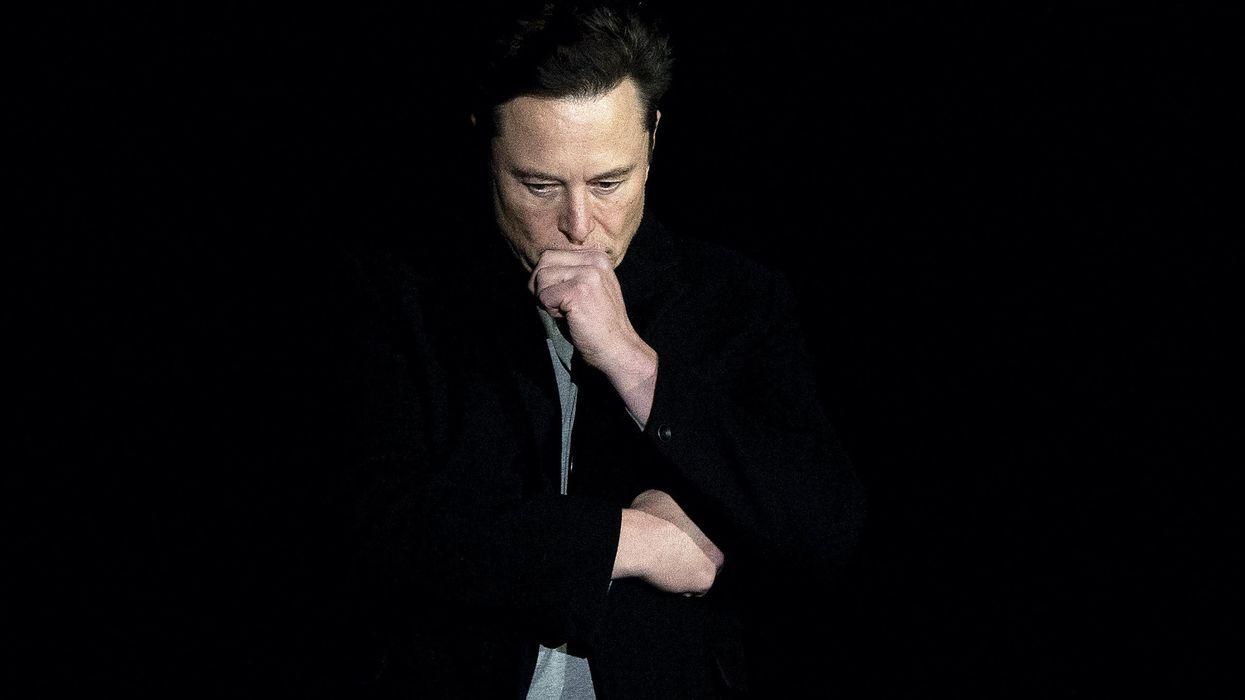
Tesla and SpaceX CEO Elon Musk says he will travel to a high-radiation location to "eat locally grown food on TV" after calling for a massive increase of nuclear energy production in Europe, Insider reported Monday.

What are the details?

Musk on Sunday called for European nations to increase their output of nuclear power in an effort to offset the possibility of a gas shortage.

He wrote, "Hopefully, it is now extremely obvious that Europe should restart dormant nuclear power stations and increase power output of existing ones. This is *critical* to national and international security."

Following backlash with many social media users stating a fear of radiation contamination in their food, Musk added, "For those who (mistakenly) think this is a radiation risk, pick what you think is the worst location. I will travel there & eat locally grown food on TV. I did this in Japan many years ago, shortly after Fukushima. Radiation risk is much, much lower than most people believe."

For those who (mistakenly) think this is a radiation risk, pick what you think is the worst location. I will travel there & eat locally grown food on TV.\n\nI did this in Japan many years ago, shortly after Fukushima. Radiation risk is much, much lower than most people believe.
— Elon Musk (@Elon Musk) 1646609600

What else is there to know about this?

Over the weekend, Musk also called for the U.S. to increase its domestic oil and gas production and output amid sanctions imposed on Russia.

Insider reported that Russian oil exports have plummeted by approximately 33% amid the country's invasion of neighboring Ukraine.

On Friday, Musk tweeted, "Hate to say it, but we need to increase oil & gas output immediately. Extraordinary times demand extraordinary measures."

Sen. Ted Cruz (R-Texas) announced support for the sentiment and responded, "Couldn't agree more! Unleash American energy NOW!"

Cruz on Friday also issued a statement regarding his newly introduced Energy Freedom Act, which would help release the U.S. from its extreme reliance on foreign energy sources.

“I’m introducing the Energy Freedom Act to reverse Biden’s actions so we can restore American energy independence," he said in a statement on the proposed legislation. "This bill won’t cost taxpayers a dime, but it will provide the United States billions in revenue in the coming years by expediting permitting, leasing, safe new pipelines, and exports, and providing much needed regulatory certainty. It would create new jobs, lower energy costs, and because modern energy production in the United States is far cleaner than in any other country’s by every measure, it would help the environment."