Equal treatment makes a comeback
There is something almost touching about the astonishment with which American universities are discovering that racial discrimination is illegal.
The Justice Department announced Monday that it is investigating the College of William & Mary over scholarships and student benefits that allegedly discriminate according to race. The Civil Rights Division says it is examining whether those programs violate Title VI of the Civil Rights Act of 1964, which prohibits racial discrimination by recipients of federal funding.
Universities spent years teaching America that racial discrimination could cure racial discrimination. They may now receive an expensive lesson in return.
One might have supposed that this was not a particularly difficult statute for universities to understand. These are, after all, institutions populated by people who pride themselves on detecting racism in places where ordinary mortals see friendship and community.
And yet when discrimination appears in their own programs, their racial acuity suddenly fails them. Universities have spent years building programs around concepts such as “whiteness,” “decolonizing,” privilege, and equity. The problem is not that administrators forgot the Civil Rights Act. It is that many convinced themselves they had discovered a morally superior exception to its basic rule.
The old civil-rights principle was admirably simple: Do not discriminate on the basis of race.
The newer DEI principle often works differently: Unequal treatment may be justified if it is meant to correct an earlier inequality.
The distinction is the whole game.
Under the older understanding, the injustice consisted in treating an individual differently because of his race. If a university told an applicant, “You cannot have this opportunity because you are black,” we knew what to call it. If it told another applicant, “You cannot have this opportunity because you are white,” we also knew what to call it.
The genius of DEI was to make the second sentence sound morally different from the first.
This required an impressive amount of academic labor. Entire vocabularies were constructed to explain why unequal treatment could become virtuous when practiced by the right institutions, against the right groups, for the right reasons. We learned about privilege, power, positionality, systemic racism, dominant identities, marginalized identities, intersectionality, and the rest of the lexicon.
RELATED: Trump’s Justice Department is shining a light on woke universities — finally
The result was an ethical system of remarkable convenience. It condemned racial discrimination while supplying a vocabulary for practicing it.
The trick was accomplished by shifting the unit of moral judgment from the individual to the group.
Once people are sorted into historical categories of oppressor and oppressed, equal treatment begins to look suspicious. If Group A has enjoyed advantages and Group B has suffered disadvantages, treating individual members of A and B according to the same rules can be recast as perpetuating injustice. “Equity” then becomes a justification for unequal treatment today in the name of unequal treatment yesterday.
There is only one troublesome detail: The person standing before you today is an individual human being, not an installment payment on a historical debt.
A white 18-year-old applying for a scholarship did not write the Jim Crow laws. An Asian student applying to medical school did not build the transcontinental railroad with exploited labor. A black student is not the personal embodiment of several centuries of American suffering.
The civil rights tradition understood this. That is why the law speaks in the language of persons rather than assigning inherited moral credits and debits to racial castes.
The DEI worldview has spent years trying to reverse that achievement.
And now comes the awkward part.
The law is still there.
The Civil Rights Act does not contain an asterisk reading, “Discrimination permitted when performed in the service of social justice.” Title VI does not say recipients of federal money may discriminate according to race provided that a diversity consultant has explained why it is virtuous.
Last year, the Justice Department expressly warned recipients of federal funding that antidiscrimination laws apply regardless of whether discriminatory practices are packaged under the label of DEI. Now William & Mary is discovering what that warning means.
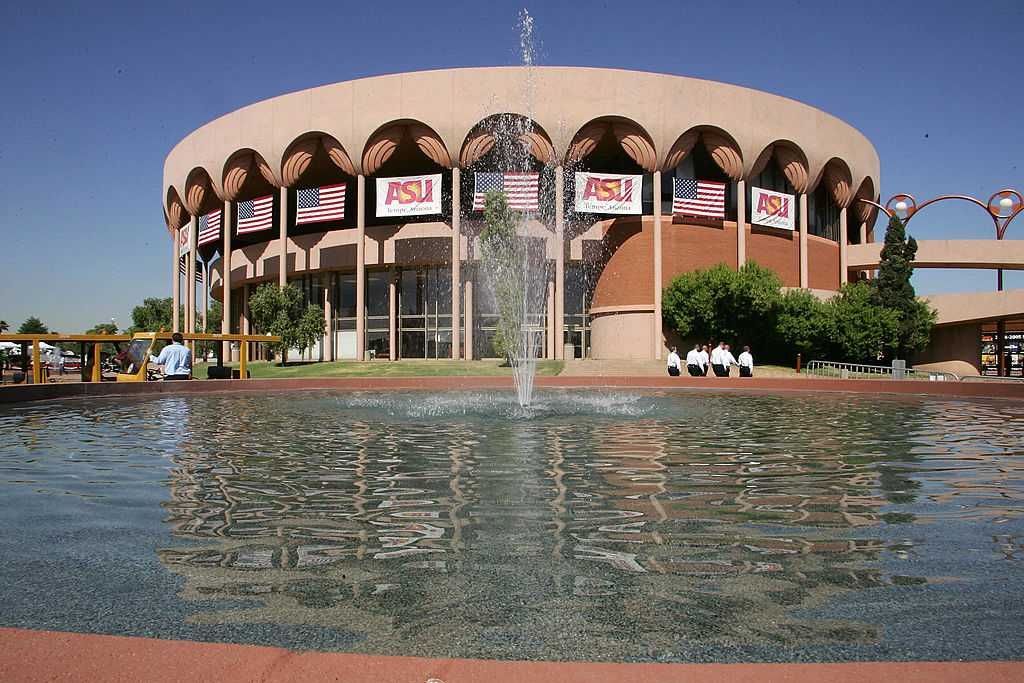
Nor is William & Mary alone. The Justice Department has been examining race-conscious practices across higher education. My own university, Arizona State, is under investigation. The Supreme Court’s 2023 decision in Students for Fair Admissions should already have alerted universities that the legal ground beneath racial preferences had shifted dramatically.
But something deeper than law is involved here. Universities are supposed to teach students how to reason. So let us try an elementary syllogism.
Racial discrimination is wrong. Denying someone a benefit because of his race is racial discrimination. Therefore, denying someone a benefit because of his race is wrong.
You don’t need a doctorate in critical theory to follow the argument. Indeed, a doctorate in critical theory may be an impediment.
RELATED: Warning: This college course may be bad for your brain

The great moral achievement of the civil rights movement was not to rearrange the racial hierarchy so different people could enjoy their turn at discrimination. It was to attack the hierarchy itself. The principle was equality before the law — not equality before the law except when our preferred theory of historical oppression recommends otherwise.
There is a useful lesson here for universities accustomed to believing that noble intentions confer immunity from ordinary moral rules.
They do not.
You may call discrimination “equity.” You may put it in a strategic plan. You may hire a vice president to administer it. You may surround it with the soothing language of “belonging” and “inclusion.” You may even persuade yourself that treating students differently according to ancestry is the latest advance in American civil rights.
But eventually somebody will ask the embarrassingly primitive question: Did you treat this person differently because of his race?
If the answer is yes, all the fashionable vocabulary in the world cannot make the question go away.
Universities spent years teaching America that racial discrimination could cure racial discrimination. They may now receive an expensive lesson in return.
The Civil Rights Act never learned DEI.
And the next shoe may be even more expensive: lawsuits from students who say they were denied scholarships, admissions advantages, or other benefits because of race. Once universities concede that race determined access to an opportunity, the legal question becomes much harder to explain away with the language of equity.

 Angela Lewis/Bloomberg/Getty Images
 Owen Anderson
 ROBYN BECK/AFP/Getty Images
 Jemal Countess/Getty Images for MoveOn
 Jeffrey Greenberg/Universal Images Group/Getty Images
 Jim Vondruska/Getty Images
 Noushad Thekkayil/NurPhoto/Getty Images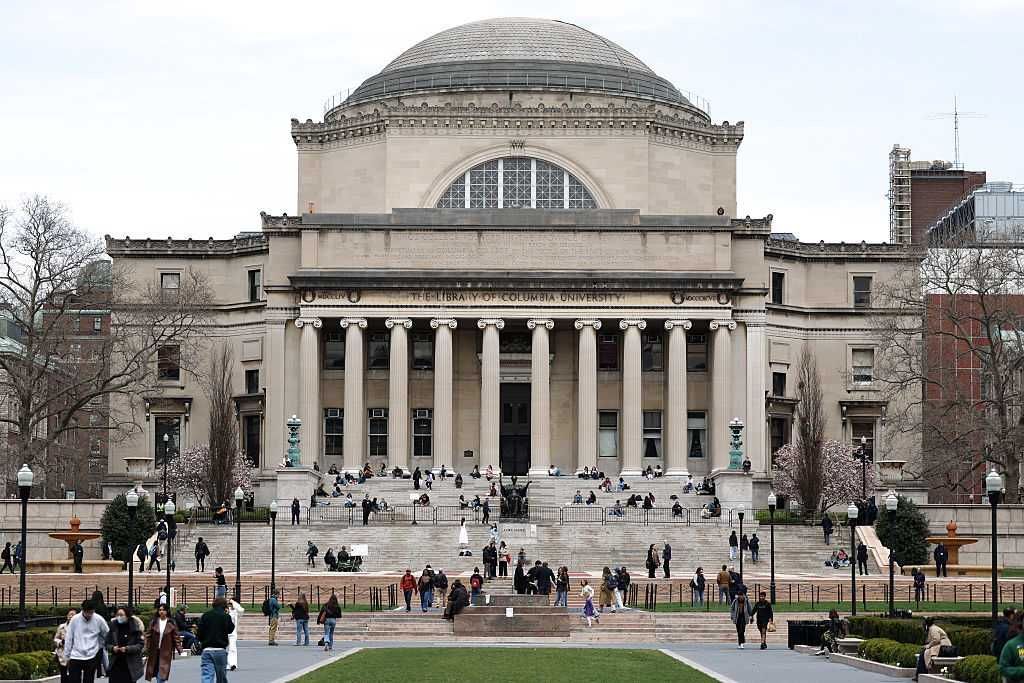
 Photo by Selcuk Acar/Anadolu via Getty Images
 Photo by Bill Pugliano/Getty Images
 Not all Asians are narrow-minded grinders, nor are all non-Asians free-spirited risk-takers.
 American universities should not be in the business of training foreign adversaries on the cheap. Foreigners must pay their fair share.
 A couple of news articles this week intended to instill the usual fear and panic that the dying media love to spread, but for anyone who isn’t a wild and vicious Democrat, they should have made for thoroughly enjoyable reads. The New York Times on Thursday ran the headline “Trump Escalates Use of Official Power […]
 Katherine Maher and her ilk don’t even see the problem of the ideological conformity their institutions have coercively created.
 www.theblaze.com
 www.theblaze.com