Opportunity or surrender? Louisiana becomes flash point in battle over carbon storage initiatives.
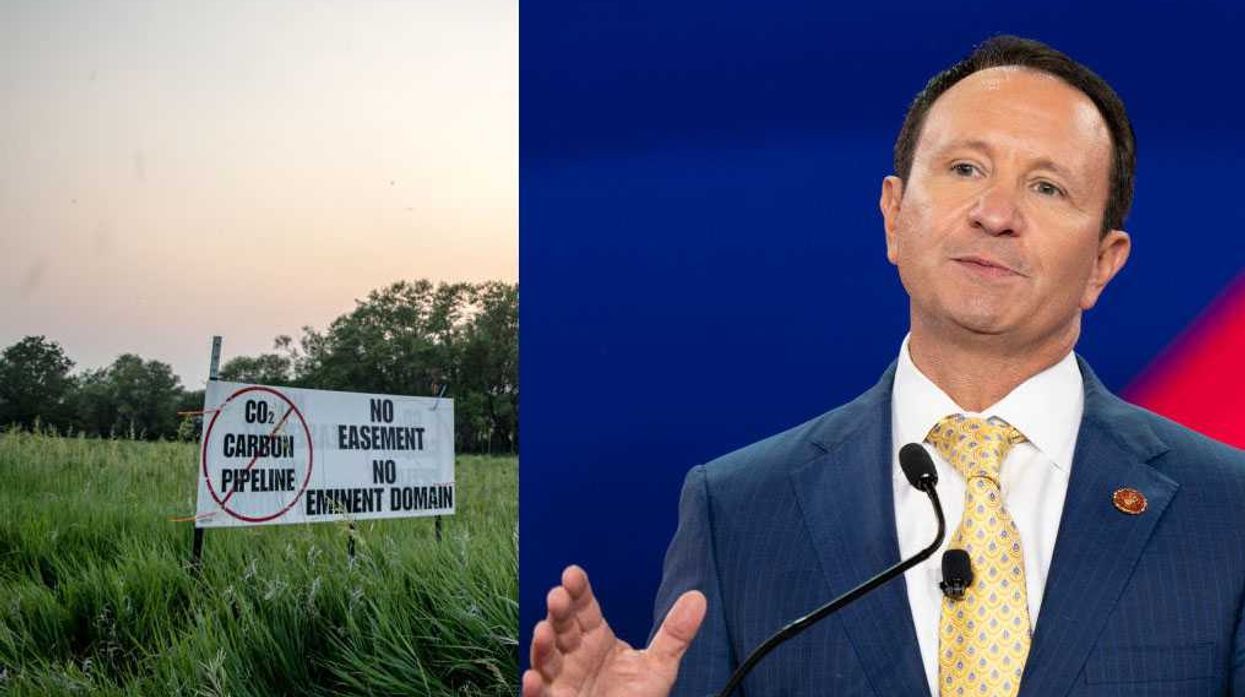


Louisiana has become a flash point in the battle over carbon capture and storage technology.

As its name suggests, CCS entails the capture, transportation, and storage of carbon dioxide produced by industrial activity or power generation.

'CO2 capture and storage will provide additional revenue sources.'

Long employed as a means of enhancing oil recovery, this technology has been embraced in various sectors as a way of simultaneously trapping greenhouse emissions and pacifying climate alarmists who regard carbon dioxide as an existential threat.

Just as liberals can be found on both sides of the issue, conservatives too are divided over whether to encourage CCS in Louisiana, one of only six American states approved to regulate all underground wells.

Republican supporters of the technology have touted it as a job-creating, industry-preserving means of fostering energy security, boosting the state's global competitiveness, and attracting business to Louisiana — claims echoed by ExxonMobil in its Feb. 16 announcement of expanded CCS operations in the state.

Some of the most outspoken opponents of CCS in the Bayou State are, however, MAGA-minded politicos and residents unwilling to accept the potential fallout of what they regard as a threat to private property rights and an act of surrender amid a decades-long climate alarmist campaign against American energy.

In defense

Gov. Jeff Landry (R), among the lawmakers who have encouraged CCS in the state, noted in an Oct. 15 executive order barring consideration of new applications for carbon dioxide injection projects — an order purportedly aimed at enabling the Louisiana Department of Conservation and Energy to catch up on previously received petitions — that:

  • Louisiana's industrial infrastructure "positions the State as a national leader in CO2 capture and storage, capable of seamlessly integrating CO2 capture in existing processes, enhancing America's energy competitiveness globally";
  • "CO2 capture and storage will extend Louisiana’s presence in energy by creating 17,000 potential new jobs, investing seventy-six billion dollars in potential capital for communities throughout Louisiana from announced projects alone, and driving economic growth on a scale unimaginable for Louisiana"; and
  • "CO2 capture and storage will provide additional revenue sources for local governments, has the potential to create a more diversified economy for Louisiana, and continue to serve as a catalyst for multiple industries, while sustaining and enhancing existing industries."

According to Louisiana's economic development agency, $23 billion in CCS-related capital investments in the state has been announced to date and 4,500 jobs are projected to result from CCS-related projects.

RELATED: Out of order: Courts shouldn’t rule based on ‘trust us’ science
Photo by F. Carter Smith/Bloomberg via Getty Images

Cameron Henry, the president of the Louisiana Senate who has expressed concern about recent legislation that would empower local communities to reject CCS projects, has similarly pitched carbon capture as the way toward greater prosperity.

'Another industrial experiment with serious risks.'

"It is something that is required for industry coming to Louisiana. Louisiana has to come to grips with that and find a happy medium to it," Henry said.

Liberal aversion

CCS has historically enjoyed a great deal of support from the American left.

The Biden administration, for instance, committed billions of taxpayer dollars to advance CCS initiatives, while the Democratic Party endorsed increasing taxes on fossil fuel power generation where the technology is employed.

While supported by powerful elements of the left and identified by the United Nations as a way of helping to limit so-called "global warming," some leftists who would apparently prefer to see the fossil fuel industry further humbled and America dependent on unreliable energy sources have exhausted a great deal of time and resources fighting the technology's implementation.

Antagonistic groups in the Bayou State, which reportedly leads the nation for proposed CCS projects, appear to have drawn funding from out-of-state liberal organizations such as the Rockefeller Family Fund, the Bloomberg Family Foundation, and a climate fund started by billionaire Jeff Bezos.

'The only people that want it are the ones who are trying to abscond with these federal tax credits.'

Form 990 tax returns indicate that Healthy Gulf, one of the New Orleans-based activist organizations that has criticized and campaigned against CCS initiatives in Louisiana, has received a fortune in recent years from the Rockefeller Family Fund and at least $1 million from the Bloomberg Family Foundation Inc.

Healthy Gulf has in turn dumped grant money into other Louisiana-based anti-CCS outfits including the Lake Maurepas Preservation Society, which campaigned against Air Products' proposed injection of trapped emissions a mile underneath the eponymous lake.

Healthy Gulf is hardly the only outfit opposing Louisiana CCS initiatives that has received money from out-of-state liberal groups.

Rise St. James touts itself as "a faith-based grassroots organization championing environmental justice and opposing the expansion of petrochemical industries in St. James Parish, Louisiana."

The group has characterized CCS as "another industrial experiment with serious risks" and advocated against it — not just in Lake Maurepas but across the whole of Louisiana.

This supposedly "grassroots organization" notes on its website that it is financially backed by the Earth Island Institute, a mammoth international organization based in Berkeley, California.

The Earth Island Institute, which has itself received funds from various climate alarmist groups such as the leftist Tides Foundation, has pushed anti-CCS literature, warning about possible leaks and a potential "pipeline-building frenzy" in the event that the technology becomes more common.

The Deep South Center for Environmental Justice, a New Orleans-based nonprofit, even appeared to imply that CCS initiatives are racist, claiming that the technology is "one of the biggest threats to communities of color being harmed by the polluting industries that exacerbate our climate crisis and by the regulatory agencies that are supposed to be protecting them."

The DSCEJ also joined Healthy Gulf and the Alliance for Affordable Energy in an unsuccessful legal challenge to the Environmental Protection Agency's decision to grant Louisiana primary enforcement authority over a class of underground carbon storage wells.

As with the other groups, the DSCEJ has received funds from deep-pocketed, out-of-state liberal organizations.

The Bezos Earth Fund — described as a "$10 billion commitment from Jeff Bezos to fight climate change" — reportedly gave the New Orleans-based activist group $4 million in September 2021. From 2020 to 2023, the DSCEJ received over $700,000 from the San Francisco-based Tides Center and Tides Foundation.

Healthy Gulf, Rise St. James, and the DSCEJ did not respond to a request for comment from Blaze News.

Conservative backlash

While some of those who oppose CCS appear to be liberals, both inside and outside Louisiana, there is substantial resistance among local conservatives — including Republican lawmakers.

State Rep. Chuck Owen (R), one of the more vocal critics of carbon sequestration initiatives, told Blaze News, "People who live in the country where they're trying to dump this stuff do not want it."

"I polled this twice. This is an 85% 'no' issue in my district," said Owen, whose district includes the cities of Anacoco, DeRidder, Leesville, and Rosepine. "The only people that want it are the ones who are trying to abscond with these federal tax credits, knowing that it's not going to do any good."

Owen emphasized that much of the resistance is about property rights — about Louisianans' aversion to having "private companies coming in and taking their land for money."

A group called Save My Louisiana, comprising mostly residents and elected officials in Owen's neck of the woods, filed a lawsuit in November over state laws enabling the expropriation of private property for pipelines transporting carbon dioxide.

The lawsuit, which was supported by Louisiana Treasurer John Fleming (R), alleges that laws permitting the use of eminent domain for CCS are unconstitutional and that such statutes turn Louisiana "into a national waste dump site."

"No one's against oil and gas. We want oil and gas to succeed here. But how do you equate the burial of carbon waste with energy?" Owen said.

Daniel Turner, founder of the American energy advocacy group Power the Future, told Blaze News, "The entire thing is just absolute bulls**t. The process, the money, the subsidies, the metrics, the goals, the technology — the entire thing is a farce."

"Once we start playing this game that carbon dioxide is bad and needs to be captured, you are playing the left's game," added Turner.

When asked about the burgeoning industry promise of generating thousands of jobs in Louisiana, Turner said, "We're going to create fake jobs for a fake problem and then wonder why we are further in debt."

The disagreement over the value of CCS appears to be coming to a head in Baton Rouge, where lawmakers have advanced numerous bills aimed at hamstringing CCS initiatives.

"These bills are not anti-industry," state Rep. Mike Johnson (R) said in January after filing a trio of bills targeting CCS. "They are pro-property rights, pro-local government, and pro-Louisiana families. Economic development should be built on voluntary agreements — not forced land seizures — and local communities deserve a seat at the table."

Landry's office did not respond to a request for comment.

Like Blaze News? Bypass the censors, sign up for our newsletters, and get stories like this direct to your inbox. Sign up here!


Waiting to exhale? Trump’s EPA just made it possible.


The Trump administration has rescinded the Obama administration’s 2009 Greenhouse Gas Endangerment Finding for gases such as carbon dioxide. You may now exhale without worrying that the carbon dioxide in your breath will contribute to global warming.

After all, with 8.3 billion people on the planet exhaling an average of 2.3 pounds of CO2 per person per day, roughly 9.5 million tons of CO2 are respired into the atmosphere daily. That is a lot of hot air — literally.

If you have been holding your breath while waiting for more sensible environmental regulations that focus on both people and the planet, you may now breathe easier.

Fortunately, plants use the air we exhale. It is part of the life cycle that sustains a healthy biosphere. Add the full carbon cycle — in which carbon is sequestered and released throughout the living and nonliving components of the global ecosystem — and a natural balance is generally maintained.

The serious question has been whether human activity, especially the increasing use of fossil fuels since the late 1800s, has tipped that balance.

The major “consensus science” conclusions tied to the endangerment finding include the confident assertion that modern climate change can be attributed to people burning fossil fuels and releasing greenhouse gases into the atmosphere. According to one professional organization, these human-caused changes “are larger and faster than any humanity is known to have endured over the last 10,000 years.” The same view also holds that many harmful impacts already under way will intensify and outweigh any benefits.

Yet another perspective deserves consideration. One of the greatest forces lifting people out of poverty has been the burning of fossil fuels. The progression from coal to oil to natural gas — along with advances in pollution controls — has helped produce dramatically higher living standards in societies that use their energy resources well.

Arguably, the human-caused improvements in comfort, productivity, and longevity made possible by fossil fuels are also “larger and faster than any humanity is known to have [enjoyed] over the last 10,000 years.”

As for harmful impacts, the rhetorical pattern often looks familiar: find an extraordinary weather event and blame it on anthropogenic global warming. Extreme heat? Human activity. Extreme cold — as the United States recently experienced? Human activity again.

At least most scientists acknowledge that positive effects exist. These include substantial increases in global vegetation and the advantages of warmer temperatures over colder ones for human well-being and development.

RELATED: 5 truths the climate cult can’t bury any more

Khanchit Khirisutchalual via iStock/Getty Images

Any honest assessment of climate change and its effects on people, infrastructure, and the natural world should weigh both benefits and harms. Complex systems demand that kind of accounting.

The current retraction of the endangerment finding will be a particular breath of fresh air for the auto industry. In essence, the Environmental Protection Agency concluded that it “lacks statutory authority under Section 202(a) of the Clean Air Act to prescribe standards for [greenhouse gas] emissions” from “new motor vehicles and new motor vehicle engines.”

According to the EPA:

As a result of these changes, engine and vehicle manufacturers no longer have any future obligations for the measurement, control, and reporting of [greenhouse gas] emissions for any highway engine and vehicle, including model years manufactured prior to this final rule. This final action is only related to [greenhouse gas] emissions and does not affect regulations on any traditional air pollutants. Rather, this action realigns EPA’s regulatory framework with the best reading of the CAA, which does not authorize EPA to regulate [greenhouse gas] emissions from new motor vehicles.

As the agency notes, traditional health-based air pollutants such as sulfur dioxide, nitrogen dioxide, ground-level ozone, particulate matter, lead, and carbon monoxide — not CO2 — are unaffected by this EPA action.

So if you have been holding your breath while waiting for more sensible environmental regulations that focus on both people and the planet, you may now breathe easier.

Editor’s note: A version of this article appeared originally at American Thinker.

Give thanks for the sun, the CO2, and the farmers — not the climate scolds


What if, this Thanksgiving, we offered a small tribute to global warming and the relative abundance of carbon dioxide in the atmosphere? An apparently scandalous idea. Global elites and their media partners insist that these forces promise catastrophe. Yet sound thinking demands the opposite conclusion.

Fifty years ago, the story was reversed. In the 1970s, major outlets warned of a coming ice age. Some scientists called for immediate action to stop the planet from plunging into widespread glaciation.

Abundance is not an accident. It reflects a climate far friendlier than the one our ancestors endured — and a modern economy powered by fuels that make global agriculture possible.

The fear of cold had at least a historical basis. Unlike today’s speculative climate models, past civilizations suffered through genuine cold-driven crises.

The Little Ice Age, from roughly 1300 to 1850, brought centuries of persistent chill. Historical accounts describe crops withering, growing seasons collapsing, and communities starving as food systems failed. The Thames froze solid. Frost fairs became a tradition because the cold was relentless. Entire regions fell into poverty and instability.

People living through those centuries would have welcomed the warmth we enjoy today.

Modern Americans rarely think about that history as they prepare Thanksgiving meals sourced from every climate zone on Earth. Our abundance depends on a long supply chain anchored in one fundamental reality: Plants grow best in warmth, not cold.

Warm periods fed civilizations

Warm eras have repeatedly aligned with human flourishing. During the Roman Warm Period and the Medieval Warm Period, farmers cultivated crops in regions that are too cold for them now. Warmer temperatures didn’t bring disaster; they supported prosperity.

The present is no exception. Earth has quietly greened since the late 20th century. Satellite data shows expanding vegetation, especially in arid regions. The drivers are straightforward: increased carbon dioxide and a slightly warmer global climate.

CO2 is not a toxin. It’s plant food — an essential input for photosynthesis. Higher concentrations allow crops to use water more efficiently and grow more robustly. This is one of the greatest environmental improvements of the past century, though you would never know it from the coverage.

RELATED: ‘Green Antoinettes’ live large, preach small

Julia Klueva via iStock/Getty Images

The other indispensable ingredient is modern fertilizer, made largely from natural gas. High-yield crops require nitrogen, and synthetic fertilizers supply it.

Energy-dense fuels — coal, oil, natural gas — power nearly every part of modern agriculture. Irrigation pumps, fertilizer plants, harvesters, delivery trucks, and refrigeration systems depend on them. Remove these fuels, and global food systems collapse. The return of famine would be swift.

A simple truth

Climate alarmists warn that warming will devastate global food security. Actual yields say otherwise. For 40 years, production of wheat, corn, rice, and other staples has climbed dramatically. Most food shortages today result from war or corrupt governance, not climate.

Earth’s climate has always shifted. Mega-droughts, severe floods, heat waves, and cold snaps have occurred throughout history. Treating every anomaly as evidence of imminent collapse ignores the long record of natural variability.

So as Americans gather around Thanksgiving tables, remember a simple truth: The feast depends on warmth, carbon dioxide, and the affordable energy that moves food from field to plate.

This abundance is not an accident. It reflects a climate far friendlier than the one our ancestors endured — and a modern economy powered by fuels that make global agriculture possible.

G7 meets in a carbon-rich paradise to demand less carbon


As Canadians host the 50th annual G7 Summit this week in Kananaskis, Alberta, they can expect a deluge of “climate-saving” proclamations — rhetoric divorced from scientific evidence and economic reality.

This elite gathering of the world’s leading economies, along with the European Union, plans to spotlight climate resilience, net-zero targets, green certification, and renewable energy. But the most heavily hyped technology on the agenda will likely be carbon capture — a scheme billed as the silver bullet for saving the planet from carbon dioxide emissions.

NASA has credited rising CO2 levels with 70% of Earth’s recent greening. More carbon dioxide, not less, helps feed the world.

Carbon capture refers to the removal of carbon dioxide from industrial exhaust or directly from the air. The captured gas is then injected underground or used commercially, such as for boosting oil production. That latter application has proven highly effective worldwide. But the idea of scaling up carbon capture to cool the planet is not just costly — it’s potentially counterproductive.

Carbon capture as a climate fix imposes heavy costs with no measurable benefits. It burdens consumers, risks environmental harm, and distracts from more effective energy solutions. Most proposals target emissions from coal- or gas-fired power plants, where the captured CO2 would be pumped underground and stored permanently.

With Alberta phasing out coal in favor of natural gas, the cost implications matter. Using data from the U.S. National Energy Technology Laboratory, we examined what it would cost to retrofit gas-fired plants in the province with carbon capture.

NETL analyzed two natural gas combined cycle plants: a 727-megawatt and a 992-megawatt facility. The numbers are staggering. For the smaller unit, construction and startup costs would jump from $760 million to $1.4 billion. Annual operation and maintenance would rise from $29 million to $55 million.

For the larger plant, the picture is no better. Costs climb from $1.1 billion to $1.9 billion to build and launch, and annual maintenance surges from $39 million to $70 million — an 80% increase.

On top of the financial hit, carbon capture reduces energy output by about 11%. That means consumers would pay more — for less electricity.

These systems also require an extensive network of pipelines to move CO2 to underground storage sites. One proposal to connect Canada’s oil sands operations with a CO2 transport system estimated the cost at $4 billion. And that’s just for the pipes.

Even if money were no object, carbon capture fails the basic test of relevance. The theory that CO2 is the primary driver of Earth’s temperature remains unproven. Natural factors — like changes in solar output, the planet’s orbit, and its axial tilt — play a far greater role. Alarmist climate models, built on faulty assumptions, fail again and again to match observed data.

According to the CO2 Coalition, even if the United States had reached net-zero emissions in 2010, the reduction in global temperature by 2100 would amount to just 0.1040 degrees Celsius. That’s not a meaningful impact. Alberta’s emissions, by comparison, are a fraction of the U.S. total.

Far from being a pollutant, carbon dioxide is essential to life. It feeds plants, boosts crop yields, and promotes ecosystem health. NASA has credited rising CO2 levels with 70% of Earth’s recent greening. More carbon dioxide, not less, helps feed the world.

Instead of obsessing over how to bury carbon, G7 leaders might do better to look around at the Canadian Rockies and ask why they’re trying to deprive the planet of the gas that makes them so green in the first place.

Democrat Climate Zealots Implore Lee Zeldin To Prioritize ‘Green’ Agenda During EPA Confirmation Hearing

'We can and we must protect our precious environment without suffocating the economy,' Zeldin told senators.

With the country shivering, now is the time to counter the war on carbon


Carbon forms the basis of plant life and emerges from nearly all energy sources, aside from nuclear power, that keep us warm. With forecasts predicting a prolonged cold spell for much of the country, now is the time to end the war on carbon, human life, and effective energy production. Wyoming conservatives offer a solution with SF 92, the “Make Carbon Dioxide Great Again” bill.

For years, most Republican governors have embraced or tolerated the push for “carbon neutral” energy — also known as transitioning away from reliable energy sources to less effective options that harm land and the environment. They mainly differ from Democrats on how quickly to pursue this potential energy nuclear winter. In Wyoming, where the governor supports going “carbon negative,” a group of conservatives is taking the offensive, rejecting the idea that carbon is the problem instead of a key driver of the economy.

Most Americans are staying warm this winter because of carbon-based fuels. Let’s stop demonizing them.

State Sen. Cheri Steinmetz and former Wyoming Freedom Caucus Chairman John Bear introduced legislation that would prohibit the state from restricting carbon-based energy sources or treating carbon like a pollutant. The measure specifically overturns a five-year-old liberal law requiring coal-fired power plants to use “carbon capture” technology.

Wyoming should lead the nation in coal production, but the industry has been crushed by the carbon hoax. The state government has only advanced the hoax instead of fighting it. Under the new bill, Wyoming would reimburse consumers for fees paid under the mandatory carbon capture retrofitting program.

Most important, the bill begins with several pages of findings debunking the idea that carbon dioxide is a pollutant, that it causes the climate to warm, and that human activity significantly contributes to such warming. It calls carbon “a foundational nutrient necessary for all life on earth,” a stance every Republican-led legislature needs to adopt.

The most consequential lie of our time

Human activity accounts for only about 4% of atmospheric carbon, leaving the exact share of carbon dioxide increases caused by humans in dispute. A recent paper in the journal Health Physics by University of Massachusetts Lowell researchers, using Carbon-14 data, concluded that only 12% of CO2 added to the atmosphere since 1750 is man-made — “much too low to be the cause of global warming,” they write.

That’s why we have no clear correlation, let alone proof of causation, between energy usage and higher carbon levels, or between those higher carbon levels and rising temperatures. For instance, although renewables increased by 12% and coal use dropped by 8% in 2022, U.S. carbon emissions still rose by 1.3%. Climate conspiracists have gotten what they want, even though human input remains too small to affect processes that clearly play out over thousands of years.

And there is certainly no evidence that carbon systematically causes irrevocable warming across the globe. Greenpeace co-founder Dr. Patrick Moore says carbon dioxide typically lags about 800 years behind temperature increases, which he believes indicates that higher temperatures come first and rising CO2 follows. “There is no situation where we have proven that CO2 is the cause and temperature is the effect. None,” he said. “There isn’t any situation where we can actually say we know that from empirical evidence, from science.”

Moore observes that warmer periods began long before modern industrialization. For instance, the 1930s dust bowls in the United States set numerous high-temperature records. One study found that Italy was 3 to 4 degrees Celsius warmer 10,000 to 12,000 years ago, despite CO2 levels then being 20% below the preindustrial level of 280 parts per million.

Moore says the current warming trend has lasted about 300 years, beginning 150 years before fossil fuels came into broad use. He argues the warming rate hasn’t changed despite exponential increases in carbon emissions, concluding that “it hasn’t moved the thermometer in the slightest.”

“And that’s kind of all people have to know to see that they’re being tricked.”

CO2 has nothing to do with it

Some scientists argue warming trends align more with absorbed solar radiation than with carbon dioxide levels, which they say explains why observed warming isn’t uniform. A new study from multiple southern-state earth science departments reports that the Southeast United States has been cooling for the past 120 years, despite emissions and the urban heat island effect.

Other studies suggest cloud cover and other complex meteorological factors drive various warming cycles at different times and places. One study identifies the jet stream as a “dynamic driver of climate variability” going back to 1300.

Some researchers attribute warming trends to rising sea surface temperatures rather than emissions, arguing that emissions are “irrelevant” compared to cyclical ocean changes. They add that human activity cannot meaningfully heat the oceans, noting a study showing the atmosphere — whatever it contains — only influences the top 0.01 millimeter of the ocean’s surface.

Finally, critics say it’s naïve to think we can measure every corner of the Earth’s temperature for the past 150 years and predict the next century within a degree Fahrenheit. Another recent study, confirmed by NASA satellite data, suggests that from 1880 to 2020, global warming estimates were inflated by 42% because of aging weather stations

This lie is too dangerous to ignore, and Republicans must stop parroting it. We should end the practice of ruining our lives and the environment in service of the carbon hoax.

Every state should pass legislation like Wyoming’s SF 92 and eliminate any mention — let alone a mandate — of anti-carbon policies. At the federal level, Congress must repeal all anti-carbon mandates and subsidies, including the carbon capture grift.

What better time to champion common sense than a month when much of the country is bracing for freezing temperatures? Despite hundreds of billions in subsidies, a monopoly on public discourse, and anti-carbon mandates, solar and wind still provide only about 10% of electricity — and most of that comes from areas not facing extreme cold. Most Americans are staying warm this winter because of carbon-based fuels. Let’s stop demonizing them.

California Shows What Happens When Nobody Checks The Administrative State: Everything Burns Down

The Darwinian evolution of our constitutional framework promoted by Woodrow Wilson has fully run its course in California.

Glass half empty: Carbon dioxide shortage causing some craft breweries to consider tapping out


After almost two and a half grueling years of shutdowns, restrictions, staff shortages, and rising prices for ingredients, some local breweries are now having to contend with yet another threat to their business models: limited supplies of carbon dioxide.

Carbon dioxide is an essential component of the crisp beer experience. CO2 gives beer a bubbly, foamy appearance and taste. It is also important for transmitting beers through taps and canning lines.

"Warm and flat is not where it's at," said Bob Pease, the president and CEO of the Brewers Association. "It's a key ingredient."

But now because of unreliable supply chain lines and contamination at a major CO2 facility, many small breweries are left feeling high and dry.

Night Shift Brewing, in Everett, Massachusetts, near Boston, has already announced that it will have to suspend operations and lay off personnel soon because of the CO2 shortage.

“Last week, we learned that our CO2 supply has been cut for the foreseeable future, possibly more than a year until we get more,” the company reported on Instagram.

"Come October 1, we won’t likely have jobs for many of this team," the post continued.

Though demand for cold, carbonated beverages like beer skyrockets during the summer, demand is not the main cause for the shortage. Contamination in the carbon dioxide facilitated in Jackson Dome, Mississippi, has also greatly affected brewing capabilities. The major energy company Denbury, which owns the rights to the Jackson Dome source, claims on its website that it controls perhaps "the only significant underground deposit of CO2 in the United States east of the Mississippi River." So any disruption at Jackson Dome would cause disruptions in many other industries, including the beer brewing industry.

And Jackson Dome isn't the only CO2 source with processing issues.

“Several of my brewers received a Force Majeure letter yesterday from their CO2 supplier letting them know that their plant in Illinois just suffered a mechanical failure that will shut the plant down until mid-September,” Katie Stinchon, executive director of the Massachusetts Brewers Guild, wrote in an email. “The result is a 30% reduction in contracted volume for at least the next month, and they should expect delays.”

And according to some experts, the supply chain issues have a greater impact on microbreweries than on major corporations.

"Large brewers ... may have a technology called carbon capture at their breweries that helps insulate them from supply disruption," Pease noted.

Still, despite the added setback, Pease and other brewers remain optimistic that they will be able to withstand what Pease hopes will be a short-term shortage.

"Our members have faced a long string of challenges, and we have found ways to overcome most of them," Pease said. "We will try to help our members overcome this one."

Pease said he hopes that the carbon dioxide supply issue will be resolved within the next three months.

Rattankun Thongbun/Getty Images

Horowitz: What have we gotten from two years of mask-wearing?

It’s truly hard to overstate the damage done to a generation of children by the two-year masking regime. From language and developmental inhibition to social and behavioral anxiety, these Chinese cloths have created a generation of bumbling fools. So, was it worth it?

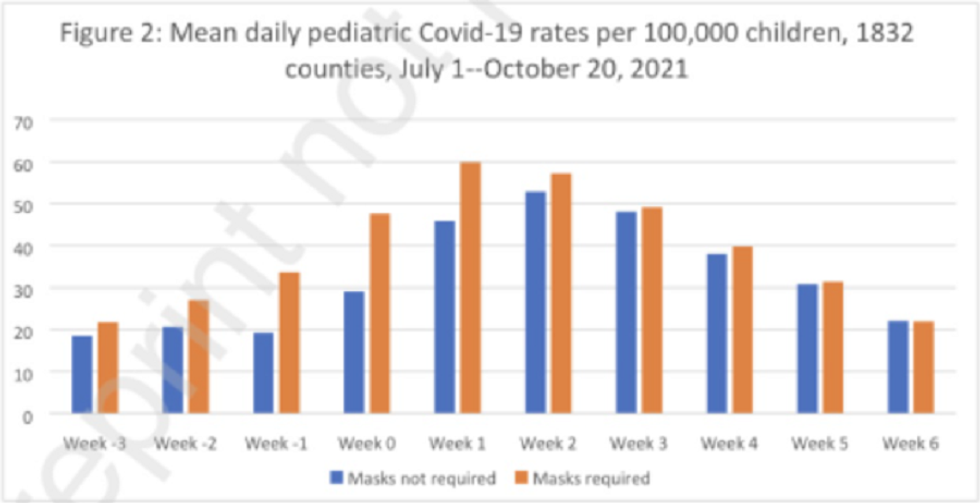
In a preprint published in the Lancet, Ambarish Chandra of the University of Toronto and Tracy Beth Høeg of the University of California at Davis replicated a CDC study comparing counties with school mandates to those without mandates. However, rather than using the CDC’s artificial and arbitrary number of counties and duration of study, they extended the study using a larger sample of districts and a longer time interval, employing almost six times as much data as the original study. Using this updated method to measure the relationship between mask mandates and per-capita pediatric cases, they found “no significant relationship between mask mandates and case rates.”

The study observed over 1,800 counties from July through October 2021, which is presumed to be the largest observational sample ever conducted on the mask issue.

In fact, for most weeks, there was a non-statistically significant higher case rate among the masked counties. What this demonstrates is that with all of the CDC’s observational studies, arbitrary endpoints were clearly manipulated to show results they knew did not reflect reality.

Similarly, a study of fatality rates in 35 European countries during the 2020-2021 winter peak found no positive relationship between reduced mortality rates and mask compliance. If anything, there was a reverse correlation. “While no cause-effect conclusions could be inferred from this observational analysis, the lack of negative correlations between mask usage and COVID-19 cases and deaths suggest that the widespread use of masks at a time when an effective intervention was most needed, i.e., during the strong 2020-2021 autumn-winter peak, was not able to reduce COVID-19 transmission,” concluded the author in an April study published in Cureus. “Moreover, the moderate positive correlation between mask usage and deaths in Western Europe also suggests that the universal use of masks may have had harmful unintended consequences.”

Several months ago, an observational study published in Medicine by German doctor Zacharias Fögen compared the overall case fatality rate in 81 counties in Kansas without mask mandates compared to the 24 with mandates. He actually found a statistically significant higher fatality rate in the mask counties. “Results from this study strongly suggest that mask mandates actually caused about 1.5 times the number of deaths or ∼50% more deaths compared to no mask mandates.”

Dr. Fogen posits as a potential reason for negative efficacy that the mask-wearing can make the virions smaller and cause them to penetrate deeper into the alveoli, where they can cause pneumonia instead of bronchitis. “A rationale for the increased RR (risk ratio) by mandating masks is probably that virions that enter or those coughed out in droplets are retained in the facemask tissue, and after quick evaporation of the droplets, hypercondensed droplets or pure virions (virions not inside a droplet) are re-inhaled from a very short distance during inspiration.”

While negative efficacy is still a hypothesis, there have been documented negative side effects to mask-wearing. A preprint Italian study from earlier in May found that short-term surgical mask usage was associated with an increased inhaled CO2 level greater than 5000ppm in 90% of 10- to 18-year-olds in the sample. “Shortly after wearing surgical masks, the inhaled air CO2 approached the highest acceptable exposure threshold recommended for workers, while concerningly high concentrations were recorded in virtually all individuals when wearing FFP2 masks,” concluded the authors. “The CO2 concentration was significantly higher among minors and the subjects with high respiratory rate.”

Yet here we are, over two years into this saga, and schools are still masking children, while some that stopped are bringing back this barbaric practice. To this day, people with severe mental and physical disabilities are being forced to wear masks when seeking medical attention at health care facilities. Trauma survivors who suffer panic attacks from having their faces covered are forced to choose between panic attacks and loss of medical care.

But children will, by far, be the most harmed by this policy. The language development impediment that will result from the past two years of inhumane mask mandates is incalculable. The head of the U.K.’s Office for Standards in Education, Children's Services and Skills found that children suffer from “limited vocabulary,” while some babies “struggled to respond to basic facial expressions,” partly due to interacting with people wearing face masks.

Talk about a cost-benefit analysis!

To this day, only a few states have banned mask mandates from coming back. The New Hampshire governor recently vetoed a bill from the state legislature banning local school boards from implementing such immoral policies upon children. What we really need is a ballot initiative in every state to spell out in the state’s constitution that a person has a fundamental right to refuse to wear a medical device and cannot be discriminated against in the realm of public accommodations for exercising that right. Moreover, there should be criminal penalties for any adult who forcibly masks a child.

If we plan to wait for “the science” to catch up to reality and morality, we will be waiting a long time. It might be obvious to us that masking is cruel and ineffective, but not to the megalomaniacs in power. That power needs to be stripped permanently.

Horowitz: New study shows mask-wearing children at risk for ‘unacceptable’ CO2 levels, cautions against the practice


We've spent over a year debating nonexistent evidence that masks effectively protect against the spread of viruses. However, there has been little debate and few published studies on potential harms of mask-wearing, a reality that has allowed zealous maskers to aggressively push their mandate as harmless, with no downside. Well, now we have a randomized controlled trial published in JAMA that raises serious concerns about this practice.

Researchers from Germany conducted a blinded randomized controlled trial of 45 children wearing masks and measured the baseline carbon dioxide levels during inhalation and exhalation behind various masks as compared to the levels of unmasked children. The results are very concerning:

We measured means (SDs) between 13 120 (384) and 13 910 (374) ppm of carbon dioxide in inhaled air under surgical and filtering facepiece 2 (FFP2) masks, which is higher than what is already deemed unacceptable by the German Federal Environmental Office by a factor of 6. This was a value reached after 3 minutes of measurement. Children under normal conditions in schools wear such masks for a mean of 270 (interquartile range, 120-390) minutes. The Figure shows that the value of the child with the lowest carbon dioxide level was 3-fold greater than the limit of 0.2 % by volume. The youngest children had the highest values, with one 7-year-old child's carbon dioxide level measured at 25 000 ppm. (Emphasis added.)

Why has nobody in our government bothered to study this before experimenting on children for a virus that doesn't affect them?

The German researchers conclude that there is a concern of mask-wearing causing hypercapnia, and as such, children should not be forced to wear masks: "This leads in turn to impairments attributable to hypercapnia. A recent review concluded that there was ample evidence for adverse effects of wearing such masks. We suggest that decision-makers weigh the hard evidence produced by these experimental measurements accordingly, which suggest that children should not be forced to wear face masks."

While it might seem like the mask mandates are over, they are still largely in place in many workplaces, including an impervious mandate for health care workers who often work 10-hour shifts. The mandate is still in place for 2-year-olds on six-hour flights. The facts that the only RCT studying carbon dioxide effects shows reason for concern, that the only RCT on mask efficacy shows no evidence of meaningful effectiveness, and that children rarely get sick from this virus make the continued mask mandates senseless.

The public health fascists are already attempting to mischaracterize COVID variants in order to reinstitute masking, a trend that has already started in California. CNN had a doctor on the air this week suggesting that masks need to be a part of a new dress code.

Potential carbon dioxide poisoning is but one side effect that needs to be studied. Last month, a group of Alachua County, Florida, parents had their children's masks cultured in a lab and found dangerous pathogens growing on them. Where are the studies on microbiological harms?

The findings of this survey support what we already know to exist in terms of side effects from mask-wearing. A published survey of over 25,000 parents of German schoolchildren found that 68% reported impairments caused by masks. The impairments included: "irritability (60%), headache (53%), difficulty concentrating (50%), less happiness (49%), reluctance to go to school/kindergarten (44%), malaise (42%), impaired learning (38%), and drowsiness or fatigue (37%)."

Until now, one could have dismissed this as unscientific hearsay. However, with this degree of carbon dioxide increase from just a few minutes of mask-wearing, it makes sense that so many children would feel lethargy and malaise after an entire school day.

Masks increase the volume of dead space, which facilitates carbon dioxide retention, according Megan Mansell, a hazardous environs PPE expert. "An area covered in the study is dead space increase, where not only is there an accumulation of rejected respiratory emissions, but a pathogenic concentration of rejected bodily waste and pathogen picked up from pulling airborne microbes, in addition to periodontal bacterial contributions, which thrive in low-oxygen, warm, moist areas," warned Mansell, who recently spoke against the mask mandate at an Alachua County School Board meeting.

Many parents likely ignored the concerns about mask-wearing and carbon dioxide poisoning because they didn't see their kids faint or any immediate severe effects. But Mansell, who is a former district education director for children with disabilities and special needs, believes that there are potential long-term impacts every moment a child's breathing is restricted by masks.

"Deoxygenation and hypercapnia can have permanent impacts on human growth and development, and we can anticipate profoundly incapacitating conditions such as cerebral palsy, in addition to far lower birth rates, as stillbirth rates have increased fourfold in mandating regions," asserted the PPE expert and child advocate. "This has an impact on all lives, even the unborn."

The obvious question is why would there be any difference for adults if the implication of this study is that masks increase carbon dioxide levels across the board? The concerns definitely apply to everyone, but Mansell contends the mask mandates are especially dangerous for children. "Child masks are unregulated garbage with no efficacy or safety standards, and no two are alike, so while one child may breathe freely and have no visible signs of distress, another child could have a similar-looking but far more restrictive apparatus on, and no one would be any the wiser."

Ultimately, this comes down to medical consent. We are just beginning to learn about the corners cut in the development of the vaccines and the side effects the public was not warned about. However, when it comes to masks, until now, nobody has bothered to even capture the reported side effects. Have human beings, including children, become the new lab rats for scientific experimentation?