Netflix wants a monopoly on your mind


Netflix has announced an $80-plus billion plan to buy Warner Bros. Discovery — a move that would give the streaming giant control of some of the biggest entertainment franchises in America. Executives celebrated the deal, promising consumers “more of what they love.” In reality, the merger would create a monopolistic monster. For millions of Americans already frustrated with Netflix’s ideology and influence, this feels like a bridge too far.

This isn’t some routine corporate merger. It is an attempt to build an unstoppable cultural behemoth. Netflix is already the largest streaming platform in the country. Absorbing Warner Bros. — one of Hollywood’s oldest and most important studios — would allow the company to tower over its competitors and control a massive share of American storytelling.

The Netflix-Warner Bros. merger would confer unprecedented cultural and economic authority on a company already mired in national controversy.

Antitrust concerns are obvious and bipartisan. Lawmakers in both parties have called the deal an antitrust “nightmare.” Consumers have already filed a class-action lawsuit arguing that the merger would gut competition. But there is another reason conservatives in particular are sounding the alarm: the cultural power Netflix has accumulated — and how it intends to use it.

The culture-war dimension

In recent years, Netflix has dominated the streaming world and, by extension, much of the debate over ideological influence in entertainment. The company has been at the center of national fights over gender, sexuality, race, and the politicization of children’s programming.

Elon Musk triggered a viral backlash when he urged millions of followers to cancel Netflix, accusing the platform of pushing a “woke agenda” into entertainment and slipping social messaging into children’s content. Musk tapped into a widespread, simmering frustration: the belief that major corporations no longer reflect the values of ordinary American families.

Netflix’s programming choices have not eased those concerns. The company has showcased transgender and nonbinary themes in children’s shows, celebrated DEI ideology internally, and proudly curated LGBTQ+ collections “for families.” Sometimes this yields unintentional comedy — like a new show about a transgender coal miner — but other times, the messaging feels more deliberate and invasive.

Now imagine giving the company control of Warner Bros. The concern isn’t only economic. It’s cultural. A combined Netflix-Warner empire would shape what stories get made, which values get promoted, and what kind of entertainment future generations will inherit.

What happens to theaters, communities, and creators?

Warner Bros. has long been a pillar of American cinema. Local theaters depend on major studios to draw families out of their homes and into shared cultural experiences — some of the last common spaces in American life. Netflix, by contrast, has built its kingdom on isolation: individual screens, algorithmic curation, the slow erosion of communal entertainment.

If Netflix takes control of Warner Bros., expect shorter theatrical windows, more straight-to-streaming releases, and a slow decline in the local theaters that hold American communities together. The result: fewer choices, weaker alternatives, and consumers trapped paying whatever the merged company demands.

Netflix insists this won’t happen. History suggests otherwise.

Creators and workers see what’s coming

Hollywood’s creative class understands the danger. Director James Cameron has warned that the merger would flatten artistic diversity and silence competing voices. Industry unions fear that a single corporation controlling both production and distribution will decide which projects get funded, which careers move forward, and which ideas make it to the screen.

A company with that much power can shape the entire pipeline of culture.

RELATED:Can conservatives reclaim pop culture?

Photo by Danny Martindale/FilmMagic

The government must stop this

Regulators have noticed. President Trump has expressed concern that the combined company would wield too much market power. The Department of Justice and consumer advocates are preparing for an aggressive antitrust review. Critics across the political spectrum warn that prices will rise, competition will collapse, and consumers will lose.

Americans want competition — not cultural empires run by a handful of executives who impose ideological agendas while claiming neutrality. They want storytellers who reflect a diversity of values and views, not corporate gatekeepers who see entertainment primarily as a delivery system for political messaging.

The Netflix-Warner Bros. merger threatens all of this. It would confer unprecedented cultural and economic authority on a company already mired in national controversy.

The Trump administration should block the merger.

Americans are tired of corporations that profit from their attention while ignoring their concerns. Allowing one company to dominate such a massive share of American entertainment would weaken the industry and harm the country.

The government must stop this power grab before the damage becomes irreversible.

Ongoing Judicial Coup Proves Alito, Thomas Were Right About Weak SCOTUS Injunction Ruling

Alito predicted that the court's decision would 'have very little value if district courts award relief to broadly defined classes without following "Rule 23’s procedural protections" for class certification.'

'Game of whack-a-mole': Leftists have new favorite way to block MAGA agenda — without universal injunctions


Over the course of George W. Bush's entire presidency, 12 nationwide injunctions were issued by federal judges, halting or preventing the enforcement of executive branch policies. During Barack Obama and Joe Biden's presidencies, 19 and 28 nationwide injunctions were issued, respectively.

According to the Congressional Research Service, the first Trump administration was slapped with 86 nationwide injunctions.

Meddlesome U.S. district court judges proved more than willing this year to oblige liberal litigants in arresting the MAGA agenda by slapping the second Trump administration with scores of additional universal injunctions — 25 in Trump's first 100 days back in office and dozens more in subsequent months.

The U.S. Supreme Court finally put its foot down on June 27, determining in Trump v. CASA Inc. that the nationwide injunctions weaponized against the Trump administration by district court judges "likely exceed the equitable authority that Congress has given to federal courts."

It didn't take long — just hours, actually — for liberal litigants to seize upon a potential alternative means of achieving similar results, and once again, largely Democrat-appointed district court judges appear ready to deliver.

Dr. John C. Eastman, founding director of the Claremont Institute's Center for Constitutional Jurisprudence, told Blaze News that the new undemocratic game played by liberal activists and sympathetic U.S. district court judges will likely prompt further action from the U.S. Supreme Court.

While Eastman reckons the Trump administration will ultimately prevail — and a White House official told Blaze News that the administration is prepared for "all possible legal options" — its challengers will nevertheless attempt in the meantime to deny or postpone what Americans voted for in November.

RELATED: Even Sotomayor bewildered by Ketanji Brown Jackson's dissenting opinion

Al Drago/Bloomberg via Getty Images

In CASA Inc., the Supreme Court indicated that the nationwide injunctions "likely exceed the equitable authority that Congress has given to federal courts."

Justice Brett Kavanaugh recognized in his concurring opinion, however, that district courts may still be able to "grant or deny the functional equivalent of a universal injunction — for example, by granting or denying a preliminary injunction to a putative nationwide class under Rule 23(b)(2)."

'They've got to pay close attention to the guardrails that go along with the rule 23 class certification process.'

Hours after the high court's ruling, CASA, the immigrant advocacy group involved in the litigation, filed a motion requesting that the U.S. District Court for the District of Maryland certify as a class all persons born in the U.S. on or after Feb. 19 who would be ineligible for birthright citizenship under President Donald Trump's Executive Order 14160 and asked in an amended complaint that the court issue an injunction against the order on behalf of this supposed class.

In a corresponding request for a preliminary injunction, CASA noted that the "Supreme Court's recent stay opinion acknowledges that courts may award injunctive relief beyond the named parties when the case is brought as a class action."

CASA referred to both Kavanaugh's concurring opinion and Justice Sonia Sotomayor's dissenting opinion, in which she noted that "the majority leaves untouched one important tool to provide broad relief to individuals subject to lawless Government conduct: Rule 23(b)(2) class actions for injunctive relief."

"Justices Alito and Kavanaugh, in their concurring opinions, both tried to send a warning sign to the lower courts that this shouldn't be an automatic brand of class certification; they've got to pay close attention to the guardrails that go along with the Rule 23 class certification process," said Eastman. "One of those is commonality. You know, the members of the class have to have common issues, and with the preliminary injunction, that's just not true."

RELATED: Justice Alito issues reminder of what SCOTUS must do, even if unpopular

Photo by Erin Schaff-Pool/Getty Images

The government punched holes through CASA's request on Monday, and among the issues it raised was precisely this: The plaintiffs cannot meet the requirements of Rule 23 because of a lack of commonality — "three plaintiffs have a pending asylum application; another is present in the United States on a tourist visa; another has TPS status; another is on a student visa; another is on an H-1B visa; and another fails to articulate her immigration status."

Eastman, a former law clerk to Supreme Court Justice Clarence Thomas, stressed further that one of the key requirements for a preliminary injunction is irreparable harm.

It is certainly a giant leap to say all parties in the class are at risk of irreparable harm.

"If you stand back and ask yourself, 'What's the irreparable injury here?' it's hard to find one," said Eastman. "If a baby is born and it's a year or two before the litigation is resolved, and in the meantime they're not deemed a citizen, but if Trump's executive order is ruled illegal or unconstitutional, then they're retroactively deemed a citizen, what's the harm? Okay, they've lost some financial benefits as a citizen in the meantime. Well, financial benefits are by definition not irreparable harm because they can all be compensated after the fact with interest."

"So the only way you get to irreparable harm is if, say, the parents are members of MS-13 and they're going to be deported and the child will be deported with them because he's not a citizen — then that could be an irreparable harm. But that's very idiosyncratic, tied to each individual," stressed Eastman. "There's no commonality."

'The more they can throw barriers in the way of Trump accomplishing things, the more likely it is that they won't have as much to rebuild after they ride it out.'

Regardless of whether CASA succeeds in this attempt, it's clear that others will lean on class actions as an alternative. It has already begun.

The American Civil Liberties Union challenged Trump's asylum ban in February on behalf of three radical activist groups and a handful of foreigners denied asylum.

Last week, the Obama judge overseeing the resulting case, Refugee and Immigrant Center for Education and Legal Services v. Noem, certified all border-jumping asylum-seekers "who are now or will be present in the United States" as a protected class, then barred the administration from expelling members of the class — a ruling the government quickly appealed.

Lee Gelernt, an attorney with the ACLU who brought the case, told Reuters, "I think there's going to be a lot more class actions."

A senior White House official told Blaze News that in the wake of the CASA decision, "the Trump administration pushed aggressively against the nationwide injunctions by filing supplemental filings in the appellate courts and in the district courts," requesting that the courts narrow the scope of the injunctions to the parties before it. As this is sure to prompt desperation on the part of the plaintiffs, the official added, "Of course, the parties involved are going to try and seek the biggest sort of net they can by filing class actions."

The official noted, however, an inherent weakness in this strategy: "Class actions take a very long time — classes take a long time to certify."

"So they're going to be pushing, but that’s not a standard process," continued the official. "Justice Alito discussed the dangers of sort of trying to create a nationwide injunction via class action, and so that's not necessarily going to be a solution because the Supreme Court will push back to the extent that it’s not covering the affected party.”

Eastman anticipates another Supreme Court intervention.

He told Blaze News that the lower-court judges are likely going to ignore Alito's warning — not to view the decision in CASA "as an invitation to certify nationwide classes without scrupulous adherence to the rigors of Rule 23" — and "we'll be back up to the Supreme Court, now with just the same issue but under a different name: not a nationwide injunction but a nationwide class injunction. It's kind of a game of whack-a-mole, and it's really causing great harm to the rule of law."

Eastman outlined a likely course that will prompt action from the Supreme Court:

What I expect we'll see in short order is a nationwide class action certified and then an injunction issued to every member of the class, and the Department of Justice will seek a stay of that. The court of appeals will deny it, and then [the government] will seek an emergency stay in the Supreme Court.

When asked about the likelihood of this going back to the Supreme Court, the senior White House official said, “It totally could. Obviously, we would hope not for that to happen. But you know, Justice Alito made clear to litigants that they shouldn't abuse class certification in order to circumvent this CASA decision, so it's kind of indicating that the Supreme Court would not take lightly if district courts were doing the same thing that they were just doing, but it’s totally possible."

If the class action strategy does become a pattern, the senior White House official indicated the Trump administration is apparently "ready to go immediately. We're prepared for every outcome."

Concerning the broader campaign to neutralize the Trump agenda in the courts, Eastman stressed to Blaze News that the American left doesn't "have the White House, they don't have either branch of Congress, they don't have the Supreme Court, but they do have a lot of activist judges that were appointed on the lower courts."

RELATED: Vance identifies the perfect mascot for the Democrats — then outlines what America actually needs

Photo by Jeff Swensen/Getty Images

"They're using that base of power to thwart the agenda of the president that the American people overwhelmingly elected," continued Eastman. "What's most interesting is they claim that Trump is undermining democracy when they are trying to thwart the results of the last democratic election."

While Eastman figures the Trump administration will come out on top in court, these efforts by activist judges and leftist litigants may nevertheless delay implementation of the president's agenda long enough for the left to recapture power and neutralize his executive actions by other means.

"They hope to be able to slow it down enough that they run out the clock, at least until after the midterm elections, with their hope that they will then control one or both branches of Congress to be able to stop them legislatively rather than judicially — but at the very least try and run the clock out all the way through the next term," said Eastman.

"Their view is that millions of people that work in the federal government are so overwhelmingly on the left-of-center side of the political aisle that once they get past the four years of Trump, it'll be back to business as usual, and they just need to ride it out," he continued. "The more they can throw barriers in the way of Trump accomplishing things, the more likely it is that they won't have as much to rebuild after they ride it out."

The White House official noted that "if the judicial branch doesn't collect itself and get better, then it's going to be the detriment of the American people who wanted these policies implemented."

Like Blaze News? Bypass the censors, sign up for our newsletters, and get stories like this direct to your inbox. Sign up here!

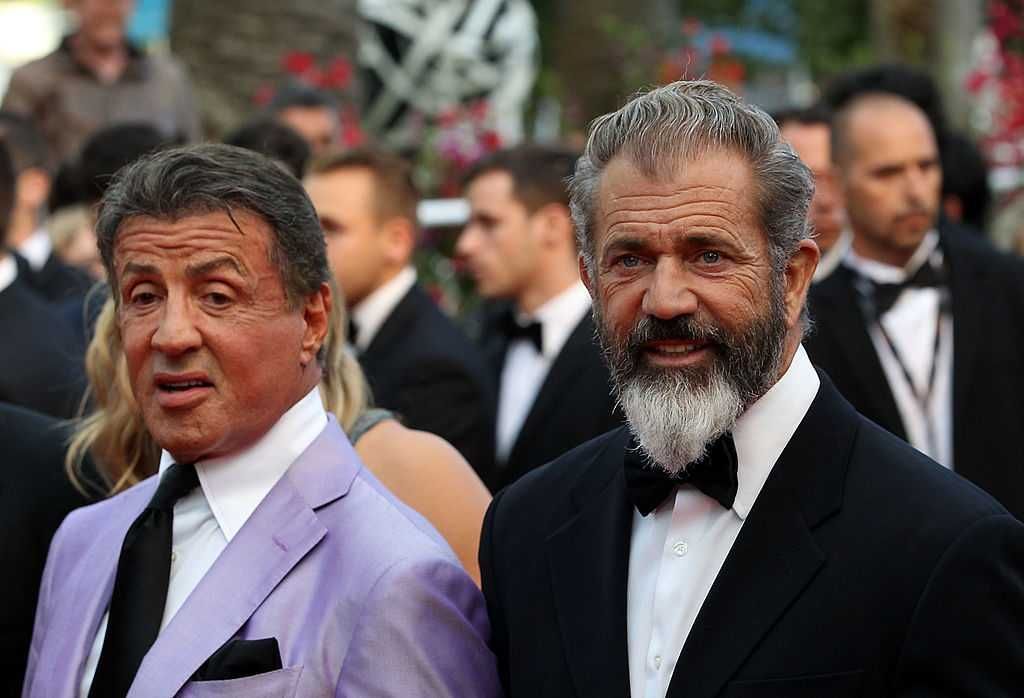
If Justice Kagan Wants Respect From Lower Courts, She Should Shut Down Their Judicial Coup

Kagan's refusal to shut down the tyrannical behavior of the lower judiciary has emboldened rogue judges to usurp SCOTUS's power.

BlueCross BlueShield Forced To Pay $700,000 To Fired Employee Over Vax Mandate

A former employee of BlueCross BlueShield of Tennessee was awarded a settlement after she was fired for refusing the Covid-19 jab.

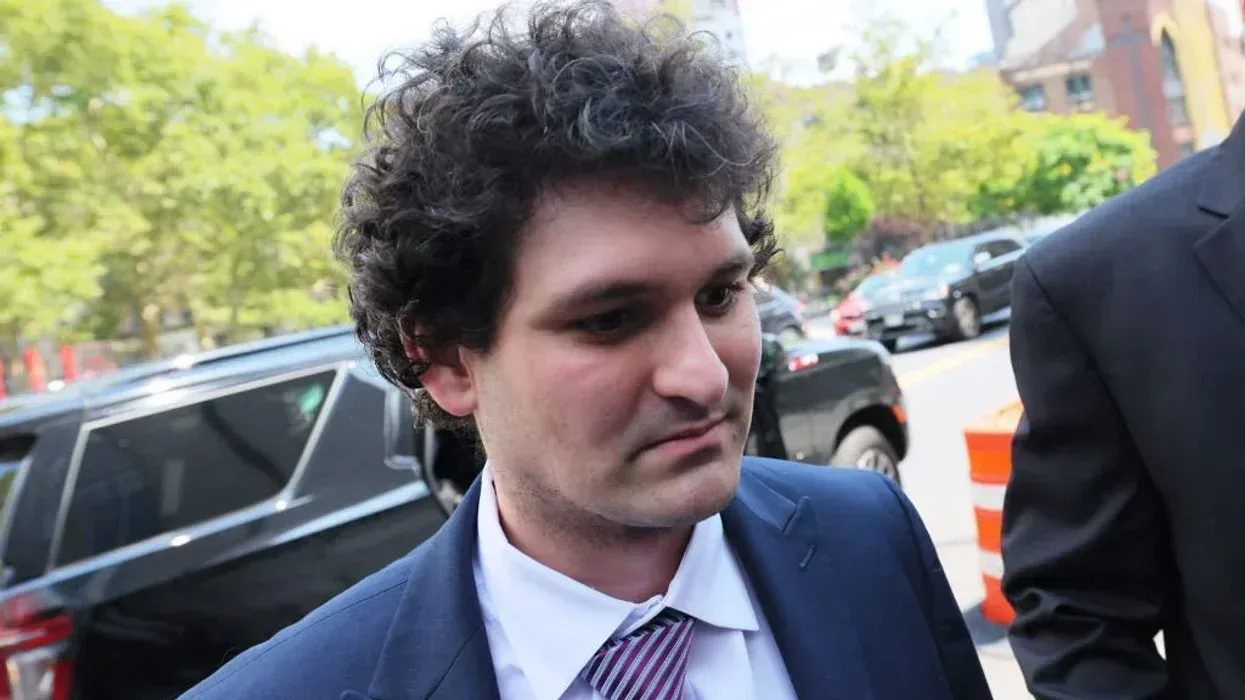
Disgraced Democratic mega-donor Sam Bankman-Fried agrees to flip on Tom Brady and other celebrity FTX promoters


Middle-aged NFL legend Tom Brady recently hinted at the possibility that he might stage a Michael Jordan-style comeback. He just might have to in order to stay whole thanks to disgraced Democratic mega-donor Sam Bankman-Fried's latest act of betrayal.

Bankman-Fried, the convicted fraudster whose mom figures is too autistic for prison, has apparently agreed to cooperate with the group of cryptocurrency users suing various FTX influencers, including Brady and his ex-wife.

Background

Blaze News previously reported that Tom Brady and his former spouse, Gisele Bündchen, were named in a class-action lawsuit filed in Miami's Southern District of Florida federal court in November 2022, along with former NBA star Shaquille O'Neal, Golden State Warriors basketballer Stephen Curry, Los Angeles Angels baseballer Shohei Ohtani, "Shark Tank's" Kevin O'Leary, and "Seinfeld" cocreator Larry David.

The class-action complaint launched months after the collapse of the crypto exchange company FTX alleges that Brady and the other brand ambassadors were responsible for "misrepresentations and omissions" in the advertisements in which they told acquaintances to unwittingly throw their money away into "the FTX Ponzi scheme."

Brady and Bündchen each took an equity stake in FTX as part of a 2021 ambassadorial partnership. While Brady became a brand ambassador, Bündchen took on the role of FTX's environmental and social initiatives advisor. The former couple appeared in a series of FTX commercials.

Curry similarly got into bed with the ill-fated company, signing on to a "long-term partnership" with FTX in September 2021 in exchange for a now-worthless equity stake. In one advertisement, Curry said, "With FTX, I have everything I need to buy, sell, and trade crypto safely."

Larry David was featured in a Super Bowl commercial for FTX where he played a number of characters rejecting historically consequential ideas, such as the light bulb. The advertisement ultimately showed David reject FTX, then suggested, "Don't be like Larry."

This FTX Super Bowl ad with Larry David ran FTX $1.13B\n\nthe irony of it\u2026 an arrest scene, Larry David saying he doesn\u2019t believe in Crypto, a ton of foreshadowing as @SBF_FTX is on trial\u2026 \n\nThe \u201cdon\u2019t be be like Larry David\u201d line after FTX lost billions of customer funds lol
— (@)

While O'Neal managed to avoid being served in the lawsuit for several months, last April he became the last of the celebrities to be served a legal notice.

No honor among FTX alumni

An April 19 court filing indicates the plaintiffs in the case have reached a settlement with Bankman-Fried, who was sentenced to 25 years in prison last month for his orchestration of multiple fraudulent schemes and ordered to pay $11 billion in forfeiture, reported Cointelegraph.

The fraudster will cooperate with the investors, and, in exchange, they will drop their civil liabilities against him.

The filing states, "[Bankman-Fried] has knowledge and other information that Class Representatives and Class Counsel believe will be valuable to Class Representatives' cases against other defendants in the FTX MDL [multidistrict litigation], particularly relating to the underlying actions and their connection to Miami, Florida, where FTX's U.S. headquarters were based, as well as each MDL Defendants' knowledge of and assistance with the actions and connections to other states in which jurisdictions over those Defendants is asserted."

Should the court approve the deal, Bankman-Fried would fork over non-privileged documents concerning his assets and his investment in the AI start-up Anthropic, proof of a negative net worth, and documents about the FTX brand ambassadors, reported the Daily Mail.

The Democratic mega-donor also apparently agreed to surrender any information he has about venture capital firms that invested in FTX as well as any accountants or lawyers who worked with the defunct crypto exchange.

CoinDesk reported that the fraudster's former friends and codefendants Caroline Ellison, Nishad Singh, and Gary Wang, have — along with FTX lawyer Dan Friedberg — made similar settlement agreements with the class-action plaintiff's attorneys.

A number of middling talents who promoted FTX, including Jaspreet Singh, Tom Nash, Jeremy Lefebvre, and Graham Stephan, have apparently also settled, as has Jacksonville Jaguars quarterback Trevor Lawrence.

While flipping on his former celebrity boosters, Bankman-Fried appears to be trying to dodge accountability for his crimes. Earlier this month, the former multibillionaire appealed his fraud convictions and prison sentence.

Like Blaze News? Bypass the censors, sign up for our newsletters, and get stories like this direct to your inbox. Sign up here!
'He's a predator': 85 women file class action lawsuit against Boston doctor over allegations of 'deplorable' sexual assaults


More than 85 women have filed a class action lawsuit against a Boston doctor over allegations of repeated sexual assaults.

Dr. Derrick Todd faces three separate lawsuits – including a class action suit launched by over 85 women.

WBZ-4 reported, "The number of women joining the third lawsuit stands at more than 85 and is expected to rise further, the plaintiffs' attorney told CBS News on Thursday afternoon."

Todd is a prominent rheumatologist, who was previously employed at Boston's Brigham & Women's Hospital before the damning accusations.

The dozens of women accused Todd of repeated sexual assaults stemming from unnecessary exams that were "performed for his own sexual gratification," according to the class action lawsuit filed in Suffolk County Superior Court. The lawsuit notes that "these horrifying, traumatizing, and deplorable acts" took place "from at least as far back as 2011 and continuing through July 2023."

The alleged victims allege in the lawsuit that Dr. Todd performed "inappropriate pelvic examinations, breast examinations, and rectal examinations."

Mimi DiTrani – a former patient who filed a lawsuit against Todd – told CBS Boston that the rheumatologist opted for repeated gynecological exams and breast exams instead of conducting MRIs on her bones for her autoimmune rheumatological health issues.

"Her lawsuit, filed in Suffolk Superior Court, alleges Todd asked her a series of 'inappropriate, invasive, and exploitative questions' about her appearance and sexual history," according to the Boston Globe. "Todd often examined DiTrani without a chaperone present, and frequently texted her at all hours of the day, according to the suit."

The suit states that during follow-up appointments Todd asked her "inappropriate sexual questions, made sexualized comments, performed sexualized breast examinations, and performed sexualized gynecological examinations that included digital penetration, all under the guise of medical treatment."

DiTraini accused hospitals for missing "warning signs" about Todd's alleged misconduct, and sued Brigham and Women’s, Brigham and Women’s Faulkner Hospital, Mass General Brigham Community Physicians Inc., and Charles River Medical Associates.

The lawsuit accuses the hospital systems of allowing Todd's alleged sexual abuse to occur while failing their duty to "hire, supervise, manage, oversee, and retain competent medical providers who refrained from assault and inappropriate examinations of patients."

After learning of the sexual assault accusations, Brigham & Women's Hospital placed Todd on administrative leave while the hospital investigated the allegations. Todd left the hospital on July 31. The hospital notified his former patients, the Department of Public Health, and the Board of Registration in Medicine.

Lubin & Meyer attorney Robert Higgins told CBS Boston, "This is criminal. He's a predator. It's no different than somebody sexually assaulting someone after a bar."

Todd's attorney, Ingrid S. Martin, said the doctor has been "fully cooperative" with all investigations and that "these allegations will be proven to be without merit."

The case files have been sealed pending a hearing on Oct. 17.

Like Blaze News? Bypass the censors, sign up for our newsletters, and get stories like this direct to your inbox. Sign up here!

Class-action lawsuit filed against Dr. Derrick Todd for alleged sex assaults www.youtube.com

Tesla workers violated drivers' privacy, shared embarrassing car camera footage, lawsuit alleges


A California man is suing Tesla over privacy concerns, saying the company's employees shared "embarrassing" footage captured on drivers' car cameras, Reuters reported Wednesday.

"I’m bothered by it because the people who buy the car, I don't think they know that their privacy is, like, not respected … We could see them doing laundry and really intimate things. We could see their kids," one ex-employee said, as cited in the suit.

"We could see inside people's garages and their private properties. Let's say a Tesla customer had something in their garage that was distinctive, you know, people would post those kinds of things," said another.

"Any normal human being would be appalled by this," David Choffnes, director of the Cybersecurity and Privacy Institute at Northeastern University in Boston said of Tesla's alleged sharing of sensitive footage.

The class-action lawsuit filed Friday targets footage taken between 2019 and 2022 via Tesla vehicles' integral Autopilot system. Tesla's eight-camera system captures 360 degrees around the vehicle, and some models also feature a driver-facing device.

Rather than using the footage for work purposes, to improve the car, for example, the lawsuit says workers were able to access footage "for the tasteless and tortious entertainment of Tesla employees, and perhaps those outside the company, and the humiliation of those surreptitiously recorded."

Some examples of circulated recordings in "private and embarrassing situations and without their consent" cited in the lawsuit included a completely naked man approaching a Tesla, road-rage incidents, a child being hit by a Tesla driving at a high rate of speed and flying off his or her bike, and pictures of family pets made into memes.

The lawsuit also alleges, that despite Tesla's assurances to the contrary, the data were not truly anonymized. It was possible for anyone viewing the images to connect the footage to owners and locations.

The alleged footage sharing occurred despite the company's privacy policy assuring customers vehicles are "designed from the ground up up to protect your privacy" and "camera recordings remain anonymous," the lawsuit notes.

Tesla is not alone in featuring camera systems on its cars. In fact, backup cameras have been required in new cars in the U.S. since 2018. Whether the data gathered by backup and other car camera systems is sent to the manufacturer, stored, or sold to others varies widely, as Vox reported Thursday.

Like Blaze News? Bypass the censors, sign up for our newsletters, and get stories like this direct to your inbox. Sign up here!

$27 billion Uvalde class-action lawsuit likely to target law enforcement, gun manufacturer for 'deliberate, conscious disregard' for human life


A class-action lawsuit on behalf of the victims and survivors of the Uvalde school shooting that occurred three months ago will soon be filed, and it is likely to name as defendants several law enforcement agencies and at least two firearms businesses.

Back on May 24, a shooter shut himself inside two adjoining classrooms in Robb Elementary School in Uvalde, Texas, and terrorized children and teachers for over an hour before law enforcement breached the door and killed him. In all, 19 students and two teachers were murdered in the attack, and several others were wounded.

Last week, Charles Bonner of the Law Offices of Bonner & Bonner — located in the Bay Area — announced that he would soon file a $27 billion lawsuit on behalf of the Uvalde victims. He has been meeting with survivors and family members at a local church to discuss a possible lawsuit which will hold law enforcement accountable for their actions that day.

"Up to right now, there's been no accountability, there's no justice for those 19 children and the two teachers," said Daniel Myers, the pastor of Tabernacle of Worship church where Bonner and the victims have met.

Defendants in the lawsuit will likely include: Uvalde city police, Uvalde police chief Pedro "Pete" Arredondo, sheriffs, Texas Rangers, Border Patrol, and the Texas Department of Public Safety. The lawsuit will also likely target Daniel Defense, which manufactured the gun used by the shooter, and Oasis Outback, which sold it to him. Members of the Uvalde school board and city council may also be named.

Bonner claims that by their actions — and in many cases, their inactions — these individuals, businesses, and law enforcement agencies violated the victims' constitutional rights.

"People have a right to life under the 14th Amendment, and what we’ve seen here is that the law enforcement agencies have shown a deliberate, conscious disregard of the life," said Bonner, who is also representing victims of the recent mass shooting in Buffalo, New York.

The civil rights lawsuit will be "one-of-a-kind in the whole world," Bonner continued.

The lawsuit is expected to be filed soon.

"Now it's time for all of us to stand up and demand change and protection," a statement on the Bonner & Bonner website says.

Other attorneys from a separate California law firm are preparing to file a federal lawsuit regarding the shooting on behalf of three individual families. Though it will not be a class-action suit, it will likely include many or all of the same defendants as the class-action suit filed by Bonner.

Class action lawsuit filed against Robinhood after GameStop trade freeze


A federal class action lawsuit was filed Thursday against the stock trading company Robinhood after it restricted its customers from buying shares of GameStop and other stocks popularized on the Reddit forum WallStreetBets.

BREAKING: Class action complaint against @RobinhoodApp filed in the southern district of NYhttps://t.co/DuGP3LIQDQ https://t.co/mw82RRoA2L
— Lydia Moynihan (@Lydia Moynihan)1611853246.0

Attorney Alex Cabeceiras filed the lawsuit in the Southern District of New York on behalf of plaintiff Brendon Nelson, a Massachusetts resident. On Thursday, Nelson said he logged into his Robinhood account and discovered that GameStop's stock had disappeared from the app. Robinhood also prevented users from buying more shares of it.

The complaint filed by Cabeceiras argues "Robinhood purposefully, willfully, and knowingly removing the stock 'GME' from its trading platform in the midst of an unprecedented stock rise thereby deprived retail investors of the ability to invest in the open-market and manipulating the open-market."

This morning I filed a class action lawsuit against Robinhood for negligence and breach of fiduciary duty, among ot… https://t.co/Fp5pbNLvYO
— Alex Cabeceiras (@Alex Cabeceiras)1611851641.0

The lawsuit demands that the court immediately issues an injunction forcing Robinhood to reinstate GameStop's stock on its platform. Additionally, it seeks a class action fee for all Robinhood users prevented from trading GameStop, an award for attorney's fees, and punitive damages.

The Daily Beast reported that another law firm, ChapmanAlbin, announced in a statement Thursday that it was "investigating claims on behalf of Robinhood users that were affected and suffered losses as a result of investing in Gamestop or AMC."

"Robinhood appears to be up to the same old tricks, recruiting social media influencers to encourage individuals to sign up and fund a Robinhood account and beginning purchasing shares of securities such as GameStop and AMC, with no consideration as to the suitability of the purchases," ChapmanAlbin attorney Philip Vujanov said.

Robinhood and other stock brokers' decision to ban trading of GameStop comes after retail investors on the popular forum WallStreetBets began a campaign to buy the stock amidst news that several hedge fund investors were attempting to short it for a profit. WallStreetBets boasts over two million users on its discussion board. The organic campaign to create artificial demand for GameStop stock successfully caused its price to rise more than 1,000% over one week, forcing short sellers to buy back into the stock to cover their potential losses.

This process, known as a short-squeeze, caused short sellers to lose an estimated $70.87 billion while the retail traders who bought into GameStop have seen the value of their shares increase dramatically.

The decision to ban trading of GameStop and other shorted stocks by Robinhood, WeBull, Interactive Brokers, and other stock trading companies was received by their customers as a statement that these services will prioritize the interests of Wall Street hedge funds over decentralized, individual traders. Lawmakers in both parties have now called for congressional investigations on the trade freeze, probing whether Robinhood and others acted unfairly by shutting retail traders out of the market while permitting credentialed Wall Street investors to trade as they please.