A Ruthless Chinese Communist Party Requires A Ruthless Leader
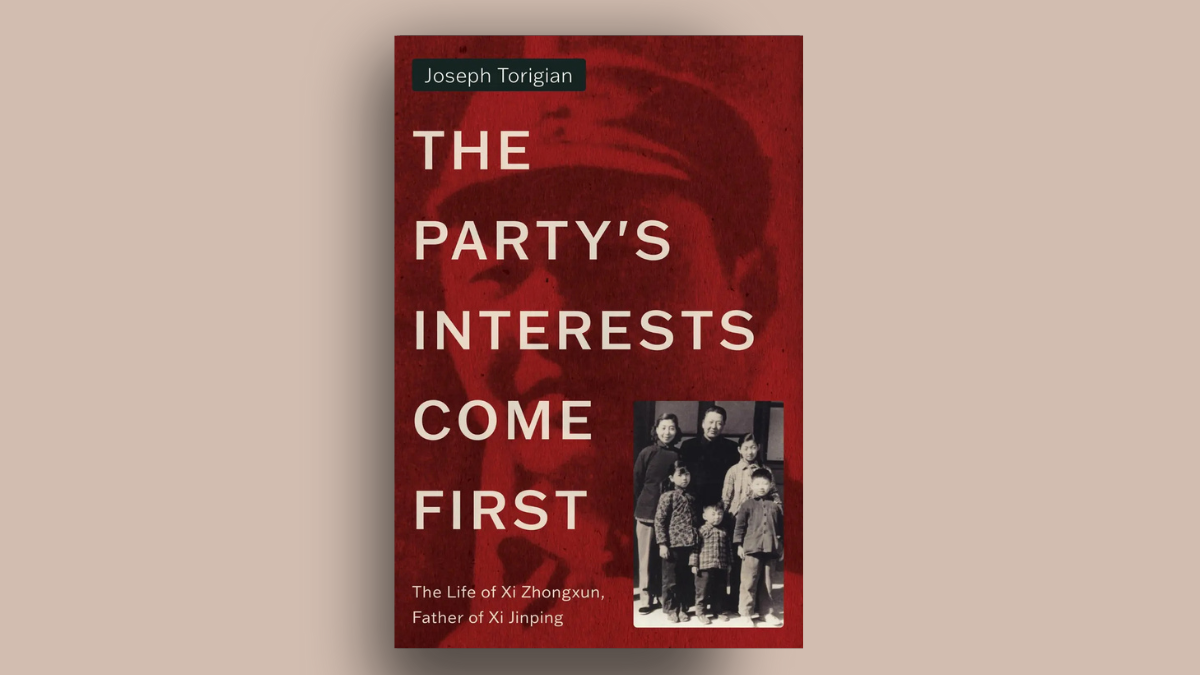
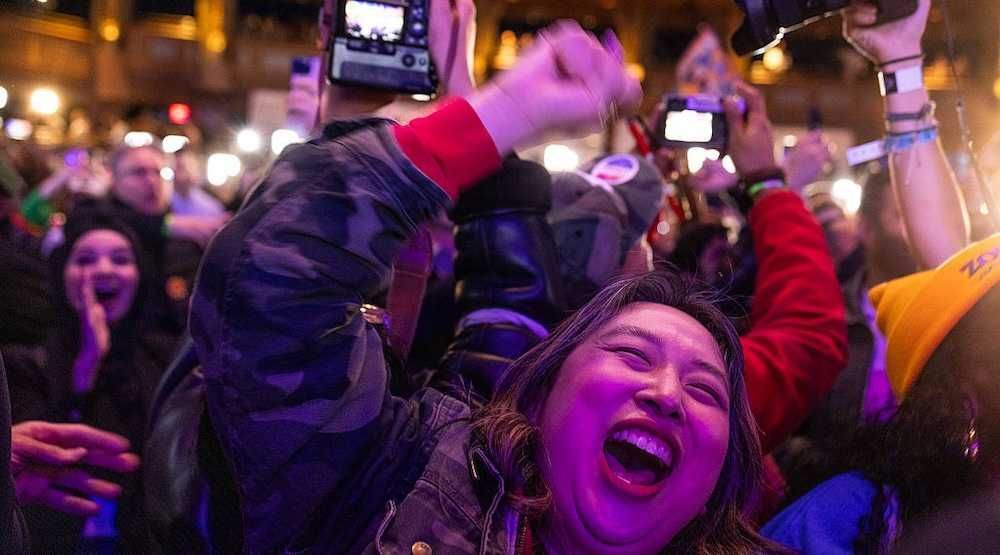
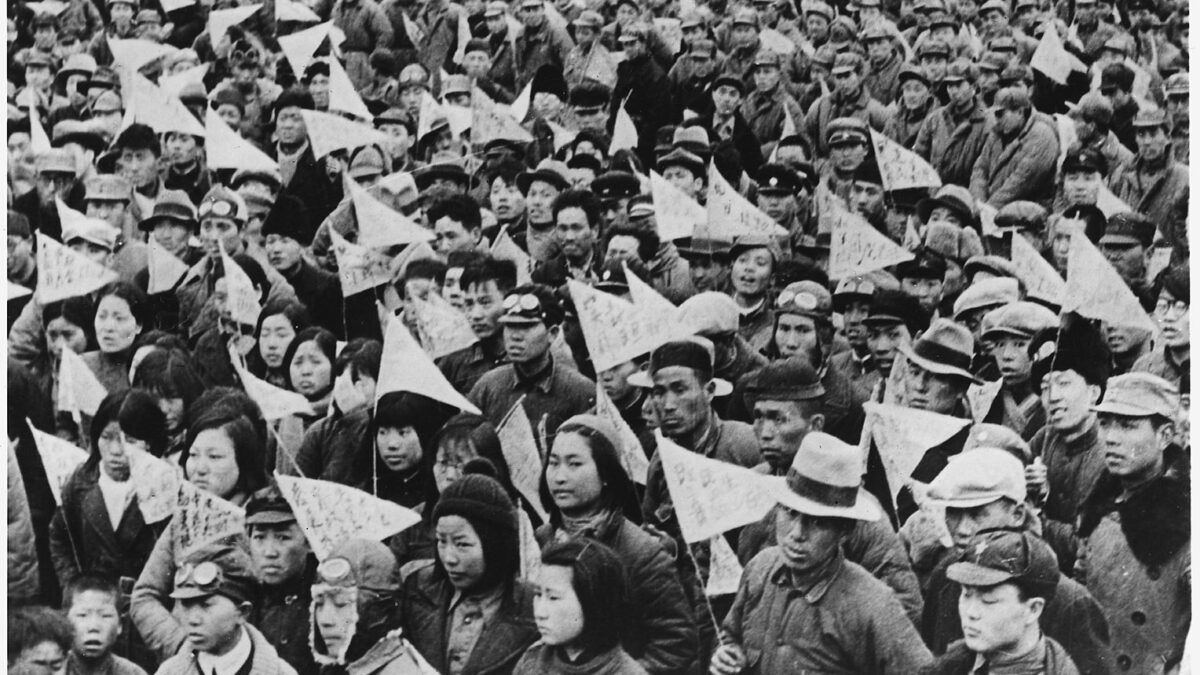
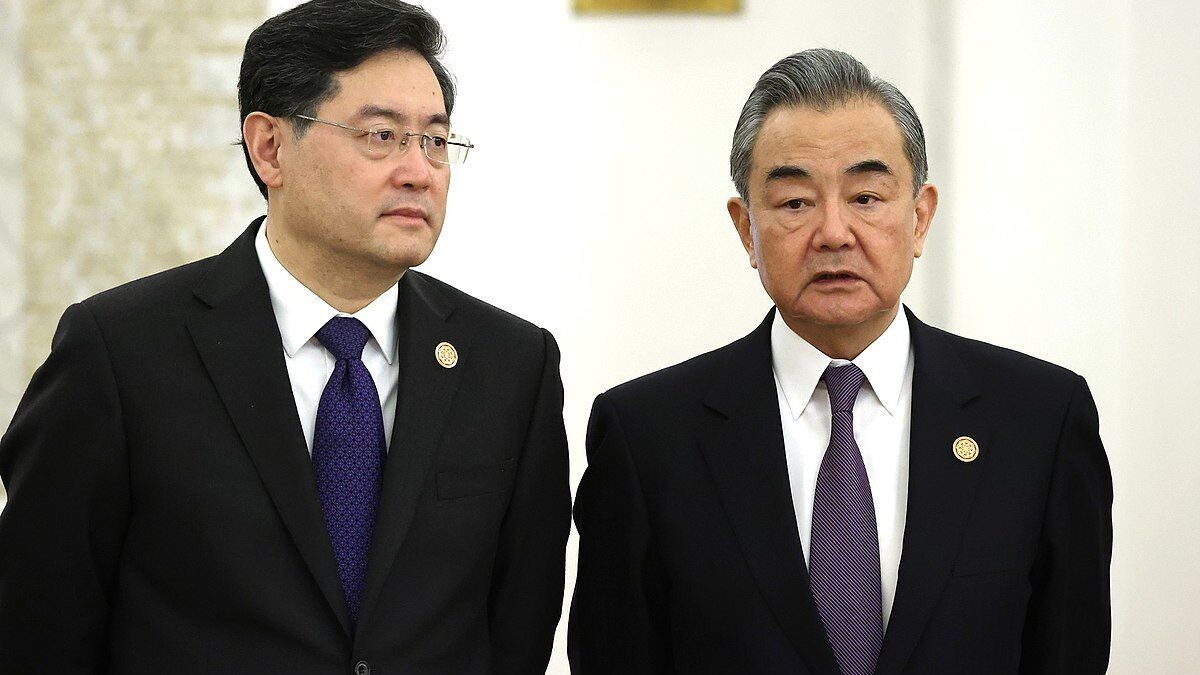
A new biography of the father of Chinese leader Xi Jinping by Joseph Torigan, The Party’s Interests Come First, provides valuable insights into how to deal with his son.More than 50 years ago, I witnessed firsthand how Mao Zedong’s socialist experiment dismantled market competition, suppressed innovation, and plunged China into economic ruin. As a survivor of that experiment, I watched in horror last week as Zohran Mamdani won over 50% of the vote in New York City, promising a socialist illusion of city-owned grocery stores, free public transit, universal rent control, and a defunded police department.
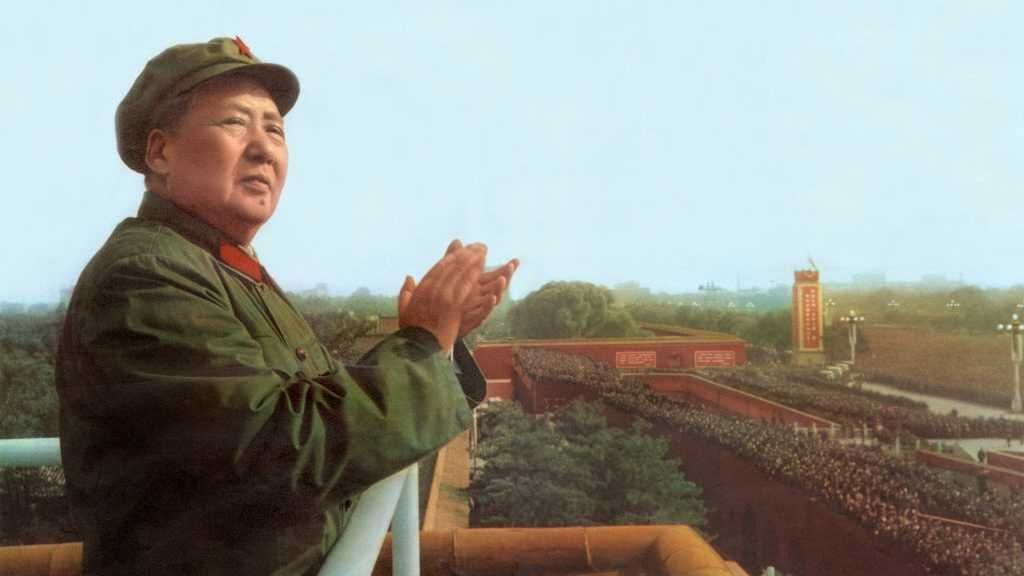
Such proposals might sound compassionate, but they threaten to repeat the class warfare and state control that devastated China from the 1950s to the late 1970s, only this time they are taking place in the financial capital of the world.
The unpleasant truth is that America may have won the Cold War, but we are losing the ideological war at home.
Consider Mamdani’s push for “good cause eviction” laws and expanded rent control. He claims these measures protect tenants from exploitation, but they discourage property ownership and investment — just as Mao’s housing policies did.
In communist China, the state assigned apartments to urban families, but most people lived in poverty. My family of five was crammed into a 200-square-foot unit with no running water or a toilet. Today, rent control has already reduced housing supply by 20% in parts of New York City, driving up costs for everyone else. What Mamdani offers isn’t progress — it’s stagnation disguised as equity.
Mamdani’s support for “Medicare for All” and fare-free buses also ignores fiscal realities. Mao’s “barefoot doctors” promised class equity but delivered substandard care, contributing to millions of preventable deaths. America’s health care system leads the world in breakthroughs because of merit-driven research and competition, not government mandates. Meanwhile, New York City’s transit authority estimates free transit would cost taxpayers $1 billion annually without improving service. When socialism promises “free” services, it often delivers shortages, rationing, and inefficiency.
The proposal for city-owned grocery stores is another red flag. Under Mao, government-run stores led to chronic food shortages. Rice, cooking oil, and meat were rationed. Each urban citizen received only two pounds of meat per month. Even with ration coupons, I had to wake at 3 or 4 a.m. and wait in line for hours to buy a few ounces. Mamdani’s plan threatening private grocery competition risks repeating this nightmare.
Then there’s his support for defunding the police and replacing them with vague “community safety” alternatives. In 2020, he co-sponsored bills to slash NYPD funding by $1 billion, claiming it would combat systemic racism. This mirrors Mao’s Red Guards, who dismantled law enforcement and replaced it with ideological enforcers — leading to chaos, violence, and mass suffering.
Since 2020, crime in New York has risen by 15%, according to NYPD data. Weakening law enforcement doesn’t protect vulnerable communities — it leaves them exposed. As a father of a New Yorker, Mamdani’s reckless approach to policing is not just a political concern; it’s a personal one.
Mamdani also seeks to eliminate gifted and talented programs in public schools, calling them “inequitable.” But these programs offer high-achieving students — often from diverse backgrounds — a path to excellence.
RELATED: The right needs bigger ideas than tax cuts

During the Cultural Revolution, China crushed its intellectual class and smothered innovation. New York is making a similar mistake. Gifted programs lifted math proficiency by 25%, according to a 2022 Department of Education report, yet Mamdani wants them eliminated in the name of “equity.” As an Asian-American parent who raised a child in STEM, I’ve seen how excellence takes root: You cultivate talent; you don’t level it.
Mamdani’s agenda mirrors the same destructive ideology I fled from. Socialism thrives on utopian promises pitched to voters who have never lived through the consequences. I have. And I recognize the warning signs.
Yet according to CNNexit polls, 70% of voters ages 18-44 supported Mamdani, compared to just 40% of older voters. Even more alarming: 57% of New Yorkers with college degrees voted for him, versus only 42% without. This reflects the growing influence of pro-socialist indoctrination in American universities.
The unpleasant truth is that America may have won the Cold War, but we are losing the ideological war at home. To prevent a socialist takeover, we must fight back by reforming higher education and teaching our children the truth about socialism in K-12 classrooms.
In a prior article, I exposed the tangled web of the New York Times’ obsessive propaganda series, which attempted to discredit Shen Yun Performing Arts.
As it turned out, the lead author of the series, Nicole Hong, is only a degree of separation away from the Chinese Communist Party, which has launched a global propaganda campaign against the group and Falun Gong, the spiritual movement that founded Shen Yun. The CCP has targeted Falun Gong for extermination since 1999. Hong’s father has worked at two CCP-backed universities and was an honorary overseas director for a group with ties to high-ranking CCP officials.
The New York Times began a spree of desperate articles attempting to defend communism.
Though this may explain why Hong was motivated to do the CCP’s bidding, why did the New York Times allow it?
A walk through the paper’s history with communism leaves no doubt that its recent attacks on Shen Yun are consistent with its past willingness to carry water for authoritarian regimes.
Perhaps the most infamous example of the Times doing the bidding for a communist regime was its coverage of Josef Stalin, who was responsible for more deaths through mass killings than Nazi Germany.
Walter Duranty, the Times’ Moscow bureau chief, wrote 13 propaganda articles, winning him a Pulitzer Prize in 1932. The articles gave a favorable view of Soviet communist policies, downplayed Stalin’s brutality, and claimed that the wealthy weren’t being physically exterminated but instead “liquidated as a class.”
In short, Duranty was doing the 1930s equivalent of clicking “copy and paste” on the very same Soviet propaganda he was being presented — without performing the due diligence expected of a journalist.
In 1933, Duranty outright denied the famine that was visible before his very eyes. He called reports of starvation “exaggeration or malignant propaganda,” despite evidence to the contrary from other journalists.
The Times’ reporting was so misleading that even liberal Hollywood pushed back. The 2019 film “Mr. Jones” tells the true story of Gareth Jones, the journalist who first reported on the Soviet famine of 1930 to 1933. That famine killed as many as 8.7 million people, including up to 5 million during the Holodomor in Ukraine and 2.5 million during the Asharshylyk in Kazakhstan.
In 2017, the Times began a spree of desperate articles attempting to defend communism. Its “Red Century” series, launched to mark the 100th anniversary of the Bolshevik Revolution, included several opinion pieces accused of romanticizing or downplaying the horrors of communism.
In one example, the Times ran an article headlined “Why Women Had Better Sex Under Socialism,” written by Kristen R. Ghodsee, who later published a book with the same title. The piece typified the paper’s vain effort to find redeeming qualities in socialist and communist systems.
From the headline alone, the piece became one of history’s most mercilessly mocked New York Times articles. But those who read past the headline found even more to laugh at.
Among the “evidence” Ghodsee presented was an interview she conducted with a 65-year-old Bulgarian woman who had lived under communism for 43 years. The woman claimed that the free market — rather than aging out of her 20s — hampered her “ability to develop healthy amorous relationships.”
The millions of women who starved under the communist regime could not be reached for comment.
That was just one of the absurd articles the Times published that year defending communism. Other doozies included an article portraying Vladimir Lenin as an environmentalist whose love for nature led to conservation efforts in Russia — while ignoring the environmental destruction under his successors.
Another piece argued that the American Communist Party in the mid-20th century gave people a sense of moral authority and purpose in fighting social injustice while downplaying its complicity in covering up or supporting Soviet atrocities. Yet another article argued that Bolsheviks raised their children with “world literature” and communal values, suggesting a sophisticated cultural upbringing under communism — an ideology that destroys culture.
A number of reasons could explain why the New York Times might amplify an anti-Shen Yun narrative beyond a supposed journalistic duty. For one, the paper has a well-documented anti-religious bias. It may also be waging a proxy battle due to Shen Yun’s ties to the Epoch Times — a competitor that heavily criticizes the Times.
The reality is that Shen Yun is growing, and a juicy exposé on a “mysterious” financially successful dance troupe will drive clicks and subscriptions, especially amid the Times’ desperate bid to maintain the relevance it deservedly lost.
Since August 2024, the New York Times has ramped up attacks on Shen Yun Performing Arts, a renowned organization dedicated to reviving the traditional Chinese culture that the Chinese Communist Party uprooted and violently silenced during Mao’s Cultural Revolution — and continues to do so today.
The frequency of the hit pieces borders on obsession, with the Times publishing 10 articles on the topic within the past six months.
The timing and focus of the New York Times’ articles coincide with the CCP’s broader strategy of transnational repression.
These stories, authored by “investigative reporter” Nicole Hong and co-author Michael Rothfeld, allege mistreatment of performers and financial improprieties within Shen Yun. Over 60% of Hong’s articles since August have been focused solely on discrediting Shen Yun. Why the obsession? A closer examination of Hong’s background and potential connections to the CCP raises questions about the impartiality and motivations behind her reporting.
Hong has been with the New York Times since 2019. She previously worked at the Wall Street Journal, where she once told an interviewer:
We have a massive platform at the Journal. We have millions of readers. The editing process is very tough. When these big pieces come out — things we’ve been investigating for weeks — they’re bulletproof. People are going to talk about it.
That standard appears to be absent at the Times, which has become known for embarrassing itself in the Trump era.
Despite her professional credentials, Hong’s familial connections merit scrutiny over her ability to remain impartial.
Her father, George Hong, is a professor at Fordham University in New York and holds several significant positions within organizations closely linked to the CCP.
For example, he serves as a visiting professor at Zhejiang University and Jiangxi Normal University, both linked to the CCP. The former is a public university affiliated with China’s Ministry of Education, while the latter is co-sponsored by the Ministry of Education and the communist Jiangxi provincial government.
More notably, he was an honorary overseas director of the Western Returned Scholars Association, part of the CCP’s United Front Work Department. This agency gathers intelligence on individuals and organizations inside and outside of China to attack opposition and has been described as “the most powerful association” by Chinese media. In 2023, Chinese dictator Xi Jinping called on WRSA to rally talent worldwide to bolster its efforts.
Given George Hong’s prominent role within the WRSA, questions arise about potential biases and influences that may extend to his daughter. An overwhelming majority of children share their parents’ political affiliation, which would help explain why Nicole Hong is pushing false, CCP-friendly narratives.
And she’s not the only one with a potential conflict of interest.
Hong’s articles are co-written with Michael Rothfeld. Before 1979, the United States and the People's Republic of China had never established formal diplomatic relations. In 1979, Rothfeld was a member of the first cultural delegation from the United States to China, raising further questions about possible biases.
So shoddy is Hong and Rothfeld’s reporting that even the supposed victims they cite contradict their claims.
In their debut August article alleging that Shen Yun mistreats its performers, Hong and Rothfeld highlight untreated injuries and emotional abuse. They claim performers were discouraged from seeking medical care and were financially exploited, subjecting young performers to extensive rehearsal schedules with minimal pay.
However, the performers mentioned in Hong and Rothfeld’s reporting outright contradicted their claims.
One performer, Eugene Liu, was portrayed as a victim — a characterization he flatly denies. Liu, who performed from 2015 to 2017, publicly refuted their claims, stating that his experience with Shen Yun was overwhelmingly positive. He credited his time with the dance company for his subsequent artistic successes and for helping him avoid common pitfalls among his peers, such as internet addiction and substance abuse. Liu said he spoke out due to fear that Hong’s second-rate reporting would undermine Shen Yun’s mission to highlight the persecution of Falun Gong adherents in China.
The only expert quoted in Hong and Rothfeld’s debut report is Nicholas Bequelin from Yale Law School’s Paul Tsai China Center — which the U.S. Department of Education previously investigated for taking money from the CCP.
Most damning of all, a Chinese American YouTuber, who calls Falun Gong his enemy, claimed on social media to have been the catalyst for the Times’ reporting — and personally assisted them.
After Hong and Rothfeld’s debut article, he posted on X, “I was the one who introduced people to the New York Times, especially for the initial interviews [to discredit Shen Yun].” He was later arrested and charged after being discovered carrying an illegal firearm near a Shen Yun event. Even if he was lying about his involvement in the reporting, his statements still illustrate that Shen Yun’s critics are more than willing to resort to violence.
The timing and focus of the New York Times articles coincide with the CCP’s broader strategy of transnational repression. According to Freedom House, a nonprofit that advocates democracy, political freedom, and human rights, China conducts a “sophisticated” and “comprehensive” campaign of transnational repression, aiming to control and influence narratives about its policies and practices abroad. The CCP has targeted Falun Gong in particular since 1999 with its campaign to “eradicate” the religion to maintain state atheism.
China has detained Falun Gong practitioners for “reeducation through labor,” tortured 2,000 to death as of 2009, and killed 65,000 to harvest their organs between 2000 and 2008. Even in the absence of more up-to-date statistics, the numbers remain shocking.
And this is the party “America’s newspaper of record” has chosen to side with.
When Yeonmi Park fled North Korea, she came to what she believed was the freest country on earth.
However, one of the first questions she was asked upon becoming a citizen was whether or not she would ever use hate speech against another person. If she had said yes, she would not have been allowed to become a citizen.
This was jarring to her, as she knows better than anyone that if you are not allowed to engage in free speech, you are not in a free country.
Dave Rubin sat down with Park "The Rubin Report," where she tells him just how worried she is about the state of America. She says, “Most people would get really shocked that, you know, how dare you compare North Korea to America?”
She argues that she’s not “comparing the living standards,” but rather “the tactics that North Korea used to control people and brainwash us were the same tactics [she’s] seeing right now in current America.”
Park warns that she “sees this country getting destroyed.”
She goes on to explain that she was demonetized, censored, and shadow-banned on all the social media platforms for attempting to discuss how North Korean women are being raped and their organs harvested in China under the communist party. What happened to freedom of speech in America?
Not only that, but during the pandemic, her 2-year-old son was forced to wear a mask for up to eight hours a day while people were opening strip clubs and dog parks next door to the day care.
She says she remembers thinking that “somehow the dogs have more rights than my child in America right now.”
She continues, “I am scared every day for my son, because if America falls, I cannot imagine the world without America. Where would my son escape to for freedom? There’s no place left.”
To enjoy more honest conversations, free speech, and big ideas with Dave Rubin, subscribe to BlazeTV — the largest multi-platform network of voices who love America, defend the Constitution, and live the American dream.