Trump should not fill Alito’s seat with a ‘meh’ in robes
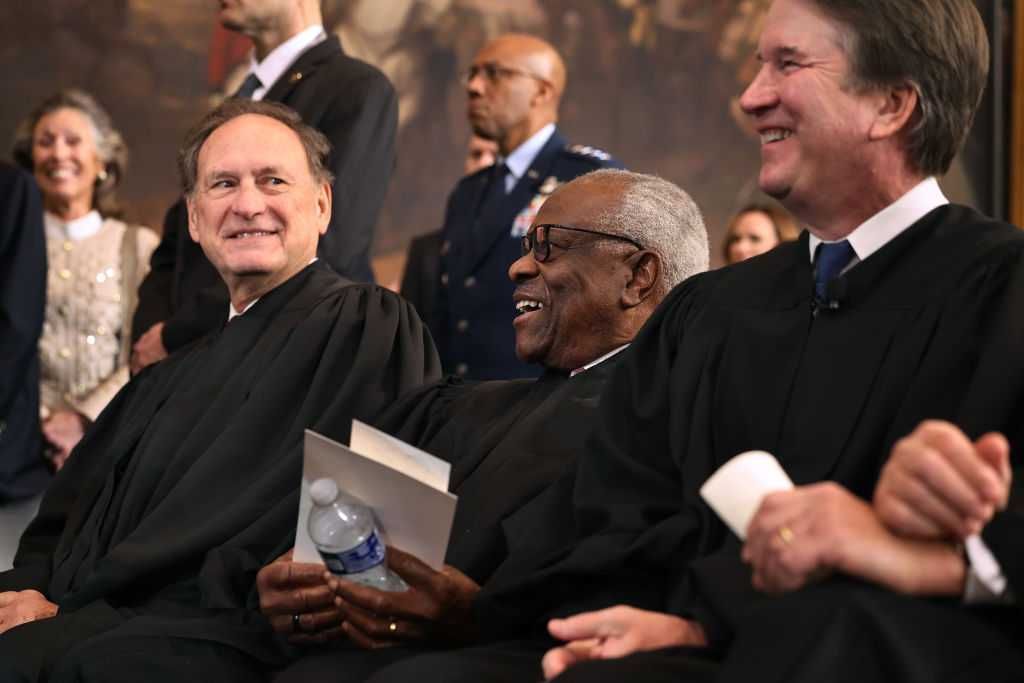


At the beginning of the year, one of my crystal-ball predictions for 2026 was that Samuel Alito and/or Clarence Thomas would retire so President Trump could replace them before the midterms.

Recent reporting suggests that prediction may prove correct, especially with speculation that Alito is considering stepping down. So I checked with some sources to see which names are circulating as possible replacements.

Why should our side ever put a judge on the Supreme Court who sides with the left on the sanctity of life for any reason?

The reality is Alito is not easily replaced. He has been one of the best Supreme Court justices of this century. His successor cannot be some C-plus or B-minus judge with a fuzzy record and a habit of folding at the wrong moment. The stakes are too high.

That is why one name worries me: Judge Andrew Oldham.

Trump already passed on Oldham for the Supreme Court in 2020 and for good reason. What remains of our constitutional republic does not have time for a “meh” nominee.

Oldham, a former general counsel to Texas Gov. Greg Abbott (R), now serves on the 5th U.S. Circuit Court of Appeals. A quick look at his record shows a pattern that should alarm anyone hoping for another Alito.

Let’s start with life.

Alito authored the phenomenal majority opinion in Dobbs v. Jackson, which overturned Roe v. Wade, one of the most wicked decisions in American history. Oldham’s record points the other way. In 2000, Bill Clinton’s FDA treated pregnancy as an “illness” to justify accelerated approval of abortion drugs as the supposed “cure.” Years later, a Trump-appointed district judge rightly rejected that decision, and a Trump-appointed circuit judge backed him. Oldham, however, became the first circuit judge to side with the Clinton FDA’s position on procedural grounds.

The American Family Association called that decision “shockingly weak” at the time. The Supreme Court effectively vindicated that criticism in 2024 when it overturned Oldham by a 6-3 vote.

Why should our side ever put a judge on the Supreme Court who sides with the left on the sanctity of life for any reason?

The concerns do not stop there.

AFA, which tracks judicial nominations as well as any group on the right, has also described Oldham as “soft” on COVID shot mandates. He earned that reputation when he wrote an opinion saying schools need not require children to wear masks, not because masks do not work, but because schools could instead adopt other COVID policies involving vaccines, plexiglass, hand sanitizer, distancing, and more.

The opinion was so weak that no other judge joined it.

Then came gender ideology. Last year, my Blaze Media colleague Daniel Horowitz reported on Oldham siding against doctors and with the Biden administration’s edict that they must perform gender-transition procedures on children by refusing even to hear their challenge. Oldham had a chance to join a Trump-appointed judge who rejected Biden’s grotesque mandate. He passed.

His immigration record raises more red flags.
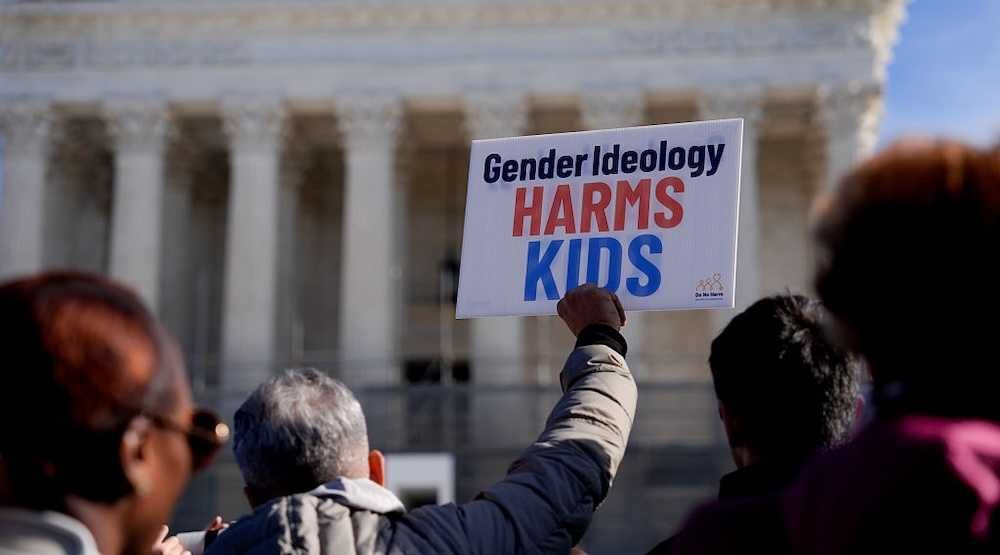
RELATED: Supreme Court sides with Catholic parents against California on student gender notification — for now

Photo by Kent Nishimura/Bloomberg via Getty Images

Oldham declined to back a Trump-appointed district judge who ruled against allowing illegal aliens to receive cheaper in-state college tuition than out-of-state Americans. That alone should have disqualified him from serious consideration.

Thankfully, Trump’s Justice Department sued last year to end that practice in Texas, where Oldham’s former client is governor. Once the Justice Department sued, Texas finally conceded the point. Now left-wing groups want the courts to restore that anti-American policy. And which legal precedent are they citing? Oldham’s.

You cannot make it up.

Nor was that his only immigration failure. Oldham also ruled against Abbott when the governor declared an invasion at the southern border two years ago. Does that sound like a judge ready to overturn Plyler v. Doe, the disastrous precedent that for illegal immigration serves much the same function Roe once served for abortion?

Now sensing that his moment may have arrived, Oldham appears to be trying to retcon himself as a reliably based jurist. Even Slate has noticed the pattern — the judicial equivalent of a comb-over meant to hide an obvious weakness. The result has been embarrassing. He now gets overturned with some regularity by one of the most right-leaning Supreme Courts in recent memory.

That tends to happen when ambition outruns conviction.

Oldham once lobbied Barack Obama to appoint Elizabeth Warren, of all people, to head the Consumer Financial Protection Bureau. Now he wants conservatives to view him as Alito’s natural heir. That kind of ideological shape-shifting should make everyone nervous. When a man’s career seems driven more by advancement than by principle, it becomes hard to know where he actually stands.

That was never a question with Alito.

Replacing a sure thing requires another sure thing. Oldham is not that. Maybe he has good explanations for parts of his record. But maybe Trump can do better.

This may be Trump’s last chance to appoint a Supreme Court justice. It would amount to a self-own of historic proportions for the most based president of modern times to replace Alito with someone appreciably weaker than a George W. Bush appointee turned out to be.

How pro-life groups are misleading you on abortion numbers


Since Roe v. Wade was overturned nearly four years ago, countless pro-life organizations have pushed new regulations on abortion. Many of those same groups have rushed to declare victory, claiming that conservative states are now “abortion-free.”

But when pro-life organizations declare any state “abortion-free,” they celebrate a victory that does not exist — and drastically overstate the impact of pro-life laws.

The preborn babies murdered under the cover of our laws deserve more than semantic victories. They deserve equal protection.

These claims don’t just mislead. They undermine the cause these organizations claim to champion.

Exaggerating victories

The claim that some states are “abortion-free” isn’t rare. It has become standard messaging.

Students for Life published a map three years ago declaring that 14 states are now “abortion-free.” Frank Pavone, who leads Priests for Life, has made the same claim about Mississippi. National Right to Life called Kentucky “abortion-free” as recently as last summer. LifeNews has become notorious for amplifying inflated or misleading abortion claims from pro-life groups at the state level.

These declarations suggest abortion has been eliminated in these states. The reality says otherwise.

Pro-life leaders do not make clear that in every state labeled “abortion-free,” abortions remain legal for women who want to kill their preborn babies.

Many conservative states shut down abortion clinics and imposed penalties on providers. At the same time, those states wrote explicit exemptions into law protecting women from prosecution for willfully obtaining abortions.

That wasn’t a mistake. Pro-life organizations crafted and promoted that policy.

Self-induced abortions

Legal immunity for women who murder their preborn babies created a massive loophole. It also opened the door to a surge in self-induced abortions.

Women in “abortion-free” states can order abortion pills online from telehealth providers operating under shield laws in blue states or from overseas providers.

In many cases, it remains perfectly legal to order these pills, possess them, and use them at home. The scale of this practice — even in conservative states — is staggering.

Consider Kentucky, which National Right to Life called “abortion-free.”

In Kentucky, more than 2,800 women in 2024 received mail-order abortion pills through telehealth providers alone, according to data from the Society of Family Planning.

That does not include the more than 4,300 Kentucky women who traveled to other states for abortions in 2024, according to the Guttmacher Institute. It also does not capture self-induced abortions outside the formal medical system.

Kentucky is not an outlier.

RELATED: How a pro-life law in Kentucky lets mothers get away with murder

Carl Lokko via iStock/Getty Images

When all available data is considered, the 14 conservative states that have banned or mostly banned abortion — the same states pro-life groups often call “abortion-free” — saw at least 250,000 preborn babies murdered in 2024.

That number represents a sharp increase from the 181,000 abortions recorded in those states in 2019.

In other words, pro-life laws have not created states with fewer abortions. They have created states where abortion has shifted away from clinics and toward self-induced abortions at home — abortions that remain legal for the mother who commits them.

How can abortion increase while pro-life organizations claim success? Because many have misrepresented what they mean by “abortion-free.”

When these groups say “abortion-free,” they mean abortion clinics have closed. They do not mean abortions have stopped. It’s like calling a city “crime-free” because the district attorney refuses to prosecute criminals. The semantics conceal the reality.

Opposing abolition

Even more troubling, major pro-life organizations often oppose the bills that would actually abolish abortion.

When lawmakers introduce equal protection bills — proposals that would make abortion illegal for everyone, including pregnant mothers — pro-life organizations often mobilize against them.

This has happened dozens of times across the country. The reasoning stays consistent: Pro-life groups insist women are victims of abortion and should not face legal consequences, even when they deliberately order abortion pills and self-induce abortions at home.

When pro-life groups oppose equal protection bills and then claim their states are “abortion-free,” they don’t merely exaggerate. They sabotage.

Everyday anti-abortion Americans hear “abortion-free” and assume the fight is over. Activism slows. Political pressure fades. Donations and support shift elsewhere. Meanwhile organizations that should be pressing for equal protection instead suppress the only laws that would actually end abortion.

In the meantime, abortion continues unabated — simply moved from clinics to living rooms.

The pro-life establishment has redefined victory to fit what it has achieved, not what it claims to seek. It has declared victory over a substitute target — abortion clinics — while the killing of preborn children continues through abortion pills and interstate travel.

RELATED: Why the pro-life movement fails without a Christian worldview

wildpixel via iStock/Getty Images

Demanding honesty

Americans who oppose abortion deserve honesty from the organizations claiming to represent them.

If abortion can still be performed legally in a state through mail-order pills, that state is not “abortion-free.” If abortion numbers rise rather than fall, victory has not arrived. If pro-life groups oppose laws that would make abortion illegal for everyone, they owe the public an explanation.

Abolishing abortion requires equal protection under the law: making the killing of any human being illegal for everyone, without exception or compromise.

Until major pro-life organizations support that principle, their claims of creating “abortion-free” states remain not just premature but dishonest.

The preborn babies murdered under the cover of our laws deserve more than semantic victories. They deserve equal protection — and Americans who oppose abortion deserve leaders honest enough to admit when that goal remains unmet.

Nash Keen’s life proves the unborn deserve the law’s protection


Nash Keen holds the Guinness World Record for the most premature infant to survive outside the womb. Born at just 21 weeks’ gestation, Nash’s story forces us to grapple with an unsettling reality: In 29 states and Washington, D.C., the law would have permitted his abortion for at least another week.

At 21 weeks, abortionists commonly use dilation and extraction. Many call it a dismemberment abortion, and the term fits. The procedure requires pulling the child apart.

We’ve made real progress since the Dobbs decision. Thirteen states, including my home state of West Virginia, protect life from the moment of conception.

A Sopher clamp — a metal tool with sharp, serrated jaws — grasps a limb, the torso, or the head. The abortionist twists and tears the body piece by piece. The child has a beating heart and can feel pain. Arms and legs are ripped from the torso. The spine snaps. The skull is crushed so it can pass through the cervix. Blood and tissue are suctioned out. Then the abortionist reassembles the remains on a tray to confirm nothing is left behind.

This barbarity happens tens of thousands of times each year in the United States.

Consider the contrast. At 21 weeks, doctors and nurses fought to keep Nash alive. At the same stage of development, in other hospitals and clinics across the country, medical professionals ended the lives of other babies.

What separates those children? No coherent answer exists because no meaningful difference exists. Every child — born and unborn — bears God-given dignity and deserves the protection of our laws.

This year, Nash will turn 2. His survival, as rare as it is, reveals why so many Americans fight for life — and why we will win.

I plan to do everything I can to protect the most vulnerable among us. That’s why I’m proud to co-sponsor the Life at Conception Act, which aligns federal policy with scientific reality: Life begins at conception, and the law should protect it.

Policymakers must also do more to support mothers and fathers raising children. If we aim — as we should — to end abortion, our laws must protect the unborn and make it easier to raise a family in America.

RELATED: New York caves on forcing nuns and churches to fund abortion after knockout SCOTUS ruling

Photo by JOSEPH PREZIOSO/AFP via Getty Images

That’s why I have introduced legislation to give low-income families more flexibility to choose the child-care option that fits their situation.

I have also introduced legislation to eliminate marriage penalties that discourage single parents from marrying.

And I have also introduced a bill to close a loophole so women who choose not to return to work after giving birth cannot be forced to reimburse an employer for health insurance premiums from the year they delivered.

Similarly I support legislation that would hold fathers accountable for pregnancy costs as part of child support. I supported expanding the Child Tax Credit in the One Big Beautiful Bill Act, and I advocate extending the credit to cover the months of pregnancy.

We’ve made real progress since the Dobbs decision. Thirteen states, including my home state of West Virginia, protect life from the moment of conception. In Congress, the One Big Beautiful Bill Act finally defunds big-abortion providers.

The fight has only begun. As long as I’m in public service, I will work to protect every life from the moment of conception — and to ensure federal policy puts the American family first.

How a pro-life law in Kentucky lets mothers get away with murder


Melinda Spencer allegedly took abortion pills, ended the life of her unborn son, and buried his remains in a shallow grave in her backyard.

Yet a law in Kentucky exempting women from prosecution after obtaining an abortion — a law supported by the most influential pro-life organization in the state — appears to have prevented prosecutors from holding Spencer accountable for murder.

If a state refuses to make murder illegal for everyone, then some human beings will remain unprotected by design.

According to court documents cited by local media, Spencer, 35, told Kentucky State Police that the child “was not her boyfriend’s, and she did not want him to find out she was pregnant with another man’s baby.”

To conceal the pregnancy, Spencer allegedly ordered abortion pills online, intending to end the life of her unborn child without medical supervision.

Police say Spencer took the pills the day after Christmas, placed her deceased son in a light bulb box, and buried him in a shallow grave in her backyard. An autopsy determined the child was around 20 weeks’ gestation at the time of his death.

Initially Spencer was charged with first-degree fetal homicide, abuse of a corpse, concealing the birth of an infant, and tampering with physical evidence.

This week, however, Kentucky prosecutors dropped the homicide charge — not because they doubt that Spencer intentionally caused the death of her unborn child but because Kentucky law explicitly prohibits prosecuting a pregnant woman who murders her own unborn child.

— (@)

Miranda King, the prosecutor overseeing the case, acknowledged this limitation directly. In a public statement, she explained that the relevant statute “prohibits the prosecution of a pregnant woman who caused the death of her unborn child.” Spencer still faces the remaining, lesser charges.

King made clear that this frustrating outcome was not her preference.

“I sought this job with the intention of being a pro-life prosecutor but must do so within the boundaries allowed by the Kentucky state law I’m sworn to defend,” she said. “I will prosecute the remaining lawful charges fully and fairly.”

Kentucky is widely regarded as a conservative state with strong pro-life laws. Many Americans assume abortion was effectively banned there after the Supreme Court overturned Roe v. Wade in 2022. This case exposes how incomplete that assumption is.

RELATED: Why the pro-life movement fails without a Christian worldview

jcphoto via iStock/Getty Images

Kentucky’s leading pro-life advocacy organization, Kentucky Right to Life, has long supported laws that shield women from criminal liability for abortion. In practice, this ensures that abortion remains legal for women, even if clinics are closed.

In 2021, Kentucky Right to Life joined more than 70 other pro-life organizations in signing a national letter declaring opposition to “any measure seeking to criminalize or punish women” who obtain abortions.

Since then, the organization has opposed multiple abolition bills that would have established equal protection under the law for unborn children — specifically because such legislation would allow for the prosecution of mothers who willfully procure abortions.

Addia Wuchner, Kentucky Right to Life’s executive director, opposed an abolition bill in 2023 on the grounds that it might expose mothers to criminal charges. She took the same position last year, arguing that women are victims of coercion by the abortion industry.

That framing has deadly consequences.

RELATED: ‘Massive betrayal’: Republicans, pro-life groups push back on Trump's call to loosen key abortion restriction

Photo by Mandel NGAN / AFP via Getty Images
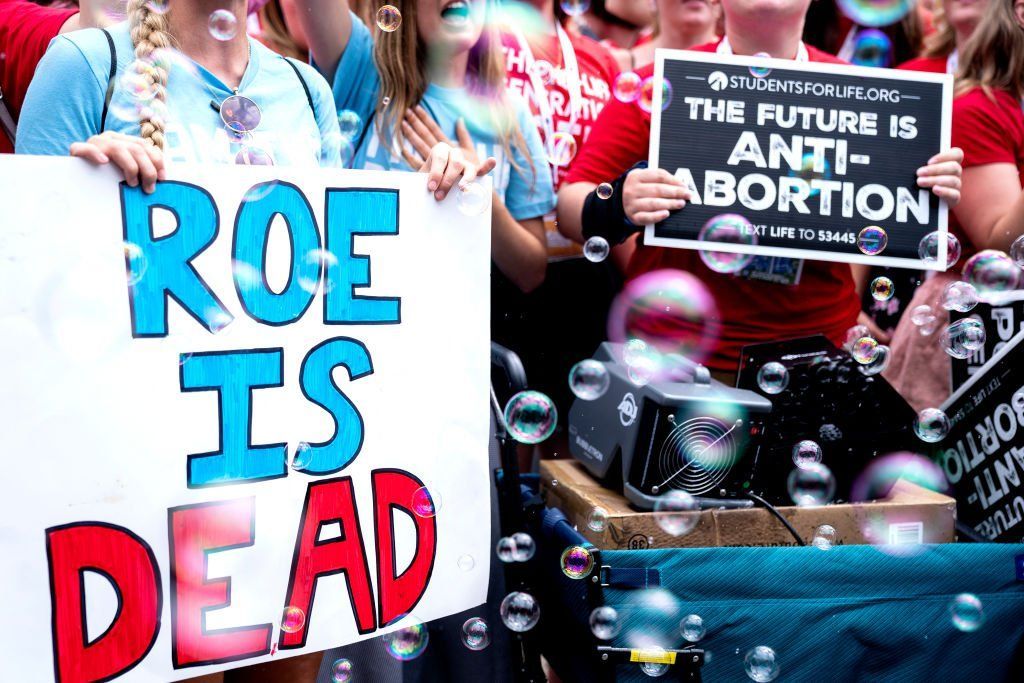
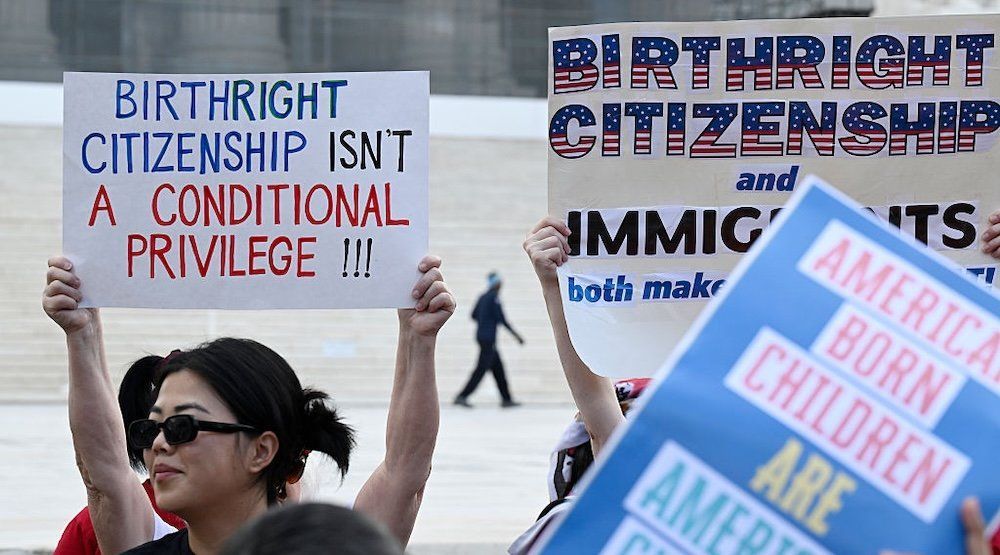
Following Spencer’s arrest, Wuchner publicly expressed sympathy for the accused, describing Spencer as likely being “on her own” and calling that “probably the greatest tragedy,” before adding that “of course ... a child’s life was lost.”

The ordering is revealing. The alleged murder of a child was treated as secondary to the emotional state of the alleged murderer. Empathy displaced justice and accountability.

— (@)

There are cases in which women are coerced into abortions under genuine duress. But coercion cannot be presumed as a universal explanation. By all available evidence, Spencer appears to have acted deliberately. Kentucky law nevertheless forecloses full accountability — and ensures that the central act in this case cannot be adjudicated as homicide.

Since the Supreme Court overturned Roe, states like Kentucky have continued to see record abortion levels, largely through self-managed chemical abortions ordered online. Laws that categorically exempt women from prosecution guarantee this outcome.

If a state refuses to make murder illegal for everyone, then some human beings will remain unprotected by design. And when that exemption applies even in cases involving concealment, burial, and admitted intent, justice becomes impossible by statute.

So long as that remains the case, women who willfully kill their unborn children in Kentucky will continue to get away with murder.

Why pro-life Americans can’t trust the courts any more


Americans love to blame politicians — and often with good reason. But the real power in this country doesn’t rest with the people we elect. It rests with the ones we don’t. Unelected judges now govern America. They don’t interpret laws. They rewrite them.

Activist judges have become the unelected elite now running our country, handing down rulings that override the will of voters, defy elected legislatures, and erase laws they don’t like.

One state is trying to protect life; the other is trying to shield those who end it. And a single judge gets to pick which law counts.

They employ manipulative language to justify their overreach. If you don’t comply, blood is on your hands. Whether it’s the environment, vaccine mandates, border control, or abortion access, the refrain is always the same: Submit to the ruling, or people will die.

The irony couldn’t be more blatant.

In many cases involving abortion policy, it is in fact judges’ rulings that cost lives — lives of the unborn babies impacted by their rogue, dangerous decisions.

Take the recent case in Tennessee, where a federal judge blocked a law that protected minors from being trafficked across state lines for secret abortions. The law didn’t punish women. It didn’t outlaw abortion. It simply required parental involvement, something the majority of Americans support. But for activist judges, parental rights are optional if abortion is the end goal.

In New York, another judge defied federal authority and openly refused to cooperate with Texas law enforcement to hold a doctor accountable for illegally prescribing abortion pills. One state is trying to protect life; the other is trying to shield those who end it. And a single judge gets to pick which law counts.

Meanwhile, a federal judge overturned efforts to defund Planned Parenthood nationwide, even after Congress passed clear budget restrictions. The elected branches — chosen by the people — made a decision. But it didn’t matter. The judge didn’t like it, so the ruling class overruled the people and prioritized its holy grail: abortion.

Judicial activism has turned the courts into abortion war rooms. Judges now see themselves not as interpreters of law but as defenders of an ideology that elevates abortion above the democratic process. Their rulings don’t reflect any laws. They reflect a commitment to abortion at any cost.

It’s not just dangerous. It’s undemocratic.

Thankfully, the Supreme Court is beginning to push back. In a recent ruling, the court clarified that district judges cannot issue nationwide injunctions and block federal policies. It’s a necessary and overdue correction. But it’s only the beginning.

RELATED: Judicial activism strikes again in 14th Amendment decision

Photo by Matt McClain/The Washington Post via Getty Images

The Supreme Court overturned Roe v. Wade and gave power back to the people. In many states across the country, Americans responded by electing leaders and passing laws to protect the unborn. But today, activist judges are overriding those efforts, blocking pro-life laws and shielding abortionists from accountability.

We need judges who apply the law, not rewrite it. Until that happens, every unborn child, every woman in danger of being exploited by the abortion industry, and every citizen fighting for life will remain at the mercy of unelected rulers.

The Dobbs decision was only the beginning. Now we must press forward to ensure that the will of the people is honored and the most vulnerable among us are finally protected.

Get ready for another 50-year abortion fight


Following the Supreme Court’s decision last year in Dobbs v. Jackson Women’s Health Organization, which happily overturned Roe v. Wade, the pro-life movement went on to suffer significant defeats in six different ballot initiatives to regulate abortion — even in deep red states like Kansas and Montana.

On Tuesday, Ohio became the seventh such loss. There, by a margin of 53% to 46%, voters approved an amendment to the state’s constitution establishing a right to abortion.

If the first six post-Dobbs losses weren’t clear enough, surely the seventh conveys the message clearly: The pro-life movement has an abortion problem.

And the first step to solving a problem is admitting that you have one.

How we ended up here is fairly easily diagnosed. The pro-life movement understandably spent the past 50 years primarily making the case against Roe, which involved focusing most of its efforts on embracing tactics and messaging that would be most effective at overturning it, but not necessarily for life — at least, not enough.

We believed it was enough to “abort” Roe and that by doing so, the problem of abortion would essentially solve itself. But we didn’t build alternative structures to welcome those who had found refuge under Casey’s wings, nor did we think deeply enough about what lessons we would offer to replace the ones that Roe had hammered into our souls.

In short, we assumed the pre-Roe American people were still there, dormant, waiting to be freed from Roe’s oppressive yoke if we could just marshal the courage to jettison that awful Supreme Court ruling. What we learned instead was that, broadly speaking, Americans are quite fond of their chains, despite the fact that they’re forged from the blood of innocent children and a myopic desire for a higher GDP.

Like the ancient Israelites, we prefer the slavery under which we were raised to the hard freedom of the desert.

One of the most consistent refrains in Western political philosophy is that the law acts as a teacher, instructing us in what is good and bad, noble and ignoble, just and unjust. Since 1973, Roe’s lessons — lessons that Casey reinforced and entrenched a generation later — have sunk deep into the public’s soul and corrupted its moral sense about precisely what we owe the unborn.

For nearly half a century, the American people were taught that the baby in the womb is not human, a clump of cells, of no essential worth, and that the shallow, not to mention fleeting and ill-considered, desires of adults trump their sacred duties to their progeny.

Of course, throwing off Roe didn’t instantaneously reset the country’s moral compass to postwar America. The rot has done its work. We are a different country now.

Think of Roe like a termite infestation. Dobbs was like an exterminator, and the American soul is the building in which they wage war. Unfortunately, the exterminator arrived too late to remove the termites and leave a healthy, intact building. The damage has been done.

Because of the extent of the damage, the task now is to rebuild the entire house, from the foundations upward. That challenge will occupy the next two generations or more.

We’d better get started.

Yelp steers women away from crisis pregnancy centers, claims they give 'misleading information' to prevent abortion


Yelp is now the latest Big Tech company to shore up access to abortion in the wake of the Supreme Court decision to overturn Roe v. Wade. Yelp has now decided to flag crisis pregnancy centers to dissuade women from using their services rather than those provided at abortion clinics.

Beginning on Tuesday, Yelp, a website and app that purports to connect "people with great local businesses," will begin flagging both faith-based and non-faith-based CPCs with a "consumer notice" regarding the limited medical services CPCs usually provide.

"This is a Crisis Pregnancy Center," reads the notice posted with most CPC organizations listed on Yelp. "Crisis Pregnancy Centers typically provide limited medical services and may not have licensed medical professionals onsite."

Yelp has openly admitted that it hopes to prevent unsuspecting pregnant women who may be seeking abortions from utilizing the services offered by CPCs instead.

"It's been well-reported that crisis pregnancy centers often attempt to provide misleading information to people seeking abortion care to steer them to other options," a company statement says, "– with this new notification we're aiming to further protect consumers from the potential of being misled or confused."

Noorie Malik, Yelp’s VP of user operations, agreed.

"After learning about the misleading nature of crisis pregnancy centers back in 2018, I’m grateful Yelp stands behind these efforts to provide consumers with access to reliable information about reproductive health services," Malik told Axios in an email.

"It has always felt unjust to me," Malik continued, "that there are clinics in the U.S. that provide misleading information or conduct deceptive tactics to steer pregnant people away from abortion care if that’s the path they choose to take."

Malik stated that, with the new CPC notice, Yelp hopes to "better match" women seeking an abortion with licensed providers and lessen the chances that such women will be directed toward CPCs instead.

It is unclear whether women seeking pregnancy support services who mistakenly select an abortion provider on Yelp will be redirected toward businesses that better match their search needs.

Many CPCs were "review bombed" on Yelp after the Dobbs decision from SCOTUS earlier this year, prompting Yelp to prevent commenters, who were mostly abortion-rights activists, from adding poor reviews, according to Business Insider.

Other Big Tech firms have likewise attempted to adjust some of their policies to protect abortion after Roe. On Tuesday, the Alphabet Workers Union petitioned Google to address several abortion-related issues, including "misleading search results related to abortion services."

Yelp announced earlier this year that it would provide full financial support to any employee or employee spouse seeking an abortion out of state.

H/T: Daily Wire

Louisiana Supreme Court rejects appeal in abortion case, letting state ban take effect


The Louisiana Supreme Court on Friday denied an appeal from plaintiffs challenging the state's abortion ban, allowing the ban to remain in effect.

According to a statement from Pro-Life Louisiana, the court denied an appeal filed by the Center for Reproductive Rights on behalf of June Medical Services, which operates Hope Medical Group for Women, an abortion provider located in Shreveport.

“We are thankful that babies in Louisiana will continue to be protected from abortion while the abortion industry’s frivolous lawsuit plays out in court," Executive Director of Louisiana Right to Life Benjamin Clapper said. "Their lawsuit is disrespectful to our citizens and legislators who have made it clear for decades that we value life in the womb. “

Pro-choice advocates and abortion providers were hardest hit by the court's decision, as the state's three abortion clinics will not be allowed to continue operations so long as they perform abortions.

“While it is disappointing that four of the seven justices, without any written explanation, issued a ruling that will effectively deny critical care to women throughout Louisiana, the litigation continues and we are confident we can affect (sic) meaningful change,” attorney for the plaintiffs Joanna Wright said in a statement after the ruling, according to the Associated Press.

The ruling was celebrated by Louisiana Attorney General Jeff Landry, a defendant in the case, who promised in a tweet to "continue fighting to end this legal circus."

\u201cThe LA Supreme Court has denied June Medical\u2019s writ. Abortion remains illegal in Louisiana. I\u2019m pleased with the Court\u2019s decision and will continue fighting to end this legal circus. #lagov #lalege\u201d
— AG Jeff Landry (@AG Jeff Landry) 1660326561

Louisiana's abortion "trigger law" took a tumultuous journey through state courts before going into effect. The law does not provide an exception for rape or incest but does include exceptions for medical emergencies threatening the life of the mother.

After the U.S. Supreme Court ended constitutional protections for abortion rights in June, Louisiana abortion clinics sued to continue their operations, arguing the law was vague and violates the state constitution.

A New Orleans judge blocked the law from taking effect on June 17, but it went back into effect on July 8 when a different judge transferred the case to Baton Rouge.

Then on July 21, state Judge Donald Johnson blocked enforcement of the abortion ban while the case played out in court. However, Louisiana Attorney General Jeff Landry appealed Johnson's ruling eight days later, winning in appeals court and putting the law back into effect.

Now, the abortion clinics have had their appeal rejected by the Louisiana Supreme Court, permitting the law to remain in effect.

Biden makes an extreme abortion demand, but there are two problems


The answer is still no, Joe.

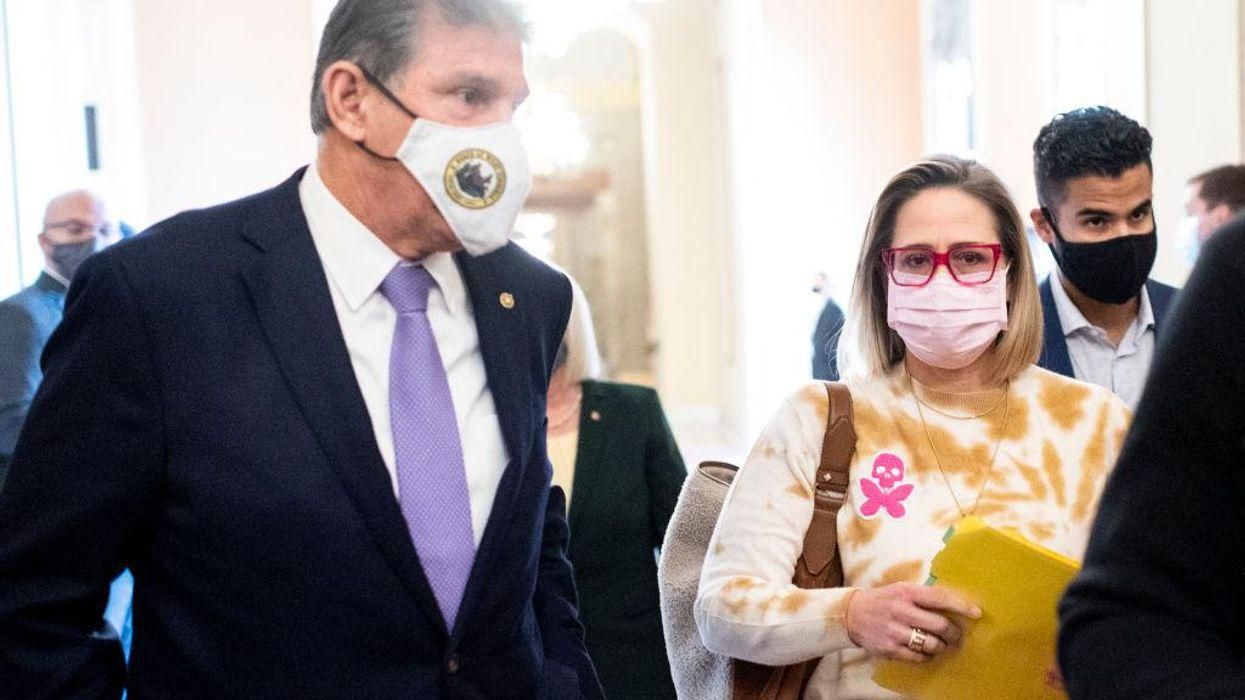
Democratic Senators Joe Manchin of West Virginia and Kyrsten Sinema of Arizona remain opposed to nuking the Senate filibuster, even as President Joe Biden is demanding that Democrats pass a law making abortions legal nationwide.

Following the Supreme Court's landmark decision in Dobbs v. Jackson Women's Health Organization — which overturned Roe v. Wade and revoked the constitutional right to abortion — Biden on Thursday demanded that the Senate create an exception to its 60-vote filibuster threshold to pass abortion legislation.

“We have to codify Roe v. Wade in the law, and the way to do that is to make sure the Congress votes to do that,” Biden said during a news conference in Spain. "And if the filibuster gets in the way, it’s like voting rights, it should be we provide an exception for this, we require an exception to the filibuster for this action.”

\u201cJoe Biden calls for eliminating the filibuster to legalize abortion nationwide until the moment of birth.\u201d
— RNC Research (@RNC Research) 1656595653

“It is a mistake, in my view, for the Supreme Court to do what it did,” the president said. "I feel extremely strongly that I’m going to do everything in my power, which I legally can do in terms of executive orders, as well as push the Congress and the public.”

The end of Roe was a significant victory for the pro-life movement in America. Republican-led states with abortion restrictions on the books acted swiftly to put those laws into effect, while other states with Democratic majorities announced new proposals to create "safe havens" for abortions.

The White House announced several executive actions on abortion last week that aim to protect the right of women to travel to another state for the procedure, as well as guarantee access to abortion-inducing drugs. Biden and Democratic leaders in Congress have also renewed calls to pass the Women's Health Protection Act — extreme legislation that would not just codify abortion rights but would invalidate hundreds of health and safety regulations on abortion clinics, as well as unconstitutionally micromanage state policy from the federal level.

Previous attempts to pass the WHPA have not earned enough support in the Senate to overcome the 60-vote filibuster threshold — hence Biden's demand that the Senate create an exception for it this time.

But Manchin and Sinema remain opposed to any attempt to change or circumvent the filibuster, according to the Daily Mail.

"Manchin's office told DailyMail.com that the West Virginia Democrat's position had not changed in light of the president's new comments, and Sinema's office referred DailyMail.com to a statement the Arizona Democrat made after the leaked Supreme Court decision," the outlet reported.

Sinema's statement said: "Protections in the Senate safeguarding against the erosion of women's access to health care have been used half-a-dozen times in the past ten years, and are more important now than ever."

Their joint opposition to nuking the filibuster leaves Democrats with just one option: Win more Senate races in the midterm elections this November.

Pelosi blasts 'extremist' Supreme Court in letter outlining next steps for House Democrats on abortion


House Speaker Nancy Pelosi (D-Calif.) on Monday sent a seething letter to her Democratic colleagues railing against the "extremist" U.S. Supreme Court's abortion decision and vowing to revive failed legislation that would create federal protections for abortion.

In a dear colleague letter dated Jun. 27, Pelosi outlined several abortion bills House Democrats will take up before the upcoming elections in November. Among them is another version of the Women's Health Protection Act, a bill that would create a federal right to abortion and drastically roll back state abortion restrictions — restrictions that are now legal since the Supreme Court overturned Roe v. Wade in a landmark decision on Friday.

Legislation to codify Roe has passed the House before but failed to win enough support in the Senate to overcome a filibuster by pro-life Republicans. It has virtually no chance of passing under the current makeup of Congress.

Two other bills House Democrats will advance include legislation protecting the right to travel out of state for an abortion and a privacy bill that would prevent prosecutors in pro-life states from accessing data stored in reproductive health apps to enforce abortion restrictions.

In her letter, Pelosi blasted the "extremist Supreme Court" and accused the court of attempting to "punish and control the American people."

"Democrats must continue our fight to expand freedom in America. Doing so is foundational to our oath of office and our fidelity to the Constitution," Pelosi said.

Her letter singled out Justice Clarence Thomas' concurring opinion in Dobbs v. Jackson Women's Health Organization, in which Thomas wrote that the Supreme Court should go farther than overturning Roe and "reconsider all of this Court’s substantive due process precedents, including Griswold, Lawrence, and Obergefell." Those are several highly controversial cases dealing with contraception, sodomy laws, and gay marriage, respectively.

"Because any substantive due process decision is ‘demonstrably erroneous,’ […] we have a duty to ‘correct the error’ established in those precedents," Thomas wrote.

Pelosi called Thomas' opinion "disturbing" and promised federal legislation to codify the rights to contraception, homosexual sex, and gay marriage.

"Justice Clarence Thomas confirmed many of our deepest fears about where this decision may lead: taking aim at additional long-standing precedent and cherished privacy rights, from access to contraception and in-vitro fertilization to marriage equality," she wrote. "Legislation is being introduced to further codify freedoms which Americans currently enjoy. More information to follow."

Thomas' opinion was not shared by the other justices in the majority. In the opinion authored by Justice Samuel Alito, the court explicitly rejected the proposition that Dobbs should be used to question the court's rulings on issues not related to abortion.

“And to ensure that our decision is not misunderstood or mischaracterized, we emphasize that our decision concerns the constitutional right to abortion and no other right,” Alito wrote. “Nothing in this opinion should be understood to cast doubt on precedents that do not concern abortion.”

But Pelosi's letter does not address the substance of the Supreme Court's decision in Dobbs. The final paragraph reveals that Pelosi's outrage is directed at motivating voters to the polls in November to protect Democratic majorities in Congress.

"It is clear from how Donald Trump and Mitch McConnell stacked the Supreme Court that elections have ramifications," Pelosi wrote. "It is essential that we protect and expand our pro-choice Majorities in the House and Senate in November so that we can eliminate the filibuster so that we can restore women’s fundamental rights – and freedom for every American."