The Atlantic Says Dressing Sharply Makes You A Nazi, Just Like The Nazis Wanted You To Think
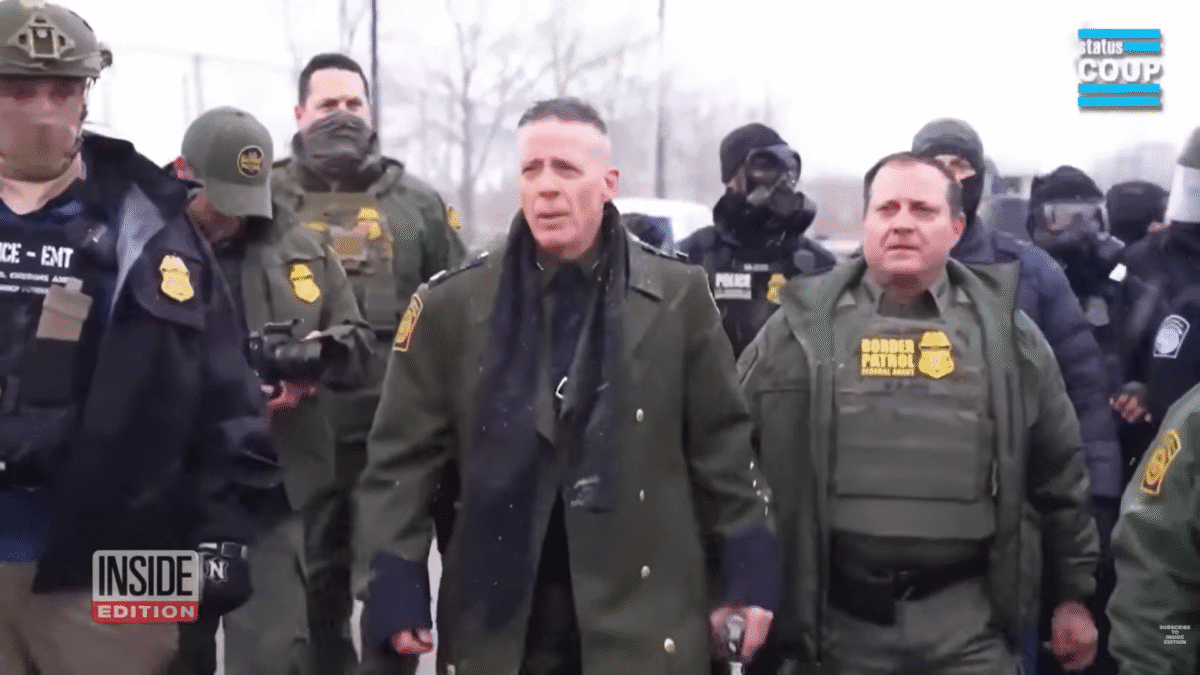 By associating symbols of Western civilization with Nazism, leftists like Tom Nichols are carrying on the work of actual Nazi propaganda.
Dennis Boldt was a 19-year-old private in the Army when he landed on the shores of Normandy on June 6, 1944.
On the 80th anniversary of D-Day in 2024, the San Antonio-based organization Walk Among Heroes arranged for Boldt and several fellow World War II veterans to return to the battlefields where they had served with valor decades earlier.
'You are carrying the torch of the fallen.'
“Dennis met the president [or] leader of nearly every democratic nation, and he met Tom Hanks, Steven Spielberg, and many other celebrities," Walk Among Heroes president and founder Jeff Wells told Blaze News. "What continuously took me by surprise was the humbleness and gratefulness Dennis expressed to everyone he met. Dennis 100% could not understand why he was being treated like ‘royalty,’ in his words. They call his generation the ‘Greatest Generation’ for a reason. They are humble and truly believe they were just ‘doing their job.’”
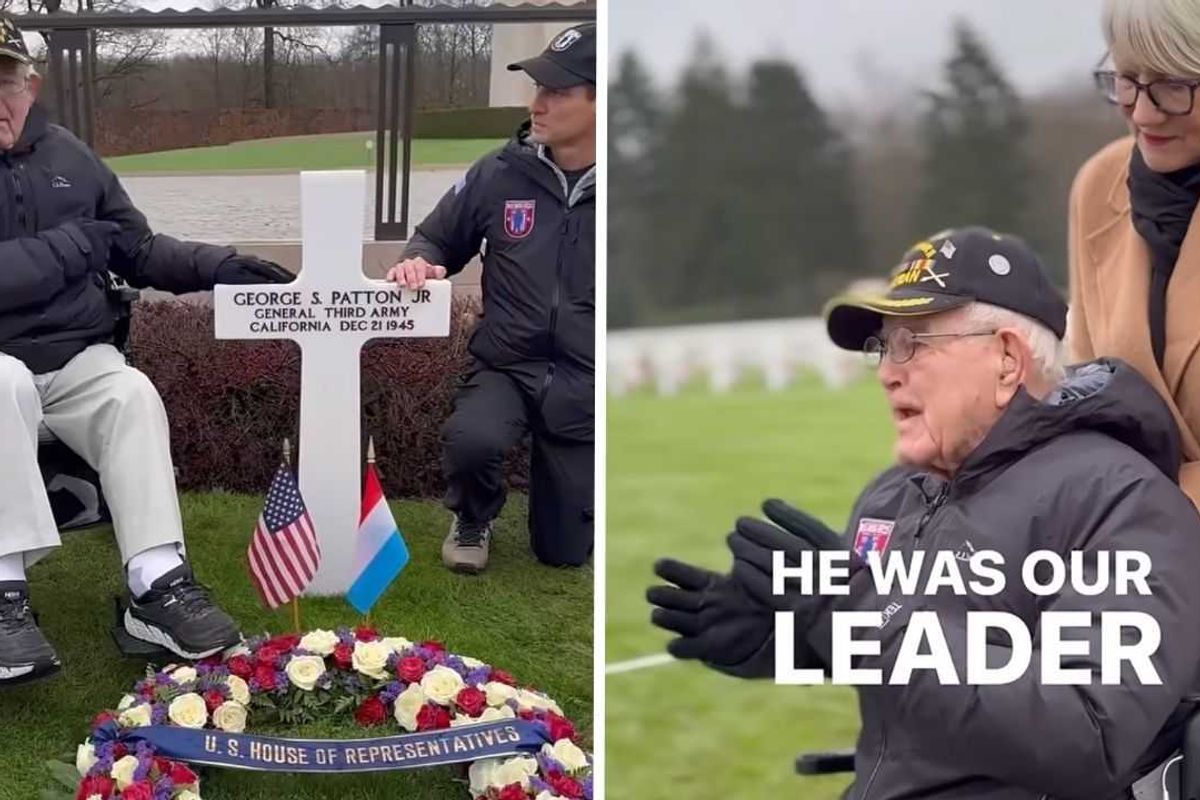
During last year's trip, Boldt had the opportunity to visit the grave of General George S. Patton Jr. in Luxembourg American Cemetery for the first time. Boldt, who served in the Third Army under Patton, was accompanied by the late general's granddaughter Helen Patton.
“This is something I had never expected in my life,” Boldt said as he rested his hand on Patton’s gravestone, which was surrounded by flowers and American and French flags.
“I knew that I had served under him, but to be at his gravesite, with ... his granddaughter, how is this possible for me?” he stated.
RELATED: What we owe our veterans this D-Day
Boldt expressed his deep appreciation for Patton’s leadership.
“Greatest honor that ever could have been presented to me and all my other comrades — that we ... served under General Patton,” Boldt stated. “He was our leader. If it had not been for his thrust with the saber forward, we could not have made it.”
“It was our leader that led us to victory,” Boldt added.
Boldt also visited the Normandy American Cemetery for the first time, where he met with a young active-duty soldier and shared a powerful message with him.
“I thank you,” Boldt told him. “You are carrying the torch of the fallen.”
At the conclusion of his trip, he shared some warm words with Walk Among Heroes.
“I’d like to say this: I feel like an old prospector that’s out in the field looking for a fortune. And I have found it,” he said as he pointed to those around him. “You people are my second family. I want you to know that. I think of you as my brothers and sisters. What you have all done for me here has made my time here valuable beyond all words."
Boldt celebrated his 101st birthday in December.
When asked what fuels Walk Among Heroes, Wells shared that it is “our debt of gratitude for these heroes who paved the way for all us.”
“Their service and sacrifices allow us to enjoy the greatest privilege in the world — freedom. We must take advantage of every opportunity to honor them and thank them,” Wells added.
Like Blaze News? Bypass the censors, sign up for our newsletters, and get stories like this direct to your inbox. Sign up here!
After the Allied forces successfully stormed Normandy, France, on D-Day, the German army launched a 200,000-strong counteroffensive on December 18, 1944, in the Ardennes region in Eastern Belgium. The attack marked the beginning of World War II's Battle of the Bulge.
Over 700,000 Allied troops, including Lt. Gen. George S. Patton Jr.'s Third Army, were involved in the combat that lasted 41 days.
This December, Walk Among Heroes brought U.S. Army veteran John "Jack" Moran to Bastogne, Belgium, for the 81st anniversary of the start of the battle.
'To me, just seeing the reactions of the Belgian people, thanking Jack over and over again, makes it all worthwhile.'
Moran, a former Army staff sergeant and member of Patton's Third Army, joined the military at the age of 18 and fought in the Battle of the Bulge in Bastogne.
Moran shared his firsthand account with Walk Among Heroes about crossing the Rhine River, the final major natural barrier for Allied forces advancing into Nazi Germany. The effort to cross the river, known as Operation Plunder, began in March 1945.
"There's no way in the world that 142 men can do anything and keep quiet," Moran explained. "They can't. It's an impossible possibility."
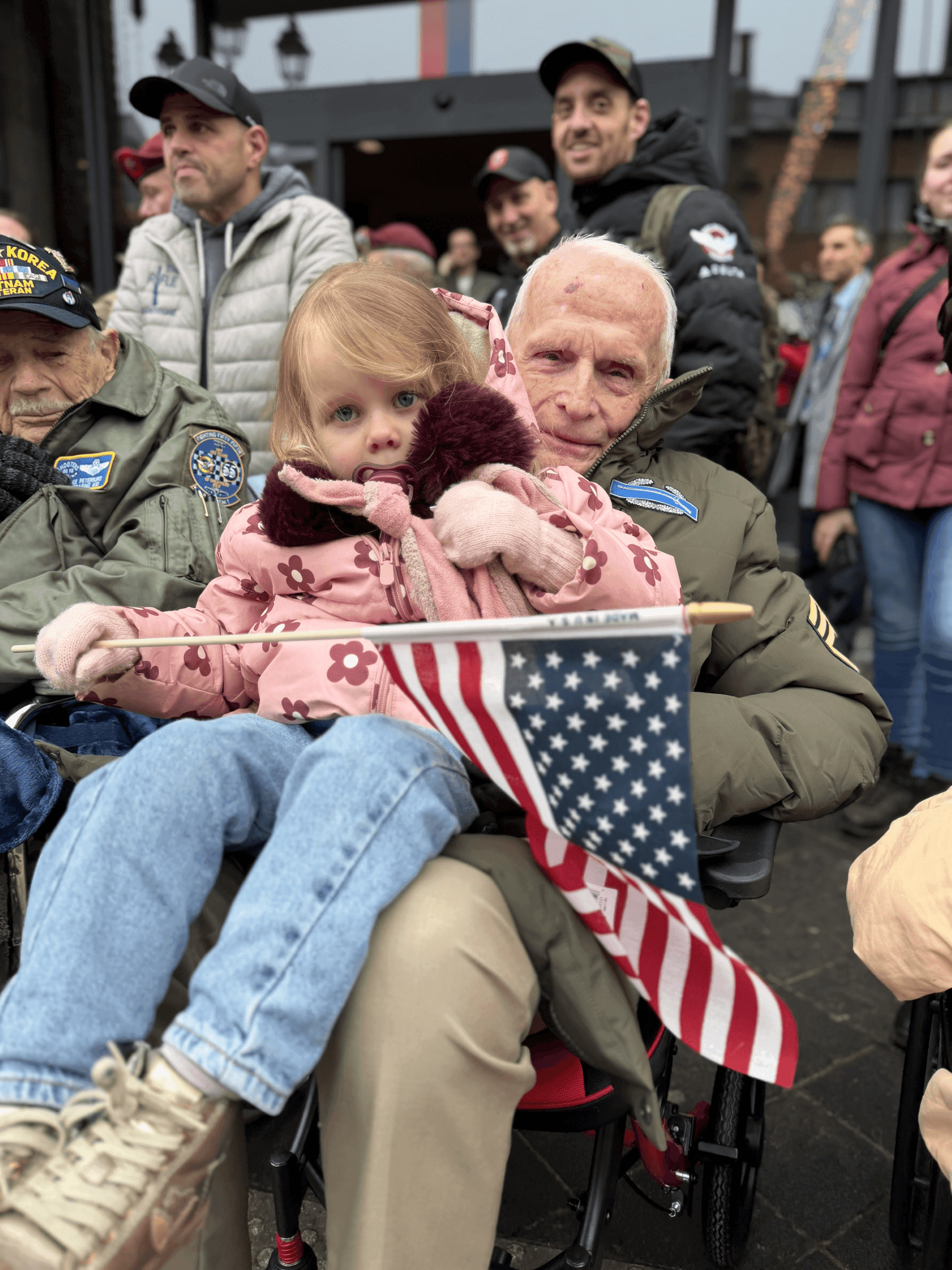
"So we slowly slip our paddles into the water, start paddling out into the middle of the … river. All of the sudden, the Germans light it up, just like this room — even brighter than this room," he continued. "And here we are, sitting right there."
"They opened up on us with five heavy machine guns," Moran said. "Chopping us up badly. We lost half our men."
During the trip, Moran met Bill White, the U.S. ambassador to Belgium, who presented the WWII veteran with the Victory in Europe Medal at the 101st Airborne Museum. Walk Among Heroes reported that the crowd was “very emotional” when Moran received the medal.
RELATED: What we owe our veterans this D-Day
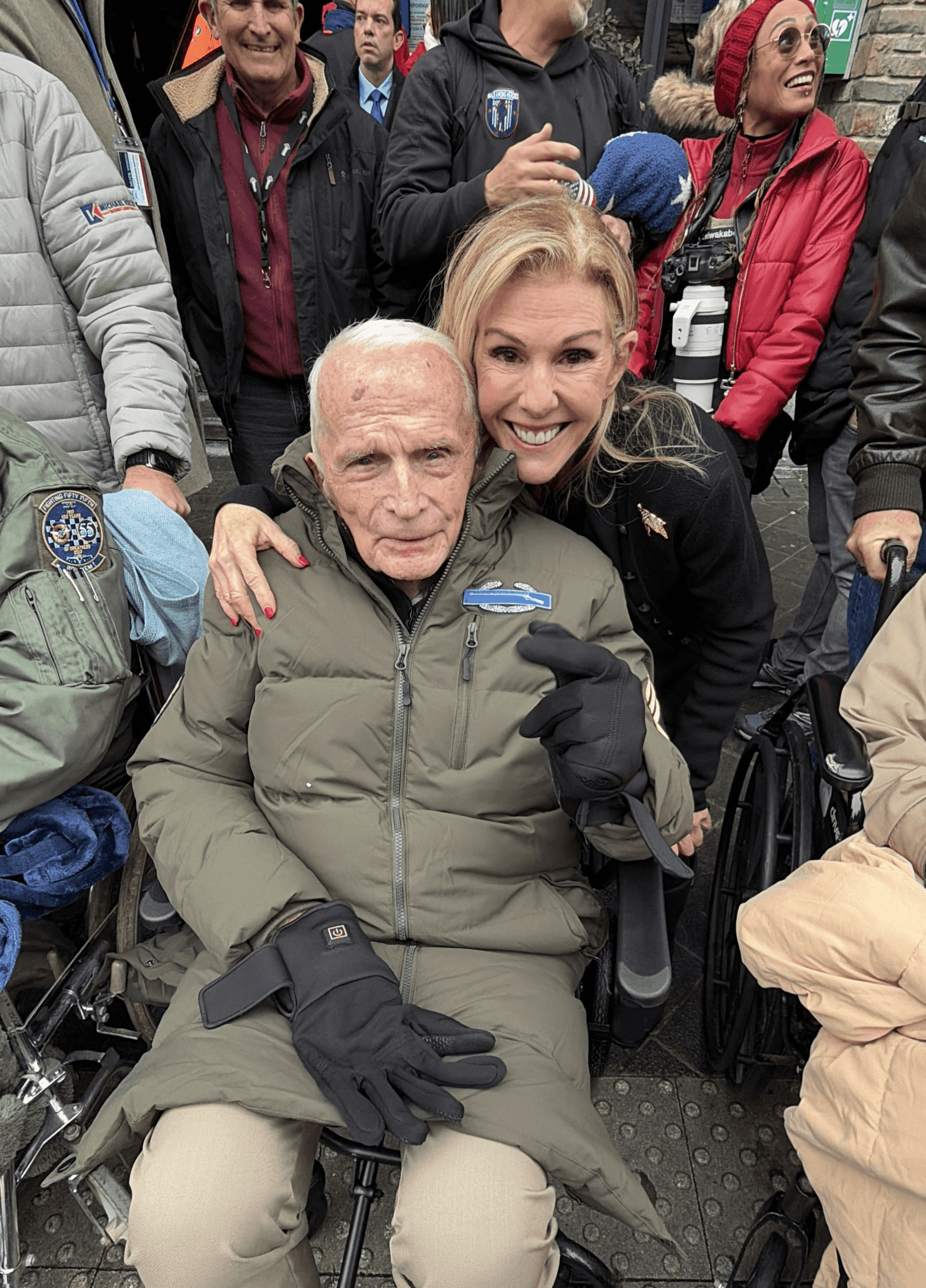
"In recognition of your military service during the Second World War, this is to certify the award of the Victory in Europe Medal to Staff Sergeant John Moran," the announcer stated.
"Your fight for freedom and democracy is in keeping with the finest traditions of military service and reflects great credit upon yourself, the 87th Infantry Division, and the United States Army."
“To me, just seeing the reactions of the Belgian people, thanking Jack over and over again, makes it all worthwhile,” Walk Among Heroes president and founder Jeff Wells told Blaze News.
Wells explained that Moran had plans to visit Patton’s grave at the Luxembourg American Cemetery. He noted that Moran would be accompanied by Patton’s granddaughter, Helen Patton.
“General Patton was Jack’s commander, so we are very excited to visit with him,” Wells said.
Like Blaze News? Bypass the censors, sign up for our newsletters, and get stories like this direct to your inbox. Sign up here!
When General George S. Patton served as military governor of postwar Bavaria, he startled the press by comparing Germans who voted for the Nazis to Americans who voted for Republicans or Democrats. Eighty years later, that comparison, once deemed outrageous, makes more sense than most care to admit.
Today’s Democratic Party has become a profoundly destructive force. Its leaders incite violence, wink at assassination attempts, and encourage riots to block the Trump administration’s efforts to deport illegal immigrants — including criminal offenders — the Biden White House imported as future Democratic voters.
As a European historian whose own family fled the Nazis, I recognize the pattern. The difference today is that Democrats enjoy advantages the German totalitarians never had.
In Virginia, Democrats just elected an inexperienced attorney general who once wished death upon a Republican leader and his children. Jay “Two Bullets” Jones, a man with no serious professional experience and a long public record of hate-filled rhetoric, is now the state’s top law enforcement officer. His victory didn’t trouble Virginia’s Democratic establishment. Democrats defended him, celebrated him, and made clear they see nothing disqualifying about open derangement when it serves the cause.
The point isn’t that the Democratic Party is identical to Hitler’s regime. It’s that its tactics — the deceit, manipulation, and contempt for constitutional limits — echo the methods the Nazis used to dismantle Weimar Germany from within.
As a European historian whose own family fled the Nazis, I recognize the pattern. The difference today is that Democrats enjoy advantages the German totalitarians never had. Even at the height of economic collapse, no more than one-third of German voters supported Hitler’s party. In America, at least half the electorate — and possibly more — backs a party that celebrates political violence, erases gender distinctions, tears down monuments, degrades men, and promotes the mutilation of confused children in the name of “affirmation.”
Many of the Democrats’ most reliable constituencies — college-educated women, black voters, and recent immigrants — embrace the movement’s nihilism without the desperation that once drove Germans to extremism. Their loyalty is ideological, not circumstantial, and that makes the threat more enduring.
The totalitarian Democrats’ rise owes as much to their ruthlessness as to the right’s failure to resist it. For years, the so-called conservative establishment — especially the Murdoch media — has preached “common ground” and “dialogue.” Its members have treated the left as a legitimate partner even as it dismantled every shared institution. They’ve assured us, wrongly, that the Democratic Party was about to collapse. Their naïve optimism left Republicans unprepared for last week’s electoral debacle.
RELATED:Accountability or bust: Trump’s second term test

A serious conservative movement would treat the Democrats not as rivals but as a subversive force bent on domination. They control the mainstream media, public education, entertainment, and the bureaucracy. The task is not to appease them but to weaken their grip. That means defunding their institutions, shrinking the administrative state, and cutting federal money to the states and cities run by radical leftists — Virginia, California, New Jersey, Minnesota among them. Washington should stop subsidizing those who despise the nation it governs.
The vapid notion that “we all want the same things for our children” only empowers those who plainly do not. They want to rule, not reconcile.
Conservatives must demand fair, transparent elections conducted in designated polling places on Election Day under bipartisan supervision. Voter identification should be federally required — a safeguard, not a surrender of state authority, which has long been diluted anyway.
And before Senate Democrats move to end the filibuster to cement their control, President Trump and his allies should act first. Forget “comity.” The GOP cannot afford another cycle of deference to rules their opponents ignore.
The moment demands moral clarity, not compromise. The Democratic Party is not merely misguided — it has become an organized threat to constitutional government and civil peace. Treating it as anything less will only hasten the day when America wakes to find itself a one-party state.
Republicans have given voters no reason to support them beyond the claim that Democrats are dangerously radical.
Well, sure. But when voters look around and see rising prices, rising crime, and no clear plan from the party in power, they turn to the other side. That’s what happened in Virginia, and it will keep happening as long as life stays unaffordable and Republicans offer nothing but excuses.
Republicans can still win — but not with hollow slogans or billionaire donors. They need to fight for affordable living, strong families, and safe communities.
Democrats’ victories in Virginia and New Jersey shouldn’t shock anyone — Trump didn’t need either state to win the presidency in 2024. What should alarm Republicans are the margins. Democrats crushed their opponents by 15 points in Virginia and 13 in New Jersey, performing better than Kamala Harris did against Trump in New York.
The blue wave swept deep into Republican territory. Democrats unseated Virginia’s attorney general — a respected conservative — with Jay “Two Bullets” Jones, a radical, scandal-prone candidate, and still won by nearly seven points. They gained at least 13 legislative seats, leaving Republicans with half the representation they held just eight years ago.
In Georgia, Democrats flipped two public service commission seats — their first statewide wins since 2006 — and won them by 24 points. They broke the GOP supermajority in the Mississippi Senate, flipped a state House seat, and took local races across Pennsylvania. In New Jersey, where Republicans didn’t even see the blowout coming, Democrats regained a supermajority in the General Assembly.
Taken together, these results point to a coming wipeout. Democrats have outperformed their 2024 presidential baseline by an average of 15 points in special elections this year, according to Ballotpedia — more than double the overperformance seen during Trump’s first term. In 45 of 46 key contests, Democrats either held or improved their position.
Republicans now face the worst possible political scenario: They hold power, which unites and energizes Democrats, but they’ve done almost nothing with it to inspire anyone else.
The first year of Trump’s second term has been defined by trivial fights and tone-deaf priorities: tax favors for tech investors, special deals for crypto, and zoning disasters for rural and suburban voters. The data center explosion in Virginia, which has raised utility bills and wrecked communities, could have been an easy populist target. Instead, Gov. Glenn Youngkin (R) vetoed a bill to rein it in.
Despite cozying up to Big Tech, Republicans haven’t reaped any benefit. The Virginia Republican Party is broke, its candidates are outspent, and the grassroots are demoralized. The GOP keeps selling out to special interests that will never back the party. How have the ties to crypto, Big Tech, and Qatar paid off?
The reality is, Republicans don’t need those donors — they need a message to inspire a new generation of activists.
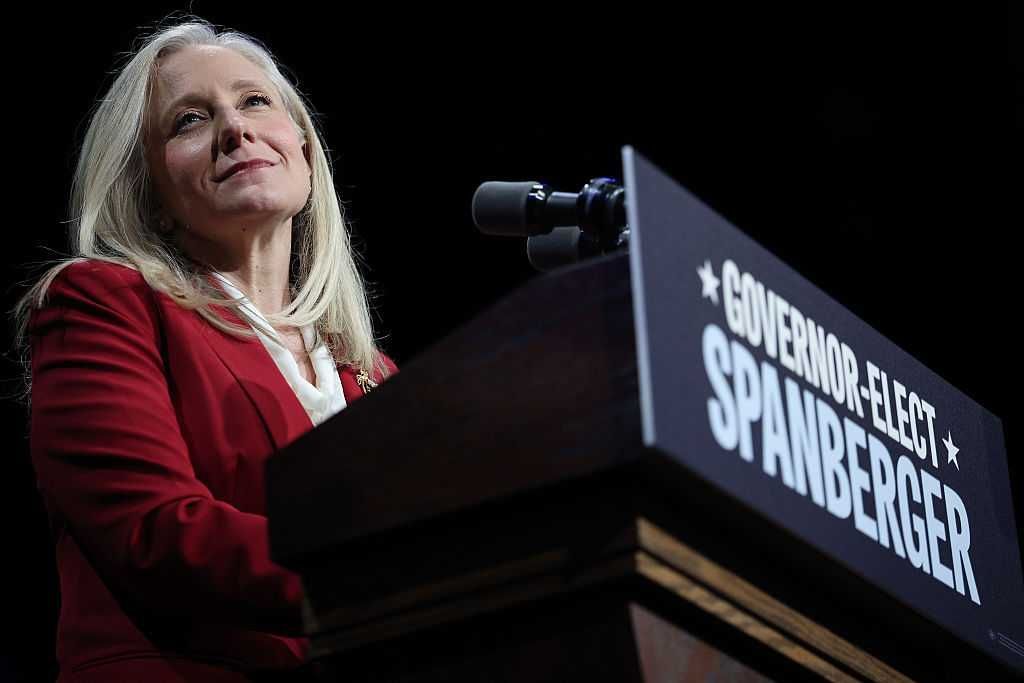
Democrats have learned to look like the party of normalcy while Republicans drift between populist posturing and corporate servitude. In Virginia, Abigail Spanberger ran on cutting costs, lowering taxes, and fighting crime — and she did it in the language of moderation. Republicans, who should own those issues, barely showed up for the debate.
Spanberger’s ads promised relief from inflation and touted her background in the CIA and law enforcement. She presented herself as steady and practical while Republicans floundered. Once again, Democrats outflanked the GOP on the right.
Republicans could have drawn blood by hammering Democrats on crime in Northern Virginia. Instead, they ran away from tough-on-crime policies. Winsome Earle-Sears even toyed with “criminal justice reform” while voters begged for accountability and order.
The result: Democrats ran as Bush-era Republicans, while Republicans looked like corporate consultants. Democrats talked about affordability and safety. Republicans talked about crypto and zoning boards.
The GOP’s reliance on one man has hollowed it out. Trump won the presidency in 2016 by talking about forgotten workers and American industry. But his divided message, personal vendettas, and fixation on media attention have since consumed the movement.
RELATED: Here’s what exit polls reveal about Tuesday’s electoral bloodbath
Now the party gets the worst of both worlds — all of Trump’s baggage, none of his appeal. Democrats use him to rally turnout. Independents recoil. The GOP lacks infrastructure, vision, and discipline. The movement that once promised to fight the establishment has become addicted to social media applause.
If Virginia had a commanding figure like Ron DeSantis at the top of the ticket, Republicans might have dampened the blue wave. But without an inspiring message, voters in an economic crisis will always drift to the other side.
The problem isn’t demographics; if it were, Democrats would campaign in Virginia the same way they do in California or New York City. Instead, they skate by on empty promises because Republicans, trapped by special interests and lacking a winning message, have become easy targets — and surrendered the very issues that could win back suburban voters.
Republicans can still win — but not with hollow slogans or billionaire donors. They need to fight for affordable living, strong families, and safe communities. They need a moral and economic vision that reaches beyond social media and into the lives of working Americans.
The question conservatives must ask is the one George Patton once put to his men in another context: When will we finally fight and die on our own hills instead of dying on someone else’s?
Twitter is not America. And unless Republicans start acting like they know the difference, they’ll keep losing — and keep deserving it.
You’ve probably never heard of Phil Larimore — a teenage hero of World War II whose story sounds too improbable to be true. But behind the unbelievable details stands a real young man with the leadership of Dick Winters (“Band of Brothers”), the resilience of Louis Zamperini (“Unbroken”), and the courage of Desmond Doss (“Hacksaw Ridge”).
Born in 1925, Philip B. Larimore Jr. excelled at outdoor pursuits — hiking, camping, horsemanship, sharpshooting, and hunting. But he also struggled with discipline and behavior, prompting his parents to send him to military school at age 13. There, Phil found his purpose. He emerged as a standout cadet and natural leader, graduating with honors shortly after the attack on Pearl Harbor in 1941.
If Dad could speak to us this Memorial Day, I believe he would ask for just one thing: Tell the stories of those who served.
At 17, he became the youngest cadet up to that point to complete the Army’s demanding Officer Candidate School. Days after his 18th birthday, he received his commission — becoming the youngest Army officer in the war. He then trained intensively with the 82nd Airborne.
By early 1944, Phil had landed on the beachhead at Anzio, Italy, with the 3rd Infantry Division. He had just turned 19.
He fought in frontline combat almost immediately. He first led an ammunition and pioneer platoon, working shoulder to shoulder with his men. At night, often deep in no man’s land, Phil defused mines, strung barbed wire, delivered supplies, and engaged in brutal combat — sometimes hand to hand — as he advanced through Italy and into southern France.
During that phase of the war, the average life expectancy for a junior officer on the front lines was 21 days. Phil survived 415.
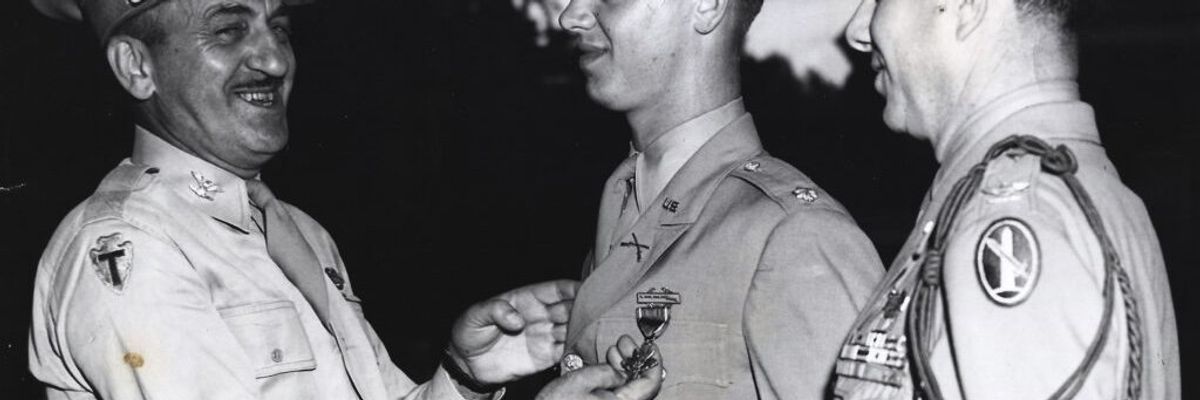
Days after his 20th birthday, he was promoted to company commander, the Army’s youngest at that post. He went on to become one of the most highly decorated junior officers, receiving every valor medal the Army awarded except the Medal of Honor — including the Distinguished Service Cross, two Silver Stars, two Bronze Stars, three Purple Hearts, and three Presidential Unit Citations. His bravery included volunteering to fly 200 miles behind enemy lines to find where Hitler had hidden the world-famous Lipizzaner stallions — a top-secret mission that led General George Patton to authorize Operation Cowboy to save the breed from extinction.
On April 8, 1945 — just one month before VE Day — Phil learned that a squad of his men were pinned down by more than 120 German soldiers. Without hesitation, he jumped on the back of a tank and coolly manned a .50-caliber machine gun under relentless enemy fire. He wiped out three German gun nests and scattered the surrounding troops. A sniper’s bullet shattered his leg before he could return to cover.
Surgeons in a field hospital amputated his right leg. Phil was then flown home to an Army hospital, joining more than 15,000 soldiers recovering from major limb loss. Army policy at the time mandated automatic discharge for all amputee officers after rehabilitation. Phil refused to accept it. He appealed the policy, calling it unjust, unfair, and unethical.
During his appeal hearing on April 15, 1947, Phil discovered exactly how Army brass viewed amputee officers. One colonel told him, “You’re a handicap to the Army. You’re a highly decorated cripple — but still a cripple.” Another added, “The Army doesn’t need one-legged handicaps,” and “Amputee officers simply don’t have a place in our Army.”
The board denied his appeal by a single vote. Phil received an honorable discharge with the rank of major — at just 22 years old.
Though the Army later reversed the policy in 1950, the damage had been done. Phil’s self-image was shattered. His promising military career had been stolen — not only by a German sniper, but by the Army and country he had faithfully served and loved. He fell into despair and contemplated ending his life.
Fortunately, he turned to an Army chaplain for help. With the support of family, friends, and his faith, Phil rebuilt his sense of purpose and began healing.
I’m the oldest of Phil’s four sons. He never spoke about the war. Only after he and my mother celebrated their 50th wedding anniversary did I ask what it felt like to be a hero.
“Two million men fought in Europe,” he replied. “I was one of over 500,000 American casualties. But more than 100,000 are buried there. Those are the real heroes. Not me!”
Dad’s quiet but steady faith, humility, and lifelong service to others became a model — not just for my brothers and me but for the many students and Boy Scouts he mentored over the decades. Several even named their first sons Philip.
After retiring, Dad made peace with his past and with his Creator. The nightmares faded. The stench of war no longer haunted him. He died peacefully in his sleep on Oct. 31, 2003. He was 78.
After 15 years of research and writing, I completed my biography of him — “At First Light” — first published in 2022. The book led to his posthumous inductions into the Army’s Officer Candidate School Hall of Fame and the 3rd Infantry Division Hall of Fame, alongside legends like Audie Murphy and Generals Dwight D. Eisenhower, George C. Marshall, and Lucian K. Truscott.
After his most recent induction, I visited his grave. I thought: Dad, I always loved being your son. Now more than ever, I’m honored by it.
If he could speak to us this Memorial Day, I believe he would ask for just one thing: Tell the stories of those who served. Tell the stories of those who gave everything on the altar of war — those who sacrificed their tomorrows so we might have our todays.
And above all, remember the cost. The freedoms and liberties they preserved must not only be appreciated — they must be wisely stewarded.


 If our society accepts the faulty premise that there are no differences between men and women, women have no grounds for objecting to compulsory combat duty.
 www.theblaze.com
 www.theblaze.com