What Trump Can Learn From Reagan About Blockading The Strait Of Hormuz
 History’s winning formula is clear: Reject proportionality, embrace decisive force, and see the mullahs’ grip weaken.
America’s past energy weakness wasn't accidental. It was a result of misguided political pressure.
While Washington politicians congratulated themselves on “green leadership,” they systematically strangled the most energy‑rich state in the nation: Alaska. The result has been higher costs, increased foreign dependence, and a national security posture that makes our adversaries smile.
Alaska proves what Washington refuses to admit: You can develop resources responsibly, or you outsource damage to others.
Revitalizing the Alaskan oil industry is the key to reversing these costly mistakes.
The Trans‑Alaska Pipeline System was built after the 1973 Arab oil embargo made the danger of foreign dependence painfully clear. Authorized by Congress and completed in 1977, the 800‑mile pipeline has moved more than 17 billion barrels of oil to U.S. markets.
At its peak, TAPS delivered over 2 million barrels per day, dramatically reducing reliance on OPEC and reinforcing American energy security. It funded public services, created tens of thousands of jobs, and helped stabilize global markets — all while operating under some of the toughest environmental standards in the world.
The United States still imports billions of barrels of oil every year. Roughly 20%of our petroleum needs are met by foreign suppliers. While Canada and Mexico are reliable partners, global pricing and supply remain hostage to instability in the Middle East and geopolitical maneuvering by OPEC+.
This instability is the cost of blocking domestic development. If America won’t produce energy, others will — often with weaker labor laws, worse environmental practices, and profits flowing to regimes aligned against U.S. interests.
Environmental activism does not stop the demand, but it does decrease American leverage.
In Alaska, the Arctic National Wildlife Refuge Coastal Plain alone holds an estimated 7.7 billion barrels of recoverable oil, with total North Slope reserves exceeding 10 billion barrels. Development could deliver up to 1.2 million barrels per day at peak production — enough to materially offset foreign imports and extend the life of TAPS.
This untapped potential is why restrictions on Alaska energy development were so destructive. They ignored economic reality and national defense in favor of ideology.
Recent deregulatory efforts show the correct path forward: Open ANWR and the National Petroleum Reserve-Alaska, streamline permitting, modernize infrastructure, expand offshore access, and invest in liquid natural gas for both domestic use and exports to allies.
Affordable energy lowers grocery bills, keeps manufacturing competitive, restrains inflation, and allows young families to build lives without fleeing high‑cost states. It is no coincidence that states with affordable energy policies attract investment and jobs while those with ideological energy policies hemorrhage both.
Alaska understands this reality very well. In a cold, remote state, energy reliability is not optional. That same realism should guide national policy.
Natural gas, large‑scale hydro, clean coal, and next‑generation nuclear are the way forward. They don’t collapse during cold snaps. They don’t require permanent subsidies. And they work at scale.
A country that depends on foreign energy can be easily manipulated and destabilized. A country that exports energy sets its own terms.
Alaska’s location makes it a critical asset. LNG exports from Alaska strengthen allies while undercutting Russian influence and Chinese leverage. Continuing to restrain the state’s energy potential does nothing but weaken America and strengthen our rivals.
RELATED: What’s Greenland to us?
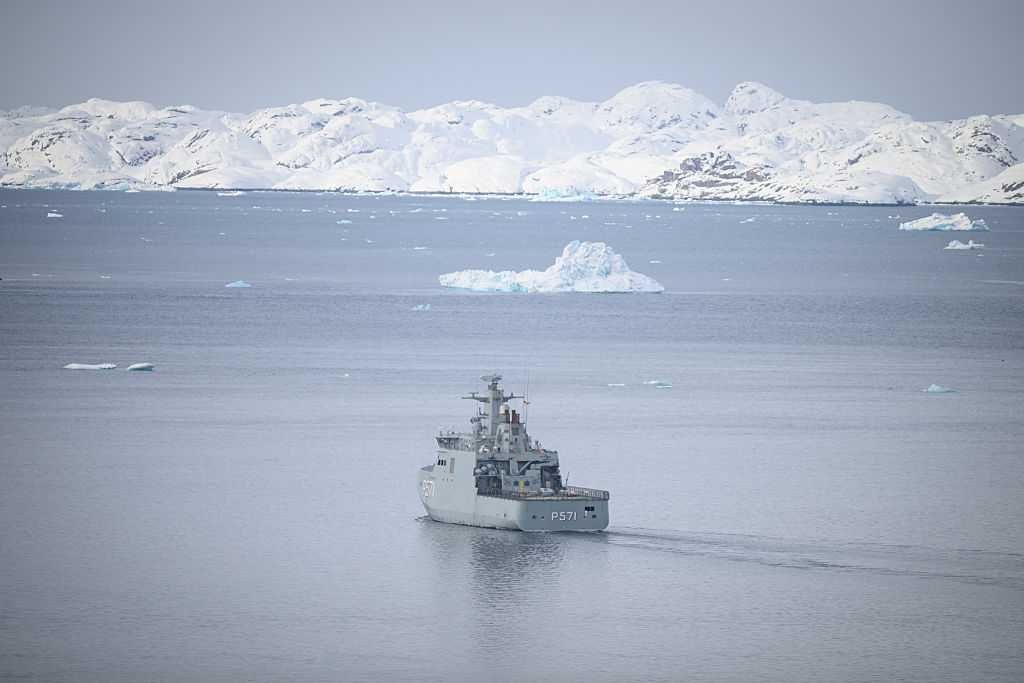
Critics repeat the same tired scare tactics, but reality tells a different story.
Wildlife adapted around the Trans‑Alaska Pipeline. Fisheries can easily coexist with modern development. Today’s monitoring, engineering, and land management dramatically exceed anything available a generation ago.
Alaska proves what Washington refuses to admit: You can develop resources responsibly, or you outsource damage to others.
America can keep pretending that energy comes from press releases and foreign tankers, or we can reclaim the proven model that once made it strong: Produce at home under American rules, for American families.
The path to energy independence doesn’t run through climate conferences or regulatory delay. It runs through Alaska.
House Speaker Mike Johnson (R-La.) described an alarming meeting with Joe Biden, during which the president allegedly could not recall a significant policy decision he had made just weeks prior.
During a Friday interview with the Free Press' Bari Weiss, Johnson stated that the interaction with Biden made him question who was running the country.
'He genuinely did not know what he had signed.'
Weiss asked Johnson whether he stood by his previous statement that he believes Biden is "the worst president in the history of the country."
"I do stand by it," he responded. "In some ways, I actually kind of feel sorry for Joe Biden. I mean, he's in the twilight years of his life. He has not — obviously — has not been in charge for some time. And I know this by personal observation."
When pressed to share a story about his observations, Johnson explained that he had repeatedly requested to meet with Biden after becoming House speaker in October 2023.
"They wouldn't let me meet with him," Johnson told Weiss. "His staff kept giving excuses. This went on for like eight or nine weeks."
He stated that he had "some big national concerns at the time" that he was "losing sleep over."
Biden's staff finally agreed to meet with the speaker amid pressure from the press.
When Johnson showed up to the meeting, he realized it was "an ambush," noting that several Democratic leaders were in the room.
Johnson stated that in the middle of the meeting, Biden asked everyone else to leave so the two of them could speak privately. The speaker noted that Biden's staffers looked concerned as they went to exit.
Johnson proceeded to question Biden about why he signed an executive order just weeks earlier that froze liquid natural gas exports.
"Liquified natural gas is in great demand by our allies. Why would you do that?" Johnson said. "You understand, you're fueling Vladimir Putin's war machine because they got to get their gas from him."
The speaker said Biden appeared "stunned."
"He said, 'I didn't do that,'" Johnson continued. "I said, 'Mr. President, yes, you did. It was an executive order like three weeks ago.' And he goes, 'No, I didn't do that.' He's arguing with me. I said, 'Mr. President, respectfully, could I go out here and ask your secretary to print it out? We'll read it together. You definitely did that.' And he goes, 'Oh, you're talking about natural gas.'"
Johnson stated that Biden told him that he misunderstood the nature of the executive action, claiming it was an order to study the effects of LNG.
"It occurred to me, Bari, he was not lying to me. He genuinely did not know what he had signed. And I walked out of that meeting with fear and loathing because I thought, we're in serious trouble," Johnson remarked.
"Who is running the country?" he questioned. "I don't know who put the paper in front of him, but he didn't know."
The White House did not respond to a request for comment from the New York Post.
Like Blaze News? Bypass the censors, sign up for our newsletters, and get stories like this direct to your inbox. Sign up here!
President-elect Donald Trump is still months away from taking office, yet the European Union already appears desperate to cut a deal with him.
Ursula von der Leyen, president of the European Commission, addressed members of the European Council in Budapest, Hungary, Friday, signaling a desire to avoid a trade war with the United States and to switch from Russian to American gas.
When asked how she intends to negotiate with Trump on trade, Leyen answered, "I think first of all: Engage. Very important what we have started yesterday."
Leyen was referencing her phone call with Trump Thursday, where she apparently congratulated him on his landslide electoral victory. The German politician noted on X that they discussed defense, Ukraine, trade, and energy.
"Secondly, discuss about common interests. And there are common interests that we have," continued Leyen. "Then go into negotiations."
'They are going to have to pay a big price.'
Leyen said that liquid natural gas was among the common interests she briefly discussed with Trump this week, noting that Europe still gets "a lot of LNG via Russia, from Russia."
According to the Institute for Energy Economics and Financial Analysis, in the first half of 2024, Europe sourced 48% of its LNG imports from U.S., 16% from Russia, 11% from Algeria, 10% from Qatar, and 4% from Nigeria and Norway.
"Why not replace it by American LNG, which is cheaper for us and brings down our energy prices?" said Leyen. "It's something where we can get into a discussion, also [where] our trade deficit is concerned."
The U.S. Census Bureau indicated Tuesday that the trade deficit with the EU in September was $23.8 billion, contributing to the year-to-date trade deficit of $173 billion.
Trump indicated in October that the EU would have to "pay a big price" for not buying enough American exports, reported Reuters.
"I'll tell you what, the European Union sounds so nice, so lovely, right? All the nice European little countries that get together," said Trump. "They don't take our cars. They don't take our farm products. They sell millions and millions of cars in the United States. No, no, no, they are going to have to pay a big price."
Politico noted that Leyen's maneuver to dodge the steep tariffs of 10% or more that Trump has threatened by promising to buy LNG is largely political theater granted the European Commission is virtually powerless when it comes to dictating European companies' purchases of gas.
"The EU doesn't buy LNG — there's a global LNG market and LNG buyers have their own contract," Laurent Ruseckas, executive director for gas markets at commodities giant S&P Global, told Politico. "It's certainly possible to do a memorandum of understanding to talk about increasing purchases but ultimately in the past that's been a way to put a political wrapper around something that was delivered by the market. And the EU is buying as much LNG currently as the market needs."
Like Blaze News? Bypass the censors, sign up for our newsletters, and get stories like this direct to your inbox. Sign up here!
Two new energy enterprises in the Port of Brownsville were on the cusp of ushering in a new era of business and industry for the region. Together, they would bring in billions of dollars in investment, provide major infrastructure improvements, and create thousands of jobs.
And they would lead to a domino effect of benefits for the community, such as the $30 million Texas A&M training facility that broke ground at the port this year.
This is not governmental cooperation through agency and legal means. It’s obstructionist.
Both projects received the green light in the federal permitting process, and one had even begun construction.
But then everything came to a screeching halt at the whim of a court in Washington, D.C.
For the sake of the people of South Texas, this unprecedented move — tossing out preapproved permits, including one for a facility that is already under construction — needs to be challenged.
The Rio Grande LNG terminal, projected to be one of the world's largest liquified natural gas export projects, would cost an estimated $18 billion. It is expected to generate 5,000 construction jobs, over 400 permanent positions, and potentially another 3,000 indirect jobs in the local community.
Meanwhile, Texas LNG was finalizing its investment plans to start construction. This project, too, was set to invest billions and create thousands of jobs throughout its construction phase.
The Federal Energy Regulatory Commission had approved permits for both projects. The companies went above and beyond to comply with environmental regulations, even incorporating a carbon capture and storage facility to reduce emissions. Ironically, the court cited these environmental efforts as the reason to revoke their permits. In response, both projects have now abandoned their carbon capture efforts to comply with the court’s demands.
As Charles McConnell, a former official in the Environmental Protection Agency under the Obama administration, wrote, “This is not governmental cooperation through agency and legal means. It’s obstructionist.”
U.S. Sen. Ted Cruz (R-Texas) has urged FERC to appeal a court decision that halted the construction of two major liquefied natural gas terminals. Cruz’s letter to the FERC chairman stressed the need for regulatory clarity to ensure that legal disruptions do not discourage investors from backing future projects that could position America as the world’s leading energy producer.
“If project developers come to believe that federal permits can be overturned due to procedural missteps by the regulator, apart from any actions or fault by the developers, U.S. infrastructure projects will slow and stall,” Cruz wrote.
But for the people of South Texas, this outlandish reversal is a lot more personal. We need more industry and business to help our region flourish. The projects were expanding business access to South Texas significantly. Rio Grande LNG was already in the process of making the channel another 10 feet deeper to make the Port of Brownsville accessible to more ships. With the federal court ruling, all that progress will come to an end — and with it, a golden opportunity to turn South Texas into a hub of prosperity.
It’s easy to get lost in the legal jargon of the permitting process and lawsuits. But what FERC and the courts do has real-world implications for everyone in South Texas. More industry leads to more jobs, and more jobs lead to more opportunities, which in turn would create more opportunities for South Texans to escape poverty.
The new LNG developments could set the region up for success in decades to come — but not if bureaucratic obstructionists continue to stand in the way.
Texas is refusing to back down and hand over control of Shelby Park in Eagle Pass, Texas, to federal authorities.
President Biden then banned all new liquid natural gas export approvals, claiming this was a climate-related decision — not a way to retaliate and hurt Texas’ economy.
Texas Attorney General Ken Paxton tells Glenn Beck that he has “no doubt” that this was meant to hurt Texas, not help the climate.
“There’s no doubt in my mind they were probably enjoying the fact that it would hurt the Texas economy, but I also think that’s what the border is about,” Paxton says.
While Paxton believes the long-term goal is to allow immigrants into Texas in order to change the way the red state votes, the rest of what the administration is doing is hurting the Texas economy anyway.
“What they’re doing is bringing people into our state so that we have higher costs. We have law enforcement costs, health care costs, we have education costs, and they know that,” he explains.
“I think they’re doing their best to damage and harm in any way possible, even if it means high crime in the Republican states,” he continues, adding that while it “sounds so conspiratorial,” he can see what they’re doing.
“It’s not like a secret; it’s all out in the open,” he adds.
Glenn is in agreement with Paxton, adding, “This is what a constitutional crisis looks like.”
To enjoy more of Glenn’s masterful storytelling, thought-provoking analysis, and uncanny ability to make sense of the chaos, subscribe to BlazeTV — the largest multi-platform network of voices who love America, defend the Constitution, and live the American dream.

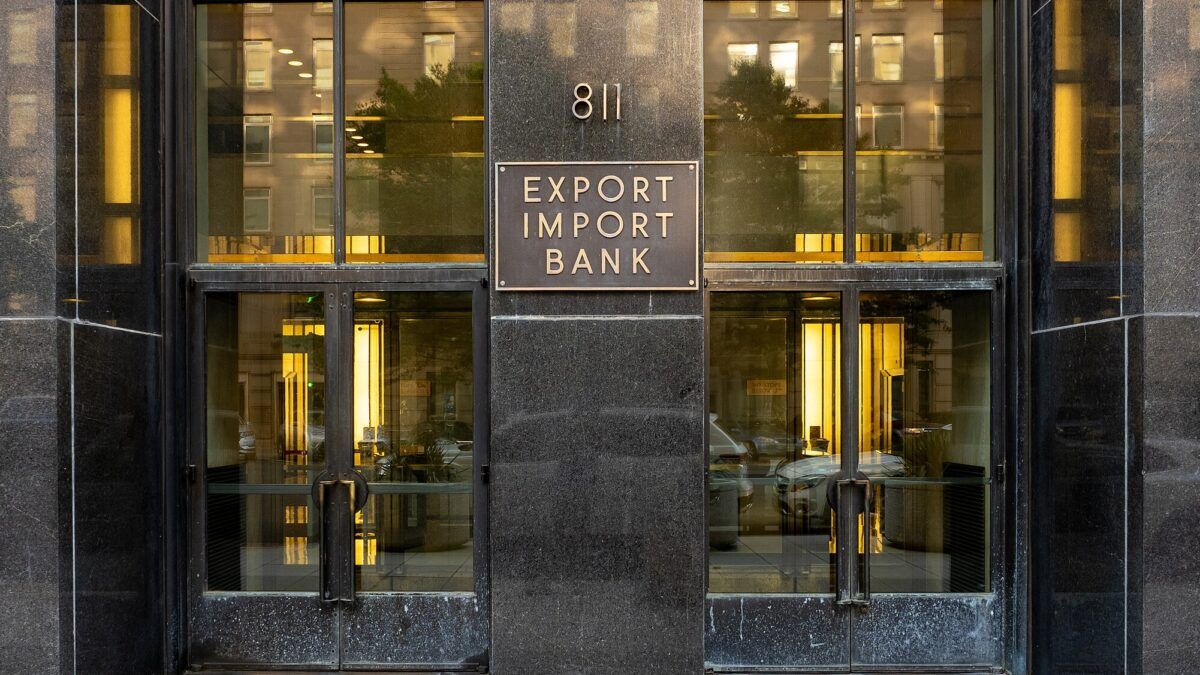 The Export-Import Bank approved a $5 billion loan to a French energy company to build an LNG pipeline in Mozambique, competing with the U.S.
 The Constitution Pipeline could save New Englanders $1 billion in energy costs while providing more reliable energy than renewable energy.


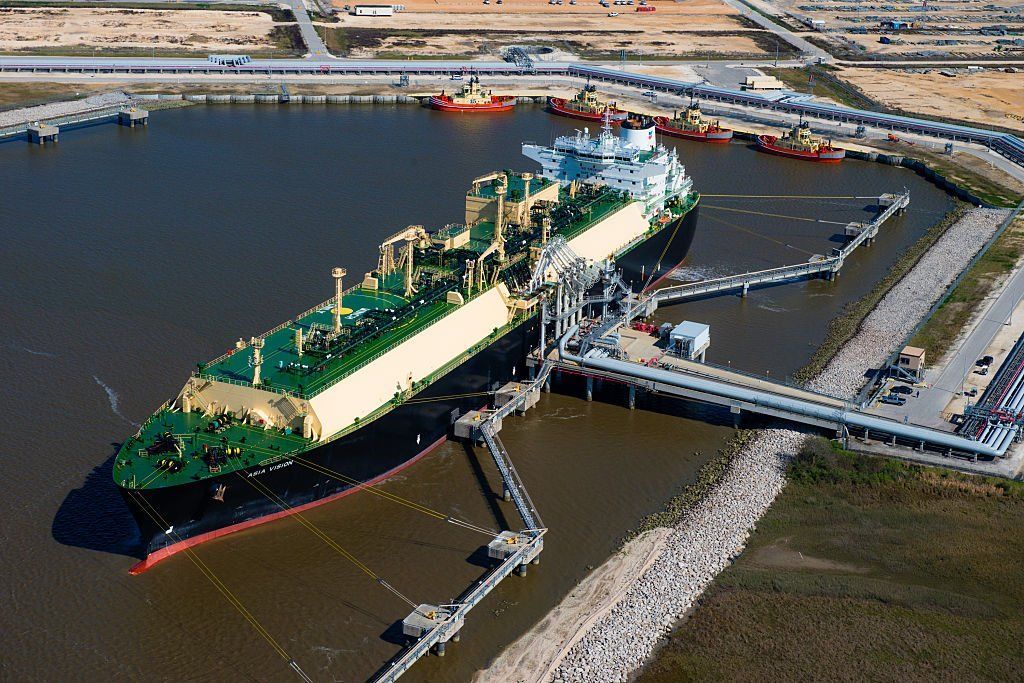
 'We know no one can believe what Kamala Harris says, so it’s clear that we have to believe her actions like this disastrous LNG pause.'

 www.theblaze.com