Virginia Democrats get bad news about legally dubious gerrymandering effort

The Virginia Supreme Court heard arguments on Monday in Scott v. McDougle, a case initially brought before Tazewell County Circuit Judge Jack Hurley Jr. that could determine whether Old Dominion ultimately adopts a gerrymandered map that would all but guarantee that 10 out of the state's 11 congressional seats go to Democrats in the upcoming midterm election.
On April 21, Virginia voters passed the redistricting referendum, but the next day, Hurley blocked certification of the result, ruffling the feathers of Democrats who eagerly want to see the result certified.
Hurley ruled in January that the constitutional amendment that ended up on the April 21 ballot was unlawful. He then declared on April 22 in a related case about the constitutional amendment — Koski v. Republican National Committee — that:
- the Virginia General Assembly illegitimately usurped the powers of the Virginia Redistricting Commission;
- the legislation that prompted the special election for the amendment violated the submission, timing, and form of laws clauses of the Virginia Constitution; and
- "any and all votes for or against the proposed constitutional amendment in the April 21, 2026, special election are ineffective."
The judge granted the Republican plaintiffs in the Koski case a permanent injunction against certification, noting that they "will be irreparably harmed absent permanent injunctive relief because of the numerous violations of the constitutional amendment process and because Congressmen [Ben] Cline and [Morgan] Griffith would be irreparably harmed by their districts changing at this juncture."
On April 24, Virginia Attorney General Jay Jones (D) filed a motion for an emergency stay of Hurley's order in the Koski case.
The Virginia Supreme Court delivered Jones and other Democrats bad news on Tuesday, denying them their coveted emergency stay.
RELATED: Virginia Supreme Court seems skeptical about Democratic gerrymandering

Former Republican Virginia AG Ken Cuccinelli said in response to the court's rejection of the Democratic motion that "in the 'tea leaves' category, this is as positive a 'tea leaf' as one might imagine" with regard to the Scott case.
Cuccinelli said that if the Virginia Supreme Court "thought they would let the referendum stand, then logically they would have lifted the injunction on counting & certifying the votes."
Virginia Del. Wren Williams (R) wrote, "The same Supreme Court that allowed the referendum to go forward in March, so voters could be heard, has now declined to override a final judgment finding the constitutional amendment process defective. Strong signal that process matters in Virginia."
Like Blaze News? Bypass the censors, sign up for our newsletters, and get stories like this direct to your inbox. Sign up here!
Virginia Supreme Court seems skeptical about Democratic gerrymandering

Virginia voted last week in favor of a referendum to adopt a gerrymandered congressional map that would all but guarantee that 10 out of the state's 11 congressional seats go to Democrats in the upcoming midterm election.
There remains a good chance, however, that the new map may not ultimately be adopted.
Background
There are numerous legal battles across Virginia over whether the gerrymandering referendum that passed Tuesday is lawful. One of those battles — Scott v. McDougle — is now before the Virginia Supreme Court.
In October 2025, Republican state lawmakers and members of the Virginia Redistricting Commission filed a lawsuit, claiming that the special session reconvened late last year to consider a constitutional amendment on redistricting was invalid as it was called not by the governor, who holds the exclusive right to do so, but by the speaker of the state House.
The complaint noted further that while the Virginia House of Delegates "has no constitutional authority to propose a plan to redraw or reapportion districts" for the U.S. Congress, as this falls under the purview of the Virginia Redistricting Commission, the state House nevertheless usurped the authority.
To bypass the commission, lawmakers proposed a constitutional amendment to redraw the congressional map. Getting this amendment on the April 21 ballot required the approval of a corresponding resolution in two separate legislative sessions on either side of a state election. Challengers contend that this process was bungled and legally flawed.
RELATED: GOP bill would squeeze Democratic hives out of Virginia — and back into DC

Tazewell County Circuit Judge Jack Hurley Jr. ruled on Jan. 27 that the proposed constitutional amendment was unlawful, but the Virginia Supreme Court subsequently ruled that Virginians could still vote for it in the statewide April 21 referendum while the case proceeds.
The day after the referendum passed, Hurley blocked the state from certifying the results of the vote, ruling that the legislature's constitutional amendment and the special election on it were invalid.
Skeptical of Democratic plot
On Monday, the Virginia Supreme Court heard arguments in Scott v. McDougle.
One Virginia justice extracted concessions from the defense at the outset that the "yes" vote in the referendum "doesn't tell us anything" about the merits of the challengers' claims, and that the Virginia General Assembly didn't follow its own procedural rules with regard to the special session during which the new congressional map was passed.
Multiple justices expressed skepticism about the validity of that special session.
One justice said that contrary to the previous expectation in Virginia that the legislature wouldn't sit year-round, the Democratic "interpretation of the special session would allow them to sit in continuous session for the better part of two years."
The same justice appeared receptive to the argument by Thomas McCarthy, attorney arguing for the plaintiffs, that "it's sort of a nonsensical position to say that the special session exists through a regular session" — referencing the overlap of the 2024 special session and the 2025 general session.
The justices also did not appear entirely convinced by Democrats' argument that enough time had passed between when the amendment was first passed and the 2025 state election. The legislature voted on the amendment in October, weeks after early voting for the 2025 election had already begun.
"What is your position — your client's position — regarding a constitutional amendment that is adopted at 6 p.m. on Election Day with an hour left at the polls?" asked one justice. "Is that still the next general election?"
Virginia Solicitor General Tillman Breckenridge responded that the amendment must only be passed before Election Day, rather than on it.
McCarthy argued to the contrary, claiming that for the amendment to have been valid, it should have been passed before the entire voting period, not just before Election Day 2025. A Virginia Supreme Court justice subsequently noted that the amendment process responsible for the passage of the gerrymandering legislation was unprecedented.
Of note, the Circuit Court of the City of Richmond ruled on Sunday in a separate but related case that the Virginia General Assembly did not exceed its authority when passing the amendment on redistricting.
Like Blaze News? Bypass the censors, sign up for our newsletters, and get stories like this direct to your inbox. Sign up here!
'Record' cash advantage gives GOP upper hand in state AG races

The country presently has 27 GOP state attorneys general and 23 Democrat state AGs — counting the Democrat-appointed lesbian activist in Hawaii. Republicans are fighting to maintain their dominance in the top legal offices across the country, the majority of which they have controlled since 2015.
There are 30 state attorney general seats on the ballot this November — 16 of which are presently occupied by Democrats and 14 of which are occupied by Republicans.
The Republican Attorneys General Association, whose support wasn't enough to spare former Virginia AG Jason Miyares from losing his re-election bid last year, announced on Friday that it raised "a record $29.3 million across all entities last year" — the most that any AG organization has reportedly ever raised in a calendar year.
'Four of the Toss-up AG races are in states that were considered presidential battlegrounds in 2024.'
"In 11 months, RAGA raised nearly $30 million for the first time ever," RAGA Executive Director Adam Piper said in a statement. "However, we must shatter previous fundraising records to ensure we protect battleground incumbent seats and pick up winnable seats."
"2026 is the largest election year for AG races, and RAGA is well positioned for another banner year," added Piper.
Among the incumbent Republican attorneys general now running or poised to run for re-election are:
- Tim Griffin of Arkansas;
- James Uthmeier of Florida;
- Chris Carr of Georgia;
- Raúl Labrador of Idaho;
- Brenna Bird of Iowa — who received a $1 million donation from the RAGA on Dec. 31;
- Kris Kobach of Kansas;
- Mike Hilgers of Nebraska; and
- Drew Wrigley of North Dakota.
Whereas Ohio's Dave Yost is ineligible to run again due to term limits, several other GOP incumbents are creating openings because they have their eyes set on different prizes.

Alabama AG Steve Marshall and Texas AG Ken Paxton are running for the Senate — Marshall for the seat of Sen. Tommy Tuberville (R-Ala.), who is running for governor, and Paxton to deny Sen. John Cornyn (R-Texas) a fifth term.
South Dakota AG Marty Jackley is running for Congress. Oklahoma AG Gentner Drummond is running for governor of his state.
Louis Jacobson at the University of Virginia's Center for Politics suggested in an analysis late last year that "of the 2025-26 AG races, seven states have competitive AG races: five Toss-ups, plus a Leans Republican and a Leans Democratic seat each."
"Democrats will largely be playing defense: All five Toss-up races are currently held by Democrats, with at least two of them open-seat races, and potentially more to come open if additional incumbents run for a different office," continued Jacobson. "Mirroring the national partisan split, four of the Toss-up AG races are in states that were considered presidential battlegrounds in 2024."
Arizona, Michigan, Minnesota, Nevada, and Wisconsin were identified as toss-up AG races. Jacobson suggested further that Carr (R) was well-positioned in Georgia.
"The remaining states with AG races this cycle include 10 Safe Republican seats, 3 Likely Republican seats, and 11 Safe Democratic seats," added Jacobson.
While the races in Maryland, Nevada, Ohio, and Wisconsin are attracting significant national and donor attention, the contests in Iowa and Kansas — where Kobach is once again battling Democrat challenger Chris Mann — are fast becoming two of the most closely watched, reported MultiState.
Mann reportedly out-raised Kobach last year. Nevertheless, the incumbent had more cash on hand to kick off this election year.
Bird has managed to raise over $2 million for her re-election campaign — more than double what her Democrat challenger, Nate Willems, has netted. The Des Moines Register reported, however, that Willems has fared far better in terms of fundraising than his state's former Democrat AG, Tom Miller, who lost to Bird in 2022.
The race in Texas is similarly garnering national attention, though much of the present heat surrounds the Republican primary on March 3.
The candidates who will face off Tuesday in a debate moderated by BlazeTV host Allie Beth Stuckey are:
- Aaron Reitz, the Paxton-endorsed former assistant attorney general who has promised to "destroy the left" if elected;
- Rep. Chip Roy, an antagonist of Paxton who has Texas Sen. Ted Cruz's endorsement;
- Mayes Middleton, a Texas state senator who has characterized himself as proud supporter of President Trump and the America First agenda and has been endorsed by Rep. Brian Babin (R-Texas); and
- Joan Huffman, a Texas state senator who enjoys the support of various police unions and has been endorsed by National Fraternal Order of Police Vice President Joe Gamaldi.
The debate airs at 8 p.m. ET on Tuesday.
Like Blaze News? Bypass the censors, sign up for our newsletters, and get stories like this direct to your inbox. Sign up here!Pro-Life Groups Announce $80 Million Campaign To ‘Fire Up Pro-Life Americans’ For 2026 Midterms
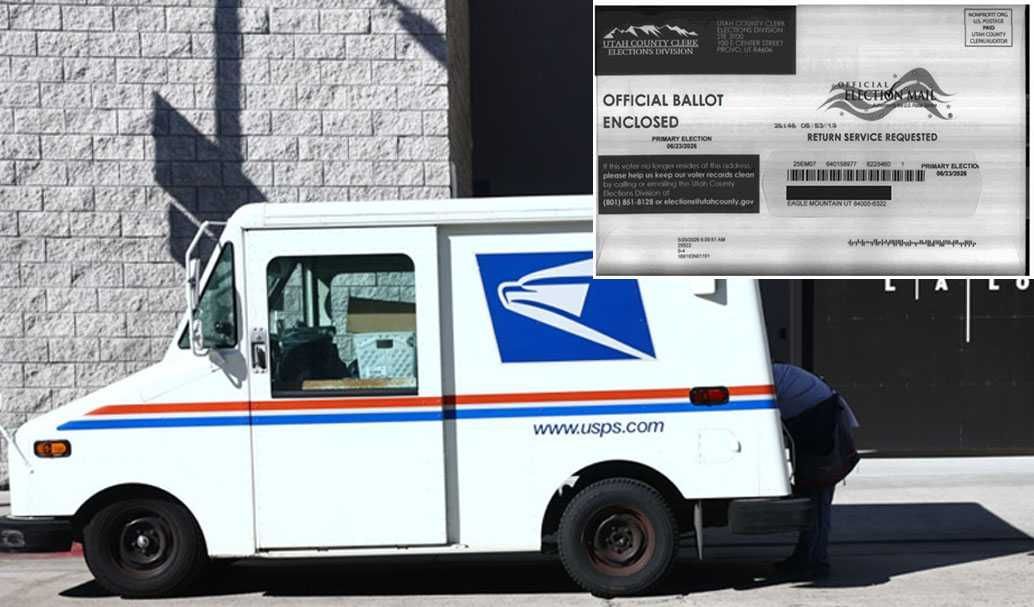
Susan B. Anthony Pro-Life America is partnering with Women Speak Out PAC to chase votes for life in a high stakes, lower-turnout election.SCOTUS To Decide Whether States Can Accept Mail Ballots Received After Election Day
Before Covid, most states held voting on Election Day, and the results were tallied after the polls closed.Mark Levin eviscerates Liz Cheney's gushing promotion of Democrats days before the midterms

Liz Cheney claims to be a Republican, but according to Mark Levin, Liz seems more of a "Democrat stooge" who "craves the limelight." In the wake of the attack on Paul Pelosi, Mark says liberal media outlets are trotting Liz out to push their conspiratorial theories against Republicans.
In this clip, Mark Levin played a clip featuring Liz Cheney appearing to appeal for sympathy votes by playing up the recent threats against Pelosi and others.
Mark explained that he has been a target of threats and that all members of Congress have likely been targets of threats. "It is a huge problem," Mark explained. "It is a bipartisan problem."
Cheney went on to tell PBS News Hour that since she began serving on the Jan. 6 committee, she believes Nancy Pelosi to be a "tremendous leader" of "historic consequence."
Mark's rebuttal was epic. Video below.
Want more from Mark Levin?
To enjoy more of "the Great One" — Mark Levin as you've never seen him before — subscribe to BlazeTV — the largest multi-platform network of voices who love America, defend the Constitution, and live the American dream.


Midterms 2022: The DeSantis Lesson for the GOP | Ep 236