14-year-old named Pagan apparently linked to satanic group is charged with threatening church massacre, child pornography


The Hillsborough County Sheriff's Office in Tampa, Florida, has arrested a 14-year-old on terrorism and child pornography charges.

Sheriff Chad Chronister told reporters on Wednesday that "threats of mass violence and the exploitation of children are some of the most heinous crimes we investigate — and this case was no different."

'Images too graphic and too disturbing to discuss because they would keep all of you up at night.'

After receiving a tip on Jan. 31 that Jose Pagan Jr. had access to firearms and was plotting a massacre at a church near his home in Wimauma, the HCSO searched the teen suspect's family home, where officers found weapons, ammunition, and electronic devices containing horrific child pornography.

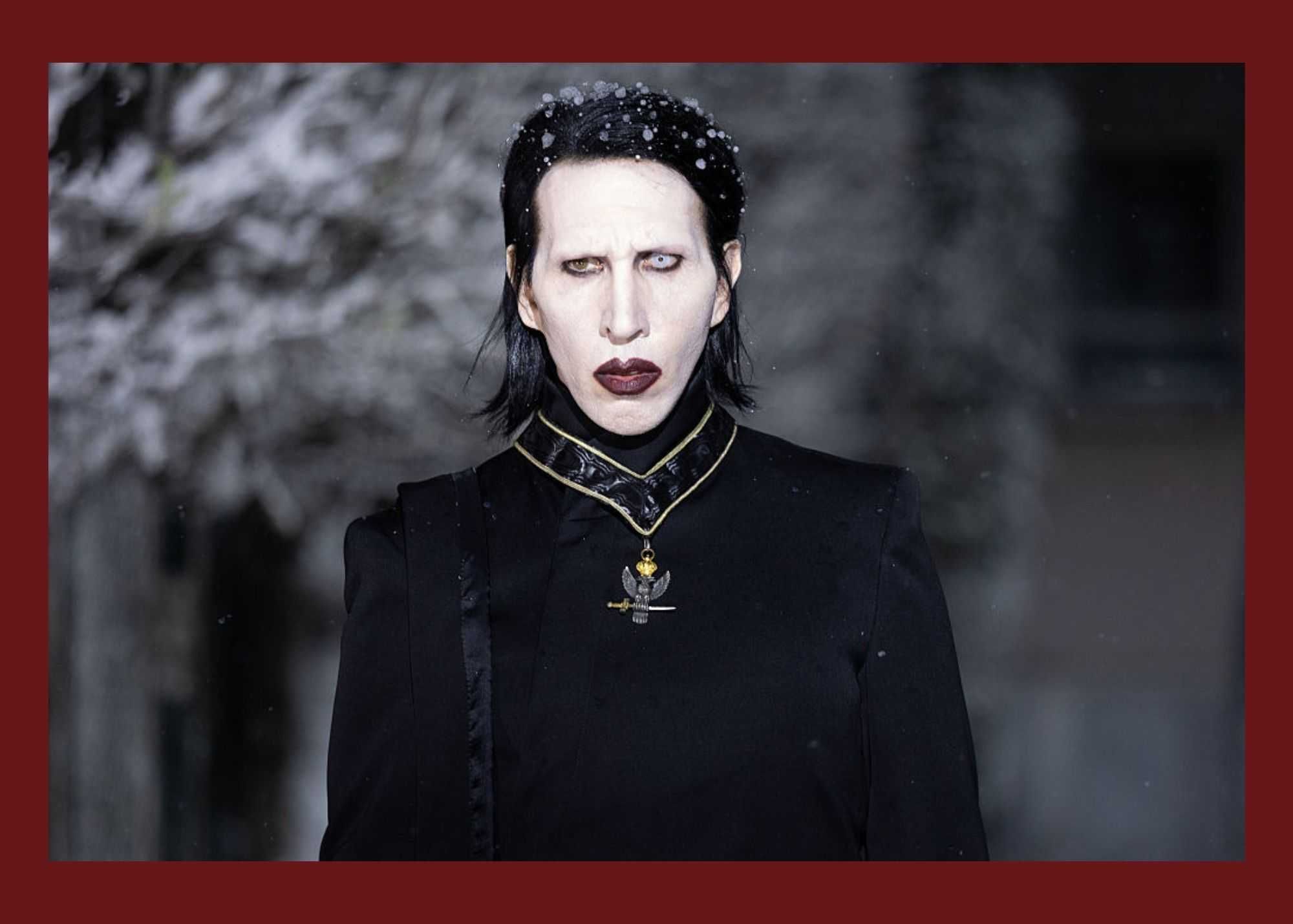
The sheriff indicated that Pagan — who was spotted in a photo wearing a No Lives Matter T-shirt and is apparently linked to a neo-Nazi satanic group — discussed in an online chat room associated with violent extremists his alleged plan to shoot up a church.

While Sheriff Chronister initially referred to the group as Temple of Love, his office confirmed to Blaze News on Thursday that Pagan was involved with the group Tempel ov Blood.

According to the Mapping Militants Project, Tempel ov Blood describes itself as a "hybrid between a traditional satanic coven and a (religious) militant order." FBI informant Joshua Caleb Sutter — a convicted felon who publishes neo-Nazi propaganda — has long led the group out of South Carolina.

RELATED: Radical teen who plotted to kill Trump and lived with corpses of slain parents pleads guilty

Karl Merton Ferron/Baltimore Sun Staff

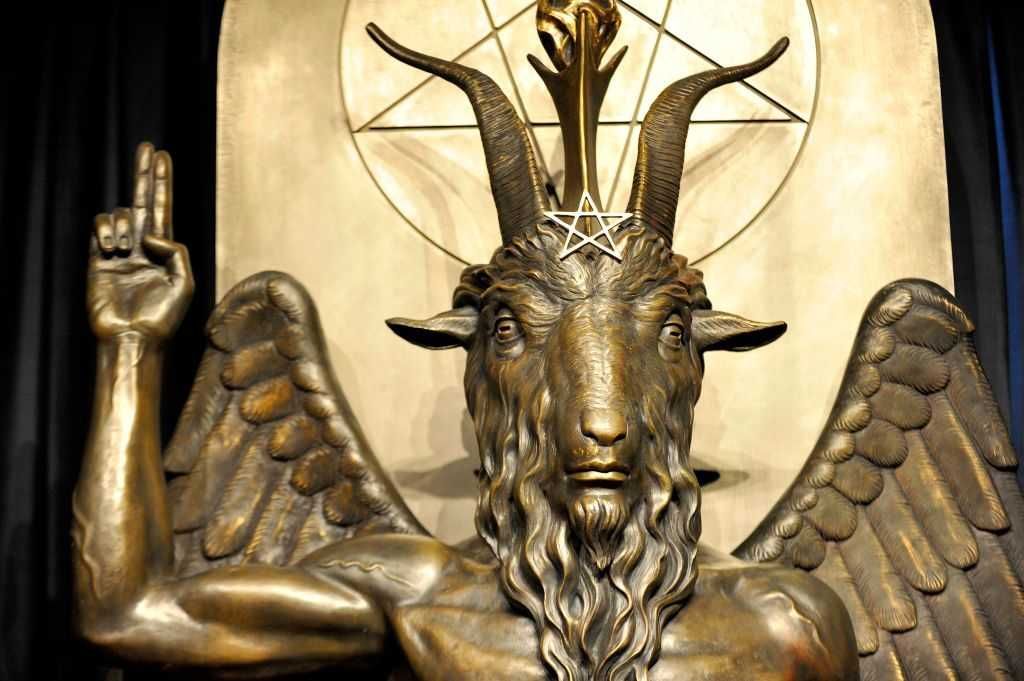
TOB is apparently an American affiliate of the Order of Nine Angles, a global satanic pedophile cult known for anti-Semitism, hatred for Christianity, identitarianism, and admiration of Adolf Hitler and other loathsome historic figures. Its members have in the past reportedly encouraged their minor victims to commit suicide.

A Wisconsin teen who pleaded guilty last month to murdering his parents as part of a broader plot to assassinate President Donald Trump apparently was an adherent to the global satanic group's teachings.

Sheriff Chronister noted that days prior to executing the search warrant, his office received information from the FBI's Joint Terrorism Task Force about a possible mass shooting plot as well as information from a child exploitation hotline about child pornography possibly being downloaded at the same residence.

During the search of Pagan's home, detectives "discovered 14 extremely graphic, disturbing images where individuals were inflicting violence toward infants and toddlers — images too graphic and too disturbing to discuss because they would keep all of you up at night," Chronister said.

While most of the firearms in the house were found locked in a safe, authorities indicated that one firearm was easily accessible and stored in the father's nightstand.

Pagan was charged with written or electronic threat to conduct a mass shooting or act of terrorism; in-state transmission of child pornography by electronic device; multiple counts of solicitation or possession of child pornography; and multiple counts of unlawful use of a two-way communication device.

Although it's unclear if Pagan will be charged as an adult, Chronister stressed that "the age of the individual involved does not lessen the seriousness of these crimes."

The sheriff noted further that after the 21-day juvenile hold of the suspect, "based on the seriousness of these crimes, I am extremely worried about this 14-year-old integrating right back into our community, where our loved ones live."

The presence of law enforcement has greatly increased at two churches in the area, Chronister said.

The teen, who may face additional charges, told authorities he was just trying to be edgy.

Like Blaze News? Bypass the censors, sign up for our newsletters, and get stories like this direct to your inbox. Sign up here!

Nicki Minaj goes scorched-earth after Trevor Noah Grammys diss; accuses celebs of ‘blood sacrifice’ of children


The star-studded Grammys featured some jokes from “comedian” Trevor Noah, who took aim at rapper Nicki Minaj and her support of President Trump.

“Nicki Minaj is not here,” Noah said, to thunderous applause from the audience.

“She is still at the White House with Donald Trump discussing very important issues.”

Noah then broke into a Trump impression, mocking, “Actually Nicki, I have the biggest ass ... everybody’s saying it Nicki.”

While the crowd may have laughed, Minaj didn’t find it funny.


“Trevor refuses to come out the closet when everyone in the industry knows his boyfriend. Allegedly,” Minaj wrote in a post accompanied by photos of Jay Z on X.

“Your favorite artist has been practicing rituals in a satanic cult where they take babies from other countries & mutilate them & kill them as a form of a blood sacrifice to their God. You see, when your master is satan, you must constantly shed blood. However, the JIG IS UP,” she wrote in another post.

But she wasn’t finished.

“Are y’all understanding that these ppl have been sacrificing children as a way of gaining & maintaining power?” she wrote in yet another post, adding, “If you ever vote DemonCrat again, you’re just as soulless as they are & will perish. Maybe it’s time for me to do some story times — since I was trying to not say what I know — yet they continue to attempt bullying.”

“I’m glad she actually fired back because I thought Trevor Noah was just not funny,” BlazeTV contributor Shemeka Michelle tells BlazeTV host Jason Whitlock on “Fearless.”

“They just want to keep you pigeonholed to the Democrat Party. And anytime they feel like you’ve stepped away, then they want to ridicule and shame you. As someone who has seen a little bit of Nicki Minaj’s career over the years, it’s very telling that now they have an issue with her being fully clothed and supporting Donald Trump more than they did when she was naked and just saying all types of foolishness,” Michelle says.

“It really, it speaks volumes about the black community in general and about those who are so-called elite or in charge. Now all of a sudden, they want to bring Nicki Minaj down because of her allegiance to Donald Trump. It says a lot,” she continues.

As for Noah himself, Michelle believes Minaj’s allegations may have some merit.

“He doesn’t really strike me as this masculine man,” Michelle says, adding, “So I’m not surprised at all.”

Want more from Jason Whitlock?

To enjoy more fearless conversations at the crossroads of culture, faith, sports, and comedy with Jason Whitlock, subscribe to BlazeTV — the largest multi-platform network of voices who love America, defend the Constitution, and live the American dream.

‘Chatbot Jesus’ is a digital fake — and churches are falling for it


Artificial intelligence now offers “Chatbot Jesus,” personalized prayers, AI-generated sermons, and even virtual pastors charging monthly fees. Some see these tools as a lifeline for shrinking congregations. Others claim they offer new ways to evangelize.

The church must speak plainly: We are not called to relevance. We are called to righteousness. Scripture commands believers to “test all things; hold fast what is good.”

People are not abandoning faith because the church lacks modern technology. They are leaving because they are starving for truth in an age of deception.

Technology itself is neither holy nor wicked. The printing press, radio, livestreaming, and Bible apps have all served ministry. AI that organizes calendars, translates languages, or answers simple questions is just another tool.

Crossing a biblical line

Trouble begins when technology imitates divinity. An app that invites people to “talk with Jesus” steps into territory Scripture reserves for the living God alone. Jesus said, “My sheep hear My voice” (John 10:27). Only the Lord speaks with the authority of Matthew 24:35: “Heaven and earth will pass away, but My words will by no means pass away.”

No chatbot can make that claim.

The danger becomes obvious when apps offer simulated “conversations” with Judas or Satan. God forbids consulting spirits, mediums, or conjured voices (Leviticus 19:31; Deuteronomy 18:10-12). Why would the church encourage digital re-creations of what Scripture calls an abomination?

Convenience or relevance cannot override explicit biblical commands.

You can’t outsource the Holy Spirit

Some pastors now admit they use AI to help write sermons. Others market “avatar” versions of themselves. But ministry has never centered on polished prose. It has always centered on God’s power — His breath, His Spirit, His Word.

Paul wrote, “My message and my preaching were not with wise and persuasive words, but with a demonstration of the Spirit’s power” (1 Corinthians 2:4).

You cannot automate the power of God. You cannot outsource the voice of the Holy Spirit. You cannot download anointing.

A sermon is not literary content to be refined by software. It must be birthed in prayer, wrestled through in Scripture, and delivered in obedience. As Jesus said, “Apart from Me you can do nothing” (John 15:5). That includes preaching.

Tech won’t save us

Axios reported that up to 15,000 churches may close this year and that 29% of Americans now claim no religion. That trend calls for actual spiritual renewal, not AI simulations of Jesus.

People are not abandoning faith because the church lacks modern technology. They are leaving because they are starving for truth in an age of deception. The early church grew because believers “continued steadfastly in the apostles’ doctrine and fellowship … and fear came upon every soul” (Acts 2:42-43). They witnessed repentance, signs, wonders, and transformation — none of which machines can produce.

True revival begins where the early church began: holiness, unity, prayer, obedience, and the power of the Holy Spirit.

A distortion of Christ

False voices proclaiming truth are not new. The only novelty is that they are now automated. The central danger of “AI spirituality” is doctrinal corruption. What sources shape these chatbots? What ideology trains them? If systems learn from shallow teaching or progressive theology divorced from Scripture, they will preach a distorted Christ.

When AI “hallucinates” — and all current systems do — it can hand users outright lies.

Jesus warned, “Beware of false prophets … you will know them by their fruits” (Matthew 7:15-16). Paul warned that if anyone preaches "any other gospel … let him be accursed” (Galatians 1:8). From Genesis onward, the devil has counterfeited God’s voice. AI can and will preach an "other gospel" if it draws from anything other than Scripture.

RELATED: God-tier AI? Why there’s no easy exit from the human condition

gremlin via iStock/Getty Images

Believers must remain discerning. “Do not be deceived” (1 Corinthians 15:33). “Beware lest anyone cheat you through philosophy and empty deceit” (Colossians 2:8). Those who build their faith on machine-generated counsel risk building a house on sand rather than the Rock (Matthew 7:24-27).

A servant, not a shepherd

Tools can organize schedules and streamline communication. They can assist brainstorming. But preaching, prayer, prophecy, discipleship, deliverance, and counsel belong to the life of the Spirit — not the cold logic of machines.

Technology must remain a servant. It must never become a shepherd. Only the good shepherd, Jesus Christ, leads His people.

Jesus said, “I am the door of the sheep,” “I am the good shepherd,” and “I lay down My life for the sheep” (John 10). No AI pastor and no “Chatbot Jesus” can claim any of that.

Revival will not come from faster processors or stronger large language models. It will come when God’s people “humble themselves," pray, seek His face, and turn from their wicked ways (2 Chronicles 7:14).

The world does not need a digital imitation of Jesus. It needs the real Jesus — the one who, as Hebrews 13:8 tells us, “is the same yesterday, today, and forever.”

Why Christians should stop running scared from Halloween


As October comes to a close, "spooky season" is in full form. Stores are packed with Halloween candy, costumes, and decorations.

Some Christians reject Halloween as synonymous with evil. But why is that? And what is the best way for Christians to respond to Halloween?

Make no mistake: Every day on the calendar belongs to God, and none of them belong to anyone else, including the devil.

How it started

The pagan Celts of ancient Ireland celebrated the new year on Nov. 1. So, much like we celebrate the night before New Year's Day, they celebrated the night before (Oct. 31), too.

They called it "Samhain" — a night when they believed the dead in the form of ghosts could return to walk the earth. The Celts built huge bonfires, dressed in costumes to disguise themselves from the ghosts, and made lanterns out of gourds (like pumpkins, although they likely used different gourds). The fires attracted many insects, which attracted bats.

When the influence of the Catholic church began extending into pagan lands, sometimes the two cultures influenced each other. The Catholics celebrated All Saints' Day on Nov. 1 — also known as "All Hallows Day" — which was an occasion to remember the dead, who are supposedly now in heaven.

So Samhain eventually came to be known as "All Hallow's Eve" or Halloween. And the bats, ghosts, costumes, and jack-o-lanterns made of gourds — the trappings of Samhain — continued to be part of the celebration.

Trick-or-treat origin story

In medieval Britain, a practice called “souling” emerged, where the poor would go door-to-door on Nov. 1 or Nov. 2, offering prayers for the dead in exchange for food, often “soul cakes.”

In Scotland and Ireland, a parallel tradition called “guising” developed in which children and young adults disguised themselves in costumes or masks, supposedly to mimic or hide from wandering spirits, and went door-to-door performing songs, poems, or tricks in exchange for food, nuts, or coins.

The term “guising” comes from “disguise,” reflecting the costume element in modern trick-or-treating.

How it’s going

History is important. But so is understanding what is happening now.

In the U.S., Halloween is primarily about one thing: trick-or-treating. Kids love dressing up in costumes and getting free candy, which is why we start seeing Halloween candy displays about 10 minutes after school starts in the fall — if not earlier.

Trick-or-treating is, of course, driven by commercial candy manufacturers, who make a significant portion of their profit from Halloween-related sales of their highly processed, terrible-for-everyone, garbage candy, which is full of dyes and additives (save us, MAHA!). That’s an “evil” we don’t hear enough about.

But there are those who see evil in every Halloween nook and cranny. Those who proclaim it "Satan's day" and a peak time for witchcraft and other evil doings. This seems to be based in great part on alleged comments from satanists and witches that I see posted on social media every October — comments thanking Christians for allowing their children to worship Satan one day a year by trick-or-treating.

That’s stupid. Why would we believe or listen to anything self-proclaimed devil worshippers say?

Make no mistake: Every day on the calendar belongs to God, and none of them belong to anyone else, including the devil. I don't deny people could choose Oct. 31 in particular to celebrate evil. However, for the vast majority of Americans, Halloween is about strolling the neighborhood in costume and collecting candy.

What should Christian families do?

Our highest calling is to love God and love our neighbor. And Halloween brings those neighbors to our door, literally. What if we prayerfully and thoughtfully considered how we can bless those neighbors on Halloween with an eye toward building relationships?

I'm not talking about handing out Christian tracts instead of candy. Don't be that person. But I am talking about eagerly seeking opportunities to connect with at least one if not more families in your neighborhood with whom you can begin to build relationships.

This, in fact, is why God has you where you live.

Let me tell you about what one family did for Halloween. They set up a pole tent in the driveway, hung lights from it, and under the tent placed their BBQ grill on which they cooked hot dogs. A table held buns and condiments, a bowl of Halloween candy, and jello shots for the adults. They publicized this on the neighborhood webpage a day or two before Halloween.

To be clear, they weren't Christians seeking to love their neighbor. They were seeking to promote the father's business. But how might we promote our heavenly father's business similarly?

Here are some ideas:

  1. If you have access to one, a pole tent in the driveway with lights strung on it is very welcoming on a dark night!
  2. Grilling hotdogs is a good idea. Another might be a big crock-pot filled with chili, with paper cups and plastic spoons for serving.
  3. A hot drink station with cocoa, cider, tea, etc.
  4. Fresh-made pumpkin bread or oatmeal cookies in little treat bags as an alternative to commercial candy.
  5. Set out lawn chairs and invite people to sit down and rest for a moment — and if they do, introduce yourselves and get to know their family.
  6. Let your kids dress up and pass out the goodies. If you also allow your kids to trick-or-treat, one of you can hold down the fort while the other takes the kids around the neighborhood.
  7. Let people know a day or two ahead that you welcome them to come by and "sit a spell," as the saying goes.

This will cost you time, effort, and money. But it's a ministry investment in the lives of precious people God has placed in your neighborhood. You can't love them if you don't make an effort to know them, and you can't know them if you never even meet them.

You could also just set out lawn chairs toward the end of the driveway where you will be able to actually see and converse with the adults as you pass out candy. Compliment the kids' costumes. Ask the adults where they live in the 'hood. They won't linger long without a reason to stop at your house, but at least you'll physically meet some of them.

A few do's and don'ts, by way of suggestion

  1. DO wear a costume. Bible costumes are fun. So are a lot of others. Don't be anything that will scare children. Don't be a witch. Don't be the devil (duh).
  2. DON'T hand out Christian literature that talks about how evil Halloween is. In fact, don't hand out Christian literature. I heard someone say once that if you feel you absolutely must hand out some kind of Christian tract, you should be handing them out with full-size candy bars!
  3. DON'T make it all about your kids and their candy. Recruit them to be part of your family blessing the neighborhood, whatever you end up doing.

If you think Halloween is evil, don't hunker down in your house with all the lights out. Unless you live somewhere with no trick-or-treaters, get out there and redeem it.

Halloween is an opportunity for your family to bless others and begin forging relationships with lost people in need of Jesus, all by being a good neighbor.

This article was adapted from an essay originally published on Diane Schrader's Substack, She Speaks Truth.

Facing darkness: What no one tells you about haunted houses


For most people, haunted houses sound like the stuff of folklore or movies and television. Naturalists, as well as a number of Christians, doubt that houses or people can be haunted.

But for those who have experienced it firsthand, it’s a very real and frightening phenomenon — and it’s also more widespread than most people realize.

An infestation is often the result of a door that has been opened, giving the demonic permission or authority to do their work.

A 2022 YouGov poll found that one in four Americans say they've lived in a house they believe was haunted. Thousands of YouTube videos purport to show people recording paranormal activity in their homes. At the same time, there is a deluge of bad advice online and in print of what to do when you discover negative spiritual activity in your home.

I want to offer advice from a Christian perspective on how best to respond if you ever find yourself in a haunted house while also discussing what shouldn’t be done.

The demonic truth

Two important points of clarification. First, the kind of haunting I’m referring to is one in which the phenomena being produced cause fear and distress for the people in the home. Some people report mild experiences, like the occasional feeling of a presence.

But the type of haunting I’m addressing is characterized by frightening and sometimes violent activity. These include banging or scratching sounds, disembodied voices, foul odors, sudden drops in temperature, objects disappearing or moving on their own, dark figures or other apparitions, and physical attacks, to name a few.

Second, I believe this type of haunting is always the work of demons. It does seem to be the case that God allows some human spirits to linger or make appearances on earth. In my view, these may be the souls of the unsaved whose punishment in the intermediate state includes spending additional but distressing time on earth.

But the phenomena mentioned above, which are aimed at inflicting psychological distress, are always, in my view, perpetrated by the demonic. This accords with scripture and reflects the experiences of Christians who work in this area.

What not to do

First, don’t hesitate to talk to people you trust about your experiences.

Most people understandably fear being labeled "crazy" or "attention-seeking" if they reveal what they’re dealing with. But this serves the purposes of the demonic, who want to isolate an individual or family so that they suffer alone and don’t receive help. Share your circumstances as soon as possible with trusted family and friends, and especially seek out mature Christians and clergy.

On the other hand, there are people it’s best to avoid talking to. This includes nearly all paranormal investigators and books or articles by non-Christians on the paranormal.

Some paranormal investigators or ghost hunters are charlatans, while others are well-meaning. Even with the latter, there is nothing these folks can do to help. They can try to capture paranormal activity on cameras or other devices, but that does nothing to help someone under demonic attack. These teams often include people who describe themselves as mediums or psychics who can convey false information demons want them to relay.

As I’ve written about previously, when a medium was called in to help with the real-life Annabelle doll case, the demon concocted a story about being a 7-year-old girl who had died. This was a ploy to gain the sympathy of the doll’s owner, and it led to the owner giving the demon permission to inhabit the doll.

Talk to trusted pastors or other mature Christians who can actually help fight the enemy. Non-Christians will have endless mistaken theories about what’s happening and what should be done, but only those steeped in scripture who walk closely with Christ can help.

What to do

I’ve been saying that it’s important to talk to Christian clergy, but I also have to offer the warning that some will not believe you or will you tell you they can’t help.

There are a few reasons for this. Some clergy don’t believe that Satan exists but instead believe he's a symbol or just the product of a superstitious ancient culture. Others will be too fearful to help, or think they lack the necessary training or experience. Some will think it will damage the reputation of their church if word gets out that they’re in the business of dealing with demons.

As a result, it may be necessary to talk to several different pastors or priests before you find one who is willing to help.

This is an important step, because the ideal solution to a demonic infestation is for a Bible-believing, spiritually mature pastor to come and bless the home and cast the demons out. This usually involves prayers and reading scripture passages and sometimes the use of holy water or anointing oil, along with commanding the demons to leave by Christ’s authority. It may take multiple visits and blessings to fully rid the home of the infestation.

If a pastor can’t be found to help, a strong, devoted, spiritually mature Christian can also perform the blessing. This should never be taken lightly, however, because whoever does it will enter into serious spiritual warfare and likely face attacks in their own lives.

RELATED: The Annabelle doll tour is a demonic death trap — but nobody's taking it seriously

Barry Chin/The Boston Globe via Getty Images

Another important step is to try to determine why a particular person, family, or home is under attack.

An infestation is often the result of a door that has been opened, giving the demonic permission or authority to do their work. Probably the most common way a door is opened is through activities related to the occult.

Attempts to interact with the spiritual world in ways forbidden by scripture (see, for example, Deuteronomy 18:10-12) can easily open doors to the demonic. One pair of Christians who did work in this area said that 70% of their cases involved someone using an Ouija board.

In some cases, there doesn’t seem to be a clear reason why a particular family or home is targeted. But if the occult is involved, whoever has participated must ask God’s forgiveness and turn away from it. This includes doing away with any occult objects.

Finally, ultimate deliverance from the demonic will only come through a genuine saving relationship with Jesus Christ. This involves acknowledging that one has sinned against God and accepting Jesus’ sacrifice on the cross in which he took the punishment for our sins (1 Peter 2:24). It also requires making Jesus the Lord of one’s life (Luke 9:23-24).

One of the chief reasons Christ came was to “destroy the devil’s work” (1 John 3:8) and to rescue people from “the dominion of darkness” and bring them into his kingdom of light (Colossians 1:13). The born-again follower of Christ is given authority to “overcome all the power of the enemy” (Luke 10:19).

Christians will sometimes face dark spiritual battles, but through Christ we can emerge victorious (Ephesians 6:11-13).

The left needs fascists like vampires need blood


The post-Enlightenment West prides itself on having left religious myths behind. Sophisticated people scoff at demons, devils, and other silly superstitions. But ideas that once wore robes and halos simply change costumes. The idea of absolute evil re-emerges in secular form, and fascism plays the part of the devil in our political imagination.

Once a movement or person becomes the secular Satan, debate ends and violence begins to look like the only remedy. That is why leftists now call ordinary conservative positions “fascist” — they build the moral case for political violence.

Publicly branding an opponent ‘fascist’ with the expectation that it justifies violence should be as unacceptable as calling for a race-based lynching.

Consider the common thought experiment: “Would you travel back in time to kill baby Hitler?” Many answer yes. The image of a helpless infant collides with the scale of evil Adolf Hitler later embodied. For some, the calculus seems to justify murder when it prevents mass atrocity. Hitler stops being a human in that mental model; he becomes pure malignancy, and ordinary moral rules fall away.

That same process unfolded on American streets and campus quads over the past eight years. In 2017 Richard Spencer, a white nationalist, received a shove and a punch while speaking publicly. Spencer committed no violence that day. He threatened no one. He merely exercised his right to speak.

Still, many on the left cheered the assault. The assault collapsed an important boundary: If someone looks or sounds like a “Nazi,” is it now permissible to punch him? The Supreme Court long ago protected ugly speech, even the American Nazi Party’s right to march through a town with a large population of Holocaust survivors.

Anti-fascism as civic religion

But popular sentiment has shifted: Physical force against those denounced as fascists won moral approval from many progressives.

From insults to legal penalties to physical attacks, the escalation followed a familiar arc. Speech codes function as secular blasphemy laws. Labels like “bigot,” “racist,” or “transphobe” once carried distinct meanings; applied relentlessly, they blurred into a single category: heretic.

When those tags lost bite, the left raised the stakes. “White supremacist” replaced “racist” for positions like ending illegal immigration or opposing radical medical interventions for children. When that failed to stanch conservative influence, progressives reached for the final word: fascist.

That choice carries theological force. In secular modernity, defeating Hitler and the Nazis became a foundational myth. Anti-fascism assumed the status of a civic religion: a liturgical memory, a ritual cast of villains, and a duty of perpetual vigilance.

Paul Gottfried and other thinkers note how anti-fascism functions as a moral system after World War II. Comparing any enemy leader to Hitler became morally decisive. Nationalism, family veneration, and cultural continuity assumed guilt by association. The strong gods, once banished, left a moral vacuum that anti-fascism now fills.

RELATED: Calling MAGA ‘fascist’ is the smear of the century

Gina Ferazzi/Los Angeles Times via Getty Images

We’re all ‘fascists’ now?

Yet, fascism as a coherent political doctrine remains a historical phenomenon tied to early 20th-century Italy and, in some respects, to German national socialism. Stretching the term until it fits every conservative position strips it of analytical meaning. Calling something “fascist” should require attention to ideology, not impulse. Treating the word as a universal moral obliterator turns politics into theology. You cannot bargain with demons; you must exterminate them.

The very online left sells a modern variant: “ontological evil.” Call someone ontologically evil and you deny that person’s capacity for change. Evil becomes an essential property, not a series of choices. A man deemed ontologically evil stops being a political adversary and becomes a predator to be neutralized. That rhetoric creates a moral climate in which killing a political opponent appears not merely excusable but necessary.

We hear that rhetoric applied to mainstream conservatives practically every day. News figures, pundits, and Democratic politicians label President Trump and his supporters “fascists” or, at the very least, “semi-fascist.” After Charlie Kirk’s murder, some commentators continued to call him a fascist. Those who declared him so while he lay dead turned vile accusation into a license for dehumanization. The slogans scrawled by the shooter evoked the same anti-fascist catechism.

When likely presidential candidates like California Gov. Gavin Newsom (D) brand ordinary conservative beliefs — national sovereignty, for example — as “fascist,” they signal to zealots that violence is not just allowed but morally mandated.

RELATED: Gavin Newsom’s ‘fascist’ slur echoes in the streets

Genaro Molina/Los Angeles Times via Getty Images

That dynamic plays out in organization and funding as well. Networks of activists and groups that tolerate or endorse violent tactics receive resources and cover. Antifa and similar formations act as paramilitary foot soldiers who can intimidate, disrupt, and, when they choose, kill. They do so with the encouragement of influencers who frame opponents as existential threats. Label someone a fascist, and the path to extra-legal action opens.

Argument, not extermination

Americans must treat such rhetoric with the same moral opprobrium once reserved for lynch mobs. Publicly branding an opponent “fascist” with the expectation that it justifies violence should be as unacceptable as calling for a race-based lynching. When progressives use “fascist” to mark a target for death, they weaponize language to strip victims of human rights.

We must also restore analytic discipline. Accurate political language matters. Fascism, nazism, and other totalizing ideologies warrant denunciation and opposition, but we dilute our ability to resist genuine threats when we scream “fascist” at any conservative who supports border security or traditional marriage. If every disagreement becomes a call to arms, the political space collapses into a permanent state of evisceration disguised as moral clarity.

Finally, recognize what this rhetoric teaches would-be killers. If violence succeeds in silencing a critic, networks that cheer the act learn an obvious lesson: violence pays. The civic cost is enormous. The social fabric frays. The state loses its monopoly on legitimate force when vigilantes and ideologues decide they hold moral authority to execute enemies.

Treat accusations of “fascism” with the contempt they deserve. And make clear that no label grants anyone the right to take a life. If we let secular Satan labels justify bloodshed, we will learn in short order how quickly a republic can abandon its own laws and become hostage to its worst angels.

Evil unmasked: How Charlie Kirk's murder exposed a diabolical spiritual war


Millions of Americans are still desperately trying to scrub their hearts and minds of the infernal videos and images that emerged after conservative commentator Charlie Kirk’s assassination.

Far from a typical social or political event, this murder has reverberated throughout America, igniting everything from fury to depression and opening a chasm filled with uncomfortable questions about the state of the nation and where we go from here.

Today, too many people are now fully embracing and emulating Satan’s nature.

There’s an alarm sounding among many faith and political leaders who believe America is at a dire crossroads — a point where we must carefully choose our destiny.

"We have crossed the Rubicon," Pastor Samuel Rodriguez, president of the National Hispanic Christian Leadership Conference, told me last week. "We're no longer what we used to be. The age of civility is officially over, and we've entered into the proverbial dark, slippery slope where rhetorical violence becomes physical violence."

He’s not wrong. The disturbing reality is that a sizable proportion of the public is now OK with political violence. In fact, a YouGov survey recently asked, “Do you think it is ever justified for citizens to resort to violence in order to achieve political goals?”

Shockingly, 11% answered, “Yes, violence can sometimes be justified,” with an additional 11% stating they were unsure and another 5% preferring not to respond. Thus, while 72% rejected political violence, 27% either weren’t sure, wouldn’t respond — or seemed to back it.

True evil

This willingness to entertain political violence is so alarming and otherworldly that it can only come from one source: true evil. And sadly, wickedness has, in some circles, become increasingly pervasive. James 4:7 in the Bible is monumentally clear that each person must “resist the devil” and, when we do, “he will flee.”

But today, too many people are now fully embracing and emulating Satan’s nature. The Bible tells us the “devil has been sinning from the beginning” (1 John 3:8) and is filled with ghastliness and lies.

“He was a murderer from the beginning, not holding to the truth, for there is no truth in him,” Jesus proclaims of Satan in John 8:44. “When he lies, he speaks his native language, for he is a liar and the father of lies.”

Scripture also makes it clear that the devil prowls around seeking to “steal, and kill, and destroy” (John 10:10), hoping to so confuse human hearts and minds that people reflect his nature and reject the biblical command to love God and love others.

We see these elements permeating society and playing out not only in the brutal killing of Kirk, but also among the slew of people who have bizarrely and fiendishly excused or even celebrated the conservative commentator’s death.

Make no mistake: The only humane and sane reaction to an assassination like this is sheer horror. There’s no need to add a “but,” no warrant for a “well, his tone wasn’t always the best” — and certainly no excuse for debasing Kirk’s humanity as to gleefully react to his death.

Luciferian delight

Such insanity, though not the majority response, exposes the extent to which some have willfully chosen to baste in the bowels of Luciferianism. Relishing in death has become a newfound passion for those who have given themselves over to such evil.

Just consider that YouGov also found that 9% of Americans believe it’s acceptable to celebrate a public figure’s death. Sure, 78% said it’s inappropriate, but the fact that one out of every 10 Americans said it’s perfectly permissible “for a person to be happy about the death of a public figure they oppose” should send a literal shiver down our spines.

As it turns out, Democrats (11%) are more likely than Republicans (6%) to say it’s either “always” or “usually” acceptable to celebrate public figures’ deaths. Republicans are also far more likely (89%) to oppose this than are Democrats (71%).

RELATED: Charlie Kirk’s legacy: ‘Put on the armor of light’

George Frey/Getty Images

These statistics reveal a disturbing level of moral corruption within the American populace, with human hearts taking on the nature of the devil in such a merciless way. Rather than showing honor and decency, many in recent days have opted for full-blown hatred — a satanic level of bile that says much more about them than it does Kirk or anyone else.

One of the problems fueling the dysfunction in our politics has become an unhealthy rhetoric that dominates our discourse. Trump, Kirk, and others have been labeled as "racist," "homophobic," and other dishonest slurs.

Some, like former President Joe Biden, warned Trump would “sacrifice our democracy.” Former Vice President Kamala Harris also seized on this rhetoric as did other Democrats. For his part, Trump has often returned fiery rhetoric. Tragically, there’s a cost to such proclamations.

The choice is ours

I recently spoke with Dallas Jenkins, creator of the hit TV show “The Chosen,” about Kirk’s death and the chaos in our nation.

"We are in a time where people demonize the opposition — the political or spiritual opposition, so much that their death is a logical conclusion," Jenkins said. "If you tell enough people that someone or a group of people are Nazis, are a threat to your literal freedom and democracy, and in fact, your very life, I mean, why wouldn't you think that they should die, or at least be stopped in some dramatic way?"

His point? We’ve allowed callousness and rhetoric to become so untethered from goodness that we have unwell people getting panicked, ginned up, and, in turn, radicalized. This is a dangerous path for our nation, with Kirk’s death, in particular, forcing both sides to decide: Is this the America we want — or are we willing to strive for something better?

The Book of James warns that the tongue is a “world of evil,” can “corrupt the whole body," and is “set on fire by hell.” And Ephesians 6 delivers perhaps the most important context, explaining that the real battle is spiritual — not physical.

“For our struggle is not against flesh and blood, but against the rulers, against the authorities, against the powers of this dark world and against the spiritual forces of evil in the heavenly realms,” Ephesians 6:12 reads.

We’d do well to pause, reflect, and ponder where we are and where we want to go. Will we choose God or Satan? Will we opt for good or devilish hatred?

The decision is ours, and the very fate of our nation and the world depends on how we collectively answer.

The Annabelle doll tour is a demonic death trap — but nobody's taking it seriously


Many people are familiar with the doll named "Annabelle" through the three movies that are part of the "Conjuring"universe.

In a disturbing recent development, the doll is now touring the country, and anyone who purchases a ticket can take pictures with it, talk to it, and touch its case. Technically, touching is against the rules, but videos show people making contact with the case while taking pictures.

A demon — a spiritual being with a will and intelligence — has attached itself to this object, and its intentions are malevolent.

To explain how dangerous this is, I must first provide important background. Like other cases Ed and Lorraine Warren were involved in that are part of the movie franchise, the "Annabelle" films have little in common with the actual events surrounding the doll.

The real-life case, as recorded in "The Demonologist," a book about the Warrens, involved a 25-year-old nurse residing in Connecticut who was given a Raggedy Ann doll as a birthday gift by her mother. The nurse shared an apartment with a female roommate who was also a nurse. Not long after the doll’s arrival, it began to mysteriously change locations around the apartment. The women then began finding short messages written on pieces of paper, including “Help us.” They also once found three drops of blood on the doll’s chest.

Perplexed by what was happening, the women sought out a psychic medium to try to find answers. The medium informed them that the doll was inhabited by the spirit of a deceased 7-year-old girl named Annabelle Higgins, who had died near the apartment building. Feeling sympathy for Annabelle’s plight, they gave her permission to stay with them and inhabit the doll.

Not surprisingly, these details turned out to be lies.

Things escalated when the boyfriend of Annabelle’s owner was attacked one night in the doll’s presence with seven claw-like slashes across his chest. Alarmed at this violence, the women contacted an Episcopal priest, and the case was referred to Ed and Lorraine, who interviewed the nurses.

All the evidence pointed to demonic activity, and the Warrens contacted a second Episcopal priest and asked him to come and bless the apartment. Following the blessing, the nurse asked the Warrens to take the doll with them to ensure there wouldn’t be any further problems.

This, however, would not be the end of the attacks associated with the doll. The Warrens maintained that three different people who belittled the doll in their home were either killed or seriously injured in vehicle accidents the same day they made their comments.

Tragically, the main organizer of the current “Devil’s on the Run” tour displaying the doll, Dan Rivera, died suddenly in Gettysburg, Pennsylvania, on July 13. He was only 54 years old and had just presented to a group of ticket-holders the day before.

Some of the reasons the tour organizers have given for exhibiting the doll include educating the public, keeping the Warrens’ legacy alive, and funding a new museum where the doll can reside.

Although well intentioned, this tour is exceptionally irresponsible.

RELATED: Inside the thriving online market for 'haunted' dolls

shaunl/Getty Images Plus

There were good reasons, as we’ve seen, that Ed Warren placed that famous sign on the doll’s storage cabinet: “Warning, positively do not open.” If the stories of those who made light of the doll are true, what might happen to scores or hundreds of other people now engaging in similar behavior?

Although the tour operators believe they’re providing an educational experience, it’s clear from photos and videos that many attenders are there to make jokes, take selfies with the doll, and generally frolic in front of it.

At the time of this writing, Dan Rivera’s autopsy results are still pending, and the coroner has said the cause of death was “nothing suspicious.”

Perhaps the autopsy will reveal that Rivera had a chronic condition of some kind that led to his untimely death. I don’t wish to demean his memory, but given that this doll, which has allegedly killed or severely injured people in the past, was being transported around the country and made into a carnival-like spectacle, one has to wonder if his death was more than a coincidence.

Notably, the Warrens’ grandson, paranormal investigator Chris McKinnell, said the following prior to Rivera’s death: “They’re claiming this [tour] is what my grandparents would have wanted. It’s not. My grandfather’s warning still stands: ‘Positively do not open.’ If they keep doing this without understanding what they’re handling, someone is going to get seriously hurt.”

Unfortunately, the situation has taken an even greater turn for the worse.

Just a few days ago, a comedian named Matt Rife announced on Instagram that he and a YouTuber named Elton Castee had purchased the Warrens’ home and are now the “legal guardians and caretakers of all 750 haunted artifacts and items in the Warren Museum, including the Annabelle doll.” They don’t legally own the artifacts, which remain the property of the Warrens’ daughter and son-in-law, but the items will be under their control for “at least the next five years,” according to Rife.

Horrifically, the two intend to turn the home into a kind of paranormal Airbnb.

“You are going to be able to soon book a night or a weekend and stay at the Warrens’ house and investigate the house … as well as the museum and all the artifacts inside of it,” Rife said.

In an interview with a Connecticut news program, Castee added that the house will be supplied with a complete collection of ghost-hunting equipment, so that guests can try to make contact with any spirits dwelling there.

Non-Christians who interact with these objects are placing themselves in harm’s way and have no defense from demonic attacks.

I hope no harm will come to anyone involved in this tour or the conversion of the Warrens’ home to an attraction for paranormal thrill-seekers. I’m sad to say, however, that it’s highly likely that misfortune will strike again.

Rife and Castee, and the organizers of the Annabelle tour, are under the impression that with the correct precautions, people can safely interact with items that have demonic attachments. They believe that if someone sprays himself with holy water, makes the sign of the cross, and employs other rituals, that these will offer protection from demons looking for opportunities to destroy human lives.

From a biblical perspective, this approach is misguided.

It’s not holy water or rituals that protect a person from the attacks of Satan, but the fact that through regeneration the person has been delivered from the kingdom of darkness into the kingdom of light (Colossians 1:12-13; Ephesians 6:11-13). Because Christians have become children of the King, they gain his divine protection and can call upon his authority to drive away the enemy (Luke 10:19; Ephesians 6:11-13; James 4:7).

Non-Christians who interact with these objects are placing themselves in harm’s way and have no defense from demonic attacks. Even Christians can invite trouble into their lives if they’re not cautious — and most Christians have no business dealing with these kinds of items. They should never be sought out for the sake of entertainment.

Many in the paranormal community describe the Annabelle doll as having “negative energy.” This suggests the doll is something like a radioactive object that can contaminate a person. But this is a mischaracterization.

In reality, a demon — a spiritual being with a will and intelligence — has attached itself to this object, and its intentions are malevolent. And, yes, the demon can afflict people who come into contact with the doll.

This makes it much more dangerous than something merely giving off negative vibes.

I fear that what lies ahead for many non-believers who interact with the doll and other items collected by the Warrens is the fate of the sons of Sceva, recorded in the book of Acts. Although they weren’t Christians, they attempted to use the name of Jesus, “whom Paul preaches,” to cast a demon out of a possessed person. But the demon replied to them: “‘Jesus I know, and Paul I know about, but who are you?’ Then the man who had the evil spirit jumped on them and overpowered them all. He gave them such a beating that they ran out of the house naked and bleeding” (Acts 19:13-16).

Meet the man building the Christian answer to Fortnite


The word “programming” gets tossed around often when talking about TV — and it carries two meanings. One is obvious. The other is more insidious.

What you and your kids watch is programming. Not just what’s on the screen, but what’s being impressed upon them.

To some people, especially tech giants like Google, the message of the Bible runs counter to much of what they are pushing onto kids today.

The same can be said about the video games children play. And in many cases, it’s worse. Far too many video games marketed to children numb them to violence or undermine traditional values. This isn't just a game. Kids inured to violence grow into adults inured to violence. Children taught to regard other people as objects — whether as targets in a first-person shooter game or as targets of lascivious attention — tend to grow into morally calloused adults.

These kinds of games, like the smartphones and tablets they’re played on, are everywhere. It seems every kid has either one or both devices, making it difficult for parents to protect them or prevent access to violent, unwholesome material, including interactive online games.

Some of these platforms offer more than just harmful ideas. Predators have been known to use online games to reach unsuspecting children by disguising themselves as other players.

A new solution

But what can parents do?

Parental controls only go so far, and today’s tech-savvy kids often know more about computers and the internet by the time they’re 13 than their parents ever will. Taking away devices is a clumsy — and worse, ineffective — tool. Your kids’ friends almost certainly have devices, and access to them can circumvent any boundaries you try to set at home.

One thing parents can do is provide their kids with an alternative.

Enter TruPlay, a new gaming platform created by Brent Dusing to bring “high-quality, fun, and biblically sound” entertainment to kids.

Dusing, a Harvard graduate and pioneer in Christian gaming through his previous venture, Lightside Games (which reached over 7 million players worldwide), also serves on the board of Promise Keepers — the organization dedicated to “Making Dads Great Again.”

The TruPlay suite of apps includes Bible-based games, such as “King David’s Battles,” which allows kids to role-play biblical characters. The Comics and Videos app illustrates scriptural themes in a graphic novel, similar in theme to “The Dark Knight Rises” but without the darkness. Other games resemble classic hits like the iconic block-building game Tetris — but using stained glass pieces instead.

Counterprogramming vs. censorship

This, too, isn't a game. It's counterprogramming.

Dusing says "there’s a lot of awful content" out there and “almost nothing … delivers God’s truth or hope or joy or Jesus Christ to children at all in the gaming space.” In fact, anything that dares to mention Jesus or the Bible, whether in gaming or any other space, without mocking it, is itself mocked. Compare that to the media frenzy around the release of a new first-person shooter. Coverage is wall-to-wall, as if it were the second coming.

But wholesome, family-friendly platforms like TruPlay get crickets — and sometimes worse than crickets.

According to Dusing, Big Tech platforms like Google have blocked or limited the visibility of TruPlay ads, claiming "sensitive interest" as the justification — as if promoting Jesus and biblical values were somehow dangerous.

To some, it is.

To some people, especially tech giants like Google, the message of the Bible runs counter to much of what they are pushing onto kids today — including, in some cases, the explicitly demonic, as opposed to an action game about King David or an adventure game about a little girl who believes in Jesus.

Dusing says TruPlay is being suppressed by Google because "the algorithms themselves view the content we make, encouraging biblically inspired games for children, as a threat."

RELATED: Can ditching DEI save the failing video game industry?

gremlin via iStock/Getty Images

Of course it is — and that's precisely the point.

"There has been this sea change generationally in America — and really throughout the world — of people playing games as a common part of entertainment and cultural understanding,” Dusing says.

Indeed.

We went from innocent, fun games like “Space Invaders” and “Pac-Man” to hyper-realistic first-person shooter games like “Call of Duty,”designed to realistically convey what it's like to shoot another human being. Games like “Grand Theft Auto” make sport out of stealing, and games like “Doom” and “Quake” present satanic material as “fun.”

It’s a cultural rip current — pulling kids along while they don't even realize they’re in the water. And here we are.

“What world do we live in where fun, inspirational games with Christian principles are offensive but sexual content for small children, including sex trafficking, is permitted with no problems on Google?” Dusing asks.

It's a question that demands answers.

TruPlay’s response is "to transform generations of children in such a profound way that it will shape culture” in a different direction.

‘The darkness hates the light’: Why Christians must persevere in the public sphere


While a majority of Americans identify as Christians, many of them have been misled to believe in a version of Christianity that is not biblical — for fear of how they’d be treated in the public square.

“We are told over and over again that if you, as not just a Christian, but a conservative Christian, bring your worldview into the public square, into politics, if you allow what you believe about the Bible to influence your politics, you are a fascist, you are a dictator, you’re trying to bring in ‘The Handmaid’s Tale,’ you are a Christian nationalist,” Allie Beth Stuckey tells author and apologist Natasha Crain on “Relatable.”

However, the opposite is true for progressives.


“If you’re a progressive that uses some decontextualized Bible verse to support your immigration policy or your abortion policy or your socialistic policy, that’s not Christian nationalism, that’s fine, that’s true, good Christianity,” Stuckey continues.

“It’s only when a Christian might say, ‘Well, you know, Psalm 139 makes it pretty clear that babies inside the womb are valuable or made by God, so I don’t think that it should be legal to murder them,’ all of a sudden that is prohibited in a form of tyranny,” she adds.

“I think Christians get very confused on this because we see that there’s so many different ideas out there of what is good. People start saying that what we believe is harmful and toxic and that we’re misogynous and we’re oppressors,” Crain says. “We have all these insults that are hurled at us because of our ideas about the common good.”

“What the world calls good may be evil, and what the world calls evil may be good,” she adds, noting that many Christians get dissuaded from preaching what they believe is good because others don’t like them for it.

“Jesus said, ‘If the world hates you, know that it has hated me before it hated you. If you were of the world, the world would love you as its own,’” Crain says. “So he was warning his disciples before they went out on mission. He didn’t give them warm and fuzzies and say, ‘Hey, this is going to be great.’”

“He actually gave an explanation for why they would be hated by saying, ‘If you were of the world,’ and to be ‘of the world’ literally means to be under the governing rule of Satan. Scripture is very clear that you are either of Satan or of God. You’re a child of Satan or a child of God,” she continues.

“Those who are children of Satan, they want to go their own way. It’s their own wills, their own desires. They are slaves to sin. And people who are slaves to sin are always going to hate those who are slaves to righteousness, who are children of God, because the darkness hates the light,” she adds.

Want more from Allie Beth Stuckey?

To enjoy more of Allie’s upbeat and in-depth coverage of culture, news, and theology from a Christian, conservative perspective, subscribe to BlazeTV — the largest multi-platform network of voices who love America, defend the Constitution, and live the American dream.