Exclusive: Redistricting Initiative Calls On ‘Pathetic’ Georgia GOP To Redraw Affirmative Action Map
 Speaker Jon Burns looked pretty shameless in announcing Republicans won't take up redistricting in special session.
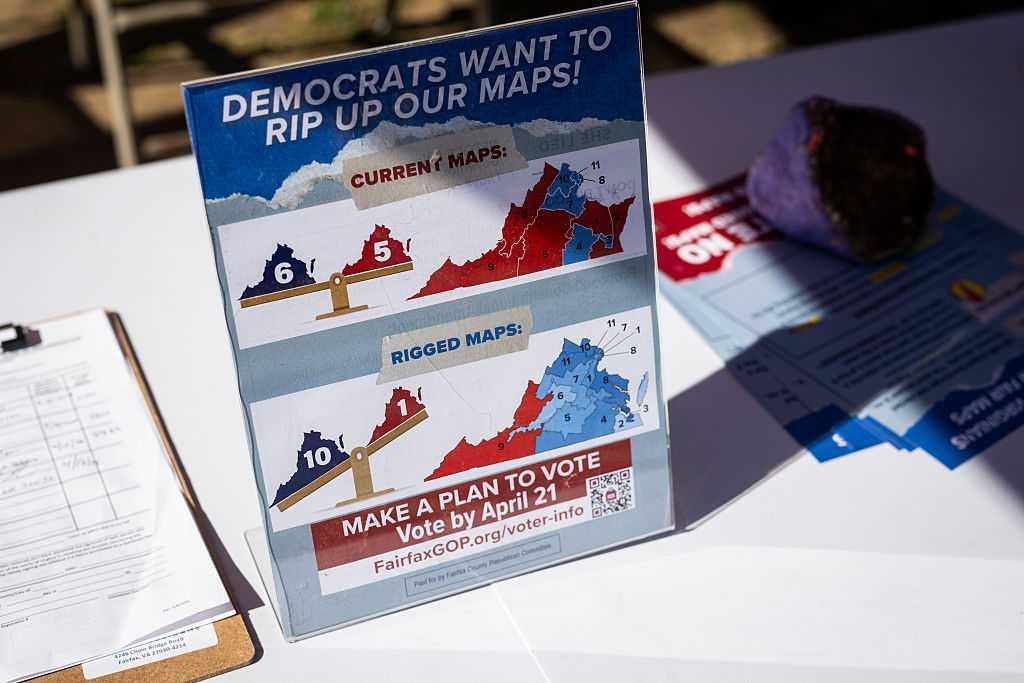
Virginia voted last week in favor of a referendum to adopt a gerrymandered congressional map that would all but guarantee that 10 out of the state's 11 congressional seats go to Democrats in the upcoming midterm election.
There remains a good chance, however, that the new map may not ultimately be adopted.
There are numerous legal battles across Virginia over whether the gerrymandering referendum that passed Tuesday is lawful. One of those battles — Scott v. McDougle — is now before the Virginia Supreme Court.
In October 2025, Republican state lawmakers and members of the Virginia Redistricting Commission filed a lawsuit, claiming that the special session reconvened late last year to consider a constitutional amendment on redistricting was invalid as it was called not by the governor, who holds the exclusive right to do so, but by the speaker of the state House.
The complaint noted further that while the Virginia House of Delegates "has no constitutional authority to propose a plan to redraw or reapportion districts" for the U.S. Congress, as this falls under the purview of the Virginia Redistricting Commission, the state House nevertheless usurped the authority.
To bypass the commission, lawmakers proposed a constitutional amendment to redraw the congressional map. Getting this amendment on the April 21 ballot required the approval of a corresponding resolution in two separate legislative sessions on either side of a state election. Challengers contend that this process was bungled and legally flawed.
RELATED: GOP bill would squeeze Democratic hives out of Virginia — and back into DC
Tazewell County Circuit Judge Jack Hurley Jr. ruled on Jan. 27 that the proposed constitutional amendment was unlawful, but the Virginia Supreme Court subsequently ruled that Virginians could still vote for it in the statewide April 21 referendum while the case proceeds.
The day after the referendum passed, Hurley blocked the state from certifying the results of the vote, ruling that the legislature's constitutional amendment and the special election on it were invalid.
On Monday, the Virginia Supreme Court heard arguments in Scott v. McDougle.
One Virginia justice extracted concessions from the defense at the outset that the "yes" vote in the referendum "doesn't tell us anything" about the merits of the challengers' claims, and that the Virginia General Assembly didn't follow its own procedural rules with regard to the special session during which the new congressional map was passed.
Multiple justices expressed skepticism about the validity of that special session.
One justice said that contrary to the previous expectation in Virginia that the legislature wouldn't sit year-round, the Democratic "interpretation of the special session would allow them to sit in continuous session for the better part of two years."
The same justice appeared receptive to the argument by Thomas McCarthy, attorney arguing for the plaintiffs, that "it's sort of a nonsensical position to say that the special session exists through a regular session" — referencing the overlap of the 2024 special session and the 2025 general session.
The justices also did not appear entirely convinced by Democrats' argument that enough time had passed between when the amendment was first passed and the 2025 state election. The legislature voted on the amendment in October, weeks after early voting for the 2025 election had already begun.
"What is your position — your client's position — regarding a constitutional amendment that is adopted at 6 p.m. on Election Day with an hour left at the polls?" asked one justice. "Is that still the next general election?"
Virginia Solicitor General Tillman Breckenridge responded that the amendment must only be passed before Election Day, rather than on it.
McCarthy argued to the contrary, claiming that for the amendment to have been valid, it should have been passed before the entire voting period, not just before Election Day 2025. A Virginia Supreme Court justice subsequently noted that the amendment process responsible for the passage of the gerrymandering legislation was unprecedented.
Of note, the Circuit Court of the City of Richmond ruled on Sunday in a separate but related case that the Virginia General Assembly did not exceed its authority when passing the amendment on redistricting.
Like Blaze News? Bypass the censors, sign up for our newsletters, and get stories like this direct to your inbox. Sign up here!
Indiana Governor Mike Braun (R) announced on Monday that he was calling a special legislative session "to protect Hoosiers from efforts in other states that seek to diminish their voice in Washington and ensure their representation in Congress is fair."
States across the country are set to redraw or at least reconsider their congressional boundaries ahead of the 2026 midterm elections, where a Democratic gain of three seats would break the GOP's hold on the House of Representatives.
'The people of Indiana did not elect a Republican supermajority so our Senate could cower, compromise, or collapse at the very moment courage is required.'
After a great deal of hand-wringing about Texas Republicans' successful adoption in August of a new congressional map that could net the GOP five extra seats, California Democrats responded with a new map that would create five new majority-Democrat districts should voters cast ballots in support of Proposition 50 on Nov. 4.
Among the other states that have looked at their respective maps with minds to help fellow travelers keep or take Congress are:
Governor Braun indicated that the special legislative session for the Indiana General Assembly will convene on Nov. 3.
The governor's announcement comes just days after a spokeswoman for Indiana Senate President Pro Tempore Rodric Bray told Politico, "The votes aren't there for redistricting."
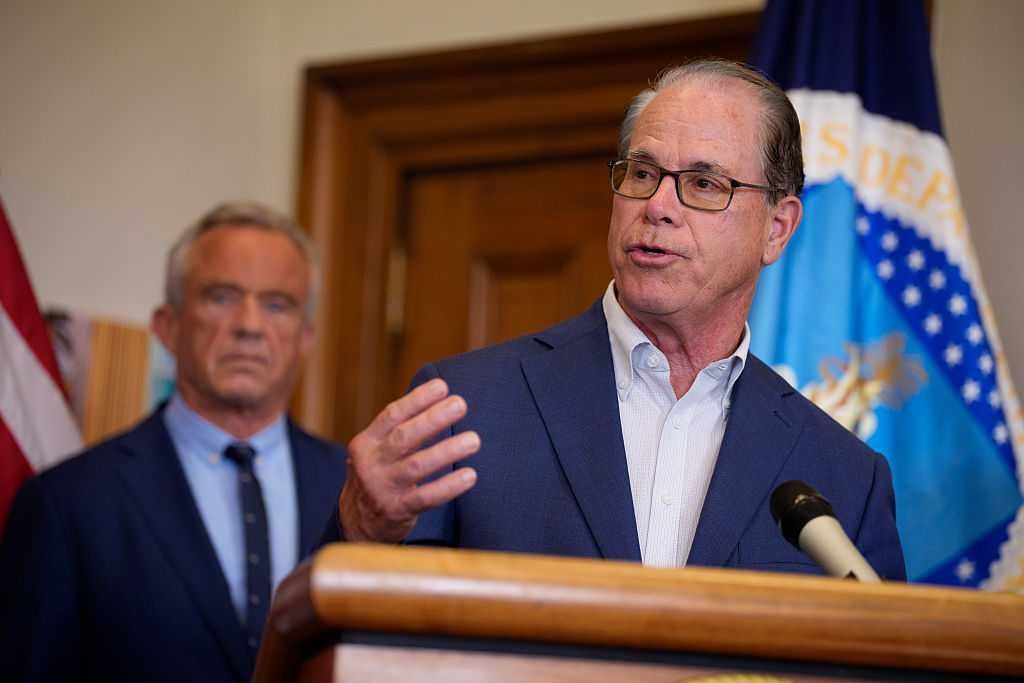
Braun's decision to set a date may be a sign of newfound intestinal fortitude among those remaining holdouts who have been under intense pressure not only from the White House but by fellow Indianans to play to win.
Even Turning Point USA founder Charlie Kirk threatened prior to his assassination to "support primary opponents for Republicans in the Indiana State Legislature who refuse to support the team and redraw the maps," adding that "it's time for Republicans to be TOUGH" and not to "let California steal the 2026 house from us."
Indiana Sen. Jim Banks (R) noted in the wake of Kirk's passing, "They killed Charlie Kirk — the least that we can do is go through a legal process and redistrict Indiana into a nine-to-zero map."
Indiana Lt. Gov. Micah Beckwith (R) said in a statement on Wednesday, "The people of Indiana did not elect a Republican supermajority so our Senate could cower, compromise, or collapse at the very moment courage is required. Yet, here we are again. The Indiana Republican-controlled Senate is failing to stand with President Trump, failing to defend the voice of Hoosier voters, and failing to deliver the 9-0 conservative map our citizens overwhelmingly expect."
Beckwith suggested that his colleagues rediscover their backbones, remember who elected them to office, and "reclaim Indiana's rightful voice in Congress by drawing a 9-0 map."
Following Braun's announcement, Indiana House Speaker Todd Huston (R) said in a statement obtained by WGN-TV, "We've received the Governor's call for a special session and will continue having conversations within our caucus and with our counterparts in the Senate on our next steps."
Following Braun's announcement, Indiana Attorney General Todd Rokita indicated that he is ready to defend the new map in court once it "gets across the finish line."
Like Blaze News? Bypass the censors, sign up for our newsletters, and get stories like this direct to your inbox. Sign up here!
 While the left's naked power grab may be hypocritical, partisan map-making is not the problem — legally speaking.
 It's reminiscent of when Donald Trump was kept from campaigning in 2024 because Democrats tied him up in court.
 Sen. Colton Moore is asking Gov. Brian Kemp to convene the Georgia General Assembly to probe Fulton County's indictment of Donald Trump.
 www.theblaze.com
 www.theblaze.com
 thefederalist.com