Federal court strikes down Alabama's redistricting effort — Republicans to APPEAL at Supreme Court


Alabama Republicans immediately called for an appeal to the U.S. Supreme Court after losing a redistricting battle at a three-judge panel of a federal court.

Republicans are trying to reinstate a 2023 congressional map that would allow them the possibility of picking up a seat in the U.S. House of Representatives.

Democrats claimed the new map would send Alabama back to the '1950s and 60s.'

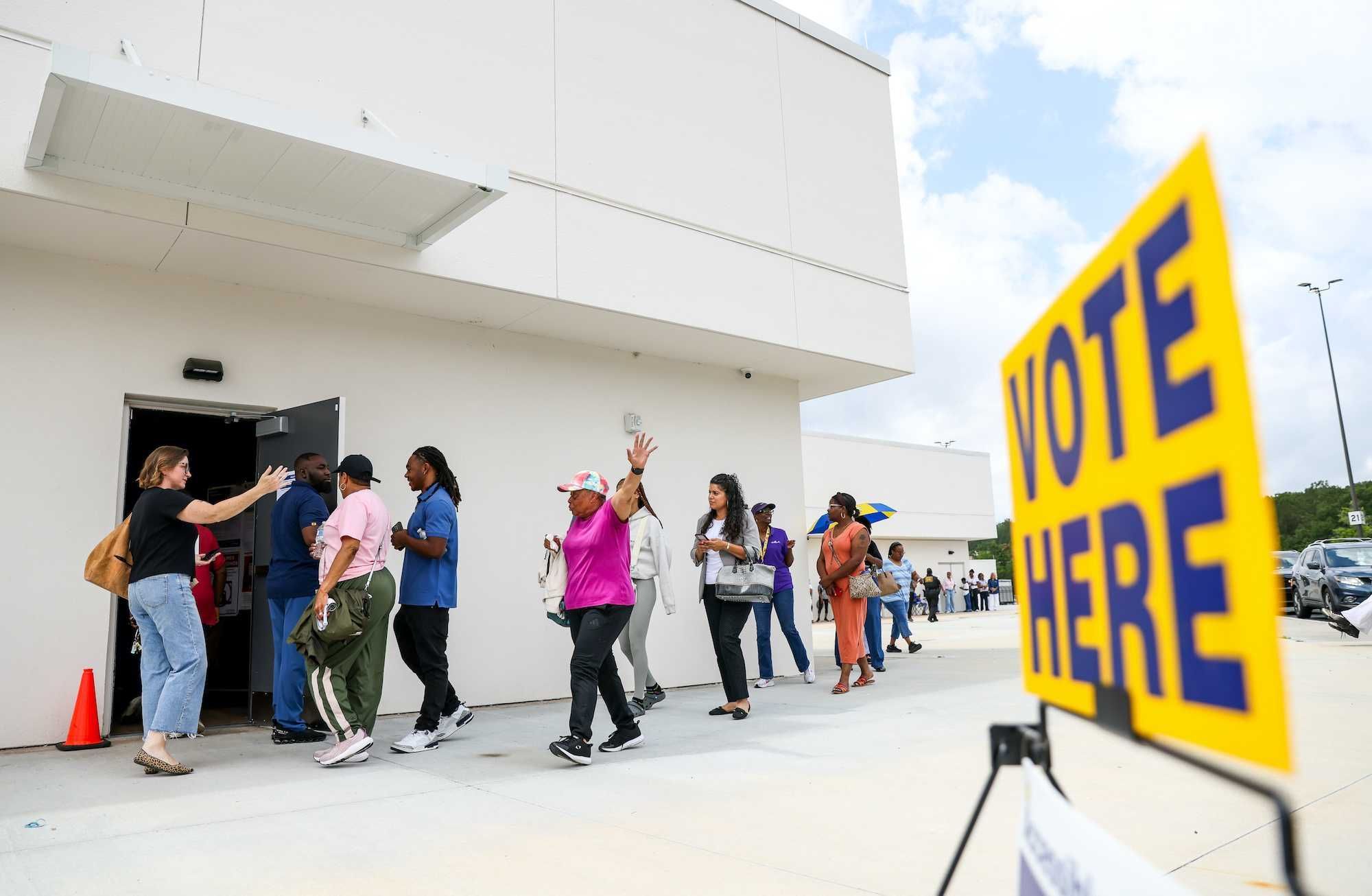
On Tuesday, a U.S. district court in Alabama sided against the map and ordered the state to use a map with two majority-black districts.

"Ultimately, we cannot see our way clear to requiring Alabamians to cast their votes in the 2026 elections under a districting plan tainted by intentional race-based discrimination," read the ruling.

Alabama Attorney General Steve Marshall released a statement after the ruling.

"I am disappointed, but not at all surprised, that the three-judge panel has again struck down Alabama’s blandly unobjectionable congressional map that has been in place for decades," wrote Marshall.

"I find nothing in the U.S. Supreme Court’s vacatur order of May 11 that would provide a basis for this outcome; thus, we will immediately appeal this decision to the Supreme Court," he added.

Rep. Shomari Figures, one of the Democrats representing a black-majority district in Alabama, praised the ruling but said Democrats were prepared to continue fighting at the Supreme Court.

"I am pleased with the Court's decision, but this case is still not over," he wrote.

"Although we expected the Court to reach this decision given the overwhelming evidence, we fully expect the State to immediately appeal the decision to the Supreme Court," Figures added. "This is a significant step in the right direction, but there is still a long way to go before this fight is settled."

Figures had previously claimed the new map would send Alabama back to the "1950s and 60s in terms of Black political representation in the state."

RELATED: VIDEO: Ocasio-Cortez makes humiliating mistake while telling New York to take on the South

"We've seen it from Republicans across the country — their goal is to eliminate every opportunity district for an African American candidate in the country," Figures added in a separate comment.

Marshall expressed confidence that the Supreme Court would side with Republicans.

"This is a very fluid situation, and I will do my best to keep the People of Alabama apprised of our efforts," he added. "Know this — in my mind, it is not a matter of whether we win this case, only when."

Like Blaze News? Bypass the censors, sign up for our newsletters, and get stories like this direct to your inbox. Sign up here!
Ex-GOP congressman tries to save Democrats from losing redistricting war — but Hakeem Jeffries doesn't want his help


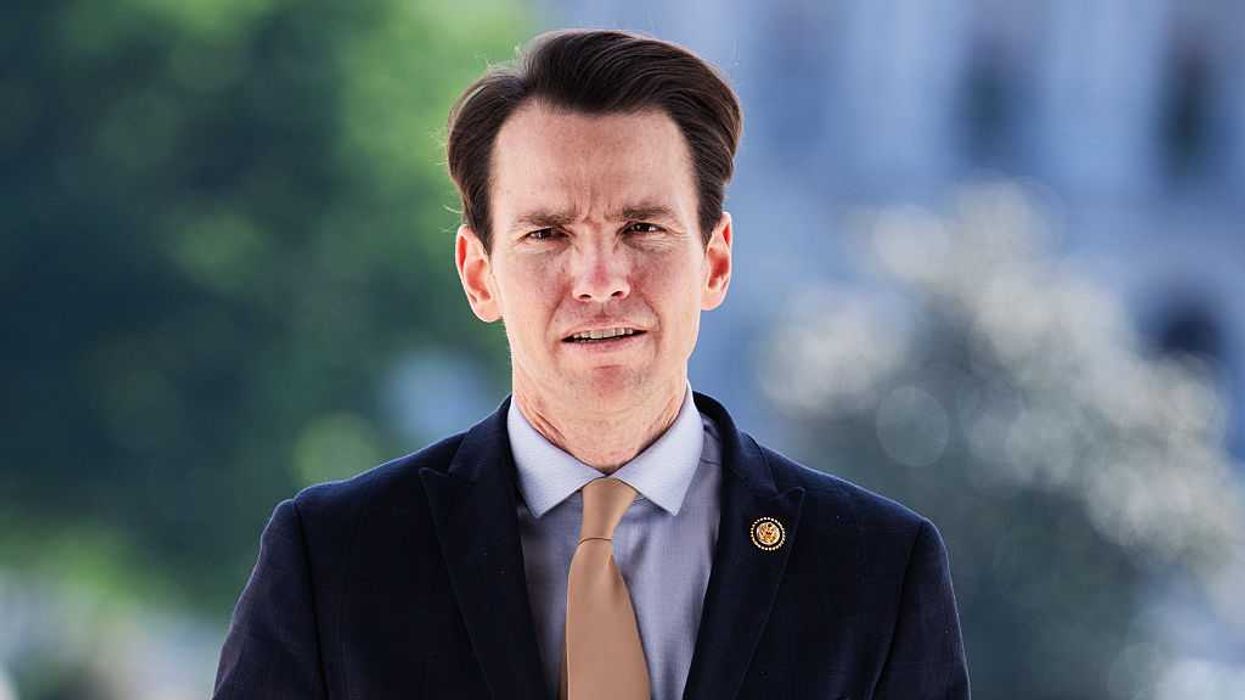
Rep. Kevin Kiley was elected as a Republican in 2022 to represent California's 3rd district in the U.S. Congress.

After the Golden State's Democratic gerrymander effectively reduced to nil his chances of getting re-elected with an "R" next to his name, Kiley filed to run as an independent in the nonpartisan primary for California's newly drawn 6th district.

'This arms race could create a new norm.'

"I've always seen my role as being an independent voice for our community, holding politicians in Sacramento and Washington accountable to serve my constituents. I answer to you, not party leaders," said Kiley, who had a 77.42% lifetime score in Turning Point Action's rating system.

On his way out the GOP door, the newly minted free agent complained about gerrymandering, noting that "both parties are complicit" and that "political division has become a serious problem for our country."

Kiley — one of the few casualties on the right of the redistricting war that Republicans are now winning in a big way thanks to the U.S. Supreme Court's ruling in Callais — is asking Democrats to help him pass a bill that would prohibit states from engaging in mid-cycle redistricting and changing their congressional maps more than once a decade.

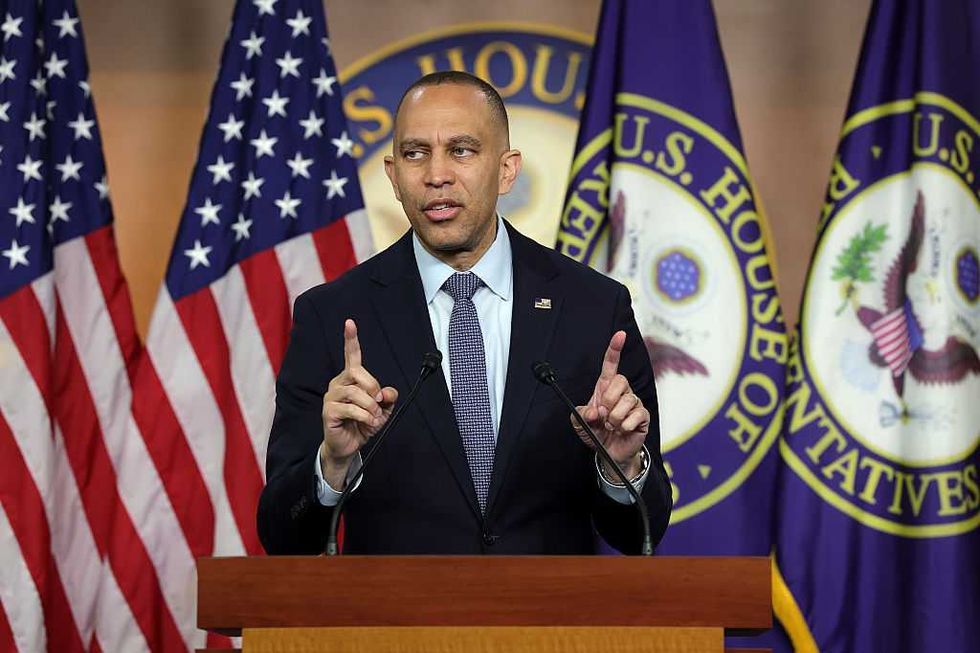
The former Republican told Axios on Wednesday that he has written to House Minority Leader Hakeem Jeffries, asking the radical Democrat and his cronies to support a discharge petition that would force a vote on his ban.

RELATED: Play stupid games: Tennessee GOP makes Democrats pay a heavy price for childish tantrums over redistricting

Kevin Dietsch/Getty Images

"This arms race could create a new norm where maps are redrawn to gain a temporary advantage every two years," Kiley wrote to Jeffries. "The result will be chaos for our democracy: a weakening of representation, a further polarization of Congress, and a deepening of the distrust and division that threaten our country's future."

Some Democratic lawmakers who, like Kiley, are on tilt after having their districts redrawn, are receptive to the idea of a ban.

Rep. Greg Landsman (D-Ohio), for instance, said he'd sign on, noting, "Why wouldn't I? Both parties need to get behind ending this. It's gonna kill the democracy."

Rep. Emanuel Cleaver (D), whose Kansas City-based district lawmakers transformed last year into a GOP-leaning Missouri seat, is another desperate lawmaker supportive of the ban, stating that "of course" he would sign onto the discharge petition.

Jeffries — whose help Kiley acknowledged was critical to the petition's success — apparently has no interest in helping the independent with his crusade.

Christie Stephenson, a spokeswoman for Jeffries, told Axios, "Kevin Kiley's unserious legislation would supercharge partisan gerrymandering by Red states while putting Democratic-led ones at a serious disadvantage."

"Leader Jeffries has no plans to support it," Stephenson added.

This is at odds with Kiley's statement earlier this month, where he noted, "Minority Leader Jeffries has announced he supports my proposal to prohibit mid-decade redistricting."

Former Democratic Rep. Shelia Jackson Lee (Texas), who passed away in 2024, introduced the same legislation to ban mid-cycle redistricting in the last Congress.

Like Blaze News? Bypass the censors, sign up for our newsletters, and get stories like this direct to your inbox. Sign up here!
Play stupid games: Tennessee GOP makes Democrats pay a heavy price for childish tantrums over redistricting


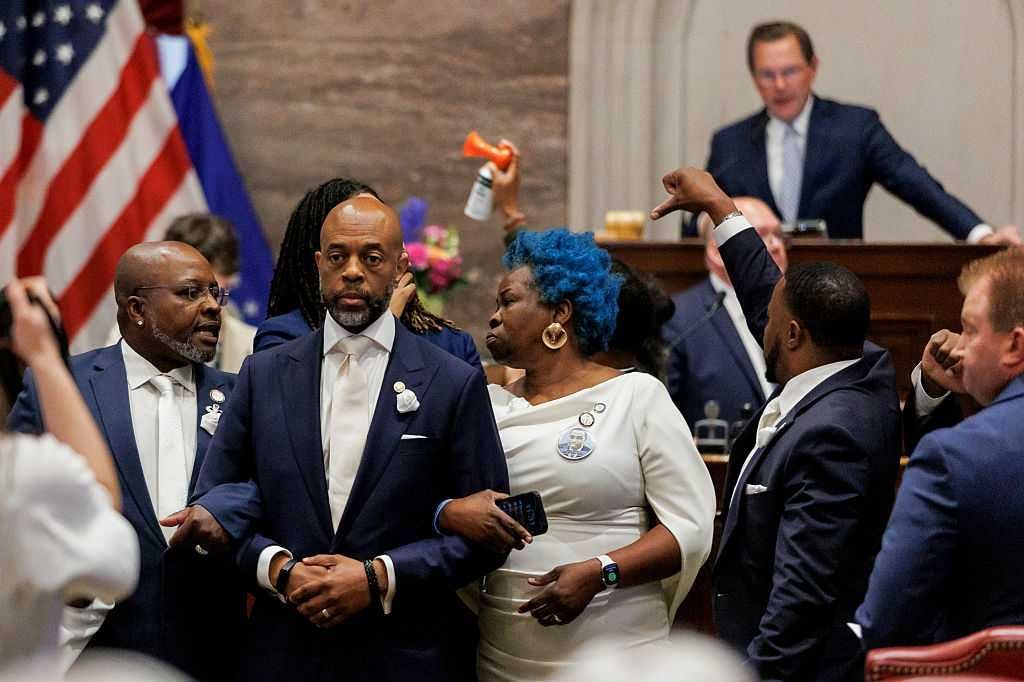
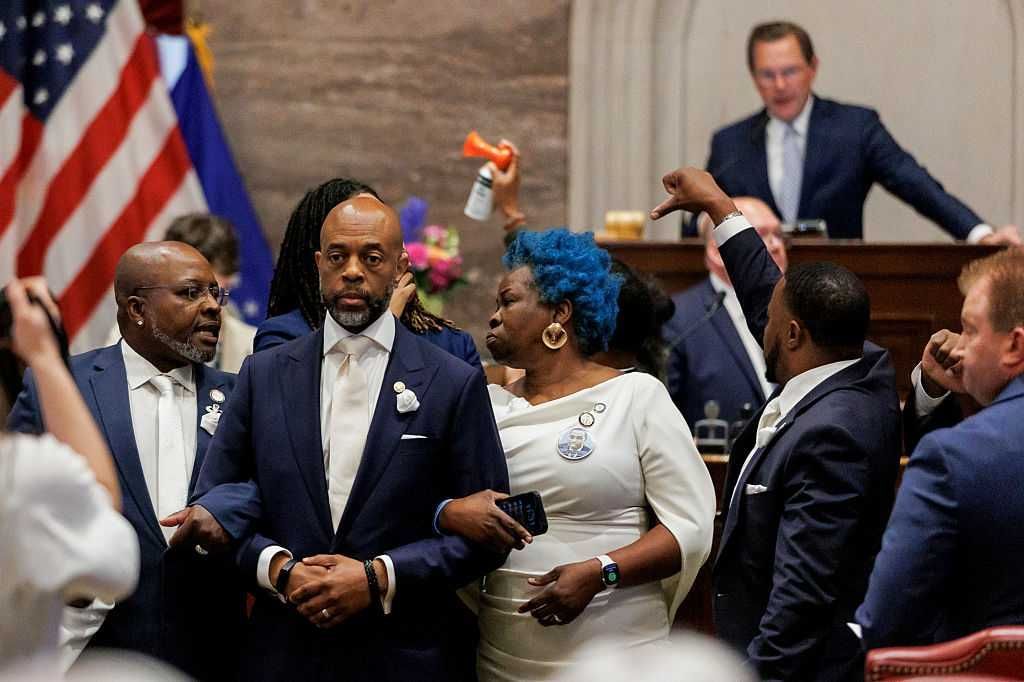
Tennessee state Republicans passed a new congressional map last week that, applying the logic of the U.S. Supreme Court's recent Callais ruling, carves up a Democrat-held district that was the product of a racial gerrymander. They managed to do so despite obstruction and gross incivility from their Democrat colleagues.

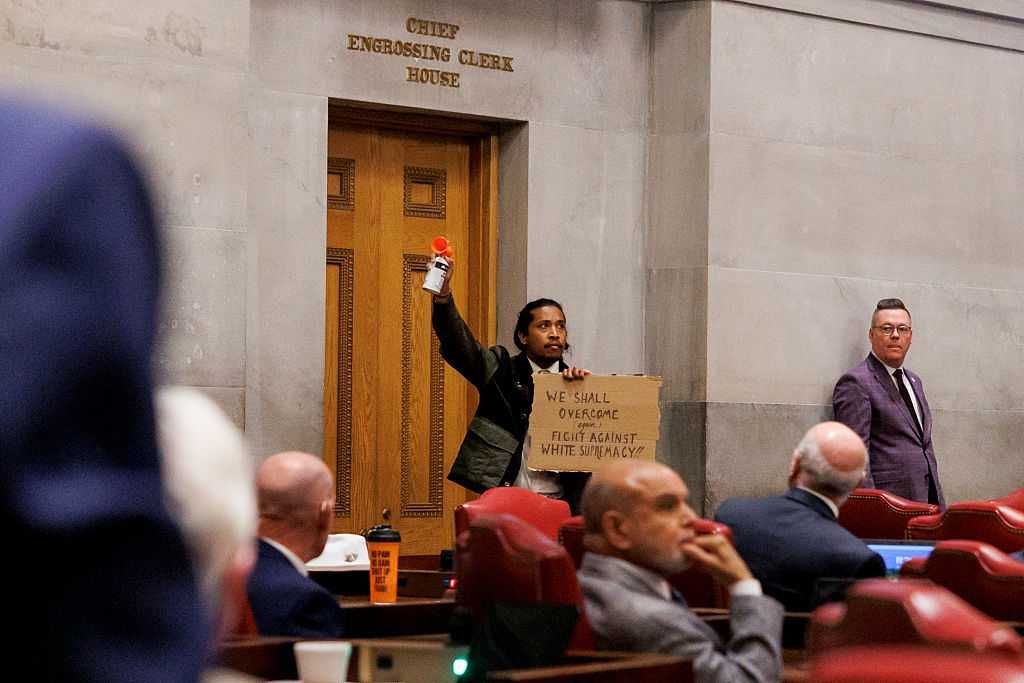
Tennessee state Rep. Justin Jones, for instance, walked around the chamber blowing a bullhorn in the faces of lawmakers and subjecting them to potential noise-induced hearing loss. Jones — a Democrat who was caught on film throwing a traffic cone at a driver during a 2020 Black Lives Matter blockade — also set fire to a printout of the Confederate flag and repeatedly accused Republicans of racism.

'Maybe next year we’ll explain the basics like "don’t start fires in the Capitol."'

Democrat state Sen. Charlane Oliver — the radical who threatened riots in 2024 over the passage of a bill she didn't like — danced atop her desk in the chamber, yelling and holding up a banner that said, "No Jim Crow 2 Stop the Steal."

Some of the Democrats yelled and chanted while Republicans calmly conducted the work at hand, while another got testy with police, barraging a Tennessee Highway Patrol trooper with insults while interfering with an arrest.

Evidently, actions still have consequences in the Volunteer State.

Republican Tennessee House Speaker Cameron Sexton notified Democratic House Minority Leader Karen Camper on Tuesday that members of the Democratic Caucus should expect to receive individual letters removing them from all standing committees and subcommittees in the statehouse, "except where membership is required pursuant to Rule 65 of the House Rules."

RELATED: South Carolina GOP poised to erase district of geriatric Democrat who got Biden elected

Madison Thorn/Bloomberg/Getty Images

Sexton cited as cause Democrats' actions "aimed at disrupting the democratic and legislative processes and creating disorder on the House Floor, including, but not limited to:

  • Interlocking arms in the well of the House;
  • Blocking aisles on the House Floor;
  • Instigating and encouraging disruptions of the legislative process in coordination with paid protestors and attendees in the gallery, including the distribution of earplugs to a member of your caucus;
  • The use of prohibited props and noisemakers on the House Floor;
  • Demonstrating a lack of respect toward fellow members seeking recognition to speak on legislation; and
  • Flagrant disregard for the Permanent Rules of Order of the House."

Rather than reflect on whether they went too far again or shouldn't bemoan the loss of a racial gerrymander, state Democrats condemned the committee-removal consequence, painted themselves as victims, and descended farther into lunacy.

Minority Leader Camper said in a long-winded, reality-averse statement that the passage of the new map "felt like being stabbed in the back, then having the knife pushed in deeper and turned to finish the job."

The minority leader then engaged in several paragraphs of what could only be described as partisan-hack numerology.

Camper, convinced there was a "symbolic scheme behind the handling of debate during this extraordinary session," said:

  • there were supposed to be 47 minutes of debate on each side, which was somehow "a clear nod to the 47th President";
  • the duration of the "debate allotments" when it came to the "debate structure surrounding changes to election law," when added up, would have "totaled 54 minutes — a nod to 1954, the year of the landmark Brown v. Board of Education Decision"; and
  • the addition of 47 plus the time allotments also associated with the debate equals 74 — clearly a nod to 1974, the "year Harold Ford Sr. became the first Black member of Congress elected from Tennessee in the modern era."

In conclusion to her embarrassing numbers game, Camper suggested that her protest last week was ultimately aimed at ensuring that these numbers wouldn't add up — that there would instead be only 44 minutes of debate on the redistricting legislation in honor of the 44th president, Barack Obama.

"We are hurt. We are disappointed. But we are not intimidated," wrote Camper. "And no committee assignment will stop us from fighting for democracy, voting rights, constitutional freedoms, and the people of Tennessee."

State Rep. Justin Pearson — the Democrat who interfered with an arrest on Thursday and called a THP trooper "stupid motherf**ker" and "boy" — whined on X, "Speaker of the TN House Cameron Sexton just removed me and every Democrat — and therefore every Black elected official in the state legislature from any committee we served on. This move strips nearly 2 million Tennesseans from [sic] the representation they deserve in TN state leg."

The Tennessee House GOP said of the Democrats' responses, "Of course now they’re playing victim. Maybe next year we’ll explain the basics like 'don’t start fires in the Capitol.'"

Like Blaze News? Bypass the censors, sign up for our newsletters, and get stories like this direct to your inbox. Sign up here!

South Carolina GOP poised to erase district of geriatric Democrat who got Biden elected


Former President Joe Biden was stumbling long before he took office. He fell behind in the first three Democratic primary elections of 2020, placing fourth, fifth, and second, respectively.

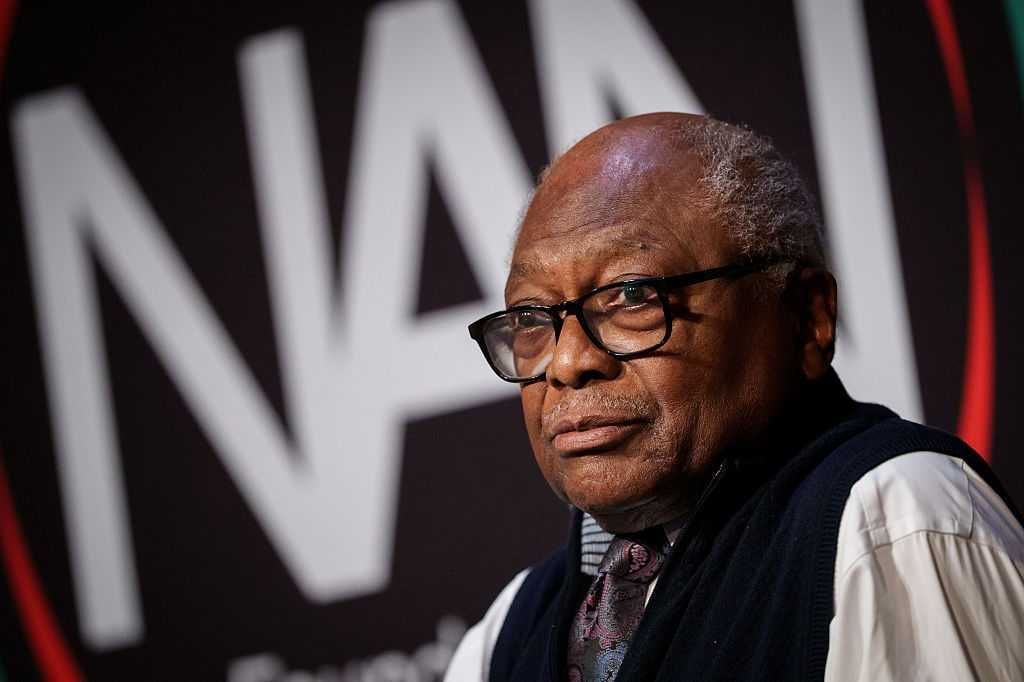
James Clyburn, South Carolina's lone Democratic congressman, is credited with turning things around for the campaign and propping Biden up by delivering him a timely endorsement and South Carolina's delegates.

Now, Biden's political crutch is poised to lose his own footing.

'This fight is a straightforward, fair election versus Democrat manipulation.'

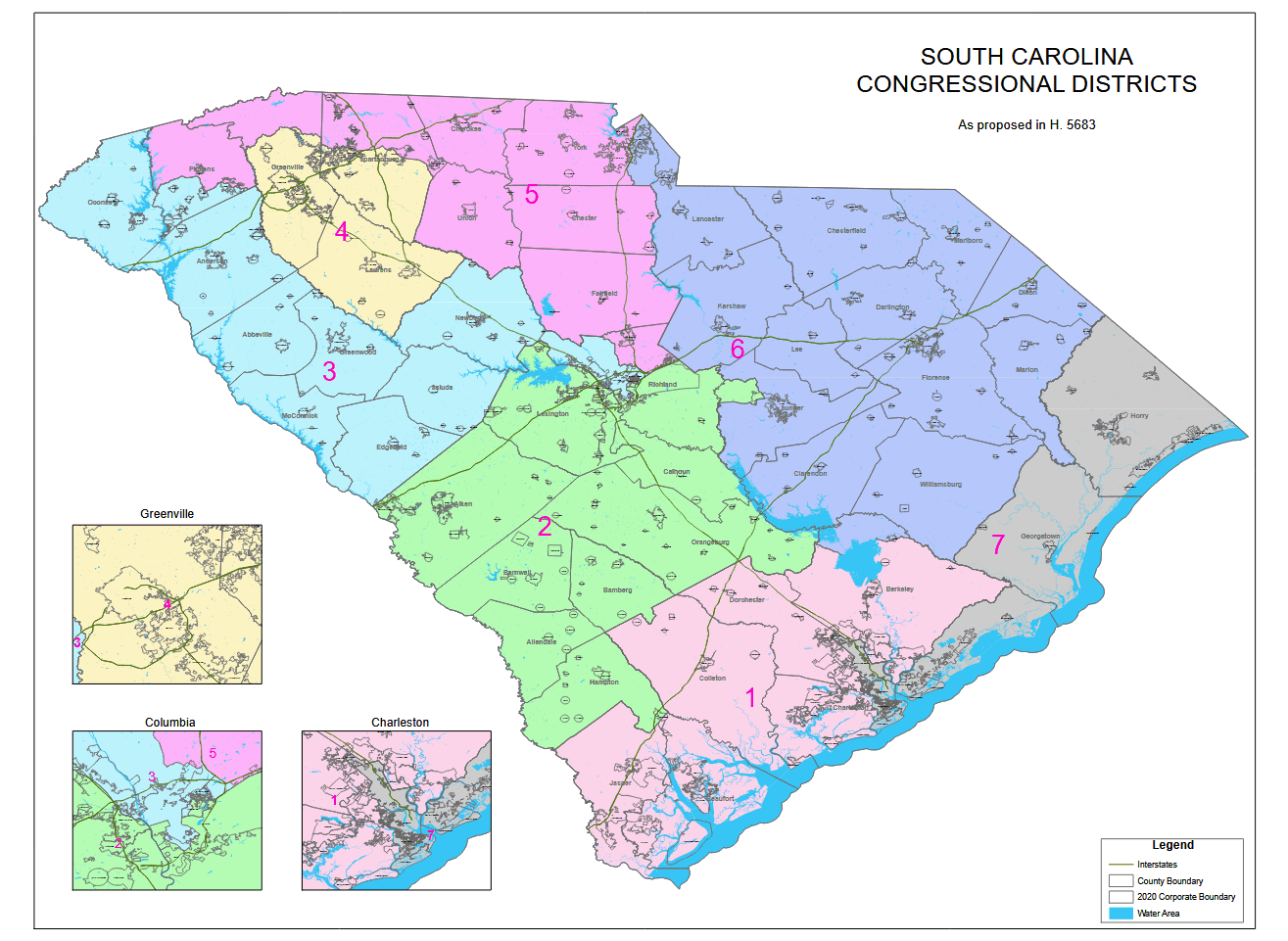
During a heated meeting on Tuesday, lawmakers on the South Carolina House Constitutional Laws Subcommittee discussed legislation that, if successfully passed by both chambers of the legislature and ratified by the governor, would ultimately redraw the Palmetto State's congressional maps and eliminate Clyburn's district.

During the public testimony portion of the meeting, wild-eyed opponents accused Republican lawmakers of engaging in "fascism," killing democracy in the state, disenfranchising black voters, and diluting liberal voting power.

South Carolina Lt. Gov. Pamela Evette, among those who alternatively spoke in support of the legislation at the meeting, stated, "We have both the duty and the opportunity to maximize our conservative stronghold and ensure our people receive the representation they deserve, grounded in faith, freedom, family values, safe communities, and economic prosperity."

RELATED: Virginia Democrats trying to force through illegal power-grab make ANOTHER humiliating mistake

South Carolina State House

"This fight is a straightforward, fair election versus Democrat manipulation," Evette added.

The subcommittee ultimately signaled support for the legislation in a 3-2 vote that prompted heckles from the peanut gallery.

The full South Carolina House Judiciary Committee subsequently took up the matter.

Ahead of the state lawmakers' meeting, President Donald Trump noted on Truth Social, "I'm watching closely, along with all Republicans across the Country who are counting on their Elected Leaders to use every Legal and Constitutional authority they have to stop the Radical Left Democrats from destroying our Country, including leveling the playing field against their decades of egregious Gerrymandering and Census Rigging."

"South Carolina Republicans: BE BOLD AND COURAGEOUS, just like the Republicans of the Great State of Tennessee were last week!" Trump continued. "Move the U.S. House Primaries to August, leave the rest on the same schedule. Everything will be fine. GET IT DONE!"

Clyburn, now serving his 17th term and seeking re-election, is furious over the prospect of losing power.

In a series of tweets last week, the Democratic congressman complained, "Republicans are trying to break apart South Carolina's 6th District. Not because voters demanded it, but because Donald Trump requested it."

"This fight is bigger than one district," Clyburn continued. "It's about whether our democracy belongs to the people, or to politicians who change the rules when they don't like the results. We cannot let them succeed."

Clyburn was first elected to represent South Carolina's 6th district after its borders were redrawn with the intention of making it a majority-black district.

Republicans are empowered to augment Clyburn's district as the result of the U.S. Supreme Court's ruling in Callais, where the high court struck down Louisiana's 2024 congressional map as an unconstitutional racial gerrymander and made clear that redistricting should effectively be color-blind.

Clyburn briefly dropped the alarmist shtick during a recent CNN interview, where he admitted that he could potentially still get re-elected in a district that's not a racial gerrymander.

The 85-year-old Democrat suggested further that other Democratic candidates could benefit from new maps, telling talking head Jake Tapper, "When they finish with the redistricting, there will be the possibilities of at least three Democrats getting elected here in South Carolina to the United States Congress."

Like Blaze News? Bypass the censors, sign up for our newsletters, and get stories like this direct to your inbox. Sign up here!

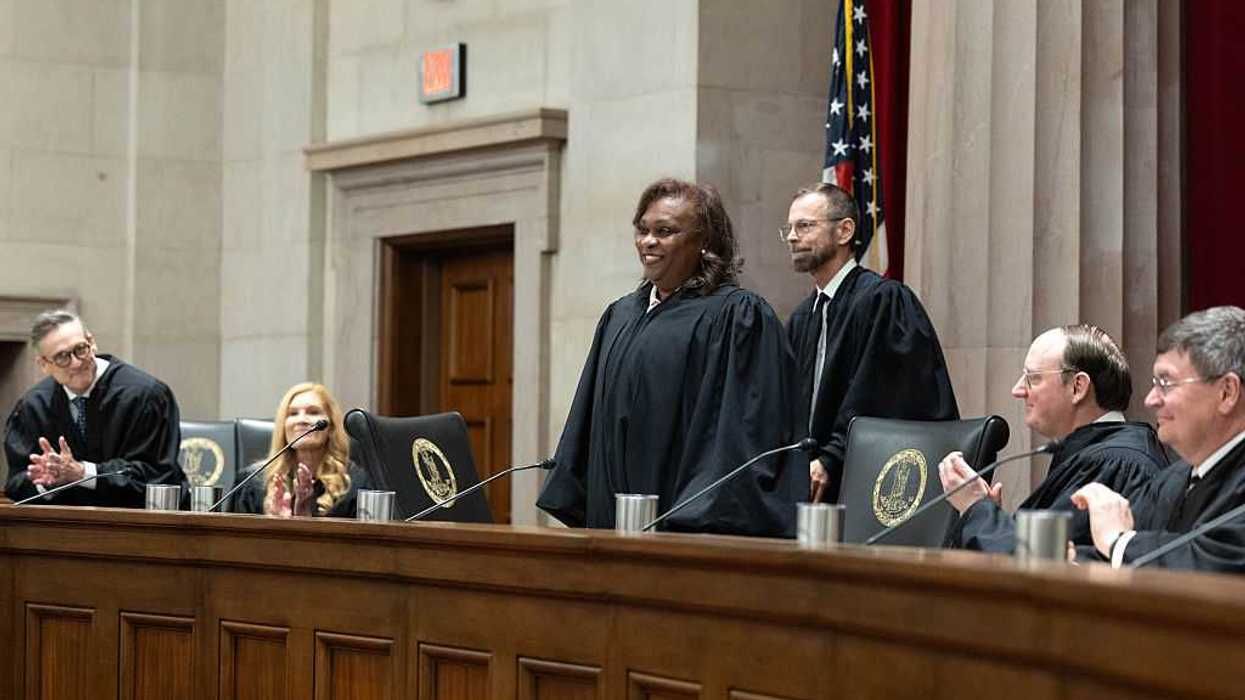
Democrats propose purging Virginia Supreme Court so they can force through illegal power-grab


Democrats have been racking up the losses in recent weeks. In hopes of turning around their luck, they're considering the possibility of purging the Virginia Supreme Court and packing it with young yes-men.

Quick background

Following a $60 million Democrat propaganda campaign featuring former President Barack Obama, Gov. Abigail Spanberger, and other radicals, Virginia voted last month to pass a constitutional amendment that would enable the General Assembly to adopt a new gerrymandered map.

Instead of the current map, where Democrats and Republicans control and are positioned to continue controlling six and five districts, respectively, the new map would ensure that 10 out of the state's 11 congressional seats would go to Democrats in the upcoming midterm election.

'The gut-and-pack scheme sets aside any pretense of principle.'

While the Virginia Supreme Court permitted the vote on the amendment to take place, the court made clear in advance that it might ultimately have to "address" questions about the legality of the amendment and the corresponding referendum, which were deemed invalid by a lower court in the case Scott v. McDougle.

The Old Dominion's high court ruined Democrats' weekend on Friday, issuing a 4-3 decision in McDougle declaring the amendment unconstitutional. In the ruling, the court underscored that "the legislative process employed to advance this proposal violated Article XII, Section 1 of the Constitution of Virginia" because the first legislative vote on the amendment occurred after voting in the general election for the House of Delegates had already begun.

RELATED: Republican Indiana state senator has no regrets about redistricting vote

Virginia Supreme Court. Mike Kropf-Pool/Getty Images
"In this case, the Commonwealth submitted a proposed constitutional amendment to Virginia voters in an unprecedented manner that violated the intervening-election requirement in Article XII, Section 1 of the Constitution of Virginia," said the court. "This violation irreparably undermines the integrity of the resulting referendum vote and renders it null and void."

As the result of ruling, the the 2021-era congressional maps, where Democrats and Republicans enjoyed a 6-5 split, will serve as the governing maps for the 2026 midterm elections.

Nuclear meltdown

Democrats bitterly lashed out at the Virginia Supreme Court over its invalidation of their illegal power-grab.

House Minority Leader Hakeem Jeffries (N.Y.), for instance, said that the "decision to overturn an entire election is an unprecedented and undemocratic action that cannot stand."

Jeffries promised that Democrats "are exploring all options to overturn this shocking decision."

Virginia Rep. Jennifer McClellan similarly claimed that "all options" are on the table and told "The Hill Sunday," "We’re going to fight every way possible, whether that’s through the courts, whether that’s through legislatures, or whether that’s at the ballot box."

While some state Democrats are hoping the U.S. Supreme Court might hear an appeal and give new life to their illegal gerrymander, others are scheming ways to eliminate key institutional obstacles to similar power-grabs in Virginia.

The steal-power-quick scheme

Democrat lawmakers including Jeffries and U.S. House members from Virginia had a private call on Saturday to discuss ways of forcing through their gerrymander and/or flipping two or three GOP-held seats under the existing map, three participants and two individuals briefed on the matter told the New York Times.

On the call, Democrats raised the possibility of purging the entire Virginia Supreme Court with the aim of handpicking justices who would reinstate their gerrymandered maps.

While Democrats might easily be able to find replacement justices whose loyalty to the ruling party trumps their loyalty to the state and U.S. Constitutions, they first need a way to empty the current bench.

According to the Times, some congressional and state Democrats are considering the possibility of lowering the mandatory retirement age for Virginia Supreme Court justices — an idea proposed in a Friday blog post by Quinn Yeargain, a woke associate law professor at Michigan State University.

"Current law sets the mandatory retirement age at 73: 'Any member who attains 73 years of age shall be retired 20 days after the convening of the next regular session of the General Assembly following his seventy-third birthday,'" wrote Yeargain. "This number is arbitrary. States around the country with similar laws mandate retirement across a wide range of ages. Virginia lawmakers can simply lower theirs. Make it 54 for Supreme Court justices — the age of the youngest justice, Stephen McCullough, who joined the majority opinion — and make it take effect immediately."

The plan, as reportedly laid on Democrats' Saturday call, would consist of multiple steps:

  • In his January ruling in McDougle, Tazewell County Circuit Court Judge Jack Hurley declared invalid the Virginia constitutional amendment effort to gerrymander the maps because county officials had failed to post notice of it at courthouses and other locations at least three months before the election. Democrats would attempt to use this ruling to invalidate the 2020 constitutional amendment that created Virginia's independent redistricting commission. Democrats, if successful in arguing that insufficient notice was given in the case of the commission-creating amendment, would be able to enact whatever map they wanted.
  • In order to ensure that this subversive plot could proceed, Democrats in the General Assembly would reportedly lower the mandatory retirement age for the Virginia Supreme Court justices to 54, thereby forcing out all current justices. Instead of principled authorities on the bench, the General Assembly would appoint Democrat lawyers to fill the vacancies.

The Times' sources involved with the call said that Spanberger, who would have to sign off on any legislation that lowered the judicial retirement age, had not been briefed on the proposal.

Jeffries' spokesman declined to provide the Times with comment. Virginia Senate Majority Leader Scott Surovell (D) similarly declined to provide comment.

U.S. Rep. Suhas Subramanyam (D), the son of Indian immigrants, said that he was among those on the call supportive of the plan to purge the state's supreme court.

"Everyone has got to have a strong stomach right now; this is a complete disaster waiting to happen if people are timid," said Subramanyam.

By contrast, Ryan McDougle, Republican leader of the Virginia Senate, said, "This is a brazen assault on our democracy.

"In our nation's 250th Anniversary, Democrats knowingly violate the Constitution, ram through deceptive ballot language to deceive and divide voters, then demand the Court not rule until after the vote. These hypocrites now pretend to defend democracy by removing lawfully appointed Supreme Court Justices because they blocked their illegal rewrite of the Constitution."

The Virginia GOP stated, "Those claiming to care about fairness and democracy should respect the rule of law instead of threatening to pack the Supreme Court and nullify the Virginia Constitution."

Legal scholar Jonathan Turley wrote, "The sack-and-pack scheme sets aside any pretense of principle. The Democrats would simply adopt a ridiculously low retirement age for the sole purpose of populating the court with reliable and robotic justices. The fact that an academic and various pundits would expressly float such an idea is another chilling reminder of the growing radicalization on the left."

Like Blaze News? Bypass the censors, sign up for our newsletters, and get stories like this direct to your inbox. Sign up here!

Tennessee Democrats turn legislature into madhouse after Republicans nuke 'black district' represented by white liberal


Tennessee Democrats' thin veneer of civility broke again, this time on Thursday amid state Republicans' successful efforts to pass a new congressional map.

Radical lawmakers not only attempted to obstruct the democratic process — screaming, dancing, blowing bullhorns at Republican legislators, and getting combative — but cosplayed as opponents of racial prejudice, barking lines popularized during the civil rights movement and working in real time to spin their party's likely diminution in power as the result of an imagined reversion to Jim Crow-style policies.

Quick background

The U.S. Supreme Court issued a hugely consequential 6-3 ruling in Louisiana v. Callais last week, striking down the Bayou State's 2024 congressional map as an unconstitutional racial gerrymander and making clear that redistricting should effectively be color-blind.

'My brother ain’t doing nothing to nobody.'

Tennessee state Republicans wasted no time applying the logic of the high court's ruling in their back yard with the aim — according to Republican Gov. Bill Lee — of ensuring that the Volunteer State's congressional map "remains fair, legal, and defensible."

After its easy passage by the GOP supermajority in the legislature, Lee signed a new congressional map into law on Thursday that will likely enable Republicans to secure all nine U.S. House seats in Tennessee.

The new map divides up the supposedly black-majority, Memphis-based 9th Congressional District represented by white Democrat Rep. Steve Cohen into three districts and also splits Nashville into five districts.

Cohen called it an "egregious result."

The madhouse

As the Tennessee Senate voted on the map, Democrat state Sen. Charlane Oliver — the radical who threatened riots in 2024 over the passage of a bill she didn't like — danced atop her desk in the chamber, yelling and holding up a banner that said, "No Jim Crow 2 Stop the Steal."

Footage shared online by WTVF-TV's Chris Davis appears to show Oliver fighting with the Senate sergeant at arms over control of her banner. After losing control of her banner, Oliver proceeded to stomp and sing on her desk while her peers voted to pass the bill, reported the Nashville Banner.

RELATED: Alito shreds Ketanji Brown Jackson's unhinged dissent to SCOTUS' demand that Louisiana immediately redistrict

During the voting process in the state House on Thursday, Tennessee Rep. Justin Jones — a Democrat who has previously evidenced a willingness to violate the legislature's decorum rules and was caught on film throwing a traffic cone at a driver during a 2020 Black Lives Matter blockade — walked around blowing a bullhorn in the faces of lawmakers and staffers while holding up a sign that said, "We shall overcome."

Jones also set on fire a printout of the Confederate flag and repeatedly accused Republicans of racism, calling them the "white sheet caucus."

Rep. Justin Pearson (D), who like Jones was briefly expelled from the Tennessee House of Representatives in 2023 for staging a disruptive protest on the House floor, lashed out at members of law enforcement who were working feverishly to keep the peace.

After state House Speaker Cameron Sexton (R) asked that the gallery be cleared, Tennessee Highway Patrol began ushering radicals out. Some, including Pearson's brother KeShaun, apparently refused to leave, reported WKRN-TV.

The prospect that his brother might face consequences for his actions evidently enraged Rep. Pearson, who yelled at THP troopers as they were executing their duties — calling one trooper a "stupid motherf**ker" and "boy" — and attempted to interfere with his brother's apparent arrest, which Pearson later suggested "is what white supremacy does."

"My brother ain’t doing nothing to nobody. Hey, hey, he’ll walk out by himself. Move the f**k back!" said Pearson.

THP Lt. Bill Miller told WKRN in a statement, "During today’s hearing, three individuals in attendance began disrupting the session of the House of Representatives. After repeated warnings, three individuals were taken into custody inside the gallery of the Capitol for suspected violation of TCA 39-17-306 (Disturbing an Official Meeting). The individuals were transported to the Davidson County jail for booking."

Democrats' theatrics were all for naught, as this is Tennessee's new congressional map:

Like Blaze News? Bypass the censors, sign up for our newsletters, and get stories like this direct to your inbox. Sign up here!

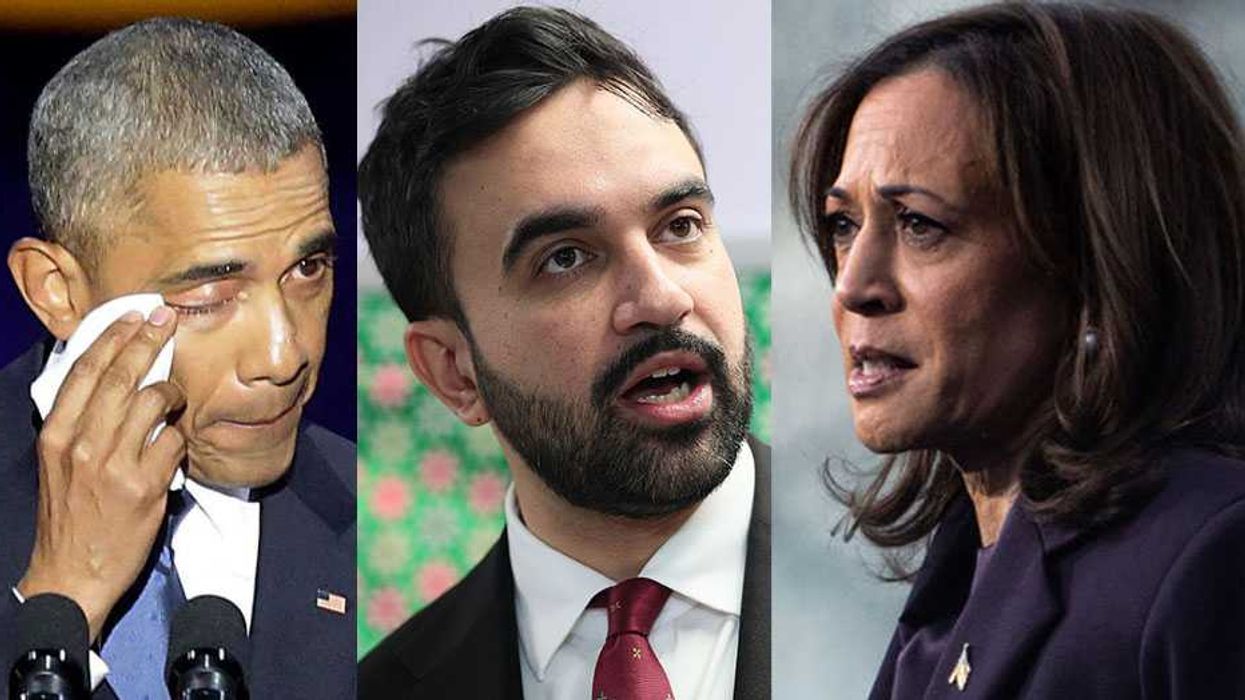
Obama, Mamdani, other Democrats throw ugly tantrums after SCOTUS strikes racial gerrymander


Former President Barack Obama is among the many liberals who had conniptions Wednesday over the U.S. Supreme Court's rejection of an unconstitutional racial gerrymander in Louisiana.

While such critics have largely spun the ruling as a setback for racial minority representation in American politics, it appears they are chiefly concerned with how the ruling might affect Democrats politically in the the midterm elections and beyond.

How it started

Louisiana adopted a new congressional map in the wake of the 2020 consensus, which then-House Speaker Pro Tempore Tanner Magee (R) claimed honored "traditional boundaries."

'This is one of the most consequential and devastating rulings issued by the Supreme Court in the 21st century.'

Dissatisfied that only one of the Bayou State's six congressional districts had a black majority, a group of black voters sued the state, alleging that the new 2022 congressional map diluted black voting strength in violation of the Voting Rights Act of 1965.

A federal judge appointed by Democrat former President Barack Obama ruled that the map likely violated the VRA and ordered the Louisiana legislature to add a second majority-black district.

Pursuant to this ruling, which was upheld by the U.S. Court of Appeals for the Fifth Circuit, Louisiana created a map with a second majority-black district — this time prompting a legal challenge by "non-African American" voters who recognized the new map both as a racial gerrymander and a violation of the Equal Protection Clause of the 14th Amendment.

Their case, Louisiana v. Callais, ultimately made its way to the U.S. Supreme Court, which ruled on Wednesday that "because the Voting Rights Act did not require Louisiana to create an additional majority-minority district, no compelling interest justified the State's use of race in creating SB8, and that map is an unconstitutional racial gerrymander."

RELATED: 'Trump is racist' arguments seem to fall on deaf ears at SCOTUS TPS hearing about Haiti and Syria

Alex Wong/Getty Images

Beyond striking down the racial gerrymander in its 6-3 decision, the court provided some much-needed clarity on "whether compliance with the Voting Rights Act can indeed provide a compelling reason for race-based districting."

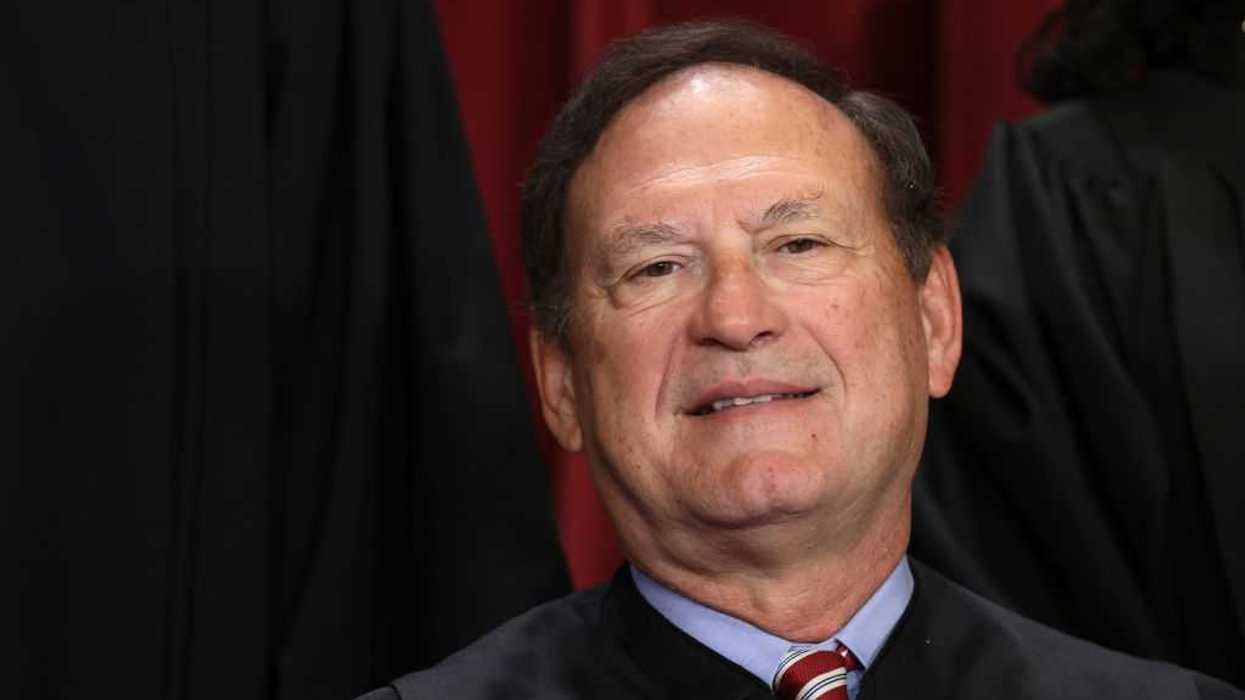
Justice Samuel Alito noted in the opinion for the court, for example, that "interpreting §2 of the Voting Rights Act to outlaw a map solely because it fails to provide a sufficient number of majority-minority districts would create a right that the Amendment does not protect. And such an interpretation would run headlong into the Act’s express disclaimer against racial proportionality."

Alito noted further that "§2 imposes liability only when the evidence supports a strong inference that the State intentionally drew its districts to afford minority voters less opportunity because of their race."

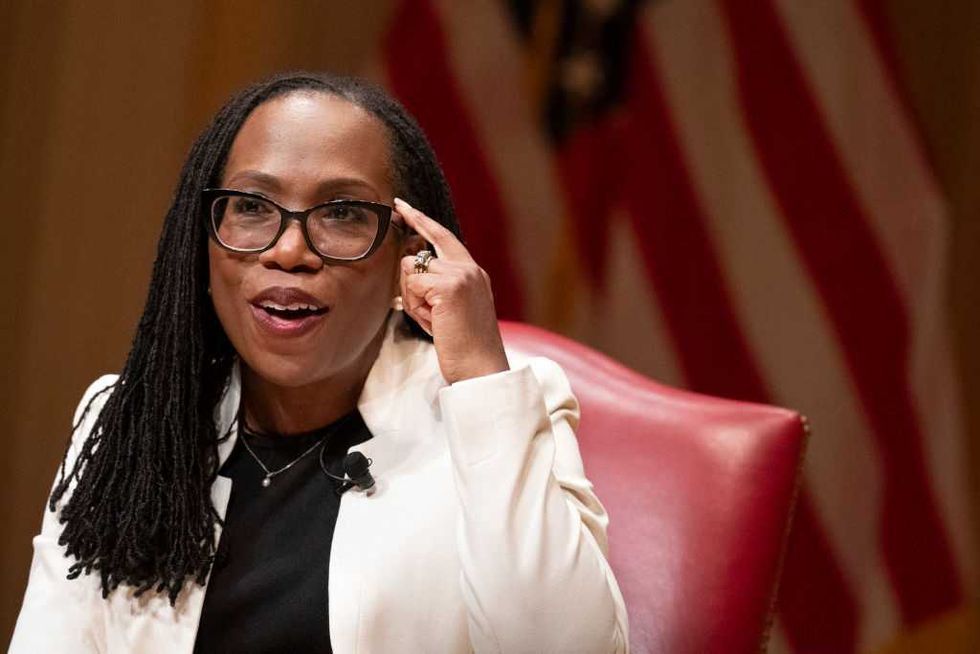
Although the court's clarifications appear aimed at providing states with guidance on how to comply with Section 2 of the VRA without unduly discriminating on the basis of race and violating the U.S. Constitution, Justice Elena Kagan alerted fellow travelers in her dissent — which was joined by Justices Sonia Sotomayor and Ketanji Brown Jackson — that the ruling will supposedly impact "racial equality in electoral opportunity."

"The consequences are likely to be far-reaching and grave. Today’s decision renders Section 2 all but a dead letter," wrote Kagan.

"If other States follow Louisiana’s lead, the minority citizens residing there will no longer have an equal opportunity to elect candidates of their choice. And minority representation in government institutions will sharply decline."

Alito found Kagan's dissent to be "unabashedly at war with key precedents."

How it's going

Obama, a champion of Virginia's recent legally dubious gerrymander whose appointee's decision in 2022 unwittingly set the stage for the SCOTUS ruling, complained on social media, "Today's Supreme Court decision effectively guts a key pillar of the Voting Rights Act, freeing state legislatures to gerrymander legislative districts to systematically dilute and weaken the voting power of racial minorities — so long as they do it under the guise of 'partisanship' rather than explicit 'racial bias.'"

Obama accused the Supreme Court's conservative majority of "abandoning its vital role in ensuring equal participation in our democracy and protecting the rights of minority groups against majority overreach" and hinted that the decision could affect the upcoming midterms.

He added that "such setbacks can be overcome" but only if "citizens across the country who cherish our democratic ideals continue to mobilize and vote in record numbers."

Twice-failed Democrat presidential candidate Kamala Harris similarly bemoaned the Supreme Court's ruling, calling it "an outrage" that "turns back the clock on the foundational promise of equality and fairness in our election systems" and that is "part of an agenda that conservatives set in place decades ago to steal power from everyday people."

'This will embolden lawmakers in former slave-holding states.'

Like Obama, Harris expressed concern about the midterm elections and the possibility that red states will "rush to redraw districts" before voting begins.

Democratic socialist Mayor Zohran Mamdani of New York City also threw a fit online, calling the decision a "direct assault on the promise of the Voting Rights Act" that threatens to disenfranchise "millions of Americans along racial lines."

Rep. Yvette Clarke of New York, a Democrat who said in 2021 that her district needs to bring in migrants to increase the population in time for redistricting, claimed in a joint statement with other members of the Congressional Black Caucus that "with the stroke of a pen, this rogue, unaccountable Court has effectively signed the death certificate of the Voting Rights Act, undoing decades of Black progress."

"Not since Jim Crow have we seen this level of systematic disenfranchisement of Black voters," said the joint statement.

Failed Democrat gubernatorial candidate Stacey Abrams — the founder of a voter turnout group slapped last year with what the Georgia State Ethics commission said was the largest fine it has ever imposed — said in an alarmist op-ed for MS NOW that the ruling was a "direct hit" to the "fragile promise that every American's vote should carry equal weight."

"This is one of the most consequential and devastating rulings issued by the Supreme Court in the 21st century," whined NAACP general counsel Kristen Clarke.

"This will embolden lawmakers in former slave-holding states to target and eradicate districts that have provided Black Americans a fair opportunity to elect candidates of choice, and they will do so with the blessing of this Court."

Alanah Odoms, executive director of the ACLU of Louisiana, characterized the 6-3 decision as "cruel" and a "significant setback for our multiracial democracy."

Rep. Cleo Fields, a Louisiana Democrat who benefited from the Bayou State's racially gerrymandered map struck down by the Supreme Court, condemned the ruling and suggested that while Louisiana now has the authority to adopt a new map, "redrawing maps at this stage would not be prudent."

Like Blaze News? Bypass the censors, sign up for our newsletters, and get stories like this direct to your inbox. Sign up here!

'Trump is racist' arguments seem to fall on deaf ears at SCOTUS TPS hearing about Haiti and Syria


Congress created the temporary protected status program, often abbreviated TPS, in 1990 to bar the removal of foreign nationals who hail from countries roiled by civil unrest, violence, or natural disaster, regardless of their immigration status. Under the program, the secretary of the Department of Homeland Security can designate a certain country for TPS for periods of up to 18 months.

While supposedly "temporary," these status designations — presently extended to a dozen countries and shielding millions of foreigners — have in many cases been extended for decades.

Recognizing that the conditions previously cited as justification for TPS have materially changed for the better in some countries, the Trump administration has taken steps to revoke numerous TPS designations. This initiative has, of course, enraged liberal activists and beneficiaries of the program, who have mounted various legal challenges.

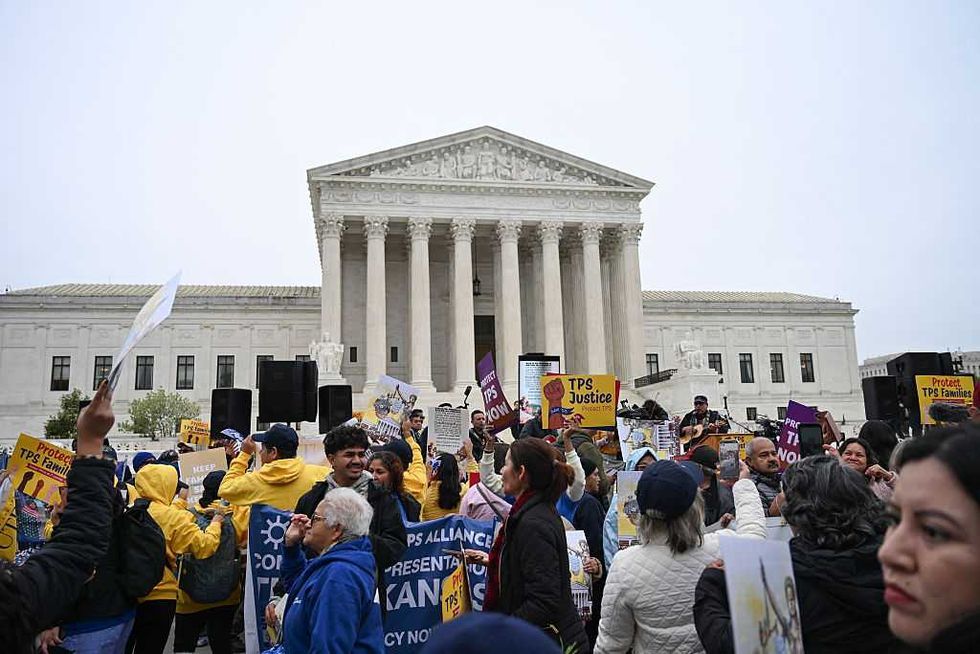
The U.S. Supreme Court — which cleared the Trump administration last year to strip Venezuelan migrants of TPS — heard oral arguments on Wednesday in the consolidated cases Mullin v. Doe and Trump v. Miot regarding the revocation of TPS for Haitians and Syrians.

Ahead of the hearing, Democratic Reps. Ayanna Pressley (Mass.) and Debbie Wasserman Schultz (Fla.) joined Democratic Sens. Edward Markey (Mass.) and Lisa Blunt Rochester (Del.) in demanding the high court defend TPS for Syrians and Haitians, stating, "Do your job, uphold the law, save lives, and protect our communities."

Given conservative justices' questions and remarks during the lengthy hearing, these Democrats and the hordes of foreign squatters who've long been shielded from removal may be headed for disappointment.

Quick background

TPS has covered Haitian migrants since January 2010 and covers nearly 350,000 citizens from the Caribbean today. Syria was designated for TPS in March 2012 and has received several extensions over the past 14 years. Roughly 6,000 Syrians presently enjoy protected status.

RELATED: SCOTUS issues shocking ruling about 'racial gerrymander' map

JACQUELYN MARTIN/POOL/AFP/Getty Images

Having determined that neither country still meets the conditions for special status owing largely to significant improvements in domestic safety and stability, Trump's DHS announced the termination of Haiti's TPS in July and the termination of Syria's status in September.

These revocations, which were supposed to take effect months ago, have been held up in the courts.

In Washington, D.C., U.S. District Judge Ana Reyes — a foreign-born, Biden-appointed, lesbian judge who previously worked as a lawyer to fight the first Trump administration's immigration policy and helped the U.N. secure asylum for so-called refugees — obliged her fellow immigration activists on Feb. 2, blocking the revocation of Haiti's TPS.

'That's what you got?'

Reyes, a Uruguayan native, claimed that former DHS Secretary Kristi Noem not only violated the Administrative Procedure Act and the Fifth Amendment's due process clause when terminating the TPS designation for Haiti but had likely done so "because of hostility to nonwhite immigrants."

The U.S. Court of Appeals for the District of Columbia Circuit refused on March 6 to block Reyes' ruling, thereby keeping the special status for Haitians in place while the litigation moved forward.

In New York, U.S. District Judge Katherine Polk Failla, an appointee of former President Barack Obama, granted an injunction in November against the government's termination of TPS for Syrians. The U.S. Court of Appeals for the Second Circuit denied the government's motion for a stay pending appeal on Feb. 17, prompting the Trump administration to ask the Supreme Court to weigh in.

Divided court

U.S. Solicitor General D. John Sauer, who defended the administration's revocation of the special statuses, sparred at the outset with liberal Justices Ketanji Brown Jackson and Sonia Sotomayor over whether a TPS termination is open to judicial review, especially when the relevant statute makes expressly clear that there is to be no judicial review of any determination with respect to the TPS designation or termination or extension of a designation.

When asked by Justice Brett Kavanaugh why Congress would have barred judicial review as broadly as the administration now contends, Sauer pointed to the possible foresight that protracted legal review would inevitably undermine the temporary nature of the program and hinder the executive's ability to conduct foreign policy in a timely and confident manner.

Sotomayor and Brown proceeded to dwell on the suggestion advanced by the plaintiffs in the Haiti case and by Judge Reyes in February that "discriminatory intent" played a role in the termination of that nation's TPS designation, alluding to President Donald Trump's derisive remarks about third-world nations such as Somalia, which he characterized last year as "filthy, dirty, disgusting, ridden with crime."

While Sauer made clear that the government defended its decisions on non-discriminatory grounds, the liberal justices nevertheless appeared keen to read into extraneous comments by members of the administration, which were the primary focus of Geoffrey Pipoly, the attorney who argued on behalf of Haitian TPS beneficiaries.

RELATED: Illegal alien activists are furious at Trump administration after 'cruel' new 'Dreamer' policy drops

Alex WROBLEWSKI/AFP/Getty Images

Neither Justice Samuel Alito nor Justice Neil Gorsuch posed questions during Sauer's arguments, perhaps signaling understanding of or even agreement with them, but spent considerable time poking holes in those posed by the challengers.

Ahilan Arulanantham, a lawyer for Syrian TPS beneficiaries, emphasized that the issue is whether the DHS secretary adequately followed procedure when arriving at her decision to revoke TPS status, not whether her assessment was correct that the conditions previously justifying TPS had in fact changed.

Justice Alito did not appear to be buying what Arulanantham was selling. Instead, Alito echoed Sauer's concern that if the challengers' argument regarding the government's supposedly insufficient level of consultation with agencies was accepted, "it will create a hole in the judicial review bar that you could drive a convoy of trucks through," and that it will always be possible to second-guess the DHS secretary's decisions and process.

Pipoly, who piped up after Arulanantham's time elapsed, desperately tried to make the case that the Haitian TPS designation was based on a "sham" of a review, not grounded by empirical support but by President Donald Trump's "racial animus towards nonwhite immigrants."

Justice Alito countered, however, that "TPS was terminated for quite a list of countries," many of which are home to individuals who are or could be construed as white.

"If you put Syrians, Turks, Greeks, and other people who live around the Mediterranean in a lineup, you think you could say those people are, all of them, are they all nonwhite?" Alito said, prompting an acknowledgment from Pipoly that Syrians "may be classified as white."

After Alito nuked the notion that TPS revocation is solely bound up with race, Justice Gorsuch pressed Pipoly to disentangle the DHS secretary's determination — which is not subject to judicial review — from the DHS' ultimate termination of the TPS status.

"How can it not be judicial review of the determination if you're postponing the determination?" Gorsuch asked.

"The final agency action here that was postponed is ... the termination, not the determination, which is not subject to judicial review," Pipoly responded.

Pipoly does not appear to have won over Gorsuch with his tortured attempt to strike a distinction between the two since Gorsuch replied, "That's what you got?"

Like Blaze News? Bypass the censors, sign up for our newsletters, and get stories like this direct to your inbox. Sign up here!

Conservative lawyer John Eastman punished AGAIN for representing Trump


Conservative legal scholar John Eastman, founding director of the Center for Constitutional Jurisprudence, was among the lawyers whose lives and livelihoods were targeted for ruination after they provided President Donald Trump with counsel on cases dealing with election illegalities and fraud following the 2020 election.

Years later, Eastman is still fighting off attacks by liberals apparently keen to ensure that Trump's constitutionally guaranteed right to legal representation doesn't go unpunished.

'This lawfare/barfare is metastasizing before our very eyes.'

The California Supreme Court upheld a decision by a lower court's judges on Wednesday to permanently disbar Eastman in the Golden State.

The state bar accused Eastman in 2023 of violating his obligations as an attorney in two ways when working "with Trump and others to promote the idea that the outcome of the election was in question and had been stolen from Trump as the result of fraud, disregard of state election law, and misconduct by election officials."

"First, he provided legal advice, formulated legal strategies, and engaged in litigation based on, and made public statements propounding, allegations of election fraud he knew, or was grossly negligent in not knowing, were false," alleged the bar.

RELATED: The left's absurd attack on Brooke Rollins

Eric Thayer/Bloomberg/Getty Images

Eastman's second alleged violation, according to the bar, was:

He provided, and proposed actions based on, legal advice regarding the unilateral authority of the Vice President to disregard or delay the counting of electoral votes that he knew, or was grossly negligent in not knowing, was contrary to and unsupported by the historical record and established legal authority and precedent, including the Electoral Count Act and the Twelfth Amendment, such that no reasonable attorney with expertise in constitutional or election law would have concluded that the Vice President was legally authorized to take the actions respondent proposed.

Altogether, the bar alleged 11 counts of misconduct.

Eastman, who initially began working with an election integrity effort requested by Trump in early September 2020, denied many of the bar's allegations including several of those above and the claim that there was no evidence of election fraud or illegality that could have affected the outcome.

Judge Yvette Roland — appointed to the State Bar Court by former Gov. Jerry Brown (D) in 2018 — recommended in March 2024 that Eastman be disbarred for his alleged election subversion efforts, resulting in the revocation of his license.

"Eastman failed to uphold his primary duty of honesty and breached his ethical obligations by presenting falsehoods to bolster his legal arguments," wrote Roland.

While waiting for the California Supreme Court to weigh in on her ruling, Eastman, a former clerk to Supreme Court Justice Clarence Thomas, asked Roland to reactivate his law license during the appeal process, noting that he needed to be able to represent clients and pay his own legal bills.

The Democrat appointee denied his request, claiming that he had "failed to show that he poses no significant threat to the public."

The California Supreme Court ultimately denied Eastman's petition for review on Wednesday, ordering his disbarment from the practice of law in California and his name stricken from the roll of attorneys. Adding insult to injury, the court ordered Eastman to pay $5,000 in sanctions to the State Bar of California Client Security Fund.

Randall Miller, Eastman's attorney during his disciplinary proceedings, said the outcome "raises pivotal constitutional concerns regarding the limits of state regulation of attorney speech."

Miller added that Eastman will ask the U.S. Supreme Court "to repudiate this threat to the rule of law and our nation’s adversarial system of justice."

Eastman confirmed to Blaze News that he will be filing a petition for writ of certiorari with the Supreme Court and underscored that the significance of a possible win "goes well beyond my particular case."

"As we have recently seen, leftist/activist bars are targeting current attorneys at the Department of Justice for simply doing their jobs in defending President Trump’s executive orders," said Eastman. "This lawfare/barfare is metastasizing before our very eyes and will only get worse if the Supreme Court does not take decisive action to put a stop to it."

Jeff Clark, vice president of litigation at the Oversight Project, said that the California Supreme Court's decision "is a travesty."

"John represented the President in litigation challenging an election. That’s all. He lied about nothing. Reasonable minds can disagree about the 2020 election," wrote Clark. "He did what lawyers are supposed to do — represent disfavored individuals. And make no mistake, the elites, especially in bar apparatuses, disfavor and hate President Trump and anyone associated with him with a burning passion."

"No one representing Vice President Gore was disbarred for losing Bush v. Gore where the whole partial county-specific recount strategy Democrat lawyers devised there was ruled an unconstitutional violation of equal protection," continued Clark. "Two-tiered system of justice and of bar discipline."

This is hardly the only front in Eastman's battle with Democrat-aligned lawfare. In addition to having his law license suspended in the District of Columbia, he was arrested in Fulton County, Georgia, over the legal counsel he rendered to Trump following the 2020 election. The Georgia case was dropped in 2025.

Like Blaze News? Bypass the censors, sign up for our newsletters, and get stories like this direct to your inbox. Sign up here!