Stellantis’ China gamble could reshape America’s auto industry forever


Chinese cars are a security risk.

That's the message Washington has been sending the American consumer: Cheaper vehicles aren't worth exposing sensitive data to theft. Hence the massive tariffs aimed at China.

The difference is that Stellantis is now openly telling investors that these partnerships are central to its long-term strategy.

But while America was focused on keeping brands like BYD and NIO out of local dealerships, the global auto industry quietly found another way in.

And Stellantis just made that strategy official.

Ties that bind

The parent company of Jeep, Ram, Dodge, Chrysler, and Fiat has embraced deeper partnerships with Chinese automakers and suppliers as part of its global restructuring effort. New CEO Antonio Filosa is betting the company's future on partnerships, software integration, shared manufacturing, AI systems, and Chinese EV technology.

That should concern every American consumer, every UAW worker, every supplier, and every policymaker. The issue is no longer simply about cars built in China. It's about China becoming embedded inside the future of the American auto industry itself.

Stellantis recently announced a roughly $1.17 billion partnership with China's Dongfeng Group to build new-energy vehicles at a Wuhan manufacturing plant beginning in 2027. The agreement includes future Peugeot and Jeep models for China and other global markets.

But that's only part of the story.

FaST and furious

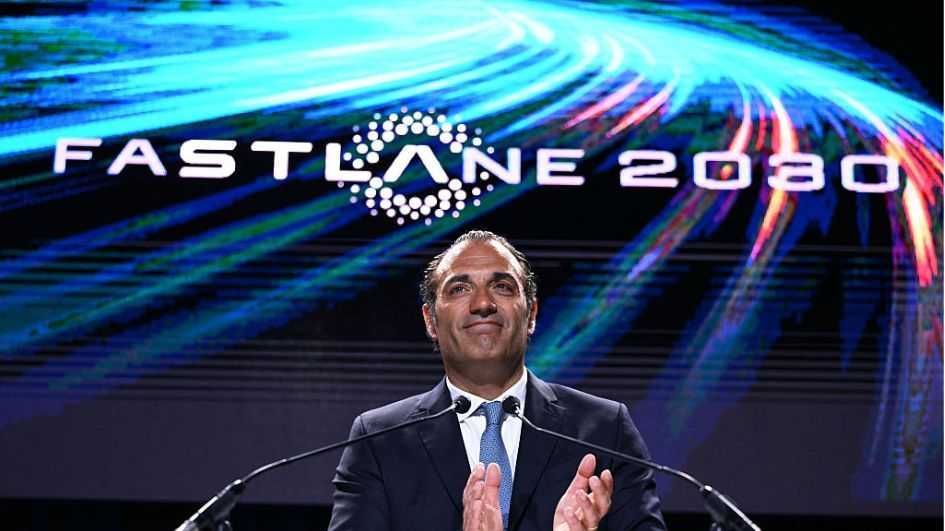
At its recent Investor Day presentation, Stellantis unveiled its "FaSTLAne 2030" strategy, a $70 billion restructuring plan featuring 60 new models, expanded AI integration, autonomous-driving development, and manufacturing partnerships stretching across China, Europe, India, and North America.

The message from Filosa was unmistakable: Partnerships will be "embedded" in Stellantis' future strategy.

That should have set off alarms in Washington.

Ohio Sen. Bernie Moreno (R) has been leading the effort to block Chinese vehicles and components from gaining a foothold in the United States because of concerns over technology and supply-chain dependence. Yet while lawmakers debate tariffs, one of America's best-known automakers is openly moving deeper into partnerships with China.

For years, Americans were told tariffs would stop China from gaining influence over the U.S. auto market. But tariffs mainly target finished vehicles imported directly from China. They do little to prevent American or European automakers from incorporating Chinese-developed batteries, software, electronics, and EV platforms into vehicles sold under Western brands.

Beneath the badge

Consumers may soon be driving vehicles wearing Jeep, Dodge, Chrysler, or Ram badges while much of the underlying technology comes from Chinese partnerships: batteries, semiconductors, AI systems, autonomous-driving technology, and connected-car software.

To control these is to control the modern automotive supply chain. China already dominates large portions of that ecosystem, and many legacy automakers increasingly appear to believe they cannot compete globally in EVs without Chinese involvement.

For the UAW and the industrial Midwest, the implications are enormous.

For decades, organized labor fought outsourcing to lower-cost countries. But the shift toward electric vehicles creates a different challenge. EVs generally require fewer moving parts than traditional internal-combustion vehicles, reducing demand for engines, transmissions, and many of the suppliers that support them. If battery production, electronics, and software also migrate overseas, the economic consequences could ripple through the entire manufacturing base.

America's automotive economy extends far beyond assembly plants. It includes steel suppliers, logistics companies, plastics manufacturers, tool-and-die shops, engineering firms, rail networks, repair facilities, dealerships, and thousands of small businesses. When supply chains move, entire local economies move with them.

RELATED: America's salvage yards are on fire — and drivers are the ones getting burned

Andy Cross/Getty Images

If you can't beat 'em ...

Stellantis' own strategy reflects that trend.

By the end of the decade, the company wants half its global production running on just three platforms. Its new STLA One architecture will support more than 30 models while integrating advanced software, steer-by-wire systems, AI capabilities, and connected cockpit technologies.

At the same time, Stellantis plans to cut more than 800,000 units of manufacturing capacity in Europe while aggressively restructuring operations around efficiency and lower costs.

Even more revealing is its expanding relationship with Leapmotor, the Chinese EV company in which Stellantis already owns a controlling stake through a joint venture. What began as a distribution agreement has expanded into manufacturing cooperation and joint sourcing designed to improve "cost competitiveness."

Rolling computers

The auto industry has seen this pattern before.

Detroit once dominated global manufacturing before outsourcing and offshoring reshaped the landscape. Today's version isn't just about where vehicles are assembled. Modern cars are rolling computers connected to cellular networks, cloud services, cameras, microphones, GPS systems, and over-the-air software updates.

That is why national security concerns now collide directly with automotive policy.

The Biden administration imposed 100% tariffs on Chinese EV imports and proposed restrictions on connected vehicle technology because of concerns over data collection and infrastructure security. Those concerns are legitimate. Modern vehicles collect extraordinary amounts of information, including location data, driving behavior, communications, and other personal information.

Now, imagine foreign-developed software integrated into millions of connected vehicles operating across the United States.

That concern helps explain why Moreno's proposal to block Chinese vehicles and components represents a major escalation in the debate over America's automotive future.

His message is straightforward: Chinese companies should not gain a strategic foothold inside the U.S. auto industry.

China syndrome

President Trump spent years warning about unfair Chinese trade practices and the hollowing out of American manufacturing. His tariffs forced companies to rethink supply chains and brought China's influence into the political spotlight.

Yet despite those efforts, many automakers continued moving deeper into China's EV ecosystem because executives saw lower costs, faster development, and access to advanced battery technology.

Stellantis is hardly alone. Ford has partnered with CATL. Volkswagen expanded its ties with Xpeng. General Motors continues to rely on Chinese-linked battery supply chains, and Tesla maintains an enormous manufacturing footprint in China.

The difference is that Stellantis is now openly telling investors that these partnerships are central to its long-term strategy.

If America loses control of automotive batteries, semiconductors, software platforms, AI systems, and electronics manufacturing, the consequences could extend far beyond the auto business. This remains one of the country's largest manufacturing sectors and one of its biggest sources of middle-class industrial employment.

Consumers were promised that the EV transition would spark a manufacturing renaissance. Instead, America risks becoming increasingly dependent on foreign-controlled supply chains for many of the most important technologies inside next-generation vehicles.

The next generation of cars may still wear familiar American badges while relying heavily on Chinese-developed batteries, software, and technology underneath the sheet metal.

That's the issue Washington is finally beginning to confront.

The real battle is no longer about where vehicles are assembled. It's about who controls the technology inside them, who owns the supply chains behind them, and whether America still intends to build the next generation of vehicles itself.
Digital trade corridors can fix our outdated supply chain


Trade policy still thinks in terms of borders. Supply chains moved on long ago.

The old model wasn’t wrong. When production was mostly national and exports crossed a frontier once on their way to market, managing trade at the border made sense. But that’s no longer how things work.

If information has already been verified once, why should anyone have to re-create it at the next border?

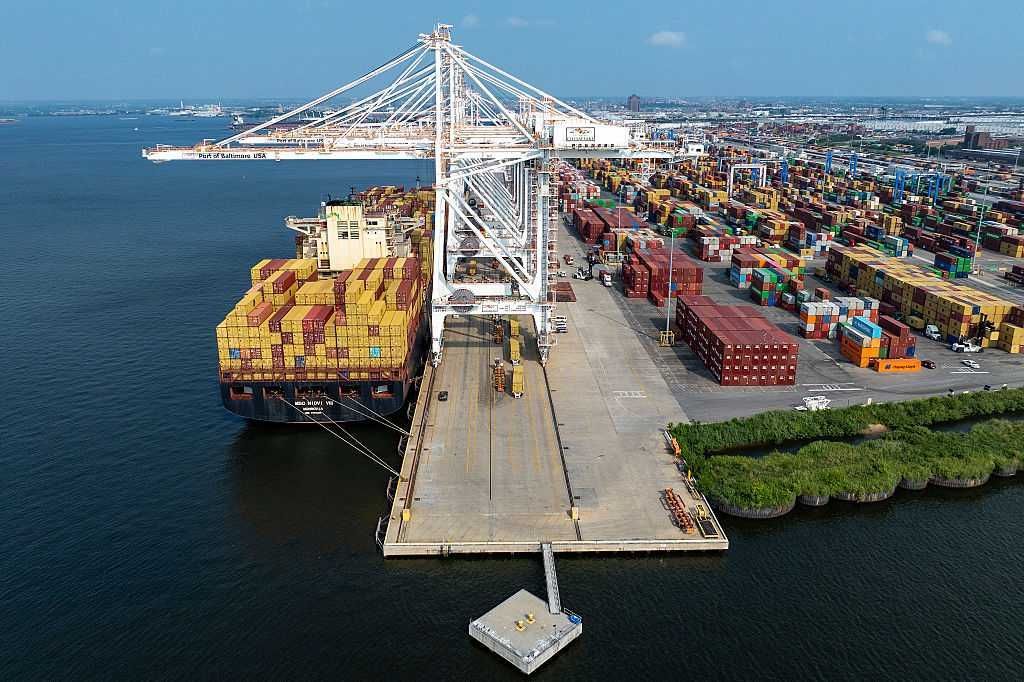
In North American manufacturing, intermediate goods move back and forth across borders at multiple stages of production. In automotive, a single component can cross the same frontier three or four times before final assembly. No one sat down and designed it that way — it’s just what efficiency ended up producing.

Every crossing still triggers the same rituals: compliance checks, data submissions. All that costly friction adds up.

Governments haven’t been idle. Digitization, single windows, paperless trade — these have all helped. But they mostly improve individual touchpoints. They don’t really change how the system works end to end.

Trade policy is still organized around discrete events: a declaration filed, an inspection completed, a shipment released. That was fine when trade itself was simpler. Now the harder problem is managing trust, data, and compliance across an entire journey, through multiple agencies, multiple jurisdictions, and the same goods crossing borders more than once.

Digital trade corridors are an attempt to deal with that reality. The formal definition sounds technical, but the idea isn’t complicated. A DTC connects existing systems so that they can share information without forcing everyone onto the same platform.

Put more plainly: If information has already been verified once, why should anyone have to re-create it at the next border? Yet that’s exactly what usually happens today.

Fixing that changes quite a bit. Regulators don’t just see a shipment when it arrives; they can see its history. That allows them to assess risk earlier and more precisely. And when that happens, the usual trade-off between control and speed starts to look less inevitable than we have assumed.

One group that would notice the difference immediately is smaller firms. Large multinationals can absorb compliance costs. They have the teams and systems to do it. Smaller exporters don’t. When things like classification, origin, and documentation are built in to the corridor itself and offered as services, those fixed costs start to spread out.

There’s a bigger shift under way, and it doesn’t get discussed nearly as much as it should. Governments and industries are experimenting with what you might call joint production zones — arrangements in which different stages of production are deliberately spread across countries that are trying to align their regulatory approaches.

RELATED: America’s elites trusted global trade. Japan trusted reality.

Andrew Harnik/Getty Images

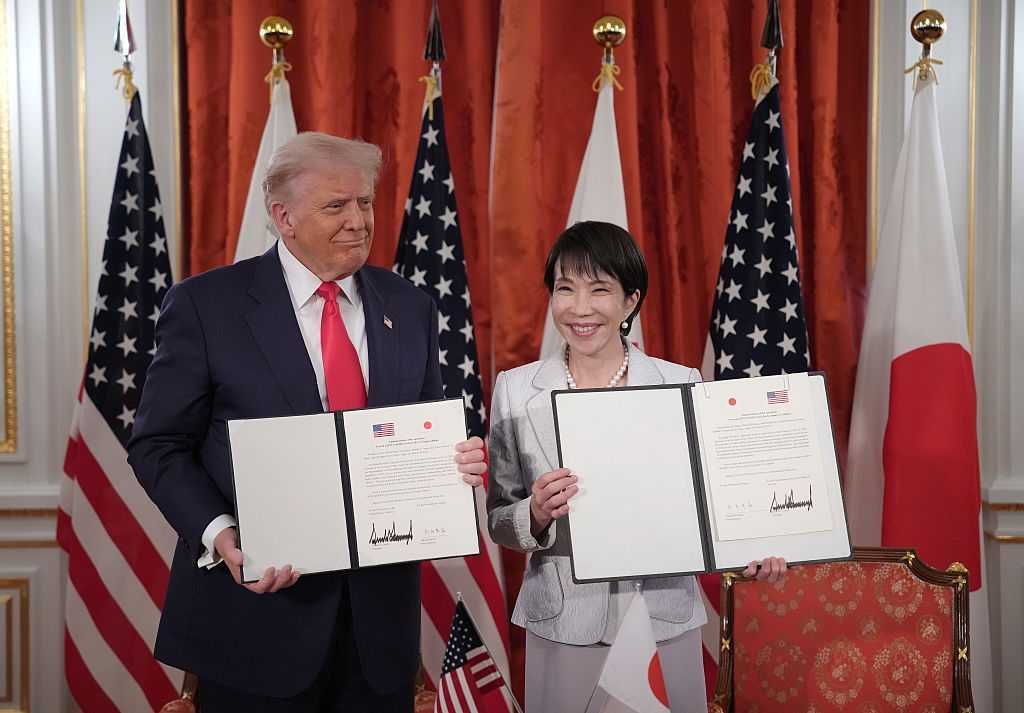
Pharmaceutical supply chains are already being set up this way, with different stages distributed across allied countries. In shipbuilding, Korean and American firms have started collaborating on projects in which modules are built in one place and assembled in another. What has been missing is the connective tissue to make it run smoothly.

That’s where DTCs come in. By allowing compliance and provenance data to move with the goods and to be reused rather than re-created, they make frequent cross-border movement workable at scale.

There is, predictably, a sovereignty concern. The worry is that deeper integration means less control. But that assumes that the current system actually provides strong control. In reality, point-in-time checks at the border offer only a snapshot. What corridors provide is more like a continuous record. In many cases, that strengthens oversight.

None of this is especially mysterious from a policy perspective. Electronic trade documents need to be recognized across borders. Data standards need to line up; there is already a base to build on. Participation can be tiered so that more reliable actors get smoother treatment. The harder part is treating this as infrastructure rather than as a series of pilot projects.

Trade policy has a habit of lagging behind how trade actually works. That’s not new. What is different now is the scale of the gap. Supply chains have already reorganized themselves around a cross-border reality. The administrative systems haven’t caught up — and the costs of that mismatch are starting to show.

No peace without steel: Why our factories must roar again


Our country is standing at a crossroads. Neither the world nor America’s place in it is what it was a generation ago. The unipolar moment is over. And yet, many in the Republican Party seek to claim the mantle of America First while continuing the same failed adventurism of the past.

National conservatism as a movement agrees that these people and ideas must be stopped. But we have failed to check their influence in the party largely because we have not offered an alternative that both meets the real threats to American security and balances national interest, the deterrent effect, industrial capability, and political will.

We cannot deter our adversaries if we cannot outbuild them.

I outlined a framework for what a genuine America First foreign policy would entail in an essay for the National Interest. I called for developing a doctrine that I dubbed “prioritized deterrence.” That essay was the first step toward forging a set of foreign policy principles that can unite national conservatives and set the agenda for the Republican Party for the next generation.

A key component of prioritized deterrence is industrial capacity. Deterrence depends not only on our military’s technical capability, but also on our industrial capacity — certainly in defense, but particularly in non-defense. Without factories humming, shipyards bustling, and energy production roaring, our ability to deter wanes. We cannot project strength abroad if we cannot produce strength at home.

Prioritized deterrence is not retreat. It is a recalibration. It rejects the fantasy that America can — or should — police every corner of the globe. Instead, it demands that we concretely identify our vital national interests. No more vague talk of values or entering endless nation-building campaigns. This will require open and honest debate.

The days of tarring dissenting voices as unpatriotic should be left in the rearview mirror. In fact, I recently sent a letter to President Donald Trump urging him to award Pat Buchanan the Presidential Medal of Freedom. Buchanan was right about nearly everything 20 years before anyone else realized it, including his recognition that Iraq was not aligned with our strategic national interests. We need serious voices like his in the conversation during these all-important debates.

Prioritized deterrence belongs firmly within the realist school of thought. It rests on restraint and on the quantifiable limits of a nation’s resources and people. Those limits force policymakers to rank threats to the American way of life by urgency and severity.

Deterrence depends on credibility: An aggressor must believe it will pay an unacceptable price for attacking the United States. But not every hostile nation deserves brinkmanship. National constraints and the risk of escalation demand that we focus only on the gravest threats.

Kinetic action must remain credible but reserved as a last resort. The U.S. military exists not only to fight and win wars but, more importantly, to deter them before they begin and ensure American security.

Prioritized deterrence in practice

What does a strategy that contends with these essential questions look like in practice?

Consider the 2020 strike on Qassem Soleimani. A single, precise action eliminated a key architect of Iran’s malign influence, sending a message to Tehran: Kill Americans, and you will pay. No endless wars, no nation-building, just a clear signal backed by lethal force.

Now consider Operation Midnight Hammer. President Trump authorized a precision strike that was executed flawlessly. He rejected calls to further escalate into regime change. As a result, we eliminated a key threat while managing the retaliation from Iran and successfully stepped off the escalation ladder before the region became destabilized. That’s prioritized deterrence in action.

What do these strikes have in common, other than the antagonist? In both cases, the president laid out clear, precise explanations of America’s vital national interest. He aligned the use of force with American goals, and he did so precisely with explicit acknowledgment of our constraints and limitations.

Additionally, both strikes relied on American technological supremacy: drones, stealth bombers, precision munitions, and intelligence — all products of a sophisticated industrial base. However, we cannot just rely on our qualitative military advantage as a silver bullet for deterrence. At a certain point, quantitative advantages become qualitative, which is one of the reasons China’s industrial might has made it so formidable on the world stage.

What is making us less formidable on the world stage is Ukraine. We should not be funding the war in Ukraine, and we should never have been involved in that conflict from the beginning. The proponents of prolonging this conflict seem unable or unwilling to grasp the reality that we do not have the industrial capacity to provide Ukraine with what they need — to say nothing of providing for our own needs here at home.

RELATED: Why won’t American companies build new factories here?

Photo by Kirk Wester via Getty Images

In fact, Ukraine’s defense minister has said his country needs 4 million 155-millimeter artillery shells per year and would use as many as 7 million per year if they were available.

In 2024, then-Senator JD Vance correctly noted that even after drastically ramping up production, the U.S. could still only produce 360,000 shells per year — less than one-tenth of what Ukraine supposedly needs. Vance was also doubtful of expert claims that we could produce 1.2 million rounds per year by the end of 2025. In the end, he was right, and the experts were wrong.

The Army now confirms that the U.S. is only on pace to produce 480,000 artillery shells per year. These aren’t highly sophisticated guided missiles either. Quantity, not quality, ended up winning the day.

Very simply, we must choose to put America first, as we do not currently have the capacity to both arm Ukraine and defend ourselves should the need arise.

Lagging behind

A candid assessment of our industrial capacity is that it’s lagging. The same voices that called for foreign adventurism also hollowed out our heartland and sent our manufacturing jobs overseas. We now face a new choice: Rebuild or be left to the ashes of history.

We cannot deter our adversaries if we cannot outbuild them. Our defense industrial base — shipyards, munitions factories, aerospace plants — lag significantly behind our peers, especially China. This is a far cry from the industrial base that won World War II.

The Virginia-class submarine program, for example, is crucial in countering China. Yet limited shipyard capacity, supply chain bottlenecks, and a shortage of skilled workers have created years-long delays. Chinese shipyards account for more than 50% of global commercial shipbuilding, while the U.S. makes up just 0.1%.

In 2024, a single Chinese shipbuilder constructed more commercial vessels by tonnage than the entire U.S. shipbuilding industry has since World War II. We cannot deter China in this state of industrial atrophy.

Reviving the entire industrial base

Just as critical — perhaps even more so — is the need to rebuild the U.S. industrial base as a whole, not just the defense sector. “If you want peace, prepare for war” means more than building ships. It means strengthening industry, shoring up families, and restoring the backbone of society. That creates jobs, secures supply chains, and projects strength without overextending our forces or wasting resources.

During World War II, the United States retooled civilian manufacturing almost overnight. Ford and General Motors turned out aircraft. Singer Sewing Machine Company built precision cockpit instruments. IBM produced fire-control systems for bombers. Civilian industry became the arsenal of democracy.

That capacity has withered. The COVID-19 pandemic revealed just how hollowed out our domestic base has become. America now relies on China for more than 80% of the active ingredients in pharmaceuticals. That dependence gives Beijing leverage.

Our weakness feeds China’s confidence. If defending Taiwan means empty pharmacy shelves across America, would Washington still respond? Beijing is counting on the answer. That calculation could determine whether China invades.

We need a manufacturing renaissance — steel mills, factories, foundries — because a nation that outsources its industry outsources its power.

Taiwan is indicative of another vital manufacturing sector where our capacity is lagging: the semiconductor industry. These chips power everything from smartphones to missile systems, yet the U.S. produces less than 12% of the world’s supply. Meanwhile, Taiwan’s TSMC dominates. If China invades Taiwan, our military and domestic economy will grind to a halt.

This is not theoretical; it’s a ticking time bomb, one that is tied directly to our ability to credibly deter China.

This equation must change. If America produces pharmaceuticals and semiconductors at home, adversaries lose their leverage. Deterrence grows stronger without firing a shot or putting boots on foreign soil.

I think of my home state of West Virginia, where Weirton Steel once stood as one of the largest steel producers in the world. At its peak, it employed 23,000 people.

That steel not only secured American dominance in industry, it sustained families, churches, schools, and communities. A single paycheck could buy a home and support a family. Mothers could raise children and stay active in their schools and churches because one income was enough.

The same bipartisan leaders in Washington who chased short-term gains instead of building a strong industrial base and healthy families signed Weirton Steel’s death warrant. They let China flood the U.S. market with cheap tin plate steel, and Weirton paid the price.

We begged President Joe Biden for tariff relief, but he followed the pattern of his predecessors and did nothing. The result: Weirton’s tin plate mill was idled, thousands of workers lost their jobs, and the community was gutted.

Today, only one blast furnace capable of producing tin plate steel remains in the entire United States. One.

China’s gotten the picture

Economic capacity and industrial output are critical in the defense of the nation and create a better quality of life. A strong manufacturing sector is, in itself, a strong deterrent. China understands this.

Its “Made in China 2025” plan, cited in then-Sen. Marco Rubio’s 2019 address at the National Defense University, declared:

Manufacturing is the main pillar of the national economy, the foundation of the country, the tool of transformation, and the basis of prosperity. Since the beginning of industrial civilization in the middle of the 18th century, it has been proven repeatedly by the rise and fall of world powers that without strong manufacturing, there is no national prosperity.

This is obviously true.

China now produces more than half the world’s steel, powering both its infrastructure and its military. Meanwhile, we’ve allowed our own steel industry to wither, importing from abroad while American mills rust. That failure is not only economic. It’s strategic.

We won World War II in part because we built planes, tanks, and ships faster than the Axis powers could destroy them. A robust industrial base — defense and non-defense — is a deterrent in itself. It signals to adversaries: We can outfight you, outbuild you, and outlast you.

We need a manufacturing renaissance — steel mills, factories, foundries — because a nation that outsources its industry outsources its power. Deindustrialization was a choice, a choice with disastrous consequences. We must now make the choice to rebuild and reindustrialize.

RELATED: Read it and weep: Tariffs work, and the numbers prove it

Photo by IURII KRASILNIKOV via Getty Images

Unleashing American energy

To have manufacturing dominance, we must unleash energy dominance. Factories don’t run on hope; they run on power — reliable, affordable, and abundant power. Wind and solar power are obviously not able to power anything. Thankfully, America’s superpower is the massive quantities of natural resources we have at our fingertips.

We have some of the largest proven reserves of both oil and natural gas of any nation in the world. This is a textbook example of our quantitative advantage becoming a qualitative advantage.

We have the largest proven reserve of coal in the world, nearly double the supply of the next closest country. Our energy potential is unlimited, and we must drastically ramp up our output if we want to meet the energy demands of the future economy.

Fossil fuels have long been the backbone of industrial power, and West Virginia’s coal and natural gas is its beating heart. Yet coal in particular has been under siege, not just from regulations but from corporate environmental, social, and governance policies pushed by firms like BlackRock that waged war on fossil fuels.

As state treasurer of West Virginia, I took a stand. I made West Virginia the first state in the nation to divest our tax dollars from BlackRock. I refused to let Wall Street’s agenda use our own state’s money to kill our coal industry. Today, more than a dozen states have followed our lead, rejecting ESG policies that undermine American energy dominance.

China, meanwhile, builds coal plants at a breakneck pace, powering its industrial juggernaut. They use coal to fuel their steel production while we let our own mines and mills idle. We cannot let this continue.

Thanks to President Trump, we’ve begun to change course. For the first time in my lifetime, a president took a stand for coal, signing executive orders promoting domestic coal production. But we need to go further. We must become a global juggernaut with an “all of the below” approach to energy — coal, oil, natural gas, and nuclear must power our path to energy dominance.

Prioritizing America, deterring aggressors

America cannot do everything, everywhere, all at once. We are not a nation of infinite industrial capacity, infinite goods, or infinite will. Scarcity — of materials, of capacity, of resolve — forces us to choose. Prioritized deterrence is a framework for grappling with those choices.

It is a commitment to focusing our energies, rebuilding our industrial might, and unleashing the energy to power a 21st-century industrial base. It’s a rejection of overreach in favor of strength, of focus instead of distraction.

Leaders on both sides of the aisle over the last 40 years squandered the inheritance of peace, security, and industrial might in favor of globalization and foreign adventurism. We cannot afford to continue down that path. Correcting course will require open, honest, and sometimes intense debate.

It will require serious investments from business leaders in American manufacturing and public policies that assist in this reorientation. It demands that we do more to appropriately train and equip a skilled workforce.

But we must start now. America will build again, power again, and deter again. Not everywhere, not always — but where it matters most, with a strength that none can match.

Editor’s note: This article has been adapted from a speech delivered on Tuesday, Sept. 2, to the fifth National Conservatism Conference (NatCon 5) in Washington, D.C.

America First is driving jobs and a welcome corporate return


“They’re coming home — they’re all coming home.”

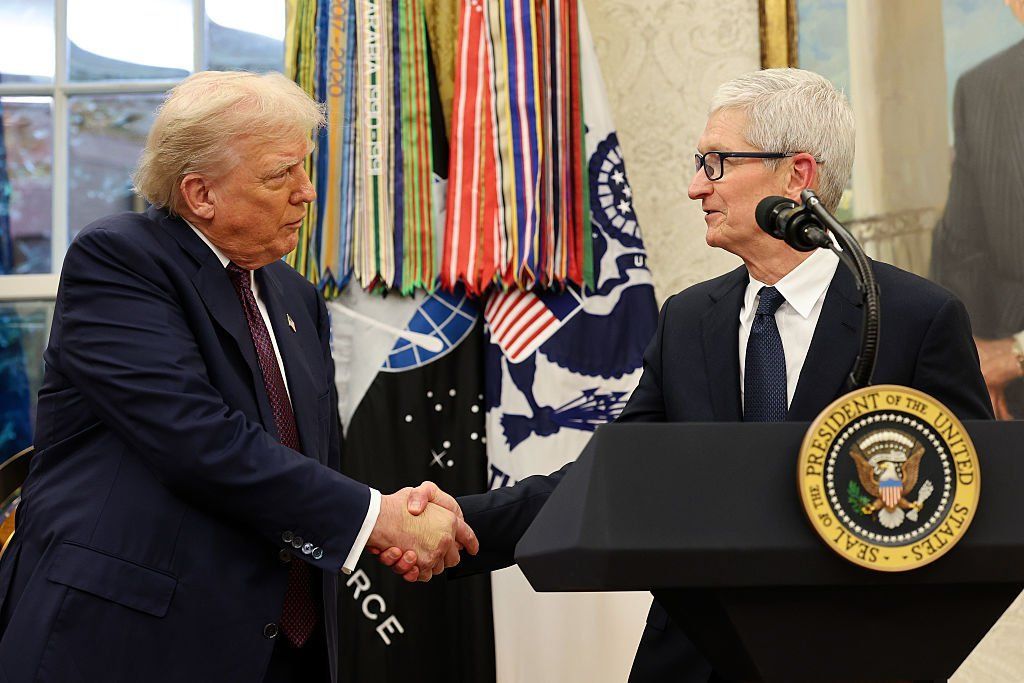
That’s how President Donald Trump described Apple’s decision to invest $600 billion in the American economy, $100 billion more than initially expected.

For decades, corporate America packed up and left. Under President Trump, companies are coming back.

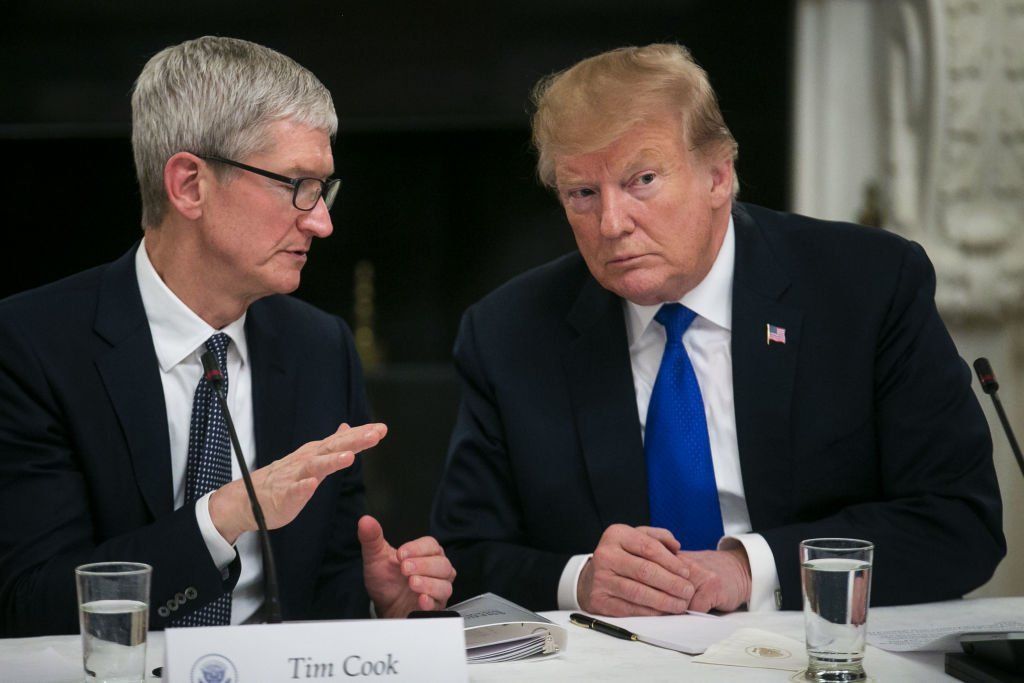
Standing alongside Apple CEO Tim Cook, President Trump declared: “These investments will directly create more than 20,000 brand-new American jobs and many thousands more at Apple suppliers like Corning, Broadcom, Texas Instruments, and Samsung.”

This is proof that the America First agenda is working.

Bringing industry back

America First isn’t just a campaign slogan. It’s a movement rooted in economic patriotism. For decades, global corporations were incentivized to offshore jobs and close American factories, leaving once-thriving towns in economic ruin.

President Trump is reversing that damage. His America First agenda creates the conditions for companies to thrive here at home — cutting taxes, slashing red tape, rebuilding infrastructure, and putting American workers first in trade deals and policy decisions.

Apple’s investment is just the latest example. From Silicon Valley to the Rust Belt, companies are responding favorably to the president’s policies, which are rewarding their investments on U.S. soil.

In the past six months alone, more than $17 trillion in new investment, factories, and infrastructure projects have been announced. From semiconductor plants in Arizona to advanced steel manufacturing in Pennsylvania, we are witnessing the rebirth of American manufacturing.

Challenging China

And America First doesn’t stop at building new factories. It also means building the capacity to win strategic fights — including the tech war with China.

One example is the Trump administration’s recent decision toheed U.S. intelligence experts and greenlight the merger between Hewlett Packard Enterprise and Juniper Networks.

For years, national security experts have warned about Huawei, the Chinese tech giant with deep ties to the Chinese Communist Party. Huawei’s global dominance in 5G and enterprise networking poses a serious threat to cybersecurity, national defense, and communications freedom. The problem wasn’t identifying the threat. The problem was that no U.S. company could match Huawei — that is, until now. Trump and Attorney General Pam Bondi are helping the U.S. finally compete in this industry.

Another example is President Trump’s executive order jump-starting America’s rare-earth and critical mineral supply chains — an industry China has dominated for years. From electric vehicles to advanced weapons systems, the modern economy runs on rare-earths. Yet for too long, America depended on Chinese exports to power everything from smartphones to fighter jets.

That is changing under President Trump, who signed an executive order cutting red tape, fast-tracking permits, and directing federal agencies to prioritize American sourcing and refining of rare-earth and critical minerals. As a result, U.S. companies are now increasingly investing in domestic mining operations in America, laying the foundation for greater American economic independence.

In June, Trump even signed an agreement with China to resume exports of U.S. rare-earth minerals. The global tide on U.S. exports is now turning.

RELATED: The founder betting big on American manufacturing

Photo by BRANDONJ74 via Getty Images

America First is winning

America First means just that: America first. Whether it’s encouraging companies such as Apple to invest here at home or ensuring that U.S. tech companies can go toe to toe with China, President Trump is delivering real results.

For decades, corporate America packed up and left. Under President Trump, companies are coming back. They’re investing in our people, our cities, and our future. That’s not just good policy. That’s what winning looks like.

Apple’s monopoly is killing the American phone dream


Earlier this summer, the Trump Organization announced T1 Mobile, a new 5G cellular service, and promised an upcoming T1 phone that would be “proudly built in the United States.” Many regarded it as an extension of President Donald Trump’s push for a renaissance in American manufacturing — a new golden age for American business.

But recently, the company has had to walk back its claims about the U.S. provenance of its flagship phone.

Apple limits consumer freedom and makes the prospect of a new 'American' phone far less likely to succeed, no matter how patriotic its marketing.

While the pursuit of a truly American phone that is both designed and built in the United States is a worthy endeavor, the likelihood of its success has been greatly diminished by one company — ironically, an American one: Apple. The tech giant has spent decades building a fortress around the smartphone market, keeping competitors out and locking customers in.

Apple’s China ‘Marshall Plan’

Apple didn’t simply outsource a few manufacturing jobs. It created what Patrick McGee calls in his landmark book “Apple in China” a “super-Marshall Plan.”

While the original Marshall Plan rebuilt a battered Europe after the Second World War, Apple poured $275 billion into China between 2015 and 2020 — twice what America spent rebuilding postwar Europe, adjusted for inflation.

That staggering investment of money and American innovation didn’t just churn out iPhones. It built China’s manufacturing prowess and enabled its rise in precision industries. It effectively underwrote Beijing’s climb to global tech superpower status — fueling its dominance in everything from electric vehicles to artificial intelligence to 5G.

In creating a supply chain so vast and sophisticated — one dependent on China’s unique, massive labor force — Apple made it nearly impossible for American manufacturers to match its cost, quality, or speed. In exchange for global market share, Apple forsook American manufacturing and secured its dominance over competitors.

The walled garden

But China’s supply chain alone didn’t forge the heights of Apple’s smartphone walled garden. The company painstakingly designed a digital ecosystem around its platform that complicates deciding which phone to buy beyond basic considerations like price and performance.

Apple’s trap is both psychological and digital — not just logistical. Switching from iPhone to Android may be harder than escaping Alcatraz. Your cloud-stored memories, those precious photos, notes, bookmarks — are all locked in iCloud, with no convenient way to be transferred to competitors’ products.

Your AirPods and Apple Watch become expensive paperweights outside the Apple ecosystem. Try messaging your friends from an Android, and you’re marked by the dreaded green bubble — a stamp of second-class status among teens.

It’s not just peer pressure; it’s proprietary lock-in, and Apple wrote the manual.

For developers, Apple’s wall is even higher. The company controls the App Store with an iron fist — dictating terms, collecting fees, and stifling new entrants who dare challenge the status quo. It’s the digital equivalent of a company town: Innovators get in line or get left out in the cold. Both competitors and lawmakers alike are calling foul.

RELATED: Trump’s tariffs reportedly prompt Apple to make game-changing investment

Photo by ozgurdonmaz via Getty

Taken together, these choices trap users, limit consumer freedom, and make the prospect of a new “American” phone — like Trump’s T1 or any other real competitor — far less likely to succeed, no matter how patriotic its marketing.

Unleashing American smartphone competition

While sheer will can’t revive the great American supply chain overnight, opening competition in the smartphone market could. Legal and regulatory reform could break Apple’s digital monopoly and restore real competition.

One bipartisan proposal, the Open App Markets Act, aims to do exactly that — forcing Apple to open app distribution and payment systems. In theory, the act could give consumers the power to install what they want, how they want, from whom they want — tearing down Apple’s walled garden and letting a hundred new “American phones” bloom.

If passed, this law would give Americans the right to choose, switch, and control their digital lives. Only then, as cracks in Apple’s walled garden form, will we have a fighting chance at seeing a truly American-made phone compete with the iPhone.

Trump’s tariffs reportedly prompt Apple to make game-changing investment


President Donald Trump is set to announce another win as a result of his tariff policies. According to reports, on Wednesday he will highlight another massive investment in American manufacturing, which is expected to benefit the economy and create jobs.

The White House stated that Apple Inc. is planning to commit another $100 billion to domestic production to circumvent Trump's tariffs, several news outlets, including the New York Times and Bloomberg, have reported.

'Trump casually delivering the largest investment in Apple's entire history like it's just another Wednesday afternoon!'

While Apple has not yet confirmed this latest plan, it has previously guaranteed that it would invest $500 billion and hire 20,000 people in the United States over the next four years. The technology company also has plans to open a 250,000-square-foot factory in Houston, Texas, to produce servers that support its artificial intelligence system.

Apple CEO Tim Cook stated last week during a call with analysts that "the vast majority" of the company's iPhones sold in the U.S. are produced in India. Apple's other products, including MacBooks, iPads, and Apple Watches, are manufactured in Vietnam.

"We obviously try to optimize our supply chain," Cook stated. "And ultimately, we will do more in the United States."

Apple announced its third-quarter results last week, reporting revenue of $94 billion, which is a 10% increase compared to the previous year.

RELATED: India surpasses China in Apple exports to US, up 240% from last year

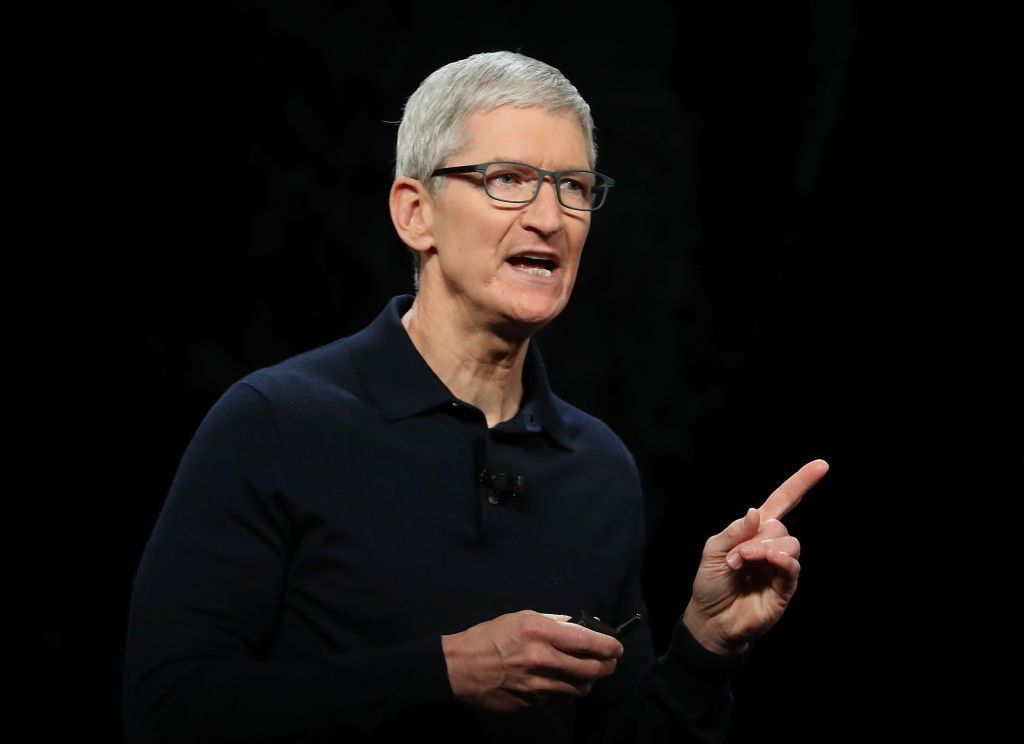
Apple CEO Tim Cook. Photo by Justin Sullivan/Getty Images
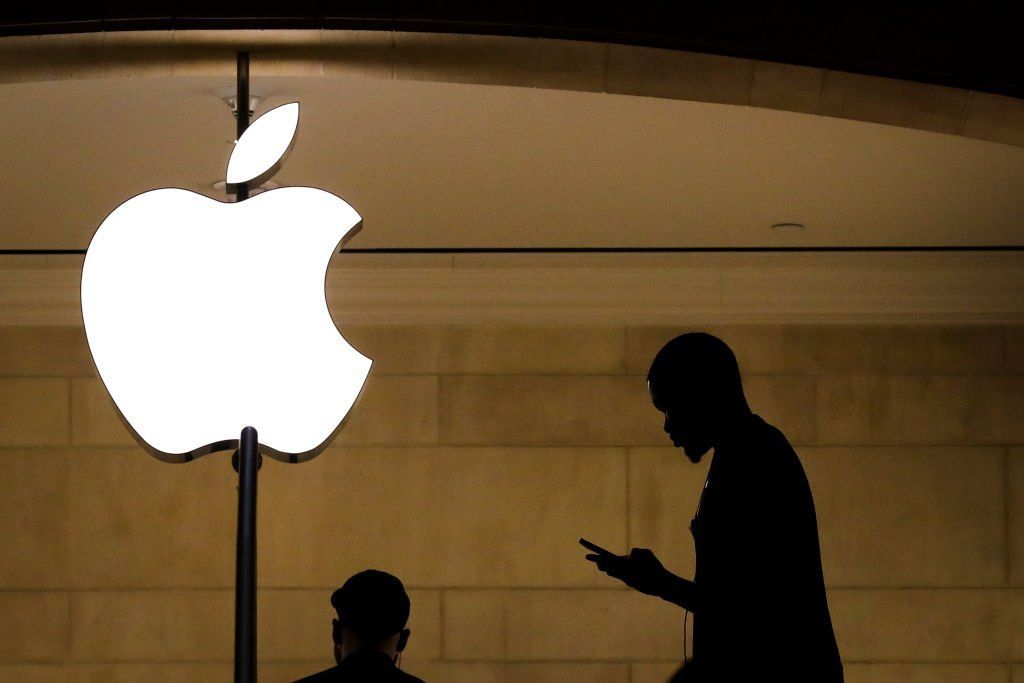
"Today Apple is proud to report a June quarter revenue record with double-digit growth in iPhone, Mac and Services and growth around the world, in every geographic segment," Cook said.

Apple's investment plan in the U.S. appears to be influenced by Trump's threats to impose a 25% tariff on its products manufactured outside the country.

The $600 billion total investment will bring more of Apple's supply chain to the U.S., a White House official told Bloomberg.

White House spokesperson Taylor Rogers stated, "President Trump's America First economic agenda has secured trillions of dollars in investments that support American jobs and bolster American businesses."

"Today's announcement with Apple is another win for our manufacturing industry that will simultaneously help reshore the production of critical components to protect America's economic and national security," Rogers added.

RELATED: Big Tech’s charm campaign flops as Trump’s DOJ brings the heat

Photo by Drew Angerer/Getty Images

Cook is expected to attend a meeting with Trump in the Oval Office on Wednesday at 4:30 p.m. Eastern to announce the latest investment update.

The U.S. Commerce Department stated, "This investment — part of the new American Manufacturing Program — will help reshore critical supply chains, strengthen national security, and bolster America's economic infrastructure."

Donald Trump Jr. reacted to the investment plan in a post on social media.

"Trump casually delivering the largest investment in Apple's entire history like it's just another Wednesday afternoon!" he wrote.

Apple did not respond to a request for comment from Bloomberg.

Like Blaze News? Bypass the censors, sign up for our newsletters, and get stories like this direct to your inbox. Sign up here!

House Republicans to hike up Harvard endowment tax in reconciliation


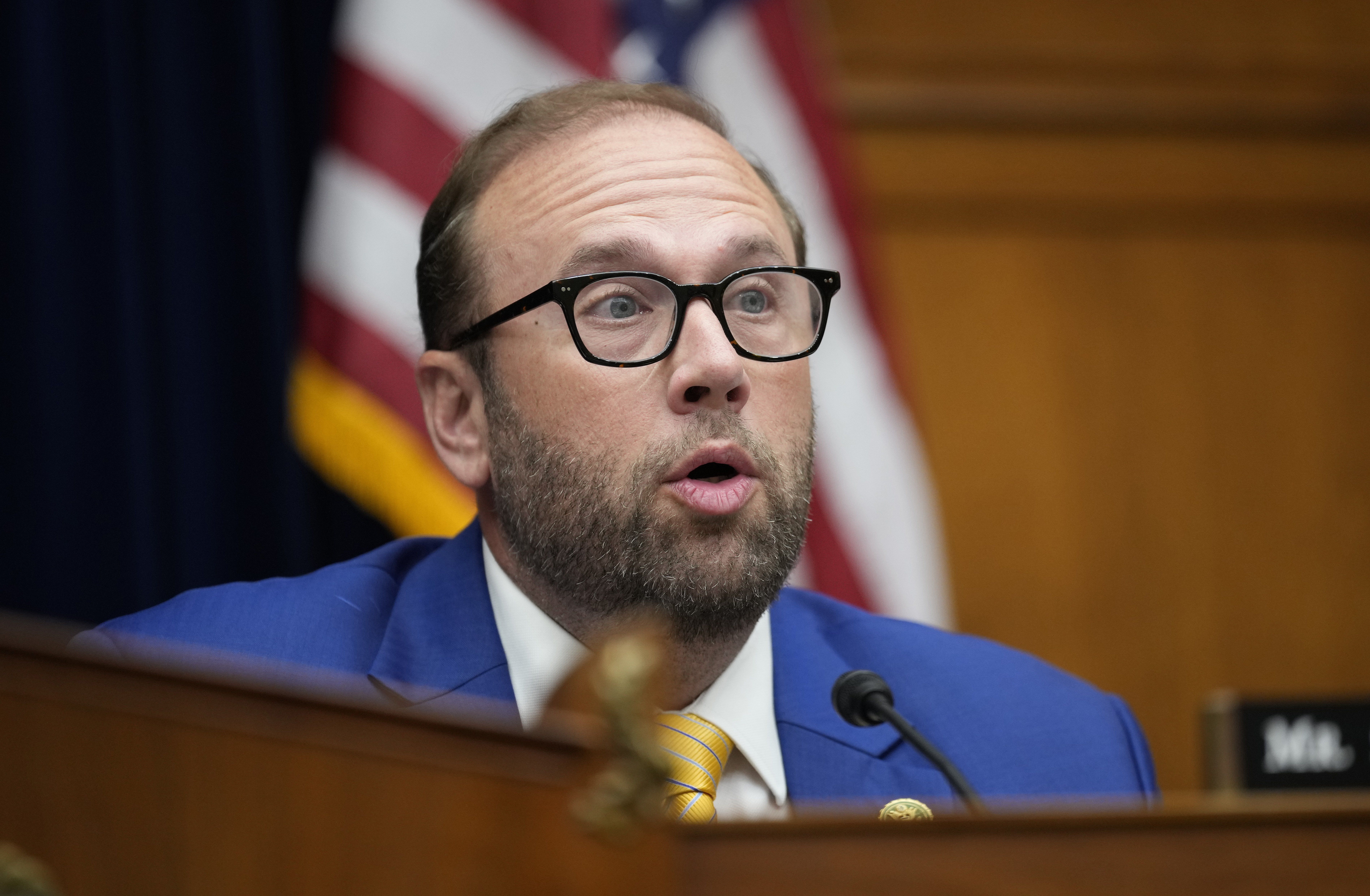
As reconciliation talks continue, House Ways and Means Chairman Jason Smith revealed that the Republican-led tax bill will hike up Harvard University's endowment tax, in addition to codifying many of President Donald Trump's campaign promises.

During a members-only GOP conference on Capitol Hill, Smith told members that Harvard's current 1.4% endowment tax under the 2017 Tax Cuts and Jobs Act will be bumped up to 21%, according to a source on the call. Harvard continues to be in the hot seat after the Trump administration announced they would be canceling millions of dollars in federal grants, noting that taxpayer funds are a "privilege."

'We're delivering on no tax on tips, no tax on overtime pay for the 80 million workers affected, and achieve tax relief for seniors.'

Photo by Andrew Harnik/Getty Images

In addition to the increased endowment tax on Harvard, the GOP tax bill is also aiming to codify Trump's incredibly popular policies like no tax on tips and no tax on overtime, according to a source on the call. Other line items are focused on boosting pro-family policies, like indexing the child tax credit for inflation and improving adoption tax credits.

"We're delivering on no tax on tips, no tax on overtime pay for the 80 million workers affected, and achieve tax relief for seniors," Smith said during the call.

The legislation is also focused on reinvesting in Americans and includes 100% immediate expensing for new factories in the United States, according to a source on the call. The bill further bolsters American manufacturing by including deductibility of auto loan interest for American-made cars.

Photo by Anna Moneymaker/Getty Images

These provisions mirror Trump's directives to incentivize American manufacturing while renegotiating international trade deals to benefit the United States. In just the last week, Trump has finalized major trade deals with both the United Kingdom and China.

Like Blaze News? Bypass the censors, sign up for our newsletters, and get stories like this direct to your inbox. Sign up here!

SHOCKING: American towns before and after globalism took our jobs


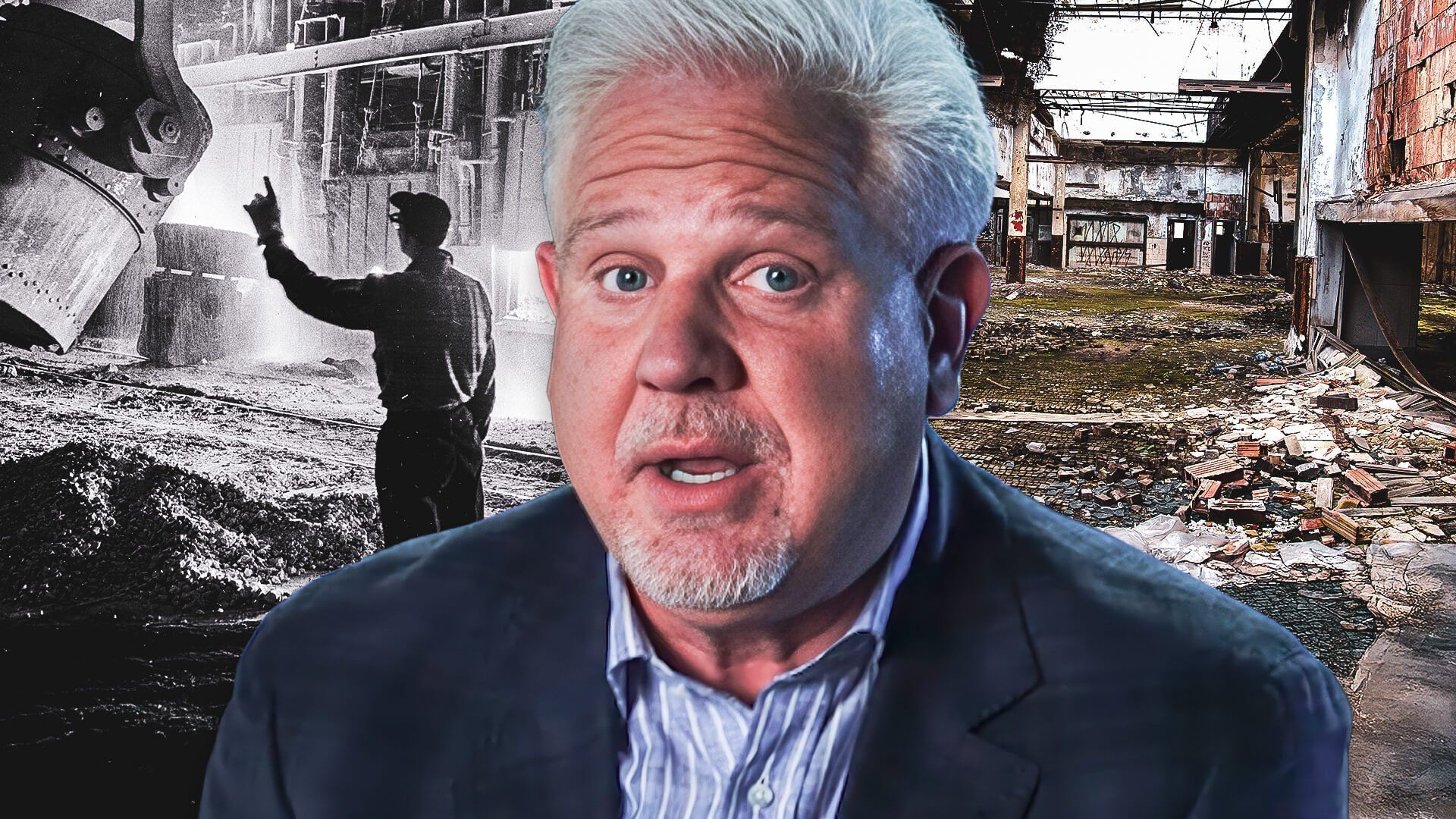
On a recent Wednesday Night Special, Glenn Beck took a good hard look at how elite-driven trade policies over the last 30 years have gutted America’s middle class.

In 2001, China joined the World Trade Organization. The move was presented as progress, but it ultimately caused nationwide devastation.

“The year China joined the WTO, the U.S. imported $102 billion in goods from China. In 10 years that number has more than tripled to $365 billion,” says Glenn.

Our trade deficit with China suffered tremendously as well.

“[It] tripled over the same period to $273 billion. Last year the deficit was $295 billion — by far our largest trade deficit with any nation,” Glenn adds.

“What is the fallout from this massively lopsided trade with China alone?”

Glenn, citing a 2016 study by an MIT economist, says, “During the first decade after China joined the WTO, the growth of imports from China cost us 2.4 million jobs — 985,000 of those just from a factory floor.”

The study concluded with the following point: International trade results in lower-priced goods and services on average and thus lowers the cost of living. However, low-skilled workers are nearly always worse off. The system creates “winners and losers.”

“This is what Trump is talking about. For far too long our leaders, especially on the left, have been way too comfortable with ignoring the losers in this equation,” says Glenn.

The displacement of American workers, he says, is best seen in “the Rust Belt” — a term created to capture the economic decline, factory closures, and population loss of a region in the United States, mainly in the Midwest and Northeast, that is known for manufacturing.

To illustrate this point, Glenn shows a picture of Galesburg, Illinois, home of the once-booming Maytag factory. Formerly known as “Appliance City,” the plant used to employ 5,000 people, but after “the last refrigerator rolled off the assembly line in 2004,” the site has been reduced to a pile of “rubble and weeds.”

Glenn also gives the example of Youngstown, Ohio — “once a proud hub of American steel, churning out beams that built our skyscrapers.” That is, until Chinese steel was brought in and the factory collapsed.

“Youngstown has lost 60% of its population since 1970,” says Glenn, noting that a significant portion of the exodus occurred “between 2010 and 2012” — about a decade after China joined the WTO.

Glenn’s third example is Gary, Indiana, a major steel manufacturing center and home to U.S. Steel's massive Gary Works plant.

“In the 1970s, 30,000 people worked at that mill alone. Today, it employs 3,700,” says Glenn, adding that the town’s population has decreased 62% over the last several decades and has “10,000 abandoned buildings.”

“Between the year 2000 and 2010, the U.S. lost over 5.5 million manufacturing jobs. That's the steepest drop-off in our history. … It is the draining of the American dream,” he laments.

To hear more of his commentary, watch the episode above.

Want more from Glenn Beck?

To enjoy more of Glenn’s masterful storytelling, thought-provoking analysis, and uncanny ability to make sense of the chaos, subscribe to BlazeTV — the largest multi-platform network of voices who love America, defend the Constitution, and live the American dream.

Tariffs Aren’t Bad For The Economy, Just For Financial Pencil-Pushers

The American economy is worth saving. So are the people who built it. And for the first time in a generation, someone is finally fighting to do just that.
Trump targets NO INCOME TAX in final election push — but is it possible?


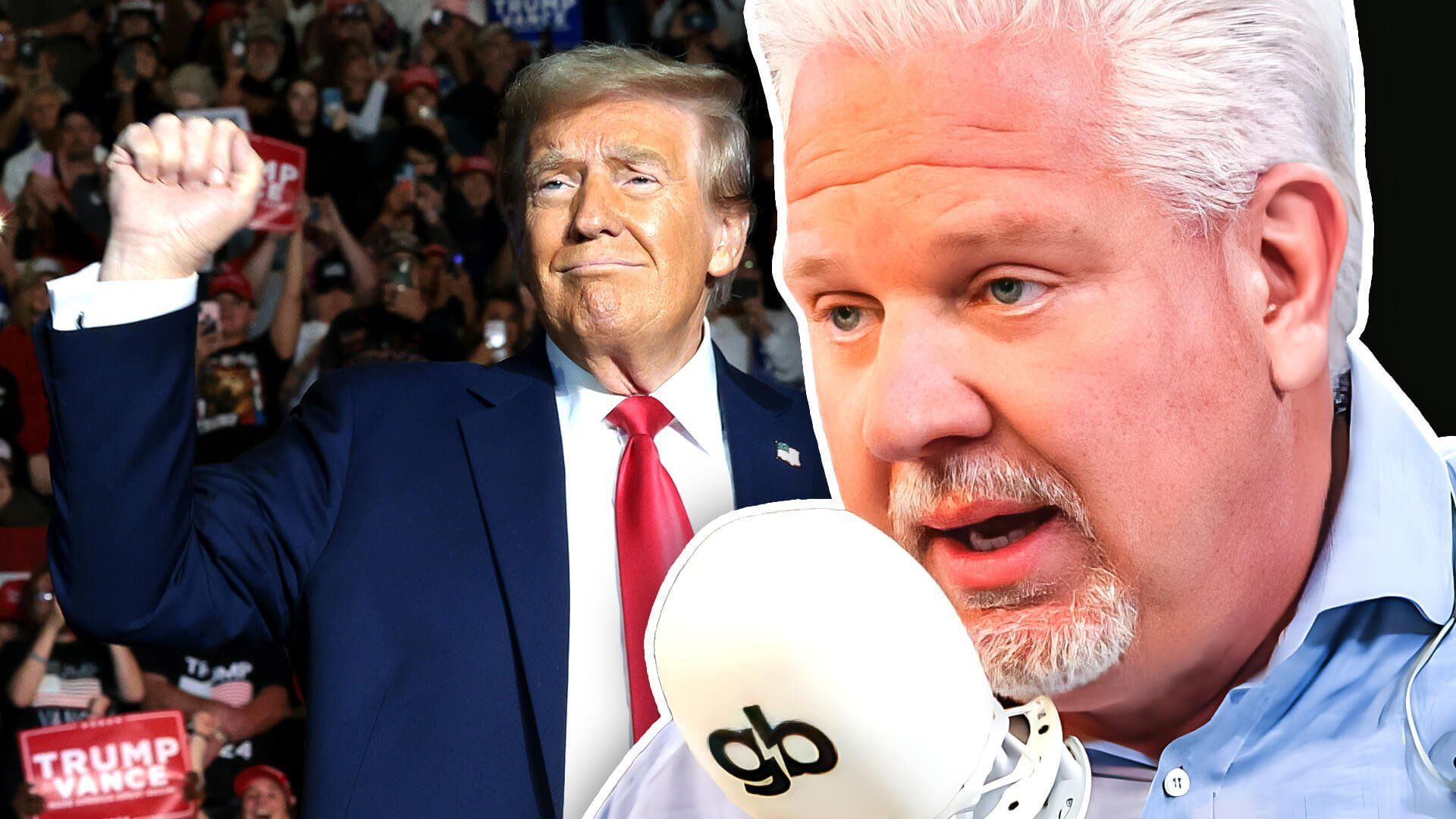
Last week the mother of all interviews happened when Donald Trump, arguably the most famous man on the planet, appeared on “The Joe Rogan Experience,” the top-ranked podcast on the planet.

In their three-hour interview, Rogan and Trump broached a number of issues, but one that’s getting a ton of media attention is Trump’s reiterated claims that he will potentially end income taxes by substituting tariffs.

Glenn Beck and Stu Burguiere discuss the possibility of such a drastic change to America’s tax infrastructure.

As for repealing the 16th Amendment, Stu says, “I am a huge fan.”

Glenn shares Stu’s enthusiasm and thinks that “it’s the right time” to do it.

“[Trump] is talking about tariffs in a different way. … You build your cars outside of the United States? Okay, we're going to put a tariff on it to keep cars that are made here in the United States cheaper,” says Glenn, adding that this is the first time he’s ever “started to agree with tariffs.”

“We must rebuild our infrastructure. We have to have manufacturing here in America,” he says, pointing to the fact that America “made the planes and the tanks and the Jeeps … that brought the whole world into Germany” during WWII.

“Tariffs have a chance of saying, ‘Look, you want to sell your stuff? Fine, make it in America. … We'll give you incentives to bring your company, your manufacturing here so we have these plants, we are producing our own steel, we're doing these things.' Meanwhile, we're also going to drill, baby, drill," which will “bring our energy costs down,” Glenn explains.

While Stu doesn’t love the idea of tariffs, he does love what they would do to the magnitude of our current federal government.

“The size of the government that would be required for a government to be funded by tariffs is the size of a government I like,” he says, adding that “it’s a lot smaller than the one we have.”

“Yes!” Glenn agrees. “We were all about that up until the 16th Amendment.”

However, the question still remains: Will Trump actually do it?

Even though almost all politicians promise tax cuts leading up to an election, Glenn thinks Trump “is actually going to do a lot of these things” he’s talked about during his campaign, as long as “he has the Senate and the House.”

But he also has to “turn it around quickly.”

To hear more of the conversation, watch the clip above.

Want more from Glenn Beck?

To enjoy more of Glenn’s masterful storytelling, thought-provoking analysis, and uncanny ability to make sense of the chaos, subscribe to BlazeTV — the largest multi-platform network of voices who love America, defend the Constitution, and live the American dream.