5 Ways The Right Can Start Fixing The Student Loan Crisis Without Punishing Taxpayers
 We need to do something to bridge the gap back to the American dream for college grads.
The Trump administration’s push to examine alleged political weaponization inside the Justice Department is not merely about looking backward. For many patriotic Americans, it is about people whose lives were turned upside down because the government decided to investigate them.
That is where the conversation often gets lost.
Justice isn’t measured only by what happens in the courtroom. It’s also measured by what it costs an innocent person to get there.
Everyone focuses on the indictment, the headlines, and the courtroom drama. Far less attention goes to what comes before a verdict. It does not take a conviction to ruin someone’s life. Sometimes an accusation is enough.
Federal and congressional investigations are expensive. Responding to a subpoena is expensive. Hiring lawyers to review documents, prepare testimony, answer investigators, and defend your reputation can wipe out a lifetime of savings long before a judge or jury weighs the facts.
Winning years later does not restore your bank account. It does not rebuild your business. It does not give you back the years spent living under a cloud.
That reality has become increasingly familiar in Washington. During Donald Trump’s first term, congressional investigations became a defining feature of his presidency. House committees launched a steady stream of oversight inquiries into the administration, with then-House Judiciary Committee Chairman Jerry Nadler (D-N.Y.) leading many of the most high-profile efforts.
Democrats argued they were fulfilling Congress’ constitutional oversight responsibilities. Republicans saw something else: a strategy to keep the administration tied up in investigations while forcing witnesses, aides, and associates to spend enormous sums defending themselves.
Whatever your politics, one fact remains undeniable. Every subpoena carries a price tag. Every interview requires lawyers. Every document request takes time. Every hearing pulls someone away from work, family, and ordinary life.
The financial toll rarely makes the evening news.
Former FBI Special Agent Mark Rossini recently offered a glimpse into that reality during a conversation with A.J. Rice on the “Dangerous Laughter” podcast. Rossini, who later received a presidential pardon after pleading to a misdemeanor in a case many conservatives see as part of the weaponization of the Justice Department under Joe Biden, focused less on the legal outcome than on the years leading up to it.
“What a waste of time,” he said, describing what he called “three and a half, four years of this Kafkaesque experience.”
Then came the part that should resonate with anyone who has ever faced the weight of the federal government.
“No one will hire you. You get no phone calls. You lose your income. It’s just debilitating.”
Rossini also encouraged people to read the court filings instead of relying solely on commentary surrounding the case, arguing that public opinion too often forms before anyone examines the underlying record.
RELATED: The right needs a public defender network for lawfare
His experience does not settle the whole debate, but it illustrates something too often overlooked: The process itself can become the punishment.
That is why discussions about alleged Justice Department weaponization have struck such a nerve among many conservatives. They are not simply asking whether every investigation was justified or unjustified. They are asking a more fundamental question: What happens when the immense power of government collides with the life of an ordinary citizen?
Government has a duty to investigate credible allegations of wrongdoing. Congress has a constitutional responsibility to conduct oversight. Those powers are essential in a constitutional republic.
But those powers also demand restraint.
When investigations stretch on for years, legal bills climb into six or seven figures, careers disappear, and families absorb the emotional and financial burden, Americans have every right to ask whether the system has accounted for those costs.
That is what makes the current conversation about Justice Department reform more significant than another round of partisan finger-pointing. It raises a basic question of public trust: Can Americans have confidence that extraordinary government powers will be exercised fairly and consistently, regardless of politics?
By the time an investigation ends, the damage may already be done. A dismissed case does not erase years of legal fees. A pardon does not restore lost income. Favorable headlines at the end of the story do not undo the quiet suffering that came before it.
Justice isn’t measured only by what happens in the courtroom. It’s also measured by what it costs an innocent person to get there.
My husband has bipolar disorder. I know firsthand that the medications he takes do not merely improve his quality of life — they make our family life possible.
I am thankful for the drug companies whose products and innovations help keep my family together. But that does not mean I trust Big Pharma.
The pharmaceutical industry’s incentives are often at odds with the people it treats.
The pharmaceutical industry has helped create a culture in which Americans are taking more prescription drugs than at any point in history. Last year, more than two-thirds of Americans reported taking a prescription drug daily, and 26% said they take four or more.
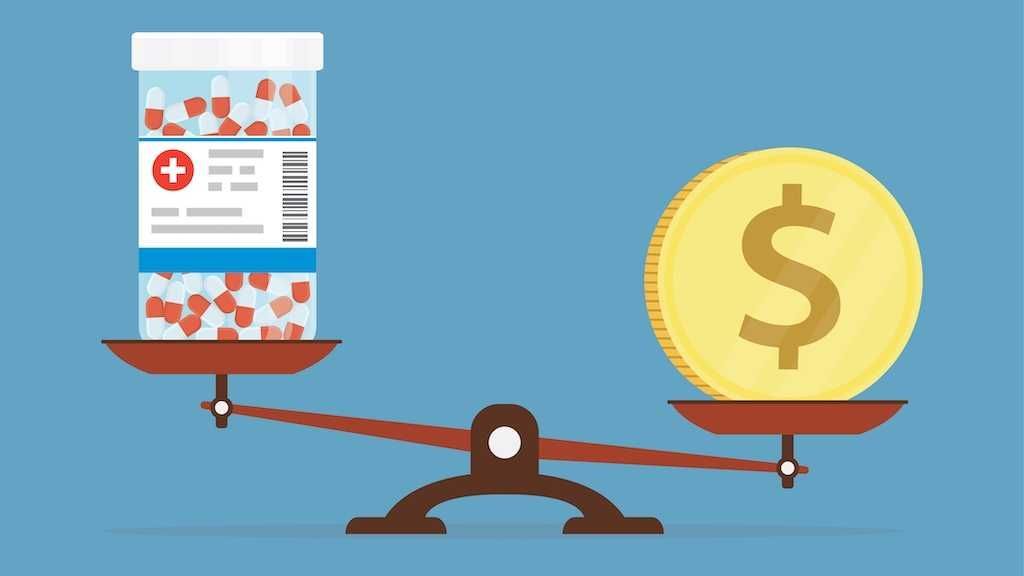
No wonder the average price of prescription medications in the United States has risen by about 37% in the last decade. Many of the most popular brand-name medications have doubled in price over the past 15 years.
One study found that prescription drug prices in the United States are nearly three times higher than prices for the same medications in 32 comparable countries. Family health insurance premiums for employer-sponsored plans jumped 26% from 2020 to 2025, outpacing wage growth and inflation.
A quarter of Americans recently reported having difficulty paying for their medications. About 19% said they had skipped or rationed doses because of the cost. Research indicates that medical expenses are now the leading cause of personal bankruptcy in this country, surpassing job loss.
I understand that high prices help fund the astronomical cost of clinical trials that test and bring new drugs to market. But Americans have also seen pharmaceutical companies acquire the rights to off-patent drugs and raise prices overnight. They have watched insulin prices climb for years even though insulin is relatively cheap to produce.
Let’s face it: The pharmaceutical industry’s incentives are often at odds with the people it treats.
The same industry that helps my husband is increasingly keeping medications out of reach for many families.
Drug prices would not be so high if Big Pharma did not spend between $13 billion and $14 billion a year on direct-to-consumer advertising. They would not be so high if the pharmaceutical and health sectors did not consistently spend more on federal lobbying than any other industry.
Those efforts shape the laws and policies that allow current drug prices. The industry clearly views them as worthwhile investments.
Americans spent 12.7% more on pharmaceutical drugs last year than they did in 2024. A significant share of that increase came from popular GLP-1 weight-loss drugs such as Ozempic and Wegovy. Roughly 12% of American adults are currently taking one of these drugs, and that number is expected to rise significantly in the coming years.
I am not saying people should not take these medications. That is not for me to say. But I am deeply concerned that, culturally, we increasingly treat medication as the first line of defense for nearly every challenge before seriously exploring other options.
RELATED: Want to live to 100? Don’t expect Big Pharma to help.

That concern comes from firsthand experience.
As someone who has battled addiction, I am acutely aware of the power substances can hold over a person’s life. That experience has left me worried about others who may develop dependencies on drugs.
I remember how the opioid crisis destroyed entire communities and caused a staggering number of deaths after companies such as Purdue Pharma aggressively pushed OxyContin while downplaying its risks. That epidemic continues today with synthetic opioids such as fentanyl.
Is it any wonder some of us remain skeptical of pharmaceutical companies’ motives?
As a parent, I do everything in my power to ensure that my children do not become unnecessarily dependent on medications. I want them to understand that any drug they take should be used carefully and for its intended purpose.
I acknowledge the value of medicine. I deeply respect what the health care industry can do. My own family depends on it.
But respect should not require blindness.
The pharmaceutical industry should remember the families paying the bills, rationing the doses, and wondering whether the medications they need will remain within reach.
Innovation deserves reward. Exploitation does not.
In 2013, I published an article at American Thinker titled “How Detroit Almost Killed My Business.” It drew attention — enough to earn me a spot on Fox News Radio. The theme was simple: Government actions drive up costs until businesses can’t survive. I had to leave Detroit in 1984, along with hundreds of other business owners facing the same pressure.
The title of that article could just as easily have been: “How Could These Government Officials Be So Stupid?”
None of it makes sense — until you realize it isn’t stupidity. It’s sabotage.
Detroit finally declared bankruptcy in 2013. But looking back now, I realize my premise was wrong. The politicians weren’t stupid. They knew exactly what they were doing.
That same year, Diana West released her remarkable book “American Betrayal.” In a book that is part thriller, part tragedy, West exposed the depth of communist infiltration in the U.S. government — a war between those hiding the truth and those trying to expose it. Her research, though controversial, convinced me that America had long been the target of a coordinated effort to destroy it from within.
If America fell, the rest of the free world would follow.
With that lens, I reconsidered Detroit. The people running the city weren’t incompetent. They were executing a plan — to destroy the greatest industrial marketplace the world had ever seen. And they succeeded.
So when I now ask, “How could they be that stupid?” I catch myself.
How could anyone in 2020 vote for a man clearly not in his right mind? How could Americans allow COVID to justify the most extreme restrictions on freedom in modern history?
Masks, social distancing, lockdowns, mandatory shots — all of it was wrong. We know that now. And yet it was pushed with religious fervor.
How could they be that stupid?
How could the government open the borders and let in waves of illegal immigrants — including violent criminals from foreign prisons? Why did we pay to fly migrants in from distant countries, give them EBT cards with monthly refills, and house them in luxury hotels?
How could they cripple energy production, restrict how much water we use to wash dishes, and mandate what kind of car we can drive? What free government tells manufacturers what to build, regardless of market demand?
How could they decide diversity quotas matter more than competence? Why target the military for destruction?
None of it makes sense — until you realize it isn’t stupidity. It’s sabotage.
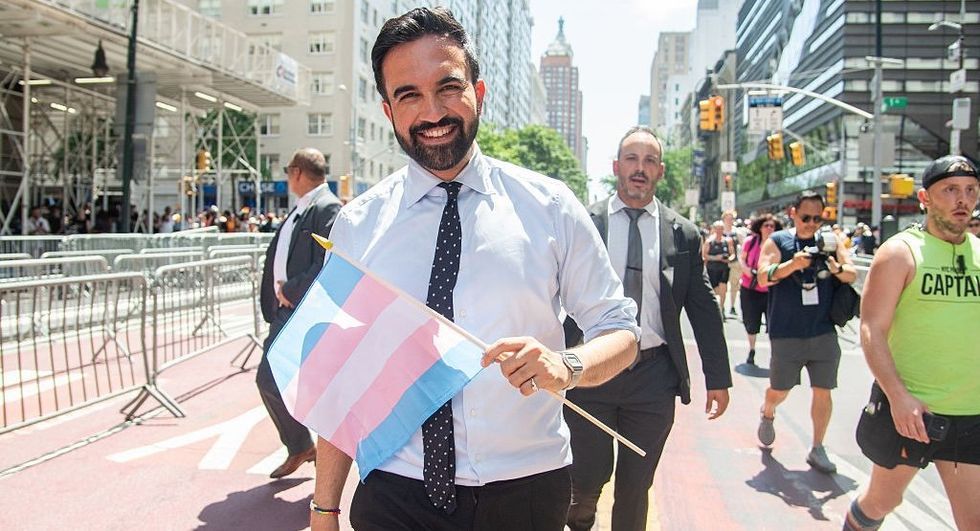
And now we have Zohran Mamdani, a self-described Democratic Socialist, poised to become the next mayor of New York City. His platform includes rent control, government housing, social policing, city-owned grocery stores, and free public transit. Every one of these policies has failed before.
RELATED: Vance on Mamdani: ‘Who the hell does he think that he is?’
Under socialism, living standards always fall. It’s never been otherwise.
How could Mamdani be that stupid?
From my vantage point as an exile from Detroit, I know exactly what’s coming. I watched a government plan hollow out a once-thriving city. Now New York, the world’s financial capital, is in the crosshairs.
Businesses are already preparing to leave. Can you blame them?
Shakespeare wrote, “What’s past is prologue.” Twelve years ago, I warned what would happen to America’s industrial heartland. Now the ruling class has trained its sights on its financial one.
The question isn’t whether people like Mamdani are sincere. The question is: How can we be that stupid?
The Social Security Trust Fund is in far worse shape than most Americans realize. Yet both political parties refuse to confront it. Why? Because addressing Social Security is considered “touching the third rail” — a phrase meant to invoke the political equivalent of electrocution.
Here’s where things stand. About 73 million Americans rely on Social Security for retirement, disability, or survivor benefits. But the program is bleeding money. It pays out roughly $60 billion more in benefits each year than it collects in payroll taxes.
We cannot keep printing and borrowing our way through this crisis. Kicking the can down the road will only trigger an inflationary disaster.
What about the trust fund? Isn’t there money saved for shortfalls?
Technically, yes. The trust fund holds $2.8 trillion in assets — but not in cash. That money was lent to the federal government over the years to finance its ballooning $36 trillion national debt. In exchange, the government issued the trust fund $2.8 trillion in Treasury bonds. In plain English: IOUs.
Each month, the trust fund redeems some of those IOUs to cover its shortfall. But there’s a catch. The federal government doesn’t have the cash either — it’s running a $2 trillion annual deficit. So when it pays the trust fund, it just borrows more. In effect, Washington is printing money to keep Social Security afloat.
Even if the trust fund had $2.8 trillion in real cash, it would still run dry by 2033. That’s because more people are retiring and drawing benefits than there are workers paying into the system. If Congress does nothing, benefits will be slashed by 23% in 2033. Why? Because by then, the fund will only collect about 77 cents in tax revenue for every dollar it pays out. Millions of Baby Boomers retiring each year will only accelerate this imbalance.
The longer Congress delays, the worse the fix will be. And the greater the risk that Washington — buried in debt — won’t be able to repay the trust fund at all. Soon, interest payments on the national debt will surpass the $1.6 trillion paid annually to Social Security’s 73 million beneficiaries.
It’s time to stop pretending this problem will fix itself. Yes, touching the “third rail” might carry political risk. But doing nothing guarantees economic and political disaster.
So what can we do?
First, remove the cap on Social Security payroll taxes. Right now, workers stop paying the 6.2% tax after earning $168,600 in a year. Lifting that cap would raise about $200 billion annually — enough to solve 70% of the long-term funding problem. Yes, high earners would be angry. But the move would also stabilize benefits for tens of millions of Americans.
Second, adjust the system’s parameters. We could raise the retirement age, though that punishes younger workers. We could raise the payroll tax rate, which hits all earners. We could reduce benefits for wealthy retirees. We could also turn loose the DOGE to combat waste and fraud, which drain billions from the system. A mix of these strategies could close the remaining 30% of the funding gap.
Third, we should expand the pool of contributors. America’s population growth has stalled. The best path forward is to increase legal immigration of able-bodied, working-age adults. At the same time, we should encourage more Americans who have left the workforce to return. The surest way to do that? Boost the economy and job creation.
What we cannot do is keep printing and borrowing our way through this crisis. Kicking the can down the road will only trigger an inflationary disaster.
The most painful option would be to cut benefits. But slashing retirement income for seniors who can’t easily return to work would be devastating — financially, morally, and politically.
No matter which fixes we pursue, we need to stop letting the federal government borrow from the trust fund. Lending money to a government drowning in historic debt makes no sense. The trust fund should be allowed to invest in safer, more productive assets that deliver reliable returns.
The time for delay is over. Politicians must grab the third rail — not because they want to but because the country needs them to. If they explain the stakes honestly and act decisively, voters might just reward courage over cowardice.
The U.S. Supreme Court recently let the world know that it has the power to force presidential administrations to pay billions of dollars to dubious organizations, regardless of the case’s merits. If a judge sides with a nongovernmental organization that demands automatic payment for its alleged “work,” the Trump administration simply must hand over the money pronto.
From one angle, this may seem like an unfortunate speed bump on the way to eliminating waste and fraud in the government. However, from another angle, this may serve as a needed wake-up call to the world about what’s really holding back reform efforts.
Compared to the debt crisis, concerns about disregarding a dubious Supreme Court ruling seem insignificant.
John Daniel Davidson provided a clear summary of an otherwise complex case filled with legal jargon, contradictory rulings, and vague claims.
The case began when the Trump administration attempted to halt payments to USAID after uncovering evidence of waste and fraud. In response, several NGOs that received USAID funds objected and demanded the payments continue. A district court judge in Washington, D.C., Amir Ali, issued a temporary restraining order to override the pause. He later issued a second order requiring the government to distribute about $2 billion in grant funds within 36 hours.
The Trump administration challenged these rulings, taking the case to the U.S. Supreme Court. The Court then intervened, blocking the lower court’s decision and allowing the administration to argue that Judge Ali’s orders should be overturned. The administration maintained that the original pause should stand, especially since the NGOs had yet to justify their entitlement to the $2 billion. If they believe they have a valid claim, they can present their case in a federal claims court, the proper venue for such disputes.
Rather than affirm the constitutional authority of the executive to manage his own budget, Chief Justice John Roberts, Justice Amy Coney Barrett, and the three liberal justices sided with Ali and the NGOs, demanding that the Trump administration quit stalling and pay up.
Justice Samuel Alito’s blistering dissent sums up the matter succinctly: "The Government must apparently pay the $2 billion posthaste — not because the law requires it, but simply because a District Judge so ordered.”
To clarify the situation, consider this analogy:
A man buys a restaurant and reviews the budget left by the previous owner. He notices questionable purchases and realizes the staff has been dishonest. Concerned about financial mismanagement, he halts payments and reassesses the budget. But the staff, afraid he’ll uncover deeper corruption, enlists a crooked cop to block his efforts. When the new owner challenges this interference in court, the judge sides with the corrupt staff and officer.
In both this scenario and the Trump administration’s case, two paths forward exist. One option, echoing the absurdity in Franz Kafka’s “The Trial,” is to accept an irrational ruling and move on, assuming that legal chaos is inevitable. With over 100 injunctions still under appeal, the administration could hope for a more favorable decision in the future — but there’s no guarantee.
The other way would be to ignore this ruling and get to work. And before corporate media pundits cry “constitutional crisis,” they should consider the bigger issue: The government wastes trillions of taxpayer dollars on programs no one asked for, while the country drowns in debt. Compared to that crisis, concerns about disregarding a dubious Supreme Court ruling seem insignificant.
Yet, most justices refuse to acknowledge this reality. Instead, they insist on upholding a system that cannot sustain itself. As economist Jeffrey Tucker recently noted, when unlimited money flows through a system without accountability, and no one is incentivized to ensure it is spent wisely, bankruptcy is practically inevitable.
A fitting analogy would be the scholars of Constantinople debating how many angels could dance on the head of a pin while a horde of Ottoman Turks prepared to sack the city. Today, our judiciary engages in similar frivolities — deliberating over payments to ineffective NGOs while the federal government careens toward insolvency.
Will ignoring the ruling upset those who cling to the sanctity of the courts and the bureaucrats who exploit that deference? Of course. But when the alternative is national bankruptcy, Americans have no other choice.
The Onion, a Chicago-based liberal satire publication that was recently purchased by longtime Democratic donor Jeff Lawson, attempted to acquire the assets of Alex Jones' Infowars empire last month in a court-ordered bankruptcy auction. Gun-grab activists and other leftists celebrated the news that the Onion had supposedly won the auction with an apparently suboptimal bid. Ben Collins, the CEO of the Onion's parent company Global Tetrahedron, promised he would turn the platform into a "cosmic joke."
Collins' punitive plans were tripped up by the Houston bankruptcy judge involved the case, district Judge Christopher Lopez, who paused the acquisition and reportedly said, "No one should feel comfortable with the results of this auction."
After weeks of uncertainty about the fate of the sale, Lopez rejected the Onion's bid Tuesday evening, ruling the auction process unfair and noting that money was left on the table.
Lopez said that Christopher Murray, the court-appointed trustee who is liquidating Jones' estate, failed both to run a transparent auction process and to provide a rival bidder associated with Jones, First United American Companies, an opportunity to improve its bid, reported NBC News.
'It clearly was and must have been the subject of conspiratorial negotiation and agreement.'
"I think you've got to go out and try to get every dollar," said the judge. "I think that the process fell down."
According to the Washington Post, FUAC's $3.5 million bid was nearly double the Onion's supposedly winning cash bid. FUAC, an organization affiliated with Jones' supplements business, argued in court that its higher bid should have prevailed and that Murray improperly picked the Onion's bid.
Lawyers for FUAC and Jones raised concerns about fraud and collusion, questioning how auctioneer Jeff Tanenbaum valued the Onion's $1.75 million cash and incentives bid at $7 million and why a live action had been spiked.
They also complained about a gross lack of transparency, claiming, for instance, that "no announcement was ever made that joint bids, bifurcated bids, floating amounts or other form of non-final 'best and highest' bid structures was even in the contemplation of the Trustee and the Defendants, which it clearly was and must have been the subject of conspiratorial negotiation and agreement."
Jones raised some of these concerns with Blaze Media co-founder Glenn Beck last month, alleging that the initial sale of Infowars was "100% cut-and-dry illegal."
— (@)
Lopez reportedly said when delivering his decision, "I don't think anyone acted in bad faith here. I think everyone was trying to buy an asset and put their best foot forward and play by the rules."
'It's like being held under water and finally getting air.'
"It seemed doomed almost from the moment they decided to go to a sealed bid," said Lopez, reported the New York Times. "Nobody knows what anybody else is bidding."
According to Bloomberg, the decision means Jones could remain in control of the platform.
In a statement shared by Collins on X, the Onion, which previously mocked the death of Corey Comperatore, noted, "We are deeply disappointed in today's decision, but The Onion will continue to seek a resolution that helps the Sandy Hook families receive a positive outcome for the horror they endured. We will also continue to seek a path towards purchasing InfoWars in the coming weeks."
Chris Mattei, an attorney for the families who backed the Onion's bid, said in a statement obtained by the Post, "This decision doesn't change the fact that, soon, Alex Jones will begin to pay his debt to these families and he will continue doing so for as long as it takes."
Jones rushed to broadcast the news on a platform still out of Collins' reach, stating, "Finally, a judge followed the law in the lawfare fiascos and ruled in Infowars' favor."
"It's like being held under water and finally getting air," added Jones.
'They're trying to destroy us and destroy free speech.'
Jones also suggested that the coalition involved with the Onion's bid colluded to rig their bid and that there was cause for legal action and possibly a Department Justice investigation.
"Now, the judge told them 27 days ago Bloomberg's Everytown that turned out is the group behind it — the Onion's, their front group — he told them they didn't own it and he said, 'Stop saying that.' They did not stop. Major cause of action." said Jones. "And I'm not a litigious person, but they're trying to destroy us and destroy free speech, so you know what's going to happen to them and Michael Bloomberg, Mr. Baby Feet."
Like Blaze News? Bypass the censors, sign up for our newsletters, and get stories like this direct to your inbox. Sign up here!
 Despite these troubling economic conditions and many businesses leaving, it seems unlikely that Gov. Newsom and the Democrat majority in the legislature will change their ineffective policies.



 The sewing community has not stopped sewing, but many stopped going to Joann.

 www.theblaze.com
 www.theblaze.com
 thefederalist.com