The world cut the cord. Government won’t.


The world is cutting cords at every opportunity. Wireless has become the default. Faster, cheaper, and more convenient beats wired every time. Consumers know it. Industry knows it. Government, as usual, lags far behind.

Americans used a record 132 trillion megabytes of wireless data in 2024. That follows 100 trillion in 2023, 74 trillion in 2022, and 53 trillion in 2021. The trajectory isn’t slowing. Artificial intelligence alone will accelerate demand.

Cutting cords makes life easier. Cutting government waste would, too.

Why the stampede to wireless? Because the technology now outpaces wired service. Fifth-generation networks can deliver speeds 20 times faster than 4G LTE. Sixth generation promises to be up to 100 times faster still.

Consumers are responding. More than one million Americans cut the cord on cable internet in 2024. Less than half of all cord-cutters now rely on cable providers for home service. The trend is irreversible.

Even cable companies acknowledge it when they install Wi-Fi routers after stringing fiber into a home. Wireless is the product people actually use.

Government’s fiber fetish

Everyone is adapting — except government. Because government is just that stupid.

State officials still funnel billions into fiber even as private-sector wireless has already done the job.

Barack Obama himself declared victory in 2015: 98% of Americans connected to high-speed wireless. At the time, average speeds were 10 Mbps. Today, average wireless speeds reach 155 Mbps — more than 15 times faster. The private market delivered that progress.

RELATED: Trump nukes Biden’s broadband gimmick, saving taxpayers billions

imagedepotpro via iStock/Getty Images

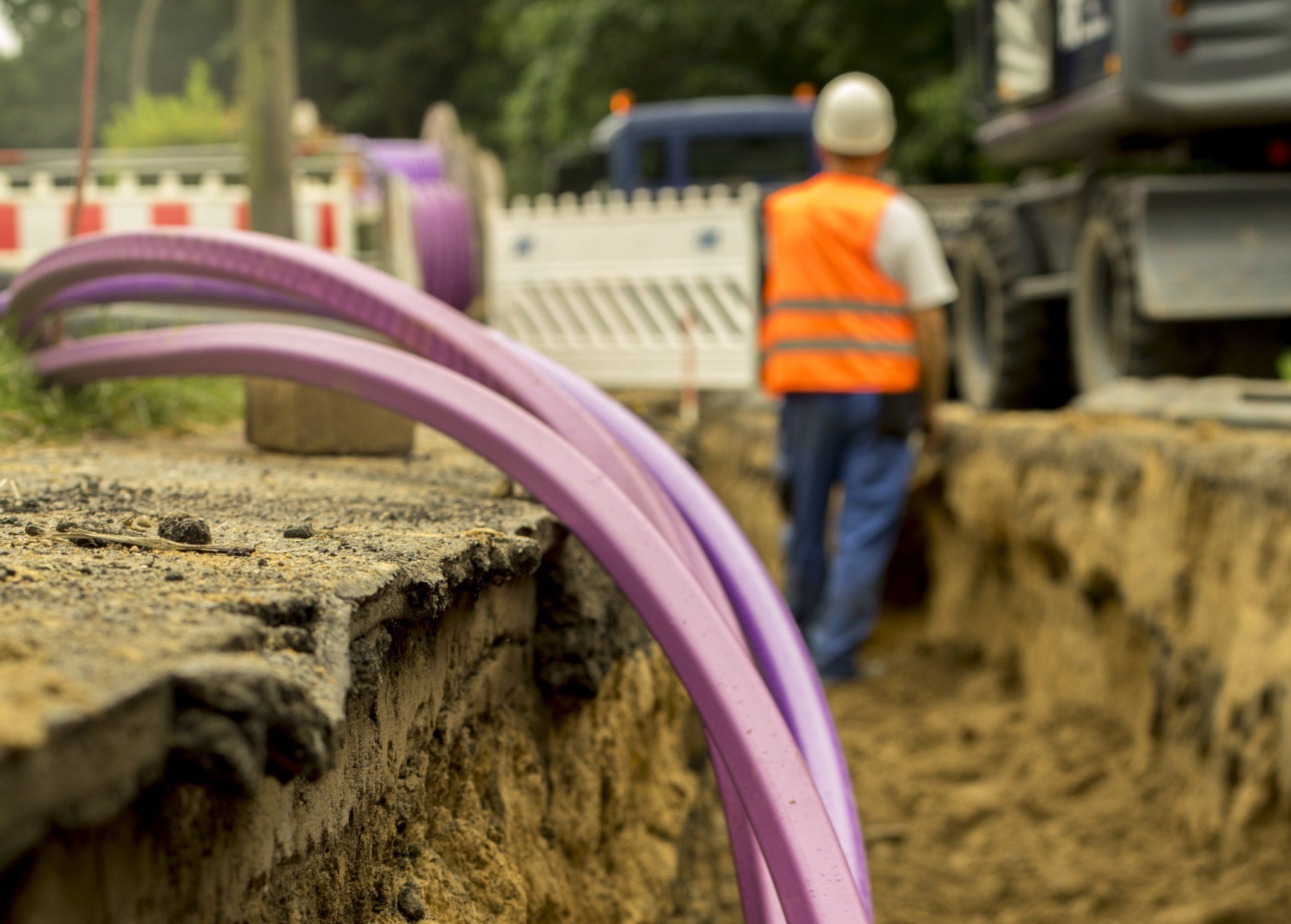
Yet in 2025, states like Louisiana and Virginia plan to spend 80% of their federal Broadband Equity, Access, and Deployment program dollars on fiber. That program carries a $42.5 billion price tag. Fiber may be reliable in limited contexts, but it is costly and slow to deploy. Starlink has flagged projects with per-household connection costs exceeding $10,000. That’s not infrastructure — it’s idiocy.

The mismanagement is staggering. The BEAD program, launched in 2021, has yet to connect a single person. By late 2024, the score was still zero. Another year has passed, and states remain bogged down in bids and bureaucracy. Meanwhile, nearly every American has been online for a decade.

The market already won

Wireless continues to do the work. It connects homes, cars, and devices at ever-increasing speeds. The private sector solved the access problem years ago. The government now wastes hundreds of billions pretending to fix a problem that no longer exists.

That money buys ribbon-cuttings, not results. It funds reports and grants, not connections. It props up a fiber fetish that ignores how people live and work.

The pattern is clear: When consumers get to choose, they choose wireless. When politicians get to spend, they throw billions at fiber networks no one needs.

The market has spoken. Government refuses to listen. Cutting cords makes life easier. Cutting government waste would, too.
Trump nukes Biden’s broadband gimmick, saving taxpayers billions


President Trump has consistently applied one simple litmus test to any government program: Does it work?

If so — a rare occurrence — he keeps it. If not, he either ends it or reforms it. Intentions, noble or otherwise, count for nothing. Execution is everything.

For Americans, this is good news. For bureaucrats who enjoy wasting taxpayer dollars while pretending to serve the public, it’s a nightmare.

From zero to nowhere

If you need an example, just look at the Trump administration’s recent decision to overhaul the Biden administration’s ill-conceived Broadband Equity and Development program. As with anything with the word “equity” in the name, this program was a rat’s nest of inefficiency and corruption hiding beneath the rock of good intentions.

Democrats’ strategy has always been cronyism, not competition.

The program, launched in 2021, promised to provide $42 billion in subsidies to expand broadband internet in underdeveloped areas. This sounds good in theory, especially for rural voters who historically have voted for President Trump.

How many people did this program actually connect to the internet? Zero — yet another example of a government program that failed to execute on its lofty goals, wasting taxpayer dollars in the process.

The reasons for this failure are multifaceted. First, the program was burdened with woke mandates and entrenched political favoritism. Instead of targeting the most effective solution for rural areas, it prioritized fiber — literally the least efficient internet technology for rural residents — which can cost more than $100,000 per household. This made it impractical for rural America, where the internet infrastructure is desperately needed.

Meanwhile, the best solution — satellite internet, which can cost just a few hundred dollars per receiver — was passed over. Why would the Biden administration prioritize the more expensive, inefficient option? Simple: The fiber industry is aligned with pro-amnesty and diversity, equity, and inclusion agendas. The industry’s political ties to leftist causes won them a sweetheart deal at the expense of taxpayers and genuine competition.

The Trump administration took one look at this deal and decided enough was enough. It has since restored fair competition and saved taxpayer dollars. In the words of Commerce Secretary Howard Lutnick, the administration's new reforms will ensure the BEAD program “will deliver high-speed internet access efficiently on a technology-neutral basis, and at the right price.”

Screaming cronies

Predictably, the Democrats cried foul. Rep. Alexandria Ocasio-Cortez (D-N.Y.) led the charge, conveniently throwing out her anti-corporate bona fides and becoming the fiber industry’s best friend. She signed on to a letter with 21 House Democrats making the allegation that “any objective assessment of the technologies available to provide broadband would conclude that fiber optic technology far exceeds any other in its capability to provide future-proof speeds and network capacity.”

This claim is absurd — and not merely because most of the signatories are from big cities, completely ignorant as to what works in rural America.

RELATED: Wi-Fi is winning — so why is Congress still stuck in the 1990s?

Photo by Shutthiphong Chandaeng via Getty Images
Don’t just take my word for it. Listen to Federal Communications Commission Chair Brendan Carr, Sen. Ted Cruz (R-Texas), or anyone who isn’t blinded by political favoritism or corporate cronyism.

Ocasio-Cortez’s letter is also a complete non sequitur. It would be one thing if the program had been destroyed — but it hasn’t. It’s simply been reformed to allow every potential internet provider to compete, unhinged by political agenda and favoritism. That’s it.

Trump restores the free market

If fiber and broadband really are superior, they should have no trouble winning in a fair competition. But they won’t, because their strategy has always been cronyism, not competition.

President Trump saw through that playbook, and with any luck, red states will follow suit. Only then will these industries be forced to wave the red flag, which has been their banner all along: the red flag of communist cronyism.

Over $42 billion and 3 years later, Biden's rural high-speed internet plan hasn't connected a single home


President Joe Biden has a tendency to make grand promises he can't make good on.

For instance, ahead of the 2020 election, then-candidate Biden promised the American people in four debates and during his CNN town hall interview that he would build half a million new charging stations across the nation if elected.

After taking the White House, Biden reiterated his promise, stating in November 2021, "We're going to build out the first-ever national network of charging stations all across the country — over 500,000 of them."

Of the 1,200 billion taxpayer dollars blown on the Democratic infrastructure package supported by Sen. Mitch McConnell (R-Ky.), $7.5 billion was set aside to building Biden's promised EV stations.

As of last month, only eight stations had been constructed nationwide.

The Biden administration made another big pledge in 2021: Unserved Americans would soon have reliable high-speed internet. Like the electric vehicle charging stations, this connectivity has failed to materialize.

'We're barreling toward a broadband blunder.'

Brendan Carr, a Republican commissioner on the Federal Communications Commission, noted Friday, "In 2021, the Biden Administration got $42.45 billion from Congress to deploy high-speed Internet to millions of Americans. Years later, it has not connected even 1 person with those funds. In fact, it now says that no construction projects will even start until 2025 at earliest."

The Broadband Equity, Access, and Deployment program is a federal grant program administered by the National Telecommunications and Information Administration that supposedly "aims to get all Americans online by funding partnerships between states or territories, communities, and stakeholders to build infrastructure where we need it to and increase adoption of high-speed internet. BEAD prioritizes unserved locations that have no internet access or that only have access under 25/3 Mbps."

Grantees are supposed to receive taxpayer cash to "support broadband planning and related capacity efforts, from mapping, staffing state/territory broadband offices, to outreach and coordination with local communities."

"The Biden Admin's failure to turn even a single shovel's worth of dirt with this $42.45B is not just predictable, it was predicted," continued Carr, referencing an Aug. 18, 2022, letter from a number of U.S. senators, which indicated the initiative might be ill-fated.

The lawmakers noted that there were unnecessary burdens in the NTIA review process and that the Notice of Funding Opportunity process "creates a complex, nine-step, 'iterative' structure and review process that is likely to mire State broadband offices in excessive bureaucracy and delay connecting unserved and underserved Americans."

The Washington Times indicated that as of this month, only nine states and the District of Columbia had secured approval for the BEAD program.

Last year, Republican senators highlighted other issues with the Notice of Funding Opportunity for the BEAD program in a letter to U.S. Assistant Secretary of Commerce Alan Davidson. They noted that it:

  • "actively discriminat[es] against workers in ways that could deny communities ... access to reliable broadband service";
  • it "gives favorable treatment to government-owned networks over private investment," thereby threatening to "divert program dollars to less capable providers — a real risk given municipal broadband's track record of costly failure";
  • "generally prohibits non-fiber projects from receiving BEAD funding despite Congress' technology neutral stance";
  • "falsely suggests that states and NTIA have the authority to regulate rates for broadband service"; and
  • diverts resources away to address the specter of climate change.

Carr added, "The Biden Administration's policy cuts make clear that we're barreling toward a broadband blunder. Rate regulation, thumb on the scale for government run networks, technology bias, union preferences plus many more problems = many of the broadband builders that would normally bid to do this work are not expressing interest in taking these dollars."

The commissioner made clear that the Biden administration has not only failed to deliver, but has kneecapped those who could — revoking "an award to Starlink that would have delivered high-speed Internet to 642K rural locations."

In August 2022, the FCC leadership reversed the agency's previous decision to provide an $885 million infrastructure award to Elon Musk's Starlink, which it had won at an FCC election in 2020.

Fox News Digital indicated that when pressed for comment, the White House wouldn't speak to the failure of the project but cited three states' receipt of federal funding for broadband projects, apparently under other initiatives.

Like Blaze News? Bypass the censors, sign up for our newsletters, and get stories like this direct to your inbox. Sign up here!