Artemis II pilot Victor Glover tells schoolkids to put teamwork over race


Artemis II pilot Victor Glover is showing kids that progressive ideology and groupthink are not pathways to success.

Despite the media's persistent interest in the color of his skin, the 50-year-old NASA astronaut prefers to keep the focus on his crew's historic April 6 spaceflight, which marks the farthest distance humans have ever traveled from Earth.

'I think one of the reasons we were as successful as we [were] is we spent a lot of time thinking about us and not me individually.'

This was once again evident Friday, when the team of four sat down for a "CBS Mornings" town hall, taking questions from children from nearby science-focused school M.S. 255 Salk School of Science.

No DEI in 'team'

"How did it feel to be the first person of color to fly to or around the moon?" an 11-year-old girl named Ameya asked, 10 minutes into the discussion.

Glover replied with a smile, "I will tell you one of the things about swinging for the fence and trying to hit a home run when the game is on the line is if you think about that, that can add pressure and make you not go up there and and play your best game."

The astronaut said instead he "focused a lot on working with this team and trying to be a good teammate," before stressing the importance of being a team member, and not focusing on individual attributes.

"I think one of the reasons we were as successful as we [were] is we spent a lot of time thinking about us and not me individually."

Glover continued, "I would answer this by maybe just making a visual lesson here that I spent a lot of time thinking about this patch and this patch," he said while pointing to his NASA patch and then the United States flag, "and not this patch," pointing to his own name.

"And now we get to be here and we get to talk about it, though."

RELATED: 'I wanted to thank God in public': Fighting tears, Victor Glover gives legendary speech on return to Earth

-

'Human history'

Glover has been fielding such questions since the mission was announced. Just three days before the launch, a journalist asked Glover what being the "first black man" to travel to the moon meant to him.

Glover dismissed the notion, saying he hoped society would be "pushing the other direction" so that one day "we don't have to talk about these firsts."

"This is the human history," he emphasized. "It's about human history. It's the story of humanity, not black history, not women's history, but that it becomes human history."

RELATED: Victor Glover reminded us what an American is

Todd Owyoung/NBC/Getty Images

Glory to God

Glover has also been known to put his Christianity before ethnic identity.

Glover has used his time in the spotlight to talk about his faith. Just before circumnavigating the moon, Glover shared what he called the "most important mysteries of the world" in a live radio transmission.

"Christ said in response to 'what was the greatest command' that it was to love God with all that you are. And he, also being a great teacher, said the second is equal to it, and that is to love your neighbor as yourself."

Upon returning to Earth, he made his priorities even clearer: "When this started ... I wanted to thank God in public, and I want to thank God again."

Like Blaze News? Bypass the censors, sign up for our newsletters, and get stories like this direct to your inbox. Sign up here!

Telling America’s story is too important to leave to radicals


Every nation has a story. Recently, the Washington Post described the Smithsonian Institution, with its 21 museums and 14 educational and research centers, as “the official keeper of the American Story.” What kind of story have the Smithsonian museums been telling about our country?

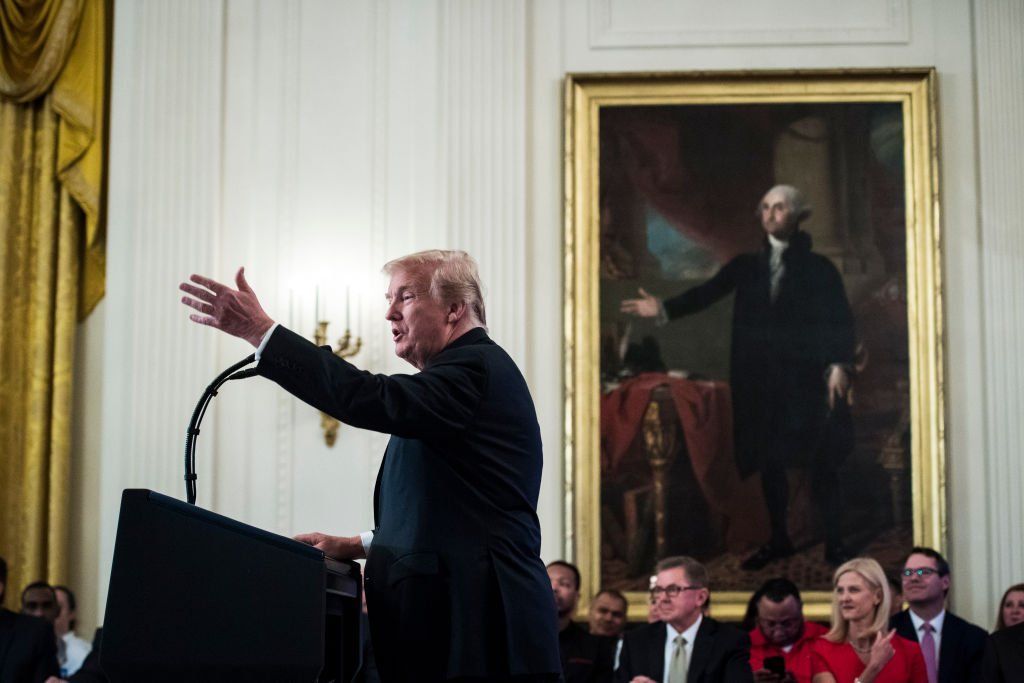
On March 27, President Trump issued an executive order arguing that there has been a “concerted and widespread effort to rewrite our Nation’s history” and promote a “distorted narrative driven by ideology rather than truth.” This “revisionist movement” casts American “founding principles and historical milestones in a negative light.” A White House fact sheet calls for “revitalizing key cultural institutions and reversing the spread of divisive ideology.” Vice President JD Vance, a member of the Smithsonian Board of Regents, will lead the administration’s efforts.

The debate over the Smithsonian is only one front in a wide-ranging, ongoing conflict over first principles and concepts of justice (equality versus equity).

Critics of the executive order responded quickly. They maintain that the Trump administration wants to “whitewash the past and suppress discussion of systemic racism.” The Smithsonian, the critics contend, is led by nonpartisan professionals whose aim is to be truthful and inclusive and tell the whole story of America, including groups that have been neglected in the past. Professor David W. Blight of Yale, president of the Organization of American Historians, complained that the executive order is a “laughable thing until you realize what their intent actually is and what they’re doing is trying to erode and then obliterate what we have been writing for a century.”

Is there a divisive ideology being taught, as the Trump administration maintains, and if so, what is it? What have university professors been writing about America, if not “for a century,” for at least the past decade? Professor Blight’s OAH revealed its ideology by embracing the New York Times’ 1619 Project, declaring:

The 1619 Project’s approach to understanding the American past and connecting it to newly urgent movements for racial justice and systemic reform point to … the ways in which slavery and racial injustice have and continue to profoundly shape our nation. Critical race theory provides a lens through which we can examine and understand systemic racism and its many consequences.

What do we call the ideology that, as the OAH explains, “acknowledges and interrogates systems of oppression — racial, ethnic, gender, class — and openly addresses the myriad injustices that these systems have perpetuated through the past and into the present”?

As most are aware, the ideology expressed by the OAH is dominant in universities today. It views American history negatively through the lens of “oppressors” (white males) versus “oppressed” and “marginalized groups.” This ideology has been variously called political correctness, identity politics, social justice, and wokeness. We could use Wesley Yang’s term “successor ideology,” meaning it is the new, radical, left-wing ideological successor to the old patriotic liberalism of politicians like Walter Mondale and historians like Arthur Schlesinger Jr.

Not surprisingly, given its pre-eminence in America’s universities, this divisive “successor ideology” is at the heart of the worldview propounded by the leaders of the Smithsonian.

Something rotten in the Smithsonian

The current secretary of the Smithsonian is Lonnie G. Bunch III, who is adept at dealing with donors, stakeholders, and Republican congressional appropriators. His language is mostly measured and reasonable. He talks in terms of truth, nuance, complexity, and nonpartisanship. But in reality, Bunch is a partisan progressive, a skilled cultural warrior, and a promoter of the leftist “successor ideology.”

Bunch partnered with and promoted the biased 1619 Project, which asserts that slavery is the alpha and omega of the American story and that maintaining slavery was a primary motivation for some American colonists who joined the revolutionary cause. The architect of the 1619 Project, Nikole Hannah-Jones, bragged that it “decenters whiteness,” and she denounced her liberal academic critics as “old white male historians.”

Nevertheless, Bunch proclaimed, “I want the Smithsonian to legitimize important issues, whether it's 1619 or climate change.” Of the Smithsonian’s participation in the 1619 Project, he declared, “I was very pleased with it.” Bunch proudly noted that people “saw that the Smithsonian had fingerprints on [the 1619 Project]. And that to me was a great victory.”

Bunch pictures America as a nation in which systemic racism is pervasive. During the George Floyd riots, Bunch told the Atlantic, "It is really about systemic racism throughout, not just the police department, but many parts of the American system.”

Further, he made excuses for the violence in the summer of 2020, which resulted in more than a dozen Americans killed and between $1 and $2 billion worth of property damage:

How dare they loot. Well, that kind of protest is really one of the few ways the voiceless feel they have power. And while I am opposed to violent protests personally, I understand that frustration sometimes pushes you over the edge. I think what’s important for us to recognize is, let us not turn attention towards looting in a way that takes away what is the power of these protests.

Three years ago, the Smithsonian assisted in the creation of a new College Board AP course on African American Studies. Ethics and Public Policy Center scholar Stanley Kurtz has revealed how APAAS is a radical neo-Marxist, anti-American project that calls for the socialist transformation of the United States. APAAS is soaked in the tenets of critical race theory, flirts with supporting violence, and implicitly advocates dismantling the American way of life, including free-market capitalism. It is a curriculum where students learn from Frantz Fanon that America is a “monster” and from Aimé Césaire that Stalin’s Soviet Union was a model society. Nevertheless, the APAAS curriculum is promoted on the Smithsonian’s Learning Lab.

Under the leadership of Gov. Ron DeSantis, the Florida legislature passed the Stop Woke Act that bars APAAS from the state’s K-12 schools because it promotes the divisive concepts manifest in CRT. Lonnie Bunch and his close ideological ally Elizabeth Alexander, president of the Mellon Foundation, falsely accused DeSantis of ignoring African-American history. On the contrary, DeSantis created a new black history curriculum based on serious and accurate scholarship. In response to DeSantis’ opposition to APAAS, Bunch complained to Alexander:

I am upset because you know we were involved in helping [APAAS] and the notion that somehow simply having a course that forces us to understand complexity, nuance, and ambiguity is a problem, that’s a problem for all of America.

In truth, there is very little “complexity” and “nuance” in the Smithsonian-promoted APAAS. It is one-sided, partisan propaganda. Kurtz notes that APAAS is not in fact inclusive, ignoring the work of black conservatives “like Glenn Loury, Shelby Steele, or Robert Woodson” or even “liberal black intellectuals, like Randall Kennedy or John McWhorter.”

Bunch often talks in terms of “nonpartisanship” and promoting the best of historical and cultural scholarship. But at the same time, he promotes the progressive left agenda, stating that the “job” of the National Museum of African American History and Culture is “really to create new generations of activists,” and “for me it really is about how … museums play a social justice role.”

Our story

To use one of Lonnie Bunch’s favorite terms, what is the “context” in which President Trump issued his executive order? It recognizes that a left-progressive cultural revolution (the “successor ideology”) has marched through our universities, schools, foundations, and museums, transforming the story of America into a tale of oppression and exploitation. The woke revolutionaries aim to “fundamentally transform the United States” from a nation based on a natural rights concept of the equality of citizenship to “equity,” a system of racial-ethnic-gender group quotas and group consciousness.

The debate over the Smithsonian is only one front in a wide-ranging, ongoing conflict over first principles and concepts of justice (equality versus equity). If the cultural revolutionaries are “transformationist,” in the sense that they aim to deconstruct the American way of life, the position articulated by Trump’s executive order is “Americanist,” in the sense that it represents a cultural counterrevolution that affirms America’s past and principles.

Are the Organization of American Historians and the current leadership of the Smithsonian right that America is a nation built on “slavery, exploitation, and exclusion”? Or is the American story what British writer Paul Johnson described as one of “human achievement without parallel,” the story “of difficulties overcome by skill, faith, and strength of purpose, and courage and persistence”? Was Johnson right when he wrote, “The creation of the United States of America is the greatest of all human adventures” and that Americans “thrown together by fate in that swirling maelstrom of history” are “the most remarkable people the world has ever seen”?

Editor’s note: A version of this article appeared originally at the American Mind.

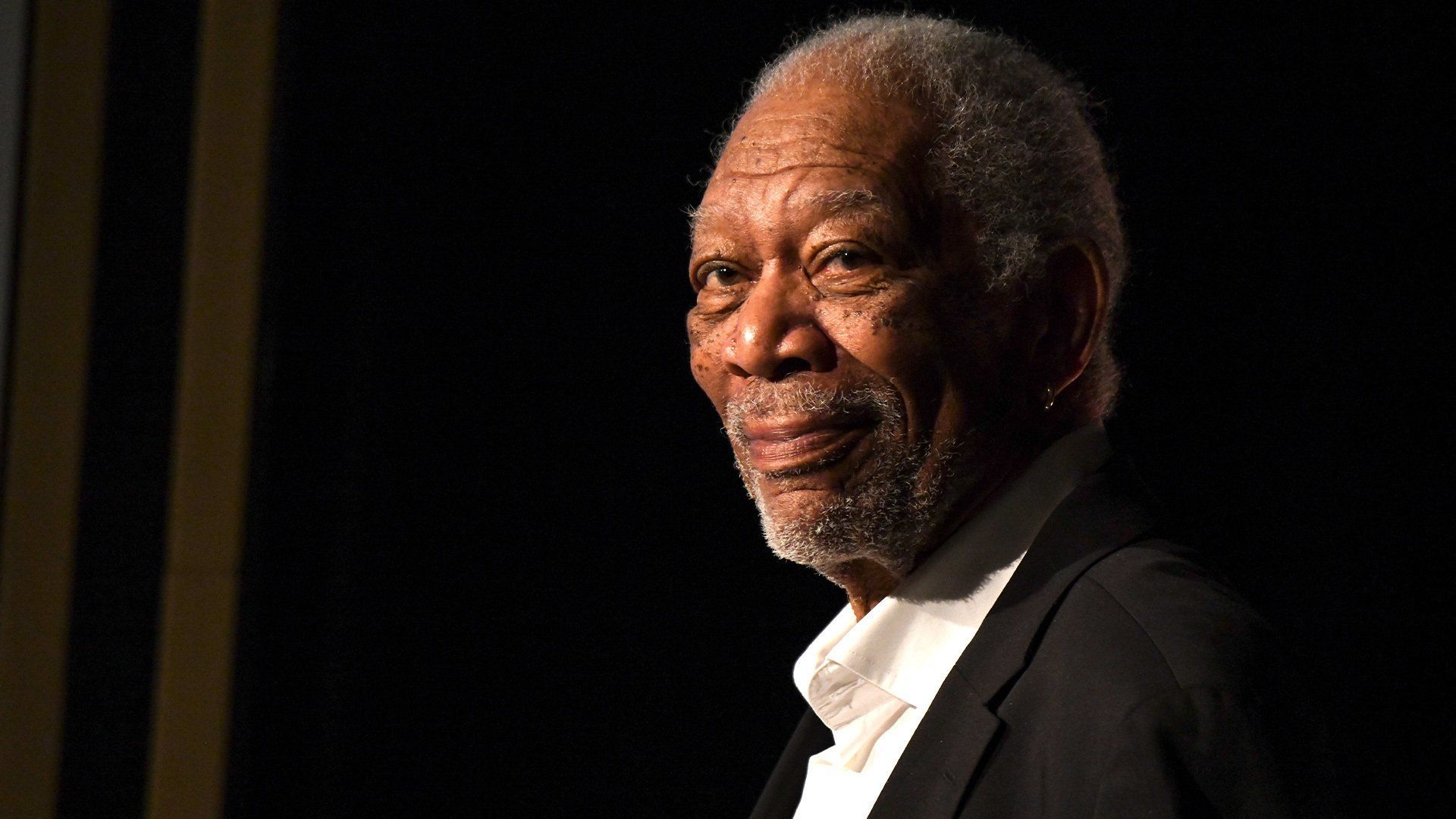
This 2005 clip of Morgan Freeman discussing black history month rings even MORE true today


Morgan Freeman’s iconic voice isn’t the only thing that makes him unique. He’s also one of the few Hollywood stars to totally reject the idea that everything under the sun is racist.

Dave Rubin plays a clip from 2005 of Freeman’s interview on “60 Minutes” with Mike Wallace, and while Freeman’s words were germane back then, they are infinitely more so today.

“Black history month, you find ...” Wallace begins before Freeman fills in the sentence with the word “ridiculous.”

“Why?” asks a perplexed Wallace.

“You’re going to relegate my history to a month?” Freeman asks. “Which month is Jewish history month?”

“There isn’t one,” Wallace replies.

“You want one?” Freeman presses.

“No, no,” Wallace says assuredly.

“I don’t either. I don’t want a black history month. Black history is American history.”

“But how are we going to get rid of racism?” asks a concerned Wallace.

“Stop talking about it” is Freeman’s simple, yet profound answer.

“I know you as Mike Wallace, you know me as Morgan Freeman,” he says, emphasizing the importance of judging someone by merit rather than race.

Dave loves this clip – “Stop focusing on this nonsense; focus on what matters.”

“Should I vote for this person ... because the policies they have might make my life better? Should I want that person to be the Supreme Court Justice because they have an understanding of the Constitution and make judgments that are congruent with our laws?”

“OR, do I just want all the judges in New York to be black women?”


Want more from Dave Rubin?

To enjoy more honest conversations, free speech, and big ideas with Dave Rubin, subscribe to BlazeTV — the largest multi-platform network of voices who love America, defend the Constitution, and live the American dream.

This NFL player says he doesn’t want WHITE PEOPLE teaching his kids...


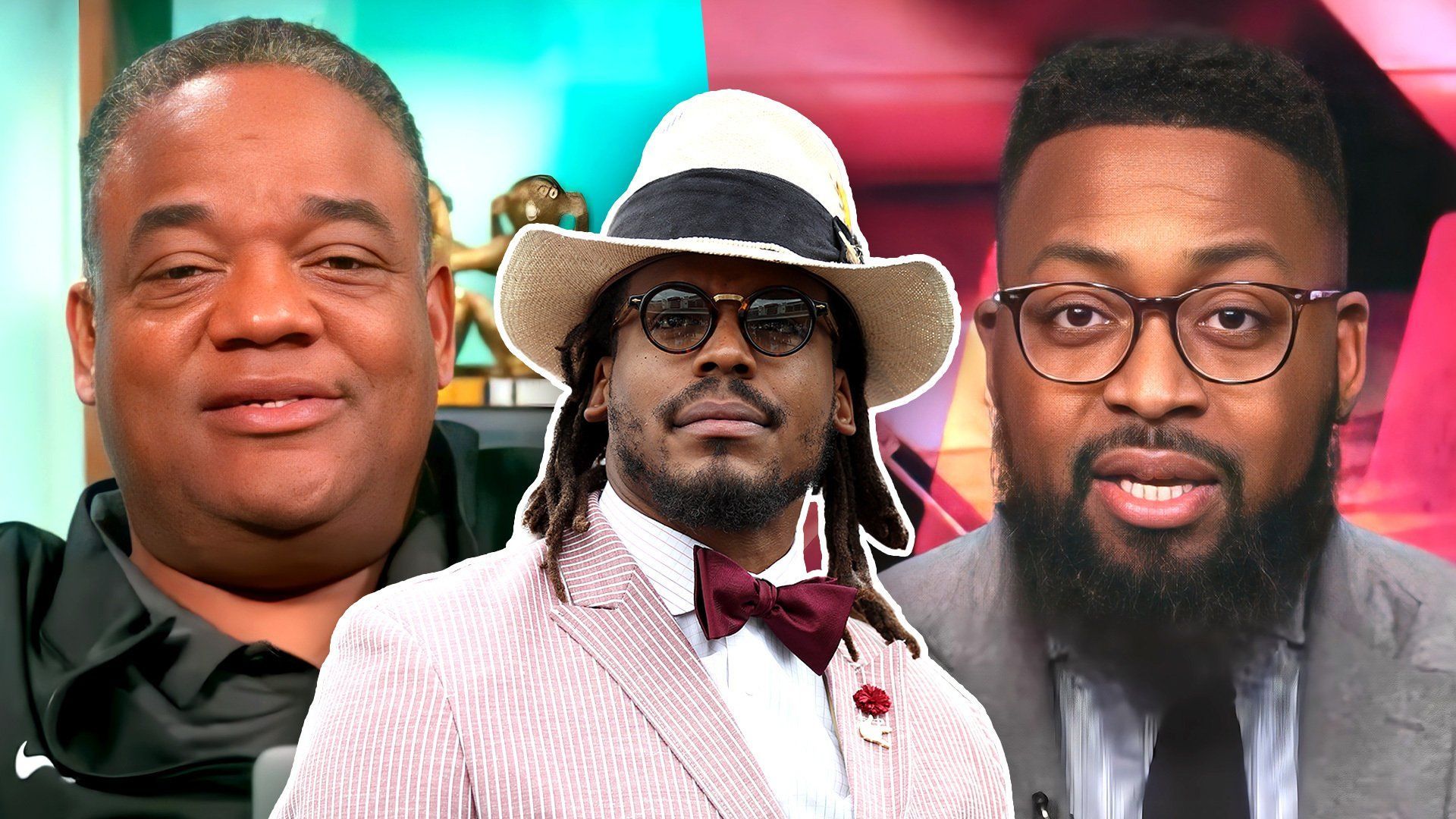
Former Carolina Panthers quarterback Cam Newton, who is currently a free agent, apparently has a problem with white people teaching his seven children.

Jason Whitlock plays the video of Newton explaining his issues with the private schools he sends his kids to.

"Something alarming happened when my daughter came home. ... She said, 'Dad, a white person is teaching us about black history,' and I was like, 'Yo, that's not right,'" Newton said.

“If a white person is teaching about black history, can a black person teach about Caucasian history [or] European history?” he asked. “You could, but there's gonna be some things that are left out,” like “slavery [and] how Africans moved to America.”

One of Newton’s interviewers had her own bit to add. “They’re not letting black teachers…” she trailed off, insinuating that black educators are being barred from teaching in schools.

“Black teachers have been banned, and white teachers don't teach about slavery, and Cam Newton has no responsibility to teach his own kids about history,” sighs Whitlock in staunch disagreement with Newton’s perspective.

“Black professors or teachers certainly can teach European history,” adds Delano Squires, who agrees that Newton should assume the responsibility of teaching his children about history.

“I think all of this colorized history is a mistake. ... We just need to teach American history, and that should be universal to everybody,” says Whitlock.

Squires, however, does find value in teaching black history specifically.

“There are certain facts of history — a certain battle took place on this particular day, a certain event took place on another day — but the perspective on those issues is very much different,” he explains. “Consider how different ... the death of George Floyd will be taught in schools 50 years from now, depending on whether you have a teacher who has, let's say, more pro-law enforcement leanings as opposed to one who has more pro-BLM leanings.”

Both types of teachers will convey that “yes, this man died on this particular day, but how he died, how they characterize it, [and] the terms that they use will be very much different, depending on who shapes the narrative,” he tells Whitlock.

To hear their full analysis, watch the clip below.


Want more from Jason Whitlock?

To enjoy more fearless conversations at the crossroads of culture, faith, sports, and comedy with Jason Whitlock, subscribe to BlazeTV — the largest multi-platform network of voices who love America, defend the Constitution, and live the American dream.

Kamala Harris’ Hip-Hop Tribute Erases Black History

Our first black vice president just erased over 150 years of black musicians while proclaiming that a subsequent genre will not be erased.

DeSantis' furious response to Kamala Harris' lies about Florida curriculum


Ron DeSantis has frequently been criticized by the left for how he chooses to run education in his state, and Kamala Harris’ latest attack is no different.

On July 24, Harris tweeted: “In the state of Florida, they decided middle school students will be taught that enslaved people benefited from slavery. They insult us in an attempt to gaslight us, and we will not stand for it.”

Clay Travis spoke to DeSantis about her tweet and asked for his reaction.

“Well, obviously, she’s lying,” DeSantis says without skipping a beat.

“You know that there is going to be corporate press that are going to run with that and try to create a narrative. Now, there’s actually been some that have pushed back because it’s so egregious,” he continues.

DeSantis claims that the history the left wants him to teach is not real history. This is why he decided a couple of years ago to get critical race theory out of Florida school’s curricula.

The Florida governor and presidential hopeful explains that his bill essentially dictates that “you must teach accurate history, you must teach about racial discrimination, you must teach about all aspects of African-American history because we believe in true history.”

He claims that the current curriculum is “very thorough and it is every little aspect of not just slavery but the black experience in America from colonial times, the beginning.”

“The reality is, they’re lying again. They’re creating a narrative,” he adds.


Want more from Dave Rubin?

To enjoy more honest conversations, free speech, and big ideas with Dave Rubin, subscribe to BlazeTV — the largest multi-platform network of voices who love America, defend the Constitution, and live the American dream.

Will Whoopi Goldberg be forced to apologize for this BLATANT LIE?


Whoopi Goldberg tore into Governor Ron DeSantis on “The View” for “trying to repeat [slavery]” after Florida’s Board of Education approved curriculum standards for African-American history last week.

“I feel like [the Board] didn’t talk to any African-Americans” when they developed these standards, she says.

“We’re telling you this history; it’s our American history because you need to know so we don’t repeat it. And here you come, DeSantis, trying to repeat it,” she spits.

“First off, Whoopi, you gotta lay off the pipe,” Rubin says, adding, “I’ve heard from multiple sources you show up to that show stoned every day.”

Rubin is certain that DeSantis does not intend to reinstitute slavery or deny that it happened.

“[She] flat out lied when she said that they should've talked to some black scholars about this,” he says.

Dr. William B. Allen as well as Dr. Frances Presley Rice, both of whom are African-American, were on the board that approved the curriculum.

Maybe Whoopi missed that little detail. Perhaps she needs to get her facts straight before her next tirade.


Want more from Dave Rubin?

To enjoy more honest conversations, free speech, and big ideas with Dave Rubin, subscribe to BlazeTV — the largest multi-platform network of voices who love America, defend the Constitution, and live the American dream.