Newsom’s EV push: Can Detroit break free from California’s influence?


While Washington has pulled back on electric vehicle mandates and emissions enforcement, California is moving in the opposite direction — and the nation’s largest automakers are paying close attention.

Late last month. executives from the Detroit Three met with regulators from the California Air Resources Board, reopening a conversation that has become increasingly consequential for the future of the U.S. auto industry and consumer vehicle choice.

For automakers, the lesson is familiar. Regulatory swings are inevitable, but market access is permanent.

The meeting came at a pivotal moment. Congress has revoked California’s long-standing authority to set its own vehicle emissions standards, federal fuel economy rules have been weakened, and financial penalties for missing emissions targets have been eliminated. Yet California is signaling it has no intention of slowing its push toward zero-emission transportation.

Instead, the state is preparing to launch a $200 million electric vehicle incentive program aimed at offsetting the loss of the federal $7,500 EV tax credit and sustaining pressure on automakers to electrify their fleets.

Stuck with Sacramento?

For Detroit automakers, the calculus is complex. Federal relief has eased near-term compliance costs, but California remains the largest single automotive market in the country and a regulatory bellwether for more than a dozen other states. Ignoring Sacramento has never been a viable long-term strategy, regardless of which party controls Washington.

CARB Chair Lauren Sanchez underscored that reality in a recent interview, saying the state is accelerating its zero-emission agenda while attempting to balance environmental goals with workforce stability and industry constraints. That balance is becoming harder to maintain as political and legal battles reshape the regulatory landscape.

California’s influence dates back decades. Under the Clean Air Act of 1970, the state was granted unique authority to seek EPA waivers allowing it to impose stricter emissions standards than federal rules. Other states were permitted to adopt California’s standards, giving the state outsize influence over national vehicle design and production.

War on waivers

That authority has now been curtailed. Using the Congressional Review Act, Congress rescinded California’s Advanced Clean Cars II waiver, which would have required a phaseout of new gasoline-powered vehicles by 2035. Lawmakers also revoked waivers governing zero-emission heavy-duty trucks and stricter diesel emissions rules, while federal regulators halted penalties for automakers that miss tailpipe targets.

The financial implications are significant. General Motors has said the rollback of federal emissions rules could save the company up to $750 million — relief that matters in an industry facing high interest rates, slowing EV demand, and rising production costs.

California officials argue that short-term relief may come at a long-term cost. Weakening U.S. emissions and efficiency standards, they say, risks surrendering technological leadership to global competitors such as China, which has aggressively subsidized EV manufacturing and battery development.

From the state’s perspective, the new $200 million incentive program is meant to bridge a growing gap. With federal tax credits gone, EVs remain more expensive than comparable gasoline vehicles for many consumers, and EV sales have slowed nationwide. State incentives are intended to prevent demand from stalling further while encouraging manufacturers to continue investing in electrification.

Cooling demand

Automakers, however, are responding to a market that no longer aligns neatly with policy ambitions. Consumer interest in EVs has cooled, charging infrastructure remains uneven, and concerns about affordability, insurance costs, and resale values persist. In response, manufacturers are delaying some EV launches, scaling back production targets, and refocusing on hybrids and internal combustion vehicles that better match consumer demand.

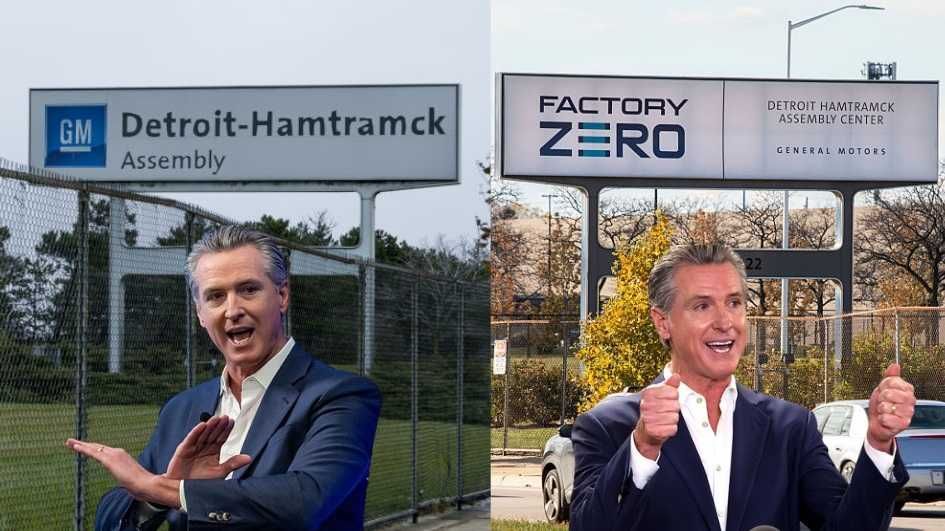
That disconnect has fueled tension between California leaders and the auto industry. Governor Gavin Newsom sharply criticized GM last year after the company supported federal efforts to roll back California’s authority. GM, while welcoming federal regulatory relief, emphasized California’s importance as a market and reaffirmed its commitment to ongoing dialogue with state regulators.

The legal fight is far from over. California officials are preparing to challenge potential efforts to rescind the EPA’s “endangerment finding,” which underpins federal authority to regulate greenhouse gas emissions. Repealing it would mark one of the most consequential shifts in environmental policy in decades and would almost certainly trigger prolonged court battles.

At the same time, California has quietly pulled back some proposals. The state withdrew waiver requests that would have imposed strict locomotive emissions rules and accelerated diesel truck replacements, framing the move as a strategic effort to preserve flexibility while pursuing alternative regulatory and incentive-based approaches.

RELATED: GM’s $7 billon loss exposes gap between EV optimism and market reality

Bloomberg | Getty Images

A familiar lesson

For automakers, the lesson is familiar. Regulatory swings are inevitable, but market access is permanent. California’s economy rivals that of entire nations, and its policies continue to influence vehicle standards well beyond its borders. Even without formal waiver authority, the state retains powerful tools through incentives, procurement policies, and partnerships.

Detroit’s continued engagement reflects a recognition that today’s rollback may not be tomorrow’s reality. Political power shifts, court decisions evolve, and regulatory frameworks rarely stand still. Maintaining dialogue with California regulators is less about immediate concessions than long-term positioning in an industry with product cycles measured in decades.

As federal and state governments continue to diverge, automakers are left to bridge the gap. This week’s meetings may not resolve that tension, but they underscore a growing reality: California is pressing ahead with an agenda that increasingly outpaces consumer demand, infrastructure readiness, and market economics.

Incentives and mandates can shape product planning, but they cannot manufacture affordability or force trust. When policy consistently runs ahead of buyers, the result is not innovation — it is distortion. And the cost of that distortion is ultimately borne not by regulators, but by consumers.

Can the Fuel Emissions Freedom Act save America’s auto industry from California?


California, your days driving U.S. emissions policy are numbered.

That's the message behind House Bill H.R. 4117, the Fuel Emissions Freedom Act — and it's shaking up the automotive world.

Even if it clears Congress, lawsuits are certain. California has never been shy about using the courts to defend its regulatory turf.

First introduced on June 24, 2025, and now under review by the House Committee on Energy and Commerce, the legislation seeks to repeal federal and state motor vehicle emission and fuel economy standards under the Clean Air Act and related laws.

Its stated goals? Lower costs for consumers, simplify compliance for automakers, and revive U.S. competitiveness. But behind the legal jargon lies a direct challenge to one of the most powerful forces in U.S. auto regulation: California.

Game changer

The bill, sponsored by Republican Rep. Roger Williams of Texas and co-sponsored by Republican Reps. Michael Cloud (Texas), Brandon Gill (Texas), and Victoria Spartz (Ind.), takes aim at Section 202 of the Clean Air Act (federal emissions standards) and portions of Title 49 of the U.S. Code (CAFE standards).

But the sharp end of H.R. 4117 is pointed directly at state-level mandates like California’s Advanced Clean Cars II program, which requires 100% zero-emission vehicle sales by 2035. If passed, the bill would prevent California — and any other state following its lead — from setting their own emission or fuel rules, putting Washington and Sacramento directly at odds.

FEFA fix

Supporters argue the current system of EPA rules layered with California’s mandates and CAFE standards create a regulatory maze that raises costs and limits choice.

The Fuel Emissions Freedom Act promises to fix this by:

  • Lowering prices for drivers: Meeting the EPA’s 2023 rules, which require a 49% emissions cut by 2032, could raise new car prices by thousands. Repealing these standards would ease costs for buyers and keep more affordable gas-powered vehicles on the market.
  • Simplifying regulations: Automakers currently juggle federal requirements and California’s dictates, plus a patchwork of states copying California. The result? Confusion, higher compliance costs, and supply chain strain. H.R. 4117 promises a single, unified system.
  • Strengthening U.S. industry: Instead of funneling billions into forced EV development, manufacturers could refocus on consumer demand, job growth, and homegrown production.
  • Restoring choice to consumers: With California mandating EV adoption, critics argue consumers are losing the freedom to buy the cars they actually want — trucks, SUVs, or traditional sedans. This bill restores that choice.
Sounds promising, but make no mistake: California is not about to give up its power without a fight.

RELATED: The Stop CARB Act: A bold move to rein in California’s control over emission rules

Justin Sullivan/Getty Images

Waiver goodbye?

Crucial to that power is the state's unique authority under the Clean Air Act to set its own emission standards, with other states free to follow its lead. For decades, this waiver has allowed California to dictate national auto policy by sheer market size.

H.R. 4117 would revoke that authority, ending California’s role as the de facto regulator for the entire U.S. auto market. Supporters call this a win for fairness and consumer freedom; opponents call it an assault on states’ rights and climate progress.

As of September 2025, the Fuel Emissions Freedom Act sits in committee, facing heavy opposition from Democrats, environmental groups, and California lawmakers. Even if it clears Congress, lawsuits are certain. California has never been shy about using the courts to defend its regulatory turf.

The sheer viciousness of the fight ahead is a testament to how much is at stake: this is about nothing less than who controls America’s automotive future — Washington, Sacramento, or the free market.

The Stop CARB Act: A bold move to rein in California’s control over emission rules


Big news: California's iron grip on the automotive market could finally be over!

The Stop CARB Act, introduced in the U.S. Senate as part of larger legislative efforts to address vehicle regulations, is generating a lot of buzz for its aim to curb the influence of the California Air Resources Board on national auto standards.

Whether you’re a truck enthusiast, a daily commuter, or an auto industry worker, this bill touches your life.

This bill seeks to limit CARB’s ability to set stringent emission rules that impact not just California but 17 other states. As debates over vehicle costs, consumer choice, and environmental regulations heat up, the Stop CARB Act could reshape how cars are built and sold across America.

What is the Stop CARB Act?

The Stop CARB Act is a proposed piece of legislation focused on restricting the California Air Resources Board’s authority to enforce its own vehicle emission standards, particularly those stricter than federal regulations.

While the bill is often discussed in connection with the Transportation Freedom Act (S.711), introduced on February 25, 2025, by Sen. Bernie Moreno (R-Ohio), the Stop CARB Act specifically targets CARB’s waivers under the Clean Air Act. The bill aims to eliminate these waivers, preventing California from dictating emission policies beyond its borders and blocking other states from following its lead.

Currently, S.711, which includes provisions aligned with the Stop CARB Act’s goals, is pending in the Senate Committee on Finance, with no floor vote scheduled as of September 3, 2025.

Sponsored by Sens. Moreno, Jim Banks (R-Ind.), Tim Sheehy (R-Mont.), and Jim Justice (R-W.V.), the broader Transportation Freedom Act also seeks to repeal federal emission standards, such as the EPA’s Multi-Pollutant Emissions Standards for 2027 and later model years and Phase 3 heavy-duty vehicle greenhouse gas rules, while offering tax deductions for auto manufacturing wages. The Stop CARB Act’s focus on CARB makes it a key component of this larger deregulation effort.

Why do we need it?

CARB’s influence stems from a unique provision in the Clean Air Act, which allows California to request waivers to set stricter emission standards than the federal government. Since the 1970s, CARB has used this authority to implement rules like the Advanced Clean Cars II program, which mandates zero-emission vehicles by 2035.

Seventeen other states, representing over 40% of the U.S. population, have adopted CARB’s standards, effectively giving California outsized influence over national auto markets — even though it arguably violates the Constitution.

The Stop CARB Act argues aims to remedy this in a few key ways:

Reducing costs for consumers: CARB’s strict standards require automakers to invest heavily in technologies like electric vehicles or advanced combustion engines. These costs often raise vehicle prices, with estimates suggesting compliance could add thousands to the sticker price of new cars. By limiting CARB’s waivers, the bill aims to lower these costs, making vehicles more affordable for everyday Americans.

Streamlining regulations: The patchwork of federal, California, and state-adopted CARB standards creates complexity for automakers. Companies must design vehicles to meet multiple requirements, increasing production costs and delaying innovation. The Stop CARB Act seeks to establish uniform federal standards, simplifying compliance and fostering a more predictable market.

Preserving consumer choice: CARB’s push for zero-emission vehicles by 2035 limits the availability of gas-powered cars, trucks, and SUVs, which many drivers prefer for their affordability, range, or utility. The bill aims to protect consumer choice by preventing California’s mandates from dominating national markets.

Supporting U.S. manufacturing: Companies like General Motors, Stellantis, Toyota — as well as the National Automobile Dealers Association — argue that CARB’s rules strain manufacturers, particularly smaller suppliers. By curbing CARB’s influence, the bill could reduce compliance costs, boost domestic production, and create jobs.

RELATED: Ride or die: How Ford, Honda, VW, and 3 more got stuck with California's strict emission standards

Mandel Ngan/Getty Images

CARB counting

The bill’s progress is uncertain, given the polarized views on environmental policy and state rights. If scheduled and it passes the Senate, it must clear the House and gain presidential approval. Legal challenges from California or environmental groups could also delay implementation if the bill becomes law. The next goal is to get this bill on the floor to vote on it.

Whether you’re a truck enthusiast, a daily commuter, or an auto industry worker, this bill touches your life. Will it lower vehicle costs and preserve your choice of gas-powered cars? Or will California continue to tell you what to drive? It’s time to reach out to your senators and representatives to tell them to get this bill to the floor.

Little Deuce Prius?! California's shocking plan to ban classic cars


Take a listen to "Little Deuce Coupe," that joyful tribute to the 1932 Ford Coupe and California car culture. Now try to imagine the Beach Boys writing such a gorgeous song about a Prius.

Unfortunately that's the future California's climate-crazy Preach Boys want for us.

The explosion of legendary hot-rod brands, builders, and hobbyists came at a time when individual expression, not institutionalized expression, reigned supreme.

The California Air Resources Board is exploring a proposal to allow local governments to create "zero-emission zones" in the new future. In other words, no gas-powered vehicles allowed.

EVs only

According to a recent report in the Auto Wire, these zones would be be similar to the Ultra Low Emission Zones seen in London's boroughs in the United Kingdom, with plate readers fining drivers for violations.

This just happens to coincide with the CARB's newfound interest in classic cars.

The CARB sent a survey to owners of classic cars from model year 1978 or earlier. The questions were aimed at ascertaining how those classics are used and how they're stored, as well as where they are driven. It even asks about how many miles show on owners’ odometers.

Somehow I don't think they're gathering that information for fun.

Classic cars endangered

California has a net-zero carbon emissions goal to meet by 2045. We hope it doesn’t get to the point that authorities go door to door looking for classic cars to seize and crush, but the mere mention of zero-emission zones would have been dismissed as a crazy conspiracy theory only a few short years ago.

The collector car market is huge. The United States is the word's largest market for classic cars, with a revenue of between $14 and $15 billion generated in 2020. California has the largest classic car market of any state. Moreover, the classic car market in the United States is projected to grow to some $18.77 billion by 2024.

Banning classic cars would be an economic disaster. It would also be a betrayal of our history.

A proud legacy

California was arguably the epicenter of cool-car culture. The explosion of legendary hot-rod brands, builders, and hobbyists came at a time when individual expression, not institutionalized expression, reigned supreme. Unfortunately, that looks to be going the way of the dodo before long.

California car culture isn’t what it used to be but is still pretty amazing. However, moves like this could accelerate the current downward trajectory.

Of course, the justification for full-on banning older cars from certain areas or making the owners pay a daily fee to drive there is climate change. After seeing the amount of emissions produced by private jets, cruise ships, EV mining production, Space X rockets, and many other things that are widely celebrated, defended, and/or enjoyed, one can’t help but feel cynical about these growing restrictions.

California in charge?

I’d say let the California elitists put their money where their mouths are first.

Classic cars are pieces of our history, symbols of culture and pride. They bring joy to many. These coming rules are really about control, and nothing else.

Remember 17 states follow the rules set by California, so this impacts New York, New Jersey, Connecticut, Massachusetts, Oregon, Washington state, Washington, D.C., Colorado, New Mexico, Maryland, and others. The impact affects our freedoms and our investments in those cars and enforces the “you will own nothing and be happy" mindset.

I think not! I refuse to give up the keys to my 1965 Mustang.

Multiple states to BAN motorhome sales in latest EV tyranny


California is banning motorhomes.

No, not the dilapidated firetraps illegally parked in crime and drug-infested encampments throughout the state — some 10,000 in greater Los Angeles alone. Those are fine.

The regulations — which will effectively ban the sale of new motorhomes with a gross vehicle weight rating over 8,500 pounds — take effect January 1, 2025.

It's new motorhomes — the kind that retirees might buy to live out their sunset years on the road — that the Golden State wants gone.

Starting in 2025, California’s Advanced Clean Trucks regulation, aimed at promoting zero-emission vehicles, creates a near-total “ban” on motorhome sales in the state.

And because Oregon, Washington, New York, New Jersey, and Massachusetts follow California Air Resource Board regulations, they'll be putting the kibosh on motorhome sales as well.

As I said last week, this CARB needs cutting if we ever want to release ourselves from California's draconian authority over what we can drive.

The ACT regulation mandates manufacturers of medium and heavy-duty vehicles to sell an increasing percentage of zero emissions vehicles each year.

The regulations — which will effectively ban the sale of new motorhomes with a gross vehicle weight rating over 8,500 pounds — take effect January 1, 2025.

Since 2020, the RV Industry Association has been asking CARB for exemptions from the ACT regulations, citing negative impact on motorhome manufacturers and dealers, to no avail.

Complicating the matter are two other recently-passed regulations: the Omnibus Low NOx rule and the Advanced Clean Fleets rule. Along with ACT, these rules seek the gradual replacement of medium- and heavy-duty vehicles with zero emission vehicles by 2036.

CARB also has its focus on off-road vehicles with the Small Off-Road Engine regulation, which threatens spark-ignition engines on generators. So no offroad vehicles or gas-powered generators?

This has gone way too far.

These rules also go into effect in Vermont for 2026 model year motorhomes. And the rules take effect in Colorado, Maryland, New Mexico, and Rhode Island with the 2027 model year.

Get ready to go electric whether you like it or not. If you have an older motor home, it will need to be smogged twice a year. More regulations and more money out of your pocket.

This all happened because of California's vote in August to ban the sale of new gasoline-fueled cars by 2035.

One state controlling the other 49 is clearly unconstitutional. We need to fight this regulation at a federal level.

We'll keep you posted, as usual.