'What in the Davos?' Reverse ATMs are the lazy, dystopian cashless future you imagined
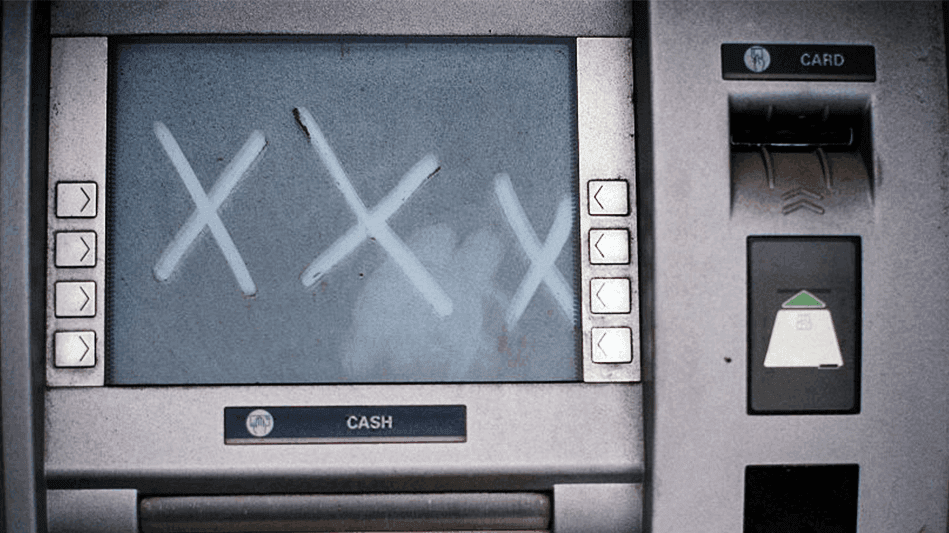


"What is a reverse ATM?"

This question has been asked ad nauseum for the last few years, and the answer is somewhere between an unnecessary step and a cashless society.

'Hardly-user friendly.'

Money walks

An early August post asked, "What in the Davos," referring to the home base of the World Economic Forum in Switzerland, where undoubtedly the most controversial world figures come together to coordinate, undoubtedly, the most controversial policies.

The "you'll own nothing and you'll be happy" meme apparently extends to physical money, as well, as one X user's photo read, "reverse ATMs are available throughout the concourse for your convenience."

According to BluePoint ATM Solutions, a "Reverse ATM" is a cash-to-card kiosk that allows users to convert physical cash into a prepaid card.

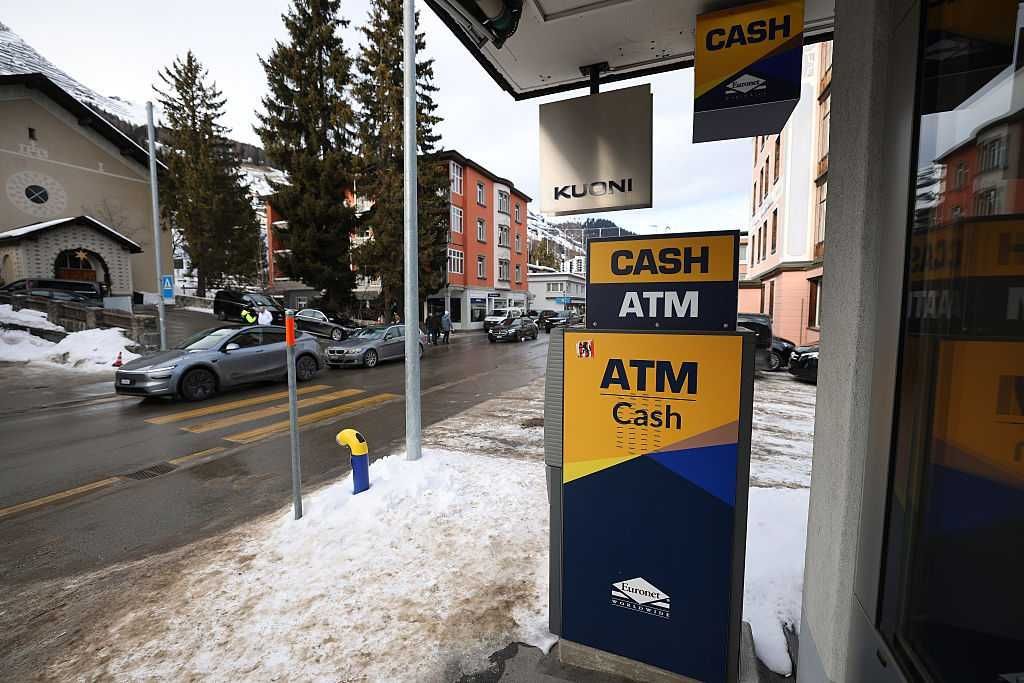
The kiosks are everywhere now, especially in New York, where they are seen at venues like MVP Arena and the Saratoga Performing Arts Center. In Texas, the San Antonio Zoo says a cashless experience ensures that guests "spend less time in line."

If there is any question as to whether or not the kiosks are connected to the WEF-prescribed future, there are a plethora of horror stories floating around online that confirm the theory.
RELATED: Elderly Air Force veteran assaulted, robbed after withdrawing cash from ATM; video shows juvenile taking victim's wallet

Krisztian Bocsi/Bloomberg/Getty Images

Peasant problems

One traveler to Brussels — the home of European Parliament — panicked when she realized she was nearly out of gas and zero locations in the area "employed an actual human attendant."

Her credit cards didn't work anywhere, but her payments weren't being declined, either. Instead, she realized the pumps operate through reverse ATMs: insert cash, get a ticket, scan the ticket at the pump to get gas.

Turns out this was the case in France, too, Ashley Smith wrote. The blogger noted that in many EU states, paying with a credit card forces a €120 deposit, which refunds the difference depending on gas consumption. At the same time, this is disincentivized given that a signature is required for purchases over €100.

With no humans in sight, it's back to the reverse ATM for the peasantry.

Fintech Finance News reported in 2024 that the reverse ATMs are "hardly-user friendly," and one New York location provided no receipt, the card was not reloadable, and users must go through a "time-consuming process" to reclaim any remaining balances.

Similar experiences have been widely discussed online.
RELATED: Violent punks caught on video ganging up on, brutally beating elderly man by Baltimore 7-Eleven — while wielding rifle, sword

Jakub Porzycki/NurPhoto/Getty Images

Card sharks

One Reddit post discussed an ice cream shop in Philadelphia that refused a $10 bill, opting for a reverse ATM payment instead. The card didn't work, and an employee told the customer it wasn't his fault before gifting him the treat anyway.

On another thread, users discussed how much money is left unclaimed on the ATM cards. One user said he left $9 on a card at an amusement park because "everything in the park" costs more than that.

Another said the New York MTA had made $100 from his unused cards in just one year.

Detractors say to use the card elsewhere, as it is likely a prepaid VISA or Mastercard. Companies will say it prevents cash theft and reduces labor. This is of course for the business, not the customer, who has to whip out cash at a less secure location and then take extra steps simply to spare the establishment a few minutes of work.

"Minimize pathogen concerns associated with cash," BluePoint ATM says on its website.

Unfortunately, the Federal Reserve says there is no federal statute mandating that a private business, person, or organization "must accept currency or coins as payment for goods or services."

Instead, citizens must rely on bylaws, like that of Philadelphia, where under the city's cashless retail prohibition, establishments "may not refuse to accept cash."

It is unclear whether that extends to the ice cream experience, though.

Like Blaze News? Bypass the censors, sign up for our newsletters, and get stories like this direct to your inbox. Sign up here!

Square Outage Leaves Millions Of Small Businesses Unable To Charge Credit Cards, Manage Inventory

As of Friday morning, it appears many small businesses may not be able to do digital or card-based transactions going into the weekend.
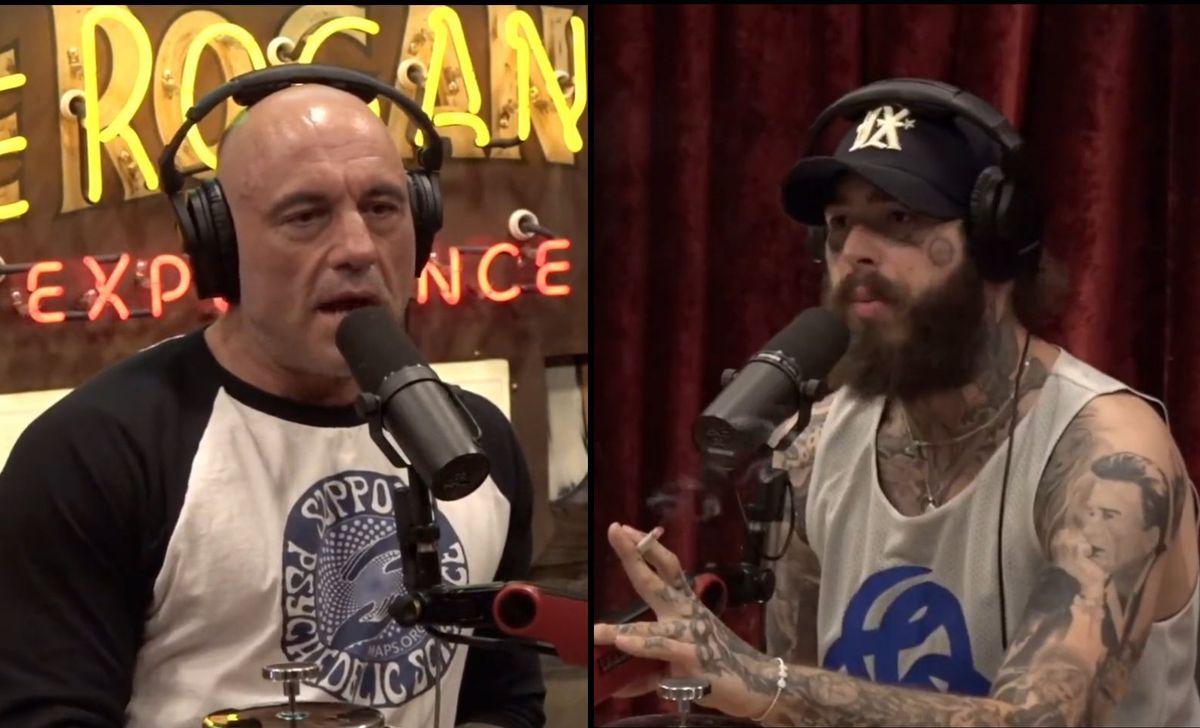
Joe Rogan and Post Malone sound off on central bank digital currencies: 'No f***ing way. ... That's checkmate.'


Joe Rogan and musician Post Malone discussed the dangers of cash-killing central bank digital currencies on the Aug. 8 episode of the "Joe Rogan Experience."

While Malone appeared cynical about the present financial system, intimating the state and powers that be already enjoy too much control over Americans' spending and finances, Rogan indicated it could get much worse.

When asked how he felt about CBDCs, Rogan fired back, saying, "No f***ing way. No way. That's what I think. That's checkmate. That's game over."

Malone agreed, "That is f***ing checkmate."

The push for CBDCs in the West and around the world has taken on new momentum in recent months.

TheBlaze previously reported that the International Monetary Fund is working on a platform to ensure interoperability between CBDCs, whereby central banks would control their respective vaporous fiat currencies but adopt a single global ledger and adhere to international standards.

The Biden administration hinted that it might be on board, noting in a September 2022 report that among the policy objectives for an American CBDC would be interoperability and transferability with the global financial system.

Last year, Federal Reserve Chair Jerome Powell hyped the prospect of a U.S. CBDC, stating it could "potentially help maintain the dollar's international standing" and possibly "improve on an already safe and efficient domestic payments system."

The Federal Reserve's 2022 paper, "Money and Payments: The U.S. Dollar in the Age of Digital Transformation," cited the adoption of CBDCs as a way toward greater inclusivity, stating, "A CBDC could reduce common barriers to financial inclusion and could lower transaction costs, which could be particularly helpful for lower-income households."

Nationally syndicated radio host and co-founder of Blaze Media Glenn Beck underscored earlier this year that the problem with a CBDC is that "there is no physical cash. There’s even [a physical aspect] with Bitcoin — you can take it on a thumb drive and you stick it in your pocket, or you can move it from one off-ramp to another. Just memorize your seed phrase, that’s all … but it’s yours."

Conversely, with a CBDC, it's only electronic, "only in the Federal Reserve System," noted Beck.

Extra to stressing that the "federal government has no authority to unilaterally establish a central bank currency," Sen. Ted Cruz (R-Texas) has made clear that even if it did, it would be a bad idea.

Gov. Ron DeSantis (R) has indicated this bad idea is ultimately "about surveillance and control."

Accordingly, he has banned CBDCs in Florida and told Tucker Carlson that as president, he would "nix central bank digital currency. Done. Dead. Not happening in this country," reiterating that it is a "massive threat to American liberty."

Building on his response to Malone, Rogan warned there will inevitably be trouble if "they apply [CBDCs] to a social credit score — if they decide somehow or another that you need some social credit score system and it's for the benefit of society — and they outline that they can track your behavior and your tweets and all your things, and you get a score."

Nigel Farage, the former English politician who proved instrumental in the 2020 restoration of British sovereignty via Brexit, was recently debanked by a giant British financial organization over his tweets and un-woke views.

Farage, having seen firsthand what traditional banks are already willing to do to conservatives with allegedly unacceptable views, made a similar claim to Rogan in a video Sunday, noting that the push "towards a cashless society" will likely usher in "a social credit system where only if you obey the prevailing orthodoxy of the day can you take part in life."

Malone told Rogan that ship has sailed — that social credit scores are already here, "they just haven't released the f***ing report cards. They didn't send the report cards home to the parents yet. ... Everything is already imprinted. Everything is already tracked. Everything is already there."

Rogan contended that the technocrats set upon the elimination of cash and regulation of behavior "just can't control you to the same extent that they would like. And what they would like to do is to strip you of your money and to be able to lock you down and then make sure you comply."

Outside communist-controlled China, this tactic has already been used to great effect in Canada under the Trudeau government.

Canadian banks in concert with the Trudeau government began freezing accounts of people linked to the trucker demonstrations as a means to snuff out the peaceful populist protest, which was critical of vaccine mandates.

Rogan indicated that the state's ability to make examples of dissenters by stripping them of their money will preclude others from standing up: "They don't want everything they worked for just be taken away instantly overnight and be powerless. No one to call. No one's going to answer your phone. They just decided you f***ed up, and the rules are the rules."

Beyond just eliminating dissent, the podcast host indicated that state actors will ultimately abuse this ability upon realizing they can fill their coffers and pockets with Americans' confiscated digital currencies.

A February CATO study highlighted that in addition to CBDCs enabling governments to freeze someone's financial resources with greater ease and speed, having established "a direct line between citizens and the government itself," policymakers would be able to set negative interest rates, thereby forcing spending by causing people to lose money.

The study also highlighted how the government would be positioned to bar people from spending their money on certain goods or services.

Watch Rogan and Malone's CBDC conversation:

— (@)

Like Blaze News? Bypass the censors, sign up for our newsletters, and get stories like this direct to your inbox. Sign up here!