37 All-American Diners, Hash Houses, And Greasy Spoons To Fuel Your Summer Road Trip
 All over the country, you'll find a microcosm of Western civilization known as the quintessential American diner.
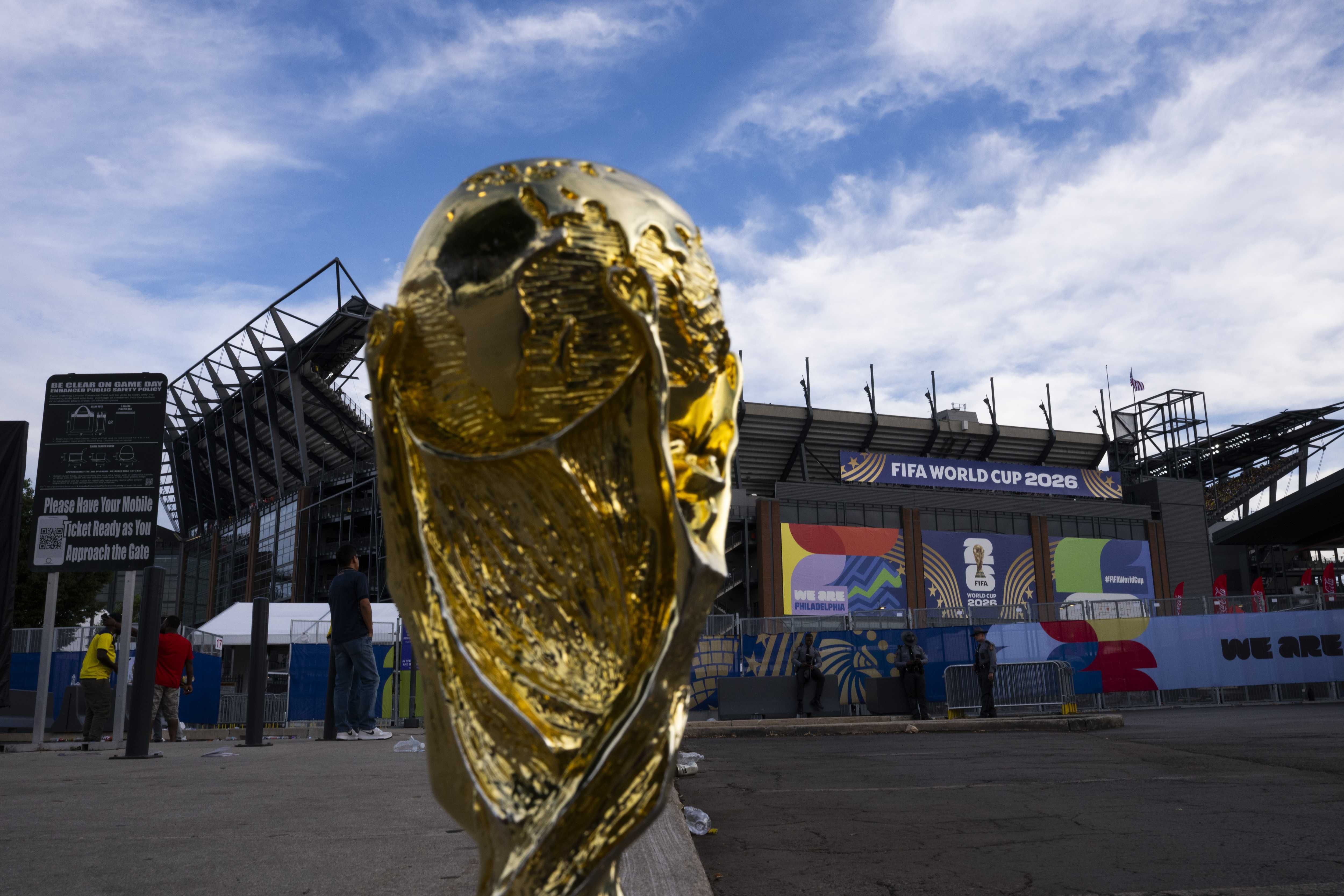
Forget the final score. The real World Cup upset this summer is how many international fans are discovering that America is, against all odds, kind of great — especially in a "why does this gas station have 40 kinds of jerky and also a Wi-Fi password printed on the receipt" way — and they're documenting their delightful experiences on social media.
The breakout star of the bunch is a German fan known on X as Freddy who has been chronicling a six-week road trip across the U.S. and Canada, following Germany's national team, and has picked up hundreds of thousands of followers in his trek.
‘The European mind can't comprehend this.’
Freddy's Atlanta stop hit the respectable tourist beats — Stone Mountain, the MLK National Historical Park, some "Stranger Things" filming locations — and then immediately abandoned all dignity for Taco Bell, which he called "the holy land."
A 1 a.m. Waffle House visit got a perfect 10/10 — food, prices, and staff included.
His Wendy's stop in Tennessee produced the single best exchange of the whole tour. His order somehow came back under the name "John," and when he posted his haul of burgers and fries, the official Wendy's account replied with one demanding question: "WHERE IS THE FROSTY."
He also fit in a Walmart run for water, socks, and USA soccer merch and somehow found time to watch the NBA Finals at Chili's amid all this.
Before a single World Cup match had kicked off, Freddy watched the War Eagle fly over Auburn's Jordan-Hare Stadium and called it the most "the European mind can't comprehend this" moment of his life.
One of Freddy's posts got enough traction that Transportation Secretary Sean Duffy shared it on X, writing: "There's no better way to see our country than on a road trip! Because to LOVE AMERICA you have to SEE AMERICA."
Alabama Governor Kay Ivey (R) invited him back for football season. When he posted from the Gulf Coast, Republican Gov. Ron DeSantis welcomed him to Florida — but couldn't let it go that Freddy had called the Gulf "the sea."
Freddy is not even the only German on this beat. Finn Agostinelli has been touring Chicago — the Riverwalk, "the Bean," and a visit to Portillo's so good that he posted a petition to get one opened back home in Hamburg.
His best moment came at Macy's, where he had ducked in to find a restroom and instead found himself staring up at an enormous American flag. "I respect how proud Americans are of their country," he wrote. "Unimaginable back home in Germany."
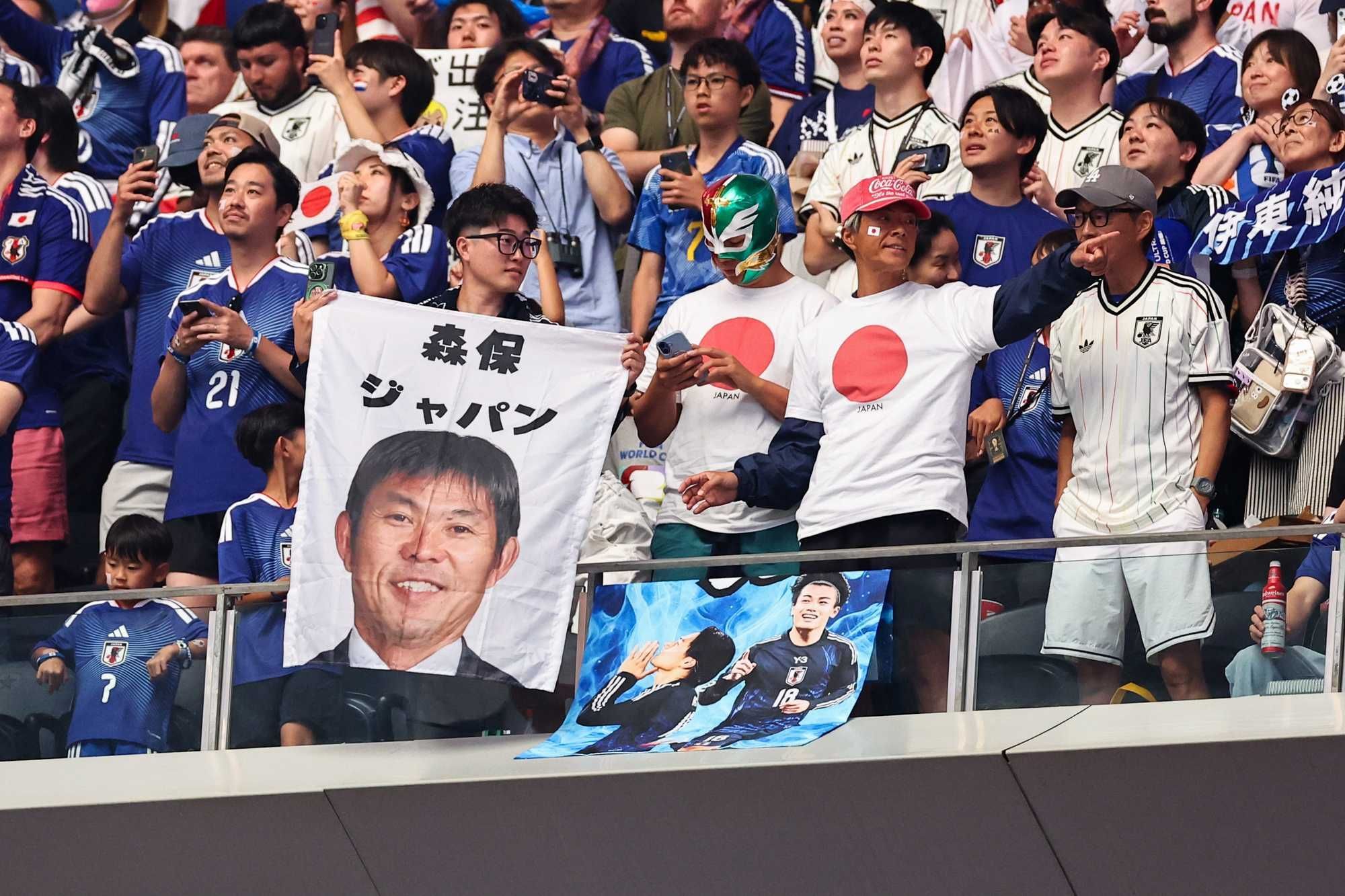
Texas, for its part, did not go unnoticed either. A group of Japanese fans told KDFW their assessment of the state in six words: "Texas is good — everything is big." Which checks out. Everything is bigger in Texas.
And in a tradition that has followed Japan's national team since its 1998 World Cup debut, Japanese fans were spotted picking up trash in the stands after a 2-2 game against the Netherlands in Dallas, a habit rooted in a saying that a bird leaves no trace when it flies. Stadium staff, presumably, were thrilled — and possibly a little confused.
Meanwhile, a young Swedish fan named Elsa Thora landed in Indianapolis and immediately discovered ranch dressing, which, by the tone of her posts on X, may have been a bigger moment for her than the actual soccer.
"Why did no one tell me ranch sauce is like crack? EUROPE WE NEED RANCH ASAP," she said.
Elsa screamed at a school bus in Indiana, posted a photo of Twinkies and Combos pretzels with the caption "I feel like I'm in a movie," and has been working her way through Trader Joe's ever since.
She also discovered that Amish people are, in fact, real.
Not every discovery has been a hit, though. Elsa also found shampoo locked behind anti-theft barriers at a store, a security measure uncommon in much of Europe, and called it her first negative experience of the trip.
She's not alone on the friction front. Scottish fan Shaun Cumming arrived in New York after flying from Edinburgh and was blunt about the cost of everything — especially after a $150 Uber ride into Brooklyn.
He also noted to Newsweek that Americans are noticeably more open than people back home.
"People here are very positive, enthusiastic, and they're not shy at all," he said. "They will tell you how they feel for good or for bad. And sometimes for British people, it can catch us off guard a little bit."
Cumming had no complaints about the food. He said American cooking is simply better seasoned than what he's used to: "Here, you get flavor, you get fed well, they put a lot spices, herbs and seasoning into their food in general, which just makes it really good" — and that the regional variety is what stuck with him most.
RELATED: Trump and Mamdani are on a collision course about ICE at the World Cup
Underneath all of it is something that keeps surprising people more than the food: the locals.
A tourism expert told Fox News that visitors driving nine hours across Texas are running into "overwhelming American kindness," often from small-town residents who have no idea why someone with hundreds of thousands of followers just pulled into their gas station.
A New Jersey deli owner gave a couple of British tourists a free lunch, and Alabama firefighters gave other British fans a station tour and sent them off with free gear.
Waffle House has been open at 1 a.m. for 50 years. Buc-ee's has always been enormous. Ranch dressing has been sitting in American refrigerators, unremarked upon, since the Reagan administration. Perhaps the deli owner who fed the British tourists wasn't doing anything he wouldn't do for a local who looked lost.
What's new is that someone finally pointed a camera at it.
For years, the conversation about America — at home and abroad — has been almost entirely about Washington: the politics, the division, the sense that the country is somehow failing itself. But that was never the whole country.
The actual texture of American life — the diners, the gas stations, the absurd portion sizes, the stranger who will drive you to a game because your Uber didn't show — was always there, underneath all of it, completely unaffected by whatever was happening in D.C.
This summer, a few hundred thousand people from somewhere else have seen the real America: big, weird, generous, a little much.
Like Blaze News? Bypass the censors, sign up for our newsletters, and get stories like this direct to your inbox. Sign up here!
There was a moment — maybe early 2000s? — when people began talking about a new frontier in American life.
I remember there was a "Nightline" episode about it and articles in magazines.
In Portland, where I live, the last 24-hour diner-style chain, Shari’s, closed all its restaurants earlier this year. Too dangerous to stay open that late.
They described a new territory that was open for exploration. A place where most people were still reluctant to go. But this new space held new opportunities and prospects for growth.
This new frontier was called “late-night America.” It wasn’t a geographical location. It was a time period. It occurred from approximately 11:00 p.m. to 6 a.m.
The idea was as the world became more crowded, with more cars on the road, more people packing into office buildings every morning, a natural evolution was occurring.
People were opting to change their schedules to avoid the crowds. They were staying up later, working later, and beginning to inhabit late-night America.
These early adopters preferred a less hectic world, so they adjusted their lives toward the “off hours."
Think of Midtown Manhattan at lunch time. The Seattle Fish Market at 9:30 am. Or your own city during afternoon rush-hour traffic.
Now think of all those places at 4 a.m. Pretty different, aren’t they? Not so crazy. Not so overwhelming.
The worst thing you might encounter at 4 a.m. is a garbage truck or an impatient jogging enthusiast with an early work schedule.
As more people began to see the obvious advantages of conducting their business and personal lives at a later hour, other businesses sprang up to serve them.
Instead of just one 24-hour restaurant in your town, now there were a dozen. Many gas stations went 24 hours as did convenience stores. Big cities added more night buses. Supermarkets began staying open until 11, then midnight, and then 1 a.m.
With more people inhabiting it, the late-night world became a more active place. It was fun working the late shift. It was easier to drive to work. The vibe was more relaxed. People weren’t in such a hurry.
I was always a night owl. My first job out of college I worked at a courier company in San Francisco. We did most of our business during normal hours, 9 to 5. But I quickly maneuvered myself into the swing shift position, coming in at 2:30 p.m. and staying until 11.
After 5, I was alone in the office. I routed the overnight shipping and spent the late hours on the phone with my cohorts at our company’s other branches in other cities.
The late-night crew got to know each other. We were the oddballs of our respective offices. We tended to be more eccentric, more interesting than the daytime employees.
When I was occasionally called in by my boss to work a normal 9-to-5 shift, I found the routine deeply disturbing.
Imagine waking up at 8 in the morning! Riding a packed, slow-moving bus downtown. Waiting in line for 10 minutes for a morning coffee. Standing in another line for a soggy sandwich at lunch.
All of this with robotic office workers crowded around me. Dan from sales. Sheila from billing. Their business outfits. Their terrible hairstyles. It was unbearable!
But to be on the late shift, alone in the office, with the radio on, my feet on the desk. That was heaven. And then leaving the building at 11, the downtown streets deserted, late-night San Francisco all to myself.
Later when I became a professional writer, I loved working in late-night cafes. Or 24-hour diners. Or truck stops, if there were one nearby.
I went there to work, but I liked having people around, a nice waitress, some foot traffic, someone to share a bit of conversation with.
Or on a bad weather night, there were the state troopers or the snowplow guys coming in from the cold at 2 a.m. for a hot coffee and a piece of pie — wasn’t that fun to be part of?
Thanks to late-night America, there were always such places available. It was a great time for a person like me. I always had somewhere to go. Some coffee to drink. And mostly good people to be around.
By now, you probably know where this story is going. We are presently at the other end of the pendulum swing. Now NOTHING stays open late. Good luck finding a coffee shop that’s open after 4!
In Portland, where I live, the last 24-hour diner-style chain, Shari’s, closed all its restaurants earlier this year. Too dangerous to stay open that late. And nobody wants to work those hours.
The early-closing phenomenon had already begun before COVID, and then COVID finished the job.
Plus in many cities, there is now the constant presence of homeless and mentally ill people to contend with.
In response, business owners have decided it’s best to minimize their hours of operation. They lock their doors and lower their metal gates as soon as the sun goes down.
Bars are still open, of course. But even that world is shrinking. Young people don’t go out as much these days. They have other ways to socialize, and they have multiple forms of entertainment right there in their homes.
Meeting people for romantic purposes was once the primary reason for being out late at night. But this seems to be on the wane as well.
Men are less eager to approach women in public places. And contemporary women, with careers and important jobs, don’t want to be out late at night. Swiping on dating apps during lunch hour is a much more efficient way to meet a potential partner.
Are there still jobs on the night shift? Sure there are. Trucking, loading, and delivering are still much easier during off-hours. But most of the other late-night jobs are ... well ... security guard, security patrol, security supervisor.
In other words, protecting people and property from the dangers of the night.
So yeah, that last frontier? It’s closed.
For such a social space to function safely, you need a high-trust, high-functioning society. People need to feel safe. They need to trust each other.
Society is too fractured at the moment for that to happen. There is too much crime, too much drug abuse, too many zombies to venture into the dark.
But think of the romance lost! Think of the late-night walks you can’t go on. The moonlit skies you’ll never see. The late-night drives in a cozy car with the radio on.
These are not insignificant things for a culture to lose. The night should be ours. The night should belong to us.
Protesters in St. Petersburg, Florida, expanded their demonstration to harass diners along the streets on Wednesday following a Louisville grand jury's decision not to charge officers involved the the raid that led to the death of Breonna Taylor in March.
A reporter for the Tampa Bay Times reported on Twitter that "Protestors are now going restaurant by restaurant to chant at diners on Beach Dr. in St. Pete. A lot of diners yelled back, starting multiple confrontations. This one was the most significant. Protestors took over a couple's table. Not sure why they were targeted specifically."
Protestors are now going restaurant by restaurant to chant at diners on Beach Dr. in St. Pete. A lot of diners yell… https://t.co/DKQiws1HXc— Josh Fiallo (@Josh Fiallo)1600907691.0
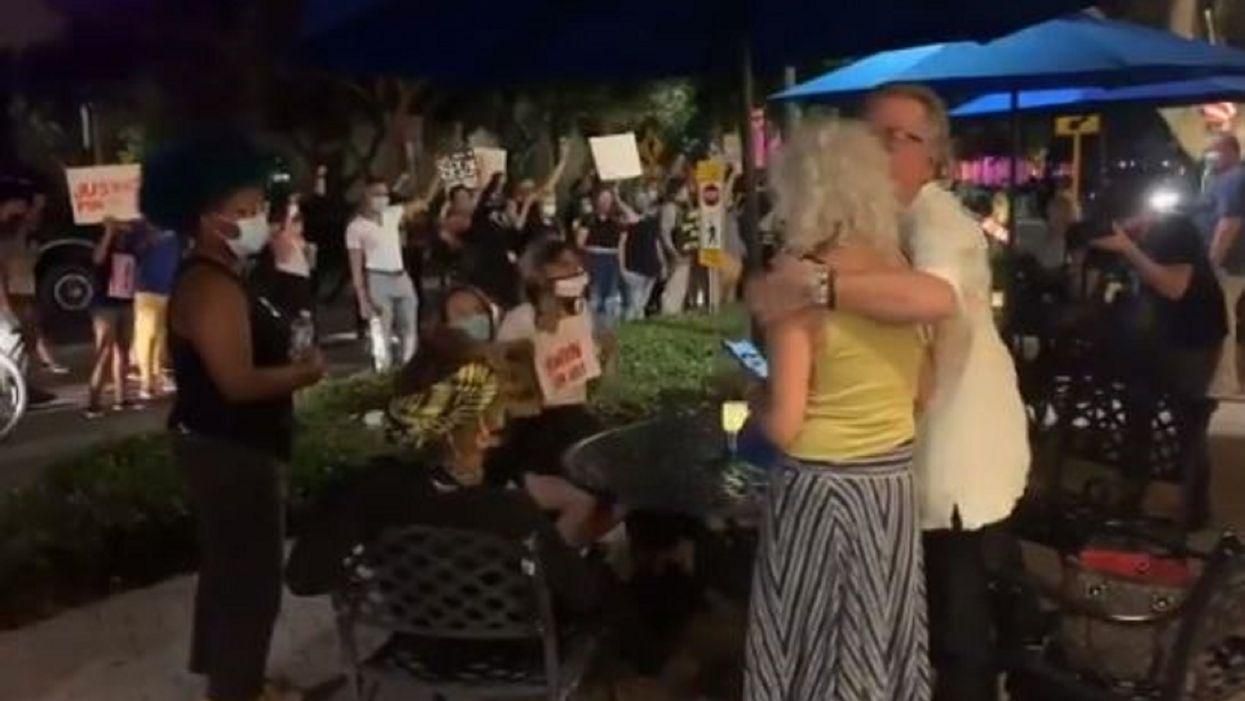
The footage in the accompanying video shows a mob of protesters repeatedly chanting, "Stand up, fight back!" while facing diners at a restaurant before one apparent activist pulls up a seat at the table of a man and woman who were seated together outside the establishment.
The woman at the table quickly stands up and says, "Nope, this is my table!" and unsuccessfully attempts to move the activist from the chair before two more activists fill the remaining empty seats while flashing signs and joining the chant. Additional activists followed and stood to surround the couple.
One activist can be heard telling the man, "why don't you shut up?" before the first activist who stole a seat told the woman, "I'll knock your old-a** boyfriend the f*** out."
Another activist is then seen blowing what appears to be a bullhorn at the couple, standing from a few feet away.
Protests have been ongoing in cities across the U.S. for months since the death of George Floyd in late May, and Breonna Taylor's name has been a frequent chant of demonstrators nationwide calling for justice after she was killed during a police raid.
Initial reports claimed that the raid was executed as a "no-knock" warrant, but Kentucky Attorney General Daniel Cameron (R) said during a press conference Wednesday that an independent witness reported that the police did announce themselves before entering the residence where Taylor was in bed with her boyfriend, Kenneth Walker, who has stated that he opened fire, believing the police to be robbers, and police fired back, killing Taylor.
Louisville was placed under a state of emergency ahead of Wednesday's afternoon announcement that only one of the three officers involved in the raid would be charged in connection with the raid itself. The police officers' use of force was deemed justified by the grand jury, but one officer was charged with three counts of wanton endangerment because he fired into other nearby residences. No officers were charged with Taylor's death.
As of this writing, Louisville police have announced that two police officers have been shot in Louisville amid ongoing rioting. According to multiple local reports, their wounds are being described as non-life-threatening

 thefederalist.com
 www.theblaze.com