Ending Fraud Is Great But It’s Not Enough To Fix Medicare Insolvency
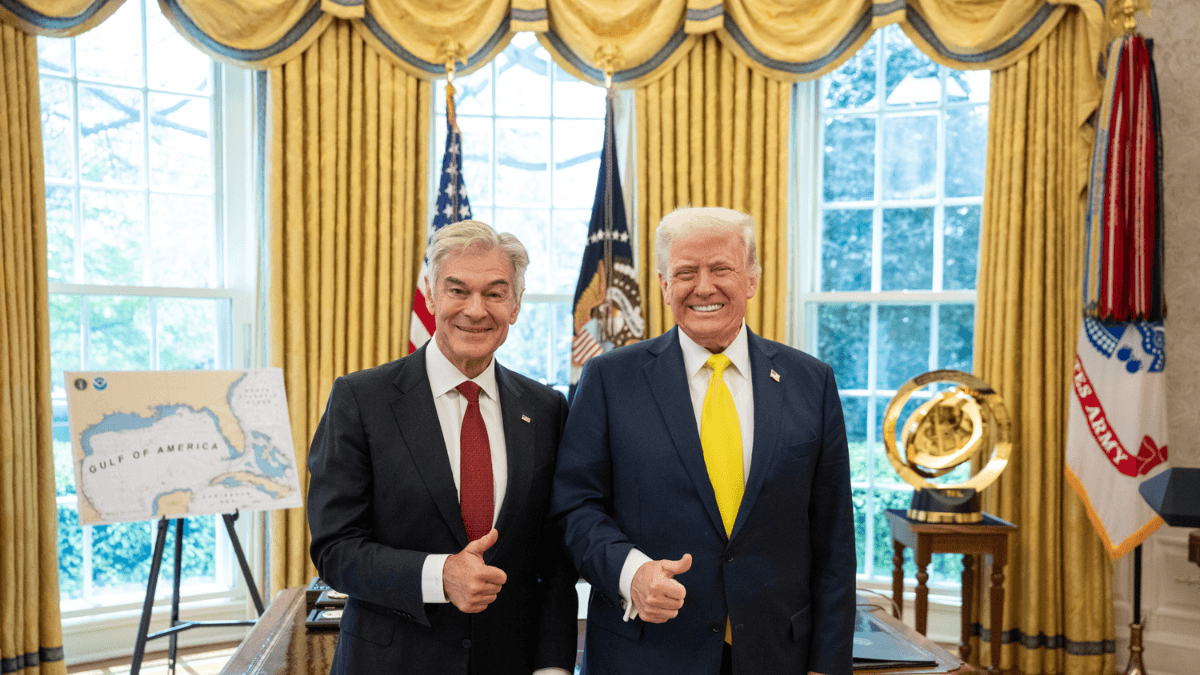 Washington policymakers can no longer ignore the mounting challenge of federal entitlements, especially Medicare.
Academy Award-winner Elizabeth Taylor, married eight times to seven men, likely entered each union with the hope it would last. Good things, after all, should be permanent.
Yet in Washington, permanence is too often treated as a liability. Nowhere is this more apparent than in tax policy. Thanks to arcane rules surrounding budget reconciliation, Congress routinely enacts pro-growth reforms with an expiration date baked in.
A permanent extension of the reconciliation bill’s pro-growth elements would produce more ‘bang for the buck’ than a temporary extension.
Consider the House-passed One Big Beautiful Bill Act. Though the measure would extend and build upon President Donald Trump’s 2017 Tax Cuts and Jobs Act, it fails to permanently extend several of the law’s most pro-growth elements.
That’s a mistake. Again, good things should be permanent.
Earlier this month, Unleash Prosperity Now — a nonprofit aligned with President Trump — organized a letter signed by more than 300 economists, myself included, urging Congress to “extend President Trump's tax cuts permanently to prevent a tax increase on January 1, 2026.”
Why do we insist upon permanence? Permanent pro-growth public policies result in better economic outcomes. In contrast, temporary policies create troublesome uncertainty, which, in turn, sows confusion for consumers and businesses, making financial planning and investment needlessly difficult.
A permanent extension of the reconciliation bill’s pro-growth elements would produce more economic “bang for the buck” than a temporary extension. It’s that simple.
According to the Tax Foundation, “Permanence for the [bill’s] four cost recovery provisions would more than double the long-run economic effect.” These provisions would include 100% bonus depreciation, expensing of research and development investment, and a more generous interest deduction limit, among others.
The Tax Foundation concludes:
The current package produces meager effects on GDP and a smaller U.S. capital stock over the long run because the cost recovery provisions sunset. As lawmakers continue to debate the tax package, they should not compromise on permanence for the most pro-growth provisions.
This view aligns with the prevailing economic literature. For example, a 2019 study by the St. Louis Federal Reserve concluded, “A rise in uncertainty is widely believed to have detrimental effects on macroeconomic, microeconomic, and financial market outcomes.”
If that warning were plastered on the side of a pack of cigarettes, it would read, “Congressionally induced policy uncertainty is hazardous to the country’s economic health.”
Fortunately, Senate Finance Committee Chairman Mike Crapo (R-Idaho) is determined to extend the reconciliation bill’s most pro-growth elements permanently. Bravo, Mr. Chairman!
Permanence aside, why did more than 300 economists call for preventing the tax increase scheduled under current law?
RELATED: I was against Trump’s ‘big, beautiful bill’ — Stephen Miller changed my mind
If taxes increase as planned, the economic fallout could be steep. Wells Fargo warns that average monthly job creation could plummet from 133,000 in the first quarter to just 25,000 next quarter — and then turn negative, with an estimated loss of 17,000 jobs per month in the fourth quarter.
If Congress fails to “spike the hike,” Wells Fargo estimates economic growth will slow to a tepid 1.1% this year and next.
For those worried about the deficit, here's the paradox: Letting the economy slow — or worse, slip into recession — is the surest way to worsen the nation’s fiscal health.
To further underscore the situation, Douglas Holtz-Eakin, who directed the Congressional Budget Office from 2003 to 2005, cautions: “Given the weak state of the economy, it [the scheduled tax increase] would likely trigger a recession, and the budget outlook never gets better in a recession.”
Yes, it’s that simple.
Elizabeth Taylor once quipped, “If you hear of me getting married [again], slap me!” At least, she had the right intentions. Congress, on the other hand, routinely resorts to temporary policies to game the reconciliation process. That needs to stop.
To guard against recession, Congress should reconsider the tax increase scheduled for next year. But to boost economic growth, Congress should follow Crapo’s lead and extend permanently the 2017 Tax Cuts and Jobs Act pro-growth provisions.
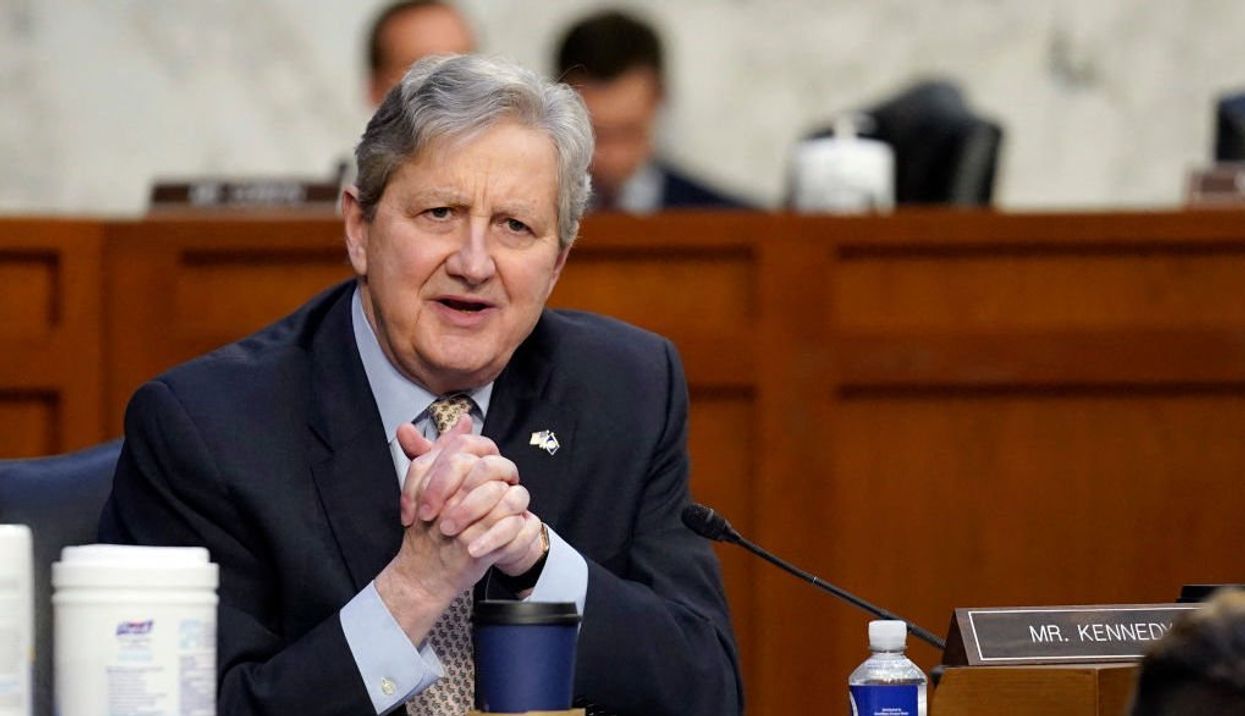
Sen. John Kennedy (R-La.) used a series of odd-ball questions on Wednesday to highlight the far-fetched hypothesis of one carbon tax advocate.
During a Senate Budget Committee hearing addressing intersecting issues of the economy and climate change, Kennedy began his time grilling two witnesses, Dr. Douglas Holtz-Eakin and Dr. Robert Litterman, about the costs associated with carbon neutrality.
Litterman, a devout advocate of a carbon tax, admitted he does not know the cost, while Holtz-Eakin estimated it would cost $50 trillion. When Kennedy followed up, asking how carbon neutrality would positively impact the climate, neither man could provide a substantive answer because they both agreed it would be contingent on China and India, which count for more than one-third of the world's population.
Kennedy then zeroed in on Litterman's apparently uninformed advocacy.
"Do you believe ... based on your observation of [Chinese President Xi] Jinping that Mr. Xi Jinping will ever do anything that is inconsistent with China's best interests in the name of global climate change?" he asked Litterman.
Litterman responded that China indeed has a carbon tax. Of course, that was not Kennedy's question. The Republican senator then clarified his inquiry, asking Litterman whether he believes Xi Jinping would ignore China's domestic interests in lieu of global ones.
"I think that President Xi understands that we have to work together to address this global problem, yes I do," Litterman responded.
Kennedy questions Litterman, Holtz-Eakin on climate in Budget www.youtube.com
To register the implausibility of Xi ever putting China's interests second to the international community, Kennedy then asked Litterman three questions that exposed the absurdity of Litterman's suggestion.
"Do you believe in the Tooth Fairy?" Kennedy asked.
"No sir," Litterman responded.
"Do you believe in the Easter Bunny?" Kennedy followed up.
"No sir," Litterman shot back.
"Do you believe that Jimmy Hoffa died of natural causes?" Kennedy asked again.
"No sir," Litterman said.
President Joe Biden has directed the U.S. government to take steps to reach carbon neutrality by 2050. But two major questions about carbon neutrality, which Kennedy highlighted, remain unanswered, namely how it will be financed and whether it will work at all without all-in support from India and China.
Like Blaze News? Bypass the censors, sign up for our newsletters, and get stories like this direct to your inbox. Sign up here!
 www.theblaze.com
 thefederalist.com
 www.theblaze.com