Supreme Court Hears Arguments in High-Stakes Colorado Climate Case Seeking To Hold Oil Companies Financially Liable for Global Warming: ‘Egregiously Exceeds Constitutional Limits’

WASHINGTON, D.C.—The Supreme Court heard arguments Monday morning in a high-stakes case that asks if state and local governments can sue energy companies over hotly contested climate issues. At stake is whether a volley of lawsuits against oil companies from Democrat-run cities, counties, and states can move forward.

The post Supreme Court Hears Arguments in High-Stakes Colorado Climate Case Seeking To Hold Oil Companies Financially Liable for Global Warming: ‘Egregiously Exceeds Constitutional Limits’ appeared first on .

Democratic Prosecutors Subpoena Oil Industry for Decades of Private Communications With Industry and Conservative Groups: Dark Money Fuels New War on Oil

Democratic prosecutors in Hawaii filed an unexpected subpoena over the summer against the American Petroleum Institute (API), the nation's largest oil industry trade group, demanding a trove of climate change-related documents and correspondence with 225 entities, including media outlets, academic institutions, conservative advocacy groups, business trade groups, and public relations firms, the Washington Free Beacon has learned. 

The post Democratic Prosecutors Subpoena Oil Industry for Decades of Private Communications With Industry and Conservative Groups: Dark Money Fuels New War on Oil appeared first on .

The diesel panic cure could make the disease worse


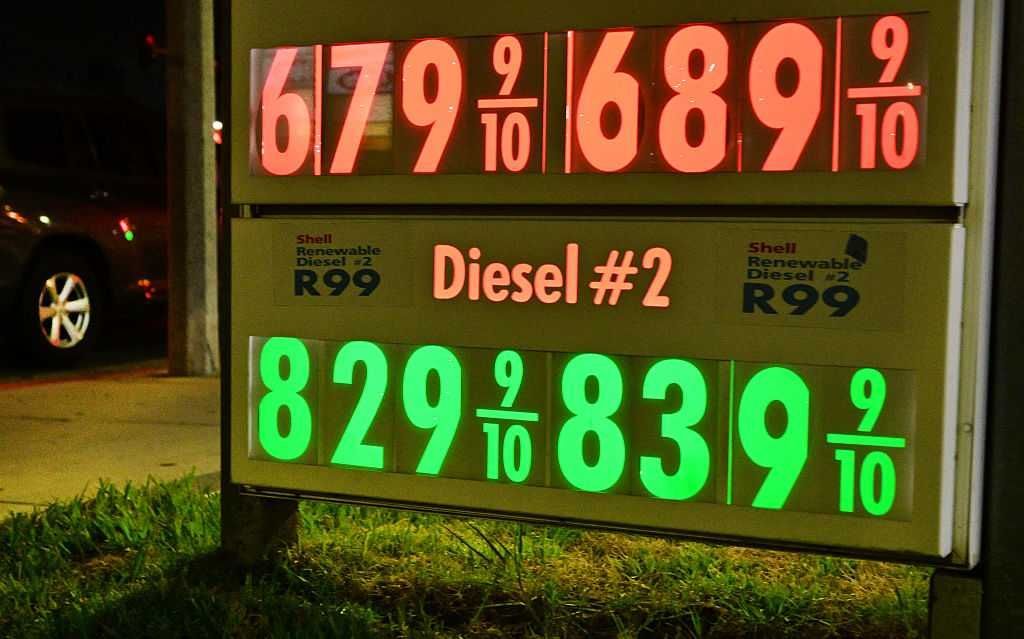
Diesel prices are at all-time highs, and panic has set in. Several Republican senators from Midwest farm states in competitive midterm races are calling on the administration to ban diesel exports. Even President Trump expressed support for the proposal. Lawmakers desperately want to curb the pain felt at the pump and throughout the agricultural industry. It’s understandable. But the knee-jerk reaction to “do something” by banning diesel exports is ill advised and would quickly backfire.

Logic might dictate that preventing all diesel from leaving our borders will allow it to fulfill our needs first. It just doesn’t work that way. Petroleum is a global market.

The only way to curtail a diesel surplus would be to cut back on crude altogether, a move that would be economically devastating.

The U.S. fuel network is not set up to distribute gas throughout our country. Nearly 55% of the nation’s refining occurs along the Gulf Coast, producing more than enough diesel for the region. But much of the surplus must be exported, as there are very few avenues to ship it to other domestic markets, like the East and West Coasts, where it is needed. Both those areas rely on imports to satisfy their diesel and other gasoline demands.

The U.S. has too few pipelines and cargo capabilities to transport energy to these locations. And storage is not an option; there is only so much space.

Refineries cannot flip a switch to produce only the diesel needed at a given time. Processing a barrel of crude oil produces certain proportions of gasoline and other distillates (like diesel and jet fuel); refiners are limited in their ability to adjust those proportions.

The only way to curtail a diesel surplus would be to cut back on crude altogether, a move that would be economically devastating.

At a time when we are already experiencing significant gasoline shortages and steep prices, constricting our supply further would only continue to inflate prices. Voters still rate the economy and affordability as their top concern; higher conventional gas prices would increase financial strain on household budgets.

U.S. diesel exports represent roughly 20% of global supply, which means they put downward pressure on global prices. Removing that portion would push those prices up, and the regions that depend on diesel imports — like the East and West Coasts — will face higher prices.

A ban on diesel and other refined products has been proposed before and soundly rejected. The Biden administration broached the topic in late 2021 but ultimately decided against it. Several analyses concluded that the action would adversely impact the country.

RELATED: The one loophole in Trump’s tariff policy

Jeff Swensen/Getty Images

A 2022 American Council for Capital Formation study predicted that such a ban would shut down roughly 1.3 million barrels a day of refining capacity. More than two-thirds of U.S. consumers would see price increases of roughly $0.15/gallon for gas and $0.45/gallon for diesel, and GDP would drop by $44 billion the following year.

McKinsey & Company similarly calculated bad news for U.S. consumers. A ban may initially provide relief for Gulf Coast and Midwest customers, but it wouldn’t last. Import-reliant regions, such as our coasts, would experience diesel price spikes due to global prices inflating by at least $0.60 per gallon.

Unfortunately, until there is a durable resolution to the geopolitical conflicts and disruptions abroad that would restore a steadier flow of resources, there is not a quick remedy that can bring energy costs down. Since energy markets and refinery operations are globally interconnected, a rash course of action has ripple effects felt across supply chain networks, some of which touch parts of our own country.

Lawmakers should focus on long-lasting solutions at home that will provide better insulation and protection from outside forces beyond our control.

  • Make federal land leasing more predictable and feasible for petroleum exploration and development.
  • Streamline permitting to facilitate and hasten building energy infrastructure like refineries for processing fuel and pipelines to transport it across the country.
  • Create a regulatory environment that fosters investment in the essential energy sources that run our economy.

A durable fix requires resisting the temptation of quick, politically satisfying moves and instead doubling down on policies that expand supply, modernize infrastructure, and strengthen the resilience of our energy system.

Banning diesel exports would raise prices for most Americans, destabilize global markets, and weaken the very regions already under strain. Rather than constricting flows in a tightly interconnected network, lawmakers should pursue reforms that unlock investment, improve distribution, and ensure that the U.S. can reliably meet its own needs.

The path to lower prices runs through growth and modernization — not restriction.

Editor’s note: This article was originally published by RealClearEnergy and made available via RealClearWire.

Canada Has No Real Alternative To Taking Trump’s Trade Deal, But It’s Sabotaging Itself To Pretend Otherwise

The United States remains Canada’s gravitational center, whether they like it or not.

Trump EPA Moves To Permanently Eliminate Greenhouse Gas Emissions Rules for Power Plants, Gutting Biden’s Signature Environmental Policies

The Trump Environmental Protection Agency is planning to propose the permanent repeal of federal regulations of power plants’ greenhouse gas emissions, asserting that such rules have “virtually no benefit,” the Washington Free Beacon has learned. In tandem with that proposal, the agency is finalizing plans to gut other Biden-era climate rules that forced existing coal-fired plants to close down and stymied future gas plant development.

The post Trump EPA Moves To Permanently Eliminate Greenhouse Gas Emissions Rules for Power Plants, Gutting Biden’s Signature Environmental Policies appeared first on .

The data center mob wants your property rights too


The war on data centers has intensified to the point that localities across the country are banning them outright or stopping them through targeted zoning and regulation. The concerns are understandable. The political response is not.

Public opposition has jumped 12 percentage points in four months, with 61% now saying they oppose building new data centers, according to the Annenberg Public Policy Center. Opponents held 142 protests in 42 states on July 18, citing water use, noise, electricity demand, outages, pollution, and property values.

There is an obvious alternative for people who do not want a data center built on a particular parcel: Buy the land.

Predictably, politicians are turning against the industry.

On August 18, Pennsylvania Gov. Josh Shapiro (D) signed an executive order restricting data center construction and boasted that he was imposing “the strictest guardrails in the nation.” He denounced a history of industry “running roughshod over our communities to make a buck” and vowed that Pennsylvania would not be “bullied” or “bulldozed” by developers and their lawyers.

Critics noted that Shapiro, who faces re-election this year, had strongly supported data center construction and even placed projects in a fast-track approval program before the recent grassroots backlash.

The turn is broader than Pennsylvania. Some 210 counties and local governments now have active moratoriums on data center construction. More than 3,000 centers are operating in the United States, with another 1,500 under construction, Pew Research reports. Two-thirds of planned facilities are headed to rural areas, while 87% of existing data centers are urban.

It is reasonable to worry about harm from any large enterprise. Citizens have every right to warn property owners and neighbors about potential costs. They often have a moral responsibility to do so.

But concern does not create a general right to control someone else’s property.

No one can foresee all the consequences, positive or negative, of a novel enterprise. That is one reason we have courts: to hear claims of actual harm, determine responsibility, and order compensation or punishment where warranted. A functioning civil justice system reduces the need for sprawling systems of preemptive command and control.

Governments should not single out data centers with punitive taxes or regulations, nor should they subsidize them. Let them pay for the energy they use, comply with laws that apply generally, receive no privileged access to water or other resources, and answer in court if they injure others.

RELATED: The data center backlash is getting spiritual

Imaginima/Getty Images

That is a better rule than trying to calculate every hypothetical “social cost” in advance and empowering regulators to decide which enterprises may proceed. Markets reveal costs and benefits imperfectly, but government regulation does too — usually with fewer incentives to admit mistakes.

In a free society, you do not get to decide what other people do with their property merely because you dislike the proposed use. That remains true when “you” becomes “we.” A majority does not acquire a moral right to coerce simply by counting heads.

There is an obvious alternative for people who do not want a data center built on a particular parcel: Buy the land.

If you cannot afford it alone, put together a consortium. If you can afford it but would rather force the owner to accept your preferred use without paying him, then the problem is no longer the data center. It is your claim to control property you do not own.

Buy it, and you may use it as you wish — subject, of course, to the same rule protecting your neighbors from actual harm. Mission accomplished.

The developer will go somewhere else, taking the jobs, local tax revenue, and other economic benefits to a community that wants them more.

That process is not perfect. Nothing involving human beings is. But voluntary exchange does a better job of matching scarce resources with people willing to bear their costs than political systems in which the loudest coalition simply vetoes uses it dislikes.

Unfortunately, that is no longer good enough for a growing number of Americans. The backlash against data centers parallels the rise of democratic socialism in one important respect: Both elevate collective control over individual property rights.

People who want to build data centers should listen seriously to objections. They should pay their own way and answer for the harm they cause. But the reflexive demand to control other people’s property because a project is unpopular reflects a much older political decay.

Restoring property rights is essential to renewing American prosperity and human flourishing. Data centers would be a good place to start.

DC’s Socialist Soon-To-Be Mayor Ran on Energy Affordability—but Pushed ‘Make Polluters Pay’ Plan That Experts Say Will Raise Power and Gas Bills

Janeese Lewis George, an avowed socialist who is heavily favored to become the next mayor of Washington, D.C., made energy affordability a central pillar of her campaign, stating that "all Washingtonians should be able to afford everyday needs like electricity." But as a member of the D.C. city council, she authored legislation that would open the door to forcing oil and gas companies to pool billions of dollars into a climate fund, something experts say would make energy even more expensive in the city.

The post DC’s Socialist Soon-To-Be Mayor Ran on Energy Affordability—but Pushed ‘Make Polluters Pay’ Plan That Experts Say Will Raise Power and Gas Bills appeared first on .

Water, watts, and workers: 3 persistent myths about AI and data centers


Artificial intelligence has become a national political issue and increasingly a local one. Communities across the country are fighting over the massive data centers needed to power the AI boom. Environmental groups warn about water consumption. Ratepayers worry about electricity bills. Workers fear the technology will undermine their livelihoods.

The backlash crosses ideological lines, and many of the concerns deserve to be taken seriously. But too often, the debate begins and ends with a terrifying number stripped of the context needed to understand it.

As AI advances, America will face difficult choices. The only way to make them intelligently is to start with the facts rather than with numbers selected for maximum panic.

There are genuine questions surrounding AI — privacy, surveillance, censorship, individual autonomy, and concentrated power among them. But three of the most common criticisms of AI and data centers are often overstated.

Claim 1: Data centers are consuming all our water

Stories about data-center water use often begin with numbers designed to shock. One project may use millions of gallons a day. Another state may be projected to consume billions of gallons annually. In a water-stressed community, those figures can absolutely matter.

But scale matters too. A 2026 analysis published by the Florida Water and Pollution Control Operators Association estimated that all U.S. data centers combined accounted for roughly 0.3% to 0.4% of total daily U.S. water withdrawals, based on 2021 figures.

Cooling methods also vary dramatically. Some facilities rely heavily on evaporative cooling. Closed-loop and air-cooled systems can use far less water. Location, water source, cooling design, and the condition of the surrounding system matter enormously.

Industrial comparisons help restore perspective. Data centers are hardly unique in consuming large volumes of water. U.S. golf courses use roughly 30 times as much water annually, while California almond production alone has been estimated at well over 100 times as much.

That does not mean a poorly located data center cannot strain a local supply. It means “millions of gallons” is not an argument by itself. The relevant question is whether a particular facility imposes a meaningful burden on a particular water system.

Claim 2: Data centers are consuming all our power

The electricity numbers are enormous too. Lawrence Berkeley National Laboratory estimated that U.S. data centers consumed about 200 terawatt-hours of electricity in 2025, roughly 4.7% of total national electricity consumption.

From there, critics often assume that more data-center demand must translate directly into higher household bills. The evidence is less straightforward. Some research suggests that recent data-center growth has had only a limited effect on retail rates, while broader inflation and energy-policy choices may explain more of the increase consumers have seen.

That does not mean new data centers are costless to the grid. Poor rate design can shift infrastructure costs onto ordinary customers, and badly planned projects can strain local capacity. But the obvious answer to rising demand is not simply to suppress demand. It is to build more abundant, reliable power.

RELATED: AI is coming for your job, your voice ... and your worldview

LPETTET/iStock/Getty Images

The AI boom may be creating exactly that incentive. Amazon recently acquired an 8,000-acre site in Texas for a data-center project that could include up to 7.65 gigawatts of on-site natural-gas generation. Microsoft, meanwhile, signed a deal tied to the restart of Three Mile Island to supply roughly 835 megawatts of nuclear power.

America spent decades making it harder to build reliable energy. If AI demand helps reverse that habit, that is not obviously a national disaster. It may be the pressure needed to start building again.

Claim 3: AI is going to displace all our jobs

Of the three claims, job displacement deserves the most caution. I have written before about the real possibility that AI could eliminate certain jobs, especially entry-level positions. Long-term forecasts are difficult because nobody knows how capable these systems will become. Still, history gives us reason to distrust the most apocalyptic predictions.

In 2016, AI pioneer Geoffrey Hinton argued that people should stop training to become radiologists because machines would soon outperform humans at reading medical images. A decade later, radiology is hardly disappearing. Research shows the number of active U.S. radiologists rose over the past decade, salaries increased, and workloads expanded along with the use of medical imaging.

That may be an example of “Jevons paradox”: When technology makes a resource or service cheaper and more efficient, total demand can rise. A recent medical paper applied the idea directly to AI and physicians.

The same possibility applies beyond medicine. If AI makes a programmer five times more productive, it is tempting to assume the economy will need one-fifth as many programmers. But economies are not static. If software becomes dramatically cheaper to produce, businesses that could never afford custom software may suddenly buy it. New applications become economical. Entirely new product categories can emerge.

None of that guarantees that every displaced worker will land comfortably in a new job, or that every profession will grow. Technological change creates winners and losers. The point is narrower: Productivity gains do not translate mechanically into equivalent job losses.

RELATED: The next fight over freedom will run through AI models

wildpixel/iStock/Getty Images

The concerns we should consider

None of this means AI is safe or harmless. The strongest concerns may simply be different from the ones dominating the headlines.

As AI becomes embedded throughout society, these systems could shape what information people see, how institutions make decisions, and how individuals interact with government and business. Massive data collection could strengthen surveillance. Ideological biases could be embedded in algorithms. Dependence on AI could weaken personal autonomy and concentrate decision-making power in governments and corporations.

Those questions deserve more attention than sensationalized claims about water, watts, and workers.

As AI advances, America will face difficult choices. The only way to make them intelligently is to start with the facts rather than with numbers selected for maximum panic.

The goal should be to preserve individual liberty, privacy, transparency, personal autonomy, and constitutional principles while allowing innovation to flourish. Exaggerating the easy concerns only makes the difficult ones harder to confront.
‘Raw Materials of American Strength’: Trump Announces Flurry of Mining Deals at State Department To ‘Dominate the Future’

WASHINGTON, D.C.—President Donald Trump unveiled deals worth more than $2 billion and funding announcements worth millions of dollars more aimed at bolstering America’s mineral supply chain during a roundtable at the State Department on Friday, alongside a group of prominent mining executives. The moves are designed, according to Trump and senior administration officials, to claw […]

The post ‘Raw Materials of American Strength’: Trump Announces Flurry of Mining Deals at State Department To ‘Dominate the Future’ appeared first on .

High-Profile Report Linking Extreme Weather to Human-Caused Climate Change Lists Lawyer Suing Oil Companies, Researchers Paid by Anti-Oil Lawsuit Funders in Acknowledgments

A highly anticipated research report linking human-induced climate change to extreme weather events lists a lawyer and multiple researchers who have ties to high-stakes lawsuits Democrat-led states have filed against oil companies in its "acknowledgments" section. The report's findings may now be used in that same litigation, which, if successful, could cost the energy industry […]

The post High-Profile Report Linking Extreme Weather to Human-Caused Climate Change Lists Lawyer Suing Oil Companies, Researchers Paid by Anti-Oil Lawsuit Funders in Acknowledgments appeared first on .