Socialism’s favorite bait-and-switch


The Democratic Socialists of America are no longer hiding the ball.

In July, the organization published a manifesto calling on the United States to "establish public ownership of the largest corporations and essential industries to ensure democratic control and accountability to the people.”

Public ownership does not give power to the people. It gives power to the government — and asks the people to trust that government never to abuse it.

That is not a proposal for higher taxes, tighter regulation, or a larger welfare state. It is a demand to replace private ownership of America’s largest companies with government ownership.

The language is designed to sound appealing. Why should a handful of billionaires control enormous corporations while everyone else gets left behind? Why shouldn’t “the people” own those companies instead?

No more greedy executives collecting fortunes while workers earn far less. No need to nationalize every business — only the “essential” industries deemed too important to operate for profit or remain in private hands.

It sounds reasonable. It sounds as though power would finally be taken from wealthy corporations and returned to society.

But that is nearly how Fidel Castro sold communism to the Cuban people.

History shows that “ownership by the people” usually means control by the government. The public does not acquire power. Politicians and bureaucrats do.

Castro did not introduce himself as a communist promising state control over every part of Cuba’s economy. He said he was fighting corruption, inequality, and concentrated wealth. Private property and capitalism became the villains. The solution was to place the country’s most important industries under the control of “the people.”

The rhetoric sounded fair and humane. Wealthy owners would lose power, and ordinary Cubans would gain it.

The first part happened. The second did not.

RELATED: From helping hand to five-finger discount

Lindsey Nicholson/UCG/Universal Images Group/Getty Images

Power was taken from private owners, but it never reached ordinary Cubans. It accumulated in the hands of the state. Today, Cubans live under political repression, chronic scarcity, and widespread poverty.

“Nothing belongs to you. It all belongs to the government,” Rosa Garcia, a survivor of Castro’s Cuba, recalled in an interview with Young Americans Against Socialism.

Garcia watched the transformation firsthand. She remembers Castro assuring Cubans that his revolution was not communist. Many believed him. Some hung signs on their doors reading, “This house is yours, Fidel.”

As government control expanded, private property rights disappeared. So did the ability to obtain goods, build wealth, or make basic economic choices without permission from the state.

When Garcia’s family later applied to leave Cuba, government officials came to their home and inventoried everything they owned to ensure they took nothing with them. Utensils, clothing, and household possessions all belonged to the government.

That is the reality behind the dreamy language of collective ownership. What supposedly belongs to everyone is controlled by the people who run the state.

Public ownership also carries enormous economic costs.

Private property gives people a reason to create, invest, innovate, and serve customers. Every smartphone, laptop, lifesaving medicine, digital platform, and other product we rely on exists because someone had the freedom to take a risk and the opportunity to profit from success.

Before Castro’s revolution, Cuba ranked among Latin America’s more prosperous countries. Today, it is one of the region’s poorest, with nearly 90% of its population living in severe poverty.

Take away private ownership, and you do more than redistribute wealth. You weaken the incentive to build businesses, develop technology, create jobs, and produce the prosperity those activities generate.

Supporters of democratic socialism will reasonably object that modern America is not revolutionary Cuba. The United States has stronger institutions, a different political culture, and constitutional protections Cuba did not preserve. Public ownership of one enterprise does not automatically produce a one-party communist state.

That distinction does not eliminate the underlying danger.

Nationalization begins with the easiest targets: highly profitable companies, billionaires accused of earning too much, and industries politicians label too important to remain privately owned.

RELATED: Who wants to eat a trillionaire?
Leon Neal/Getty Images

Once society accepts the principle that government may replace private ownership whenever politicians decide an owner is too rich or a company is too important, no clear limiting principle remains.

Why stop with the largest corporations?

Every industry placed under public ownership gives government officials more authority to decide how resources are used, which services are available, and who receives them.

Cuba’s history shows how quickly control of a few “key industries” can become a broad assault on private property. America would be foolish to assume the same principle could be embraced here without the same temptation to expand it.

Public ownership does not give power to the people. It gives power to the government — and asks the people to trust that government never to abuse it.
Trump is continuing JFK’s war on communist subversion


When President Trump reposted a video featuring President John F. Kennedy warning about subversion in America, he renewed focus on a threat we have long ignored at our peril.

Spotlighting JFK’s admonition is part of the administration’s all-out attack on foreign subversion — an effort that has no presidential precedent. Its designation of Antifa and certain Muslim Brotherhood chapters as terrorist organizations was a first. The revocation of visas for foreign subversives, if carried out on a larger scale, will be unmatched in scope.

Kennedy understood that peace through strength was broader than deploying military power or international diplomacy. But he never had the chance to deliver that warning.

During the July 16 Ministerial on the Resurgence of Political Terrorism, Secretary of State Marco Rubio, Treasury Secretary Scott Bessent, and other officials made clear that the Trump administration would use every tool of statecraft to dismantle the decades-old subversive networks operating in the United States.

This effort has also refocused attention on an older — but no less potent — enemy: communist subversion.

The State Department published a 100-page report “Cuba: The Capital of 21st-Century Communism,” detailing how Cuban communists have worked for decades to overthrow the United States. It names names, past and present.

Cuba, of course, brings us back to President Kennedy. Despite his failed effort to remove Fidel Castro’s communist regime, Kennedy frequently pointed out how communists abused constitutional protections and infiltrated U.S. institutions — the news media, labor unions, academia, and the government itself.

JFK’s words still apply today to surviving Soviet spin-offs like the Cuban regime, critical theory and critical race theory, cultural Marxism, and democratic socialism.

As a new senator, at the height of Wisconsin Republican Sen. Joseph McCarthy’s investigative hearings, Kennedy warned in successive speeches that the greatest foreign threat would rely on “the weapons of subversion, economic disintegration, and guerrilla warfare to accomplish our destruction, rather than the direct assault of an all-out war.”

Kennedy warned every possible audience — schoolteachers, university professors, community leaders, newspaper editors, women’s clubs, union leaders, military personnel, veterans, business groups, political fundraisers, civil liberties leaders, church groups, and the general public — about the communist threat right up to the last day of his life.

Kennedy recognized the danger posed by American traitors who sought, through subterfuge and collaboration with the foreign enemy, to corrode Americans’ belief in their country and the principles of their nation’s founding. He praised some American labor unions for ridding themselves of communist subversion.

Defending President Eisenhower’s counter-subversion approach in 1957, Kennedy nonetheless chided his fractured and squabbling Republican opponents. Republicans, he said, “found that their chief concern was with questions of disloyalty and subversion — not within the Federal Government but within the Republican Party.”

That was just three weeks to the day after Joe McCarthy’s death. JFK never publicly criticized McCarthy, who had been a welcome guest of his father at the Kennedy Compound on Cape Cod. “Half my people in Massachusetts look on McCarthy as a hero,” he once said.

RELATED: The socialists are coming for the Senate

Kid-a/Getty Images

Infiltration and subversion

Kennedy repeatedly warned of what he called “nonmilitary avenues of Soviet advance”: “I fear our emphasis on the dangers of missile attacks may cause us to forget. For their thrust is more subtle,” and “the task of opposing them more formidable.”

Among those threats were “economic and political penetration, intimidation, and subversion,” he said in 1958. “There is little value in rushing new billions in defense expenditures to fight total wars ... if we are unprepared to prevent continued Soviet advances through ... subversion and intimidation.”

As he was preparing his presidential run, Kennedy mused during a speech at a civil liberties conference that the public had been so subjected to subversive attacks that they no longer shared the civic principles that once united them.

On the campaign trail in 1960, Kennedy raised the topic of subversion even before audiences asked about it. As the Democratic nominee for president, Kennedy became more critical of the Eisenhower administration for focusing on massive military buildups at the expense of a predictable pattern of communist ideological conquest made easier by America’s weakness in counter-subversion:

In other words, there is every chance that the pattern of conquest of the communists will not be military action, but will be by subversion, by fear, by persuading the people of those countries and their leaders that the communist system represents the way of the future. I don’t believe the administration has recognized that danger. ... I don’t believe that our influence has increased as fast in recent years abroad as that of the communists.

In his last weeks of campaigning, Kennedy even called the communist threat more challenging than dealing with the Nazis. “I must say that the problems we will face in the next 10 years are far more complex than any that Franklin Roosevelt or Harry Truman faced, particularly in the field of foreign policy,” he said to supporters in Ohio. “What has happened in the last two years in the field of foreign policy indicates a whole technique of subversion and infiltration, which will be extremely hard to counter.”

That subversion, he continued, “will require a far great[er] subtlety, far more constant vigilance, far greater personnel, far greater foresight than we have ever shown before.”

Unaware of President Eisenhower’s plan for toppling the new Fidel Castro regime that he would inherit, Kennedy tore into U.S. unpreparedness that led to Cuba becoming “a base from which to carry communist infiltration and subversion throughout the Americas.”

Kennedy was alone in bringing up subversion during his fourth debate with Vice President Richard M. Nixon, which was striking since Nixon had become a national political figure while serving on the House Un-American Activities Committee.

What you can do

Kennedy hammered away at the threat of communist subversion in the first minutes of his presidency. In his inaugural address, he vowed “to oppose aggression or subversion anywhere in the Americas” — the same speech in which he said, “Ask not what your country can do for you — ask what you can do for your country.”

He warned in a 1961 emergency address to Congress that “nuclear weapons cannot prevent subversion.”

He and his brother, Attorney General Robert F. Kennedy, had no love for FBI Director J. Edgar Hoover, but they worked closely with him to investigate and disrupt communist infiltration of the civil rights movement. JFK, like Eisenhower before him and Lyndon Johnson and Nixon afterward, treated it properly as a counterintelligence problem.

On the day of his assassination in Dallas, President Kennedy was ready once again to warn about subversion. The president’s remarks as prepared read:

I want to discuss with you today the status of our strength and our society because this question clearly calls for the most responsible qualities of leadership and the most enlightened products of scholarship. For this nation’s strength and security are not easily or cheaply obtained, nor are they quickly and simply explained. There are many kinds of strength and no one kind will suffice. Overwhelming nuclear strength cannot stop a guerrilla war. Formal pacts of alliance cannot stop internal subversion.

Kennedy understood that peace through strength was broader than deploying military power or international diplomacy.

But he never had the chance to deliver that warning. More than six decades later, President Trump and his team have fortunately picked up where he left off, reviving a neglected part of Kennedy’s legacy. It’s time to follow President Kennedy’s lead and uproot domestic subversion in America once and for all.

Editor’s note: This article appeared originally at the American Mind.

Pope Leo Embraces Liberation Theology By Calling Health Itself A ‘Universal Right’

Pope Leo said that Pope Francis affirmed health is 'a universal right which means that access to health care services cannot be a privilege.'

Glenn Beck warns: Government reliance is a 'poisoned promise'


The government shutdown may be ending, but it revealed something very important about Americans as a whole — too many rely on the government to survive.

And that is a very dangerous situation to be in.

“Whenever a society gets into this situation, history will show us a poisoned promise begins,” Blaze Media co-founder Glenn Beck explains.

“The socialists always arrive making all kinds of poison promises,” he says. “And there is a pattern, and it is so ancient it could be scripture. ... Every socialist experiment starts with the same smooth-tongue promise: ‘We are going to make life fair.’”


“Unfortunately for socialists, you know, history keeps impeccable books. The receipts are really, really damning. Fortunately for socialists, nobody ever reads history,” he continues.

These receipts that Glenn pulls out are in the form of Hugo Chavez in Venezuela, Fidel Castro in Cuba, and Adolf Hitler in Germany.

“This story of socialism is written in blood in ledger books all over the world,” Glenn says. “And it always starts with the promise of equity or equality. And it always leads to the rise of an elite who decides what equality means. And every time it fails, they say, ‘Well, that was just put in the hands of the wrong people.’”

“No, the key word here is not ‘wrong,’ it’s ‘people.’ People. The workers never get the factories. The peasants never receive the land. The poor never get any of the wealth. And it's this story over and over and over again,” he continues.

“Socialism begins with a promise but always ends with a ruling class armed with absolute power,” he says, adding, “Only the names change.”

Want more from Glenn Beck?

To enjoy more of Glenn’s masterful storytelling, thought-provoking analysis, and uncanny ability to make sense of the chaos, subscribe to BlazeTV — the largest multi-platform network of voices who love America, defend the Constitution, and live the American dream.

Mamdani’s Political Party Mourns Convicted Cop Killer Assata Shakur

Zohran Mamdani’s political party, the Democratic Socialists of America (DSA), mourned Assata Shakur, one of the FBI’s former most wanted terrorists, who was convicted of murdering a New Jersey state trooper in 1973 before fleeing to Cuba years later.

The post Mamdani’s Political Party Mourns Convicted Cop Killer Assata Shakur appeared first on .

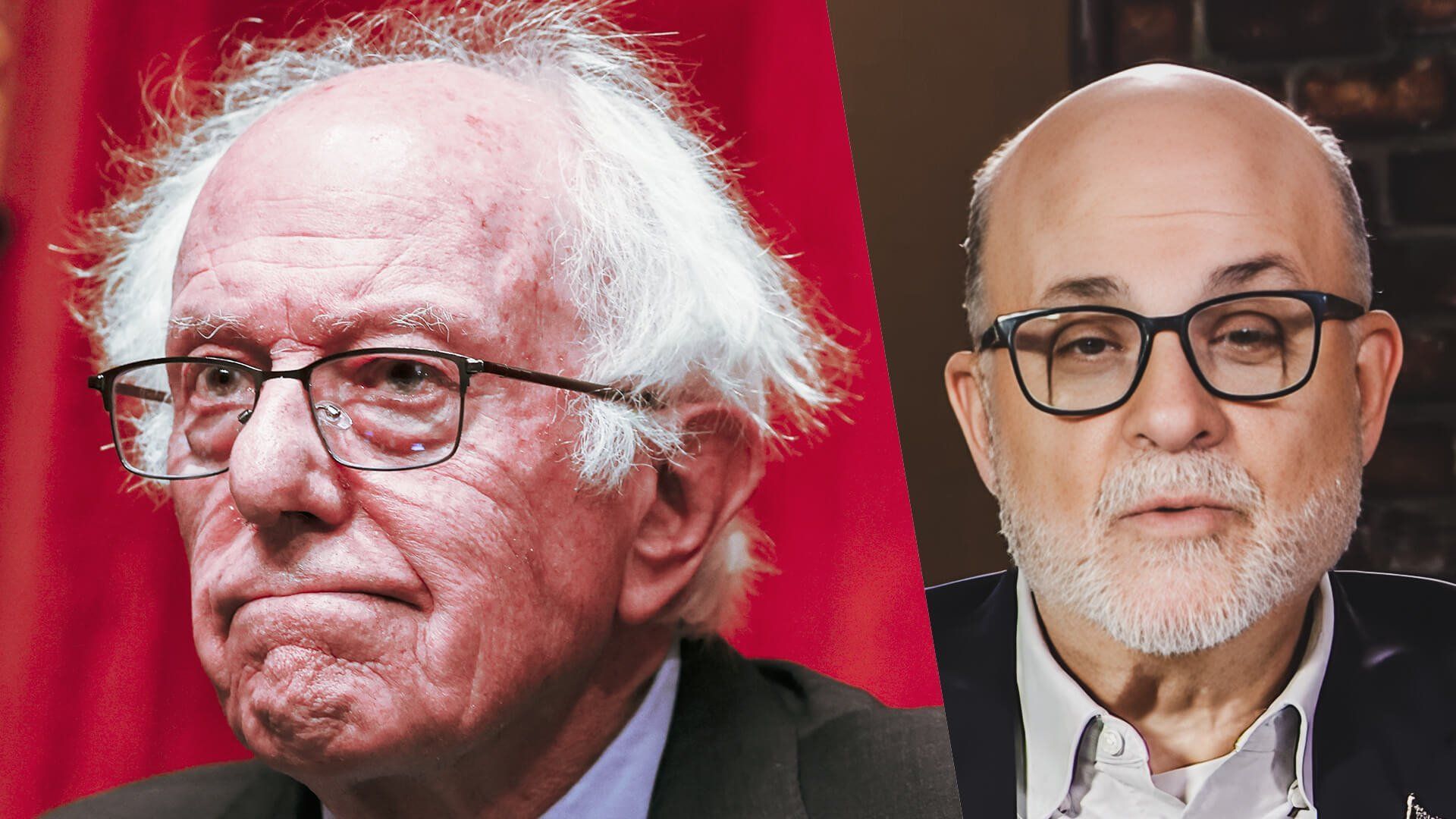
Bernie Sanders shuns Mark Levin debate: Scared of being grilled over his Castro crush?


Mark Levin has repeatedly invited Sen. Bernie Sanders (I-Vt.) on “LevinTV” to debate him over Sanders’ long list of socialist policies, like government-run health care, punitive wealth taxes, and union-heavy labor schemes. Many public invitations have been extended, but every time — crickets.

Is he just too busy rallying Trump haters on his "Fighting Oligarchy" tour? Or is he scared Mark will wipe the floor with him?

Perhaps he’s hesitant because he knows he’ll be skewered over his fascination with communist dictators — like his lauding of the tyrannical Cuban despot Fidel Castro back in 2020 during a "60 Minutes" interview and subsequent CNN town hall.

Following his controversial statement in the interview that it’s “unfair to simply say everything [about Castro’s Cuba] is bad,” Sanders doubled down in the town hall.

“When Fidel Castro first came to power ... you know what he did? He initiated a major literacy program,” Sanders retorted.

“There was a lot of folks in Cuba at that point who were illiterate, and he formed a literacy brigade. ... They went out, and they helped people learn to read and write. You know what I think? Teaching people to read and write is a good thing,” he added.

“Wow, a literacy program,” mocks Levin. “But you weren't allowed to read what you wanted to read. You weren't allowed to say what you wanted to say. There was no right to speech, free speech, or any other kind of speech unless it was dictated by the government.”

Castro, he reminds, was “a genocidal maniac who was killing people and throwing them in prison,” and his “literacy brigades” were “filled with people who had allegiance to [him] and the communists.”

“They were not just going into homes to teach literacy. They were going in their homes to spy,” says Levin.

Sanders caveated his praise of Castro’s literacy initiative by arguing he’s been “critical of all authoritarian regimes all over the world,” including Cuba’s, but Levin calls him a “a liar.”

“He used to defend all the communist leaders. Now, he's got a little more clever in his extremely old age,” he corrects.

“He supported the communist leader in Nicaragua. ... He supported the communist leader in Cuba. He supported the communist leader in the old Soviet Union when he honeymooned in Moscow,” Levin adds.

Sanders capped his defense of Castro by arguing, “I happen to believe in democracy, not authoritarianism.”

“No, he doesn't believe in democracy,” says Levin, citing George Orwell’s 1946 essay “Politics and the English Language,” in which he argued that political language is often manipulated by authoritarians to mask their wicked ends.

Sanders is “a Stalinist,” he says.

“This is why Bernie Sanders won't come on any of my shows. He will not come on any of my shows because he knows I'm going to question him.”

To see the clip of Sanders and hear more of Levin’s commentary, watch the clip above.

Want more from Mark Levin?

To enjoy more of "the Great One" — Mark Levin as you've never seen him before — subscribe to BlazeTV — the largest multi-platform network of voices who love America, defend the Constitution, and live the American dream.

Fidel Castro Acolyte Karen Bass Is No Stranger To Orchestrating Organized Chaos

Bass believes that the use of taxpayer dollars to deploy the National Guard and Marines to Los Angeles to protect the city and its citizens, as well as federal law enforcement, is 'shameful' and 'despicable.'
When Romanians went to work on Christmas Day


Most Americans get Christmas Day off, but it wasn’t like that for embattled Romanians back in 1989. Under Stalinist dictator Nicolae Ceaușescu, Romania was one of the most oppressive states in the world, practically on the level of Enver Hoxha’s Albania. Ceaușescu bulldozed churches and banned the celebration of Christmas.

In the city of Timisoara, Ceaușescu's Securitate attacked pastor Laszlo Tokes for criticizing the regime, and on December 17, 1989, the people organized an anti-government demonstration. Ceaușescu ordered his forces to fire on the crowds, killing nearly 100 protesters. Mass protests broke out across the country, and this time, the military sided with the people.

Totalitarians believe they can get away with murder, but sometimes the people prove victorious.

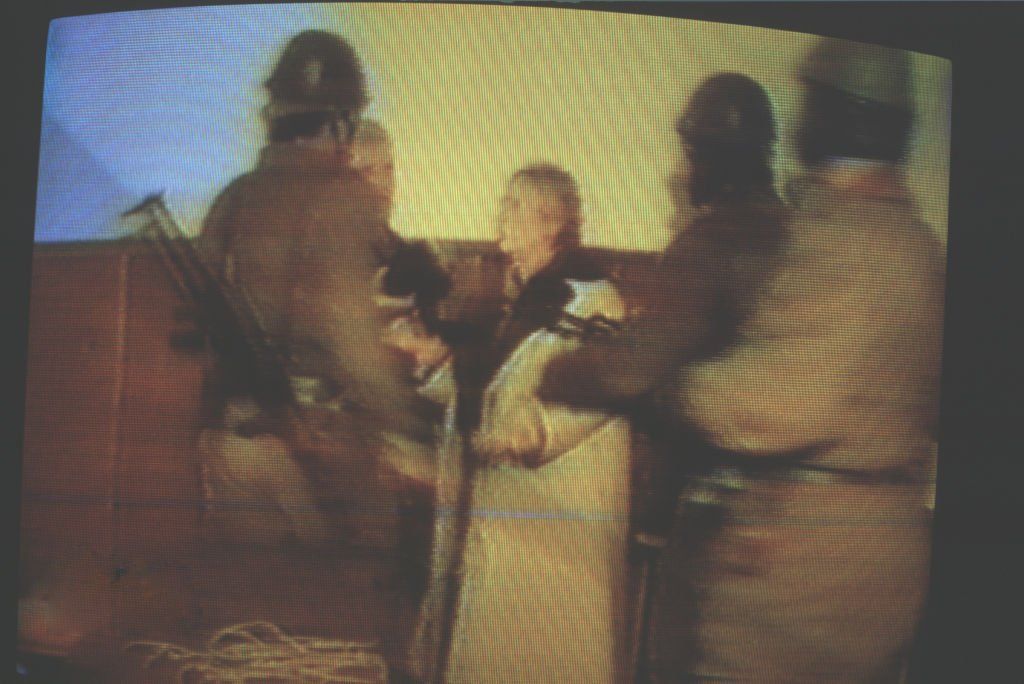
Ceaușescu fled in a helicopter, but the pilot forced a landing and soldiers took him into custody. Nicolae and wife Elena were swiftly tried for crimes against humanity and sentenced to death.

On Christmas Day, an elite unit led the pair toward an outdoor toilet block in a courtyard. Nicolae sang the “Internationale” while Elena shrieked filth at a soldier, who hauled off and smashed her face. The troops then stood the pair against a wall, set their Kalashnikovs on full automatic, and opened fire. Unlike the bloody scene in Timisoara, the rifle reports came as tidings of comfort and joy.

For the first time in decades, Romanians openly celebrated Christmas, and the next year, the nation held free elections. Too bad that the vile Ceaușescu was the only Stalinist dictator who got what he deserved.

Josef Stalin, murderer of more than 20 million, died of a heart attack on March 5, 1953. According to “The Black Book of Communism,” Mao Zedong’s genocidal campaigns claimed more than 60 million victims. China’s “Great Helmsman” died peacefully on September 9, 1976, at the age of 82.

Albania’s Enver Hoxha died of complications from diabetes on April 11, 1985, at the age of 76. Erich Honecker, communist dictator of the German Democratic Republic and builder of the Berlin Wall, died of cancer in Chile on May 29, 1994, at the age of 81.

Khmer Rouge dictator Pol Pot, whose campaign of genocide took down nearly 2 million innocents, about 21% of the population, died in his sleep on April 15, 1998. Sado-Stalinist Fidel Castro, darling of American leftists, passed away peacefully on November 25, 2016, at the age of 90.

Totalitarians believe they can get away with murder, but sometimes the people prove victorious. As Americans celebrate in freedom, they might recall Romania’s Kalashnikov Christmas, and in the new year take a lesson from Milan Kundera in “The Unbearable Lightness of Being.” In all nations, at all times, the struggle against tyranny is the struggle of memory against forgetting.

Kamala Harris Embraces Popular Communist Slogan

Kamala Harris has served as vice president since 2021, but that hasn't stopped her from running for president as the "change" candidate who will "turn the page on the last decade." In doing so, the Democrat has embraced a communist slogan popularized by Cuban dictator Fidel Castro and American tyrant Barack Obama.

The post Kamala Harris Embraces Popular Communist Slogan appeared first on .

Happy Anniversary: It's Been 7 Years Since Obama Bro Ben Rhodes Was a Special Guest at Fidel Castro's Funeral

Seven years ago today, Ben Rhodes attended the funeral of Cuban dictator Fidel Castro as a special guest of the communist regime. The failed novelist and former White House national security adviser, best known for helping Barack Obama coddle America's enemies, mourned the ruthless strongman alongside official delegations from China, Russia, and Iran.

The post Happy Anniversary: It's Been 7 Years Since Obama Bro Ben Rhodes Was a Special Guest at Fidel Castro's Funeral appeared first on Washington Free Beacon.