
Karoline Leavitt lands another new job
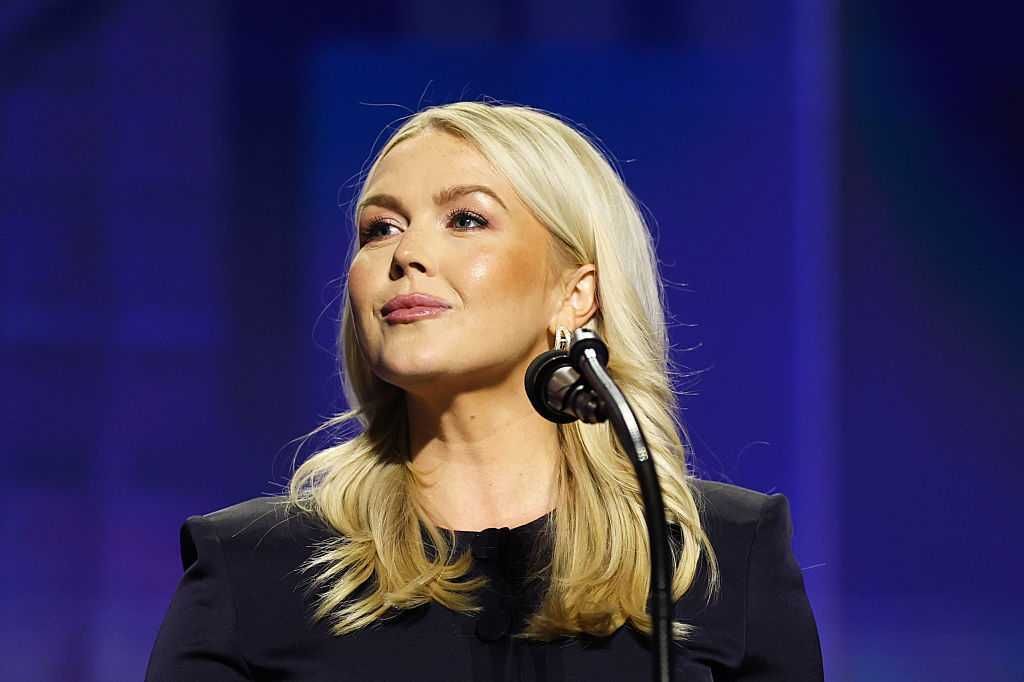
President Donald Trump’s former White House press secretary Karoline Leavitt resigned at the end of August and rejoined Trump-affiliated super PAC MAGA Inc. Shortly after, she was a featured speaker at the Republican Midterm Convention in early September. Now, just about a month later, she’s ready to start a new chapter in her professional life.
On Monday, Fox News announced that Leavitt will join the network as a contributor starting on November 1. According to the network’s reporting, she is scheduled to “provide commentary across the Fox News lineup.”
'I look forward to bringing my unique perspective from my experience as White House press secretary, along with the same energy and candor that defined my tenure, to Fox’s millions of viewers across their many platforms.'
While Leavitt interned at local news organizations when she was a student at New Hampshire’s Saint Anselm College, this is the first time Leavitt will work directly with a major news organization in her professional career.
She began that career shortly after graduating college, as a deputy press secretary during President Trump’s first administration. Then she ran for Congress, worked for Trump’s super PAC, joined his 2024 campaign, and ended up back at the White House as press secretary.
In a press release announcing the signing of Leavitt, Fox News CEO Suzanne Scott said, “Karoline’s firsthand experience in the White House and on the presidential campaign trail gives her a distinct understanding of today’s political landscape. We look forward to her providing our audience with authentic and sharp insight across all FOX News Media platforms.”
“I am grateful for the opportunity to continue appearing on Fox News Channel as an official member of the extraordinary team at FOX News Media,” Leavitt said in that same press release. “I look forward to bringing my unique perspective from my experience as White House press secretary, along with the same energy and candor that defined my tenure, to Fox’s millions of viewers across their many platforms.”
RELATED: 3 moments that will make you miss Karoline Leavitt
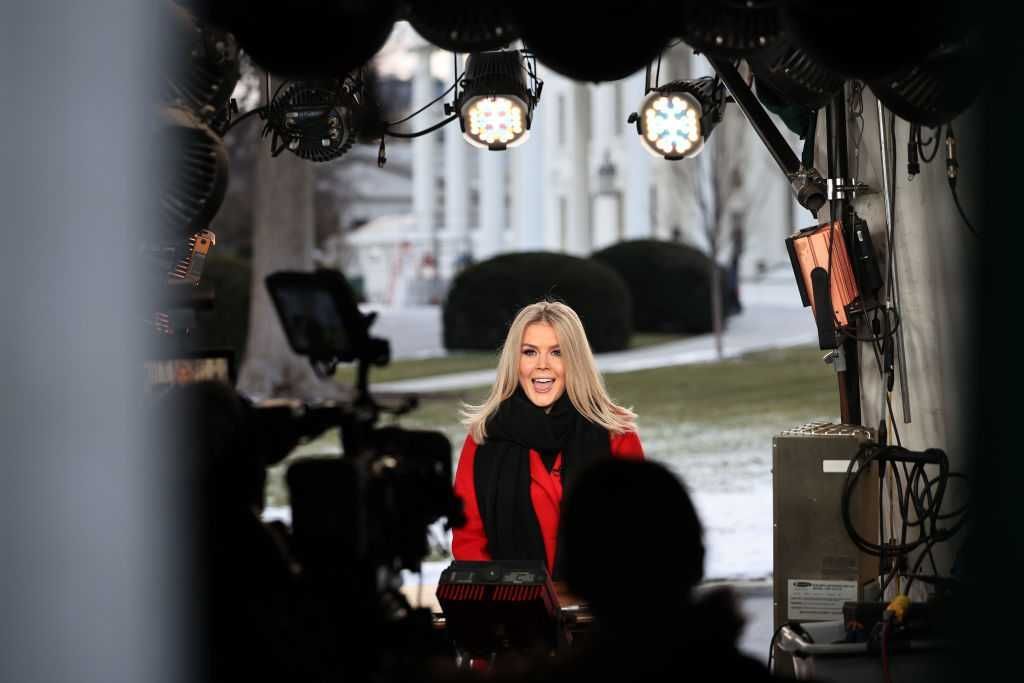
President Trump has not yet weighed in on Leavitt’s new job on social media, though liberal media critics were quick to pounce on the news and pivoted to attack Trump’s current relationship with Fox.
CNN’s Brian Stelter called Leavitt’s new gig “the least surprising headline of the day” in his daily Reliable Sources newsletter. He used the announcement as a pivot point to attack President Trump for noticing that Fox is no longer covering his full rallies.
Leavitt joins another former Trump press secretary, Kayleigh McEnany, at the network.
Like Blaze News? Bypass the censors, sign up for our newsletters, and get stories like this direct to your inbox. Sign up here!
This China bombshell is blowing up in MS NOW's face

On MS NOW, "Deadline" host Nicolle Wallace took viewers through a montage of Trump’s past tough-on-China remarks, before excitedly suggesting that Trump had asked Chinese President Xi Jinping whether or not China wanted to buy American weapons.
“So much for Mr. Tough Guy,” Wallace scoffed. “Over the last few days, we saw Donald Trump roll out an actual red carpet for China’s President Xi Jinping when he came to the White House, a visit which Reuters called, quote, ‘a stalemate summit that was a glitzy gift to China,’ end quote.”
“And then there was this moment on Fox News yesterday, courtesy of America’s ambassador to China, David Purdue,” she added.
In the clip, Purdue said, “President Trump continues to say, ‘Hey, we sell arms to other people around the world.’ He actually asked President Xi would he like to buy some at one point.”
“You heard that correctly. That was the ambassador to China saying that the United States president offered to sell arms to China,” Wallace said, laughing.
The State Department responded to the claim with a statement that read, “U.S. law prohibits arm sales to China, and there is no offer or plan to sell arms to China.”
Wallace called the statement “backpedaling,” but BlazeTV host Pat Gray points out that she’s supposed to be reporting the news.
“This is a news person, supposedly. So the president and his team denied everything you just presented in the clip, and your response is a sarcastic, belittling, dismissive heh-heh,” he says, mimicking her laugh.
“That’s some good news broadcast right there. That’s some hardcore news and reporting and journalistic integrity right there,” he continues. “It’s unbelievable.”
Want more from Pat Gray?
To enjoy more of Pat's biting analysis and signature wit as he restores common sense to a senseless world, subscribe to BlazeTV — the largest multi-platform network of voices who love America, defend the Constitution, and live the American dream.

Everything About The Catherine Herridge Contempt Case Stinks
 Everything related to the current case regarding Catherine Herridge's reporting is suspect.
Trump judge delivers 'FAKE NEWS' temporary win in battle with president
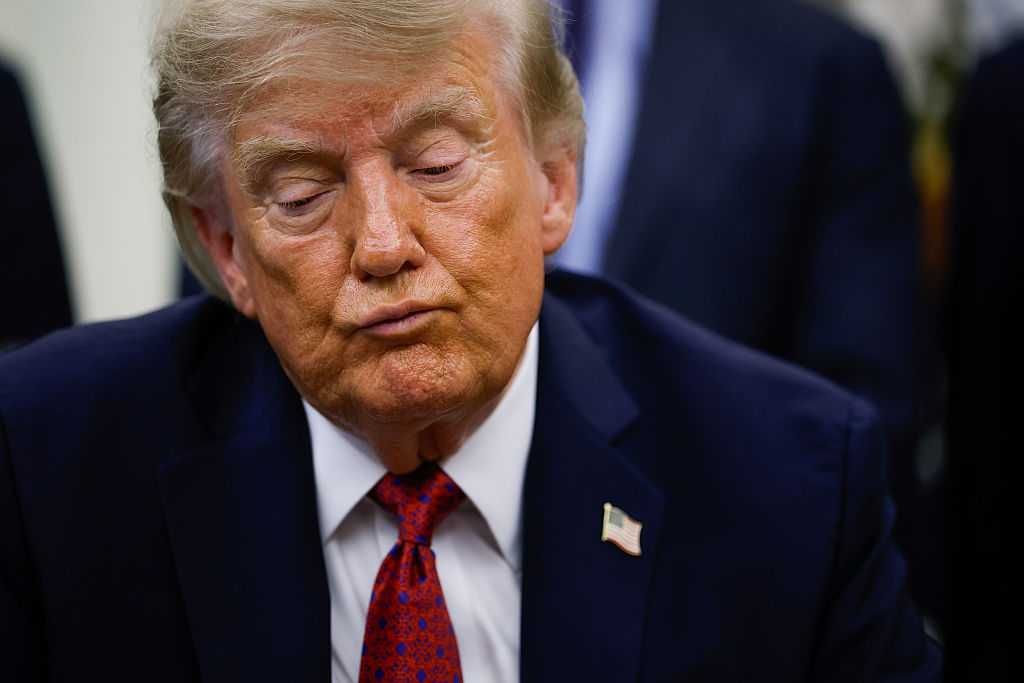
A federal judge has delivered a trio of liberal media outlets a win in their battle with the president over access to the White House grounds.
While the networks and their lawyer appear excited over the outcome, President Donald Trump has made clear this is but a battle in a war he means to win.
'Plaintiffs have engaged in a number of reporting incidents that have threatened national security.'
How it started
Trump announced Friday that he was barring CNN, MS NOW, and Politico from the White House "as a result of their constant 'reporting' FAKE NEWS," stressing that "Media Outlets shouldn’t be able to constantly write or report FICTION and LIES when they’re covering the President of the United States, the Trump Administration, or the United States of America."
Following the president's proclamation, White House television pool members — including Fox News — circled the wagons and agreed to end pooled coverage in protest.
Meanwhile, the three banned networks sued Trump, two of Trump's staffers, and U.S. Secret Service Director Sean Curran, claiming that "this ban could not be a more direct assault on the First Amendment nor a more blatant violation of our most fundamental constitutional principles."
Alleging that the ban violated the First Amendment and the due process clause of the Fifth Amendment, the media networks asked for the restoration of their White House hard passes and access as well as for a declaration that the ban was unconstitutional.
RELATED: Trump picked the wrong way to fight fake news
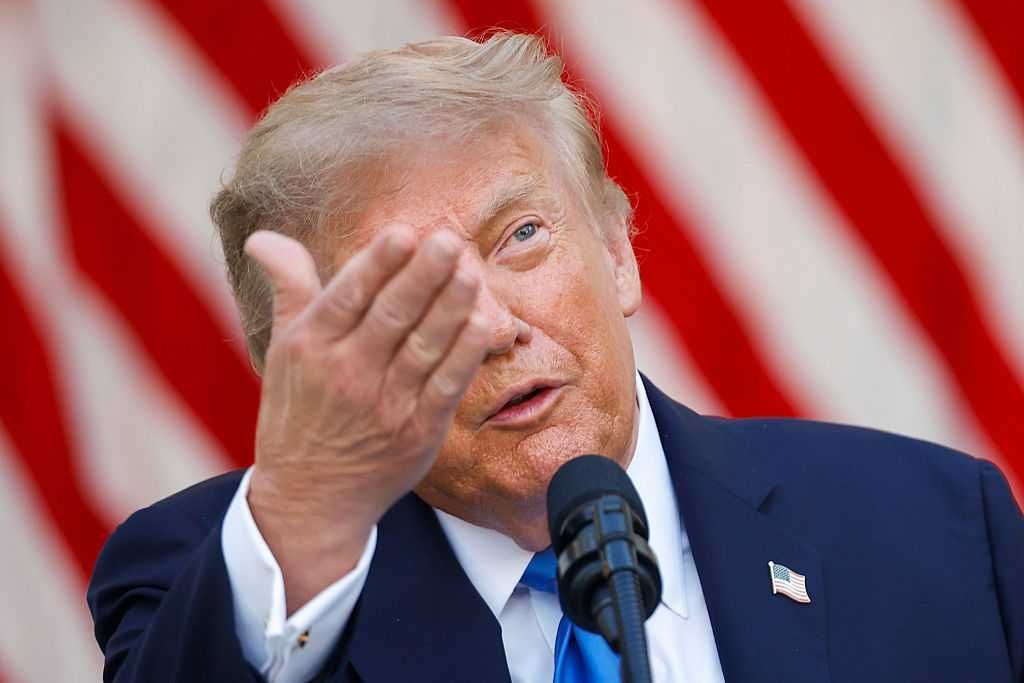
The White House argued that:
- the government has a "compelling interest in awarding hard passes to journalists satisfying minimum standards" and that the three networks did not meet those standards;
- the "Plaintiffs have engaged in a number of reporting incidents that have threatened national security"; and
- the networks are mistaken in their conclusion "that there is a special property or legal interest in access to the White House."
How it's going
U.S. District Judge Timothy Kelly did not buy what the White House was selling.
Early on Thursday, the Trump-appointed judge granted the liberal networks a 14-day restraining order and ordered the White House to reinstate White House hard pass press credentials to employees of CNN, MS NOW, and Politico.
Kelly said in his order that the plaintiffs had "shown a likelihood of success, at least on their Fifth Amendment procedural due process claim."
The judge noted further that "none of Defendants' arguments convince the Court that Plaintiffs are not likely to succeed on their due process claim."
Kelly rejected the White House's argument that the ban was motivated by national security concerns, writing, "Certainly, that is not what President Trump said when he announced that he was 'banning' Plaintiffs from the White House — instead, he focused on the alleged lack of truthfulness and negativity of Plaintiffs' reporting."
"Defendants offer no declarations or other support — classified or unclassified — explaining how any of the reporting they identified in their letters to Plaintiffs damaged the national security."
Trump, apparently anticipating this turn of events, noted on Monday, "As usual, we’ll go for appeal because Fake News people and publications that only write negatively, and who violate our National Security by writing false and defamatory stories with unknown 'sources,' shouldn’t be allowed access to the most important Office anywhere in the World."
Ted Boutrous, the lawyer representing the liberal outlets, said in a statement, "This is a strong ruling vindicating freedom of the press, due process, and the rule of law. We greatly appreciate the court’s swift action."
The White House did not immediately respond to Blaze News' request for comment.
Like Blaze News? Bypass the censors, sign up for our newsletters, and get stories like this direct to your inbox. Sign up here!
5 news outlets FIRE BACK at Trump over ban — including Fox News
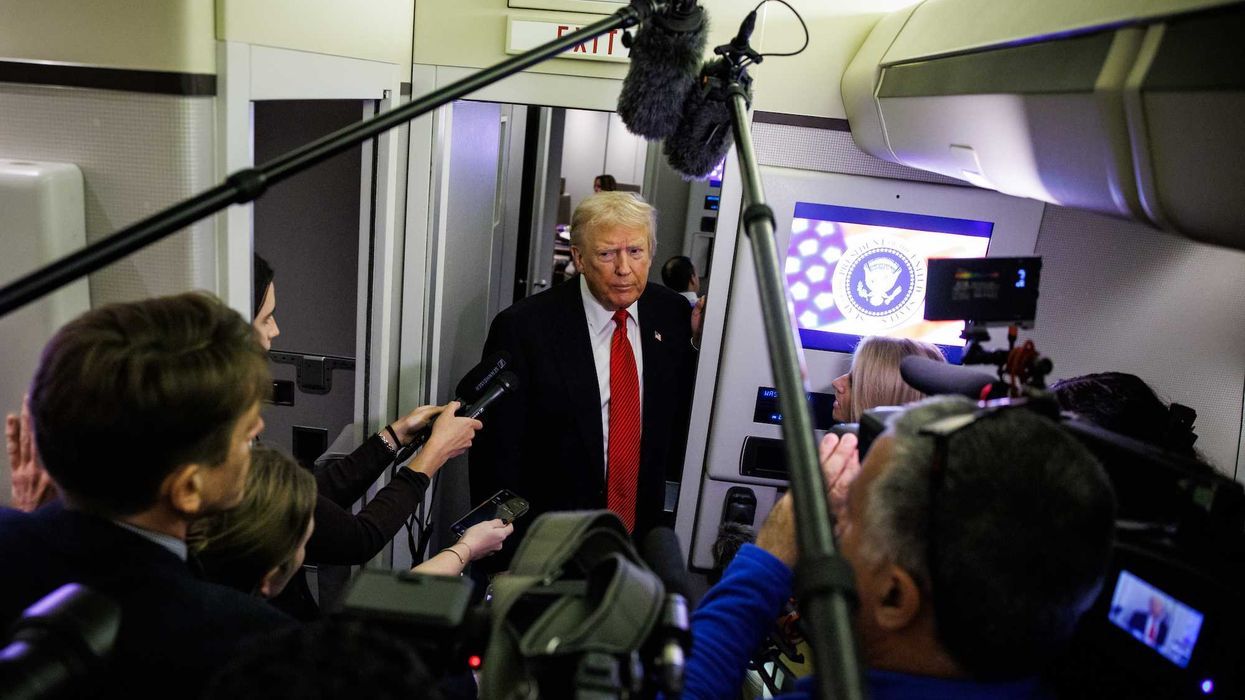
Various news outlets, including Fox News, have agreed to suspend pool reporting at the White House as a way to protest the president's news ban.
On Friday, President Donald Trump accused CNN, MS NOW, and Politico of peddling fake news and banned them all from the White House.
'If they had credibility, I wouldn't be sitting here right now.'
In response, ABC, CBS, CNN, NBC, and Fox News announced on Monday that they had suspended White House TV pool reporting.
"This is to advise that, effective today, the TV pool will not be covering events designated as pool coverage of the President," Fox News Washington bureau chief Bryan Boughton wrote in an email obtained by Politico.
"This follows the White House’s position preventing CNN from fulfilling its assigned pool duties. There will be no replacement pool put in place," he added.
Fox News Media, ABC News, CBS News, CNN, and NBC News also released a joint statement about the suspension.
"The public has a vital interest in receiving accurate, independent information about its government. No administration should restrict a news organization because it objects to its reporting," the group wrote.
Many noted that CNN had defended Fox News in 2009 when former President Barack Obama had limited its access. Fox News returned the favor in 2018 when Trump shut out a CNN reporter.
The president justified his ban in comments to reporters Friday.
"I don't want them in my office. I don't want them here," he said.
"The ban is because they are fake news, they cannot write the truth," he added. "If they had credibility, I wouldn't be sitting here right now."
RELATED: CNN says Trump press ban is illegal — then the Trump team THROWS DOWN fiery response
The president had also threatened to expand the ban to include other outlets such as the New York Times and the Washington Post.
In a post Monday on Truth Social, the president compared fake news to a "cancer" afflicting the country.
"It is corrupt, purposeful, pervasive, fully coordinated, and totally out of control," he wrote. "It is a threat to our National Security, and must be stopped, NOW!"
Like Blaze News? Bypass the censors, sign up for our newsletters, and get stories like this direct to your inbox. Sign up here!
Maria Bartiromo attorney denies she's been fired — and threatens legal action
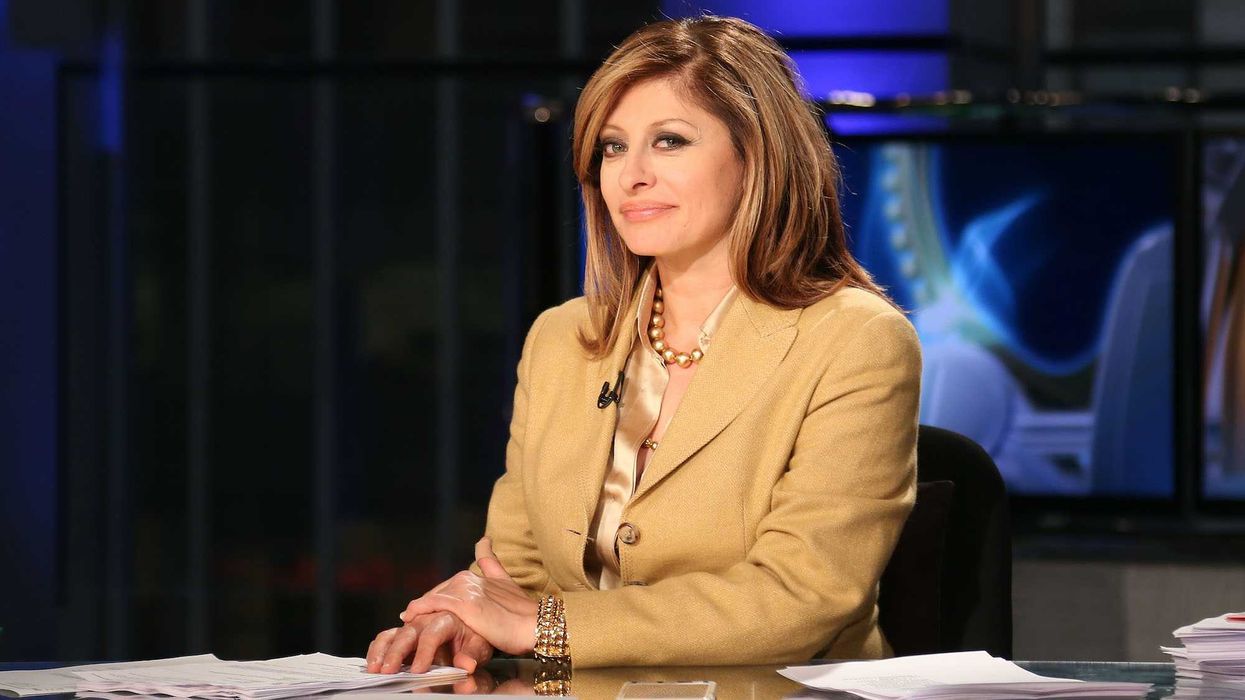
An attorney representing Maria Bartiromo released a combative statement denying that she was fired from Fox News.
The longtime host at Fox Business had reportedly "parted ways" with the network effective immediately, according to a network statement Thursday.
'Maria is a total professional, and a true warrior. Her fans, of which there are many, will not be happy.'
"The irresponsible reports that have been published stating that Maria Bartiromo was fired or is no longer an employee of Fox are absolutely and unequivocally false," read a statement from her attorney on Friday.
"Make no mistake, we have the receipts and witnesses and they will come out whether through the courthouse or otherwise," the attorney continued. "Those reporting her firing or the incredulous facts supporting that fiction have exhibited a complete and utter reckless disregard for the truth."
When asked about this new statement, Fox News said its previous statement "speaks for itself."
The statement could have been in response to reports that Bartiromo had been fired after allegedly making an improper disclosure to the White House about Fox News refusing to air the president's election fraud claims.
Bartiromo had worked at CNN and CNBC before moving to Fox News in 2014. She had come to host two shows, one that bore her name: "Mornings with Maria" and "Sunday Morning Futures." Both will be renamed after her departure.
Blaze News also previously reported that her profiles at the Fox News and the Fox Business websites were both scrubbed from the internet.
"I can’t believe Maria Bartiromo is no longer going to have her great show(s) on FoxNews/Business," said the president in a social media post. "Maria is a total professional, and a true warrior. Her fans, of which there are many, will not be happy. God bless you, Maria!"
RELATED: Trump demands Bret Baier 'straighten out' Fox News 'flunkies' over report — and he responds
Bartiromo was celebrated in 1995 as the first reporter to broadcast daily from the floor of the New York Stock Exchange.
She also was the first female journalist to be inducted into the Cable Hall of Fame in 2011.
Like Blaze News? Bypass the censors, sign up for our newsletters, and get stories like this direct to your inbox. Sign up here!
Maria Bartiromo OUT at Fox News after 12 years

Longtime Fox News host Maria Bartiromo is no longer employed at the right-wing news network.
The network said in a terse statement Thursday that Bartiromo was no longer working at Fox News or with Fox Business.
The 58-year-old had worked previously at CNBC and CNN before arriving at Fox.
"Effective today Maria Bartiromo is no longer with FOX News Media," read the statement from the network. "We thank Maria for her work over the last 12 ½ years and wish her all the best on her next chapter."
The 58-year-old had worked previously at CNBC and CNN before arriving at Fox in 2014 as its global markets editor.
Bartiromo's biography at the Fox Business website had been scrubbed in the last two weeks, as is evidenced by an archived page at the Wayback Machine. Her profile at Fox News was also apparently scrubbed.
Her show "Mornings with Maria" will be retitled "Mornings with FOX Business" and will feature a rotating roster of anchors. According to Variety, Jason Chaffetz will replace her on the Sunday show, "Sunday Morning Futures," until a permanent host can be named.
Bartiromo is known for being the first reporter to broadcast daily from the floor of the New York Stock Exchange in 1995.
In 2011, she became the first female journalist to be inducted into the Cable Hall of Fame.
RELATED: Former CNN hosts Stuart Varney and Maria Bartiromo blast CNN as a ‘propaganda machine’
Bartiromo is a member of the Board of Trustees of New York University as well as a member of the Council on Foreign Relations.
She has also won two Emmys and a Gracie Award.
Like Blaze News? Bypass the censors, sign up for our newsletters, and get stories like this direct to your inbox. Sign up here!
 www.theblaze.com
 thefederalist.com
 www.theblaze.com