Trump’s Iran gamble: Peace Prize or Persian Gulf firestorm


Even after his theatrical State of the Union address, President Trump remains the only person who knows for certain whether the United States will strike Iran. That ambiguity does not signal confusion. It reflects a negotiator’s instinct: The threat of force often carries more value than force itself.

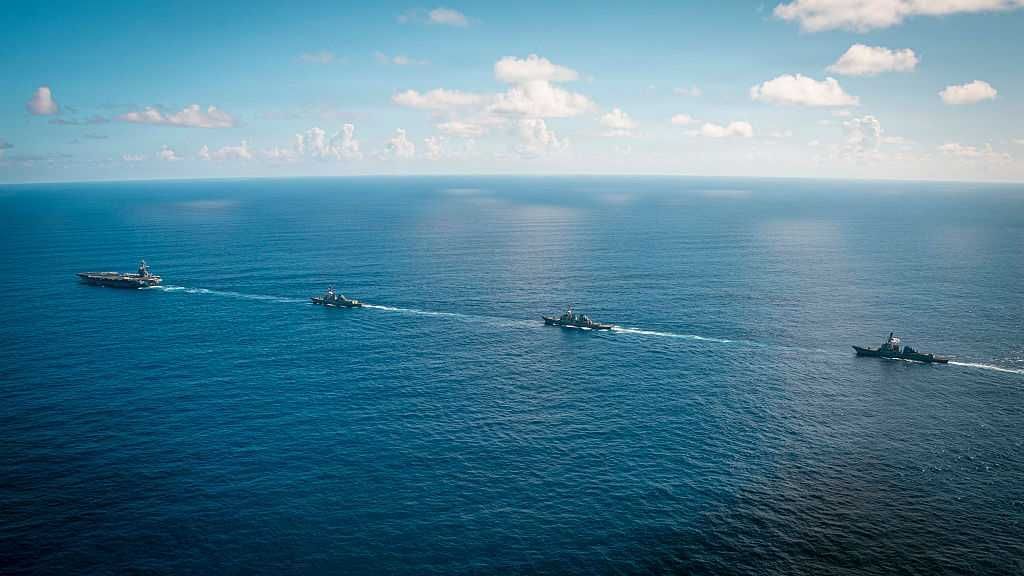
As a massive American armada gathers in the Persian Gulf — the region’s largest naval deployment since 2003, led by the USS Abraham Lincoln and USS Gerald R. Ford — the White House is also signaling that it still prefers a grand bargain to a regional war. For a president who has long said his legacy will rest on ending “endless wars” and who plainly covets a Nobel Peace Prize, a diplomatic breakthrough that dismantles Iran’s nuclear ambitions without a shot fired would be the ideal outcome.

The Geneva talks are more than another diplomatic set piece. They will test whether Trump’s 'art of the deal' can work against one of the most entrenched regimes in the Middle East.

The tension in Washington is palpable, and the president’s frustration is starting to show through his inner circle.

Steve Witkoff, Trump’s special envoy, recently offered a revealing glimpse during a briefing on the Gulf buildup. Referring to the sweeping mobilization of ships, personnel, and equipment, Witkoff said Trump is "curious" that despite the gathering of this massive armada, Iran has not yet "capitulated.”

That remark gets to the heart of the standoff. The strategy is pure Trump: maximize leverage, restate the “zero enrichment” red line, and wait for the other side to conclude that its only path to survival runs through a signed deal. But the clerical regime in Tehran has proved more stubborn than even Trump appears to have expected.

As the third round of negotiations began in Geneva on Thursday, there were real reasons for cautious optimism, even as rumors of a “multi-stage interim deal” continued to circulate.

For all its revolutionary bluster and posturing over ballistic missiles, the Iranian regime is facing a deep internal crisis. The mass protests that erupted in late 2025 and continued into early this year — with a fresh wave of student-led strikes reported this week — have badly shaken the system. Even after a brutal crackdown and sweeping internet blackouts, the grievances have not disappeared. The economy is in ruins, the rial has hit record lows, and the public has no appetite for a full-scale war with a superpower.

Inside Tehran, the divisions are growing. Hard-liners within the Islamic Revolutionary Guard Corps still posture about delivering a “regret-inducing” response to American pressure. More pragmatic figures, however — reportedly now led by veteran negotiator Ali Larijani — are speaking more openly. They understand that a war with the United States could mean the end of the Islamic Republic itself. Reports suggest that even figures close to the supreme leader are searching for an off-ramp that preserves the regime’s core interests while winning enough sanctions relief to calm a restive population.

RELATED: ‘Can’t let that happen’: Trump stresses red line for Iran but holds out hope for peaceful resolution
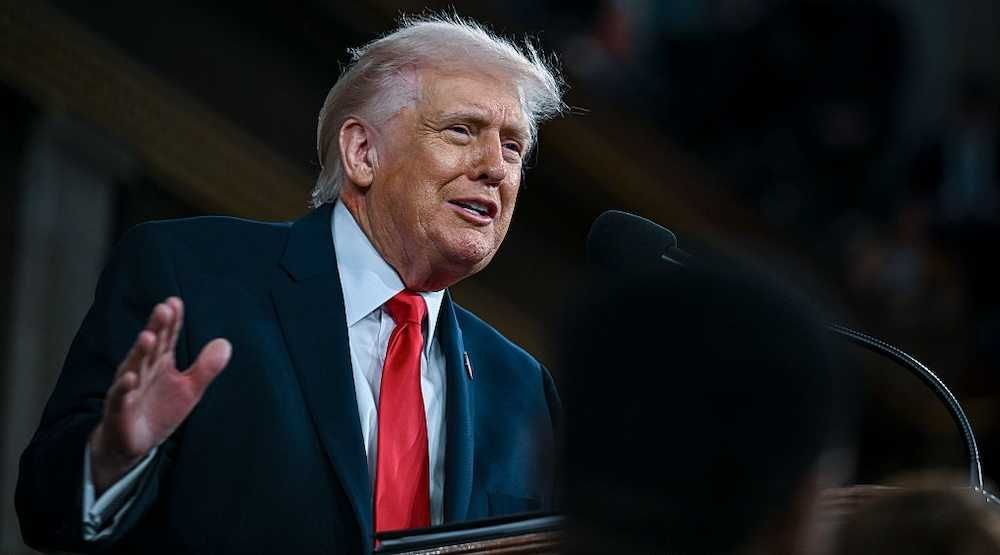
Photo by Kenny Holston-Pool/Getty Images

The regional picture also favors Washington. Across the Gulf, Arab capitals are watching with a mix of anxiety and quiet approval. Saudi Arabia, Qatar, and others do not want their cities caught in the blast radius of a regional war. But they are also weary of Iran’s regional meddling and nuclear progress. They want Tehran checked without turning the Gulf into a battlefield. That gives Trump useful diplomatic cover to keep the pressure campaign in place while leaving the Geneva door open.

The Geneva talks are more than another diplomatic set piece. They will test whether Trump’s “art of the deal” can work against one of the most entrenched regimes in the Middle East.

By combining military pressure, economic punishment, and the lure of a sweeping agreement, Trump has pushed Tehran into a corner. The regime is learning that this White House has little interest in the incremental half measures of the past. Washington wants a broader settlement — one that reaches beyond the nuclear file to the wider balance of power in the region.

If a deal comes this week, it will likely come because Tehran concludes that domestic collapse poses a greater danger than diplomatic humiliation. For Trump, that would amount to a crowning achievement: proof that his transactional style can deliver where decades of conventional diplomacy failed.

In the high-stakes contest between Washington and Tehran, the winner may not be the side with the biggest fleet. It may be the side that best understands the other’s breaking point.
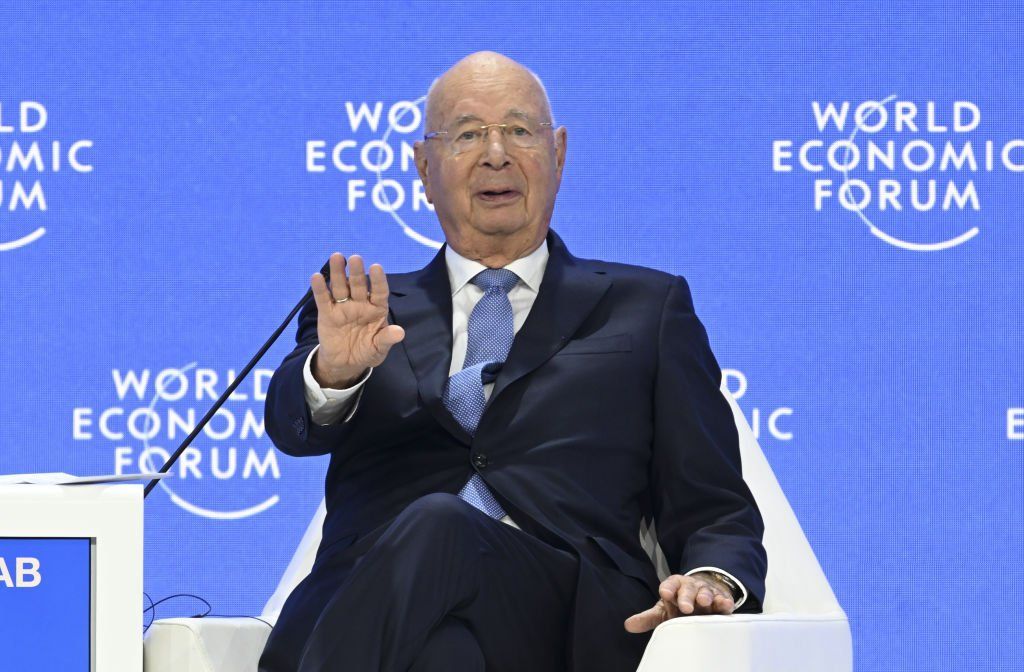
Klaus Schwab's sudden departure was on bad terms, coinciding with shocking misconduct allegations


Klaus Schwab announced on April 1 that he was stepping down as chairman of the World Economic Forum.

While the technocratic globalist organization indicated that its founder would complete his departure by January 2027, Schwab revealed Monday that he was stepping down immediately — and did so without providing a reason.

The Wall Street Journal revealed on Tuesday why Schwab left his post 20 months early.

Despite his protest, Schwab's organization initiated an independent investigation Sunday into allegations that he engaged in financial and ethical misconduct.

The WEF's board of trustees received an anonymous whistleblower letter last week detailing alleged "systemic governance failures and abuses of power that have taken place over many years under the unchecked authority of Klaus Schwab."

According to the letter, which was attributed to unnamed current and former WEF employees, Schwab used forum funds to pay for private, in-room massages at hotels; asked junior employees to take thousands of dollars from ATMs out on his behalf; and allowed sexual harassment and other abuses to go unchecked in the workplace.

If the third of these complaints sounds familiar, that's because it has been lodged against the forum multiple times before.

The Journal indicated in a damning June 2024 report that "under Schwab's decades-long oversight, the forum has allowed to fester an atmosphere hostile to women and black people in its own workplace."

The report — deemed "inaccurate" by the forum but based on internal complaints, email exchanges, and interviews with current and past WEF employees — contained allegations that: pregnant workers and returning mothers were mistreated; senior managers sexually harassed female underlings; black employees faced racist commentary and were passed over for promotions; and Schwab "made suggestive comments to [former staffers] that made them uncomfortable."

'He never had a chance to give his side of the story.'

One employee even filed a lawsuit in New York last year claiming the WEF was "hostile to women and black employees," and the WEF settled on undisclosed terms.

The letter sent to the board of trustees last week reportedly also had much to say about the globalist's wife, Hilde Schwab.

Hilde Schwab, a former WEF employee, scheduled "token" WEF-funded meetings abroad so that she could go on luxurious forum-funded trips, said the letter. She also allegedly bogarted a forum-owned 1958 modernist luxury property next to the WEF's Geneva headquarters, which the organization spent $30 million to buy and $20 million to renovate.

A spokesman for the couple claimed that the Schwabs live nearby and have used the modernist mansion only for forum events. As for the other allegations, the spokesman told the Journal that the couple denies them all and intends to sue the authors and "anybody who spreads these mistruths."

The board indicated that its audit and risk committee's Sunday decision to launch a probe into the allegations was unanimous and "made after consultation with external legal counsel."

Schwab tried to impress upon board members that the allegations were bogus, and unsuccessfully sought an opportunity to address the board during its emergency meeting.

"He never had a chance to give his side of the story to the board or the audit committee," said the globalist's spokesman.

When he resigned on Monday, Schwab reportedly forfeited his pension, which was worth over $6 million.

The WEF told the Journal that it takes the new "allegations seriously, but they remain unproven, and will await the outcome of the investigation to comment further."

This will be the second investigation launched into the WEF in recent months.

The organization previously tasked the American firm Covington and Burling and the Swiss firm Homburger with looking into claims of workplace discrimination and harassment.

The external lawyers concluded in a summary of their assessment that they "did not find the forum had committed any legal violations" and "did not substantiate" the misconduct allegations against Schwab.

Like Blaze News? Bypass the censors, sign up for our newsletters, and get stories like this direct to your inbox. Sign up here!

FACT CHECK: Did George Soros Go Missing?

There is no evidence for this claim

CROWDER: Biden's body language is WEAK and pathetic


President Biden met with Russian President Vladimir Putin to discuss issues related to hacking and human rights abuses in Geneva last week.

Steven Crowder covered the story on his morning show Wednesday and noted that when former President Donald Trump met with Putin, Trump's body language conveyed strength. A stark contrast, Crowder noted, to current U.S. President Joe Biden.

"I hate that we [The United States] are in a position of weakness right now," Crowder commented.

Trump's body language, Crowder asserted, was projecting control. Watch that clip to see footage from Biden's meeting with Putin which, according to Crowder, projected weakness.

Can't watch? Download the podcast here.


Want more from Steven Crowder?

To enjoy more of Steven's uncensored late-night comedy that's actually funny, join Mug Club — the only place for all of Crowder uncensored and on demand.

Biden Gets Played By Vladimir Putin On World Stage Over Ransomware Attacks

Putin undermined the premise of the meeting with President Biden who, from the American leader's perspective, was to establish peacetime guardrails.