Falling back, springing forward — but maybe not for much longer
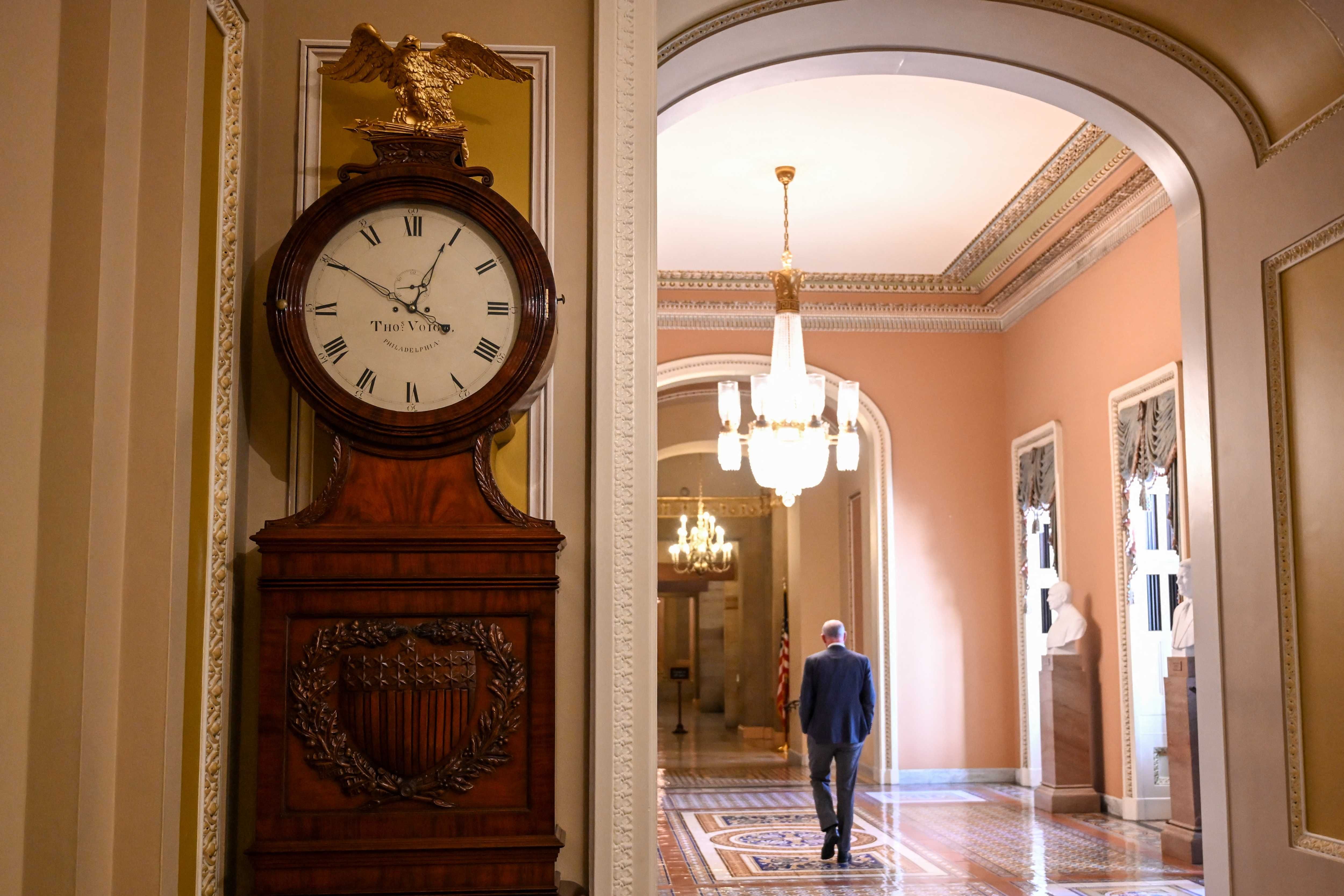


After years of false starts, Congress is finally within reach of ending one of the most universally hated rituals in American life: changing the clocks twice a year.

The House Rules Committee voted 6-4 Monday to advance Florida Republican Rep. Vern Buchanan's Sunshine Protection Act to the full House floor, teeing up a chamber-wide vote on making daylight saving time permanent nationwide.

'Ridiculous, twice-yearly production.'

States such as Hawaii and Arizona, which already skip the twice-yearly changeover, would keep their exemptions.

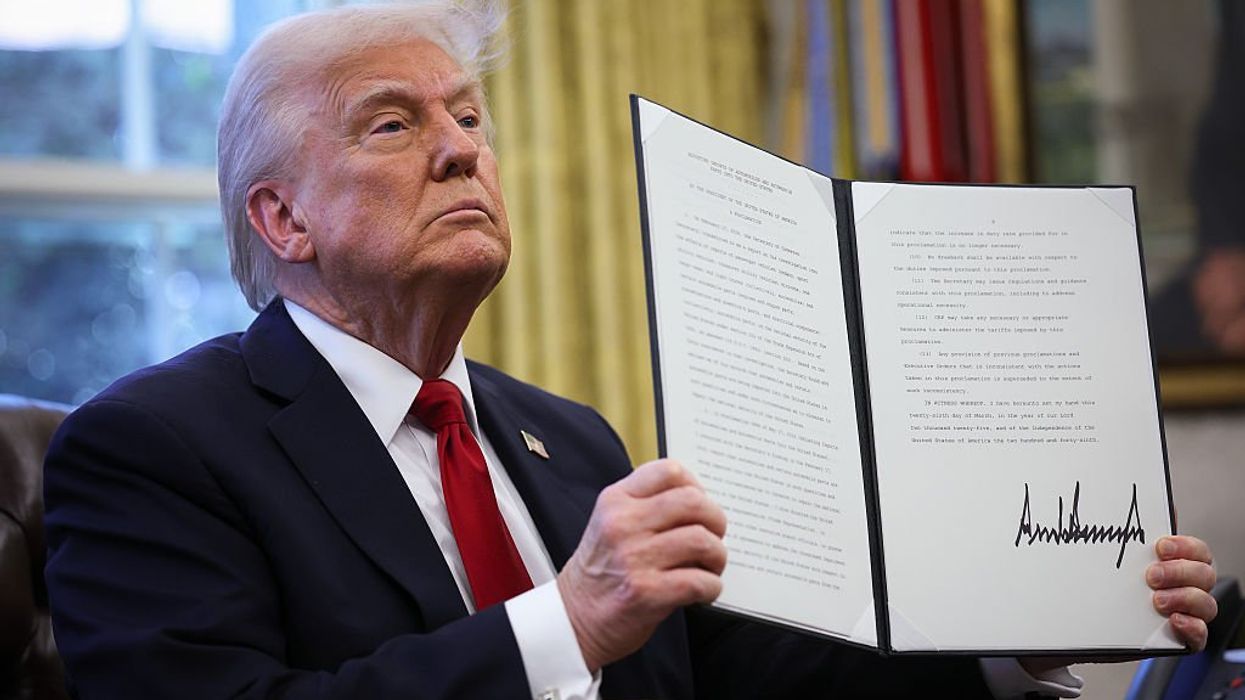
President Donald Trump has backed the bill, calling the current system a "ridiculous, twice-yearly production" and predicting that passing it would be a win for Republicans.

It's been a long time coming. Then-Sen. Marco Rubio (R-Fla.) first introduced the Sunshine Protection Act back in 2018 and kept pushing it nearly every Congress since — only for the House to kill it. Sen. Rick Scott (R-Fla.) has since picked up the baton, with bipartisan co-sponsorship.

Not everyone in Congress is on board. Rep. Mary Gay Scanlon (D-Pa.) tried to amend Buchanan's bill with language from her own rival measure, the Sunshine for Our Kids Act, which would lock in standard time instead. The amendment was rejected before it reached the floor.

RELATED: California Republicans move to end daylight saving time — America’s dumbest tradition
Jay L Clendenin/Getty Images

Supporters argue the case is simple: More evening sunlight means more time to be outside, shop, exercise, and spend money at local businesses, rather than watching the sun set before dinner.

Sen. Rand Paul (R-Ky.) has framed it as giving states the freedom to stop asking Washington's permission every year to decide how they want to live. Polling has consistently shown a solid majority of Americans just want the switching to stop — most favoring the "more evening light" version Buchanan's bill delivers.

Critics have raised familiar objections about winter sunrise times — the same argument that sank the country's last attempt at permanent daylight saving time in the 1970s. But with six competing bills on the table and a Republican Congress that just moved one out of committee, Americans could be looking at their last "fall back" ever.

Like Blaze News? Bypass the censors, sign up for our newsletters, and get stories like this direct to your inbox. Sign up here!
GOP FISA Deal Faces First Hurdle In The House

'That kind of power doesn’t belong in the hands of bureaucrat'

Trump does shocking about-face on spying power weaponized against him and other Americans, now calls it 'VITAL'


President Donald Trump implored GOP lawmakers on Tuesday to "UNIFY" in support of an 18-month extension of a particular spying power that, while ostensibly limited to foreigners, has already been weaponized against American citizens — including Trump.

The warrantless surveillance authority of Section 702 of the Foreign Intelligence Surveillance Act was both used to spy on Trump's 2016 campaign and exploited in recent years by the FBI hundreds of thousands of times to spy on U.S. citizens. However, Trump has now determined that it is presently "right for our Country" and needed by the military.

Background

Section 702 is a provision of FISA enacted by Congress in 2008 that enables the state to spy on foreign nationals located outside the U.S. with the compelled aid of electronic communication service providers. The surveillance is authorized programmatically such that the government doesn't have to bother seeking a court-authorized warrant for every person it targets.

'Do what is right for our Country.'

Although individuals targeted under 702 are supposed to be foreign nationals believed to be outside the U.S., the FBI has acknowledged that "such targets may send an email or have a phone call with a U.S. person," resulting in the warrantless surveillance of American citizens.

Numerous Republicans, including Sens. Josh Hawley (Mo.) and Mike Lee (Utah), were especially critical of Section 702 after the FBI admitted there had been 278,000 "unintentional" backdoor search queries of the 702 database for the private communications of Americans between 2020 and 2021 alone.

Jan. 6 protesters, donors to a congressional campaign, and BLM protesters were among the American citizens subjected to the warrantless searches.

New circumstances

Trump, who advocated in 2024 for killing FISA, said on Tuesday that he was working with House Speaker Mike Johnson (R-La.) and other Republicans to "get a clean extension of FISA 702 through the House of Representatives this week."

RELATED: 'Clear abuse': Appellate court thwarts Judge Boasberg's plan to investigate top Trump officials

Chip Somodevilla/Getty Images

The president noted that he "was a victim of the worst and most illegal abuse of FISA in our Nation's History, by Radical Left Lunatics, who lied to the FISA Court to spy on my 2016 President Campaign in their attempt to RIG the Election in favor of Crooked Hillary Clinton. Their use of this instrument in the 2020 President was even worse!"

"When the Dirty Cop, James Comey, the failed Head of the FBI, went after me, he was using FISA Title I, the Domestic Collection, not FISA 702, the Foreign Collection, which needs to be extended to," continued Trump.

The Obama FBI utilized FISA Title I authority to target the 2016 Trump campaign during the bureau's Crossfire Hurricane frame-up.

The FBI submitted multiple applications to authorize FISA surveillance of Carter Page, a U.S. citizen then serving as an adviser to Trump. The applications that were approved were loaded with "17 significant inaccuracies and omissions," according to the U.S. Department of Justice Office of the Inspector General.

Trump acknowledged that FISA authority has been used against him in the past and may be weaponized against him in the future but stressed that he is "willing to risk that as a Citizen in order to do what is right for our Country."

According to the president, the military "desperately needs FISA 702, and it is one of the reasons we have had such tremendous SUCCESS on the battlefield, both in Venezuela and Iran."

"The fact is, whether you like FISA or not, it is extremely important to our Military," continued Trump. "I have spoken to many Generals about this, and they consider it VITAL."

Trump's Tuesday message greatly resembles a Truth Social message he shared last month, in which he also said that he wanted "the Critical and Common Sense Reforms that were made in the last Reauthorization of FISA" to "remain intact to protect the American People from abuses."

The House Rules Committee advanced a clean extension of the surveillance powers on Tuesday, setting the stage for a floor vote on extending Section 702 ahead of the April 20 deadline, reported The Hill.

While some Republican critics of Section 702 have reversed their stances like the president in light of the reforms added to the provision, it remains unclear if Johnson presently has the votes to see it pass. Politico reported that several GOP lawmakers are planning to vote "no."

Like Blaze News? Bypass the censors, sign up for our newsletters, and get stories like this direct to your inbox. Sign up here!

House GOP targets 'rogue' activist judges, advancing new bill amid Trump's legal standoffs


As President Donald Trump grapples with more than a dozen injunctions, Republican lawmakers have targeted "rogue" activist judges with two new bills.

Rep. Darrell Issa (R-Calif.) introduced the No Rogue Rulings Act to restrict U.S. district judges' ability to issue broad injunctions. The bill passed the House Rules Committee on Tuesday in a 9-4 vote along party lines.

'700 District Court judges shouldn't each have nationwide veto power over a President's national security decisions.'

"The bill would allow a district court to issue a nationwide injunction in a case in which two separate states from two separate judicial circuits are parties — making clear the nationwide nature of the dispute. In such a case, the bill provides for the establishment of a panel of three randomly chosen judges to determine whether to issue a nationwide injunction. Such injunctions may be appealed directly to the Supreme Court," the proposed bill reads.

Since Trump's January inauguration, his administration has already been hit with 15 injunctions, stalling a wide range of initiatives such as the end of birthright citizenship, deportation flights, and the elimination of diversity, equity, and inclusion programs.

Issa told the New York Post that his proposed bill is "a constitutional solution to a national problem."

"Time and again, solitary judges have usurped congressional intent and confronted President Trump, rather than dispassionately interpreted the law," he stated.

New York Republican Reps. Claudia Tenney, Nick Langworthy, and Nick LaLota have co-sponsored the bill.

Tenney pointed out that 67% of all injunctions ever issued have been placed against Trump.

"I am supporting the No Rogue Rulings Act to stop radical judges from imposing nationwide injunctions on President Trump's agenda, which 77 million Americans voted for," she wrote in a post on X.

LaLota stated, "700 District Court judges shouldn't each have nationwide veto power over a President's national security decisions."

Rep. Bob Onder (R-Mo.) called the activist judges' actions "unconstitutional lawfare."

Meanwhile, Sen. Chuck Grassley (R-Iowa) on Monday introduced a similar measure, the Judicial Relief Clarification Act, which aims to "limit federal court orders to parties directly before the court — ending the practice of universal injunctions and clarifying the constitutional role of the judicial branch."

It would require parties to file a class-action lawsuit to receive nationwide injunctive relief.

Grassley stated, "For a number of years, but particularly in the last few months, we've increasingly seen sweeping orders from individual district judges that dictate national policy. Our Founders saw an important role for the judiciary, but the Constitution limits judges to exercising power over 'cases' or 'controversies.' Judges are not policymakers, and allowing them to assume this role is very dangerous."

On Tuesday, two House Judiciary Committee subcommittees held a joint hearing examining judicial overreach. Former Rep. Newt Gingrich (R-Ga.) and Paul Larkin, a senior legal research fellow with the Heritage Foundation, joined the hearing as witnesses.

Larkin told lawmakers, "The practice of issuing nationwide injunctions outside the confines of a certified nationwide class action is mistaken as a matter of law and unwise as a matter of policy."

"It is not the courts that are responsible for creating the laws; the courts are responsible for interpreting it as it applies, but they can only do so in the context of a case or controversy," he added. "Only the Congress can create a law. Any time a court enters a judgment that is tantamount to being a law, the judge has gone too far."

Gingrich called the judges' injunctions against the Trump administration "potentially a judicial coup d'état."

“The notion that unelected lawyers can micromanage the executive branch and override a commander in chief who received 77.3 million votes should trouble every American,” he stated.

Like Blaze News? Bypass the censors, sign up for our newsletters, and get stories like this direct to your inbox. Sign up here!

Heated Committee Chair Race Puts Two Eras Of GOP At War, May Show Whether Mike Johnson Will Stab Trump In Back

'We still have a long way to go before Republicans understand what Americans expect from them'