George Washington’s advice for the midterms


The 2026 midterm elections present a tough environment for the Republican Party, raising questions about how to campaign in such challenging circumstances. As is often the case in American politics, the economy is a central concern for voters.

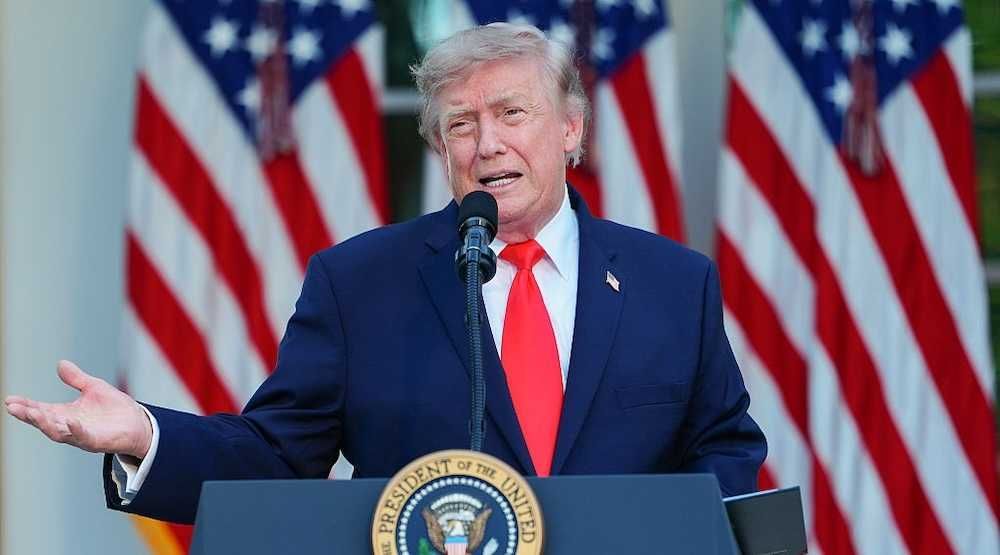
In the last few weeks, prices — particularly for gas — have been too high for the comfort of any incumbent party. What have Republicans been saying to assuage voters’ concerns?

When officers and soldiers complained about not being paid, Washington did not ignore them or tell them they should consider it a privilege to sacrifice for their country.

Some have taken a kind of high road, encouraging or even admonishing voters to rise above self-interest and consider the loftier aims President Trump and his administration are pursuing. Yes, gas prices may be high, but the president is trying to end the Iranian threat to American national security. This process is taking longer and causing more economic pain than anyone would like. But it is worth it for the nation in the long run, and so patriotic voters should toughen up. So the argument runs.

This approach, however, has no shortage of critics. They think it is futile or worse to tell ordinary voters, whose economic means are increasingly limited, to grin and bear higher prices on the necessities of life. This environment, they suggest, is a recipe for electoral disaster for the Republican Party.

The critics have a point. It is never prudent for any political party — especially a pragmatic, competitive party that hopes to win elections and not just advance philosophical arguments — to appear indifferent to the ordinary self-interest of voters.

To make this error is not only to misread the present American electorate, but to misunderstand human nature, the basis of politics at all times and in all places. This is not to say that a successful political party must appeal only to narrow self-interest. Voters can respond to appeals to moral principle and national pride. Nevertheless, to neglect self-interest is to neglect one of the vital springs of human conduct.

The party that does this as a regular practice courts defeat.

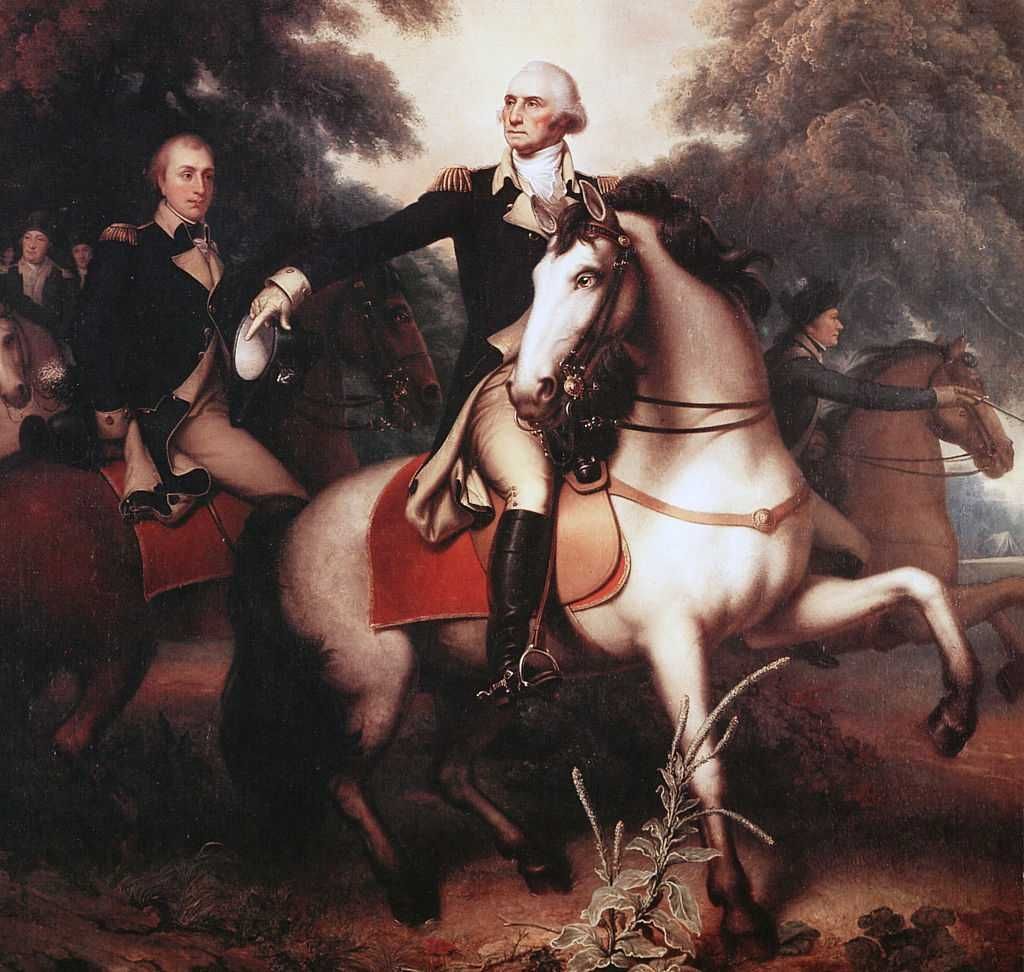
This is one of the practical political lessons that George Washington, one of the greatest Americans, learned during the Revolutionary War. As the war lengthened, he pleaded with increasing urgency with Congress to provide for the army — better pay, better clothes, better food. Washington continually reminded the nation’s political leaders that without adequate provision, it would be impossible to keep the army together, much less achieve victory.

RELATED: The GOP has mastered the art of wasting a majority

Tierney L. Cross/Getty Images

Underlying Washington’s argument is an assumption about the nature of the men composing the army essential to securing American independence — namely, that they could not be relied upon to continue in service if they were not properly compensated.

In other words, Washington assumed that the heroes of the Revolution were governed to a considerable extent by self-interest. Washington laid out this understanding explicitly in a 1778 letter to a committee of the Continental Congress:

A small knowledge of human nature will convince us, that, with far the greatest part of mankind, interest is the governing principle; and that, almost, every man is more or less, under its influence. Motives of public virtue may for a time, or in particular instances, actuate men to the observance of a conduct purely disinterested; but they are not of themselves sufficient to produce a persevering conformity to the refined dictates and obligations of social duty. Few men are capable of making a continual sacrifice of all views of private interest, or advantage, to the common good. It is in vain to exclaim against the depravity of human nature on this account — the fact is so, the experience of every age and nation has proved it, and we must, in a great measure, change the constitution of man, before we can make it otherwise. No institution, not built on the presumptive truth of these maxims can succeed.

It is important to emphasize that Washington is not taking a low view of human nature — he is taking a realistic view of it. Washington does not deny that human beings act on motives other than self-interested ones. He was himself a man of honor and of conscience. In his general orders to the army, he routinely appealed to lofty principles when communicating with his subordinates — officers, gentlemen, and ordinary soldiers.

In his private correspondence, Washington acknowledged that many men had joined the army out of patriotic motives. Such motives are genuine in the human heart and therefore have real influence on political life. Nevertheless, he understood that such motives cannot sustain most men, and certainly not a whole nation, on their own.

Conservatives often say that we would do well to learn from the high principles of our nation’s founders. But it is also just as necessary to learn from their realistic understanding of human nature. Without their realism about what motivates human beings, the founding generation would not have defeated the British and established a republican government in the service of lofty ideals.

RELATED: Ohio should be easy. Vivek is making it hard.
Blaze Media Illustration

Similarly, no political movement today (or at any time) can succeed in the long term without taking care of its voters’ self-interest and the common good of the country more generally.

Of course, sometimes, despite a ruling party’s best efforts and intentions, bad economic conditions will sour the electorate’s mood. What is such a party to say to its voters? Here, too, Washington provides a good guide.

When officers and soldiers complained about not being paid, Washington did not ignore them or tell them they should consider it a privilege to sacrifice for their country. He reminded his men that their long-term interests would be served by the nation’s independence; he agreed that their complaints were just and reasonable; and he assured them that steps were being taken to improve their situation.

This was a prudent and candid way for Washington to deal with his army, and it offers a model for how Republicans should address American voters today.

Editor’s note: This article was originally published at the American Mind.

Sorry, socialists: The system isn’t the savior


What is wrong with man? Every political philosophy begins with an answer to that question. Scripture’s answer changes everything.

As New York celebrated the victories of Mayor Zohran Mamdani’s endorsed candidates this week, I recalled something he said after his own victory last fall: “Praise be to Allah, the most gracious, the most merciful.” Predictably, much of the conversation has centered on his politics and, as we approach the 25th anniversary of 9/11, his public invocation of Allah.

Government can restrain the effects of evil. It cannot regenerate the human heart.

Those discussions are important, of course. But I found myself thinking about something else.

Gratitude reveals theology because we instinctively thank the one we believe governs reality. Some thank fortune. Some thank the market. Some thank government. Some thank the universe. Some thank themselves.

Our gratitude reveals what we ultimately believe about reality.

New York’s mayor publicly thanking Allah does more than express personal devotion. He is acknowledging a theological authority. Theology never stays inside the sanctuary. Eventually, it walks into the courtroom, the classroom, the legislature — and the voting booth.

Theology inevitably shapes our understanding of human nature. That understanding eventually produces a political philosophy.

Most Americans assume we are arguing about taxes, health care, immigration, education, or economics. We are not. Beneath every political argument lies another question.

What is wrong with man?

Every political philosophy answers it.

If man is basically good, then his deepest problem lies outside himself. The system is broken. The economy is broken. The institutions are broken. Change the system, and people should improve with it.

That assumption helps explain socialism’s enduring appeal. If people are basically good but trapped inside unjust structures, then changing those structures becomes the highest moral priority. Build a better system, and society should improve.

Scripture begins somewhere else.

Jeremiah addresses the heart: “The heart is deceitful above all things, and desperately sick.” Jesus locates murder, theft, adultery, greed, envy, and slander in the heart as well. Paul affirms the same conclusion when he writes in Romans that “all have sinned and fall short of the glory of God.”

RELATED: Trump showed voters the con behind the curtain

Aaron Schwartz/Bloomberg/Getty Images

If Scripture is right, no political system can solve mankind’s deepest problem.

The reformers understood that sin had not merely damaged humanity but corrupted every faculty of our being. We still bear God’s image and remain capable of astonishing courage, creativity, generosity, and sacrifice. But we are also fallen.

Those convictions profoundly influenced the political imagination of the men who framed the Constitution. The framers did not write the Constitution for basically good people. They wrote one for sinners.

They divided power through checks and balances because they knew power does not sanctify fallen people. It magnifies them.

Their greatest political achievement was not trusting themselves. As a result, the framers collectively produced a document better than they were.

Checks and balances are not expressions of political optimism. They reflect theological realism. They acknowledge that no office, no election, and no majority vote can cure what Jeremiah identified in the human heart.

The same view of human nature should shape how we think about wealth. Whenever someone accumulates great wealth, someone inevitably says, “Think what we could do with all that money.”

Elon Musk’s extraordinary wealth has simply made that argument impossible to ignore.

“Think what we could do with all that money.”

Notice what is quietly assumed. We imagine our compassion is purer, our judgment sounder, and our motives less corrupted.

RELATED: Who wants to eat a trillionaire?

Victor J. Blue/Bloomberg/Getty Images
When Mary poured perfume worth nearly a year’s wages on Jesus’ feet, Judas objected.

“Why was this ointment not sold for three hundred denarii and given to the poor?”

On the surface, it sounds compassionate, practical, even responsible. Then the apostle John adds one sentence that changes everything.

“He said this, not because he cared about the poor, but because he was a thief.”

John does not debate Judas’ proposal. He exposes Judas’ motive.

There is a kind of generosity that costs us nothing because it spends someone else’s resources. Judas voiced it. John exposed it. Every generation repeats it.

Before we recognize Judas in someone else’s politics, we ought to recognize him in ourselves.

When I stand before God, he will not ask me what others did with their resources. He will ask what I did with mine.

That question reaches far beyond money. It reaches into our families, churches, communities, opportunities, and even our suffering. How we steward each of them reveals our theology.

Politics asks, “Who should control this?” Stewardship asks, “Lord, what would you have me do with what you have entrusted to me today?”

Good government, the rule of law, checks and balances — all of those things matter. But they can only restrain the effects of what Scripture says is already there. They cannot create what Scripture says is missing.

Government bears the sword. Christ bore the cross.

Government can restrain the effects of evil. It cannot regenerate the human heart.

Only the gospel can make sinners new.

We do not merely need a better system. We need a new heart.

The backlash against AI reveals it’s a terrible scapegoat


One day, not long ago — no one can recall exactly when — AI dropped from the sky, a deus ex machina springing fully formed from the head of, well, maybe its own head.

Or so it seems.

The context around the technology matters even more than the content.

In reality, AI’s origin story runs much deeper. So does the backlash against it. Both look stranger than they are because our shared memory of the recent past keeps shrinking.

AI has been a long time coming. In the mid-20th century, when human imagination still outran human and machine memory, artists produced vivid narratives about supercomputers and superintelligence. Scientists and engineers did the same, especially after World War II. Go back and read atomic-age Vannevar Bush, who mentored the namesake of Anthropic’s Claude, and the surprise is not that AI arrived. The surprise is that it took so long.

So why has AI produced such powerful future shock?

Not long ago, Americans rushed to embrace new technology. Yes, we were naïve about social media. We underestimated how people and governments would peep into our personal cyberspace. But when social media exposed our own questionable collective character, the reaction was not fury. Troubled? Yes. Shocked? No.

Even now, despite evidence that smartphones have entrenched bad habits and unhealthy temptations, we broadly regard the phone-and-app ecosystem as manageable. The trade-offs seem worth the bother if we clean up our act and make responsible choices.

AI is different. For millions participating in the backlash, AI differs from smartphones and social media not merely in power and scope, but in perceived injustice. Smartphones may rot our brains slowly. According to the backlash, even moderate AI use will swiftly destroy society.

The history we long to forget

Left-wing critics describe this destruction in terms of justice and the human nature Marx called our “species being.” Right-wing critics reach for the language of spiritual illness and stolen souls. The claim remains roughly the same: AI uniquely threatens our humanity, so the conversation about how to respond need not account for anything else.

Introduce any complicating factor outside AI and its creators, and critics may accuse you of distraction, dissembling, excuse-making, or apologizing for a permanent underclass — perhaps even human extinction.

I understand why so many people are so freaked out and so unwilling to pull focus away from AI. But the biggest reason lies outside AI and the AI debate.

Look at the arc Americans traveled with smartphones and social media. These transformative technologies became ubiquitous around the time of the 2008 financial crisis. Thanks to “innovative” monetary policy and frantic institutional improvisation, the world avoided penury, and technological development kept moving along its established trajectory.

Many Americans surely spent more time online as economic slack and stagnation spread after the crisis. Yet that shock was nothing like the blow that came during the COVID lockdowns.

Over those two decades, America’s fundamentals became dangerously unsound. Governance embraced can-kicking, corruption, patronage, fraud, and self-dealing legerdemain that cooked the country as much as it cooked the books. But the populist backlash — as veterans of Occupy Wall Street, the Ron Paul “rEVOLution,” or the Bernie Bro movement will remember — remained contained and controlled.

RELATED: There's a surprising fix for our AI oversight anarchy

sonmez karakurt/iStock/Getty Images
At least until Trump came along.

Even during Trump’s first term, few Americans felt like sitting ducks in the shadow of cataclysm. Times were tough, the middle class felt squeezed, and the dollar didn’t go as far. But those pressures had become baseline dynamics — the same problem set Ross Perot once explained with his chicken-foot pointer in populist third-party infomercials.

The lockdown era obliterated that holding pattern. It also wiped out many people’s ability to process the new normal. The socioeconomic malaise accelerated into territory so unsustainable that people simply stopped trying to understand it.

They blocked it out like an event too awful to remain in our memory.

Runaway inflation. Church closures. Rising living costs. Soaring entry costs for upward mobility. Devalued savings. Exhausted savings. The mathematical impossibility of building a middle-class life across family, education, and wealth formation within the given number of workweeks in a year.

That was the comprehensive catastrophe.

And it unfolded before robust AI asserted itself on the social scene.

Rebirth and return

That means we cannot understand the AI backlash unless we recognize that the context around the technology matters even more than the content.

For many millions across the political spectrum, the American dream was already destroyed before they could form real judgments about AI. In a national atmosphere of spiritual sickness, financial insolvency, economic weakness, and social disintegration, AI appeared as the final blow — especially as AI leaders themselves forecast the end of paychecks, jobs, careers, and perhaps humanity itself.

Deep down, many Americans feel that the habits, institutions, and confidence that might have allowed them to participate fruitfully in the AI era were stripped away years ago. AI seems big, alien, and wrong. Worse, it seems forced on them at a moment of unprecedented weakness, after any hope of recovery has already vanished.

Because they now feel they can fight the “clankers” and their makers in a way they cannot fight their own downward mobility and immiseration, AI has become the perfect scapegoat.

And that is the danger.

Killing AI will not regrow our spiritual and social roots. In fact, our structural situation has deteriorated so badly that leaning harder on the machines than we otherwise would may now be necessary.

We need a financial reboot. We need to dismantle the governance system that sucked us dry. We need to shift from overextended sole superpower to sustainable civilization-state fast enough to avoid the geopolitical spike pit between those two conditions.

Without those urgent needs, we would have more time and room to maneuver on AI. But we do need those things, and we do not have much choice or time — at least not if we want to hold the country together long enough to give Americans back the freedom to regrow their spiritual and social shoots.

The real way. The slow way. The human way.

Treating AI as the ultimate scapegoat for all our ills will distort and delay that process. Treating AI as the ultimate savior will derail and damage us in the opposite direction.

Nor will the fantasy of curing our national trauma by using AI to solve all human problems restore American life as a challenge worth living. Our new technology can be much more, and much less, than a replacement plan for people reduced to polyp status.

That is the opening for a constructive approach to AI that most of us can ultimately live with.

The timeless truths behind the Declaration of Independence


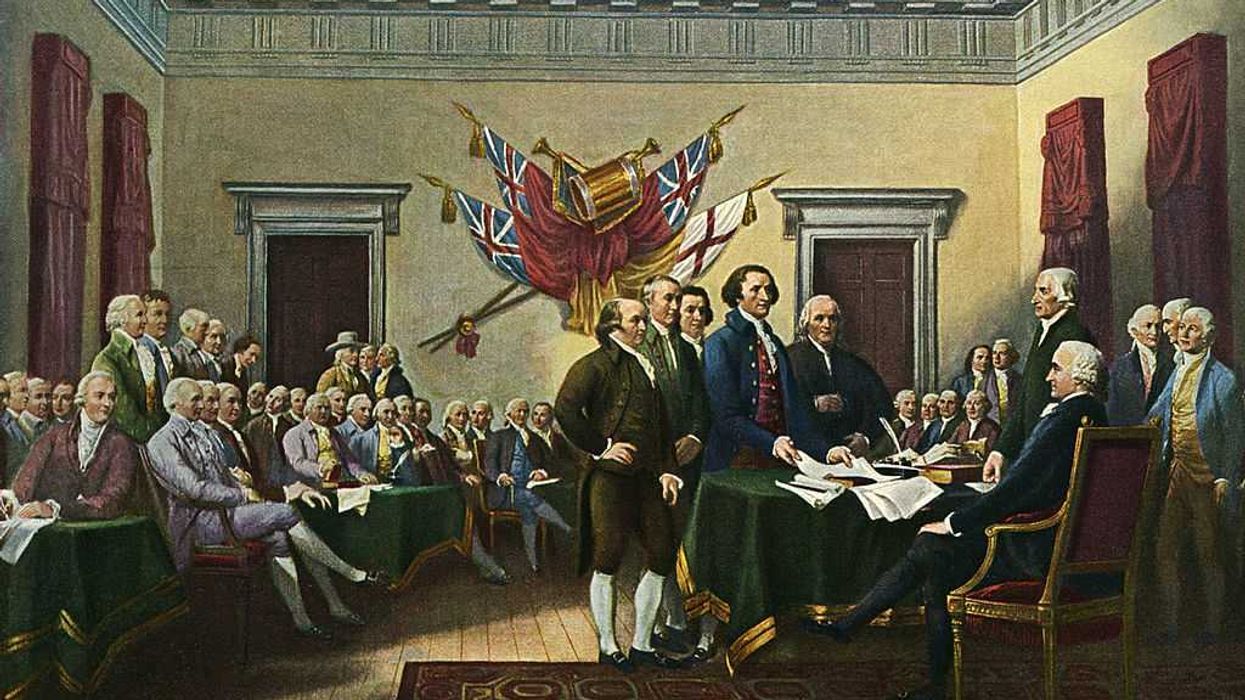
As we approach the 250th anniversary of the American founding, it’s important to point out that the Declaration of Independence does not begin with politics. Before it speaks of rights, consent, or government, it makes a claim about the structure of reality itself.

The rights it asserts are not the product of historical circumstance or collective will. They are grounded in a prior truth: that human beings are created by God.

The Declaration’s appeal to “the Laws of Nature and of Nature’s God” is not ornamental or rhetorical — it is the foundation on which its entire argument rests. The founders believed they were obligated to explain to mankind the reasons for their separation, and those reasons started with God and His law.

The Declaration of Independence is precisely that: a declaration of independence. It is not a confession of faith, a catechism, or a constitution.

With this foundation, we can then proceed to the Declaration’s most famous sentence — “We hold these truths to be self-evident, that all men are created equal.” Though it is often treated as a moral flourish or a proto-democratic slogan, it is in fact a tightly ordered philosophical claim that proceeds in three stages, each dependent on the one before it.

First, it makes an epistemological assertion: These truths are “self-evident.” They are not established by deduction, tradition, or positive law, but are known by reflecting on the observable world. Truths about God, human beings, and the good must be knowable if human beings are to be responsible for ordering their lives and laws accordingly.

To deny that such truths can be known is not merely to revise political theory, but to undermine moral accountability itself.

Second, the Declaration makes a metaphysical claim: Human beings are created and therefore possess a given nature. Equality is not asserted as a political preference but affirmed as a consequence of creation. It follows from the reality of a shared human nature, which exists because God created it. Human equality is intelligible only if there is something real that human beings equally are.

Third, the Declaration draws an ethical conclusion: Because human beings are created in this way, they are endowed with rights (life, liberty, and the pursuit of happiness) that no just government may rightly violate. To say that human beings are created by God is to say that they possess a given nature grounded in divine intention, not in change, appetite, or contingency.

This sequence is as decisive as it is brilliant. Remove any part of it and the argument collapses. Without a grounding in self-evident truths, claims about rights become matters of opinion or will. Without creation, equality loses its grounding in nature and becomes a political assertion to be enforced rather than an a priori truth. Without both, liberty ceases to be a moral claim and becomes a grant of the state for licentiousness. What remains is a thinner conception of freedom — one incapable of sustaining either justice or joy.

The assumptions that creation is intelligible, that God is knowable, and that human beings are responsible for acknowledging both stand at the foundation of the American experiment. They are the stress points at which its coherence either holds or fails.

RELATED: Trump’s Supreme Court keeps finding ways to fail his voters

OLIVIER DOULIERY/AFP/Getty Images

At this point, the Christian reader may be tempted to object that the Declaration does not go far enough. It speaks of God as Creator but says nothing of Christ. It appeals to natural theology but makes no reference to revealed religion. Does it leave us stranded with a Deistic account of God or a thin moralism that cannot sustain the claims it makes?

The concern is understandable, especially when the Declaration is contrasted with documents such as the Solemn League and Covenant that explicitly confessed allegiance to Christ the King. Yet this objection rests on a misunderstanding of both the Declaration’s purpose and the relation between natural and revealed religion.

The Declaration of Independence is precisely that: a declaration of independence. It is not a confession of faith, a catechism, or a constitution.

It has a specific and limited purpose: to justify political separation from Great Britain by appealing to truths binding on all human beings as such. The absence of explicit Christological language does not indicate theological indifference, but a focus on the specific political question at hand.

It is also worth remembering that many of the founders likely assumed that explicitly Christian commitments would find expression elsewhere. Nearly every state constitution in the founding era contained explicit Christian language, often including affirmations of Christianity or requirements that officeholders affirm specific Protestant beliefs.

The Declaration was never intended to bear the full theological weight of American public life on its own. It establishes a common foundation; it does not exhaust the moral or religious commitments of the people who affirmed it.

Just as Romans 1 demonstrates there is a clear general revelation that shows the reality of universal sin and then explains our need for Christ, the Declaration’s three-fold assertion of knowability, God, and what is good provides a basis for the path to salvation.

This points to a second consideration: The Declaration’s appeal to natural theology is not compatible with every religious or philosophical system. The Declaration’s affirmation of God the Creator excludes belief systems that deny God the Creator.

It presupposes that God is distinct from the world, that the world is created rather than eternal, and that human beings possess a knowable nature grounded in that act of creation. Natural theology, in this view, is neither trivial nor thin; it is full and clear. It tells us a great deal about God, about ourselves, and about the moral order.

RELATED: How to fix the woke teacher problem

H. Rick Bamman/Pioneer Press/Chicago Tribune/Tribune News Service/Getty Images
At the same time, natural theology is not redemptive revelation. Scripture does not merely restate natural truths more clearly or add moral instruction where reason falters. It answers a question that natural theology cannot answer on its own: how a just and holy God redeems sinners who suppress the truth they ought to know.

The founders were well aware of this distinction. The Bible was the most frequently cited book in their writings, and most took for granted that Christianity answered the question of redemption. Yet they also recognized that this answer could not be imposed by civil authority without corrupting both church and state.

They had no interest in adjudicating disputes among Protestants, much less between Protestants and Roman Catholics. The Declaration’s silence on these matters reflects not skepticism about Christian truth, but a judgment about political competence.

In this light, the Declaration’s appeal to natural theology appears not as a theological retreat, but as a principled boundary. It affirms all that reason can and must know about God and human nature, while leaving the work of redemption where it belongs: in the proclamation of the gospel and the ministry of the church.

The coherence of the American experiment depends on honoring both truths. Confuse them, and politics becomes a counterfeit religion. Separate them rightly, and both church and state are free to pursue their proper ends. This can serve as a call back to American Christians to remember the need for evangelical work if they hope for lasting positive change in America.

Editor’s note: This article was originally published in the American Mind.

The left’s Cesar Chavez problem is much bigger than Cesar Chavez


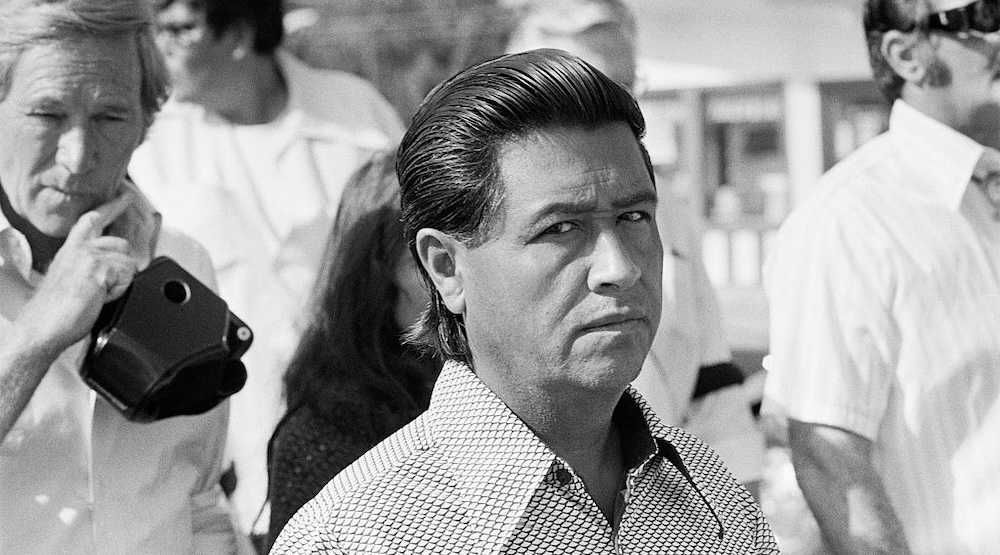
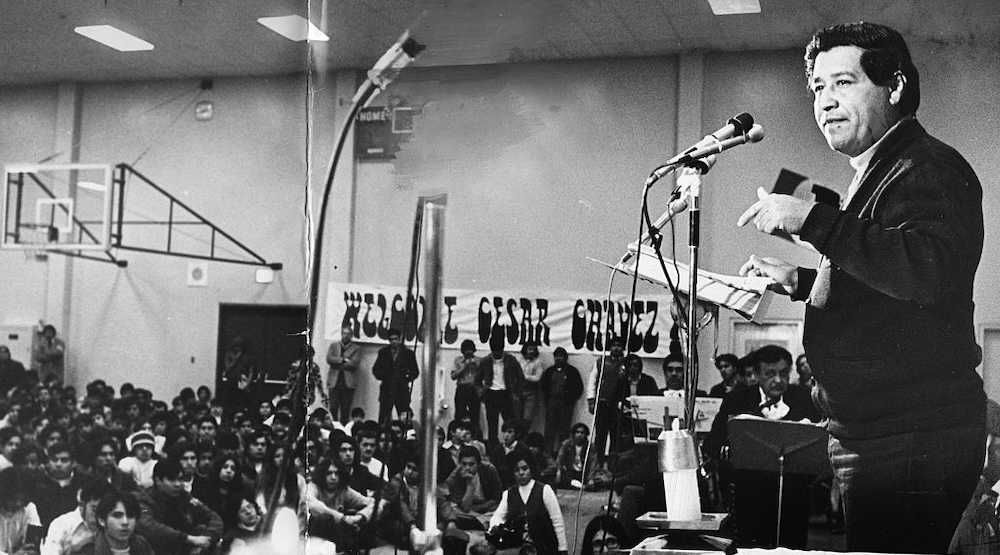
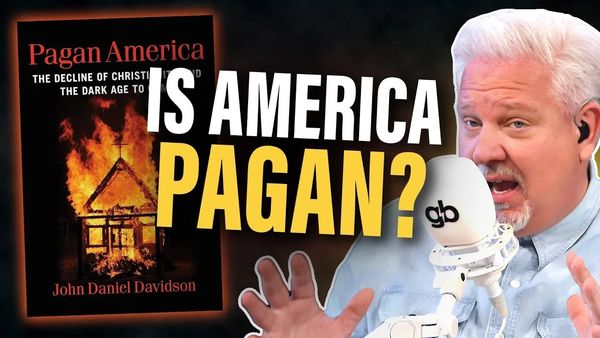
For decades, Cesar Chavez occupied near-canonical status in American universities. The United Farm Workers leader’s name adorned schools, his image filled lecture slides, and his story was told as secular hagiography: the humble labor leader who organized the oppressed, challenged exploitation, and embodied moral courage in the struggle for justice.

Now that image is cracking.

The reassessment of Chavez is not the end of something. It is the beginning of a broader reckoning.

A blockbuster New York Times story this month detailed serious allegations of sexual misconduct, including deeply disturbing claims that, if true, must force a fundamental reassessment of Chavez. The question is not only whether the allegations are true, but why this reckoning arrived only now.

What we are witnessing is not merely the fall of a man but the exposure of a pattern — one that reveals more about the moral framework of academic elites than about Chavez himself.

The manufactured hero

For years, Chavez has been presented, especially in university settings, as a hero of the proletariat. Not always in explicitly Marxist terms, of course. The language is smoother than that. But the structure is unmistakable: Chavez as the labor leader who stood against capital, exposed exploitation, and mobilized collective struggle in the name of justice.

Students are taught to see history as the story of structural oppression and economic conflict. Chavez became a usable symbol in that story. Because he served that function, his image was carefully curated.

What is now becoming clear is that the darker aspects of Chavez’s life were not entirely unknown. Reports of infidelity, domineering leadership, and abuses of power were not buried in some inaccessible archive. They were part of the broader historical record.

Silence around sin

Yet they were largely ignored.

That is how leftist professors handle their heroes. The facts that do not serve the narrative get minimized, reframed, or omitted. This is the first lesson of the current moment: The moral concern of the DEI professoriat is not truth but rather usefulness to the cause.

A figure is praised or condemned not by a consistent moral standard, but by whether he advances a political project. As long as Chavez could serve as a symbol of labor activism and anti-capitalist struggle, his sins remained background noise. Now that those sins threaten his usefulness, they have moved to the foreground.

No new moral conscience has emerged on the left. What we’re seeing is pure calculation.

RELATED: Labor group cancels Cesar Chavez events over 'profoundly shocking' new allegations

Tony Korody/Sygma/Getty Images

A narrow moral vision

The deeper problem goes beyond hypocrisy. The moral vision offered by Chavez’s academic admirers is radically narrow. It focuses almost entirely on one category of wrongdoing: economic injustice. Greed, real and serious as it is, gets elevated into the supreme moral concern. Entire departments and movements organize themselves around exposing and correcting it.

But what about lust? What about pride? What about the abuse of power in personal life, not just economic systems?

Those sins get treated as secondary or, worse, as distractions from the real work of social transformation. The result is a moral framework that is selective and shallow. It addresses external structures while neglecting the corruption of the human heart. Marxism 101 still teaches that if we revolt our way into a better system, we can somehow produce a better man.

But a philosophy with no coherent account of sin cannot solve sin.

From moralism to tyranny

That failure has predictable consequences. If the problem lies mainly in external systems, then the solution must also be external: regulation, enforcement, and conformity. Behavior must be monitored. Speech must be controlled. Dissent must be suppressed.

That is why academic environments that preach tolerance so often practice censorship. That is why calls for equity come paired with ideological compliance. Those who depart from the approved narrative do not get argued with. They get disciplined.

Until we recover a full account of human nature, one that takes sin seriously and looks beyond man for its cure, we will repeat this cycle again and again.

And that is why such movements, once they gain power, tilt toward tyranny. They do not govern by the standards of fairness they once demanded, because their moral framework never grounded those standards in the first place. It only deployed them when useful.

The fall of Chavez is not an anomaly. It is a case study. A movement that cannot account for sin will eventually be undone by it. Robespierre gets guillotined every time.

The deeper problem

At the heart of all this sits a basic misdiagnosis. Man’s greatest problem is not economic inequality. It is not structural oppression. It is not even political injustice, though all of those are real. Man’s greatest problem is sin.

It is the corruption of the heart that gives rise to every form of injustice, whether in the marketplace or the home, the factory or the family. No amount of social reorganization can fix that. You can redistribute wealth, rewrite laws, and restructure institutions and still end up with the same fallen human nature operating under new conditions.

That is why movements that promise moral transformation through politics end in disappointment. They try to fix what is internal by manipulating what is external. A Latin American studies professor once told a friend of mine, “Che su Christo.” Che is Christ.

RELATED: The lie that launched a thousand riots

Fitzgerald Whitney/Los Angeles Times/Getty Images
The only real solution

But there is only one Christ and only one remedy for sin, and it is the one most conspicuously absent from the classrooms that long celebrated Chavez.

The answer is not a program or a policy. It is a person.

Christ does not merely demand outward reform. He gives a new heart. He restores sinners to communion with God. He addresses not only the consequences of sin, but its source. He transforms the inner man, and from that transformation flow justice, righteousness, and love.

That is precisely why He is excluded. A system built on human effort, collective struggle, and ideological conformity cannot tolerate a solution rooted in repentance, grace, and divine authority. It is the works-righteousness religion of our age.

The inevitable reckoning

The reassessment of Chavez is not the end of something. It is the beginning of a broader reckoning. If our heroes are chosen for usefulness rather than virtue, they will disappoint us. If our moral standards are selective, they will collapse under their own inconsistency.

And if we refuse to acknowledge the true nature of sin, we will keep acting surprised by its consequences. The real lesson of this moment is not that another historical figure has fallen. It is that a moral system built on partial truths and ideological commitments cannot bear the weight of reality.

Until we recover a full account of human nature, one that takes sin seriously and looks beyond man for its cure, we will repeat this cycle again and again.

Beneath The Pink Patriarchy-Hate, ‘Barbie’ Tries To Answer: What Is A Woman?

Does 'Barbie' fully grasp the underpinnings of its own message about what it means to be a woman, and ultimately what it means to be human?

‘Start Trek: Picard’ Enters The Matrix With Embrace Of Transhumanism

The show despises the merely human. It reduces the human person to digits.

How To Win The New Cold War With China: Restore Faith, Community, And Industry

We may have pretended history was over and that the nation-state no longer mattered. But China never got that memo.