![]()
Jim Simons’ mathematical skills helped transform him from a prize-winning academic at Harvard and MIT into a legendary financier whose algorithmic models made Renaissance Technologies one of the most successful hedge funds in history. After his death last year, one of his consequential bequests went to his daughter, Liz, who oversees the Heising-Simons Foundation and its nearly billion-dollar endowment.
What Liz Simons has chosen to do with that inheritance might have surprised her father. Jim Simons devoted much of his charitable giving to basic research in mathematics and science, but his daughter’s foundation is moving in a very different direction. The Heising-Simons Foundation and similar organizations are supercharging a movement to remake K-12 mathematics education according to social justice principles.
Students are placed at a disadvantage when mathematical instruction is embedded in critical theory.
The revamp is profound. They reject well-established practices of math instruction while infusing lessons with racial and gender themes. The goal is to motivate disadvantaged students while dispensing with the traditional features of math — like numerical computation, which they struggle with on standardized tests — considered an oppressive feature of white supremacist culture.
Philanthropy-funded ‘anti-racist’ math
In many quarters, including corporations and universities, diversity, equity, and inclusion programs are in retreat due to pressure from the Trump administration and the courts. Not so in public education, with curricula that are locally controlled and largely insulated from the dictates of Washington.
That allows progressive foundations and like-minded charitable trusts to continue to pour millions of dollars into reshaping math education for black and Latino kids — including an $800,000 grant this year from the Heising-Simons Foundation — even though no credible research exists showing that the social justice approach improves their performance.
“Politicians and legislatures, even school boards,” are often too “hamstrung” to get things done, Bob Hughes, the director of K-12 education at the Gates Foundation, said at an online symposium on the need for racial equity policies in America's classrooms. Philanthropy, he added, faces fewer barriers in making rapid changes.
The Gates Foundation has been a leader in the promotion of anti-racist math instruction. It supported a project called “A Pathway to Equitable Math Instruction.” The project discards basic tenets of learning, like asking students to “show their work” and find the “right” answer as vestiges of “white supremacy culture.” The pathway is promoted by EdTrust West, which also receives support from the Spencer Foundation, the Heising-Simons Foundation, and other major donors.
The Gates and Heising-Simons foundations have both supported TODOS Mathematics for All, an Arizona-based organization that calls for elevating diversity, equity, and inclusion practices and anti-racist activism into all math instruction, with over $553,750 in grants in recent years. “We can no longer believe that a focus on curriculum, instruction, and assessment alone will be enough to prepare our children for survival in the world. We need anti-racist conversations for ourselves and for our children,” TODOS President Linda Fulmore announced in 2020.
Last year, the group hosted an hour-long webinar on “2SLGBTQIA+ identity in mathematics education.” During the event, a speaker expounded at length on various queer and indigenous identity groups while spending virtually no time on math-related curriculum or instruction.
At one point, the presenter erroneously claimed that there are “15.3 billion students in U.S. high schools” — a figure that would require the entire global population to be enrolled in American secondary education twice over. The speaker likely meant to say million.
‘Race-centered’ math
The foundations similarly fund practical lessons that put race at the center of math instruction. In Alexandria, Virginia, for example, the Heising-Simons Foundation supported a public-school program that encouraged kindergartners through second-graders to count the characters in picture books by race. At the end of each session, teachers guided students in creating racial scorecards for each book, then voting to select those with the fewest white characters. The exercise was presented as mathematics education.
Jo Boaler, a controversial professor of education at Stanford University who championed the push to remove eighth-grade algebra from San Francisco’s public schools in the name of equity, traces her support to this network of foundations. The Gates Foundation and Valhalla Foundation, which was founded by Scott Cook, the co-founder of tech firm Intuit, have long funded her math education project called YouCubed.
These deep-pocket donors also fund Danny Bernard Martin, a professor of math education at the University of Illinois at Chicago and a leading voice of what critics call “woke math.”
Over the past six years, the Racial Justice in Early Mathematics Project, which Martin co-leads at the Erikson Institute in Chicago, has received nearly $2.5 million from the Heising-Simons Foundation. This year, the foundation announced an additional $800,000 grant to help the project develop tool kits for wider implementation among teachers, administrators, and researchers.
Martin’s views extend far beyond typical calls for educational equity. He regards mathematics instruction as fundamentally a “white supremacist construct” that inflicts “epistemological violence” on black students. In his estimation, even DEI programs are too conservative — mere accommodations “rooted in the fictions of white imaginaries” and designed to appease “white logics and sensibilities.”
The solution Martin proposes is radical: Black students should seek instruction exclusively from black teachers at “independent black institutions.” They should resist the temptation of “advanced coursework and mathematics-related employment” and instead engage in “walkouts and boycotts” to protest against mathematics education as it currently exists.
RELATED: Test scores drop at SF elementary school that spent $250K on 'Woke Kindergarten' program to teach anti-police lessons, 'disrupt whiteness'
![]() Photo by georgeclerk via Getty Images
Photo by georgeclerk via Getty Images
The very structure of math instruction, Martin contends, has dehumanized black students through low test scores and failing grades.
The ideas of the Racial Justice in Early Mathematics Project and its leaders have reverberated through America’s classrooms. California’s new mathematics curriculum framework, which guides K-12 education statewide, repeatedly cites Martin.
Educators have sharply criticized the framework for leaning heavily on politicized concepts of math. The document suggests, for instance, that teachers “take a justice-oriented perspective” when providing instruction and discourages the use of “tracking” — or the practice of separating students into different classrooms based on their abilities.
Educators push back
Williamson Evers, a former assistant secretary of education and a fellow at the conservative-leaning Independent Institute, has been monitoring what he calls the “woke math” movement for years. “It’s very important to have math skills,” he told RealClearInvestigations.
Evers rejects the identity-based claims made by Martin and others who have called for minority students to abandon math education over alleged racism. “There are mathematicians and scientists on every continent from every background, and this idea of boycotting education would harm black schoolchildren.”
Elizabeth Statmore, a math teacher at the elite Lowell High School in San Francisco and a critic of social justice math, says the way to improve the performance of black and Latino students lies in the nitty-gritty, such as better teaching, holding students accountable, and providing them with more academic and emotional support.
Critics say the emphasis on prose over calculation will exacerbate the very disparities that social justice advocates claim to address.
“But it’s not sexy; they’re not on the keynote circuit like Danny Bernard Martin and Jo Boaler,” Statmore said. “They’re building a brand, not doing the kind of math education research that is helping to improve outcomes for disadvantaged children.”
Representatives of the Heising-Simons Foundation, the Erikson Institute, and Martin did not respond to requests for comment.
The Heising-Simons Foundation’s focus on racializing math education reflects its broader ideological commitments. Like many progressive foundations, it uses its significant funds to advance a range of left-wing policies that might have a hard time establishing themselves without billionaire support.
The foundation has also donated to PolicyLink, the organization behind DefundPolice.org, and to the Anti-Police Terror Project, which advocates for abolishing police departments in high-crime cities like Oakland, California. Liz Simons was also among a small clique of California megadonors behind the push to elect progressive prosecutors such as George Gascón in Los Angeles and Chesa Boudin in San Francisco. They declined to pursue felony charges against a range of violent offenders over concerns about racial equity.
The attempt to reimagine mathematics through the lens of critical race theory isn’t new — scholars have been working along these lines since the 1980s. They argue that historical racial oppression continues to influence everything from geometry curricula to standardized testing. Traditional emphases on objectivity, rigorous standards, and subject-matter mastery should be replaced, the scholars argue, with ideological exercises designed to promote racial and social consciousness.
What is new is the scale and speed of adoption. As America has grappled with questions of racial justice in recent years, billionaire foundations have provided the resources to implement these ideas widely in both public and private schools.
The donors appear motivated by a deep sense of ideological commitment to righting past wrongs related to racial injustice.
At the 2020 education donor symposium, Liz Simons recalled her experience working briefly as a Spanish bilingual teacher in an impoverished community in Oakland. “The much larger systemic problems,” she witnessed, Simons said, guided her to the goal of shaping early childhood education.
Na’ilah Suad Nasir, president of the Spencer Foundation, noted that she previously worked as the vice chancellor of “equity and inclusion” at the University of California, Berkeley. Expanding racial equity in education, she said, has been her “life’s work.”
Widening disparities
When it comes to math instruction, social justice means stripping it of basic features like numbers. In workshops hosted by the Racial Justice in Early Mathematics Project in 2023, the group promoted “numberless word problems” — mathematical exercises stripped of numerical computation. The method, instructors explain, is designed to counter “European ways of knowing and doing.”
Sisa Pon Renie, one presenter, spoke of wanting to challenge the “persistent myth that math is just abstract and without any cultural relevance.” The project champions this numberless approach as essential for “helping children understand how mathematics might be an important tool to understand social issues and promote justice.”
But critics say the emphasis on prose over calculation will exacerbate the very disparities that social justice advocates claim to address.
“Imagine you’re a Cambodian refugee, and you get some math problem that’s loaded with prose,” Evers, of the Independent Institute, said. “Maybe you’re very good at the figures part, the calculating part, the mathematical part.”
Such students, he argued, are placed at a disadvantage when mathematical instruction is embedded in critical-theory frameworks and dense with English text. “They unnecessarily load these things down, make it harder, and it’s not even math. It’s an inadequate mode of teaching.”
The real-world consequences of these approaches have played out most dramatically in San Francisco. A decade ago, officials removed Algebra 1 from middle schools, arguing that the change would give black and Latino students, who were underrepresented in the math class, more time to prepare while avoiding placing them in lower-level tracks.
David Margulies, a parent involved with the San Francisco community, observed that families wanting their children to take Algebra 1 in eighth grade shifted away from public to private schools, online learning, and homeschooling. Students who don’t take the math class in middle school find it more difficult to take calculus in high school.
RELATED: Major university caught in new DEI cover-up
![]() Photo by via Getty Images
Photo by via Getty Images
“Families figured out how important this is, and they are looking elsewhere,” he noted.
A 2023 Stanford study found that San Francisco’s Algebra 1 experiment did little to close racial achievement gaps. Black enrollment in Advanced Placement math classes remained unchanged, while Latino participation increased by 1%.
Meanwhile, education systems that have increased rather than decreased academic rigor have seen notable improvements in black student performance. In 2019, Dallas public schools began automatically enrolling students who performed well on state exams in middle-school algebra. The program increased black participation in advanced mathematics from 17% in 2018 to 43% in 2023.
Walking it back
Last year, during a Racial Justice in Early Mathematics Project webinar titled “Who Is Labeled Smart?” Martin addressed the backlash against San Francisco’s push for educational equity. He toned down his scathing critique of merit-based advanced education programs that he believes harm black and Latino students and made a surprising statement about his own son’s schooling.
“I’m guilty, I’m guilty,” Martin said, almost sheepishly. “My son is, quote unquote, in one of those tracks.”
Editor’s note: This article was originally published by RealClearInvestigations and made available via RealClearWire.
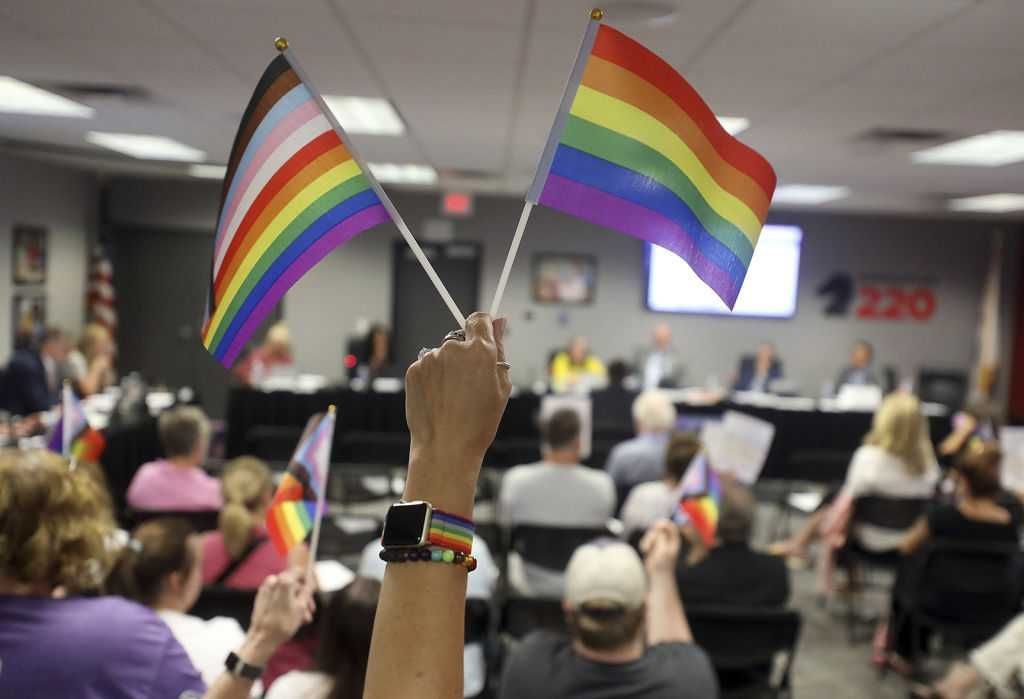

 Photo by georgeclerk via Getty Images
 Photo by via Getty Images
 www.theblaze.com
 www.breitbart.com
 thefederalist.com
 www.theblaze.com