Jordan Peterson’s Daughter Delivers Devastating Update On Her Father’s Health
'I don't plan on making another update about my dad'
The world's richest man shared a candid moment in his religious journey this week on social media, much to the surprise and excitement of many Christian commentators.
On Tuesday afternoon, Elon Musk made a surprise admission under a post about "evangelizing" the multibillionaire.
'I agree with the teachings of Jesus.'
"Someone needs to evangelize Elon Musk," the original post said. "Who will lead him to Christ?"
Musk's reply generated more than twice the engagement as the first post, climbing close to four million views by Wednesday morning.
RELATED: Large mural in memory of Iryna Zarutska painted in downtown Las Vegas — and paid for by Elon Musk
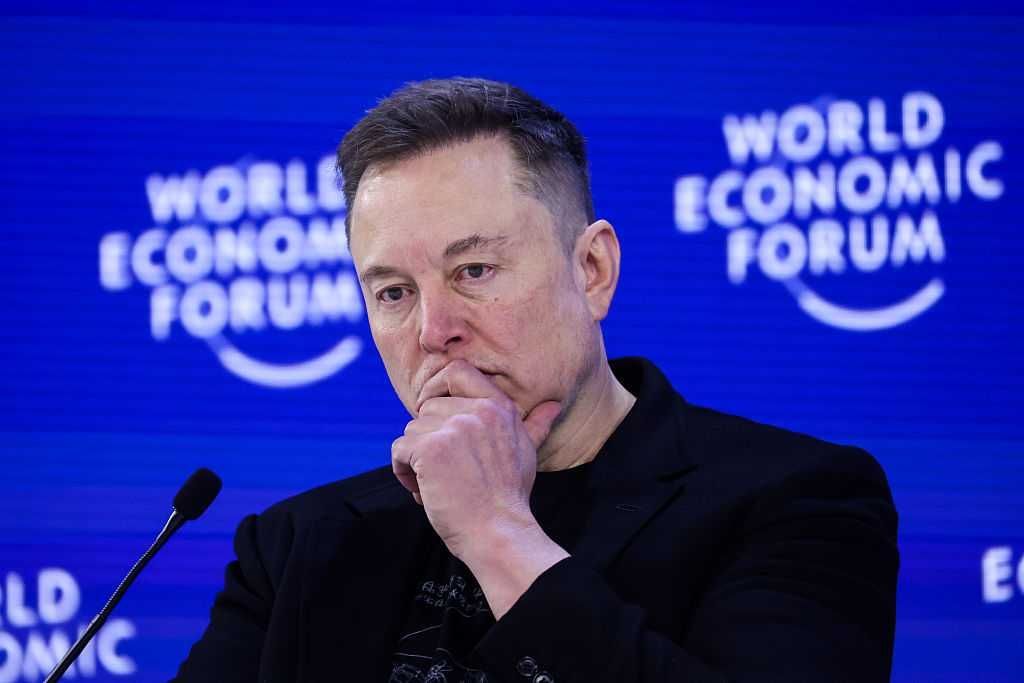
"I agree with the teachings of Jesus," Musk commented.
This prompted responses from many Christian politicians and political commentators, many of whom encouraged him to take the next step in his journey.
BlazeTV's "Fearless" host, Jason Whitlock, wrote: "Thanks for saying this. It's a start."
Michael Knowles of the Daily Wire wrote, "Always a good thing to do! But if one of Jesus' teachings — and a teaching he repeats — is that he is God, what does that imply for our own lives and actions?"
One prominent account backed up Knowles' point, adding, "This is the leap of faith that most people agreeing with Jesus's teaching won't take. It's a metaphysical commitment."
Sen. Mike Lee (R-Utah) offered his encouragement to Musk: "He lives. He loves. He redeems."
"We are all sons and daughters of the King," Rep. Nancy Mace (R-S.C.) added.
"Agreement is a short step away from belief, and then faith will follow," Frontier magazine contributor and poet Joseph Massey said.
The original poster, the Art of Purpose, left a comment under Musk's reply that summed up many of the responses well: "Brother you are so close. I'm rooting for you."
While Musk's most recent comment made waves on social media, this is not the first time Musk has suggested that he at least accepts the teachings of Christ.
Musk told Jordan Peterson in a July 2024 interview that he was a "cultural Christian" and that "the teachings of Jesus are good and wise," according to UnHerd.
Like Blaze News? Bypass the censors, sign up for our newsletters, and get stories like this direct to your inbox. Sign up here!
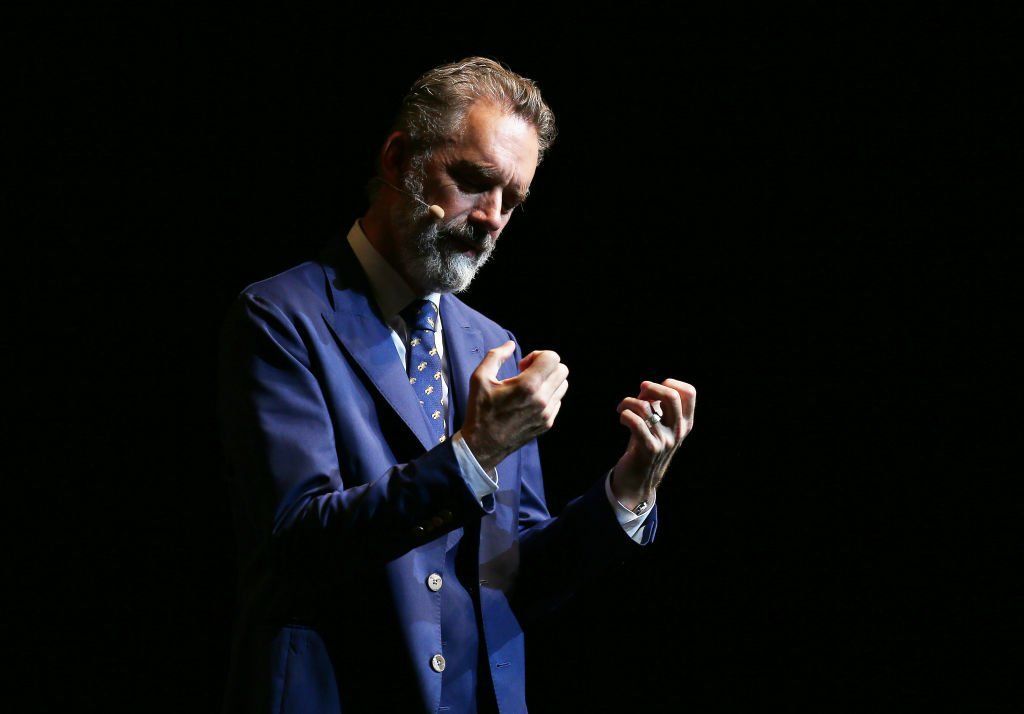
The internet is ablaze with clips of the recent “Jubilee” debate between Jordan Peterson and 20 atheists — and many on the right are criticizing Peterson for his answers to the theological questions presented.
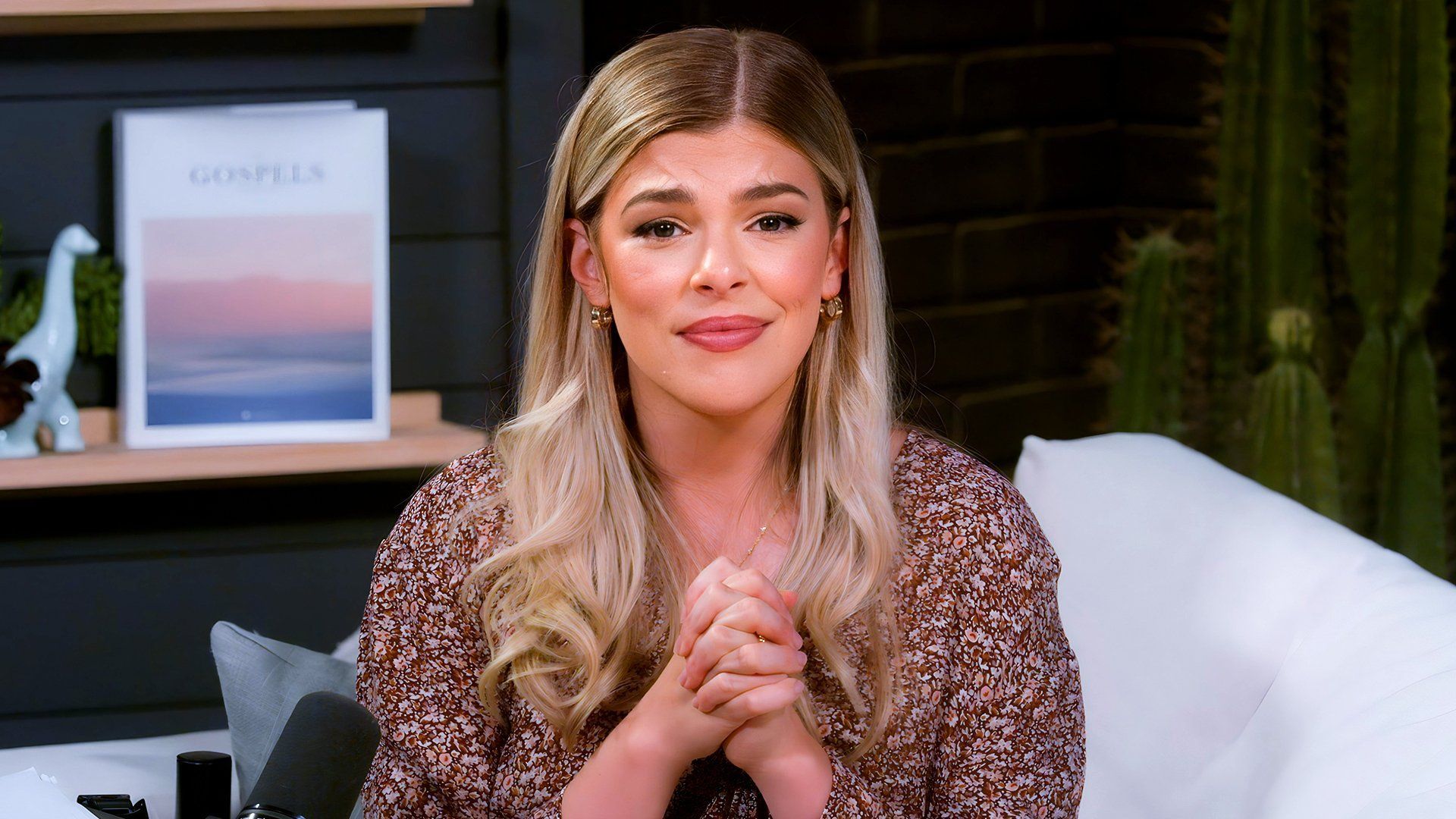
However, BlazeTV host Allie Beth Stuckey doesn’t believe the clips circulating on social media actually reflect Peterson’s performance.
“There were some things that he answered that I thought were really good, that I would affirm and say as well, and then there were other things that I’m like, ‘That is not at all the Christian perspective,’” Stuckey says on “Relatable.”
Peterson made four claims that the atheists were supposed to be contending with. The first claim is that “atheists reject God, but they don’t know what they’re rejecting.”
While the atheists took a major issue with this assertion, Stuckey believes they misunderstood Peterson’s point.
“Jordan did not actually claim that you can never reject that which you don’t understand. That’s not what he said. That’s what this atheist is assuming that he meant by his claim,” Stuckey says, explaining that instead, Peterson “claimed that atheists specifically reject that which they don’t understand, not that no one can reject anything that they don’t understand.”
Peterson’s second claim is that “morality and purpose can’t be found within science.”
“Maybe it’s too far to say the implication is that morality and purpose have to be from God — I would say Christianity — not just from any supernatural entity. But that seems to be the implication here,” Stuckey says. “And actually, the implication is what most of the debaters are debating against. And maybe that’s their error, or it's a safe assumption.”
One atheist attempted to make the point that morality can’t come from Christianity, as slavery was depicted in the Bible. He also claimed that slavery ended because humans “evolved,” to which Peterson fired back, “The reason we evolved, so to speak, away from slavery was because the West was founded on Judeo-Christian morality and the presumption that every person was made in the image of God, and so slavery itself became immoral.”
“I liked the last part of Jordan Peterson’s answer there, because he is absolutely right,” Stuckey says, before diving into Peterson’s third claim — that “everyone worships something, including atheists.”
This part of the debate has gone the most viral, as an atheist named Danny, whom Stuckey calls “Reddit Timothee Chalamet,” did not appear to be arguing in good faith. Rather than really getting to the heart of the debate, he spoke over Peterson and focused on seemingly irrelevant points.
“Danny is probably trying to argue, in the same way, atheists attend to and prioritize certain things, but they don’t worship them,” Stuckey says, adding, “As a Protestant, I would say, ‘No, that is worship.’”
Peterson’s last claim is that “atheists accept Christian morality; they just deny the religious foundation of Christian morality,” which Stuckey agrees with.
“I actually think that Jordan Peterson did a lot better than some critics on social media are saying,” she says. “I enjoyed watching it, and it made me think myself, and I always welcome the opportunity to think more deeply about my faith and why I believe what I believe.”
To enjoy more of Allie’s upbeat and in-depth coverage of culture, news, and theology from a Christian, conservative perspective, subscribe to BlazeTV — the largest multi-platform network of voices who love America, defend the Constitution, and live the American dream.
When woke mobs began chasing off guest speakers from college campuses and elite institutions started investigating scientists over minor infractions against gender orthodoxy, a certain class of moderate progressives realized its reign was ending. Figures like Sam Harris, Bari Weiss, and Michael Shermer weren’t conservatives by any stretch. In the George W. Bush or Barack Obama years, they would have qualified as mainstream progressives. But they couldn’t keep pace with the radical left.
These disaffected progressives needed a new label. But they couldn’t bring themselves to align with the “backward” conservatives they’d spent careers ridiculing. Venture capitalist Eric Weinstein coined the term “Intellectual Dark Web,” which Weiss attempted to popularize in the New York Times. But most settled on “classical liberal” to describe their stance. The problem? They had spent years rejecting classical liberalism.
Disillusioned progressives are not conservatives. They’re not classical liberals, either. They don’t get to define the future of the right.
“Classical liberal” serves as the ideal label for repackaging Obama-era liberalism in a way that reassures Republicans while keeping a safe distance from the woke left. It sounds moderate compared to identity politics. It evokes America’s founders — Washington, Jefferson, Adams. If you want to appear reasonable to conservatives while shielding yourself from attacks on your right flank, aligning with the founders is a smart move.
Whether the branding strategy was intentional remains debatable. What’s not in question is how badly this self-description distorted classical liberalism.
Some members of the Intellectual Dark Web drifted right. Most did not. They held tightly to progressive instincts. Many were atheists. Some had built careers in the New Atheist movement, penning books mocking Christianity and debating apologists for sport. Several were openly gay, and most championed same-sex marriage. These were not defenders of tradition — they spent decades undermining it.
They didn’t oppose the revolution. They led it — until the mob turned on the parts they still cherished, like feminism or science.
When the Intellectual Dark Web embraced the “classical liberal” label, it did so to defend free speech. Most of these disillusioned progressives had been canceled — for “misgendering” someone, for not parroting the latest racial orthodoxies, or for refusing to bow to ideological litmus tests. They longed for an earlier version of progressivism, one where they still held the reins, and radical activists didn’t dictate the terms of debate.
This shared frustration became the rallying point between conservatives and anti-woke liberals. Free speech offered common ground, so both sides leaned into it. But classical liberalism involves far more than vague nods to open dialogue.
Some trace liberalism’s roots to Machiavelli or Hobbes. But in the American tradition, it begins with John Locke. Much of the Declaration of Independence reads like Thomas Jefferson channeling Locke — right down to the line about “life, liberty, and property,” slightly rewritten as “the pursuit of happiness.”
In “A Letter Concerning Toleration,” Locke argued for religious toleration among Christian sects. He even entertained the idea of tolerating Catholics — if they renounced allegiance to the pope. But Locke drew a hard line at one group: atheists.
“Lastly, those are not at all to be tolerated who deny the being of a God,” Locke wrote. “Promises, covenants, and oaths, which are the bonds of human society, can have no hold upon an atheist ... [they] undermine and destroy all religion can have no pretense of religion whereupon to challenge the privilege of a toleration.”
For Locke, atheism was social acid. It dissolved the moral glue holding a nation together. A silent unbeliever who kept to himself might avoid trouble — but even then, Locke saw no reason to trust such a man with power. Atheism, in Locke’s view, posed a civilizational threat.
Now, consider the irony. Many of today’s self-declared “classical liberals” rose to prominence attacking religion. They led the New Atheist crusade. They mocked believers, ridiculed Christianity, and wrote bestsellers deriding faith as delusion. These weren’t defenders of liberal order. They launched a secular jihad against the very moral foundation that made liberalism possible.
Their adoption of the “classical liberal” label isn’t just unserious. It’s either historically illiterate or deliberately deceptive.
It’s a mistake to treat America’s founders as a monolith. They disagreed — often sharply — and those disagreements animate much of the "Federalist Papers." But one point remains clear: Their understanding of free speech and religious liberty diverged sharply from modern secular assumptions.
RELATED: Labeling you ‘phobic’ is how the left dodges real arguments

Even after the Constitution and Bill of Rights were ratified, several states retained official churches. Courts regularly upheld blasphemy laws well into the 20th century. Some state supreme courts continued defending them into the 1970s. Blue laws, which restrict commerce on Sundays to preserve the Sabbath, remain on the books in several states.
John Adams put it plainly: The Constitution was “made only for a moral and religious people. It is wholly inadequate to the government of any other.” The founders, and the citizens they represented, expected America to function as an explicitly Christian nation. Free speech and religious liberty existed within that framework — not apart from it.
So when non-woke liberals claim that “classical liberalism” demands a secular or religiously neutral government, they misrepresent history. That idea would have struck the founders as absurd. The Constitution was not written for New Atheists. Adams said so himself.
Faced with these historical facts, critics usually pivot. They argue that America has morally advanced beyond its founding values. Today, we tolerate non-Christian religions, recognize women’s rights, and legalize same-sex marriage. These changes, they claim, bring us closer to “true” American principles like freedom and equality.
Classical liberalism was a real political tradition — one that helped shape the American founding. It deserves serious treatment. Watching it get paraded around by people who reject its core values is exhausting. If Locke or Adams saw progressive atheists wearing classical liberalism like a skin suit, they’d spin in their graves.
The secular liberalism of the 1990s and early 2000s is not classical liberalism. It isn’t even an ally of conservatism. The non-woke left served as useful co-belligerents against the radical fringe, but they were never true allies — and they should never be allowed to lead the conservative movement.
Some have earned respect. Carl Benjamin, Jordan Peterson, and others have taken real steps to the right, even toward Christianity. That deserves credit. But let’s not kid ourselves. Many who still fly the “classical liberal” banner don’t believe in the values it represents. They reject its religious foundation. They rewrite its history. They co-opt its label while advancing a worldview its founders would have rejected outright.
Disillusioned progressives are not conservatives. They’re not classical liberals, either. They don’t get to define the future of the right. And they certainly don’t get to lead it.
No parent is perfect, but exactly how one should parent has become a highly contentious topic of debate — especially when it comes to giving kids space and allowing them to learn as they go.
Most holistically minded parents would agree that keeping your children in the safety of your home at all times, occupying them through screens, and hovering over their every move will result in children who don’t know how to think, or do, for themselves.
But what about sleepovers?
“I did do sleepovers growing up, like early, I don’t know about as young as kindergarten, but I feel like first, second grade, I was definitely sleeping over at friends' houses and they would sleep over at my house,” Allie Beth Stuckey of “Relatable” recalls.
“My parents' rule was if I went over to anyone’s house, whether it was spending the night or not, they had to know their parents, not just, ‘I talked to them once on the phone,’ but like really know them,” she continues, adding, “I think that’s a good boundary.”
But things are different now than they were when Stuckey was a child.
“You should not only know their parents, but if your kid is going over to a house at any point of the day, you should also know their siblings, you should know what access to technology they have and what they’re going to be doing, what their rules are,” she explains.
“My stance is different than my parents', in that I say no to sleepovers,” she continues. “I do believe it’s a good general rule, especially with the access to technology that kids have today.”
Some children are exposed to horrific imagery, like pornography, at sleepovers — which can leave a devastating mark on a child’s psyche that follows him all the way into adulthood.
“I think there are good risks, and then unnecessary risks,” Stuckey says, adding, “I think it’s Jordan Peterson that said, ‘Let your kids do dangerous things safely,’ and I think that’s a pretty good rule of thumb.”
To enjoy more of Allie’s upbeat and in-depth coverage of culture, news, and theology from a Christian, conservative perspective, subscribe to BlazeTV — the largest multi-platform network of voices who love America, defend the Constitution, and live the American dream.
Outrage about the systematic mass rape of British girls by Pakistani Muslim grooming gangs and about politically correct authorities' failure to hold the pedophilic rapists accountable is mounting once again, reignited in part by the leftist Starmer government's rejection of a call for a formal public inquiry into child exploitation in the Greater Manchester town of Oldham and by Elon Musk's efforts to highlight past governmental failures.
Canadian psychologist Jordan Peterson and Natalie Winters, co-host of Steve Bannon's "War Room," joined Piers Morgan on his show Tuesday to discuss the combined effort by the media and law enforcement to cover up the mass rapes in order to avoid anti-Muslim sentiment.
Morgan, like his guests, vociferously condemned both the Muslim rape gangs and woke authorities' cover-up of their crimes; however, later in the episode, he attempted to argue that multiculturalism was not to blame. His argument was quickly chewed up.
At the outset, Morgan — no fan of Islam critic Tommy Robinson — credited Robinson with "bang[ing] the drum about the rape gang scandal for a very long time" and played a clip of the activist's 2011 interview with former BBC broadcaster Jeremy Paxman, in which he suggested the scandal had been ignored because the impact was largely absorbed by working-class Britons: "Do you know anyone who's been murdered by a Muslim gang? You probably don't. I do. Do you know any 15-year-old girls that ... you've grown up with that have been raped or pimped? You don't — so I don't expect you to understand the issue."
When asked to explain why Britons felt compelled to downplay or ignore the rape of white, predominantly working-class British girls, Peterson broke the issue down into "four bins of complexity" around the issue:
Adding right-left politics atop the mix, Peterson noted "that's an absolute bloody rats' nest."
While recognizing the complexity of the issue, Peterson offered an apparent critique of multiculturalism, suggesting that sexual misbehavior and other undesirable social traits are everywhere default traits that have been uniquely rejected by the historically anomalous West.
"Like the default position for an unguarded woman worldwide and throughout history has been 'rape target,'" said Peterson. "That's the norm, not the civilized conduct that generally obtains between men and women even in public on the streets in the West."
'Multiculturalism makes no demands of the incomer to integrate.'
"40 out of 50 Muslim-majority countries in the world are authoritarian hellholes, and only three of them are democracies," Peterson noted later in the interview. "There are certainly doctrines in Islam that are very, very difficult to square with free, liberal, Western, Christian democracies, and those differences aren't just apparent — they're deep."
Peterson also pointed out that "100% of Protestant- or Catholic-majority countries outside of Africa are highly functional democracies. 100%. 6% of Muslim-majority countries are democracies, and they're not in the highly functional category."
After Peterson intimated that the multicultural project in the West has meant the admission and tolerance of populations for which sexual misbehavior and other barbaric practices are the norm, he indicated that the cover-up of the scandal was the result, in part, of fear of leftist political backlash and Islamic violence; of the elite's decision to "sacrifice the children of working-class Brits to the moral grandstanding of their progressive elitism"; and to the woke establishment's expertise in "identifying individuals and bringing reputation-savaging to bear on them in an extremely effective way."
Morgan, apparently still convinced that "multiculturalism has been very successful" in the U.K., asked Natalie Winters late in the episode, "Why should we blame multiculturalism in totality for [the Pakistani rape gang scandal]?"
"I don't really think that tolerance should be the paramount virtue if the disparate cultures that you're importing into said country are cultures that, frankly, I think are conducive to gang-raping of young girls," said Winters, adding that pedophilia was codified in the Quran.
"Our leaders will say that assimilation is racist, it's neocolonial, it's not appropriate to say that cultures that have different values and standards than us need to adopt the shared culture of the country that they're immigrating to," continued Winters.
Elements of the British government have in recent years issued similar critiques of multiculturalism.
Blaze News previously reported that former British Home Secretary Suella Braverman told an audience in Washington, D.C., in September 2023, "Multiculturalism makes no demands of the incomer to integrate."
"[Multiculturalism] has failed because it allowed people to come to our society and live parallel lives in it," continued Braverman. "And in extreme cases, they could pursue lives aimed at undermining the stability and threatening the security of our society. We are living with the consequences of that failure today."
Like Blaze News? Bypass the censors, sign up for our newsletters, and get stories like this direct to your inbox. Sign up here!
 The only way to understand the purpose of Bill C-9 — and other Christian persecution in the West — is to frame it as a hostile pagan religion imposing its will.
 Before deciding on any big changes in 2026, try starting with in bedroom.
 Jordan Peterson professes to be an expert on Christianity but doesn't believe in Jesus — in fact, the only higher authority he seems to recognize is himself.

 www.theblaze.com
 thefederalist.com