'The American Revolution' keeps founders at arm's length


If America had an official "documentarian laureate," Ken Burns would be a shoo-in for the job.

Over the last four decades, the filmmaker has devoted his career to capturing the country's history and culture, in works ranging from "Baseball," "Jazz," and "The National Parks: America's Best Idea" to his groundbreaking 1990 masterpiece "The Civil War." And despite his avowed "yellow-dog Democrat" tendencies, he has done so with remarkable nuance.

Those rallying around the American cause are portrayed as a loose collection of criminals, anarchists, slavers, and exiled aristocrats united by high Enlightenment ideals.

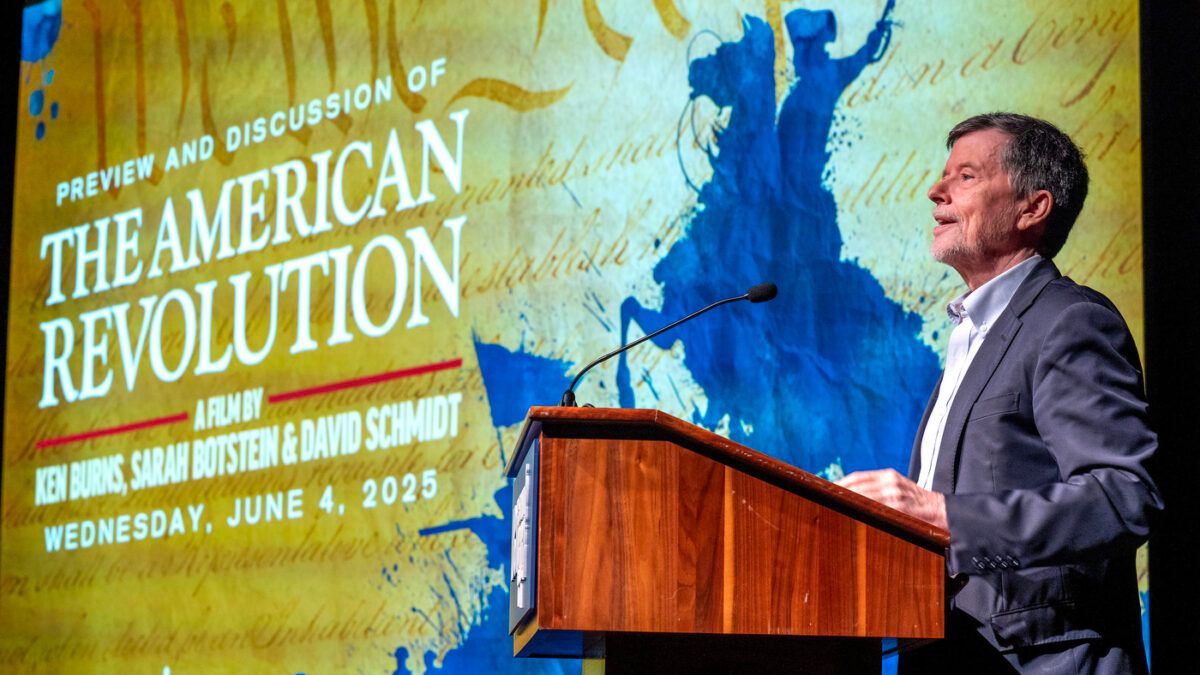
Now, just in time for America’s 250th anniversary, Burns has returned with a new six-part PBS series exploring how it all got started.

Fanfare and apprehension

"The American Revolution" arrives with suitable fanfare — and an almost absurdly star-studded cast of voice-over artists. Tom Hanks, Morgan Freeman, Samuel L. Jackson, Paul Giamatti, Josh Brolin, Meryl Streep, Ethan Hawke, Edward Norton, and Michael Keaton are among the luminaries who provide narration.

Even so, there has been a level of apprehension surrounding the show, particularly among conservatives. Could a commemoration of America's founding even work in our current moment — when even mild appeals to patriotism and national unity seem to stir up bitter partisan disputes?

Burns seems to have a found a way around this by making his retelling as clinical and unromantic as possible. He is clearly passionate about the American project, but he is unwilling to embrace the mythological or nationalistic sides of that passion.

Whose revolution?

“It’s our creation story,” historian Rick Atkinson says as he discusses the importance of the Revolution. But most of the experts Burns showcases prefer to focus on the negative, puncturing what one calls the “unreal and detached" romanticization of the founders.

Instead, we're invited to ponder the role that slavery and the theft of Native American land played in the fight for independence — not to mention a fair amount of unsavory violence perpetrated by the revolutionaries.

While the series does a good job of covering the conflicts between 1774 and 1783, it takes frequent detours to discuss the issues surrounding the revolution: the role of women contributing to the war, the perspectives of English Loyalists as they became refugees fleeing the conflict, the madness of the Sons of Liberty’s antics, and the perspectives of slaves trying to survive and find liberty too.

RELATED: Yes, Ken Burns, the founding fathers believed in God — and His 'divine Providence'
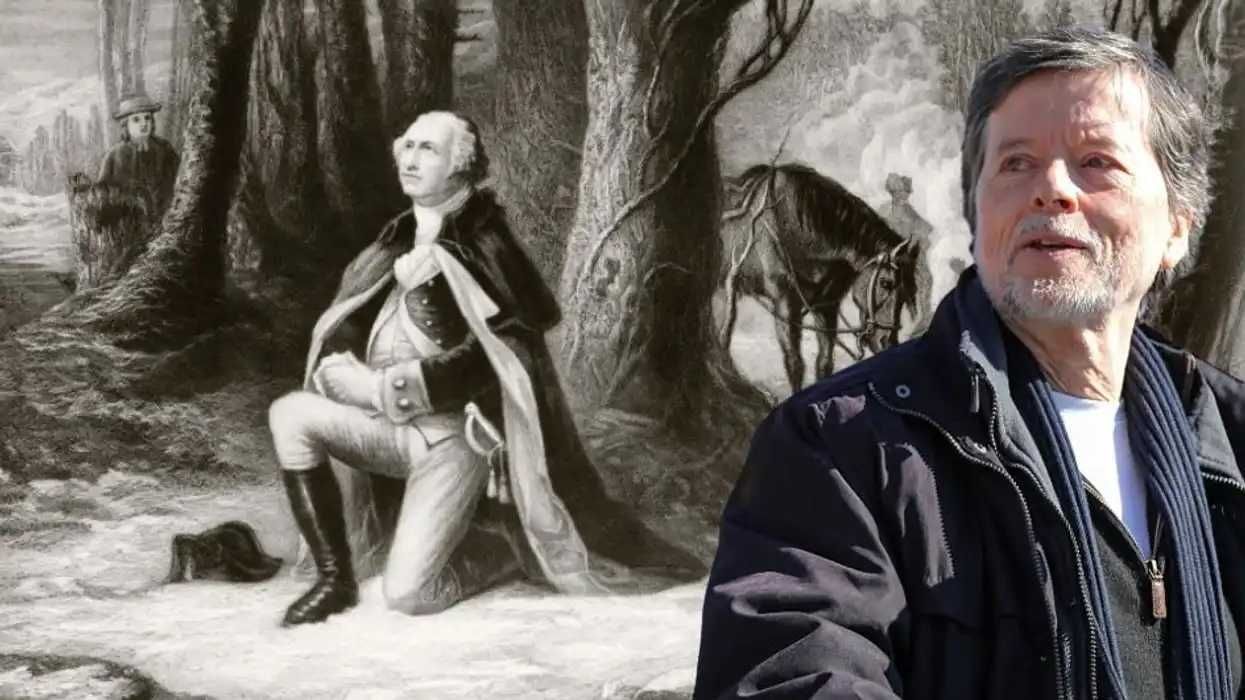
Interim Archives/Boston Globe/Getty Images

Living in the tension

A pronounced classical liberalism pervades the storytelling, one reflecting the secular Enlightenment idealism that a “new and radical” vision for mankind could be found through self-determination and freedom, apart from the aristocratic and theocratic haze of Europe.

This vision acknowledges progressive criticism of the era’s slavery and classism, but tries to integrate those faults rather than use them as grounds to discard the entire experiment. It attempts to live within the tension of history and sift out what is still valuable, rather than abandon the project altogether.

Indeed, Burns is generally good about avoiding any sort of score-settling or modern politicking, shy of a few buzzwords. He constantly uses the word “resistance” and ends with a reflection on the potential ruination of the republic by “unprincipled demagogues,” proudly quoting Alexander Hamilton that “nobody is above the law.”

The show’s consensus is overwhelmingly that the values of the Revolution were greater than the severely flawed men who fought it. To Burns, it was not merely a war, but a radical ongoing experiment in human liberty that escaped the colonies like a virus and changed the world forever. He certainly doesn’t want to throw out the liberal project, and so he constantly circles back on defending the war’s idealism.

Idealism and discomfort

This accounts for the show’s title, focusing on its revolutionary implications. It wasn’t just a war, but a change in the way people thought. The show argues that “to believe in America … is to believe in possibility,” and that studying the Revolution is important to understanding “why we are where we are now.”

Unfortunately, the intervening 12 hours require the viewer to swallow a fair share of dubious and rather inflammatory claims, including that George Washington was primarily driven by his class interests as a landowner, that popular retellings often “paper over” the violent actions of the revolutionaries, and that the founders were, on balance, hypocrites.

Its overall perspective is that it is impossible to tell the nation’s origin story in a way that is “clean” and “neat,” with clear heroes and villains. Those rallying around the American cause are portrayed as a loose collection of criminals, anarchists, slavers, and exiled aristocrats united by high Enlightenment ideals.

"The Revolution" wants both this idealism and discomfort to sit equally in your mind, as you ponder how morally compromised men could change the world. As one of the historians asks, “How can you know something is wrong and still do it? That is the human question for all of us.”

Overall, Ken Burns’ latest proves a very bittersweet watch, hardly the sentimental reflection on Americanism that the country’s approaching 250th anniversary demands, but also too idealistic and classically liberal to comfortably fit anyone’s agenda. It wants to lionize the founding’s aspirational values of democracy, equality, and revolution, while assiduously avoiding praising the people involved.

It's a remarkably watchable and entertaining work of sober disillusionment.
Ken Burns’ The American Revolution Kicks Off the Quarter-Millennial Celebrations

The famed documentarian takes on the American founding, and the result is an inspiring reminder that we have much to be grateful for.

The American Revolution Is About To Experience The ‘Ken Burns Effect’

As our nation nears its 250th birthday, Ken Burns’ miniseries should give us a newfound appreciation for the sacrifices of our ancestors.
Yes, Ken Burns, the Founding Fathers believed in God — and His 'divine Providence'


Ken Burns has built his career as America's memory keeper. For decades, he's positioned himself as the guardian against historical revisionism, the man who rescues truth from the dustbin of academic fashion. His camera doesn't just record past events — it sanctifies them.

For nearly five decades, Burns has reminded Americans that memory matters and that history shapes how a nation sees itself.

Jefferson's 'Nature’s God' wasn’t a placeholder. It was a real presence. He sliced up the Gospels but still bowed to the idea of eternal moral law.

Which makes his recent performance on Joe Rogan's podcast all the more stunning in its brazen historical malpractice.

At the 1-hour, 17-minute mark, Burns delivered his verdict on the Founding Fathers with the confidence of a man who's never been wrong about anything.

They were deists, he declared. Believers in a distant, disinterested God, a cosmic clockmaker who wound up the universe and wandered off to tend other galaxies. Cold, clinical, and entirely absent from human affairs.

It's a tidy narrative. One small problem: It's so very wrong.

The irony cuts so deep it draws blood. The man who made his reputation fighting historical revisionism has become its most prominent practitioner. Burns, the supposed guardian of American memory, has developed a curious case of selective amnesia, and Americans are supposed to pretend not to notice.

The deist delusion

Now, some might ask: Who cares? What difference does it make whether Washington believed in an active God or a divine absentee landlord? The answer is everything, and the fact that it's Burns making this claim makes it infinitely worse.

This isn't some graduate student getting his dissertation wrong. This is America's most trusted historical documentarian, the man whose work shapes how millions understand their past. When Burns speaks, the nation listens.

When he gets it wrong, the mistake seeps like an oil spill across the national story, quietly coating textbooks, classrooms, and documentaries for decades.

Burns is often treated as an apolitical narrator of history, but there’s a soft ideological current running through much of his work: reverence for progressive causes, selective moral framing, and a tendency to recast American complexity through a modern liberal lens.

Burns isn't stupid. One assumes he knows exactly what he's saying. If he doesn't — if his remarks on Rogan's podcast represent genuine ignorance rather than deliberate distortion — then we have serious questions about the depth of his actual knowledge. How does someone spend decades documenting American history while missing something this fundamental?

The truth is that Americans have been lied to about the Founders' faith for so long that Burns' deist mythology sounds plausible. The secular academy has been rewriting these men for decades, stripping away their religious convictions, sanding down their theological edges, making them safe for modern consumption. Burns isn't breaking new ground. He's perpetuating a familiar falsehood.

Taking a knee

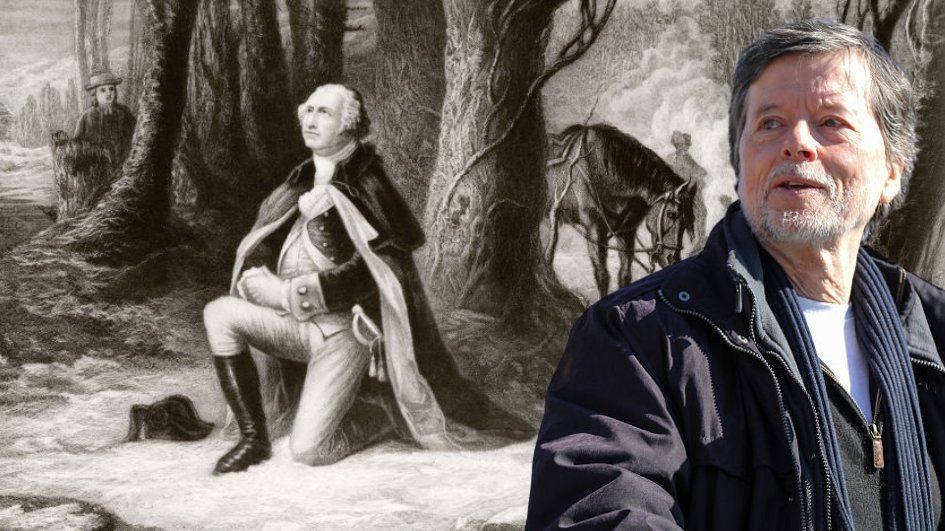
Let's start with George Washington, the supposed deist in chief. Burns would have us believe the general bowed not to God, but to a kind of cosmic CEO who delegated all earthly duties to middle management. But at least one contemporary account attests that Washington knelt in the snow at Valley Forge — not once, but repeatedly.

He called for the national day of "prayer and thanksgiving" that eventually became the November federal holiday we know today. He invoked divine Providence so frequently you’d think he was writing sermons, not military orders.

His Farewell Address reads more like a theological tract than a retirement speech, warning that “religion and morality are indispensable supports” of political prosperity. Does that sound like a man who thought God had checked out?

John Adams, another Founder often branded a deist, wrote bluntly that “our Constitution was made only for a moral and religious people.”

Adams saw the American Revolution as the outgrowth of divine intervention. As he wrote to Thomas Jefferson in 1813, “The general principles on which the fathers achieved independence were ... the general principles of Christianity.”

And what of Jefferson? By far the most heterodox, even he never denied divine order. His “Nature’s God” wasn’t a placeholder. It was a real presence. He sliced up the Gospels but still bowed to the idea of eternal moral law. Whatever his quarrels with organized religion, he did not believe in a silent universe.

Some of these men were, philosophically at least, frustrated Catholics. They couldn’t fully accept Protestantism, but they had no access to the Church’s intellectual infrastructure. The natural law reasoning that permeates their political thought — Jefferson’s “self-evident truths,” Madison’s checks and balances born of man’s fallen nature — comes straight from Aquinas, filtered through Locke, Montesquieu, and centuries of Christian jurisprudence.

The Founders weren’t Enlightenment nihilists. They weren’t secular technocrats. And they certainly weren’t deists. They were men steeped in a moral framework older than the American experiment itself.

Burns, for all his sepia-toned genius, has a blind spot you could drive a colonial wagon through. His documentaries glow with progressive reverence — plenty of civil rights and moral reckoning, but the Almighty gets the silent treatment. God may have guided the Founders, but in Ken’s cut, he barely makes the final edit.

The sacred and the sanitized

I mentioned irony at the start, but it deserves more than a passing nod. That's because the septuagenarian's own cinematic legacy contradicts the very theology he now peddles on podcasts.

His brilliant nine-part series "The Civil War" captured the moral agony of a nation tearing itself apart, and it did so in unmistakably religious terms. Here Burns treats Lincoln’s Second Inaugural Address — haunted, prophetic, bathed in biblical cadence — with reverence, not revisionism.

The series understood something essential: Americans have always been a biblical people. They see their history not just in terms of dates and treaties, but in terms of sin, sacrifice, and redemption. Sacred story, divine purpose — this was the language of American reckoning.

The Founders weren’t saints, and they weren’t simple. They read Greek, spoke Latin, studied Scripture, and debated philosophy with a seriousness that puts modern politicians to shame. But they weren’t spiritual agnostics, either.

They were men of imperfect but active faith, shaped by the Bible, steeped in Christian moral tradition, and convinced that human rights came not from government but from God.

They didn’t build a republic of personal preference. They built one grounded in enduring truths that predated the Constitution, anchored to the idea that law and liberty meant nothing without a higher law above them.

Burns may deal in memory, but his treatment of religion reveals something else entirely. He doesn’t misremember. He reorders. He filters faith through a modern lens until it becomes unrecognizable.

Memory isn’t just about what’s preserved — it’s about what’s permitted. And when the sacred gets cast aside, what’s left isn’t history. It’s propaganda with better lighting.

Ken Burns’ New Documentary Reminds Fans Why They Love Baseball

From labor strikes to segregation, Ken Burns unpacks the storied history of America’s national pastime.

Ken Burns’ New Docuseries Follows Muhammad Ali’s Greatest Fights, Both Inside And Outside The Ring

Cassius Clay, 'The People's Champion,' left a legacy that athletes can, or should, have an impact on politics and culture.