The return of Drag Queen Story Hour?
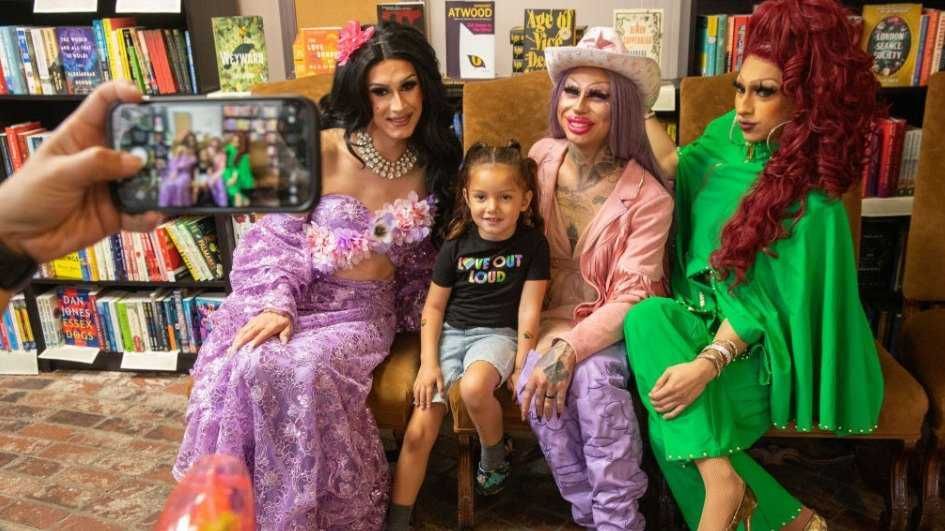


I was at my local library recently when I saw something odd on the bulletin board. It looked like a poster for a Drag Queen Story Hour.

They can’t be doing that again? I thought to myself.

Much of drag comedy focuses on the fact that as hard as they try, most men can’t actually pull off impersonating a woman.

In case you don’t remember, Drag Queen Story Hour was one of the most bizarrely inappropriate events ever to appear at your local library.

When these “story hours” first began to proliferate in the late 2010s, the idea of drag queens reading books to very small children set off one of the fiercest battles of the culture wars.

Because it was so transgressive, outrageous, and effective as a way of infuriating the general populace, the proponents of DQSH doubled down on it. They kept pushing it. They founded an NGO. They rammed it down our throats.
Blake Nelson

Queen's gambit

The way DQSH worked: Libraries would hire a professional drag queen to read books to children ages 3 to 11. It was presented to the public as a “fun twist” on the idea of a kindly grandmother or librarian reading to the kids.

The drag queens they hired were adult men from the local area, men who were otherwise employed performing “drag shows” at nightclubs, bars, and private events.

These men dressed up like women — more specifically, super-sexualized women (prostitutes). Then they went on stage and told raunchy stories and sexually explicit jokes. Sometimes they sang songs and did pratfalls, all of which were of a sexual nature.

The understanding was that a drag show would feature explicit sexual content. Which is why they were performed in 21-and-over establishments.

That is, until Drag Queen Story Hour came along. And someone decided that drag queens belonged in libraries, reading to children.

Live, love, laugh

Part of the appeal of drag queens is the humorous sight of a chubby, stubbly, middle-aged man wearing lipstick, mascara, and gigantic false eyelashes. Much of drag comedy focuses on the fact that as hard as they try, most men can’t actually pull off impersonating a woman. And the results of their clumsy failures are often very funny.

Drag shows — or something like them — have appeared in many cultures throughout history. The humor of men pretending to be women is universal. Everyone finds those situations funny.

Everyone, that is, except for 4-year-olds, who might not understand this style of humor just yet. And don’t need to.

The fact is that it would be hard to predict how a small child would react to a professional drag queen in person.

Oh, sure, a child who has been coached and prepped by a progressive parent might enjoy it. But your average child? Especially those under the age of 6? They might be traumatized.

And then doubly so when the adults they usually trust (parents, teachers, librarians) tell them not to be afraid, that it is wrong to feel uncomfortable, that if they have any negative feelings whatsoever about “Miss Wiggles” — who is 6'2", wearing ghoulish makeup, and pretending to be a woman — they are committing a grave moral sin.

Some small children are frightened by the sight of their own parents dressed up in Halloween costumes. Think of what an encounter with “Sashay D. Lite” might do to them.

RELATED: My search for America's last decent public libraries

Joe McNally/Getty Images

Properly checked and vetted

Some conservatives raised the issue that some of these performers might be predators of some kind.

This was met with attacks and smears that conservatives were homophobic, transphobic bigots, hatemongers, etc. Besides, all the drag queens would, of course, be thoroughly screened and vetted.

And yet at a Houston library in 2019, one of the drag queens reading stories to children was found to be a registered child sex offender.

So except for that guy. Everyone else had been properly checked and vetted.

Culture war, wins and losses

Looking back at the original battle over Drag Queen Story Hour ... who actually won?

In my mind, the general public did. Obviously a large majority of people believed DQSH was a bad idea. And the libraries stopped doing it.

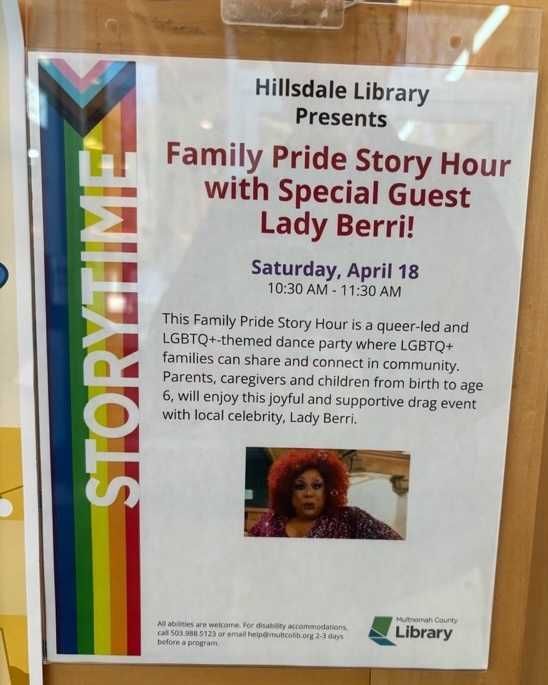
But here I was, in my local library, staring at a poster with a Pride flag. And a drag queen. With the words Story Hour on it.

Looking closer, I saw they had changed the name. Now it was called Family Pride Story Hour. It would be specifically for LGBTQ families. A drag queen would be reading the stories. And then there would be a dance.

The suggested age for children attending? “Birth to six years old.”

No rest for the wicked

Ahhh. Those sneaky leftists. They couldn’t let this go. Subjecting infant children to the most grotesque adults they could find was too good a strategy to abandon.

What better way to divide and conquer? To confound and demoralize? They want us to fight over the drag queens again!

My advice is: Don’t do it. Don’t give them what they want. Talk to your librarians ahead of time. Talk to your library’s supervisor.

But be aware: If Family Pride Story Hour is coming to my town, it might well be coming to yours.
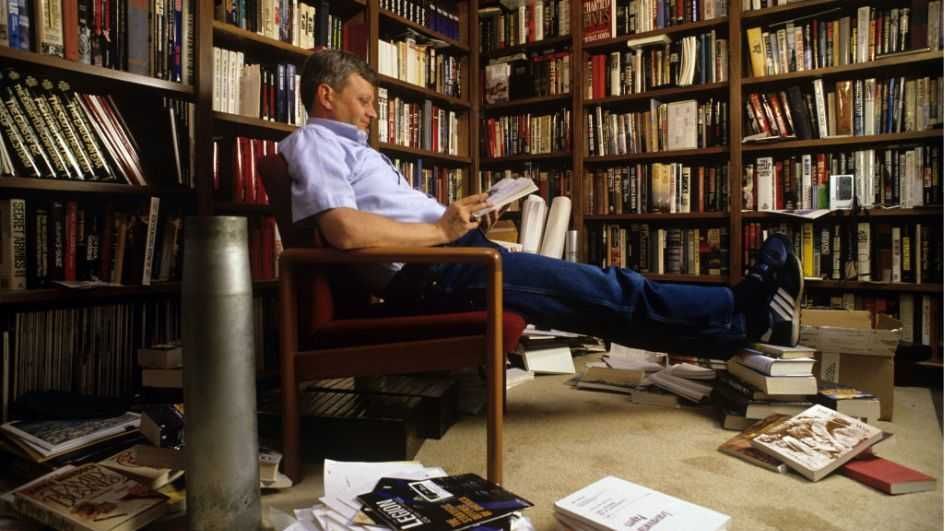
My search for America's last decent public libraries


As an avid library-goer, I’ve watched with interest how American libraries continue to shift and evolve in our new “post-book” world.

That’s right, one thing you notice in libraries these days: There are fewer books. And the ones they do have are checked out less often.

She shrugged and said, 'Libraries are for everyone. I’m not allowed to tell them to turn their phone down.'

If you can’t find the book you want, you can always reserve it through the library system’s website. But increasingly, those books are not located in a branch library. They are in a warehouse somewhere. In a state of storage.

When you receive these stored books, they often look strange and sickly. Like they haven’t seen sunlight in a while. Like they belong in a museum, an artifact from the past.

Into the future

A couple of years ago, I visited several recently completed public libraries in major North American cities: Seattle, Phoenix, Salt Lake City, Calgary, among others. I noticed these libraries had been specifically designed in anticipation of a decline in book-reading.

These new buildings had “craft” areas, or recording studios, or computer labs. They had conference rooms, where they held workshops for seniors to help them use their smartphones, or instruct young people on how to start a business.

Most of these new libraries were socialistic in nature. They were becoming places where people could access social programs and government assistance. You could sign up for job training. You could get help with your taxes.

Prisons and psych wards

Another thing I noticed: The designers and architects of these libraries seemed to believe that rampant homelessness was not a passing trend. In their minds, this was a permanent situation, which libraries would need to accommodate and serve.

Because of this, many contemporary libraries look and feel very different from the classic library environment.

They had removed old, comfortable furniture and replaced it with unbreakable plastic chairs and tables. Reading lamps were gone, with harsh overhead LED lighting taking their place. Charging stations and sleeping lounges were favored over cozy study nooks. Couches or armchairs were made of odor-resistant, easily disinfected fabrics. Outdoor areas were constructed so they could be hosed down.

Because of these changes, many new libraries often looked like a cross between a prison and a psych ward. They’d been designed to house unclean, unpredictable, occasionally violent, and sometimes incontinent humans.

Shhhhhhhh!

One recent incident I found interesting: I was in a local library, and a patron was watching a TV show very loudly on his phone.

A librarian appeared to see what the noise was. I looked at her like, “Can you say something to that person?”

She shrugged and said, “Libraries are for everyone. I’m not allowed to tell them to turn their phone down.”

She wasn’t allowed? I thought to myself.

“But you,” she said, looking at me. “You can say something.”

Looking at the TV-watching patron, I didn’t feel inclined to confront him. But how could it be that the librarian wasn’t allowed to intervene?

In search of the 'luxury library'

Like I said, I love libraries. I love the quiet. I love the atmosphere. I love being around other studious types like myself.

I’ve kept tabs on the libraries in my own city, frequently visiting some of my old favorites, to check on which ones are making progress and which ones are getting worse. (They’re all getting worse.)

But recently, I stopped doing that. I don’t go to the big central library building anymore. I have seen enough during recent years to know what that looks like.

Now what I do — at home and in other cities I visit — is figure out where the wealthiest parts of town are, and I find small regional libraries in those areas.

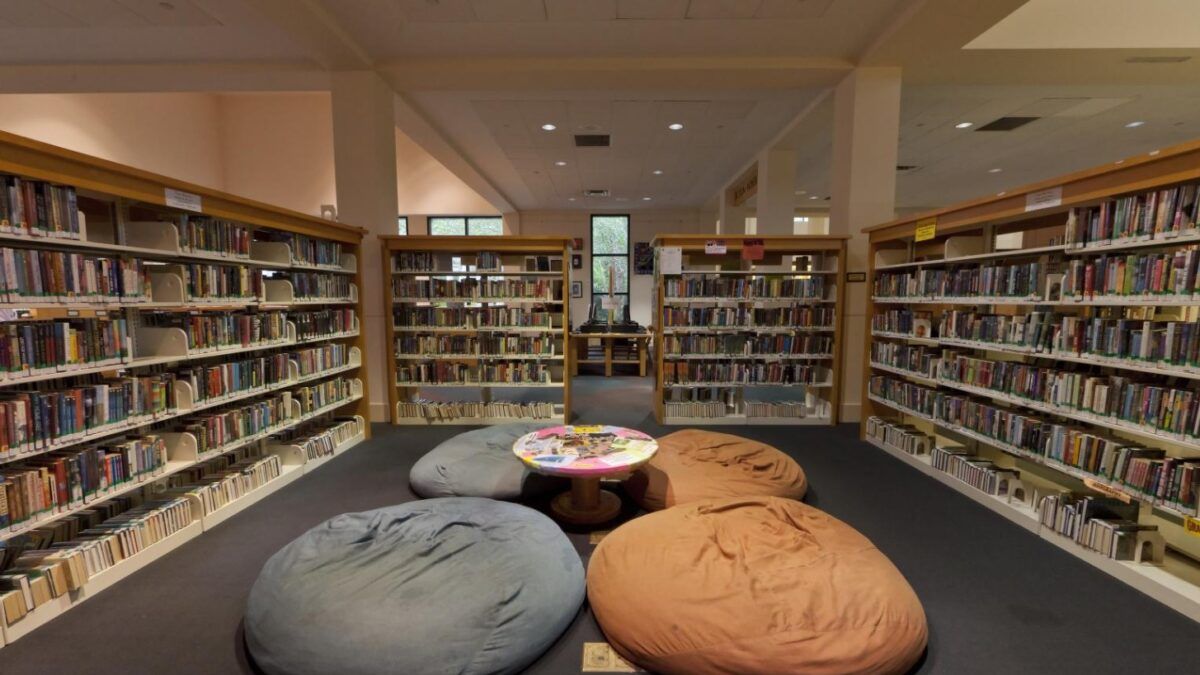
In such places, you have the best chance of finding the “original library experience.” Peace. Quiet. Clean carpets. Comfortable chairs.

You encounter kind, thoughtful librarians (as opposed to the PTSD librarians you encounter in the war-zone libraries).

Actual families visit these places. Moms with their kids. Teenagers after school.

There’s no need for armed security at the front door. There are no Narcan canisters rolling around in the bathroom.

What about the children?

But even these places are subject to change, as they continue to expand their purview.

In one such “luxury library” I frequent, the library has become a kind of part-time nursery school. During certain hours, one half of the building fills up with small children. There are toys and games and little play areas set up for them.

Because this small library is basically one giant room, I am exposed to the screams and cries of the children. They run around. Occasionally, I find them hiding under my table as I work.

I don’t mind the children at all. I don’t have children of my own and always enjoy their antics. And the library has to do something with that space, don’t they?

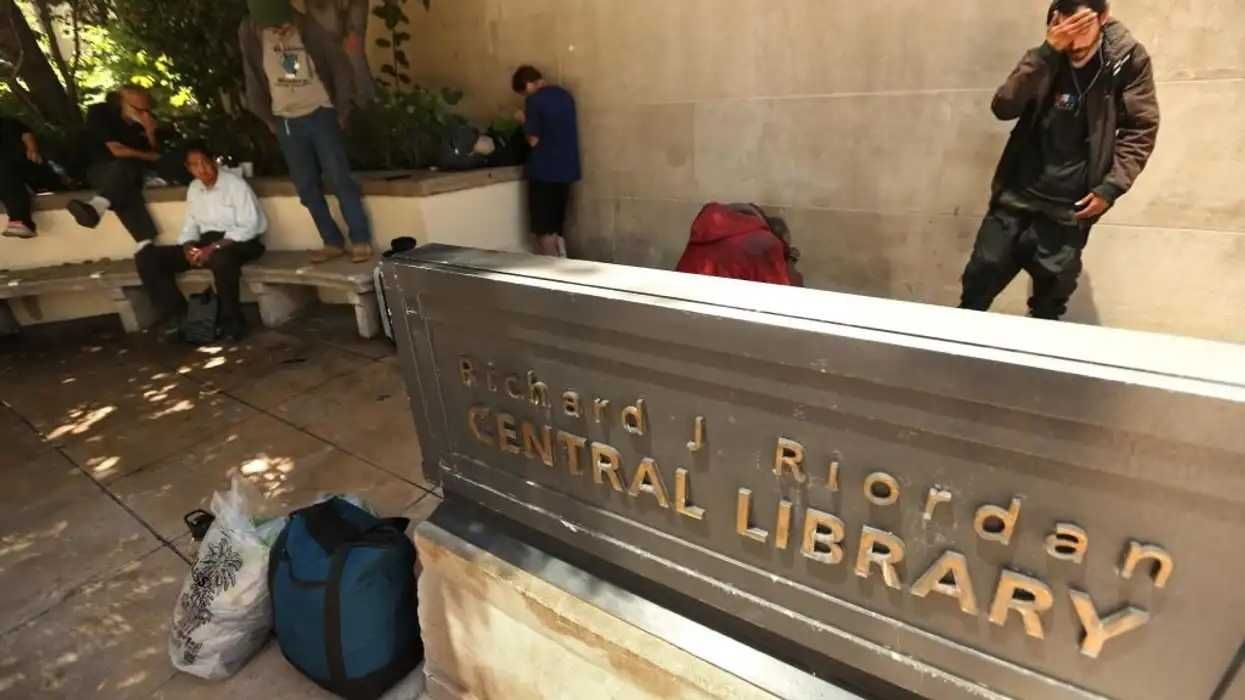
RELATED: When did America's public libraries become homeless encampments?

Genaro Molina/Getty Images

Still searching

Even in these wealthy neighborhoods, it’s clear that the libraries are struggling to find ways to remain relevant to their communities.

They have my sympathies. I don’t want libraries to go away. But what purpose will they serve going forward?

I’d prefer that libraries not become another arm of the “nanny state,” full of progressive propaganda and social activism. (“Drag Queen Story Hour” is trying to make a comeback at one library in my city.)

And what about the homeless? Is it really the fate of our great American library system to become a charging station and nod-out zone for drug addicts and street people?

But such is the nature of our socialist society. Tiny enclaves of luxury. Prisons and psych wards for everybody else.

The only solution I have found is to seek out these “luxury libraries” — and make full use of them. And I recommend that others do the same.

Democrat Bill Would Flood Every School, Church, And Hospital With Illegal Squatters

Union bosses support this reckless policy because they are more concerned with politics than with protecting teachers and students.

Because Libraries Push Racism And Queer Extremism, They Deserve Their Massive Federal Funding Cuts

By turning school libraries into ideological spaces rather than engines of literacy, the American Library Association is sending children the damaging message that politics matters more than their education.

Top Dem Donors Are Giving Biden the Cold Shoulder on His Presidential Library: Report

Joe Biden is having trouble finding funding for his presidential library, with even longtime donors and bundlers hesitant to chip in, according to a Friday report.

The post Top Dem Donors Are Giving Biden the Cold Shoulder on His Presidential Library: Report appeared first on .

Inside Philadelphia Public Libraries' 'Palestine Storytime' Events, Where Kids Are Taught To Make 'Protest Art' Promoting 'Palestinian Liberation'

Philadelphia’s public libraries have hosted, and plan to continue hosting, anti-Israel "storytime" events that teach children that Israel "senselessly murdered" thousands of kids in Gaza, depict a map in which Israel is entirely replaced with "Palestine," and create art projects promoting the "Palestinian liberation" movement.

The post Inside Philadelphia Public Libraries' 'Palestine Storytime' Events, Where Kids Are Taught To Make 'Protest Art' Promoting 'Palestinian Liberation' appeared first on .

Taxpayer-Funded Libraries Promote These Graphic Books To Kids For Pride Month

While librarians and their supporters consistently decry critiques of their LGBT advocacy as censorship, less attention has been paid to the actual content of the books the librarians promote.

Parents fight evil in schools — and seek justice at the Supreme Court


Easter is about the indignity of the cross being defeated by the only one who didn’t deserve to be on it so that we may be free to live forever in the Spirit. It was fitting, then, that in the shadow of Easter Sunday last week, full-throated indignity entered the U.S. Supreme Court to be challenged because people of faith have heard the call of their Lord to take up their own cross and follow.

A fan of the “Steve Deace Show,” Bryan Persak, informed me that his brother, Chris, is one of the plaintiffs in Mahmoud v. Taylor. The case involves parents from the Montgomery County, Maryland, school system fighting the porn-addicted educators who are cramming LGBT propaganda into their pupils’ hearts and minds.

You simply have no idea what God might ask you to do. But you must be ready to answer.

The court heard the case last Tuesday. Chris said that taking a stand came at a cost — threats against his kids and family — but he and his wife, Melissa, knew something needed to be done on behalf of the countless Montgomery County parents who feel helpless in the face of the evil they were being compelled not only to accept but to celebrate.

“By Tuesday, the nerves were gone and the Holy Spirit was with us,” Chris said. “There was an unbelievable peace and calmness. There are core things at stake for parents from many different backgrounds that are paramount. If we keep fighting about this, we aren’t going to have a country.”

Bryan stressed that with Muslim parents also plaintiffs in the lawsuit, the case displays true diversity — unifying around the common goal of rooting out the degrading sexualization of our children — in contrast to the woke version of diversity that demands its perversions be worshipped at every turn.

“Montgomery County found a way to unite parents whose religions have been at war for thousands of years,” he today. A ruling on the case is expected in June or July.

Bryan, who has also fought mask mandates in his own children’s school district, said he and his brother had good Christian parents who raised them to stand in the gap. Their mother, Michele, “raised heck” with politicians when he was stationed in Iraq and she discovered her son and his fellow soldiers didn’t have armor for their Humvees to protect them from IEDs.

Their father, Warren, when asked for advice about the wickedness being perpetrated by Montgomery County school officials, didn’t tell his son to play it safe. Instead, he insisted that “there are some hills worth dying on, that are worth the consequences.”

Well done, good and faithful servants! You raised actual men — a rare breed these days. Bryan admits, however, even that wasn’t enough to help him see his place in the world after coming back from war “mad at God.”

“I could have died four different times, and I don’t think I dealt with all that correctly,” Bryan told me. “Then I had my first child in 2017, and in 2020, I clearly saw the evil consuming the world with COVID and the trans stuff. I had to fight it, but I knew I couldn’t fight it by myself. It took me back to my faith. God told me that He sent me to be a soldier.”

Whether your calling is to be a soldier or something else, the big lesson from the Persaks’ story is this: “God told me” is the only certain place to start when figuring out your life mission. Yes, that’s going to mean having to get uncomfortable at times, like Bryan and Chris’ sister, Kathleen, who donated part of her liver two years ago to help an ailing family friend. You simply have no idea what God might ask you to do.

But you must be ready to answer.

In the name of Isaiah 8, Bryan said his family “has all stepped up when called” and that he hopes he is “teaching [his] children the same.” So those with ears to hear, let them hear:

You are not to fear what they fear or be in dread of it. It is the Lord of armies whom you are to regard as holy. And He shall be your fear, and He shall be your dread. Then He will become a sanctuary.

Amen.

Red-state rot: How GOP governors are handing power to the left


At first glance, outsiders might expect North Dakota to have already passed both school choice and a ban on pornography in public libraries. Republicans hold overwhelming majorities — 42-5 in the Senate and 83-11 in the House — and every statewide elected official is a Republican. Yet, Republican Gov. Kelly Armstrong’s twin vetoes of both bills have forced conservatives to wait another two years to achieve these basic red-state goals. Warnings about Armstrong’s weakness came early and often.

SB 2307 could not be simpler. “A public library or a school district may not maintain in an area easily accessible to minors explicit sexual material,” the final amended text reads. Any sane person should support this standard. The definition of “explicit sexual material” mirrors language already used in other areas of law. The bill does not even ban the books outright — it merely restricts children’s access to sexually explicit material in publicly funded libraries.

Electing more governors like Kelly Armstrong will leave conservatives with nowhere to run.

Without enforcement, any law becomes meaningless. SB 2307 addresses this by requiring local prosecutors to investigate violations. Schools and libraries found out of compliance risk losing state funding.

Despite the bill’s straightforward intent, it barely passed — just 27-20 in the Senate and 49-45 in the House — with more than a third of Republicans joining Democrats to oppose it. Last week, to the shock of party officials, Armstrong vetoed the bill.

“I don’t pretend to know what the next literary masterpiece is going to be,” Armstrong wrote in his veto message. “But I know that I want it available in a library.” In parroting tired liberal straw-man talking points, Armstrong claimed he agreed with the concerns but dismissed the bill as a “misguided attempt to legislate morality through overreach and censorship.”

According to Armstrong, limiting children’s access to sexually explicit material in taxpayer-funded libraries now qualifies as “censorship.”

The rest of Armstrong’s veto message trots out the usual excuses — warnings about frivolous lawsuits, handwringing over enforcement logistics, and complaints about oversight costs. But his main point could not be clearer: Armstrong opposes any effort to shield children from sexual content in public institutions.

Bought out by teachers’ unions

What can parents do when public schools flood classrooms with pornography? Send their kids to private school, of course. Unfortunately, Armstrong worked to block that option, too.

House Bill 1540 would have established Education Savings Accounts for private school students, giving them a chance to compete with just a fraction of the money state and federal governments pour into the public system. The bill passed the House 49-43 and the Senate 27-20 — the same narrow margins as the library porn bill.

In his veto message last week, Armstrong whined that public school students pay taxes, too, and griped that HB 1540 offered them nothing. Instead, he threw his support behind Senate Bill 2400, which turns school choice into another welfare program for the public education establishment. Most of the money under SB 2400 would flow straight to parents whose children already attend public schools.

But why would public school students need education savings accounts when their tuition already costs nothing? The entire school choice movement rests on a simple truth: Government pours massive sums into public education, and families need just a fraction of that money diverted to private options to have a real choice. In North Dakota, the average combined state and federal cost of public education hits about $13,778 per K-12 student. Yet under HB 1540, the proposed funding for education savings accounts ranged from only $1,100 to $4,000, depending on household income — all of it aimed at private school students.

The funding imbalance also explains the shortage of private schools across much of North Dakota. Armstrong cited the lack of private schools outside major cities as justification for pouring even more money into public schools. But with fairer funding, more private schools would emerge. In a duplicitous statement, Armstrong claimed he “strongly supports expanding school choice.” Yet, real expansion demands closing the funding gap — something Armstrong clearly opposes. His true allegiance lies with the teachers’ unions, not with parents seeking alternatives.

A pattern of reckless endorsements

The Senate bill Armstrong promoted also stuffs extra money into school lunch programs and ropes homeschooling parents into the scheme — despite the fact that North Dakota homeschoolers explicitly rejected involvement.

Conservatives had plenty of warning. Armstrong served in the leadership of the RINO Main Street Partnership during his time in Congress. Although North Dakota boasts a growing conservative bench, Trump’s premature endorsement last spring handed Armstrong the governorship in one reckless move.

If Trump keeps up his reckless endorsement habits, every deep-red state will soon struggle to pass even the most basic conservative priorities. Once Trump leaves office, Democrats won’t just revive Biden-era policies — they will escalate.

Deep-red states like North Dakota, immune from political swings in general elections, must become our last strongholds of freedom. Electing more governors like Kelly Armstrong will strip away that sanctuary and leave conservatives with nowhere to run.

America’s Librarians Became Militantly Political, And Now They Suffer The Consequences

America's librarians elected a Marxist to represent them and staked their reputation on providing explicitly sexual material to kids. It's no surprise the Trump administration is pulling federal funding.