Britain Is Turning Its Back On Western Civilization

By praising cousin marriage, the National Health Service is repudiating Britain’s Christian past in favor of its unassimilated Muslims.

Jean Raspail’s notorious — and prophetic — novel returns to America


“The Camp of the Saints” by Jean Raspail is one of the most interesting and controversial novels of the 20th century — which is why it’s good news that Vauban Books, a small publishing house, is coming out with a new edition, complete with a fresh translation by scholar Ethan Rundell.

English-language copies of the book, first published in the United States in 1975, have been passed around like samizdat. “The Camp of the Saints” became popular again in the 2010s, but the original publisher refused to reprint it — that is, until Vauban managed to secure the rights.

In the era of the Great Replacement, it is the most politically incorrect and the most vital lesson we need to hear.

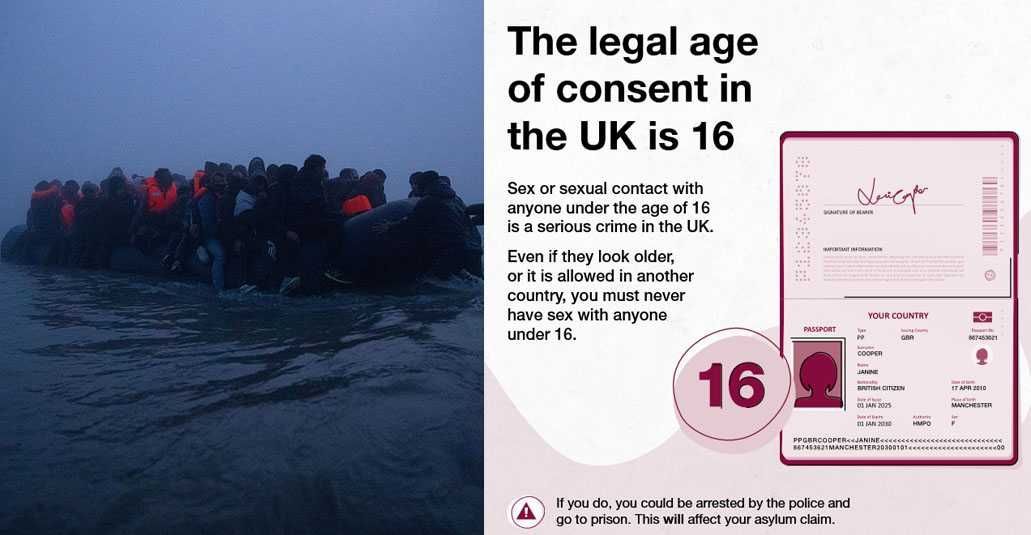
“The Camp of the Saints” depicts mass immigration destroying European civilization. In the novel, a gigantic flotilla of boats filled with destitute Indians sets course for France to seek refugee status. After much hand-wringing, the government allows them to land rather than take the only other option available, which is to massacre them. France — and very quickly all of Europe — turns into a dystopian third-world slum.

Raspail’s novel was written in the 1970s when the “boat people” fled Vietnam for Europe. The book caused an enormous sensation. It was a best-seller in France and the U.S. and eventually globally. Many have hailed it as a great and important work of prophecy. But, predictably, it was then — and is now — denounced as a horribly racist screed that only white supremacists would be interested in reading.

Contrary to the critics, “The Camp of the Saints” is a great novel, and Jean Raspail is a great writer. You should do yourself a favor and read it.

What of the book’s supposed racism? Well, it certainly contains much imagery that will shock the American reader. The Indian refugees are portrayed in vivid passages as wholly disgusting and bestial.

However, here I must point out a number of things. First, it seems that American and French cultures have different definitions of what counts as “racist.” To this Frenchman, it has always seemed puzzling that Americans seem to separate the signified and the signifier, or the thing itself and the intent.

In American culture, any grossly negative or caricatured portrayal of a non-white person is seen as “racist,” regardless of what was meant by it. “Blackface” is considered malum in se, regardless of whether it’s done to wound or express contempt for a group of people or whether one just decided to attend a costume party. (A French athlete was recently embroiled in controversy when he proudly posted photos of himself dressed up as a Harlem Globetrotter, in what he clearly intended to be a laudatory homage to a group he admired.)

This bizarre American form of Tourette’s can sometimes become downright vile: While the bodies of Charlie Hebdo cartoonists, who had been murdered by Islamic terrorists for their refusal to stop mocking Islam, were still warm, American cultural commentators denounced their drawings as racist. A French person would have pointed out that while their caricatures of minorities were certainly unflattering, so were their caricatures of everyone else — and therefore concluded that there was no racism.

In fact, in “The Camp of the Saints,” nobody looks good. Indeed, the novel’s central topic is not the refugees themselves but the bizarre form of cowardice and self-hate of Europeans that leads them to consent to their own replacement. In this sense, it is like Evelyn Waugh’s “Black Mischief,” whose portrayal of Africans is decidedly “racist” by our contemporary standards but whose portrayal of whites — and everybody else — is equally savage and outlandish.

Everything in “The Camp of the Saints”is over the top, not just its unflattering portrayal of refugees. It has a dreamlike quality, complete with baroque imagery, which is integral to the artistic style of the novel. This is what makes it such a powerful and fascinating work of art. To dismiss it as “racist” is not just inaccurate — it is Philistinic.

It’s also worth pointing out that Raspail was not some caveman pumping out racist tirades from some cave somewhere. He wrote dozens of novels and received some of the most prestigious literary awards France can confer, including the Grand prix de littérature of the Académie française and the Prix Jean-Walter for historical writing. Raspail was made a knight and an officer of the Legion of Honor. Of course, France has historically been much more open-minded when it comes to honoring artists and intellectuals who may be politically incorrect.

Getting past the caricatures

As a young man, Raspail started out as a travel writer. His first publishing success was a recounting of a trip he took following in the footsteps of Father Marquette, the French Jesuit who discovered the Mississippi.

Raspail kayaked down the length of the river, from Trois-Rivières in Québec all the way to New Orleans, exploring the history of a region that was once New France. He would later return to America and write ethnographies of remaining American Indian tribes in reservations and would be a lifelong activist for protecting indigenous peoples — a strange pursuit for a “racist.”

In France, Raspail is better known for his historical adventure novels, which young teenage males of a certain Catholic conservative persuasion tend to read avidly.

Many of them involve the fictional Pikkendorff family, penniless aristocrats from Bavaria who end up as knights-errant, mercenaries, or colonial administrators in the service of other great families. One of his novels has members of the French and German branches of the Pikkendorffs secretly meeting in Switzerland to try to negotiate an armistice during World War I.

Another leverages some fourth-wall-breaking postmodern tools, since it ostensibly presents itself as a first-person work of nonfiction written by Raspail in his own name. That novel features Raspail’s research into the Pikkendorff family, complete with extensive footnotes referring to nonexistent tomes of historical research. It ends with the depressing discovery that the last heir of the Pikkendorffs runs a successful chain of pizza restaurants.

RELATED: The philosopher pulverizing 'Progressive Myths'

Photo by skynesher via Getty Images

Another novel, “The Fisherman’s Ring,” starts with the premise that the Council of Constance, which ended the Great Western Schism that had sundered the Catholic Church in two, picked the wrong pope and that ever since, there has been a succession of secret, true popes.

“Seven Riders” takes place in a fictional, nameless country somewhere at the edge of Europe at some unspecified time, though the fact that people move either by horse or steam train gives a hint. The country has been stricken by a series of unexplained events, including plagues and destructive madness circulating among the youth. The Margrave, the ruler of this broken kingdom, sends out seven riders to try to find the outside world and discover a remedy for the bizarre afflictions affecting the country. Above all, he wants to find his daughter Princess Myriam, with whom the head of the expedition, Colonel-major Silve de Pikkendorff, is secretly in love.

Perhaps Raspail’s most ambitious novel is 2003’s “The Kingdoms of Borea,” which is hard not to read as an implicit reply to critics of “The Camp of the Saints.” The work, which stretches over several centuries, takes place in a fictional country at the northeastern edge of Europe, by the Russian steppes and Scandinavian fjords. In the deep forests unexplored by the white man, at least until the modern era, lives “the little man with bark-colored skin,” an indigenous people of the forest who fear the white man.

A French person would have pointed out that while their caricatures of minorities were certainly unflattering, so were their caricatures of everyone else — and therefore concluded that there was no racism.

The mystery of the true identity and nature of the little man, who is always elusive, is the running thread of the plot. As European civilization and industry keep encroaching on the little man’s forest over the centuries, turning timber into factories, his people and their way of life are doomed to extinction.

This is another story about demographic replacement — but one in which the whites are the clear villains and the non-whites are the clear victims. The novel is a tour de force, with contemporary descendants of 17th-century nobles and Jewish merchants somehow ending up on the path of their forebears and a stunning halfway reveal about the narrator’s true identity. It is a great historical fresco, a panorama of history’s greatest crimes.

A peaceful and prosperous Jewish community is ravaged by pogroms fomented by the kingdom’s evil ruler. One character immigrates to the Antebellum South, where he becomes a wealthy planter and happily joins the South’s rebellion, but not before freeing all his slaves. Upon returning to his home after the war, he is confronted by the devastation the Union Army caused and sets up schools and workshops for his former slaves.

Another trace of the little man is found in East Prussia in 1945. Then, Raspail reminds us vividly, the ethnic German populations of Eastern Europe were systematically butchered by Stalin’s troops, a World War II genocide that is remembered by no memorial or museum.

All genocides are bad

“All genocides are bad,” Raspail seemingly wants to say through this book. This sounds like the most trite thing imaginable until you remember that some genocides are more politically useful than others. “Don’t you understand? It’s always bad,” he seems to be screaming, grabbing us by the lapels. It’s bad when white people are the perpetrators, and it’s bad when white people are the victims, says Jean Raspail, a lifelong anthropologist and activist on behalf of Native American tribes.

For Raspail, it is clear that pogroms of Jews are bad and massacres of civilian German populations are bad. Antebellum slavery was bad, but so was destroying the South to stop it. It’s bad regardless of your politics. It’s bad even when the victim population cannot be held up as a politically convenient totem. Which is the least racist message imaginable. But in the era of the Great Replacement, it is the most politically incorrect and the most vital one we need to hear.

Editor’s note: This article was originally published at the American Mind.

Why the English flag now terrifies the regime


The United Kingdom is embroiled in a strange controversy: Officials are trying to ban the English flag from the public square.

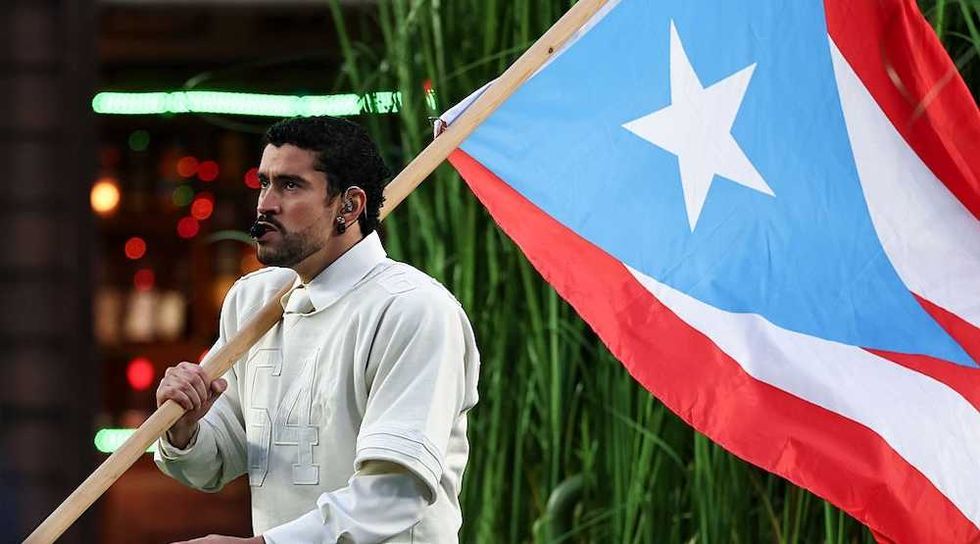
As immigration-driven violence rises, national identity has become central. Many Englishmen, watching as immigrants pour in and grooming gangs prey on their daughters, have begun raising the red-and-white St. George’s Cross. Officials invent excuses to tear those flags down — even as immigrant groups replace the Union Jack with the flag of Pakistan. To outsiders this may look like a petty fight over fabric, but it is a symbol of the existential struggle gripping Britain. When citizens clash over flags, it signals that civil war could be near.

In a regime that sacrifices free speech for 'multiculturalism,' flying the English flag has become an act of rebellion.

Modern elites tell us flags are meaningless scraps from a barbaric age. The notion that a simple banner could hold sacred status seems absurd in an era that prizes materialism. Yet ruling classes know symbols matter, which is why activists worked to replace national flags with the Pride flag in so many public spaces. Joe Biden’s administration gave the rainbow banner a place of honor at the White House and at U.S. embassies around the globe.

Swapping a flag is never a trivial gesture. Battles are fought in the spirit as well as on the field. When a flag falls, so does the resolve of the people behind it.

Britain’s history rests on forging many peoples into a single polity. The English flag merged into the Union Jack as the emblem of that union. As the empire expanded, “Britishness” widened in scope, but English identity remained its core. Today that identity is under attack from the very state the English created, with politicians insisting that the English “ethnos” does not exist. The Union Jack, once imposed on conquered peoples, now serves as a symbol of English subjugation.

This is not mere neglect. The U.K.’s leadership often appears actively hostile to its majority people. Immigrants refuse to assimilate, demand special treatment, show open contempt for the English, and commit horrific acts of violence — yet the government welcomes more boatloads. Social media is censored to shield newcomers from offense. Protests are suppressed. In a regime that sacrifices free speech for “multiculturalism,” flying the English flag has become an act of rebellion.

National media scorn this flag-waving trend, but the state has wisely avoided an outright ban. Instead, local officials hide behind obscure ordinances to force flags down — all while Pride banners and foreign symbols fly unchallenged. Each removal is met with more flags raised. This is a clever, nonviolent protest that exposes the regime’s double standard. Every crackdown vindicates the English right to resist.

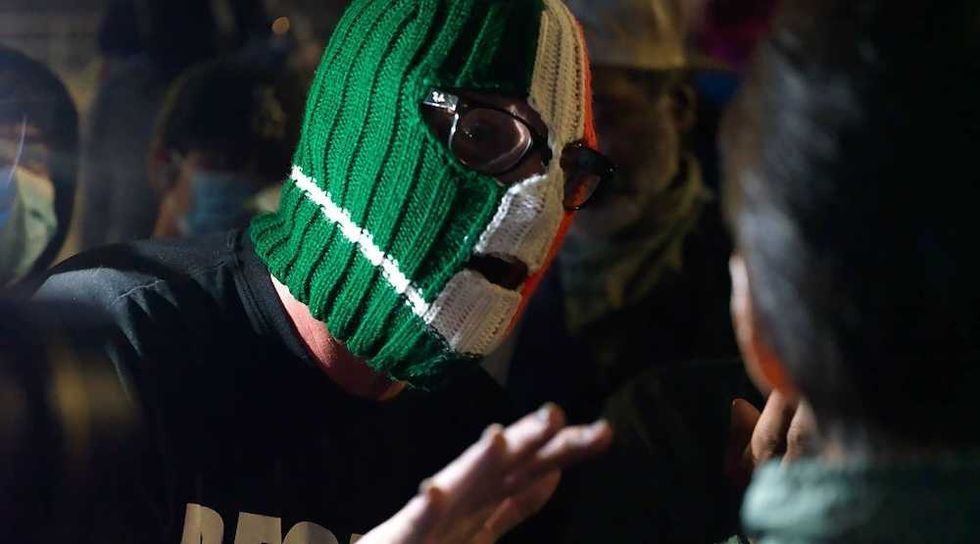
Immigrant communities have noticed. Coming from societies where ethnic solidarity is openly encouraged, they know what the St. George’s Cross means. In response, some have stripped Union Jacks from poles and replaced them with Pakistani flags. For all the insistence that flags are “outdated,” people show their true loyalty when conflict looms. They fly the banner they are prepared to defend.

RELATED: ‘Paperwork Americans’ are not your countrymen

Photo by Evgenia Parajanian via Getty Images

We’ve seen this dynamic in America too. When anti-deportation riots broke out in Los Angeles earlier this summer, protesters flew the Mexican flag, not the Stars and Stripes. They weren’t signaling solidarity with the country they demanded to remain in, but dominance in the name of another. Until very recently, everyone understood that raising a foreign flag on someone else’s soil was a declaration of conquest.

The situation in Britain today is much worse than circumstances in the United States. Despite the best efforts of the media, judges, and even a would-be assassin’s bullet, Americans re-elected Donald Trump to secure the border and deport illegal aliens. His administration has largely shut crossings and begun deportations (though not nearly enough). Still, the people here found a political solution — or at least the beginning of one.

In the U.K., no such option exists. Conservatives broke their promises and imported record numbers of migrants. Labour under Keir Starmer has gone to authoritarian lengths to suppress opposition. Nigel Farage’s Reform Party has softened its stance to avoid being called “radical.” Only Rupert Lowe seems to understand the crisis, but he lacks the political infrastructure to change course. The absence of representation has led experts like David Betz, a professor of war at King’s College London, to warn of civil war ahead.

Yet even in this bleak landscape, the persistence of the flag-flyers signals hope. Elites may seek to crush the English in pursuit of a multicultural utopia, but the native people refuse to yield. Protesters are jailed, flags are torn down, posts are censored — yet the banners keep going up. That stubborn spirit is dangerous to ignore. The English still know who they are. Unless their rulers recognize it soon, the conflict now symbolized by a flag will erupt into something far more serious.

Joy Reid said the quiet part out loud — and it’s ugly


Joy Reid has done the parents of America an unexpected kindness.

If you’ve ever wondered what really lies behind the diversity, equity, and inclusion philosophy and the “decolonizing” curriculum so prominent in our universities, Reid has made it plain by saying the quiet part out loud.

Appearing with Wajahat Ali on “The Left Hook,” she claimed that “mediocre white men” are simply coasting along on stolen achievements from others. As amusing as it can be to watch Reid melt down and flail in any medium, there is, alas, a serious side to her remarks.

In the space of a few breaths, Reid not only insulted the intelligence of all white people, but also cast herself, unwittingly, as the schoolyard bully.

As one of the few — and I mean very few — conservative professors at Arizona State University, I can testify firsthand that faculty meetings and mandatory “trainings” often turn into open-mic nights for contemptuous remarks about white men. And if you raise the issue, cue the gaslighting chorus: “We can’t be racist. Only white men can be racist.”

So yes, laugh at the absurdity if you like. But parents should know that Joy Reid’s public bile is not an isolated eccentricity. It’s the distilled essence of a worldview taught in classrooms across the country.

Riding on privilege

Consider her credentials: a degree in film studies from Harvard and a lucrative perch in television. Yes, you read that right — film studies. Yet her rant against “whiteness” was no theatrical performance. It was a window into the sort of ignorance and hatred our universities have been happily exporting into the culture for decades.

Her interlocutor, Ali, was even more candid.

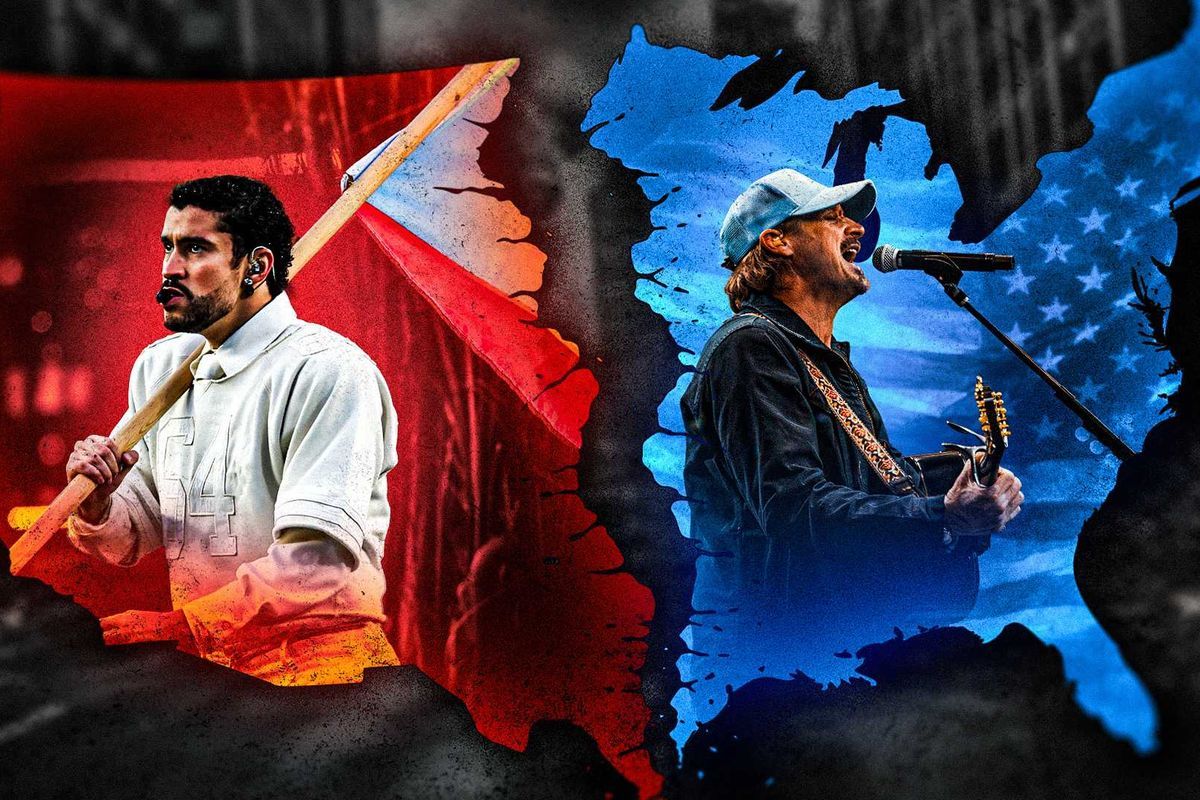
These people [white men] cannot create culture on their own. Without black people, brown people, the DEIs, there’s no culture in America. We make the food better. We make the economy better. We make the music better. Right? MAGA can’t create culture. They got Cracker Barrel and Kid Rock.

If you are still operating under the “classical liberalism and respectful pluralism” lens, you need to wake up. The left abandoned that approach decades ago. That might not be what leftists say at “meet the professor night” to get your money, but it’s what you find in their curriculum — and then said out loud by people like Joy Reid.

For those who are still under the illusion that we are committed to pluralism, you might have expected Reid to have exhibited a modicum of moderation: “Hold on, we can’t make sweeping denunciations of an entire people group. Everyone has contributed.” But no. For the academic left, classical liberalism and its old-fashioned respect for difference and fair treatment went out of fashion around the same time as dial-up internet.

Instead, Reid didn’t hide her disdain for those with lighter skin tones. “They don’t have the intellectual rigor to actually argue or debate with us,” she told Ali. “What they do is tattle and tell. They run and tell teacher that ‘the black lady or the brown man was mean to me.’”

Hiding in plain sight

The spectacle is almost too delicious. In the space of a few breaths, she not only insulted the intelligence of all white people, but also cast herself, unwittingly, as the schoolyard bully whose chief grievance is that the other children tell the teacher when she breaks the rules.

The irony, as Kid Rock might have noted with a raised brow, is as dense as a Cracker Barrel biscuit.

When Reid and Ali deign to speak of “culture,” they only mean food and pop music. They spent time sneering at Elvis, as if dismissing him were the final act of liberation. Meanwhile, Reid — a multimillionaire alumna of one of the finest (supposedly) universities in the world — complains of American awfulness and insists that our entire history must be reduced to the story of slavery, with no mention of those white men who fought and died to abolish it.

RELATED: Students are trapped in mandatory DEI disguised as coursework

Photo by Deagreez via iStock/Getty Images

As a professor, I can assure you that this is standard-issue humanities pedagogy in many American universities. Students are not trained to grapple with Mozart, Shakespeare, Adam Smith, or William Lloyd Garrison. They are taught a cartoon version of history in which every problem is “the fault of whiteness” and every solution is a demand for reparations. If those great names of history do appear, they are merely depicted as foils in a morality play about systemic oppression.

Remain vigilant

Parents, take note: Feel free to chuckle at Reid’s self-own, but then remember that people with her views stand in the front of your child’s classroom, smiling benignly during the parent campus tour while privately stewing in the same resentment. Moreover, they expect you to pay them tens of thousands of dollars for the privilege of being indoctrinated into their hatred.

It’s time to call this nonsense what it is — racism dressed up in academic jargon — and consign it to the ash heap of falsehood. They are free to hold their opinions, and we are free to ignore them and move on.

How woke broke the country


Andrew Beck makes a cogent case at the American Mind for why the United States, like other countries, requires cultural and moral cohesion to protect its nationhood and to act with a unified will on behalf of the common good. Beck correctly notes that the U.S. started out as a country with a well-defined collective identity. If we look back at America’s beginnings, we discover John Jay in Federalist 2 defining this original American identity in a memorable observation:

Providence has been pleased to give this one connected country to one united people — a people descended from the same ancestors, speaking the same language, professing the same religion, attached to the same principles of government, very similar in their manners and customs, and who, by their joint counsels, arms, and efforts, fighting side by side throughout a long and bloody war, have nobly established general liberty and independence.

At the time this was written, the newly formed American nation-state was composed overwhelmingly of Northern European Protestants; its legal institutions were largely British.

The homogeneity that the U.S. possessed at the time of its founding, and for at least several generations afterward, was perhaps an irreplaceable strength.

Its shared culture was shaped by, among other things, reading and revering the King James Bible. Among the professional class, the Bible’s authority was supplemented by that of Blackstone’s "Commentaries on the Laws of England,” Shakespeare’s tragedies, and (to some extent) classical texts like Plutarch’s “Lives.”

Protestant theologians went a bit farther in their reading and would have also studied John Calvin’s “Institutes,” the works of St. Augustine, and perhaps some of Plato’s dialogues. Political thinkers back then might also have pondered John Locke, Montesquieu, Polybius, and a few other influential political theorists.

In early America, a shared understanding of civic virtue, social manners, and community arose from revering the same classics as well as holding similar religious beliefs and being, in most cases, “descended from the same ancestors.”

Even in Federalist10 and Federalist 51, when James Madison addressed the possibility of the American polity becoming an extended republic, he did not recommend any modern concept of diversity or disagree with Jay’s judgment about America’s strengths. He was simply explaining how a country that consisted of mercantile and agrarian sectors could be held together by a “common passion of interest.” Madison’s novel theory posited that a representative government could filter the popular will in such a way as to coordinate overlapping interests.

The homogeneity that the U.S. possessed at the time of its founding, and for at least several generations afterward, was perhaps an irreplaceable strength. This strength may have been at work even when the country faced the ravages of civil war, which it survived because — as Lincoln observed — however calamitous their differences, both sides read the same Bible and prayed to the same deity.

Cohesion without coercion

In my view, these sorts of inherited, culturally sustained bonds of unity furnish the ideal conditions for a collective political identity. This unity was there at the beginning of the American republic and did not depend for its creation on coercion by the state or military forces. The shared heritage that was obvious to John Jay bespoke a deeper unity than the one imposed on German Americans during World War I (and, a fortiori, Japanese Americans during World War II). Perhaps Andrew Beck and I view this chapter of our national history quite differently.

Although European nation-states were formed partly by coercing those who resisted them into accepting a centralized form of sovereignty, such political entities were able to establish themselves by drawing on an already developed national consciousness. Frenchmen, Germans, Italians, etc. all identified with some kind of national history and culture even before they accepted or were forced to accept a unified national government. Force was not the main factor that generated unity in historic nation-states.

RELATED: Loyalty to the United States is non-negotiable for Congress members

Photo by Alex Wong/Getty Images

German Americans in the early 20th century already had a sense of being American but were bullied with the help of government inducements into giving up their ancestral heritage. This took place after the Wilson administration managed to push the U.S. into World War I.

In my part of Pennsylvania, where German Pietist farmers settled, intimidation achieved its intended effect. Churches and other buildings had their German inscriptions effaced. The teaching and use of the German language ceased. Even schools like Linden Hall in nearby Lititz that were founded by German sects stopped offering German courses and have not revived them to this day.

I won’t get into the already widely known and horrendous treatment of the Nisei, or second-generation Japanese, after Pearl Harbor. I will say only that it may have exceeded in awfulness what was done to German Americans 25 years earlier. As should be obvious, Norwegians, Swedes, and many other ethnic minorities became Americanized without the tactics applied to German and Japanese Americans. This happened through a natural process of assimilation.

By now, the national unity that Andrew Beck properly values seems to have been mostly lost. I wonder whether the “America First” politics of the MAGA movement can recover it in any meaningful way. Once the American republic lost its original ethnic and religious unity, its leaders and intellectuals were obliged to turn to other ideas to hold American citizens together. In my youth, American public education still emphasized civic patriotism and a state-sponsored pantheon of national heroes.

Unity through civic patriotism persisted until radicalized minorities began to vent their hate on ‘Amerika.’

That unifying effort succeeded for several generations, particularly since it was reinforced by a civil religion with recognizably Protestant cultural elements. This way of assimilating hyphenated Americans served well in two world wars and at least during part of the Cold War. It was the American public philosophy when I was growing up in the 1950s. An understanding of Americanness that did not depend on shared ethnicity may have worked well at the time because other unifying factors were at play.

Most of the population remained Euro-American and had some Christian affiliation. Deeper cultural bonds united (for example) an Italian American and a Swedish American than those existing between either and a third-world Muslim.

RELATED: America's ‘melting pot’ was never more than a convenient myth — here’s why

Photo by Harold M. Lambert/Getty Images

This unity through civic patriotism persisted until radicalized minorities began to vent their hate on “Amerika.” Since these irate “dissenters” proceeded to take over the mainstream media, education at all levels, and public administration, the older methods of assimilation and of producing a unified American identity became less effective.

One might apply to this changed American identity a criticism that’s been leveled at the efforts of the present German regime to assimilate third-world Muslim immigrants. Into what, exactly, can one assimilate foreign residents when public administrators, educators, and the culture industry have taught the indigenous population to hate their country?

Unhyphenated

Earlier attempts at generating unity, however, also ran into headwinds eventually. Non-Protestants, starting with a growing Catholic population, objected to attending “Protestant” public schools and seeing their religious and cultural traditions marginalized. Later the Jewish left and anti-Catholic Southern Baptists called for a more thorough secularization of the public square in the name of separating church and state, furthering pluralism — or whatever other excuse they could find for making the United States less of what it had been before.

By now our ruling class and various influencers are trying to separate whatever they intend to make of this country from its Western roots. The still widely influential Anti-Defamation League, in a pamphlet last year titled “The New Primer on White Supremacy,” explains quite straightforwardly that the designation “Western” is really a “code word” for white racism.

Indeed, according to the ADL, a racist, xenophobic taint also attaches to “Euro-American identity.” Such descriptive terms, according to this pamphlet, are used by those who oppose large-scale Muslim immigration into Europe and emphatically reject the LGBTQ agenda.

Another now-endangered vehicle of American assimilation is the melting-pot concept, which still has many adherents in our conservative establishment. The August 1 edition of the New York Post highlighted the heavily attended Muslim funeral of a slain Bangladeshi police officer in New York City.

“This most New York story,” we were informed on the Post’s front page, was intended as a celebration of the pluralism and diversity that the paper’s editors see as proof of the American melting pot at work. By now, according to this message, ethnically and racially diverse groups are coming to see themselves and each other as unhyphenated Americans.

Unfortunately, the same city with a multicultural sense of who we are is about to elect as mayor a vocally anti-Western woke Muslim — repeating something that Londoners already did when they elected Sadiq Khan and that Minneapolis will likely do if it chooses Omar Fateh as its next mayor. The slain police officer, Didarul Islam, lost his life to a crazed black killer whom CNN, out of its anti-white derangement syndrome, described as “possibly white.”

By now, the melting-pot view of assimilation and the stress on civic patriotism, which I regard as the best substitutes for an older American cultural identity, have given way to a woke dead end.

Unless we can move beyond this divisive concept, it won’t be possible to return to less fracturing views of American identity. Targeting white male Christian heterosexuals as victimizers does not seem to be a satisfactory way of bringing together this country’s legal population. Unfortunately, large demographics, particularly college-educated women, have different ideas about what the managerial state should be imposing on the rest of us.

Editor’s note: This article was published originally at the American Mind.

The left’s real enemy isn’t Sydney Sweeney


The recent outrage over an American Eagle ad featuring actress Sydney Sweeney would be hilarious if it weren’t so revealing. The ad shows Sweeney wearing jeans with the cheeky caption, “Sydney Sweeney has great jeans.” It’s a harmless pun — wordplay on both genetics and denim.

But as we know, grievance culture doesn’t do humor. According to outraged leftists, this ad is “Nazi-coded propaganda” because Sweeney has the wrong look: blonde hair and blue eyes. That’s right — Sweeney didn’t goose-step across your screen or quote “Mein Kampf.” She just smiled in a pair of jeans. Apparently, that was enough to unleash the fury of the perpetually offended.

It’s not a crime to recognize beauty. It’s an act of sanity.

Why does something so lighthearted spark such disproportionate rage?

Beauty threatens the left

At first glance, the reaction seems to fit a familiar pattern. Sweeney is white. She’s conventionally attractive. She’s not apologizing for either of those things. That’s three strikes in the diversity, equity, and inclusion playbook.

The new cultural catechism of the left says that beauty is a “social construct.” It’s used by oppressive systems to maintain unjust hierarchies, so it must be redistributed according to equity quotas.

Admiring beauty becomes an offense. It must be deconstructed — if not altogether abolished — and reprogrammed with DEI.

But there’s something deeper at work — something more visceral and more theological. You can sense it in the feral energy of the backlash. It’s not just that Sweeney is beautiful. It’s that she didn’t earn it. And the leftists are mired in high-schoolish insecurity.

She didn’t pass a DEI review. She didn’t seek approval from the sensitivity board. Her looks aren’t the result of a curated political identity — they’re the result of, well, her parents.

And that’s what drives the left insane. Beauty, in this case, violates the central tenet of their moral framework: fairness. Sweeney didn’t do anything to deserve being attractive (aside from perhaps watching her diet and going to the gym). Her features are, largely, inherited — in their language, “privilege.”

‘Why not me?’

The old-school leftists like Herbert Marcuse rightly critiqued the one-dimensionality of ads like American Eagle’s. Commercial culture does not aim at beauty, truth, or goodness. But the modern leftists dropped that message. Now, beauty is whatever the activist class tells you it is, as long as it serves the cause.

This is the theology of the grievance industrial complex: If something is unearned, it’s unjust. It's just not fair. “Why not me?” is the battle cry — less a revolution, more a toddler’s tantrum.

This is why leftists don’t just go after people — they go after beauty itself. I’m not equating sex appeal to beauty. But the outrage is beyond sex appeal and is aimed at the very idea that someone can be beautiful without approval from the Committee of Twelve.

Spend five minutes on any state university campus or in Democrat-run city and look at the newest buildings. They are intentionally not beautiful. They have even abandoned Soviet functionality. Concrete cubes with exposed ductwork and LED-lit virtue slogans where cornices and stained glass used to be are statements of contempt, monuments to cynicism and self-hatred, rather than structures designed to lift the soul.

The leftist assault on beauty goes beyond architecture. University art galleries — such as the one run by my school, Arizona State University — are considered “activist installations.” Chaotic splashes of rage, deconstruction, profanity, and noise aren’t merely misguided attempts at beauty — they are refusals of it. They reject order and celebrate cacophony.

A war on God

This reveals a deeper truth: Leftists' war on beauty is ultimately a war on God.

Beauty is not a construct. It is not the invention of Western power structures. Beauty is real — it flows from the nature of God Himself. As Augustine wrote, ”Being is good.” Evil is not a thing in itself. It’s the corruption of the good. Likewise, beauty is not a weapon of oppression. It’s the radiance of order, truth, and harmony.

But if you hate the Creator, you will hate creation. You won’t rejoice in beauty; you’ll resent it. The truly dark impulse behind much of leftist cultural production is not liberation. It’s vengeance.

A world that won’t conform to their demands must be punished. If they can’t make reality fair by their standards, then they’ll make it ugly and demand that you call it a masterpiece

Reject the mob

But you aren’t required to play along. You don’t have to pretend that brokenness is beauty, that chaos is art, that bitterness is profound, or that atheism is intellectually deep.

You don’t have to nod along when they tell you that Sydney Sweeney’s ad is a hate crime and that art school murals of screaming female body parts are sublime. You can say, without apology: That’s not beautiful.

RELATED: Hot girls and denim: American Eagle rediscovers a winning formula

Photo by Michael M. Santiago/Getty Images

And that’s a kind of cultural resistance we desperately need. Christians in particular must recover a theology of beauty. We serve the God who clothes the lilies of the field in splendor, who filled the skies with stars and the oceans with wonder, who made the human form. This God of beauty is the same one who redeems the lost sinner and works all things together for good.

So don’t let the rage mob deprive you of beauty. Don’t let their tantrums over privilege drive you into false guilt. And don’t let the secular liturgists of ugliness define what your heart is allowed to love.

We were made to love what is good, true, and beautiful. That includes a well-cut cathedral, a sonata in a major key, a sunrise over the Grand Canyon — and God, who created all of this.

It’s not a crime to recognize beauty. It’s an act of sanity.

The West Is Finally Realizing The Ancient Truth That Open Borders Kill Nations

Immigrant integration and multiculturalism have failed and produced rampant crime, conflict, and cultural loss.

Erase the Bible, lose the West — and that’s the point


The cultural revolution of the 1960s undermined every pillar of American identity, and public religion was no exception. Supreme Court rulings in 1962 and 1963 struck down state-led prayer and mandatory scripture reading in public schools. While these decisions didn’t explicitly ban biblical education as literature or cultural instruction, they effectively removed it from the classroom. Over time, institutional pressure and administrative caution eliminated nearly all engagement with the Bible in the public square.

As large-scale immigration introduced greater religious diversity, demands for a more “neutral” education further pushed cultural Christianity into the realm of the taboo. Christmas and Easter became “winter” and “spring” break. Schools reduced biblical references to passing mentions — if they acknowledged them at all. The result: a rootless, amnesiac society cut off from the spiritual and cultural traditions that once inspired greatness.

By removing the religion that shaped our national character, we’ve lost the ability to understand or transmit our own culture. This is no accident.

Humans remain narrative creatures. Even in an age obsessed with data and reason, we understand ourselves through stories. Every civilization has a set of core narratives that define its identity. These stories echo through its literature, art, science, and daily language. People imitate the archetypes they inherit — knowingly or not—so the stories a culture preserves shape its citizens’ behavior, values, and imagination.

For ancient Greece and Rome, Homer’s “Iliad” served as a civilizational anchor. For Western Christendom, that role belonged to the Bible.

As with all enduring societies, the Western canon both reflected and created its civilization. The canon includes the foundational works every educated citizen was once expected to know, at least in outline: “The Divine Comedy,” “Paradise Lost,” the plays of Shakespeare. But none of these are truly intelligible without biblical knowledge. These literary masterpieces do more than quote scripture — they shape theology itself, popularizing specific interpretations of Christian doctrine.

Art doesn’t just reflect a culture; it defines it.

The stories are everywhere: David and Goliath, Samson and Delilah, Judas the betrayer, the unwelcome prophet, the good Samaritan, the sacrificial Christ. These archetypes saturate Western literature. Even works not explicitly Christian — like Shakespeare’s plays — reference scripture on nearly every page. And for directly inspired texts like Dante’s “Inferno,” biblical illiteracy makes the work incomprehensible.

Yet American legal doctrine now treats biblical ignorance as a virtue. Misreadings of the First Amendment have transformed cultural illiteracy into a legal mandate. Forget the Bible’s spiritual value — removing it from schools broke the chain of cultural transmission.

As a former public school history teacher, I saw this biblical and cultural illiteracy firsthand. I routinely had to explain the story of David and Goliath or the birth of Christ to 16-year-olds — just so they could understand the references in a historical speech or literary text. Students weren’t rejecting scripture. They had simply never heard it before.

Shakespeare and Dante still haunt English literature curricula, but only as lifeless relics. These works already challenge students. Strip out the biblical framework, and they become unreadable. That’s one reason woke activists now demand their removal altogether. Too white. Too Christian. Too patriarchal. But the push to obliterate the canon also masks a deeper failure: Today’s teachers often find these works unteachable — because students lack the cultural foundation to make sense of them.

Mass immigration has intensified the demand for multiculturalism and secularization. As the public square fills with Hindus, Muslims, Buddhists, and atheists, American institutions have stripped out the Christianity that once defined them. But by removing the religion that shaped our national character, we’ve lost the ability to understand or transmit our own culture.

This is no accident. It’s the only outcome multiculturalism has ever produced.

America now suffers from a full-blown identity crisis. If we hope to recover a coherent national identity, we must start with the Bible. Conservatives and Christians who want to revive the American tradition must demand — unapologetically — the return of scripture and prayer to public life.

These practices weren’t controversial for most of our history. The Constitution didn’t suddenly change because the left launched a cultural revolution. Students — even those who are secular or from foreign faiths — still need biblical literacy to understand the civilization they live in and the culture they’re supposedly assimilating into.

A general knowledge of the Bible is indispensable. Without it, American education remains incomplete — and a unified national culture remains impossible.