When ‘be nice’ becomes the whole ethic, we’re in trouble



The appeal to pity is the modern left’s favorite fallacy.

In logic, it is called argumentum ad misericordiam. Instead of showing that a policy is just or true, the speaker points to suffering and insists compassion requires agreement. It works because it weaponizes one of the strongest moral instincts in the American people: mercy.

Deep empathy does not sneer at suffering. It refuses to treat feeling as the foundation of ethics.

The person making the appeal to pity is not merely expressing concern. He is using your compassion to secure special treatment, expanded power, or ideological conformity. And because America remains culturally shaped by Christianity — a faith that commands love of neighbor — the tactic often succeeds.

Allie Beth Stuckey and Joe Rigney have warned about what they call the weaponization of empathy. Empathy, properly understood, is the act of feeling the pain of another. It differs from sympathy, which acknowledges suffering without necessarily taking it on. Empathy attempts to enter another person’s emotional state.

But empathy rests on feeling, and feelings fluctuate. They can be misinformed. They can be manipulated. They can even be built on fiction.

Yet in the modern West, empathy has increasingly become a substitute for ethics. Moral reasoning gets reduced to a simple script: Identify the oppressed, feel their pain, then reorder society accordingly. The equation becomes: Empathy plus an oppression narrative equals moral righteousness.

This framework now gets handed to American students as a moral catechism. Under Marxist-inflected professors, they learn to “problematize” and “deconstruct” Western institutions, to “decolonize” structures of power — all in the name of empathy. The moral energy driving the project does not come from reasoned argument about justice or human nature. It comes from cultivated emotional identification with those cast as victims of “systemic oppression.”

Question this framework, and you run into another trick: the motte-and-bailey.

The motte-and-bailey fallacy works like this: Someone advances a controversial claim (the bailey). When challenged, he retreats to a safer, more defensible position (the motte). When the pressure eases, he returns to the controversial claim.

You see it constantly. A progressive activist claims America’s land ownership is illegitimate because it rests on historic injustice. Challenge that sweeping conclusion — raise questions about legal continuity, generational distance, competing claims of sovereignty — and the response shifts: “Why do you not care about the suffering of indigenous peoples?”

RELATED: My school’s AI challenge raised a scary question: What do students need me for?

Andrei Apoev / Getty Images

That maneuver does not answer the question. It changes the subject. It turns a dispute about political legitimacy into a moral indictment: You lack empathy.

Under this logic, questioning policy becomes questioning compassion. Questioning compassion becomes moral failure.

Elon Musk recently offered a useful distinction: superficial empathy versus deep empathy. Whatever one thinks of Musk, the distinction clarifies the problem.

Superficial empathy reacts to appearances. Someone suffers, so someone else must be guilty. Someone lacks wealth, so the wealthy must have acquired it unjustly. Someone feels distress, so society must immediately reorganize itself to relieve that distress.

Superficial empathy has no patience for causes. It wants to relieve visible pain fast, typically by redistributing power. It externalizes blame and treats suffering as primarily the product of oppressive structures. Push back and you become the villain — a heartless person unmoved by human pain.

Deep empathy asks a harder question: What is truly good for a human being?

It recognizes that not all suffering comes from injustice. It acknowledges suffering can arise from folly, moral disorder, and the limits of living in a fallen world. It understands immediate relief is not always ultimate good. Tears do not decide what is right.

Deep empathy does not sneer at suffering. It refuses to treat feeling as the foundation of ethics.

Ethics cannot rest on the shifting landscape of emotion. It must rest on something objective and enduring. For Christians, that foundation is the law of God — the revealed moral order that defines justice, righteousness, and human flourishing. Love of neighbor is not a free-floating sentiment. God’s commands give it shape.

RELATED: Jeffrey Epstein’s ‘philosophy’ wasn’t deep — it was dirty
Photo by Brendan Smialowski / AFP via Getty Images

The Marxist professor tells students that love of neighbor means feeling empathy for economic deprivation. Biblical love makes heavier demands. It cares for the body, yes, but also for the soul. It refuses to affirm what destroys a person morally or spiritually, even if such affirmation might reduce discomfort in the short term.

Superficial empathy says: Remove suffering at all costs. Deep empathy says: Pursue the true good of the person, even when that path requires discomfort, responsibility, or repentance.

The irony is that the left’s empathy-driven politics often produce policies that entrench dependency, dissolve personal responsibility, and weaken the institutions — family, church, community — that sustain long-term human flourishing. It feels compassionate in the moment. It proves destructive in the end.

America does not need less compassion. It needs a deeper understanding of it.

The question is not whether we feel. The question is whether our feelings answer to truth.

Empathy can be a virtue. But it can become a dangerous master.

When compassion detaches from objective moral order, it becomes an easy tool for anyone seeking power. When appeals to pity replace rational debate about justice, a free people grows vulnerable to emotional coercion.

If we want to preserve liberty and genuine love of neighbor, we must recover a moral framework deeper than sentiment — one rooted in enduring truth.


A caregiver’s Christmas


A Christmas or two ago, we arrived in Denver just after Thanksgiving for my wife’s long-awaited surgery — one of a series of complex procedures that could only be done at the teaching hospital there. The hospital was already dressed for the season, garlands hung and trees lit, but I barely noticed. All I could see was the next hurdle in a long medical journey.

After eight days in the ICU, Gracie was transferred to the neuro floor. I wanted her to feel something of Christmas, so I slipped out to a store and returned with a small tree, poinsettias, battery candles for the window, and stockings I hung by the nurses’ message board. A friend loaned me a keyboard, which I tucked into the corner. Music has steadied us through many storms, and I hoped it would do so again.

Christmas felt sharper there. Simpler. More honest. When life strips away what doesn’t matter, what does matter finally comes into view.

When the nurses wheeled her into that room, she entered a tiny Christmas world carved out of tile and fluorescent light. The cinnamon-scented broom was no match for the Montana pines behind our home, but it still brought a smile.

Gracie sometimes sang from her hospital bed as I played familiar carols. You’ll be relieved to know that when a staffer requested Mariah Carey’s “All I Want for Christmas,” I politely declined and stayed with the classics. Her song gets ample airplay as it is.

Learning the language of hospital life

I have been a caregiver for a long time. We have spent nearly every major holiday in a hospital, along with most minor ones — birthdays, anniversaries, and the days in between.

Hospitals, however harsh, have become familiar enough that they no longer disorient me. In the last three years alone, we spent nearly 11 months in that same Denver hospital over three difficult stretches. Over the decades, Gracie has been inpatient in 13 different hospitals. After that many years, you learn the rhythms, the noises, the hush, and the hidden grief of those hallways.

At night, before crossing the street to the extended-stay hotel where I lived during that long stretch, I often stopped at the grand piano in the massive lobby and played Christmas hymns. Patients and their families drifted nearby or stood quietly along the balcony with IV poles and wheelchairs. Their faces carried the loneliness, fear, and disbelief that appear when life tilts without warning. When I played “Silent Night,” you could see the change. Shoulders dropped. Eyes softened. A few wiped away tears.

We lived in Nashville for 35 years before moving to Montana, and the only time I felt a lump in my throat at that piano was when I played “Tennessee Christmas.” When I reached the line about Denver snow falling, it hit me harder than I expected. Being far from home — and yet exactly where we needed to be — settled heavily on me in that moment.

Spending Christmas Eve in a hospital is unlike any other day. For a few minutes that night, the music gave all of us a place to breathe. While I’ve grown somewhat used to that world, I could tell my impromptu audience had not. So I played for them.

Not home, but holy

Our youngest son flew in, and a close friend joined us for Christmas Eve. In that small room upstairs, we shared meals, prayed, and laughed through the kind of tears that form when joy and exhaustion sit side by side. It was not home, but it was holy.

On Christmas morning, we filled stockings, opened gifts, and played more music. To our surprise, that hospital Christmas became one of the most meaningful we’ve ever known. We have enjoyed plenty of postcard holidays in the Montana Rockies, with snowy woods and trees cut from behind our cabin. Yet none of those scenes compared to the quiet radiance of that hospital room.

RELATED: What we lose when we rush past pain

nathamag11 via iStock/Getty Images

Christmas felt sharper there. Simpler. More honest. When life strips away what doesn’t matter, what does matter finally comes into view.

God stepped into a harsh world, not a perfect one. The first Christmas came in conditions far cruder than ours, yet Heaven filled that stable. That is the story we remember every year: Emmanuel — God with us.

I thought of that as I looked up from the piano in the lobby, seeing the sadness on the faces around me and those watching from above. It brought to mind the crowds Jesus saw when Scripture says He was “moved with compassion” for the afflicted. Unlike me, He did not merely observe sorrow. He stepped into it. He came to bear it, redeem it, and ultimately remove it.

The light that still shines

That night reminded me that the holiness of Christmas is not found in perfect scenes but in God drawing near to people who are hurting. Being in a hospital on Christmas Eve was a fitting picture of how needy we truly are — and how miraculous it is that Christ entered our sorrow, suffering, and loneliness. Emmanuel means God with us, not in theory, but in the raw places where we feel most alone.

I left Denver with a truth I needed to keep close: Joy does not depend on scenery. Any place can become a sanctuary when Christ is worshipped — even a hospital room where monitors beep and nurses whisper through the night.

If you’re facing a season you never would have chosen, may this Christmas meet you with that same comfort. The promise of Emmanuel — God with us — has not changed.

“Yet in thy dark streets shineth the everlasting light; the hopes and fears of all the years are met in thee tonight,” Phillips Brooks wrote in 1868, steadying his people with the truth that Christ walks into dark streets as readily as bright ones.

From accommodation to absurdity on campus


Last week, Arizona State University’s provost sent faculty another familiar message ahead of the spring semester: Ensure all digital course materials meet accessibility standards. After 25 years teaching philosophy at ASU, I’m well aware of the institution’s growth and its long-standing commitment to accessibility. That commitment, in itself, is not controversial.

But recent data should give universities serious pause.

A society can medicalize despair, bureaucratize despair, and accommodate despair. None of that answers the question despair is asking.

Two reports — one from the Harvard Crimson and another from the Atlantic — put numbers to what many faculty have observed for years. At Harvard, 21% of undergraduates received disability accommodations in 2024, up from roughly 3% a decade earlier. The Crimson notes that Harvard is now aligned with a national average hovering around 20%.

The Atlantic goes further, describing what it calls an “age of accommodation” at elite schools. At Brown and Harvard, more than 20% of students are registered as disabled. At Amherst, the figure reaches 34%. The most common accommodation, professors report, is extra time on exams.

When disability becomes elastic

To be clear, accommodations for genuine physical disabilities are not in dispute. A wheelchair ramp is not a moral scandal. A student with a real impairment should not be excluded from education. That principle remains sound.

What has changed is the nature of disability itself.

Both articles describe a shift away from visible, physical impairments toward diagnoses that are invisible, elastic, and difficult to distinguish from ordinary hardship in a competitive academic environment. ADHD, anxiety, and depression now dominate accommodation requests, treated as qualifying disabilities under the Americans with Disabilities Act framework. The Crimson ties much of this surge to the COVID era, quoting one professor who described the pandemic as a “mass disabling event.”

That explanation may be partly true. Many students are not gaming the system; they are shaped by it. But even granting that, the trend raises three problems universities can no longer dodge.

The fairness and standards problems

First is fairness. When extra time becomes widespread — especially among high-performing, well-resourced students — faculty are right to wonder whether accommodations are providing access or advantage.

The Crimson acknowledges faculty suspicion that accommodations are used to “eke out advantages.” The Atlantic warns that a system designed to level the playing field can begin to distort the very meaning of fairness.

Second is standards. If a significant share of students receive individualized modifications — extra time, deadline extensions, alternate testing environments — then faculty must ask an uncomfortable question administrators prefer to avoid: Is the course still the same course?

Exams exist to measure knowledge and skill under shared constraints. Remove those constraints for many students, and results no longer mean the same thing. At best, the system becomes two-track. At worst, rigor is quietly redefined as cruelty and education collapses into credentialing.

The deeper crisis

Third — and most important — is meaning.

If vast numbers of young adults now pass through education labeled as anxious and depressed, and if that diagnosis becomes the gateway to academic survival, we should ask what kind of culture we have built. What account of life, purpose, and human flourishing are students receiving in K-12 and college?

For years, students have been immersed in a worldview that frames them primarily as victims — of structures, systems, identities, and histories beyond their control. They are told meaning is socially constructed, morality is relative, and human beings are little more than biological accidents shaped by power. Hardship, in this framework, becomes pathology. Suffering becomes injustice. Endurance becomes oppression.

At that point, anxiety and depression cease to be merely medical categories. They become rational responses to a life stripped of purpose.

Education with meaning

Here the philosopher cannot remain silent. A society can medicalize despair, bureaucratize despair, and accommodate despair. None of that answers the question despair is asking.

Have we taught students how to face difficulty? To endure frustration? To pursue excellence despite pain? Or have we trained them to interpret hardship as harm — and then rewarded that interpretation with institutional permission slips?

The philosopher Westley (disguised as the Dread Pirate Roberts) said, “Life is pain, highness. Anyone who says differently is selling something.” But there is suffering, and there is suffering well to attain what is good. We stopped teaching this, and the young adults are experiencing the consequences.

RELATED: Christian students are pushing back — and universities are cracking

simpson33 via iStock/Getty Images

Universities love to talk about “student success.” But education is not merely success. It is formation. And formation requires truth: truth about what a human being is, what suffering is for, what excellence demands, and what life ultimately aims at.

When universities exile God, moral realism, and any shared account of human purpose, they should not be surprised when students seek refuge in medicalized identities that turn pain into paperwork.

This crisis is not simply about abuse of accommodations or even about mental health statistics. It is about whether higher education can still tell students the truth: that limits are not always oppression, that hardship is not always injustice, that discipline precedes freedom, and that meaning is discovered, not administered.

If universities cannot say why education aims at the highest good, then they should not be shocked when students conclude it means nothing — and despair follows.

It is time to return education to what it was meant to be: the formation of souls ordered toward wisdom and virtue.

What we lose when we rush past pain


“No one ever told me that grief felt so like fear,” wrote C.S. Lewis in “A Grief Observed” after the death of his wife. Grief often strips away our certainties, leaving us to fear if God is who we thought He was, or if our suffering has any meaning at all. In allowing grief to become his teacher, Lewis left a road map for others, showing how to sit with sorrow, process it, and respect both loss and trauma.

That understanding doesn’t come casually; it takes time. In that willingness to observe pain rather than manage it lies a quiet reverence, a recognition that some experiences are not meant to be conquered but understood.

Suffering doesn’t exist to make us louder or more righteous. It exists to make us wiser — to teach maturity, not mobilize outrage.

I watched a young widow step into public life just weeks after her husband’s death. The world called her strong — and maybe she is — but what I saw most was sorrow: raw, recent, and surrounded by noise.

We rush to praise courage yet hesitate to sit with grief. Pain now unfolds before an audience eager to watch and quicker still to turn sorrow into argument. The question isn’t whether we’ll look, but how. Will we meet grief with reverence or rhetoric?

Suffering doesn’t exist to make us louder or more righteous. It exists to make us wiser — to teach maturity, not mobilize outrage.

When nations grieve

What’s true for one heart is true for a nation. After 9/11, America was ready to fight — and we did. But what did we learn? How did we grow? What did we lose along the way? Pain can rally a nation, yet fail to mature its people. Did we take enough time to observe our national trauma?

The lives lost, the wounded carried home, and the enormous resources spent all suggest we did not. And what is true of nations is true of hearts: When we rush past pain, we forfeit the wisdom it offers.

The thought that God rules our pain can make us flinch. If God doesn’t rule it, suffering has no purpose — something to endure but not to transform. His sovereignty may not always appear kind, yet as William Cowper reminded us, “Behind a frowning providence, He hides a smiling face.”

In four decades as a caregiver, I’ve learned that trauma has its own language, one that will not be hurried or managed. It needs presence, patience, and space. Dr. Diane Langberg, who has spent her life among the wounded, often reminds us, “We dare not rush what God Himself is willing to sit with.” That is ministry: sitting beside, not speaking over.

The wisdom of mourning

The Jewish people understand this. When someone dies, the bereaved sit shiva — seven days of stillness and shared silence. Friends come not to fix but to accompany. Then comes sheloshim — 30 days to move slowly back toward life. For a parent, mourning extends a full year. Their wisdom tells us what our culture forgets: Mourning isn’t an interruption of life; it’s part of it.

We can learn from that rhythm. When tragedy strikes, our nation lowers its flags to half-staff. For a day or two, we pause, reflect, and pray. Then the flags rise again and life resumes. That is understandable for a country, but not for a soul. For the bereaved, the flag stays lowered long after the headlines fade.

Even the church can hurry the hurting. We mistake composure for recovery and public strength for peace. But grief that is forced to perform eventually breaks in private and sometimes spills into public.

When my wife, Gracie, lost her legs and entered decades of agony, healing did not come through attention or activity. It came through grace, tears, and time, mostly in obscurity. People see her sing or laugh and assume she has gotten over it, that she’s moved past it. What they do not see is that she had to redefine her life; this is her life. Someone once told me, “Process the pain privately, share the process publicly.” That wisdom has steadied us for years.

The quiet saints of suffering

Our culture is too quick to parade its wounded on stages when they would be better served by sitting in stillness, in pajamas or sweats, without having to put on makeup or smile for the cameras.

I’ve seen that truth in lives like Joni Eareckson Tada’s, who has lived with quadriplegia (paralysis affecting all four limbs and the torso) for nearly 60 years after a diving accident. In her, suffering has distilled faith into something deep and steady, strong enough to hold her and extend grace to others who suffer.

Forgiveness, like healing, takes time. To forgive is not to excuse or forget; it is to trust God with justice and mercy, believing He knows what we cannot. Forgiveness is faith expressed with open hands — the slow loosening of the grip around another’s throat.

Philip Yancey once observed that grace, like water, flows to the lowest places. That is where I have found it: in hospital corridors, in the lonely watches of the night, and in the long quiet of waiting rooms. Not in applause or attention, but in the hush where pain meets patience.

RELATED: The poisoned stream of culture is flowing through our churches

Photo by Anadolu / Contributor via Getty Images
The best model for us

Our culture distracts us from sorrow, rushing past pain as if speed can save us. “Don’t look in the rearview mirror,” people say. “Keep moving forward. Get past it.” But some wounds do not recede with distance. They remain, reshaping who we are and how we see the world. Grief, but only if we resist the urge to flee from it.

Scripture tells us that Jesus Himself was “a man of sorrows, acquainted with grief” (Isaiah 53:3). If He carried sorrow, then sorrow itself is not unclean. His setting apart for redemption doesn’t happen on cue, not in our timeframe. It unfolds in God’s time, often unseen and unhurried. Our pain, when entrusted to Him, becomes something consecrated, set apart not for ruin but for restoration. In His hands, our sorrow becomes sacred ground.

When trauma shatters a life, our calling is not to elevate but to shelter. We are called to stand nearby like those who sit shiva, unhurried and unafraid of silence. We can only observe another’s trauma, but God enters it. The wounds in His hands and side show us that He understands the anguish of loss, rejection, even death. His way is not avoidance but presence, and His model is a good one for us.

Solitude with God is not empty silence, but the stillness where His healing takes root. The psalmist wrote, “Be still, and know that I am God” (Psalm 46:10). In that quiet, we see what countless believers across the ages have discovered: Even what was meant for evil, God weaves for good. He does not waste our sorrow. When we trust His timing, the trauma observed gives way to the grace observed.

School shootings and the street called Straight


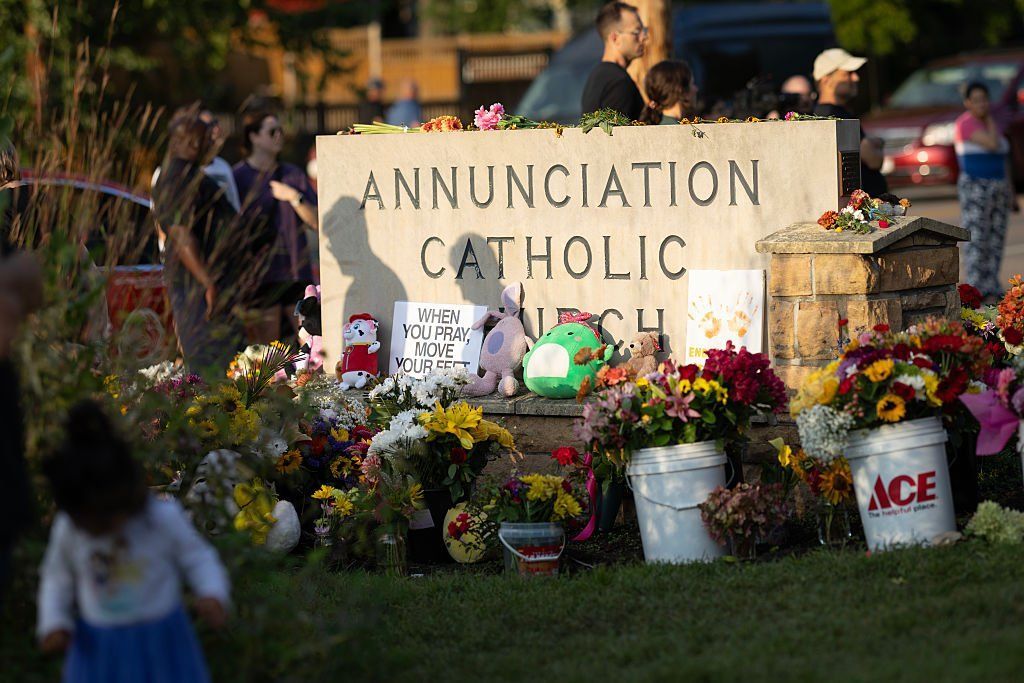
Another school shooting. This time in Minnesota. Families torn apart in seconds. A normal day turned into horror.

In the aftermath, many recalled another atrocity — the shooting at the Covenant School in Nashville two years ago. That one struck close to home for me. While my wife and I lived in Nashville, Covenant was our church for many years. I watched video of SWAT officers rushing past the very room where I once sat in Sunday school. The grief became more personal when I flew back to Tennessee from Montana to play the piano at the funeral of one of the victims.

When our own curtain is pulled back, and the way forward is shadowed with suffering, we remember: The road to glory may well run through a street called Straight.

These moments make the world feel unrecognizable. And when the dust settles, the mockery often begins. Politicians dismiss prayer. Late-night hosts sneer at faith. Social media shrugs off God with cheap jokes. Unbearable suffering, then mocked with derision.

Watching this unfold, I was reminded of the story in Acts 9 about a street called Straight. Saul had just experienced a dramatic encounter with the risen Christ on the road to Damascus — an encounter that left him blind for three days. During that time, the Lord appeared in a vision to a disciple named Ananias. He told him that Saul was staying at the home of a man in Damascus, on a street called Straight, and that Ananias was to go and pray for him.

Ananias recoiled — Saul’s reputation as a persecutor was well-known — but the Lord gave him a startling explanation: “I will show him how much he must suffer for my name” (Acts 9:16).

Not long after, Saul became known as Paul — the same apostle whose letters fill much of the New Testament. And from the very beginning of his ministry, suffering was not hidden from him but placed squarely before him. In Greek, the phrase means literally, the full measure. Not a glimpse. Not a teaser. The whole road of suffering laid out before him. And Paul walked it anyway.

His apostleship was never presented with illusions of ease. Five times he endured 39 lashes, until his back was scarred beyond recognition. Three times he was beaten with rods. In Lystra, a mob stoned him and left him for dead. Paul did not write as a theorist or philosopher; every sentence came from a man whose body testified as loudly as his words.

So when Paul wrote words of encouragement like, “We are hard pressed on every side, but not crushed; perplexed, but not in despair; persecuted, but not abandoned; struck down, but not destroyed” (2 Corinthians 4:8-9), we can bank on it — because those words were not written in safety but with scars still healing.

These weren’t armchair reflections but battlefield confessions. And scripture pulls the lens back even further with Job, who faced his own crucible of loss. His wife derisively urged, “Curse God and die.” But Job replied, “Though He slay me, yet will I trust Him.”

Why? Because Job knew the One who allowed suffering was also the only One who could redeem it.

This truth was driven home to me after one particularly brutal surgery. My wife, Gracie, was clock-watching in her hospital room. In this recovery (she’s had 98 surgeries), the pain spiked to staggering levels. She had to wait before the next dose of medication, and the minute hand on the wall became her tormentor. Her jaw clenched, her body trembled, and she looked at me with eyes filled with anxiety and agony.

Leaning close, my own eyes moist, I thought about the apostle’s testimony and said softly, “Gracie, it is often said that if you took off the apostle Paul’s tunic, you would see 195 scars from the beatings he endured. And he had no anesthesia.”

Through clenched teeth she shot back, “I’m not the apostle Paul.”

I placed my other hand on hers. “No, you’re not. But the same Spirit who sustained him will sustain you. He will never abandon you.”

The pain didn’t vanish. But together we endured — not by strength we could muster, but by the same power that carried Paul through lashings, Peter to his cross, and Jesus all the way to calvary.

RELATED:When God’s light hits hard, don’t flinch — stand firm

Photo by sykkel via Getty Images

God does not answer every question. He did not explain Job’s suffering, and He rarely explains ours. What possible explanation could we process about what happened in Minnesota?

But He did reveal to some. He showed Paul the full measure of what he would suffer. He told Peter the manner of his death. He warned the disciples plainly about persecution. And still they went.

They left scars, letters, hymns, and sermons that still speak. And because they staked their lives on what they had seen, we can bank on their testimony when our own way grows murky.

The path is often hard to see. Scripture says God’s word is a lamp to our feet, not a searchlight illuminating miles ahead. In the dark, we do not get the full blueprint. But we do get enough light for the next step.

Yet, sometimes God pulls back the curtain — just a little — and the road ahead looks unbearably bleak. For the families in Minnesota, for Job in his ash heap, for Paul staring down lashes and stones, the cost was laid bare. And in those moments, the scars of Paul, the conviction of Job, and — above all — Christ setting His face like flint toward calvary, echo down the centuries to steady us.

Because when our own curtain is pulled back, and the way forward is shadowed with suffering, we remember: The road to glory may well run straight through a street called Straight.

Luigi Mangione and 'magic bullet' medicine


Why did Luigi Mangione allegedly target UnitedHealthcare CEO Brian Thompson?

The original consensus was something like: He had chronic back pain that surgery didn’t help (or even made worse) and that his insurance company wouldn’t pay to fix.

It’s possible the 'system' had a share in derailing Mangione’s life, but surely there are many other factors, including the belief that all pain requires treatment.

But apparently the surgery, which he had no problem paying for, was a success. On Reddit, he raved about it and even recommended it to others. There is no record of him complaining about back pain after the surgery.

We do have a record of Mangione complaining of other maladies: Lyme disease, irritable bowel syndrome, and brain fog — all relatively new conditions often regarded as having a psychosomatic component.

Chronic endless pain

I have a good understanding of this because I come from a family of doctors, and my mother is one of these chronic endless pain people. I also worked in Big Pharma branding for two years, as well as for other creepy, well-funded Silicon Valley health start-ups on the agency side.

Via these experiences, I have come to basically the same conclusion that RFK Jr. has. The American for-profit health/pharma system is the most evil single institution on earth. It's also the most powerful.

This should've become obvious during COVID, where it literally took over the world. It should also be obvious given that it currently has the power to mutilate our own children, sometimes against our will, and to addict them to expensive drugs they will have to take for a lifetime.

I'm dubious that what we're seeing with UnitedHealthcare and Luigi Mangione is the whole story, but I'm more interested in the glaring contradiction at the heart of the alleged killer’s motive, seemingly expressed in the message left on the shell casings: “Defend, deny, depose.”

Among Mangione’s online sympathizers, even those who don’t go so far as to applaud the assassination claim, believe there’s a coherent political message behind it. But that rests on a faulty assumption about pain: that it must always be "treated" via medicines and surgeries.

Physical diagnosis, spiritual condition

This assumption certainly benefits the pharma industry — the more patients with chronic and consistent pain, the better. The only limit is what their insurance is willing to pay. As rapacious as insurance companies may be, some claims actually should be denied.

It’s not uncommon to get a physical diagnosis for a spiritual condition. I've seen my mother go through this her entire life, always with some new pain somewhere or some all-encompassing bulls**t diagnosis like "fibromyalgia" that gives pharma open access to her insurance funds.

Literally millions of aging single women suffer from various versions of chronic pain. They have been told, not by insurance companies, but by pharma companies and the media, that this pain is the result of treatable illnesses. Yet, somehow the more profits are made, the more “treatable” new illnesses pop up in need of cures.

But when none of them work, which is actually a quite common occurrence, what exactly is an insurance company supposed to do? Just pay endless claims forever, knowing that nothing will work? Denying the claims at least communicates that it’s time to try something else besides paying pharma companies with perverse incentives.

Whose profit?

It’s true that companies like UnitedHealthcare shouldn't exist in the first place. Even Adam Smith, father of market capitalism, said specifically that certain products were too elastic to be handled by a market, and medicines would certainly fit that category. The fear surrounding a person's health, and the desperate reliance on authority, warps the market and creates a terrible potential for very deep, evil, and pervasive abuse.

This is exactly what has happened, and it's eaten the globe. But in this instance, it doesn’t seem that UnitedHealthcare's "profit motive" had much to do with Mangione’s struggles. Of course, Mangione’s alleged manifesto encourages us to see his motivations as purely political rather than personal. He is targeting the “parasites” to blame for America’s extremely expensive yet extremely ineffective health care system.

As a diagnosis of what needs to change, the manifesto, if you could even call it that, is unsatisfactory. It ignores the bad actors upstream of the insurance companies: the doctors who offer unnecessary surgeries for hundreds of thousands of dollars and the pharma companies that run commercials telling everyone that chronic pills are the solution to their chronic problems.

Bad pharma

It’s mind-boggling that such commercials are so prevalent. Pharma has become the single biggest advertiser in all media by a massive margin: It literally keeps the mainstream media alive. A culture that heavily restricts cigarette ads should ask itself why it gives free reign to legal international drug cartels to spread their sales pitches. What impact does that have on public health?

We saw the impact during COVID, where people abandoned family members to die because the TV told them to do so. And who was the TV being controlled by? Pfizer (pharma) and Fauci (public health). Not by the insurance companies who had to foot the bill.

It’s possible the “system” had a share in derailing Mangione’s life, but surely there are many other factors, including the belief that all pain requires treatment. Maybe in a less stubbornly secular society he would’ve been able to understand his suffering as a necessary — or at least inevitable — consequence of being alive. Maybe then a father would not have been murdered in cold blood.

But our society has no concept of beneficial pain. In fact, we’re obsessed with eliminating pain entirely. That’s why our medical ideal is to match cause and cure so precisely that one treatment can eradicate a disease with maximum efficiency — and without any collateral damage.

This power such treatments promise is so seductive that it’s easy to succumb to wishful thinking, if not outright delusion. It’s right there in the name we commonly use for them: magic bullets.

Melina Mara/Getty Images

After destroying your livelihood with COVID mandates, Biden wants you subsidizing rich college grads

The No. 1 priority for the Biden administration is to inflict as much pain and suffering on the American people as possible.

Ross Douthat’s New Book Details His Personal Battle With A Mystery Illness

‘The Deep Places’ is a worthwhile read for all who need healing and asks the medical establishment to rethink its approach.