Elena Kagan gave bogus science a blind endorsement
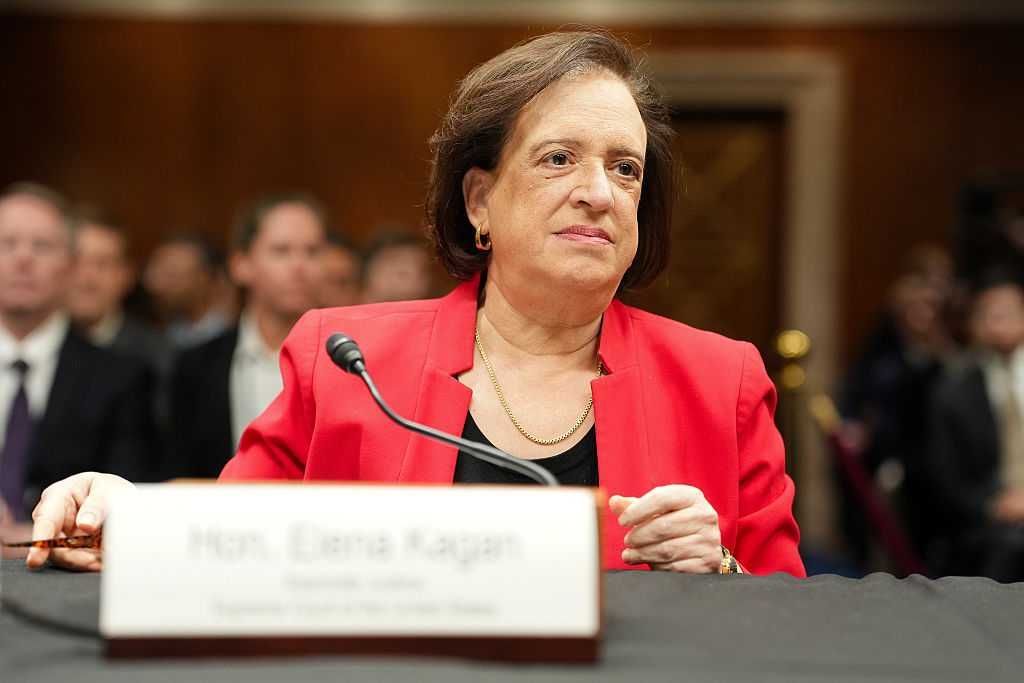


Supreme Court Justice Elena Kagan’s testimony at a July Senate hearing raised troubling questions about accountability in judicial education.

Kagan acknowledged that she wrote the foreword to the Federal Judicial Center’s “Reference Manual on Scientific Evidence” without reading its climate-change chapter — a chapter later removed after critics identified serious bias concerns. She also admitted that she still had not read it.

Kagan’s admission offers a cautionary example. Rank does not excuse a failure of diligence.

Her foreword presents the manual as an objective resource for judges handling cases involving complex scientific evidence, from epidemiology to emerging technologies. Yet Kagan placed her authority behind a volume whose most contentious material she had not taken the time to examine.

That failure weakens the manual’s credibility and raises a broader question: How carefully are judges scrutinizing the scientific authorities placed before them?

The fourth edition of the influential manual, used by thousands of federal judges, drew immediate objections. The Federal Judicial Center withdrew the climate chapter in February after state attorneys general cited imbalances and potential conflicts of interest.

The problems did not end there.

A separate chapter on the nature of science remains in the manual despite presenting a distorted account of scientific inquiry. Kagan’s foreword also remains, still attesting to the volume’s reliability and impartiality.

Earlier editions offered a clearer standard. Physicist David Goodstein emphasized empirical testing, falsifiable predictions, reliable data, and other central principles of scientific reasoning.

The new chapter moves in a different direction. It elevates social considerations and consensus among experts while giving less attention to the rigorous testing that separates science from assertion.

Scientific collaboration matters. Consensus can also provide useful evidence. But “widespread agreement” cannot substitute for disciplined scrutiny, especially in court.

The Supreme Court’s Daubert standard requires judges to assess whether expert testimony rests on testable methods, peer review, known error rates, and general acceptance — all tethered to observable reality.

Nobel Prize-winning physicist Richard Feynman stated the principle plainly: “If it disagrees with experiment, it is wrong.”

History offers repeated warnings about confusing consensus with truth.

RELATED: Out of order: Courts shouldn’t rule based on ‘trust us’ science

Nadzeya Haroshka

Dominant scientific views have often yielded to better evidence. In darker cases, governments have enforced consensus through political power. Under Joseph Stalin, Soviet biologist Trofim Lysenko rejected genetic science in favor of politically favored theories of inheritance. The state elevated his ideas into doctrine, silenced dissenting scientists, and inflicted lasting damage on Soviet agriculture.

The lesson is not that expert agreement has no value. It is that agreement must remain answerable to evidence.

That principle matters especially in courtrooms, where scientific claims can determine enormous legal and economic consequences.

The revised chapter also raises questions about authorship. Several contributors have ties to climate-policy negotiations, including work involving international financial mechanisms. Those backgrounds do not automatically disqualify them. But in an era of sprawling climate litigation, involving more than 1,000 active cases and potential liabilities reaching into the trillions of dollars, such ties create at least the appearance of imbalance.

Prominent scientists, including widely published physicists, have urged Chief Justice John Roberts and the Federal Judicial Center to revisit the chapter. They argue that the manual should restore clear explanations of hypothesis testing and empirical verification rather than rely on sociological descriptions of how scientific communities operate.

Courts increasingly adjudicate scientific disputes with consequences affecting millions, and sometimes billions, of people. The reference materials judges rely on must therefore withstand the strictest tests of objectivity.

Kagan’s admission offers a cautionary example. Rank does not excuse a failure of diligence. Judicial integrity depends on personal responsibility, especially when a justice lends her name and authority to a supposedly impartial guide.

RELATED: Justice Amy Coney Barrett describes SWATTING attack against her family
Eric Lee/Getty Images

The Federal Judicial Center can still repair the damage. It should restore the manual’s emphasis on empirical verification, seek broader input from experts without policy entanglements, and reaffirm the manual’s limited role as a procedural guide rather than an arbiter of scientific truth.

Judges should also treat such manuals as starting points, not substitutes for primary research, adversarial testing, and careful examination of the evidence before them.

Kagan endorsed a manual without reviewing one of its most disputed sections. That lapse compromised the diligence her foreword implicitly promised.

The Federal Judicial Center should now restore the manual’s credibility by recommitting it to empirical evidence, falsifiability, and genuine viewpoint diversity. The integrity of judicial decision-making demands nothing less.


Out of order: Courts shouldn’t rule based on ‘trust us’ science


A training manual for federal judges just ditched its biased chapter on climate change. Good. But the same manual still peddles quackery about how science works — and it risks teaching the judiciary to treat models and “consensus” as proof.

The “How Science Works” chapter in the “Reference Manual on Scientific Evidence” invites judges to overvalue computer models built on unproven assumptions and to accept “consensus” as evidence even when empirical testing cuts the other way. That is not science. It is a distortion of the scientific method, which demands observation, experimentation, and results that can be challenged and falsified in the real world.

This is the posture of pseudoscience: conclusions protected by authority and repetition rather than disciplined testing against reality.

The problem runs deeper than emphasis. In defining hypothesis, theory, and scientific law, the writers omit testing, observation, and experimentation. They also fail to acknowledge that all three can be disproven — even though demonstrating falseness has long been central to scientific progress. Science advances not by protecting favored conclusions but by trying — relentlessly — to break them.

The chapter even claims that science cannot “disprove hypotheses.” That is historically indefensible. Science has disproven hypotheses repeatedly, and entire revolutions have turned on that process.

Geocentrism gave way to Copernicus’ heliocentric model. Phrenology, eugenics, spontaneous generation, and miasma theory all enjoyed “consensus” before evidence refuted them. Alfred Wegener’s plate tectonics also met decades of rejection before the evidence won. Consensus delayed the truth. It did not deliver it.

The chapter also stumbles over prediction. It says prediction is a logical consequence of a hypothesis, “not necessarily what will happen in the future.” That drains prediction of its most important feature: testable claims about what should occur under specified conditions. A hypothesis can be tested against the past as well, but the logic stays the same — it must match reality.

Then the chapter offers reassurance that reveals the posture: “The fact that there is room for improvement in the process of science does not necessitate distrust of hypotheses that have gained widespread acceptance in the scientific community and about which consensus has been achieved.” In practice, that treats consensus as a shield against contrary evidence — a common ploy among climate alarmists.

RELATED: Win for kids! Major surgeon group reverses course, comes out against child genital mutilation

Photo by Jessica Rinaldi/Boston Globe via Getty Images
In places, the chapter contradicts itself, sometimes gesturing at rigor, elsewhere diminishing falsification and redefining key terms. The result is confusion. Its length and muddled definitions do not clarify how science works; they blur it. Worse, they introduce judges to wrongheaded practices — overuse of models and consensus — as if they can settle disputed scientific questions.

That is not the empirical tradition of Isaac Newton or Marie Curie. It is the posture of pseudoscience: conclusions protected by authority and repetition rather than disciplined testing against reality.

U.S. District Judge Robin Rosenberg removed the manual’s climate chapter after objections from state attorneys general and others. The National Academies of Sciences, Engineering, and Medicine still hosts the manual — including “How Science Works” — on its website.

Rosenberg, as head of the Federal Judicial Center, should take the next step and remove this chapter as well. Federal judges and the public they serve deserve a guide to science that prizes evidence over consensus and observation over simulation.

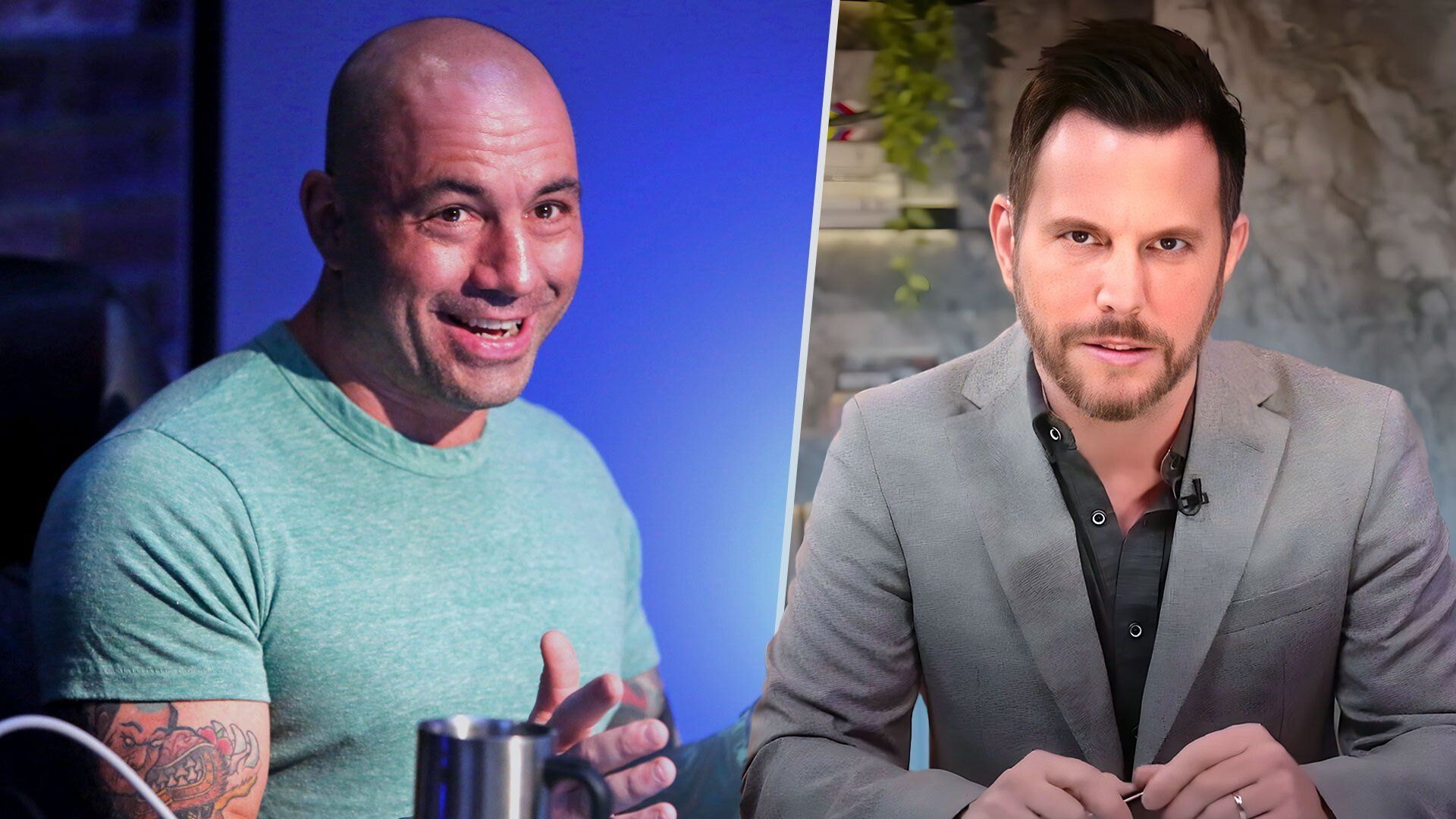
Joe Rogan and Aaron Rodgers are proven right, making their former critics look incredibly stupid


Joe Rogan and New York Jets quarterback Aaron Rodgers were both castigated by the media during the height of the COVID-19 pandemic for questioning the origins of the virus, the effectiveness of facemasks, and, of course, the vaccine.

Now their critics look remarkably stupid as nearly everything Rogan and Rodgers originally said has now been proven true.

Dave Rubin plays a clip of the two discussing previous events on “The Joe Rogan Experience.”

“Science that can't be questioned anymore isn't science. ... It's propaganda,” Rodgers told Rogan, who agreed wholeheartedly.

“There was questioning [during the pandemic], but it wasn’t allowed,” Rodgers continued, explaining that anyone who dared to question the narrative was immediately labeled as an “antivaxxer, flat-Earth, crazy, white, right-wing conspiracy theorist.”

“That's what I said when I made that video to Neil Young when Neil Young was getting all his music removed from Spotify because I was promoting misinformation,” Rogan recalls. “I said, ‘What you say is misinformation today is not going to be misinformation in the future.”’

During the height of COVID-19, “saying that masks don't work or saying that the vaccine won't stop transmission or saying that the virus came from a lab — all those things would get you kicked off of social media initially, [but] those have all been proven to be true,” Rogan continued, noting that the lab-leak theory has technically not been proven true but rather that “most people believe it to be true.”

“If you question anything,” says Dave, “the machine then puts out comedians, late-night hosts, [and] 'journalists' ... to label everybody all of these awful things, and it just marches on.”


Want more from Dave Rubin?

To enjoy more honest conversations, free speech, and big ideas with Dave Rubin, subscribe to BlazeTV — the largest multi-platform network of voices who love America, defend the Constitution, and live the American dream.

No, Critical Race Theory Isn’t About Teaching That ‘Slavery Is Real’

Parents who oppose teaching critical race theory in schools have nothing against teaching America's checkered history of race relations.
Dr. Scott Atlas: Science Killed Itself Over COVID-19

'Science is not supposed to be about intimidating, or abusing, or censoring data ... There is never supposed to be 'an accepted view' of science.'

One Of The Lockdowns’ Greatest Casualties Could Be Science

Politicians, journalists, and scientists have transferred the disease burden onto the working class. They’ve also dangerously undermined scientific inquiry.

Why Those Who Claim To ‘Follow The Science’ Are More Likely To Ignore It

We'll be able to have more productive and honest conversations with one another the sooner we realize that while morality takes sides, science does not.