Shelby and Eli Steele’s new film goes straight at the white-guilt grifters
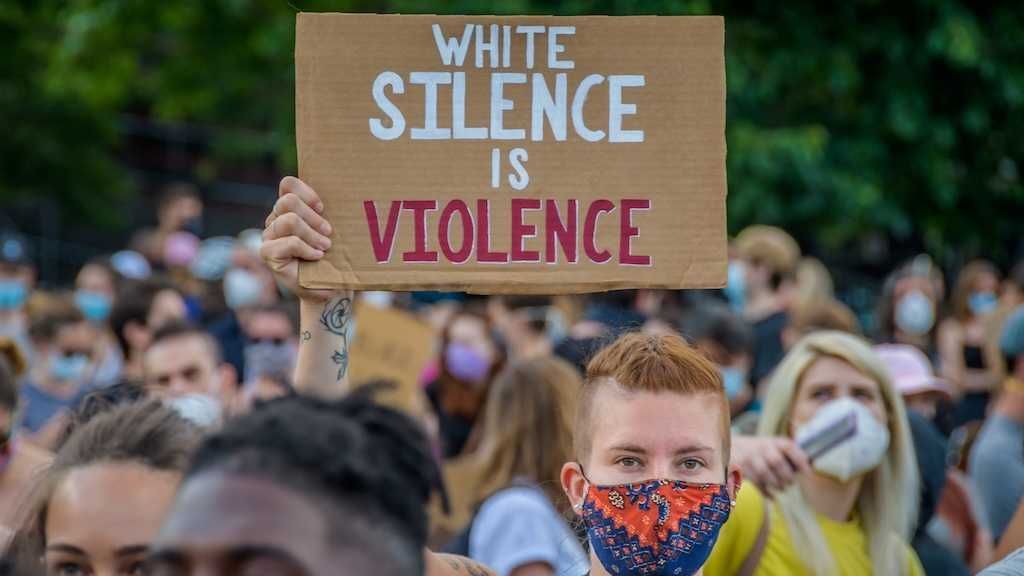


Are you guilty? That depends. Are you white? Then yes, you are guilty. But whiteness is no longer the only offense. Believe in God? Believe Christ saves sinners? Believe in objective morality, the rule of law, or marriage between one man and one woman? Then skin color hardly matters. You are guilty anyway.

Guilty of what? Guilty of the sins of history, the inequities of the present, and whatever new offense the racial racketeers invent tomorrow. At least that is what grifters like Ibram X. Kendi and Robin DiAngelo have spent years selling to America, often for staggering sums underwritten by universities eager to flatter the ideology. Arizona State University, where I teach, has offered classes on the problem of whiteness. ASU’s Barrett Honors College teaches the evils of settler colonialism.

You, Mr. and Mrs. Taxpayer, are footing the bill for Struggle Session 101.

That is the backdrop for “White Guilt,” the new documentary from Shelby Steele and his son, Eli Steele, which premieres this week at ASU. Shelby Steele, a senior fellow at Stanford’s Hoover Institution and recipient of the National Medal of the Humanities, has spent decades writing about race, multiculturalism, and affirmative action. In his 2006 book “White Guilt,” he argued that racial moralism had become a tool for gaining power over others rather than a path toward justice.

The film appears at a moment when Americans have begun to see more clearly how much of the modern racial industry depends on intimidation, guilt, and fraud.

Steele understands the temptation from the inside. As a young man, he felt drawn to the black power movement. His parents had been active in the civil rights movement, and he wanted to help his community. But he came to see that race blame solves nothing. It degrades everyone it touches. Blame wielded by race remains racism, no matter who aims it or who absorbs it.

The better question, Steele argues, asks what it means to live as a free and responsible person. What happens when an individual takes responsibility for his own choices? What kind of life becomes possible when dignity comes from agency rather than grievance? That moral vision sits much closer to the American ideal than the racial spoils system now preached across much of higher education.

Steele rejects the fashionable claim that slavery was America’s original sin. The deeper sin, he argues, is the use of race to gain power over others. That temptation did not die with Jim Crow. It adapted. It migrated into institutions, party politics, nonprofits, and university bureaucracies. Today it thrives in classrooms where professors insist they do not teach racism while teaching students to judge one another by skin color, ancestry, and inherited guilt.

That fraud has paid well.

Black Lives Matter offered perhaps the clearest recent example. In the wake of Michael Brown’s death in Ferguson, BLM became a moral brand for affluent liberals, activist professionals, and corporate America. Shelby and Eli Steele explored the lie at the movement’s foundation in their earlier film, “What Killed Michael Brown?” Their new film picks up a related question: How did the language of anti-racism become such a lucrative racket?

The answer is not hard to find. Much of the left’s social justice industry runs on a simple formula: Manufacture guilt, divide people by race, promise absolution, then collect money, influence, and institutional power. Sell moral panic to well-intentioned Americans, then invoice them for redemption.

RELATED: The campus isn’t ‘misunderstood.’ It’s mismanaged — on purpose.
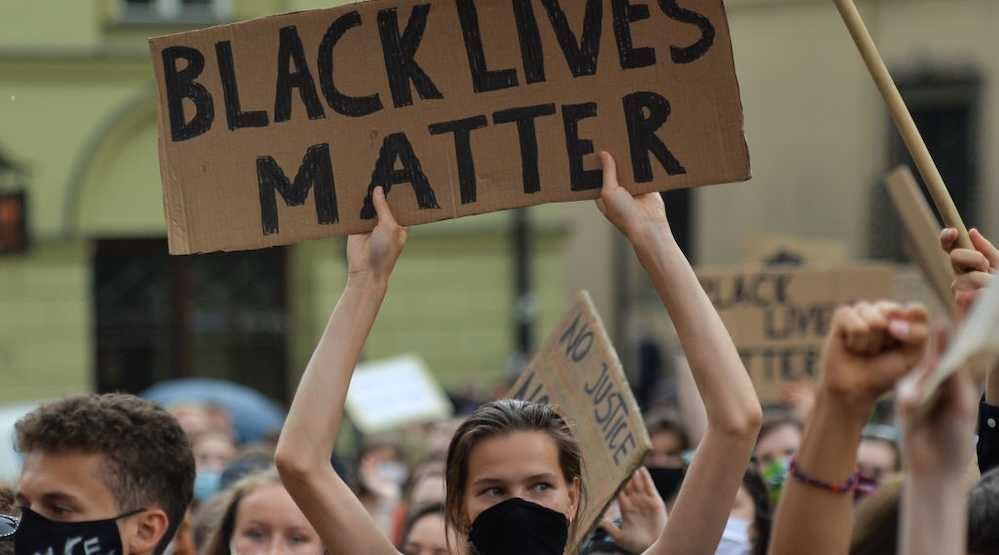
Artur Widak/NurPhoto/Getty Images

Want to end racism? Write a check. Sign the DEI pledge. Sit through the seminar. Keep your head down while the consultants explain that your skin makes you complicit and your silence proves your guilt.

The strategy stays simple. Divide humanity into categories. Teach each group to resent the others. Tell people that the brokenness of the world is not a permanent feature of fallen life but the fault of their neighbors. Then arrive as the enlightened manager who can fix it all, for a fee. That formula has wrecked poorer countries for generations. Now left-wing elites have imported it into American life, dressed it up in therapeutic language, and sold it as virtue.

Anyone who has spent time around a university classroom knows the script. A professor begins with a banal truth: The world is filled with injustice. The class nods. Then comes the poisonous turn: Would you like to know who is to blame? Look around the room. Identify the oppressor. Assign the guilt. Require ritual silence from some students and ritual confession from others. Repackage humiliation as education.

And you, Mr. and Mrs. Taxpayer, are footing the bill for Struggle Session 101.

Instead of surrendering to this politics of racial hatred, envy, and managed guilt, Americans should recover a better ideal. Freedom means more than license. It means responsibility. It means building a life through choice, discipline, and moral agency rather than through grievance and tribal score-settling. Whether the world crowns that life a success or a failure, it still belongs to you. No race hustler can take that from you.

“White Guilt” premieres March 25 at 6 p.m. at ASU Tempe in Bateman Physical Sciences F Wing, Room 166.
Telling America’s story is too important to leave to radicals


Every nation has a story. Recently, the Washington Post described the Smithsonian Institution, with its 21 museums and 14 educational and research centers, as “the official keeper of the American Story.” What kind of story have the Smithsonian museums been telling about our country?

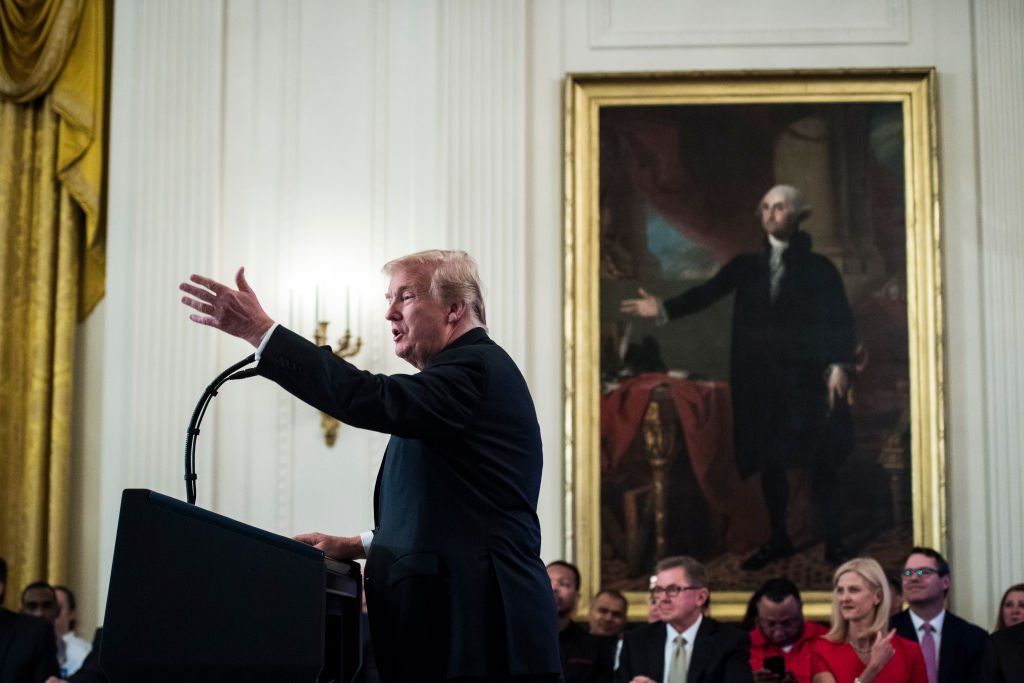
On March 27, President Trump issued an executive order arguing that there has been a “concerted and widespread effort to rewrite our Nation’s history” and promote a “distorted narrative driven by ideology rather than truth.” This “revisionist movement” casts American “founding principles and historical milestones in a negative light.” A White House fact sheet calls for “revitalizing key cultural institutions and reversing the spread of divisive ideology.” Vice President JD Vance, a member of the Smithsonian Board of Regents, will lead the administration’s efforts.

The debate over the Smithsonian is only one front in a wide-ranging, ongoing conflict over first principles and concepts of justice (equality versus equity).

Critics of the executive order responded quickly. They maintain that the Trump administration wants to “whitewash the past and suppress discussion of systemic racism.” The Smithsonian, the critics contend, is led by nonpartisan professionals whose aim is to be truthful and inclusive and tell the whole story of America, including groups that have been neglected in the past. Professor David W. Blight of Yale, president of the Organization of American Historians, complained that the executive order is a “laughable thing until you realize what their intent actually is and what they’re doing is trying to erode and then obliterate what we have been writing for a century.”

Is there a divisive ideology being taught, as the Trump administration maintains, and if so, what is it? What have university professors been writing about America, if not “for a century,” for at least the past decade? Professor Blight’s OAH revealed its ideology by embracing the New York Times’ 1619 Project, declaring:

The 1619 Project’s approach to understanding the American past and connecting it to newly urgent movements for racial justice and systemic reform point to … the ways in which slavery and racial injustice have and continue to profoundly shape our nation. Critical race theory provides a lens through which we can examine and understand systemic racism and its many consequences.

What do we call the ideology that, as the OAH explains, “acknowledges and interrogates systems of oppression — racial, ethnic, gender, class — and openly addresses the myriad injustices that these systems have perpetuated through the past and into the present”?

As most are aware, the ideology expressed by the OAH is dominant in universities today. It views American history negatively through the lens of “oppressors” (white males) versus “oppressed” and “marginalized groups.” This ideology has been variously called political correctness, identity politics, social justice, and wokeness. We could use Wesley Yang’s term “successor ideology,” meaning it is the new, radical, left-wing ideological successor to the old patriotic liberalism of politicians like Walter Mondale and historians like Arthur Schlesinger Jr.

Not surprisingly, given its pre-eminence in America’s universities, this divisive “successor ideology” is at the heart of the worldview propounded by the leaders of the Smithsonian.

Something rotten in the Smithsonian

The current secretary of the Smithsonian is Lonnie G. Bunch III, who is adept at dealing with donors, stakeholders, and Republican congressional appropriators. His language is mostly measured and reasonable. He talks in terms of truth, nuance, complexity, and nonpartisanship. But in reality, Bunch is a partisan progressive, a skilled cultural warrior, and a promoter of the leftist “successor ideology.”

Bunch partnered with and promoted the biased 1619 Project, which asserts that slavery is the alpha and omega of the American story and that maintaining slavery was a primary motivation for some American colonists who joined the revolutionary cause. The architect of the 1619 Project, Nikole Hannah-Jones, bragged that it “decenters whiteness,” and she denounced her liberal academic critics as “old white male historians.”

Nevertheless, Bunch proclaimed, “I want the Smithsonian to legitimize important issues, whether it's 1619 or climate change.” Of the Smithsonian’s participation in the 1619 Project, he declared, “I was very pleased with it.” Bunch proudly noted that people “saw that the Smithsonian had fingerprints on [the 1619 Project]. And that to me was a great victory.”

Bunch pictures America as a nation in which systemic racism is pervasive. During the George Floyd riots, Bunch told the Atlantic, "It is really about systemic racism throughout, not just the police department, but many parts of the American system.”

Further, he made excuses for the violence in the summer of 2020, which resulted in more than a dozen Americans killed and between $1 and $2 billion worth of property damage:

How dare they loot. Well, that kind of protest is really one of the few ways the voiceless feel they have power. And while I am opposed to violent protests personally, I understand that frustration sometimes pushes you over the edge. I think what’s important for us to recognize is, let us not turn attention towards looting in a way that takes away what is the power of these protests.

Three years ago, the Smithsonian assisted in the creation of a new College Board AP course on African American Studies. Ethics and Public Policy Center scholar Stanley Kurtz has revealed how APAAS is a radical neo-Marxist, anti-American project that calls for the socialist transformation of the United States. APAAS is soaked in the tenets of critical race theory, flirts with supporting violence, and implicitly advocates dismantling the American way of life, including free-market capitalism. It is a curriculum where students learn from Frantz Fanon that America is a “monster” and from Aimé Césaire that Stalin’s Soviet Union was a model society. Nevertheless, the APAAS curriculum is promoted on the Smithsonian’s Learning Lab.

Under the leadership of Gov. Ron DeSantis, the Florida legislature passed the Stop Woke Act that bars APAAS from the state’s K-12 schools because it promotes the divisive concepts manifest in CRT. Lonnie Bunch and his close ideological ally Elizabeth Alexander, president of the Mellon Foundation, falsely accused DeSantis of ignoring African-American history. On the contrary, DeSantis created a new black history curriculum based on serious and accurate scholarship. In response to DeSantis’ opposition to APAAS, Bunch complained to Alexander:

I am upset because you know we were involved in helping [APAAS] and the notion that somehow simply having a course that forces us to understand complexity, nuance, and ambiguity is a problem, that’s a problem for all of America.

In truth, there is very little “complexity” and “nuance” in the Smithsonian-promoted APAAS. It is one-sided, partisan propaganda. Kurtz notes that APAAS is not in fact inclusive, ignoring the work of black conservatives “like Glenn Loury, Shelby Steele, or Robert Woodson” or even “liberal black intellectuals, like Randall Kennedy or John McWhorter.”

Bunch often talks in terms of “nonpartisanship” and promoting the best of historical and cultural scholarship. But at the same time, he promotes the progressive left agenda, stating that the “job” of the National Museum of African American History and Culture is “really to create new generations of activists,” and “for me it really is about how … museums play a social justice role.”

Our story

To use one of Lonnie Bunch’s favorite terms, what is the “context” in which President Trump issued his executive order? It recognizes that a left-progressive cultural revolution (the “successor ideology”) has marched through our universities, schools, foundations, and museums, transforming the story of America into a tale of oppression and exploitation. The woke revolutionaries aim to “fundamentally transform the United States” from a nation based on a natural rights concept of the equality of citizenship to “equity,” a system of racial-ethnic-gender group quotas and group consciousness.

The debate over the Smithsonian is only one front in a wide-ranging, ongoing conflict over first principles and concepts of justice (equality versus equity). If the cultural revolutionaries are “transformationist,” in the sense that they aim to deconstruct the American way of life, the position articulated by Trump’s executive order is “Americanist,” in the sense that it represents a cultural counterrevolution that affirms America’s past and principles.

Are the Organization of American Historians and the current leadership of the Smithsonian right that America is a nation built on “slavery, exploitation, and exclusion”? Or is the American story what British writer Paul Johnson described as one of “human achievement without parallel,” the story “of difficulties overcome by skill, faith, and strength of purpose, and courage and persistence”? Was Johnson right when he wrote, “The creation of the United States of America is the greatest of all human adventures” and that Americans “thrown together by fate in that swirling maelstrom of history” are “the most remarkable people the world has ever seen”?

Editor’s note: A version of this article appeared originally at the American Mind.

Biden Backtracks On Promise To Release List Of Potential SCOTUS Picks

Democratic presidential nominee Joe Biden reversed course on a summer pledge to release a list identifying his potential SCOTUS nominees.

New Documentary Examines The Death Of Michael Brown And Race In America

"What Killed Michael Brown?" explores race relations, particularly around the deaths of young black men such as Michael Brown in Ferguson, Missouri.