How The Trump Administration Should Reform SBA Lending To Empower Entrepreneurs
 It would only take a few small changes to help make the American dream achievable for more small business owners.
U.S. Senator Jon Ernst (R-Iowa) recently obtained access to Biden-era Small Business Administration communications revealing a "potential cover-up obscuring $90 million in taxpayer funds Biden officials gifted to Planned Parenthood," America's largest abortion provider and a leading supplier of sex-rejection hormones.
According to the pro-life lawmaker, Biden officials at the SBA — allegedly operating under the direction of former top SBA lawyer Peggy Hamilton — used the code word "Benghazi" to refer to discussions of Planned Parenthood and its receipt of forgivable COVID-era Paycheck Protection Program loans in the wake of congressional objections to those very loans and demands for greater transparency.
'Just when we think the Democrats’ extremism can’t get more shocking.'
The use of a wholly unrelated term — the name of the Libyan city where four Americans were savagely murdered by Islamists in 2012 — is believed to have been employed strategically to ensure that future congressional or public record requests wouldn't turn up the relevant and possibly damning documents regarding the funding of Planned Parenthood, a potential violation of the Federal Records Act.
"What does Benghazi have to do with Planned Parenthood? It appears the Biden SBA used it as a code name to hide the $90 million in taxpayer funds they gifted to the abortion provider," Ernst said in a statement on Tuesday.
"This potential cover-up demands answers."
In her letter asking acting Attorney General Todd Blanche to open an investigation into the matter, Ernst raised the possibility that the Biden White House may have been involved in the alleged effort to conceal official federal records and highlighted numerous emails sent by Hamilton in which "Benghazi" appears to have been used as a stand-in for the abortion giant.
In one instance, Hamilton made clear her intended meaning, writing, "Can I schedule a meeting so we can decision Benghazi (Planned Parenthood)?"

"Recipients and respondents in the SBA email chains knew Planned Parenthood was not in or even remotely related to Benghazi, yet by continuing the email chain and scheduling meetings, it appears several Biden political appointees, and some SBA employees, were knowingly concealing or attempting to conceal their records relating to Planned Parenthood," Ernst stated in her letter.
She added, "With the records detailed here, and many more I’ve obtained, perhaps now we know why the Biden administration did not want to share its Planned Parenthood records with Congress."
"Just when we think the Democrats’ extremism can’t get more shocking, we see the lengths they’ll go to in protecting the Big Abortion industry," Marjorie Dannenfelser, the president of Susan B. Anthony Pro-Life America, said in a statement. "They knew letting Planned Parenthood help itself to taxpayer-funded COVID loans was illegal — so they tried to cover their tracks using, of all things, the national horror of Benghazi."
These revelations come just months after the SBA issued letters to 38 affiliates of Planned Parenthood demanding proof that they were eligible to receive millions of dollars in PPP loans. The agency noted that affiliates found to have provided fudged or false eligibility certifications may face "severe penalties, including repayment of the loan, ineligibility for loan forgiveness, and possible referral for civil or criminal penalties."
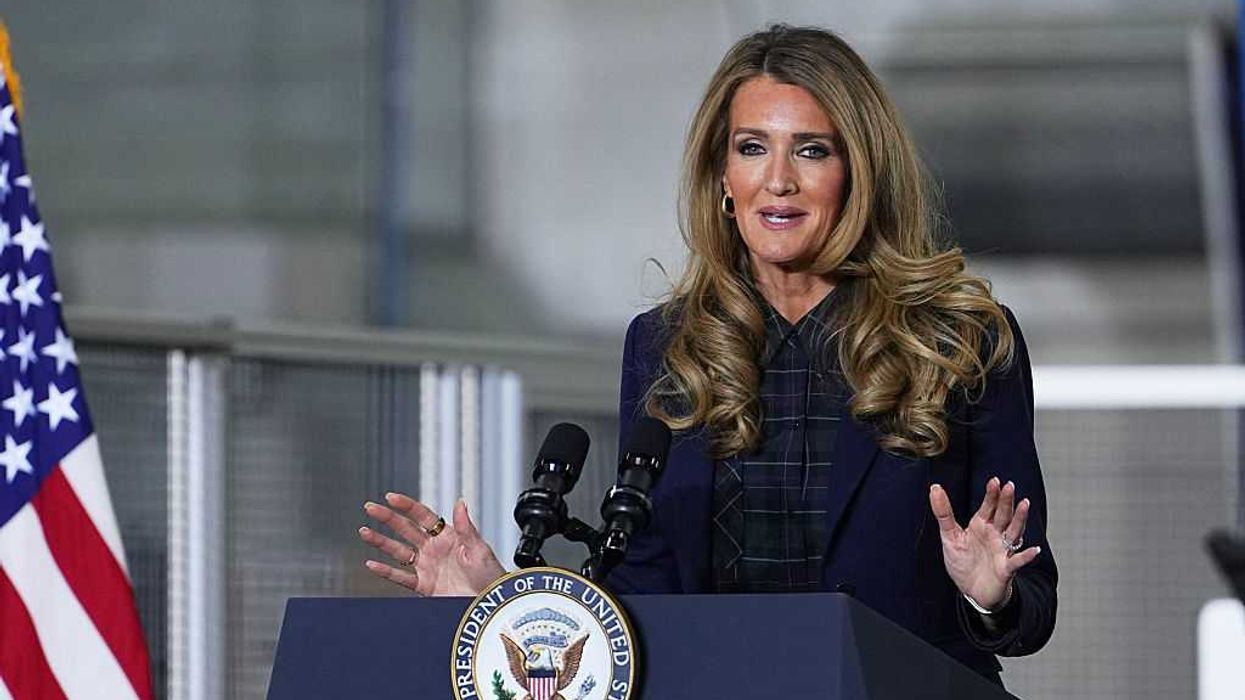
SBA Administrator Kelly Loeffler said in a statement, "Planned Parenthood Federation of America was never eligible to receive a dime in pandemic-era relief from taxpayers. As part of the review under way, not only will we expose the Planned Parenthood affiliates who took advantage of the American people — we will take every necessary step to force every bad actor to pay them back."
Planned Parenthood did not respond to a request for comment from Blaze News.
Like Blaze News? Bypass the censors, sign up for our newsletters, and get stories like this direct to your inbox. Sign up here!
The Small Business Administration has announced a policy change that many are surprised even needed to happen — and others are already calling for more action.
On Monday, the SBA, headed by Administrator Kelly Loeffler, announced a new policy that will ban foreign nationals and all noncitizens from accessing SBA-backed small business loans.
‘The Trump SBA is committed to driving economic growth and job creation for American citizens.’
The policy change is a continuation of another change implemented on March 1, which made small businesses owned or co-owned by a foreign national ineligible for two of the main SBA loan programs.
“The Trump SBA is committed to driving economic growth and job creation for American citizens,” Loeffler said.
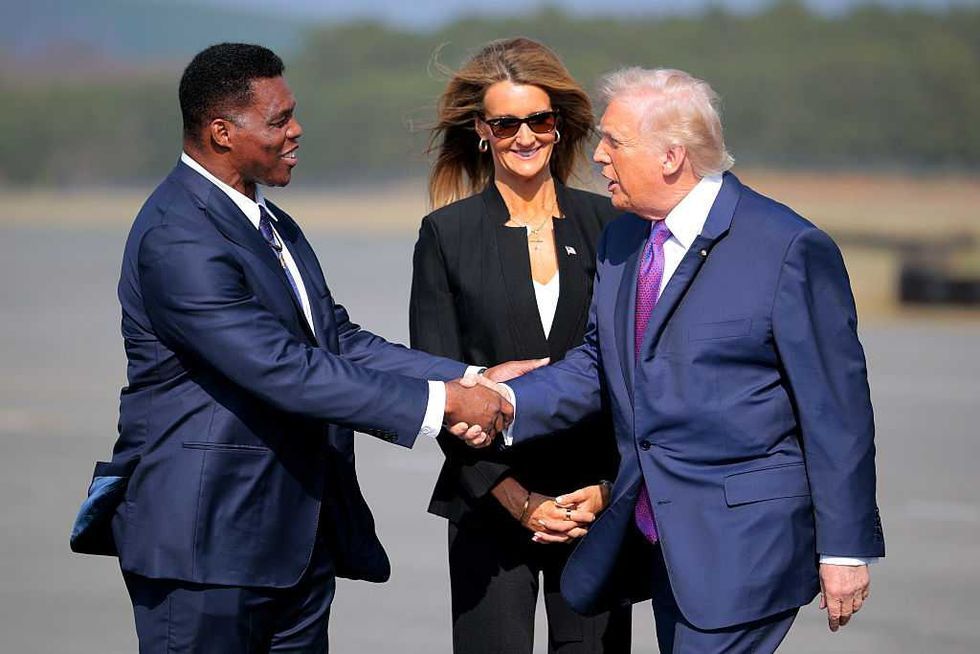
“Last month, we made it clear that SBA would not allow foreign nationals to access our core small business loan programs — and today, we are expanding that policy to include all SBA-guaranteed loans. With our lending authority capped annually by Congress and amid record demand for access to capital, our responsibility is clear: The limited resource of SBA financing must prioritize American citizens who are building businesses and creating jobs here at home.”
These changes affect the Surety Bond and Microloan programs, which were revised earlier in the month.
Citing data from the SBA, Fox News reported that the agency has 3,300 loans for small businesses partially owned by lawful permanent residents, largely under the Biden administration. That number represents 4% of the agency’s total loans, currently at 85,000.
These changes revealed a system arguably more broken than many people would guess possible. Some X users expressed their surprise at the announcement: “Why this wasn’t already policy is mind boggling.”
Others, however, saw much more room for improvement.
“Retroactively make all loans issued to foreign nationals due immediately and in full,” Andrew Beck demanded.
Like Blaze News? Bypass the censors, sign up for our newsletters, and get stories like this direct to your inbox. Sign up here!
Affordability has become a problem for nearly every American. Inflation and the rising cost of living keep chewing through paychecks, and the old markers of the American dream — home ownership, small-business ownership, a secure retirement — feel farther out of reach than they have in years.
Some people respond by demanding more government involvement in daily life. President Trump has taken the opposite view: The government should step back.
Success will not come only from repealing rules. It will come when regulators stop seeing entrepreneurs as problems to manage and start seeing them as partners in growth.
Within days of returning to office, Trump signed two major executive orders aimed at saving money for business owners and taxpayers alike: Unleashing Prosperity Through Deregulation and the much-discussed DOGE initiative. Their core principle was simple: For every new federal regulation, agencies should eliminate 10 old ones.
One year later, the results are real.
I have spent that year on the front lines of the fight against unnecessary regulation as a regional advocate in the Small Business Administration’s Office of Advocacy. Congress established the office in 1976, but it has taken on renewed life under the current administration.
My team and I have spent the past year meeting with small-business owners — many still trying to recover from the economic damage of the COVID lockdown era — to identify ways the federal government can serve as a partner instead of a roadblock.
Nationwide, our team has met with more than 12,000 businesses.
The full report is available publicly, but the top-line results from the past year are straightforward:
That last number is significant, but it also shows the scale of the broader problem. Federal regulation costs the U.S. economy more than $3 trillion a year by some estimates — roughly 12% of GDP. Much of that burden falls hardest on smaller firms that cannot absorb legal and compliance costs the way large corporations can. Meanwhile, the Code of Federal Regulations has swollen from a few thousand pages decades ago to more than 180,000 pages today.
For small businesses, that kind of regulatory sprawl is not an abstraction. It is a threat.
Big companies can keep in-house counsel, compliance officers, and HR departments on payroll. A family business, a contractor, or a startup working out of a garage cannot. Excessive regulation tilts the playing field toward the largest players and against the very people most likely to create new jobs and local wealth.
For too long, federal rulemaking has treated small-business owners as an afterthought. We once heard that giant firms were “too big to fail.” Today, many small businesses face a different reality: they are becoming too small to succeed.
RELATED: Republicans and Democrats are in revolt — for very different reasons
One of the most effective tools we have built to push back is the SBA’s Red Tape Hotline — 1-800-827-5722 — which allows small-business owners to speak directly with federal staff about regulatory burdens and offer suggestions for reform. Through that hotline, we have heard from thousands of people we could not have reached in person.
Our broader goal is to improve the regulatory climate for every business owner in the country. But even saving a mom-and-pop shop a few billable hours with an attorney can make a real difference.
In one especially memorable case, SBA staff helped a toy company in Mississippi clear a shipment through Customs and Border Protection in time for December — literally saving Christmas for that business.
The philosophy behind this work is the same one that guided me as mayor of Riverton, Utah, where I recently completed two terms. Riverton has grown because we kept taxes, fees, and regulations low enough for businesses to thrive. Companies came, jobs followed, and the city’s sales-tax revenue doubled during my time in office. Watching that same pro-growth approach work at the national level has been deeply rewarding.
Still, this is only a first down, not a touchdown.
Success will not come only from repealing rules. It will come when regulators stop seeing entrepreneurs as problems to manage and start seeing them as partners in growth. If we can make that shift, we can do more than trim costs. We can make the American dream attainable again.
Last week, BlazeTV host and investigative journalist Christopher Rufo, alongside Manhattan Institute Director of Research Judge Glock, published a report titled “No White Men Need Apply,” which pulled back the curtain on the Small Business Administration’s 8(a) program.
Despite functioning under the current Trump administration, Rufo and Glock discovered that the program has been awarding government contracts based on race, gender, and social disadvantage — a stark contradiction to the administration’s vows to abolish DEI.
“The Small Business Administration’s 8(a) program,” Rufo says, is “a $26 billion slush fund for government contracts that are available to every identity group except for one: white men.”
“We blew the whistle on this and made the case that this was a corrupt program” and “totally in violation of the president’s stated principles against DEI,” Rufo says.
The reaction from SBA and White House officials was surprisingly humble.
“I got a call from the SBA administrator, Kelly Loeffler. I got a call from a number of people at the White House, some of whom were a bit annoyed that we had brought this scandal to public attention, but all of whom recognized, ‘Yep, we’ve dropped the ball on this. It’s totally unjust. We’re going to take action,”’ Rufo recaps.
And they clearly meant it because just two days after their conversation, Loeffler posted the following announcement to X:
— (@)
Rufo says, “It’s not a perfect solution. I think the program should be abolished, but it’s at least a step in the right direction.”
But his co-host, Jonathan Keeperman, has questions.
“Is it the case that they’re not just abolishing this whole thing because, as Washington is, there’s just too many people who are sort of dependent on this, some of whom might even be Republicans or friendly to the administration?”
Are we playing the game of, “Look, we know this is bad, but these are our friends, and sometimes in politics, you just got to sort of weigh the cost of alienating people over here versus the cost of kind of just letting these not great things kind of continue because ... that’s just the friction of Washington, D.C.?” he asks.
“From my reporting on this, the White House had contemplated just unilaterally winding down the program, declaring it unconstitutional, and taking it to the courts,” Rufo says. “From what I heard from a number of people is that the White House lawyers, Department of Justice said, ‘Hey, you can’t do that. It’s a statutory program. You have to release regulations, go through public comment, do the whole song and dance.”’
“So actually, the action was stalled, from what I’ve been told, for a number of months in kind of legal limbo, and only because we published this story were they able to start getting that policy process moving again,” he contines.
However, there is also, he says, “an element of kind of long-standing corruption and complicity from Republicans” at play.
He gives the example of Alaska, which receives a disproportionate amount of the SBA’s 8(a) contract money, the majority of which is funneled into companies owned by Alaskan natives.
Many of these companies, however, subcontract the actual work to non-native (usually white-run) companies. To abolish the program would anger Alaska native groups, which are both politically and economically powerful in the state.
According to Rufo’s sources, Senator Dan Sullivan (R-Alaska), for example, has “made it known throughout the administration, ‘We need to keep this cash flowing,’ because he’s dependent.”
“Tribes are pretty powerful in a state like Alaska ... and other red states where there are big tribal populations. They have big lobbying operations. They have big political organizations, a network of businesses, casinos, constructions, contracting, etc.,” Rufo says, “and so there is an element of what I think is legal corruption — even in red states, even with Republican politicians — where they keep this disastrous program alive.”
Regardless, the Trump administration promised to uproot DEI, and Rufo intends to hold them to it.
“It’s been a year. You guys have to get rid of this,” he says.
Even though the SBA is now “letting white men into the program,” Rufo fears that “it will still heavily favor the other groups,” thus allowing the cancer that is DEI to live on.
“The only truly morally defensible position is to get rid of it. And so, I think they should blow it up. I think they should go nuclear,” he urges.
To hear more about Rufo’s investigation into SBA’s 8(a) program, watch the video above.
To enjoy more of the news through the anthropological lens of Christopher Rufo and Lomez, subscribe to BlazeTV — the largest multi-platform network of voices who love America, defend the Constitution, and live the American dream.
President Donald Trump announced Friday that some of the Department of Education's remaining functions would be shifted to the Small Business Administration and the Department of Health and Human Services effective "immediately."
Earlier this month, the Education Department axed over 1,300 workers, which Secretary Linda McMahon called the "first step" toward dismantling the agency. She confirmed that Trump had directed her to shut down the Education Department.
'Those two elements will be taken out of the Department of Education.'
On Thursday, Trump signed an executive order to start the elimination of the Education Department.
He called the move "very historic" and "45 years in the making."
"After 45 years, the United States spends more money on education by far than any other country and spends likewise, by far, more money per pupil, and it's not even close. But yet, we rank near the bottom of the list in terms of success," Trump stated. "Closing the Department of Education would provide children and their families the opportunity to escape a system that is failing them."
Trump announced Friday that some of the Education Department's remaining duties would be turned over to other federal agencies.
"I've decided that the SBA, the Small Business Administration headed by Kelly Loeffler, terrific person, will handle all of the student loan portfolio," Trump said.
The Education Department oversees $1.6 trillion in federally backed student loans that will now be transferred under the SBA's authority.
He noted that the federal student loan program was a "pretty complicated deal, and that's coming out of the Department of Education immediately."
"It'll be serviced much better than it has in the past," he added. "It's been a mess."
Trump also revealed that the HHS would handle programs regarding nutrition and students with special needs.
"[Secretary Robert F. Kennedy, Jr.], with the Health and Human Services Department, will be handling special needs and all the nutrition programs and everything else," Trump continued. "So I think that will work over very well."
"Those two elements will be taken out of the Department of Education," he added.
Meanwhile, the Trump administration faces a lawsuit filed last week by a group of attorneys general from 20 states and Washington, D.C. The complaint argues that Trump lacks the authority to terminate the ED.
On Thursday, Attorney General Rob Bonta (D) from California, one of the states suing the administration, said his office plans to review Trump's executive action.
"The Trump Administration knows, and even acknowledges, that the President cannot eliminate the U.S. Department of Education without Congressional approval. Yet it continues to do everything it can to destroy the Department's ability to carry out its most vital, congressionally-mandated functions – with the clearly stated 'final mission' of shuttering the Department for good," Bonta stated.
"Last week, we sued the Trump Administration over the mass firing of Department of Education workers – another step in its end goal of dismantling the Department from within. And we will continue to take all necessary legal action to protect the rights of students in California and across the nation," he added.
Like Blaze News? Bypass the censors, sign up for our newsletters, and get stories like this direct to your inbox. Sign up here!

 '... Perhaps now we know why the Biden administration did not want to share its Planned Parenthood records with Congress,' Sen. Ernst wrote.


 www.theblaze.com
 www.theblaze.com
 www.theblaze.com
 www.theblaze.com