Grants are a secret weapon for American communities


Most people think of grants as free money handed out at random or as something reserved for large nonprofits with powerful connections. In reality, however, grants are one of the most structured and intentional forms of funding in the American economy. They are designed to connect capital with specific outcomes, and both sides benefit when that connection is made.

Essentially, a grant is a non-repayable investment. A donor, whether an individual, foundation, or corporation, allocates capital toward a defined purpose. A recipient, whether a nonprofit, business, or project leader, applies for that funding with a plan to execute that purpose.

Unlike a loan, there is no repayment, and unlike a general donation, there are expectations.

That structure is what makes grants so effective.

Understanding how that system works is the difference between missing out and getting ahead.

For recipients, the benefit begins with access to capital without added risk. Organizations can fund new programs, hire staff, or invest in infrastructure without having to take on debt or divert limited funds. That security opens the door to growth.

Grants are often used as seed funding, supporting early-stage ideas that would otherwise struggle to attract financing. They allow organizations to think beyond short-term constraints and plan for the long term.

Just as importantly, grants create credibility. When an organization is awarded funding through a competitive or structured process, it signals validation. That recognition can attract additional donors, partners, and opportunities, creating momentum that extends far beyond the initial award.

But grants are not just one-sided. For donors, instead of broadly contributing to a cause, grantmakers can define exactly what they want to support. Grantmakers can also establish criteria, require reporting, and track outcomes over time. That creates accountability and ensures that funding is tied to results, not just good intentions.

Matching grants, for example, are designed to unlock additional funding by requiring others to contribute. This approach not only increases total dollars raised, but it also expands participation and engagement. According to data from the Bolger Foundation, these types of campaigns consistently drive higher donor involvement and overall contributions.

There are also practical advantages on the donor side. Contributions can offer tax benefits, and tools like donor-advised funds allow individuals and families to strategically manage their giving over time.

However, the grant system only works when the right capital meets the right opportunity. Too often, organizations struggle to identify funding sources that match their mission. At the same time, donors can find it difficult to connect with projects that align with their goals.

RELATED: No more free ride for federal grant hogs
Porcorex/Getty Images

That disconnect slows everything down.

That’s why more and more firms like mine have grown increasingly focused on grant matching as a way to close that gap.

By helping connect recipients with funding opportunities that align with their work and aligning donors with clearly defined outcomes, the process becomes more efficient for both sides. The alignment happens, and the results are tangible: Projects move forward faster, funding is deployed more strategically, and donors and recipients alike have greater confidence.

Grants are part of a system designed to direct resources where they can have the greatest impact. Understanding how that system works is the difference between missing out and getting ahead.

For organizations looking to grow, grants offer a path to funding without added burden. For donors looking to make a difference, they offer a way to turn intention into measurable results.

The opportunity is already there. The question is whether more people are ready to use it.

Here’s How Trump Should Let Middle-Class Americans In On The Private Equity Bonanza

Giving Americans the option of investing in private investments via their 401(k) plans poses many risks; a different proposal may be better.
Washington’s red tape machine finally met some sharp scissors


Affordability has become a problem for nearly every American. Inflation and the rising cost of living keep chewing through paychecks, and the old markers of the American dream — home ownership, small-business ownership, a secure retirement — feel farther out of reach than they have in years.

Some people respond by demanding more government involvement in daily life. President Trump has taken the opposite view: The government should step back.

Success will not come only from repealing rules. It will come when regulators stop seeing entrepreneurs as problems to manage and start seeing them as partners in growth.

Within days of returning to office, Trump signed two major executive orders aimed at saving money for business owners and taxpayers alike: Unleashing Prosperity Through Deregulation and the much-discussed DOGE initiative. Their core principle was simple: For every new federal regulation, agencies should eliminate 10 old ones.

One year later, the results are real.

I have spent that year on the front lines of the fight against unnecessary regulation as a regional advocate in the Small Business Administration’s Office of Advocacy. Congress established the office in 1976, but it has taken on renewed life under the current administration.

My team and I have spent the past year meeting with small-business owners — many still trying to recover from the economic damage of the COVID lockdown era — to identify ways the federal government can serve as a partner instead of a roadblock.

Nationwide, our team has met with more than 12,000 businesses.

The full report is available publicly, but the top-line results from the past year are straightforward:

  • We flagged more than 300 regulatory issues for federal regulators.
  • We helped influence changes to 23 federal regulations affecting millions of businesses.
  • We saved small businesses nearly $110 billion in unnecessary regulatory costs.

That last number is significant, but it also shows the scale of the broader problem. Federal regulation costs the U.S. economy more than $3 trillion a year by some estimates — roughly 12% of GDP. Much of that burden falls hardest on smaller firms that cannot absorb legal and compliance costs the way large corporations can. Meanwhile, the Code of Federal Regulations has swollen from a few thousand pages decades ago to more than 180,000 pages today.

For small businesses, that kind of regulatory sprawl is not an abstraction. It is a threat.

Big companies can keep in-house counsel, compliance officers, and HR departments on payroll. A family business, a contractor, or a startup working out of a garage cannot. Excessive regulation tilts the playing field toward the largest players and against the very people most likely to create new jobs and local wealth.

For too long, federal rulemaking has treated small-business owners as an afterthought. We once heard that giant firms were “too big to fail.” Today, many small businesses face a different reality: they are becoming too small to succeed.

RELATED: Republicans and Democrats are in revolt — for very different reasons

Douglas Rissing/Getty Images

One of the most effective tools we have built to push back is the SBA’s Red Tape Hotline — 1-800-827-5722 — which allows small-business owners to speak directly with federal staff about regulatory burdens and offer suggestions for reform. Through that hotline, we have heard from thousands of people we could not have reached in person.

Our broader goal is to improve the regulatory climate for every business owner in the country. But even saving a mom-and-pop shop a few billable hours with an attorney can make a real difference.

In one especially memorable case, SBA staff helped a toy company in Mississippi clear a shipment through Customs and Border Protection in time for December — literally saving Christmas for that business.

The philosophy behind this work is the same one that guided me as mayor of Riverton, Utah, where I recently completed two terms. Riverton has grown because we kept taxes, fees, and regulations low enough for businesses to thrive. Companies came, jobs followed, and the city’s sales-tax revenue doubled during my time in office. Watching that same pro-growth approach work at the national level has been deeply rewarding.

Still, this is only a first down, not a touchdown.

Success will not come only from repealing rules. It will come when regulators stop seeing entrepreneurs as problems to manage and start seeing them as partners in growth. If we can make that shift, we can do more than trim costs. We can make the American dream attainable again.

New X post from Zohran Mamdani has even conservatives nodding in approval, but are they duped?


On November 29 — Small Business Saturday — New York City Mayor-elect Zohran Mamdani slapped a new caption on a five-month-old campaign video pledging to boost NYC’s small-business ecosystem with massive deregulation measures, leading some conservatives to applaud the socialist as more based than they originally thought.

In the clip, Mamdani vows to “make it faster, easier, and cheaper for small businesses to get started and stay open” by cutting fines and fees by 50%, expediting permits and applications, appointing a “Mom and Pop czar” to fight bureaucracy, and increasing funding for small business programs by 500%.

This kind of red-tape-slashing, deregulatory rhetoric is something you would normally hear from Republicans or maybe an old-school Democrat, but to hear it from a self-described socialist is truly an anomaly.

Or is it?

John Doyle, BlazeTV host of “The John Doyle Show,” says these conservatives praising Mamdani’s small-business plan have had the wool pulled over their eyes. Mamdani doesn’t care about small business; “he is simply rewarding his foreign base.”

For starters, the massive increase in small-business funding, Doyle reminds, is simply “redistribution of wealth from the whiter neighborhoods.”

“I'm quoting Mamdani, who wanted to raise taxes specifically on the whiter neighborhoods … to pay for these handouts,” he says.

But the more important issue is who these small-business perks are intended to benefit. It’s not native New Yorkers; it’s the foreigners who “elected him to office,” says Doyle.

In response to the people who foolishly think that Mamdani’s small-business plan reveals he’s maybe not the stark raving mad Marxist we thought he was, Doyle tweeted the following:

— (@)

Because NYC’s business marketplace is one of the most saturated and competitive in the nation, “who is moving to New York and starting businesses?” Doyle asks. “It's obviously foreigners.”

Deregulation for Mamdani, he argues, isn’t about helping businesses; it’s about lowering the standards — “cleanliness standards, worker hygiene standards, temperature control, food safety standards, inspections, record-keeping” — to turn NYC into the kind of third-world slum his voter base came from.

That is what is going on here,” he declares.

“You have to be 200 IQ enough to understand that in this instance, deregulation is actually Marxist in nature.”

To hear more of Doyle’s fiery take, watch the episode above.

Want more from John Doyle?

To enjoy more of the truth about America and join the fight to restore a country that has been betrayed by its own leaders, subscribe to BlazeTV — the largest multi-platform network of voices who love America, defend the Constitution, and live the American dream.

Main Street’s silent plea: Exempt us from the next tariffs


President Donald Trump just keeps proving his critics wrong.

This week, he announced a trade deal with the European Union that will bring in $1.35 trillion in new investment just days after securing $550 billion from Japan. The U.S. Treasury has pulled in a record-breaking $150 billion in tariff revenue this year. New GDP figures show the economy growing faster than inflation.

A rebate, carve-out, or full exemption would show Trump responds to market realities with precision.

Trump has reason to celebrate. But he also knows tariffs can hurt. In February, he warned about the pain tariffs might cause consumers and businesses. More recently, he backed Missouri Republican Sen. Josh Hawley’s proposal to send at least $600 in tariff rebate checks to working-class Americans.

That same logic should apply to the people who sign their paychecks: small business owners.

Since the government-imposed COVID restrictions, small businesses have faced brutal headwinds. The National Federation of Independent Business reports weak job creation plans. Bank of America says hiring costs are down but entrepreneurs are leaning harder on credit cards just to stay afloat due to tighter markets.

To ease the burden, the U.S. Chamber of Commerce has urged the Trump administration to create an automatic exemption from new tariffs for small businesses. These companies don’t have the cash reserves or supply chain flexibility to absorb cost hikes. They can’t just retool overnight. The Chamber also called for exemptions for any business that proves tariffs would threaten American jobs or that imports goods not produced domestically — like coffee or bananas.

That pitch should resonate with Republicans. America’s 34.8 million small businesses provide nearly half of all U.S. jobs and created 70% of new ones between 2019 and 2024. They make up 98% of all manufacturers, with payrolls topping $278 billion.

And they lean Republican. Last fall, small business owners favored Trump’s economic policies over Kamala Harris’ by 32 points. Five of the top 20 importing states — Michigan, Georgia, Pennsylvania, North Carolina, and Wisconsin — are swing states where small businesses are watching closely.

Democrats know it, too. They’ve already started highlighting tariff-related struggles in their appeals to Main Street voters. According to the FedEx Small Business Trade Index, one-third of all imports and exports come from small businesses. Two-thirds of small and midsize business leaders say imports are vital to their domestic operations. The National Retail Federation recently flagged the impact of tariffs on the nation’s 15.5 million retail workers.

Trump understands something his critics don’t: The economy depends on balance — between tariffs, taxes, incentives, and regulation. Targeted relief for small businesses fits perfectly with his broader economic vision.

It complements the SBA’s Made in America Manufacturing Initiative, which cut $100 billion in red tape, and the One Big Beautiful Bill Act's tax reforms that let domestic producers write off depreciation and R&D costs.

RELATED: Trump says he’s considering ‘a little rebate’ for Americans from tariff revenue

Photo by JIM WATSON/AFP via Getty Images

Sure, Trump could fold a small business rebate into Hawley’s legislation. But exemptions work faster — and speed matters when you’re operating on razor-thin margins. That’s why Chamber of Commerce CEO Suzanne Clark is right: Small businesses need relief now, not months from now — if and when Congress acts.

A rebate, carve-out, or full exemption would show Trump responds to market realities with precision. It would give small businesses breathing room to shift toward domestic suppliers. And it would help Republicans tie a policy win to the pro-growth momentum already under way.

Foreign onshoring, U.S. reshoring, and renewed consumer confidence are already reshaping the economy. Strategic relief for small businesses could help seal the deal — and give Republicans even more to smile about in 2025.

How Trump’s Covid-Era Tariff Policy Could Help Small Businesses Like Mine Reshore

Small businesses reliant on imports often lack the financial capacity to absorb steep tariffs on the goods they need to survive.
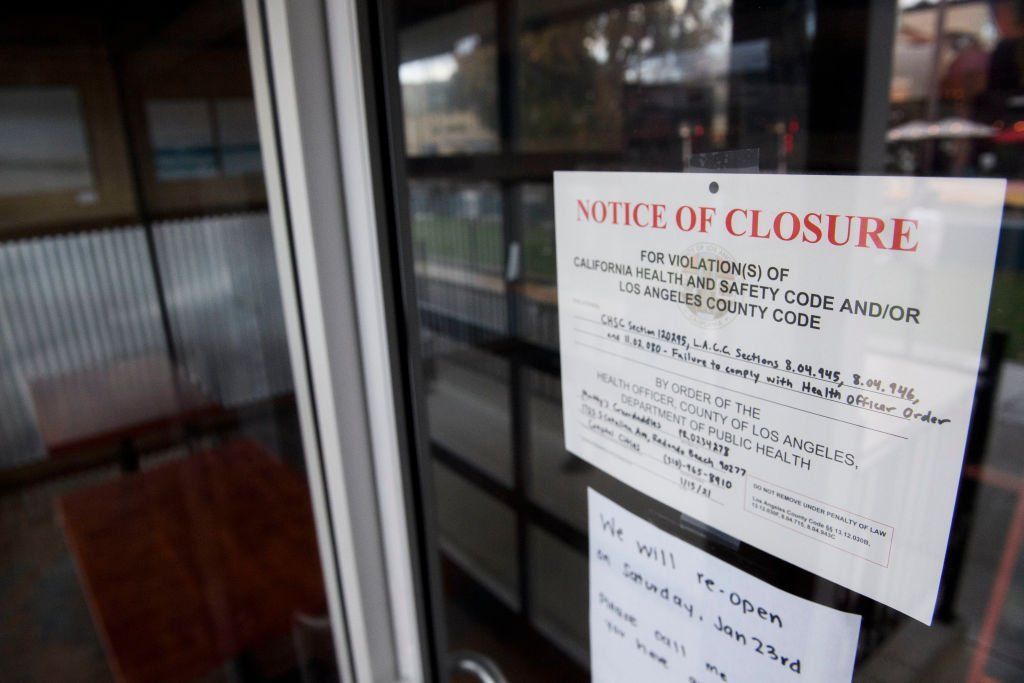
American families thrived under Trump’s tax plan — don’t kill it


As families faced a 20% spike in inflation under President Joe Biden, it’s no surprise that a strong majority of voters oppose new tax increases.

According to new polling from the Independent Women’s Forum, 79% of likely voters in the 2026 midterm elections support extending the 2017 Tax Cuts and Jobs Act. That includes 80% of seniors, 78% of women, and 78% of independent voters.

The American people desire a simpler, fairer tax system.

Across all demographics, women voiced strong support for keeping the tax cuts in place. A majority agreed that Congress should act to stop individual income tax rates from rising in January 2026.

While inflation has begun to fall under President Trump, including last month’s slowest core inflation rate in nearly four years, more action is needed to keep prices moving downward.

Two-thirds of voters agree that now is not the time to raise taxes. That includes 65% of women and 70% of voters ages 18 to 34, who say high prices and high interest rates make additional tax increases unacceptable.

Tax cuts boosted incomes

The results speak for themselves. By 2019, median household income reached a record high of $68,703. That same year, 4.2 million Americans — many in female-headed households — rose out of poverty, bringing the national poverty rate to a record low.

A major factor was the drop in the corporate tax rate from 35% to 21%. Workers, who often shoulder the burden of corporate taxes, saw immediate gains. In response to the rate cut, many companies invested directly in their employees by raising wages, issuing bonuses, expanding benefits, funding job training programs, and creating new positions.

These changes suggest the tax law not only supported American families but also helped drive job growth and a stronger economy.

George Mason University economist Tyler Cowen reported in July — more than six years after the Tax Cuts and Jobs Act took effect — that as a result of the law, “Total tangible corporate investment went up by about 11%” and “there has been a long-run increase in GDP of 0.9% — a substantial sum in an economy of more than $27 trillion.”

Small businesses thrive

Small businesses are the backbone of the U.S. economy. These "pass-through" businesses — such as sole proprietorships, partnerships, and S-corporations — are taxed at individual income tax rates. They employ nearly half of the American workforce and represent almost 44% of America’s gross domestic product.

Before the Tax Cuts and Jobs Act, some small businesses filing under the individual income tax code faced tax rates as high as 39.6%. Less than a year after the law’s enactment, the National Federation of Independent Business’s small-business optimism index hit the highest level ever recorded during its 45-year history. The previous record was set during Ronald Reagan’s tenure.

Now, small businesses face a looming challenge: The 20% small business deduction expires at the end of this year, which could significantly increase their tax burden. This deduction was designed to ease tax burdens on small and midsized businesses just as C-corporations benefited from the corporate tax rate cut.

Tax cuts help people and small businesses. As demonstrated after the 2017 tax cuts, extending them will ease inflationary pressures by lowering business costs, raising wages, and strengthening workers’ ability to withstand economic shocks.

The voters have spoken

Our polling found 59% of likely voters — including 77% of Trump voters — agree that “The 2017 tax cuts contributed to lower prices for shoppers before inflation kicked up in 2021.” This view resonated with young voters particularly, with 64% of likely voters ages 18 to 34 in agreement. This sentiment may explain the notable shift among younger voters toward Trump during the 2024 presidential election.

The American people desire a simpler, fairer tax system, and enacting sensible reforms, extensions, and updates to the Tax Cuts and Jobs Act will do just that.

The timing, public sentiment, data, and legal pathway are aligned. It’s time for Congress to pass additional tax reforms for America.

The untold story of LA’s underground COVID-era speakeasies


“It’s closed. Let’s get out of here.”

My Israeli friend had picked me up from Woodland Hills and parked in the dimly lit back lot of a seedy hookah lounge in Canoga Park, a Los Angeles neighborhood where one doesn’t want to be caught on the wrong street at the wrong time.

These moments of frustration shattered trust in government and reignited a core American belief: Those in power should not live by a different set of rules than the people they govern.

It was June 2020. “Two weeks to flatten the curve” had overstayed its welcome by three months, and my friend was one of many Angelenos who refused to accept that empty streets, boarded-up businesses, and “parking lot hangouts” were the “new normal.” We were both in need of a hit of normalcy, and he said he knew a place.

“Just wait,” he assured me.

I was skeptical. Restaurants didn’t have the luxury of attempting to accommodate California’s stringent social distancing standards like Target, Walmart, and other big-name “essential” businesses. Opening their doors was illegal — and had been for months.

After we knocked on the side door, an enormous Lebanese bouncer poked his furrowed brow over the threshold.

“Welcome,” he said quickly, ushering us in.

Lockdown speakeasies

Lebanese, Israelis, and Jordanians packed the place front to back as menthol- and mango-scented smoke curled toward the dimly lit ceiling. Who knew a shared frustration over California Gov. Gavin Newsom’s lockdowns could forge such peaceful relations?

“My gosh,” I thought. “This is a legit speakeasy” — and it wasn’t the only one.

Newsom’s draconian lockdown orders forged a slew of COVID-era speakeasies, welcoming customers through word of mouth, usually via Signal groups created by other Angelenos who craved a return to routine.

This evening of blissful familiarity — albeit with a Middle Eastern twist — was interrupted by a visit from the police. Their visit lasted all of 30 seconds. “Hey, guys. Someone reported you, so we had to show up. You all have a wonderful evening.”

The degree to which law enforcement enforced Newsom’s COVID restrictions varied from county to county, even within the same departments. Thankfully, the police in Canoga Park refused to force small-business owners to choose between putting food on their families’ tables and obeying Newsom’s dictates.

The price of defiance

Other neighborhoods weren’t so lucky. Novo, an Italian restaurant just 10 minutes north in Westlake Village, had to choose between remaining closed under Newsom’s indefinite restrictions or shutting down permanently due to lack of revenue. The owners risked defying the former to avoid the latter. Every day they remained open, Los Angeles County slapped them with a hefty fine — but the community rallied around them. Every night, the restaurant was packed with locals risking fines themselves to keep the business afloat — refusing to watch another small business in their community go under.

Five miles up the road from the Italian restaurant, a local pastor, Rob McCoy, was held in contempt and fined for illegally holding a church service with fewer congregants than people frequenting the Target across the freeway.

Within this context, I got my first gig as a writer — five years ago this very week — interviewing small businesses in the service industry for a local newspaper in the months following their government’s broken promise that they needed to close their doors for only “two weeks to flatten the curve.”

Some, like the owners of a small deli in Dos Vientos, tried to toe the line by serving burritos to customers in their parking lot. Others, like a cigar lounge in Thousand Oaks, became a hub for police officers who refused to enforce Newsom’s restrictions.

Regardless of their posturing during lockdown, one-third of all restaurants in Los Angeles County met the same fate: permanently closing their doors.

A double standard

Business owners — from both sides of the political aisle — already felt cheated by their government. But government officials' partisan double standard for themselves rubbed salt in the wound.

Los Angeles Mayor Eric Garcetti joined thousands of protesters against the death of George Floyd, marching through the streets of downtown during the height of lockdown — while his administration issued crippling fines for small businesses serving their clientele.

The protests turned violent during the infamous “Summer of Love.” National Guard troops patrolled the streets at night while the rest of Los Angeles County was under strict curfew. A family-owned Indian food store in Thousand Oaks boarded up the business with plywood ahead of an imminent Black Lives Matter protest, which had been the catalyst for mass looting and millions of dollars in damages in neighboring Los Angeles suburbs. A gym in Agoura Hills reopened after BLM-affiliated rioters stormed and looted stores across Santa Monica en masse.

“Does the virus skip over the rioters?” the gym owner asked, tongue in cheek.

Despite the chaos erupting out of California’s major city centers, the most scathing image to emerge during lockdown was Gavin Newsom and California’s Democratic elite dining — maskless — at the French Laundry, one of America’s most acclaimed restaurants.

“Let them eat cake” didn’t work for the French, and it certainly didn’t work for California’s small-business owners, even longtime Democratic loyalists.

Turning point in American politics

“Two weeks to flatten the curve” became arguably the most transformative cultural moment in modern American history. Partisan lines blurred — even in deep-blue Los Angeles County — uniting people around the definitively American sentiment: What gives you the right to tell me what to do?

These moments of frustration weren’t just passing irritations. They fundamentally shattered trust in government and reignited a core American belief: Those in power should not live by a different set of rules than the people they govern.

And now, five years later, Newsom wants the country to forget he was the man behind the lockdowns. Embarking on a desperate campaign to depict himself as a moderate — likely with eyes on the White House — Newsom has never once fessed up to his failed leadership during the pandemic.

But small-business owners haven’t forgotten. The families who lost everything haven’t forgotten. And voters shouldn’t either.

If history tells us anything, it’s that those who trample on freedom once will do it again — especially if they think no one is paying attention.

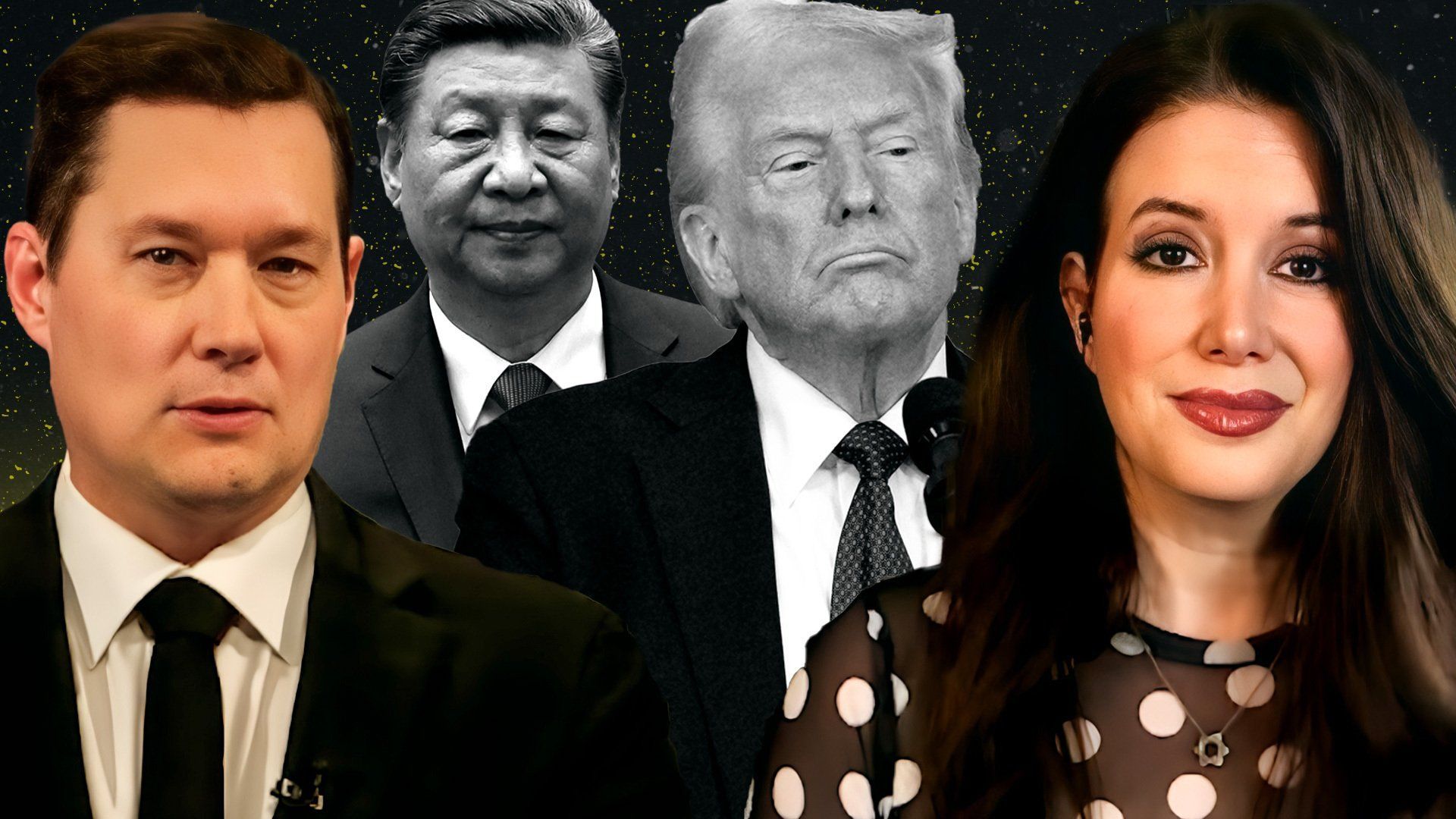
Trump's tariffs: Economic genius or costly mistake?


President Trump’s tariffs on China, Canada, and Mexico have been nothing short of controversial — and for good reason.

“China, you know, is in many ways an adversary,” economic expert and best-selling author Carol Roth tells Stu Burguiere on “Stu Does America.” “But the reality is that we are very dependent upon China on both sides of the coin, so to speak.”

“One is certainly our dependence on them for various components of making just about anything, as well as finished goods,” she explains. “There are companies that produce things in China that you just won’t be able to produce here in the United States, ever, at a price that somebody would buy it at.”


When it comes to national security issues, ammunition, and medicines, Roth believes there’s a “different argument to be made for tariffs.”

“The idea that there’s just sort of this blanket tariff pronouncements that isn’t surgical, that isn’t targeting these specific things and taking into account specific cases is probably what gives me the most pause right now,” she says.

Stu agrees but also understands the argument in favor of Trump’s tariffs.

“I think there is a sense, by a lot of people on the right now, which is like, ‘This is good. We understand we might have a little bit of pain. We’re going to raise prices a little bit, potentially, on some goods, but long-term, we need to bring this manufacturing back here, and we’re willing to kind of go down that road,’” he says.

But that’s not enough to convince either Roth or Stu that it’s the right move.

“This is a very, very careful dance that must be had,” Roth says. “Being more surgical with the tariffs, I think, would potentially accomplish more of what is being at least told to us and me, as sort of somebody who’s going through the economics of what’s happening and worrying about this happening and that happening, seems like it might drive a better outcome in a very difficult and challenging situation than just kind of this big smattering across the board.”

Roth is also a small-business advocate, which causes her even more concern regarding the tariffs.

“I worry about small businesses as well that don’t have sort of the options that are available to some of these bigger companies,” she says.

Want more from Stu?

To enjoy more of Stu's lethal wit, wisdom, and mockery, subscribe to BlazeTV — the largest multi-platform network of voices who love America, defend the Constitution, and live the American dream.

How Congress Can Protect Inventors From Big Businesses Stealing Their Ideas In Court

America’s startups and small businesses are facing unprecedented attacks on their intellectual property from larger companies.