‘White privilege’ made her do it


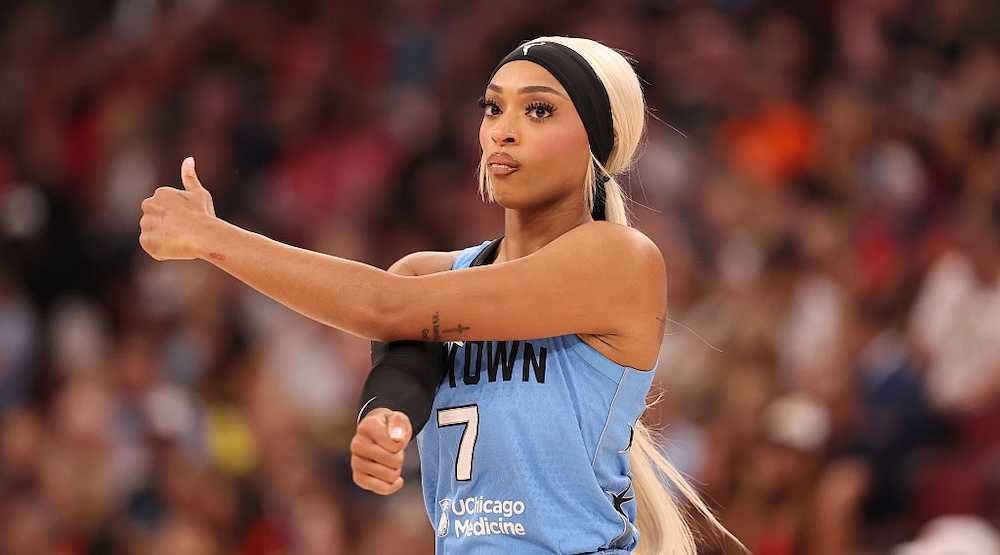
DiJonai Carrington may have committed the most educational flagrant foul in the history of basketball.

I was discussing the episode with a friend who asked, “Do you remember roller derby?” I confessed I did not. “It was a sport where people enjoyed watching women beat each other up,” he said. I saw the connection immediately.

‘White privilege’ did not appear spontaneously in professional sports. It has an intellectual pedigree.

It reminded me of undergraduate classes in which feminists argued that women should run the world because they are more level-headed, calm, and compassionate than men. I had also watched some of those same people treat conservative colleagues with remarkable contempt. The theory and the behavior did not always match.

The WNBA has lately offered a rather vivid reminder that women, being human, are perfectly capable of aggression, rivalry, resentment, and the occasional refusal to accept responsibility.

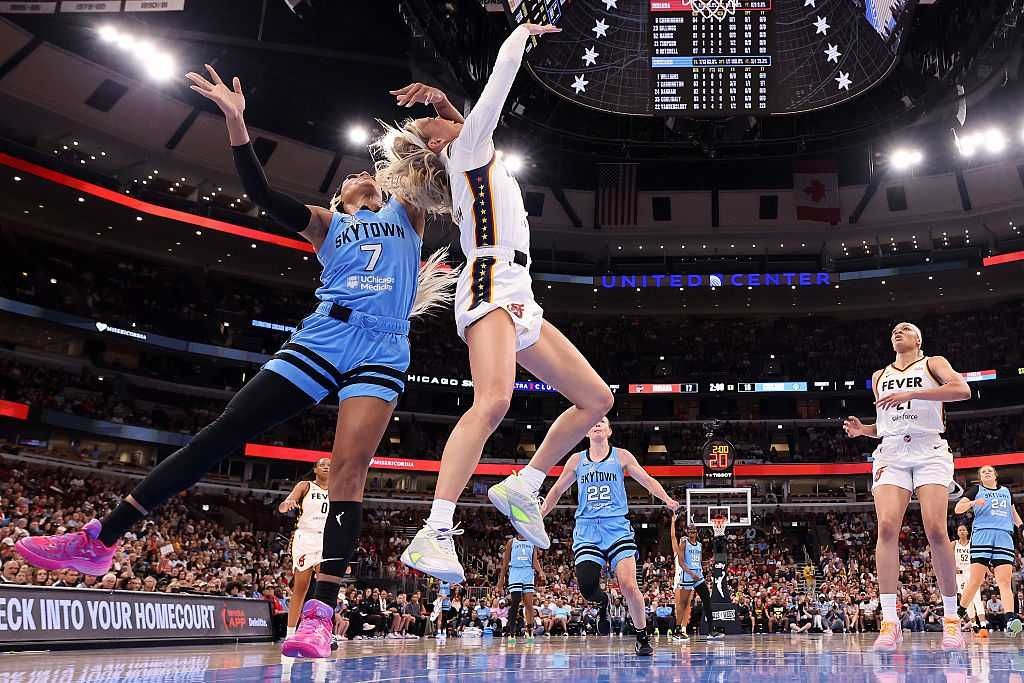
During Saturday’s game between the Chicago Sky and Indiana Fever, Sophie Cunningham broke toward the basket for a layup. Carrington pursued her from behind and struck Cunningham across the head and neck. Officials reviewed the play, upgraded it to a flagrant 2, and ejected Carrington.

This was WNBA drama. Then higher education entered the game.

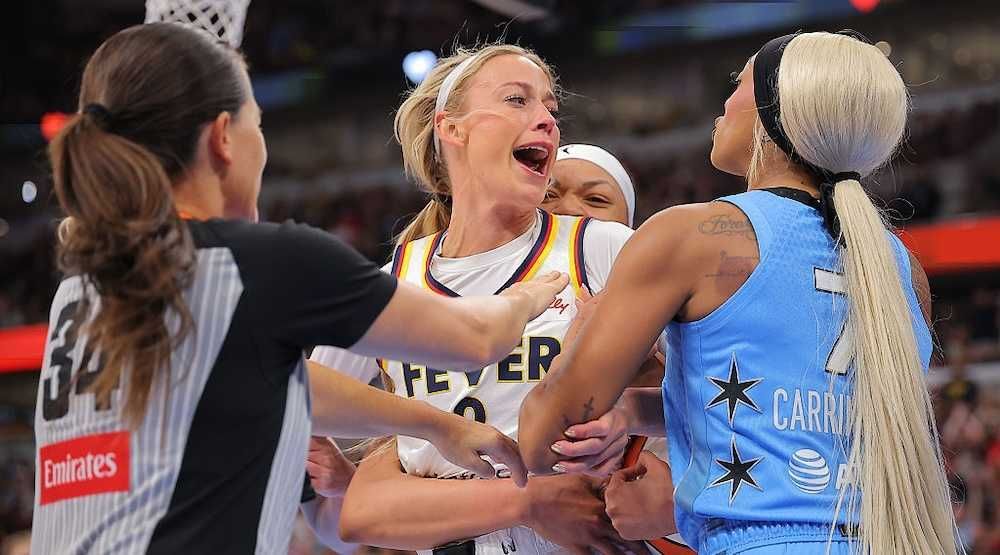
After her ejection, Carrington posted on Threads: “WHITE PRIVILEGE @indianafever.”

One has to admire the efficiency. Universities can spend an entire semester teaching students to interpret ordinary human interactions through racial categories. Carrington managed it before the game was over.

Predictably, people asked the obvious question: What precisely did Cunningham’s whiteness have to do with Carrington hitting her in the face?

Former NFL player Emmanuel Acho was among those who challenged Carrington’s invocation of white privilege. Carrington later said people had misunderstood her: She was not claiming the ejection itself was caused by white privilege, but pointing to what she regarded as a larger pattern of white players receiving different treatment. She defended her understanding of the subject by citing her education, including Stanford.

And there, buried beneath the WNBA drama, was the genuinely interesting story.

Carrington herself appealed to her education as authority for the framework she was using. That does not prove some Stanford professor taught her how to explain this particular foul. It does show how natural it has become for educated Americans to reach for concepts such as “white privilege” when interpreting conflict and punishment.

RELATED: Magical thinking just made the WNBA Draft
Melissa Tamez/Icon Sportswire/Getty Images

America’s universities have spent decades teaching students to interpret institutions and human behavior through racial categories. “White privilege” did not appear spontaneously in professional sports. It has an intellectual pedigree. Students encounter frameworks in which racial identity becomes a morally significant category through which achievements, punishments, disagreements, and disparities are interpreted.

Carrington apparently regards her education as establishing her authority on the subject. Fine. Then taxpayers and parents should pay attention to what that education teaches people to see.

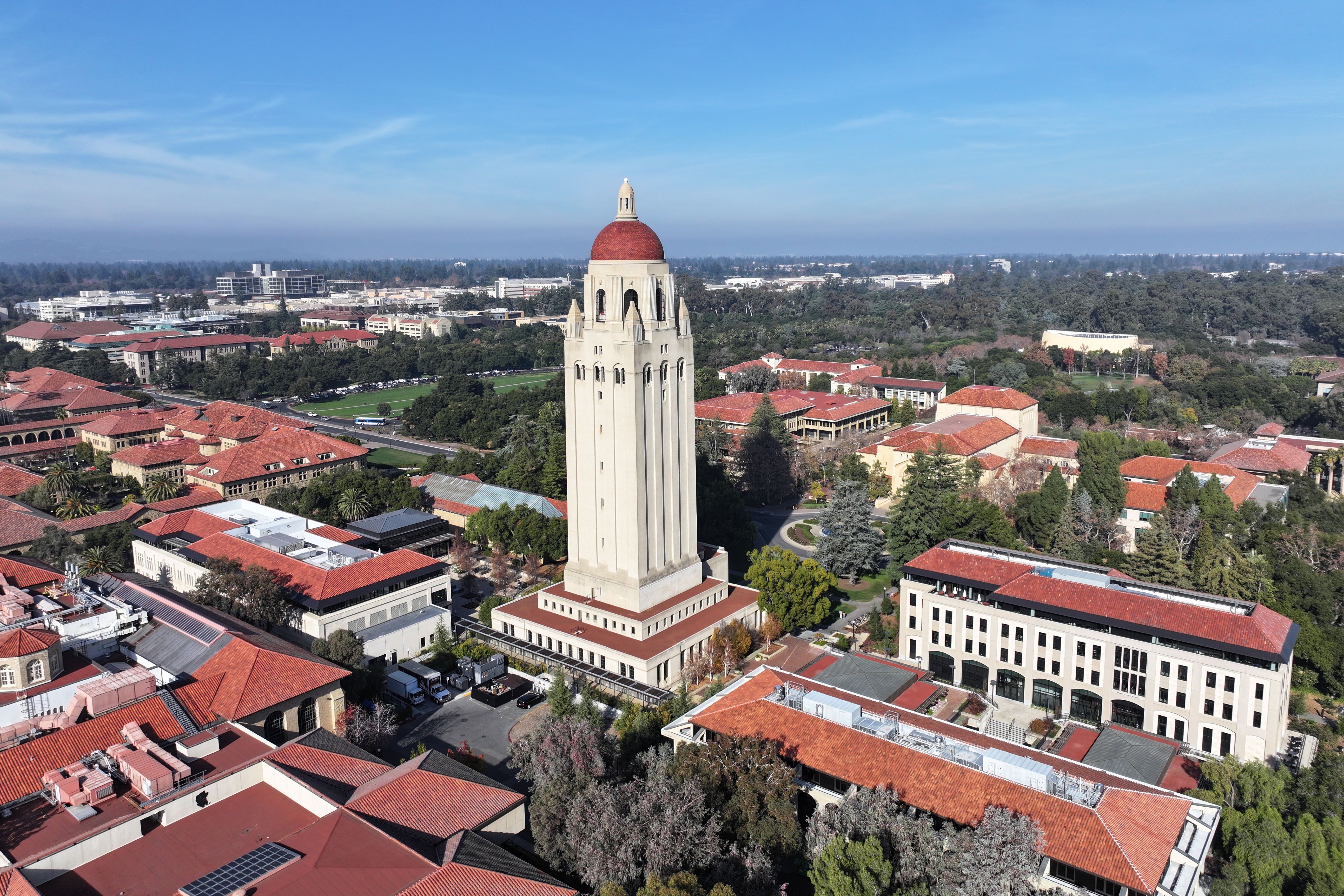
Stanford is private, of course, but like many American universities, it receives substantial federal funding. Universities receiving federal money are subject to federal antidiscrimination law. That does not mean professors cannot discuss controversial theories of race. They obviously can. The serious question comes when theories move from subjects to be examined into institutional doctrines that classify people morally by race.

Imagine reversing the language. Imagine a university program teaching students to interpret the behavior of black classmates through a theory of “black privilege,” complete with generalizations about what black people characteristically possess, how they characteristically think, and what judgments should attach to them because of their racial identity.

Would anyone seriously maintain that race had nothing to do with it?

The Carrington episode also illustrates something universities rarely advertise about these theories: They can be wonderfully useful for avoiding personal responsibility.

In the classical university, education aimed at forming a good soul: one capable of wisdom, ordered toward what is good, and disciplined against vices such as hatred, envy, and bitterness. This did not mean the good person escaped persecution or injustice. It meant that injustice did not excuse becoming unjust in return. A good soul fears God, not men — or women.

Today’s university is different. It teaches students to locate wrongdoing in systems, structures, identities, and power. Once in a while those explanations are relevant. But they can also become a vocabulary for explaining away one’s own choices. For the philosophy students reading this, the contrast is Socrates versus Thrasymachus: seek the good, or reduce everything to power.

The old-fashioned response to committing a flagrant foul was fairly straightforward: “I went too far.”

The new response requires considerably more vocabulary.

One can discuss systems, privilege, disparities, power structures, historical patterns, and institutional inequities until the original question — “Why did you hit her in the face?” — disappears beneath a small graduate seminar.

That is one of the most corrosive temptations of identity ideology. It can supply an external explanation for almost every unfavorable consequence. If I succeed, I overcame oppression. If you succeed, you benefited from privilege. If I am punished, we investigate the system. If you are punished, justice has finally arrived.

Personal responsibility becomes strangely difficult to locate.

Carrington has also defended her aggressive play on the grounds that she will do everything she can to prevent an opponent from making a layup. Fair enough — except that this rather misses the point of organized sports.

Basketball is not defined as “do everything you can to stop the other person.” It has rules.

That’s what distinguishes basketball from rugby or a parking-lot fight.
RELATED: ‘She didn’t wait until it was easy’: Victim of brutal injury from male athlete praises Sophie Cunningham

Michael Reaves/Getty Images

You may contest the shot. You may block the ball. You may position yourself defensively. You may even commit an ordinary foul to force free throws. What you may not do is simply employ whatever technique seems most likely to prevent the basket.

Otherwise, why stop with a cross-face? Tackle her. Bite her. Kick her. Put her in a rear-naked choke.

Although, given recent WNBA highlights, perhaps I should stop giving anyone ideas.

The rules are not an obstacle to the game. The rules constitute the game. And that is precisely the moral lesson obscured by the ideology Carrington invoked.

Civil society works the same way. We do not get to suspend ordinary standards of conduct because we believe ourselves to be fighting injustice. We do not get to judge people by their skin color because an elaborate theory tells us doing so is enlightened. Anti-racism becomes corrupting when it licenses hatred, envy, or racial blame in the name of correcting hatred, envy, and racial injustice.

Carrington’s foul lasted only a moment.

Her explanation deserves more attention because it inadvertently reminded Americans that when racial ideology shows up on the basketball court, it did not necessarily begin there.

Someone taught the framework. Quite possibly at a university. And taxpayers help support the institutions where it flourishes.

‘We killed them a second time’: Former pro-Palestine activist tells Glenn Beck what caused her to flee the movement


Taryn Thomas was a dedicated Black Lives Matter and pro-Palestine activist in high school and later at Stanford University. But after years of faithful activism, the narrative she once fully embraced began to unravel. Ideological inconsistencies and a visit to an exhibit honoring the Nova Music Festival victims eventually led her to renounce the BLM-Palestine allegiance and begin a new journey as an outspoken critic.

Taryn joined Glenn Beck on a recent episode of “The Glenn Beck Program” to share her journey, the October 7 attacks’ impact, and how the pro-Palestine movement at Stanford evolved into something that could only be described as “anti-Israel and anti-American.”

Taryn explains that at 16-years-old, she was conditioned by BLM leadership to believe that “for [black people] to be free, Palestine has to be free.”

By the time she reached college, she was prepared to lead the coalition. Taryn helped organize and mobilize student protests and the early encampments that sprang up on Stanford’s campus right after the October 7, 2023, attacks on Israel.

“By October 20, Stanford already put up its encampment, ‘Sit-In to Stop the Genocide.’ This is before the families had even finished identifying its dead. This is a week before a single [Israeli] soldier had even crossed into Gaza,” she tells Glenn.

The group’s rapid labeling of the conflict as a “genocide” and the immediate ostracism of anyone who mourned the Israeli lives lost made Taryn wary.

“I felt like I wanted a two-state solution, but ... I never wanted to talk about it with anyone because everyone was anti-Zionist, and it felt that ... the safest position was the most radical one,” she says.

In June 2024, one of the Stanford protests got so out of hand, Taryn started to seriously question her membership.

“They broke into the Stanford University’s president’s office and caused $700,000 in damages, 12 students received felonies, and they spray-painted disgusting things, such as ‘death to Israel,’ ‘death to America,’ ‘kill cops,’ ‘pigs taste best when dead,’” she recounts.

“At some point, our pro-Palestine movement became more of an anti-Israel, anti-American one. And I no longer could recognize what we were doing anymore.”

Shortly after distancing herself from the organization, Taryn was invited to see the Nova Music Festival exhibit.

“I thought I would find Zionist propaganda and Zionist lies, and I wanted to reaffirm my pro-Palestine position more than anything,” she admits.

What she found, however, was the exact opposite.

“I found instead, you know, half-written ‘I love yous’ and last messages sent to parents and loved ones,” she reflects.

“These are kids my age going to a music festival that I would have went to, and it was just not political. Nova Music Festival was not a political thing, and yet we had compressed them and flattened them into this political narrative, and in doing so we killed them a second time,” she confesses.

At the exhibit, Taryn also got to experience the sick celebrations of Hamas soldiers.

“One of the audio recordings that we had heard was a terrorist calling his dad saying that he had killed 10 Jews with his own bare hands and celebrating. And I thought I was going to hear horror, and instead the dad congratulated his son,” she tells Glenn.

“This was who we were calling our martyrs. ... I always called myself an anti-Zionist but not anti-Semitic, and that completely deconstructed that,” she adds.

Taryn notes that seeing the “ordinary” faces and hearing the life stories of the Nova Music Festival victims made her realize she was rooting not against evil oppressors but against everyday people like herself.

“That could have been your kids; that could have been my friends,” she laments.

Her heart changed, Taryn returned to Stanford “genuinely scared” to share what she had learned. For a while she kept her new beliefs to herself, but once she traveled to Israel and saw what life was like for the people, she knew her silence had to end.

“It made me realize I need to start speaking up about this,” she says.

To hear more of Taryn’s story, watch the video above.

Want more from Glenn Beck?

To enjoy more of Glenn’s masterful storytelling, thought-provoking analysis, and uncanny ability to make sense of the chaos, subscribe to BlazeTV — the largest multi-platform network of voices who love America, defend the Constitution, and live the American dream.

Stanford Students Award Drag Group Five Times As Much Funding As Veterans Association

Stanford University is awarding five times as much money to a campus drag troupe as to an undergraduate veterans association after students overwhelmingly approved the grants in a campus-wide vote.

The post Stanford Students Award Drag Group Five Times As Much Funding As Veterans Association appeared first on .

Yale Law School Loses Top Spot in US News Rankings After Scandals Tarnish Ivy League School

Yale Law School is no longer number one. Four years after a bevy of free speech scandals, several revealed in the pages of the Washington Free Beacon, shook the Ivy League school, Yale on Tuesday lost its spot atop the U.S. News & World Report law school rankings, which it had occupied for more than 35 years. Stanford is now the top law school, with Yale and the University of Chicago tied for second place. Harvard Law School, meanwhile, ranks number six.

The post Yale Law School Loses Top Spot in US News Rankings After Scandals Tarnish Ivy League School appeared first on .

‘Death to All Collaborators’: SJP Echoes Hamas in Call To Avenge Gazan Propagandist’s Death

National Students for Justice in Palestine (SJP), the umbrella organization for its notorious anti-Israel campus chapters, echoed Hamas in calling for the "death to all collaborators" with Israel after a Gaza-based propagandist aligned with the terror group was killed.

The post ‘Death to All Collaborators’: SJP Echoes Hamas in Call To Avenge Gazan Propagandist’s Death appeared first on .

'RALLY, RAGE, & RESIST': Pro-Hamas Student Groups Plan Nationwide Protests on Oct. 7 Anniversary

Anti-Israel student groups have started this semester with a whimper, keeping low profiles without major protests or unrest. That could change Tuesday as campus radicals plan to mark Oct. 7's second anniversary with demonstrations planned across the country. Should those demonstrations turn destructive, the response will provide a window into just how much the Trump administration's crackdown on campus anti-Semitism has changed the behavior of college administrators.

The post 'RALLY, RAGE, & RESIST': Pro-Hamas Student Groups Plan Nationwide Protests on Oct. 7 Anniversary appeared first on .

Republican senator accuses Stanford of punishing student who refused to fund pro-abortion, pro-trans union


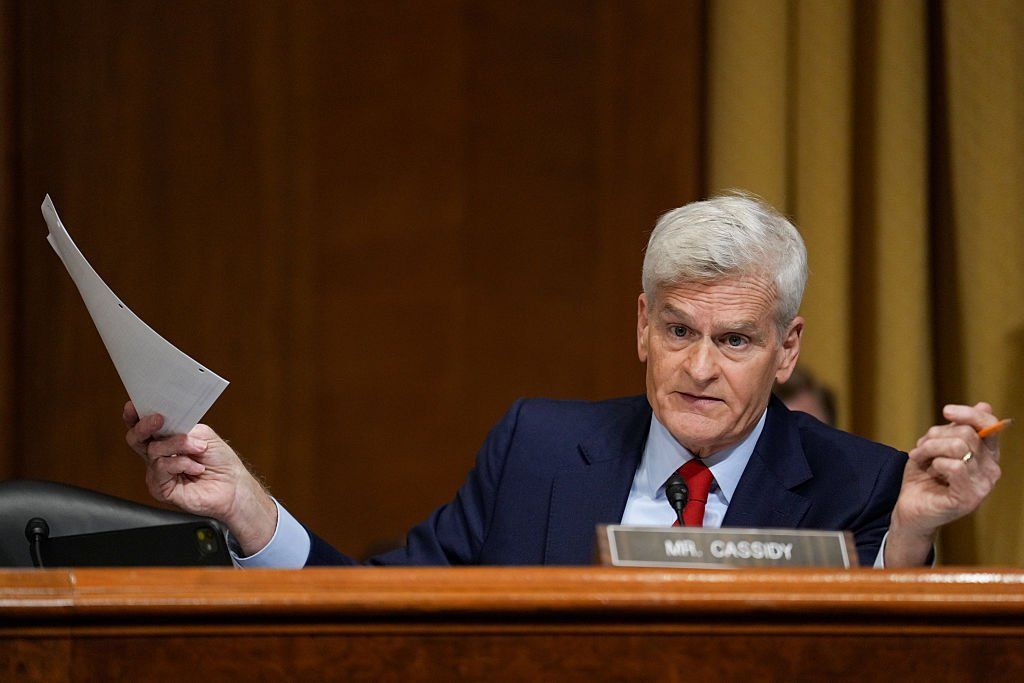
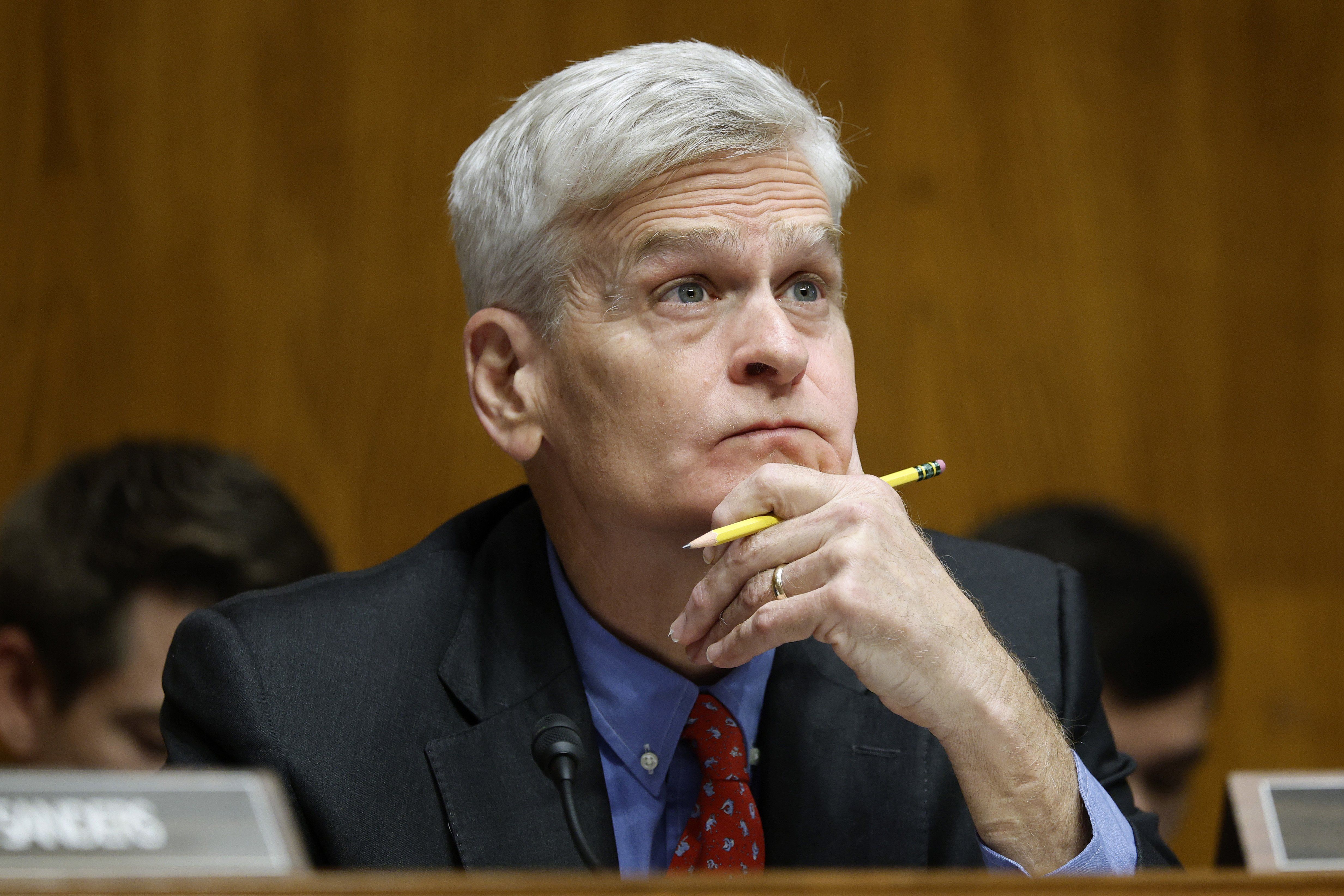
Republican Sen. Bill Cassidy of Louisiana is pushing back on Stanford University, claiming that it has punished students who don't conform to the institution's ideology.

In a letter obtained by Blaze News, Cassidy called out Stanford for allegedly threatening to fire a graduate student who refused to pay dues to a union that advocates values contrary to his own.

'Student workers should not be compelled.'

The union, known as the Stanford Graduate Workers Union, sends two-thirds of its dues to the United Electrical, Radio and Machine Workers of America, which supports abortion and taxpayer-funded gender-transition procedures. The student refused to pay the dues, citing his conflicting religious beliefs, which allegedly resulted in the threat to fire the student.

"This firing would bar the student from obtaining a degree for no other reason than his objection to being a member of a union that supports political positions violating his sincerely held religious beliefs," Cassidy said in the letter.

RELATED: 'Hey, fascist! Catch!' Leftist group apparently recruiting college students with slogan tied to Kirk murder

Photo by Kirby Lee/Getty Images

Cassidy described the "chilling effect" that discourages students with unorthodox, and often more conservative or traditional, views to self-censor.

"Forcing student workers to fund such activities has a chilling effect on speech and, presumably, would discourage students with certain religious views from applying to or attending Stanford University," Cassidy said in the letter.

RELATED: Congress takes aim at billionaires bankrolling left-wing 'hate campaigns' following Kirk assassination

Kayla Bartkowski/Bloomberg via Getty Images

"Student workers should not be compelled to spend their hard-earned dollars funding organizations that use those same funds to advance causes that violate deeply held religious beliefs," Cassidy added.

Stanford University confirmed to Blaze News that it had received Cassidy's letter and that it will "look forward to reviewing it and discussing it with his office." The university did not comment any further.

Editor's note: This story has been edited after publication to include a statement from Stanford.

Like Blaze News? Bypass the censors, sign up for our newsletters, and get stories like this direct to your inbox. Sign up here!

Stanford Lab Director Launched Bogus Sexual Harassment Investigation Into Israeli Chemist, Prompting Him To Leave the School: Lawsuit

A Stanford University lab director created a fake sexual harassment investigation as part of a campaign of "acute antisemitism and anti-Israel bias" against an Israeli chemist, according to a federal lawsuit filed on Thursday.

The post Stanford Lab Director Launched Bogus Sexual Harassment Investigation Into Israeli Chemist, Prompting Him To Leave the School: Lawsuit appeared first on .