This women’s sports ruling is a civics lesson America needed
For years, Americans have treated the Supreme Court like the nation’s principal.
Every cultural dispute eventually finds its way to Washington, where nine unelected justices are expected to settle questions that neighbors, legislators, parents, and communities no longer seem willing — or able — to resolve themselves.
A free people cannot forever outsource self-government to nine justices in Washington. Sooner or later, our democracy requires citizens to do the hard work themselves.
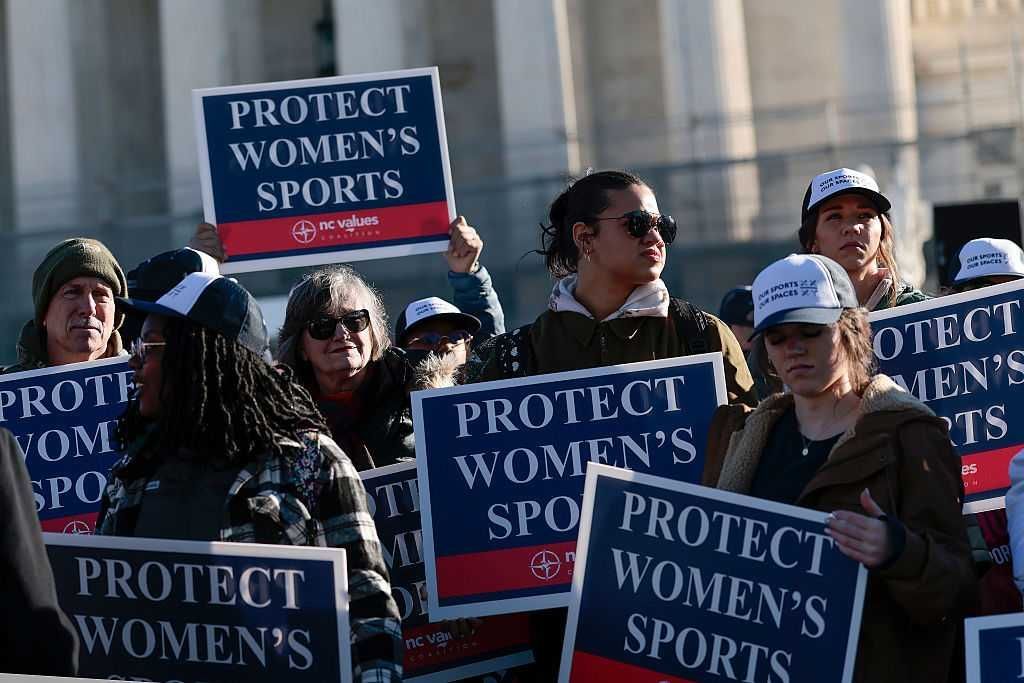
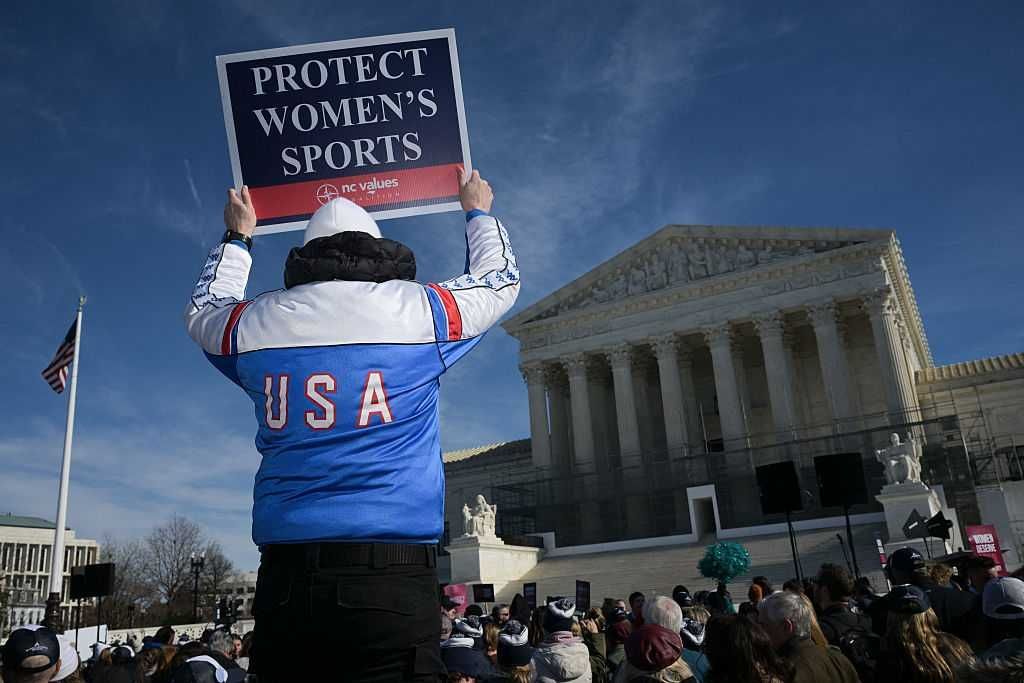
The Supreme Court’s recent 6-3 decision upholding state laws protecting women’s sports changed more than athletic policy. It reminded America how the Constitution was designed to work.
Much of the public conversation has focused on biological sex and transgender participation in women’s athletics. Those are important questions. But beneath the headlines lies something more significant: The court exercised judicial restraint. Instead of imposing one national standard, it returned much of the debate to the states.
That may prove to be the ruling’s greatest contribution.
Federalism is one of the Constitution’s forgotten masterpieces. The founders never intended America to function as one enormous county governed from Washington. They understood that a nation as large and diverse as ours could remain united because many decisions would be made closer to the people.
California may choose one approach. Texas another. Massachusetts another still.
Citizens remain free to debate, persuade, vote, and, if they wish, relocate to states whose laws better reflect their convictions. That’s the wisdom of our federal constitutional system.
Uniformity has never been America’s highest political virtue. Liberty has.
Federalism has costs. Different states will establish different athletic policies. National competitions may become more complicated. Families moving across state lines may encounter different eligibility rules. Critics are right that legal diversity can create confusion.
But confusion is not democracy’s greatest threat. Centralized power is.
RELATED: Women’s sports finally got a reality check
Freedom is rarely lost in one dramatic moment. It is surrendered gradually as authority migrates from local communities to distant institutions. The Constitution deliberately resists that impulse because power is safest when it remains close to the people who must live under it.
That principle deserves defending regardless of where one stands on this particular question.
The dissent by Justices Sonia Sotomayor, Elena Kagan, and Ketanji Brown Jackson rested on constitutional and statutory interpretation. Lawyers will debate those arguments for years.
Still, their votes raise an unavoidable question.
Three accomplished women reached a legal conclusion on an issue directly affecting women and girls that many female athletes believe weakens the very protections women’s sports were created to provide.
The issue carries added significance because Justice Jackson’s 2022 confirmation hearing became a defining cultural moment when she declined to define the word “woman,” explaining that she was “not a biologist.” Whether one agreed with her answer or not, the exchange symbolized a culture increasingly uncertain about concepts previous generations regarded as self-evident.
A civilization begins to lose confidence long before it loses arguments.
Women’s sports were never created to diminish men. They were created to protect women.
Biological differences in strength, speed, endurance, bone density, and muscle mass are measurable realities. Separate women’s competitions were established not because women are inferior but because fairness requires meaningful opportunities for women to compete, succeed, and excel.
That principle has served female athletes well for decades.
It also raises an obvious question: Must fairness for transgender athletes require sacrificing fairness for women?
Perhaps America has accepted a false choice.
Athletics already recognizes that fairness sometimes requires separate categories. We separate competitors by age because maturity matters. We separate them by weight because size matters. We celebrate the Paralympics because physical ability matters.
We separate men’s and women’s sports because biology matters.
RELATED: The Supreme Court finally confirmed what I knew all along
None of those distinctions is considered discrimination. They are considered fairness.
Rather than forcing one protected group into another’s category, America should consider developing meaningful transgender athletic divisions: state championships, collegiate scholarships, national tournaments, and professional opportunities designed specifically for transgender competitors.
That would expand opportunity without diminishing opportunity.
Surely innovation is better than endless litigation.
The court’s decision did not end America’s debate. The conversation now belongs where representative government intended it to be: in state legislatures, school boards, athletic associations, coaches’ offices, and living rooms across America.
As a Christian, I believe Scripture teaches that humanity is created male and female. I also recognize that many Americans do not share that conviction.
That’s precisely why federalism is vital. It allows citizens with profoundly different worldviews to govern themselves through democratic institutions while remaining united under one Constitution.
That arrangement requires something increasingly rare.
Not outrage. Not hashtags. Not judicial shortcuts. Persuasion.
Justice Clarence Thomas, writing separately, argued that biological sex is binary and immutable and warned that denying this reality tells “a lie to the public.” I agree with him.
But whether one agrees with every word or not, his opinion reflects a broader concern: Law cannot remain untethered from objective reality forever. Reality has a stubborn habit of refusing to yield to ideology.
The Supreme Court did not solve America’s cultural divisions. It reminded us whose responsibility they are.
That is the forgotten genius of federalism.
A free people cannot forever outsource self-government to nine justices in Washington. Sooner or later, our democracy requires citizens to do the hard work themselves.
Perhaps the future of women’s sports — and constitutional government itself — depends on whether we still remember how.
 'It's fitting that we are launching the West Virginia Freedom Caucus on the 250th anniversary [of our nation] to restore those same rights to West Virginia,' WVFC Chair Chris Anders told The Federalist.
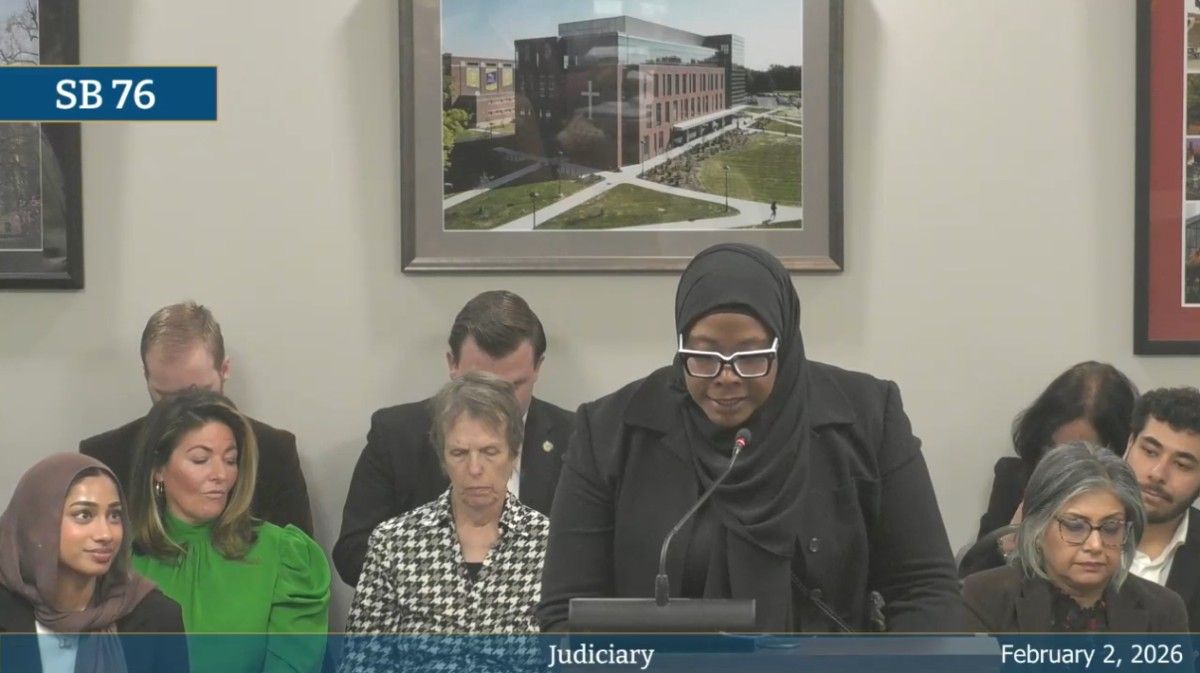 During a hearing Monday, self-described immigrants testified in favor of illegal immigration and called both the United States and basic law enforcement racist.
 Indiana Attorney General Todd Rokita seeks stronger immigration enforcement powers to help the Trump administration fix Biden's border crisis.
 Illinois’ Democrat-run legislature is fast-tracking a bill that critics say attempts to criminalize parents’ ability to homeschool their children in the Prairie State. This bill “continues that prison pipeline for homeschool parents,” said Will Estrada, senior counsel for the Home School Legal Defense Association. Dubbed “The Homeschool Act” (HB 2827), the measure in question seemingly […]
 Republican lawmakers in several states are making a concerted effort to keep foreign money out of ballot initiative campaigns.
 Several Republican state lawmakers are seeking to stymie Democrats' weaponization of the ballot initiative process.
 Republican legislators have introduced measures aimed at prohibiting ranked-choice voting in numerous states across the country.
 Florida Gov. Ron DeSantis is having to fight members of his own party to push through legislation assisting Trump's deportation operations.
 www.theblaze.com
 www.theblaze.com
 thefederalist.com
 www.theblaze.com