Make The Tennessee Valley Authority Useful Again (Here’s How)
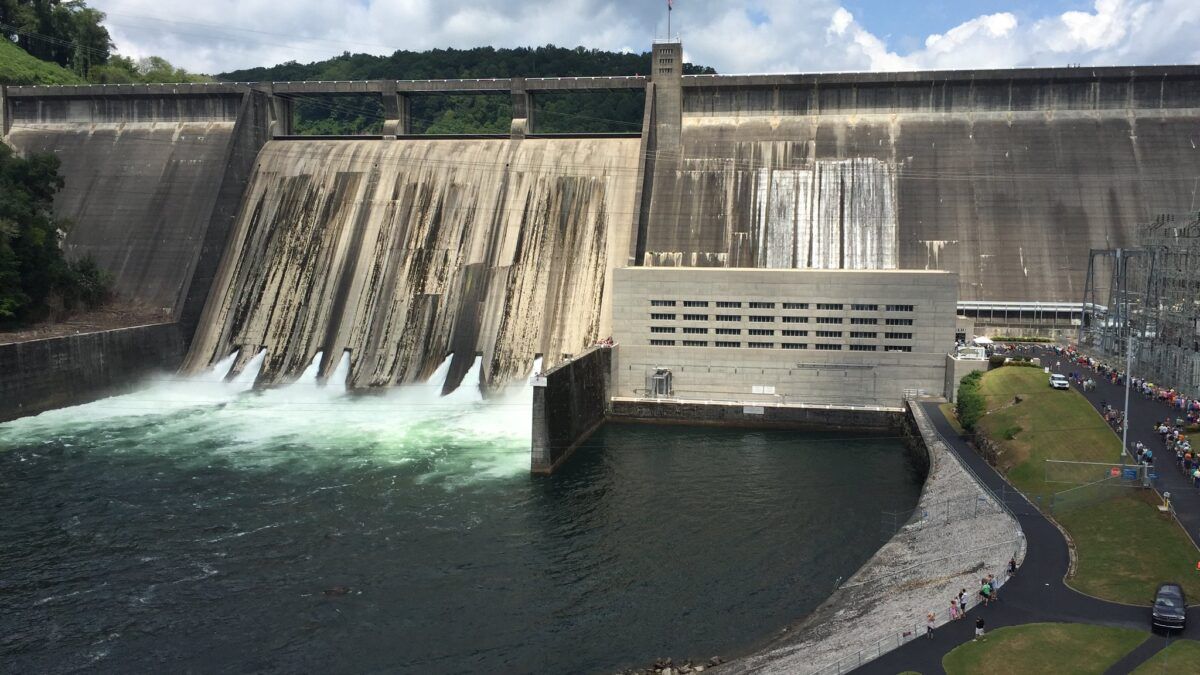 The sprawling power of TVA has inserted itself into the region’s politics and infrastructure like a tumor that’s too politically ingrained to be excised.
The federally owned Tennessee Valley Authority is the largest public utility in the country, providing electricity to Tennessee and six surrounding states. And because the president appoints its board, it’s also a political football.
Democrat administrations have stacked the TVA board with green energy zealots committed to phasing out carbon fuels in favor of wind and solar. Donald Trump has responded by firing directors who embraced that faux utopian agenda, along with those who allowed the executives to reward themselves with high seven-figure compensation packages while outsourcing jobs to noncitizens.
The blue-collar working class has become a key element in the Trump coalition. If Trump moves to privatize the TVA, it will feel like a betrayal to the very people who have had his back.
Now a new tempest is brewing: Should the TVA be privatized?
The TVA was established as a public corporation in 1933 to provide flood control, rural electrification, and economic development in the Tennessee River Valley, as well as the surrounding areas of Appalachia. For almost a century, it has delivered abundant, inexpensive, and reliable electricity.
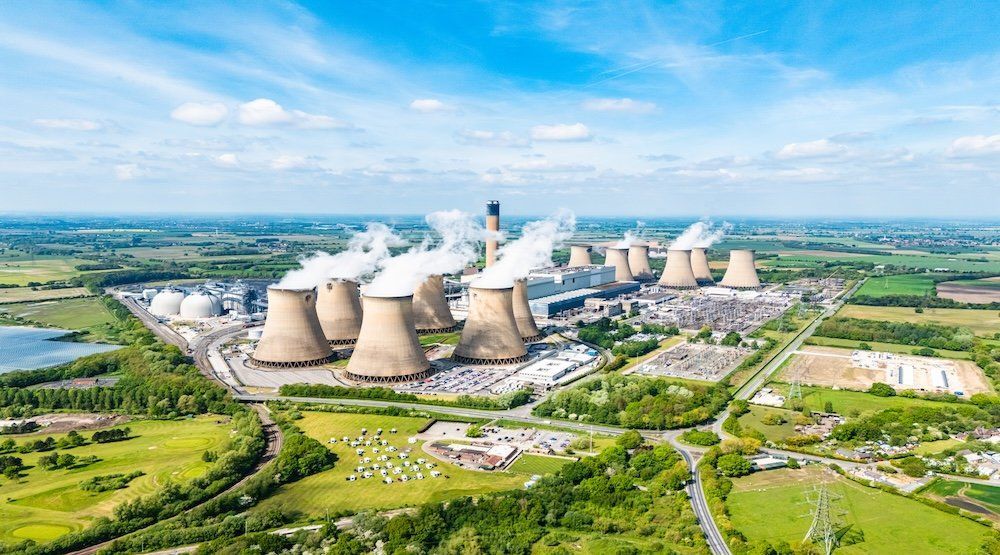
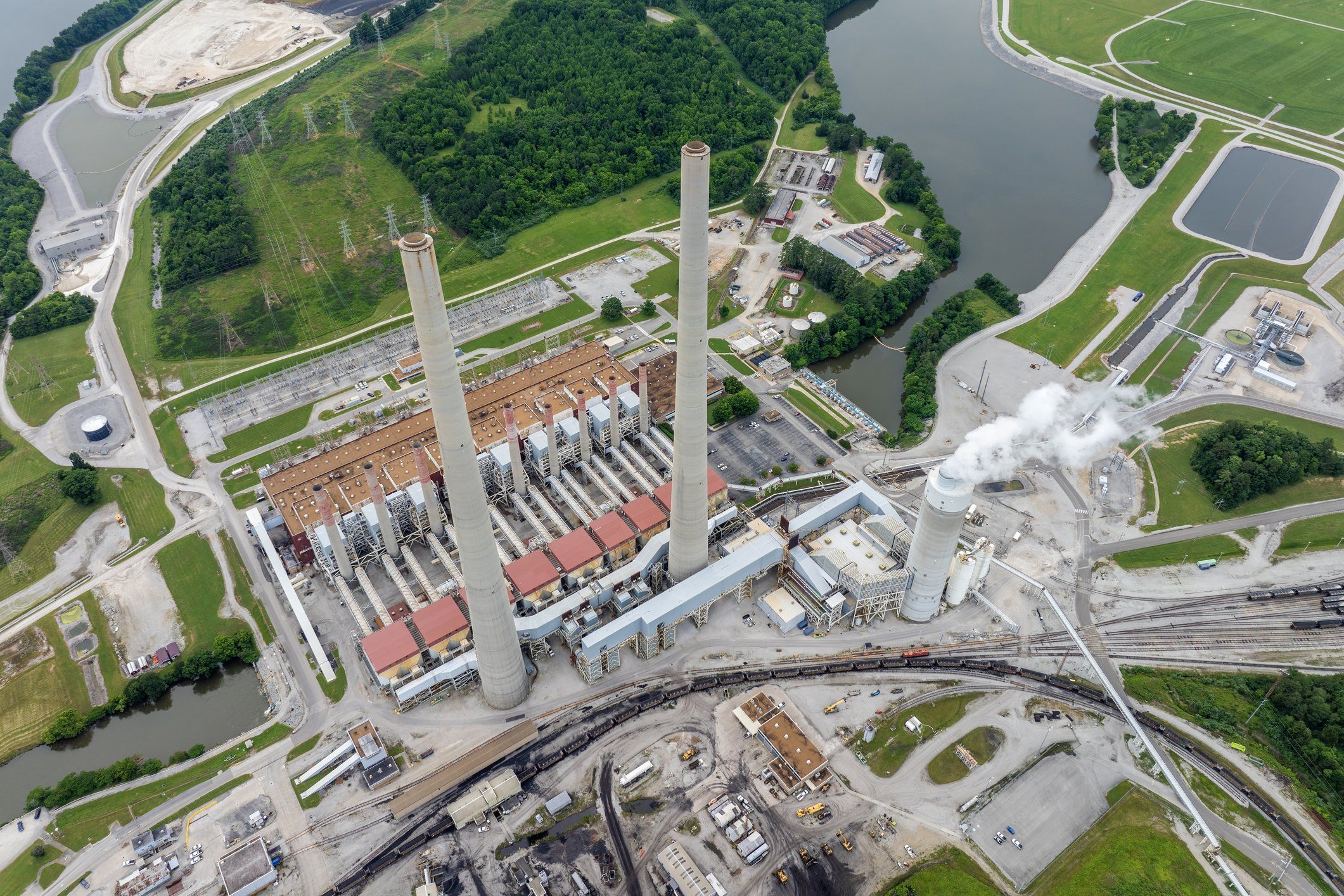
Most of its electricity comes from nuclear (42%) and natural gas (31%), while coal and hydroelectric account for about 23% combined.
Despite years of agitation from anti-carbon activists and Obama- and Biden-era appointees, the TVA’s power mix has remained overwhelmingly carbon-based — for one reason: It works.“Renewable” energy sources (primarily solar) only constitute about 4% of its total electricity production. And, as always, solar energy drops to zero at night.
The debate has focused on two extremes: Keep the TVA under federal ownership or privatize it. However, a third option offers a middle ground: Transfer ownership to the seven states that rely on it.
Moving ownership — and board appointments — to the seven primarily red states that rely on the TVA would ensure that green activists can’t destroy its ability to provide inexpensive, reliable electricity, while also maintaining the TVA’s status as a public utility.
The argument for keeping the TVA federally owned is that it has been very successful for a century now in providing electricity and flood control to much of Southern Appalachia. It also provides significant employment to the region.
Current corporate culture driven by private equity slashes employment to reduce labor expenses; relaxes quality and safety controls to meet budget-cutting goals; terminates the most experienced employees to eliminate their salaries; and outsources as many jobs as possible to non-Americans. Naturally, the fear of privatization is legitimate by those who rely on the TVA for electricity and employment.
Though the Trump administration hasn’t yet formally announced that it is considering privatization, many speculate that it is on the table. As the Atlantic reported recently:
Trump hasn’t spoken recently about privatizing the TVA. But in his first term, he proposed selling off the TVA’s power lines to a private buyer in 2018 and again in 2020. Now, he is positioned to stack the TVA’s board with new members. That, combined with his administration’s relentless push to shrink the federal government, has revived speculation about privatization — which many in Trump’s MAGA orbit have long argued should be the utility’s fate.
Most of the TVA’s 11,000-plus employees are skilled tradesmen and women who belong to unions. The International Brotherhood of Electrical Workers represents about 10,000 TVA employees. It has issued a pre-emptive warning to the Trump administration, stating:
The TVA is the primary reason the Deep South became the economic force it is today, and IBEW members have been there every step of the way. It’s an American success story that required skilled, union labor. We will fight tooth and nail attempts to turn it into a for-profit corporation whose only concern is ultra-rich shareholders.
I have had occasion throughout my career to work with companies that employ IBEW electricians, as well as companies that contract out for electrical work using the IBEW. These skilled tradesmen are overwhelmingly patriotic, America-first MAGA voters who detest the anti-carbon activists on the left. They also detest corporate America’s war on American labor.
The blue-collar working class has become a key element in the Trump coalition. If Trump moves to privatize the TVA, it will feel like a betrayal to the very people who have had his back.
Libertarian purists recoil at any level of government owning a utility. Yet privatizing the Tennessee Valley Authority as a regulated monopoly offers little difference from government ownership. Without a free-market competitor willing to build nuclear plants and hydroelectric dams, the result is the same.
Chattanooga’s Rep. Chuck Fleischmann (R), whose district includes the highest concentration of TVA employees, strongly opposes privatization. Knoxville Republican Rep. Tim Burchett, whose district houses TVA headquarters, is more open. He has said:
Any organization that pays their head $6 million a year plus bonus needs to be evaluated. For too long, the Tennessee Valley Authority has operated in the shadows with closed-door meetings and minimal transparency. I have sponsored, passed, and supported bills to fix these issues. I am a believer in capitalism and the free market. Any option that maximizes efficiency, incentivizes transparency, and keeps prices low for ratepayers should be explored.
Burchett has built a reputation fighting pork in Washington and is right to question the TVA’s waste and secrecy. But full-scale privatization isn’t the answer.
A better path would be to transfer ownership to the states. That compromise could deliver efficiency, accountability, and local control — while keeping the TVA safe from both federal meddling and Wall Street overreach.
RELATED: Tennessee Valley Authority gets a Trump-style reckoning
Well-intentioned defenders of federal ownership, from Fleischmann to the IBEW, assume that the TVA’s future will look like its past. It won’t. Democrats in Washington will never allow the TVA to remain a major provider of carbon-based energy. The most conservative region in America should not gamble its power supply on the whims of left-wing swamp creatures.
The mechanics of ownership among the seven states would require negotiation, but one model could grant Tennessee 40% ownership — reflecting its dominant use and production — with the other six states dividing the remaining 60%.
That structure would put accountability where it belongs: in the hands of state leaders answerable to the families and businesses who depend on the TVA. Local officials would bear political responsibility for keeping the lights on and the air conditioning running — not distant bureaucrats in D.C.
President Donald Trump has made the Tennessee Valley Authority a key front in his America First energy agenda. With the authority to appoint and remove TVA directors, Trump hasn’t hesitated to fire those who promote globalist “green” schemes that ignore the needs of the region’s residents.
This month, Trump ousted two Biden-appointed directors, including the board’s chairman. Their offense: trying to turn the TVA into a vehicle for the radical left’s anti-carbon agenda.
The future of reliable energy across the Tennessee Valley — and much of the South — still hangs in the balance.
Trump took similar action during his first term, firing several directors, including a previous chairman, after they approved outsourcing 146 American tech jobs to foreign workers on H-1B visas.
These firings are critical to ensuring that the Tennessee Valley Authority continues to produce abundant and reliable energy for the seven states it serves.
Last month, Sens. Marsha Blackburn (R-Tenn.) and Bill Hagerty (R-Tenn.) published a joint letter voicing their concerns about the agency’s distracted leadership. They stressed the need for the energy provider to expand nuclear projects, especially small modular reactors, which utilize existing fission technology on a smaller, more deployable scale than the massive projects of decades past.
As to the incapable leadership of the existing Tennessee Valley Authority board, the senators wrote:
As it stands now, TVA and its leadership can’t carry the weight of this moment. The presidentially appointed, Senate-confirmed TVA Board of Directors lacks the talent, experience, and gravitas to meet a challenge that clearly requires visionary industrial leaders. The group looks more like a collection of political operatives than visionary industrial leaders. The current TVA board focused on the diversity of its executives ahead of job creation for hungry workers in the region it is supposed to serve.
Shortly thereafter, Trump fired two of the agency’s six current directors.
Trump fired Michelle Moore on March 27, followed by TVA board Chairman Joe Ritch on April 1. Both were Biden-appointed green energy enthusiasts bent on turning the Tennessee Valley Authority into a utopian solar-and-battery experiment.
Had they succeeded, the consequences for the region’s energy reliability would have been disastrous.
Moore founded and runs Groundswell, a “sustainable energy” company whose mission statement boasts a “people-centric approach to developing community solar projects.” I’m not sure what that means — but I know I’d rather depend on coal, natural gas, or nuclear power than on some feel-good solar scheme when temperatures plunge below freezing.
Ritch, originally appointed to the TVA board by President Obama, returned under Biden’s nomination to serve as chairman. In his Senate confirmation statement, Ritch promoted transitioning the agency away from its current mix of coal, nuclear, hydro, and gas toward unreliable green alternatives — convinced, somehow, that it would help the environment and boost the economy.
This utopian obsession with “sustainable energy” isn’t just naïve — it’s deadly. In December 2023, a hard freeze struck the Tennessee Valley Authority’s service area. The cold snap wasn’t historically extreme, but the consequences were.
For the first time in TVA history, the agency failed to produce enough electricity to meet demand. Rolling blackouts swept the region. Why? Because the TVA lacked enough baseline reliable energy. On those near-zero nights, solar energy produced exactly zero kilowatts.
That’s the future TVA customers would face under the fantasy energy plans pushed by climate zealots like Michelle Moore and Joe Ritch: blackouts in the dead of winter and no backup.
TVA leadership has failed in other ways too — most notably by outsourcing American jobs. In 2020, CEO Jeff Lyash tried to replace over 100 U.S. tech workers with foreign nationals on H-1B visas. While gutting working-class jobs, Lyash collected nearly $8 million a year, making him the highest-paid federal employee. One longtime worker said employees were expected to train their foreign replacements before being shown the door.
Trump responded immediately. While he couldn’t fire Lyash, he could — and did — remove board members who refused to act. When the board wouldn’t fire Lyash or cut his pay, Trump fired them instead.
Soon after, Lyash ended the outsourcing plan. Following Trump’s 2024 election win, Lyash saw the writing on the wall and resigned.
The Tennessee Valley Authority remains vital to the economic strength of the upper South. Trump’s removal of Obama-Biden-era appointees has played a key role in preserving the agency’s reliability and focus. But the threat isn’t gone.
The TVA’s service states — especially Tennessee — face a serious vulnerability: Any future Democrat president could again install green energy ideologues, fire current directors, and impose Green New Deal policies. The result? An energy-starved Tennessee Valley plagued by blackouts and foolish political experiments.
Trump’s stand against the radicalization of TVA energy policy deserves recognition. His pushback has protected millions of residents from rolling blackouts and economic self-sabotage. But the fight isn’t finished.
The future of reliable energy across the Tennessee Valley — and much of the South — still hangs in the balance. The region cannot afford to treat Trump’s changes as a lasting victory.
 thefederalist.com
 www.theblaze.com