BlackRock and friends may soon control your digital wallet


America is on the edge of a financial cliff, and Washington’s so-called “solution” is yet another clever ploy that could further centralize power and lead to a reduction in freedom.

The latest scheme is a bipartisan bill dubbed the Genius Act. The U.S. Senate passed the bill on Tuesday by a vote of 68-30. The bill now moves on to the House, where its prospects are less clear.

It’s time for the right to sound the alarm and reject the Genius Act — at least until it offers protections for individual liberty.

Supporters of the law claim it will modernize digital finance by issuing new regulations for stablecoins, shoring up assets currently used by millions of people worldwide.

But the legislation comes with serious threats to liberty as well. It could ultimately become a backdoor way to create a digital dollar, one that offers minimal privacy protections and is easily controlled by massive institutions unaccountable to voters.

What is the Genius Act?

Officially named the “Guiding and Establishing National Innovation for U.S. Stablecoins Act,” the Genius Act aims to bring order and credibility to the booming stablecoin market.

Stablecoins are cryptocurrencies tied to supposedly “stable” assets like the U.S. dollar. USD Coin and Tether — two of the most widely used — circulate more than $200 billion combined.

The bill creates a regulatory framework for stablecoin issuers, allowing them to operate under either state or federal supervision. Lawmakers believe this approach will boost credibility with consumers and financial institutions.

The legislation also forces issuers to disclose their reserve assets, submit to public audits, and comply with the Bank Secrecy Act. That law requires financial entities to implement know-your-customer protocols and anti-money-laundering measures — rules that many stablecoin issuers currently avoid.

Most importantly, the Genius Act would force issuers to back their coins with liquid assets, such as U.S. dollars and Treasury securities. For example, for every USD Coin distributed, the issuer would need to maintain $1 in reserves or Treasury bills of equivalent value, ensuring that users can always exchange their stablecoins for dollars.

The Genius Act has drawn broad bipartisan support on Capitol Hill. Lawmakers from both parties praise its regulatory ambitions. But behind the applause lie serious risks.

Programmable money vs. financial freedom

The bill lays the foundation for a programmable digital currency system — one that lacks basic protections for privacy and liberty.

By granting stablecoins federal recognition and placing them under strict oversight and reserve rules, the Genius Act effectively turns them into government-blessed digital dollars, even if the federal government doesn’t issue them directly.

That might sound like progress — if the bill actually protected consumers. But it doesn’t.

The legislation includes no safeguards to prevent stablecoin issuers from linking usage to social credit systems, such as ESG scores, or restricting legal but politically disfavored transactions. These programmable currencies could easily reflect the ideological preferences of their creators.

RELATED: A brutal wake-up call from America’s most powerful banker
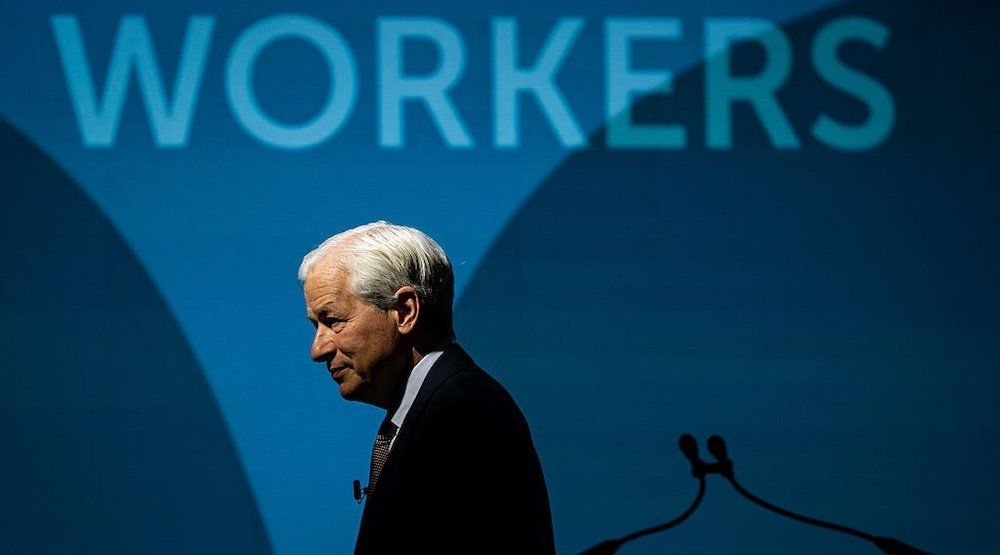
Photo by Al Drago/Bloomberg via Getty Images

Want to donate to a political cause that a stablecoin company opposes? Expect a digital roadblock. Want to buy red meat, a gas-powered car, or anything else that fails to meet an ESG benchmark? Your money might simply stop working.

That’s not science fiction. That’s the likely outcome if Congress fails to add robust consumer protections to the Genius Act.

A forced hand

No one needs to use stablecoins — at least not yet. The Genius Act doesn’t eliminate traditional dollars. For now, consumers still have alternatives. But that could change quickly.

Stablecoins regulated by the U.S. government offer clear advantages over traditional currency. They move instantly, cost little or nothing to send, and operate around the clock. Because they’re digital, they require no physical infrastructure to create or distribute.

In nearly every respect, government-regulated stablecoins outperform paper money. Once the U.S. government legitimizes them and guarantees their safety, adoption will surge.

As usage grows, demand for traditional dollars could shrink. The companies issuing stablecoins would gain enormous control over economic life. Financial institutions could even begin phasing out physical currency, leaving those who resist digital money with no practical alternative.

That’s why Congress must include strong protections for individual liberty in any bill that accelerates stablecoin adoption. Without those safeguards, Americans may one day wake up to find their economic freedom coded out of existence.

A boon for Treasurys

One of the primary reasons so many in Washington support the Genius Act is that it would increase demand for Treasury bills, which helps the federal government finance its massive debt.

The Genius Act would require stablecoin issuers to back their currencies with cash or U.S. Treasurys. Of the two options, Treasury bills often make more sense for the companies issuing stablecoins. Why? Because Treasury bills pay interest.

Washington is drowning in red ink. With over $36 trillion in national debt and counting, the government desperately needs someone to keep buying its IOUs. Stablecoins could offer a trillion-dollar solution. By 2028, the Treasury Department estimates that stablecoin issuers could hold up to $1 trillion in Treasurys, so long as legislation like the Genius Act becomes law.

The Genius Act isn’t primarily about innovation. It’s about bailing out a bankrupt government.

Who’s pulling the strings?

Even more troubling is who stands to benefit. Major players behind these stablecoins include BlackRock, Fidelity, and other financial giants with deep ties to the globalist ESG agenda and organizations like the World Economic Forum. These aren’t neutral actors. They are ideological enforcers with an appetite for control.

Are these the people we want managing the digital currency of the future?

Are these the institutions we trust to safeguard our freedoms?

It’s time for the right to sound the alarm and reject the Genius Act — at least until it offers protections for individual liberty. If we do not act now, we may soon find ourselves in a nation where every transaction is tracked, every purchase scrutinized, and every dollar you “own” is merely rented from a system that can revoke your access with the flick of a switch.
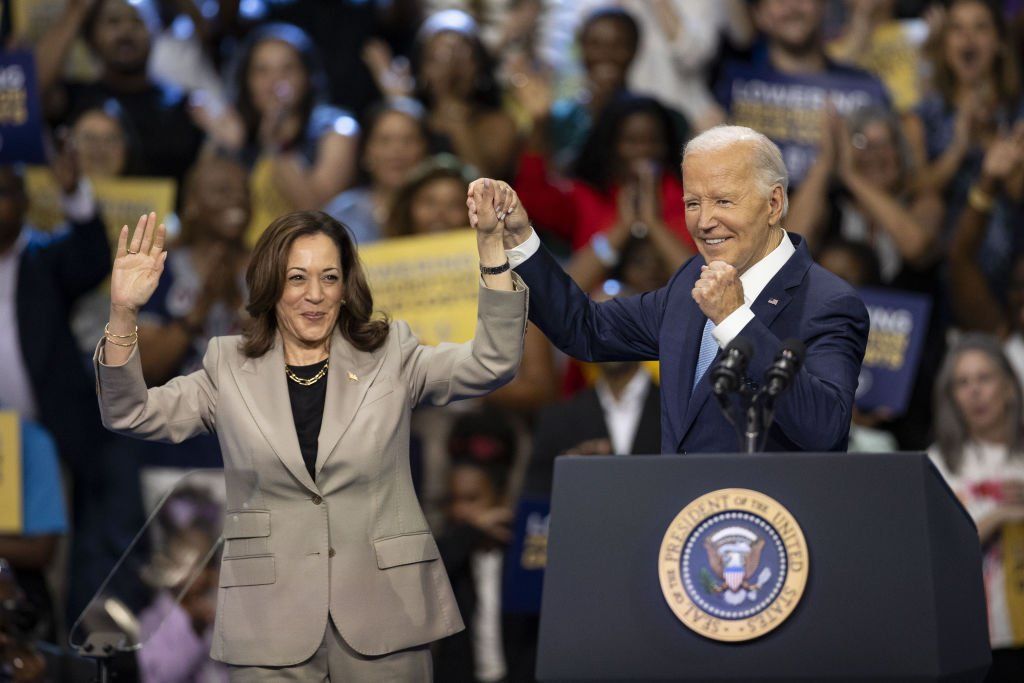

Internet helps Politico with its amnesia after it claims Vance is trying to 'tether' Biden to Harris


The liberal media has worked hard in recent weeks to help Democratic operatives rehabilitate Kamala Harris' public image. Essential to that effort has been her characterization as competent and capable — a task made all the more difficult by her track record as vice president and border czar over the past three years.

Establishmentarians' desperation to gloss over Harris' complicity in President Joe Biden's various failings and unpopular initiatives was crystallized in a Politico article this week, titled, "'Our corrupt leadership': Vance tries to tether Harris to Biden during Michigan rally."

Critics rushed to note that Vance doesn't have to do what Harris has already done — that there is a hyphen in "Biden-Harris administration" that both serves as a tether and cuts through the absurdity of Politico's framing.

All administration officials refer to the 'Biden-Harris administration' instead of the easier-to-say 'Biden administration.'

In fact, Politico has previously emphasized the existence of this hyphen.

Politico reported in early 2021 that:

For personnel announcements during the transition, officials were told to include quotes from both Biden and Harris. And all administration officials refer to the 'Biden-Harris administration' instead of the easier-to-say 'Biden administration.'

Various federal agencies followed suit, all making sure to tether Harris to Biden. Again, according to Politico, the "Education Department was referring to the 'Biden-Harris administration' on its website from Day 1, with the Treasury Department and the Office of Personnel Management following suit on Jan. 25."

Harris has effectively been tethered to Biden since 2020.

'Fast food industry tries to tie Ronald McDonald to McDonalds.'

Harris' previous presidential campaign was a complete failure — so much so, she didn't even make it to the first vote. The New York Times indicated ahead of the campaign's collapse that Harris "has proved to be an uneven campaigner who changes her message and tactics to little effect and has a staff torn into factions."

After August 2019, when she was briefly polling around 10%, she took a massive nosedive in the polls and never recovered. Shortly after a poll revealed that a majority of Democrats in her own state of California wanted her to call it quits, she did so, bailing out in December 2019.

Biden apparently took pity on Harris, telling reporters, "I have mixed emotions about [her exit]," and calling her a "first-rate candidate." Ultimately, Biden permitted Harris to tether herself to him and together they proceeded to take power.

In the years since, Harris has routinely cosigned Biden's policy initiatives and decisions, including the disastrous withdrawal from Afghanistan, which Harris has boasted signing off on.

Despite Harris' history of working hand in glove with Biden, Politico reported Tuesday, "Former President Donald Trump's running mate tried to tie Harris to the Biden administration's policies — saying at one point that 'Kamala Harris has been calling the shots' — while also warning of China's emergence as an economic superpower that's taking jobs away from the U.S."

Politico's controversial suggestion that Vance is unfairly insinuating a link between Harris and Biden has been met with widespread ridicule as well as a community note on X.

Vance responded to the article on X, tweeting, "The thing is: she's Biden's Vice President."

Former Wisconsin Gov. Scott Walker (R) posted an image of the Biden-Harris 2024 logo, noting it was "their campaign logo up and until a few weeks ago."

Blaze News social media specialist Ben McDonald quipped, "Fast food industry tries to tie Ronald McDonald to McDonalds."

"I knew the corporate press was shameless but I didn't realize that they were this stupid," wrote anarcho-capitalist author Michael Malice.

Amid the backlash, Politico stealthily changed the title of its article without an editor's note admitting the alteration. At the time of publication, the article was titled, "Vance warns of China’s influence during Michigan rally."

Like Blaze News? Bypass the censors, sign up for our newsletters, and get stories like this direct to your inbox. Sign up here!

Man out on low bail after allegedly raping young stepdaughter has now murdered her, killed himself: Report


A Massachusetts man out on low bail after allegedly repeatedly raping his young stepdaughter has now apparently killed her and himself, police say.

On September 7, 2021, a young girl called police to report that her stepfather, Juliano Santana, had raped her on "multiple occasions," said a press release from Middlesex District Attorney Marian Ryan, perhaps over the course of several years. The most recent assault had reportedly occurred just one month earlier.

'Why was he out?' one outraged resident demanded to know. 'Why was he out?'

The victim told investigators that Santana had warned her "not to be scared and not to tell her mom." Investigators also examined a diary in which the victim reportedly documented the attacks and shared them with her sister.

The same day that the girl lodged the accusations, officers arrested Santana, and prosecutors charged him with six counts of aggravated rape of a child. Despite the quick movement from law enforcement and the heinous accusations against Santana, the district court in Malden, Massachusetts, about five miles north of Boston, issued him bail of just $30,000, which Santana quickly paid.

As conditions of his release, the court ordered Santana to wear an ankle monitor and to have no contact with his stepdaughter. He was also forbidden to have unsupervised contact with anyone under age 18.

The girl's mother, Olena Wilson, immediately secured a restraining order against Santana on behalf of her daughter and herself. "I also fear for my safety because I [realized] that I do not know this man and based on this situation I do not know what he is capable of," Wilson wrote at the time.

Santana was originally scheduled to stand trial about a year later, but the case was issued one delay after another. Finally, it had been rescheduled for July 29, 2024. Unfortunately, neither the defendant nor the victim lived to see it.

Around 4 p.m. last Thursday, police in Acton, Massachusetts, received an alarming report that Santana, 49, had kidnapped his stepdaughter as she was walking home from school. Because of the ankle tether, his probation officer soon pinpointed Santana's location in the parking lot outside his condo.

When cops arrived at the scene, they quickly located Santana's vehicle. Inside, they found Santana and the girl both dead from apparent gunshot wounds to the head. The girl was just 16 years old at the time of her death, which means she was 12 or 13 the last time Santana allegedly raped her.

"Why was he out?" one outraged resident demanded to know. "Why was he out?"

The Middlesex District Attorney’s Office, members of the Massachusetts State Police Detective Unit, and Acton Police are continuing to investigate, the DA's press release said.

Like Blaze News? Bypass the censors, sign up for our newsletters, and get stories like this direct to your inbox. Sign up here!