BARGAIN BUYER BEWARE: That cheap car could cost you thousands more


That bargain price on a car may be nothing more than bait.

You see the ad, compare the numbers, and make the trip to the dealership. Then come the mandatory packages, dealer fees, and discounts you may never qualify for. Suddenly, the price that got you through the door is nowhere near the price you're expected to pay.

If you have financing arranged, say so before visiting. Confirm whether the quoted price changes if you use your own lender.

In one recent case, the Federal Trade Commission alleges the difference averaged more than $3,350, with buyers paying above the advertised price in more than 92% of the transactions examined.

For someone who has spent weeks comparing vehicles and working out a budget, that can wreck the deal. By the time the additional charges appear, the dealership already has your attention — and several hours of your day.

Thousands more than advertised

On October 8, the FTC announced a proposed settlement with Greenway Auto Group over allegedly deceptive advertising. The agency's complaint describes mandatory administrative, dealer, delivery, and processing fees, along with packages and advertised discounts unavailable to some buyers.

The FTC warned Greenway about its pricing practices in March. According to the complaint, the company responded by adding false assurances of price transparency to its websites while continuing to advertise vehicles for thousands less than their actual prices.

Under the proposed settlement, Greenway agreed to prominently advertise the actual price consumers must pay, excluding required government charges. The proposed order also prohibits misrepresentations about whether fees, products, or particular financing arrangements are required. The allegations are not findings from a contested trial.

Greenway isn't the only dealership group facing enforcement. In April, the FTC and Maryland attorney general announced a settlement with Lindsay Automotive Group that included a $3.1 million civil penalty and refunds for eligible consumers. The agencies said more than $75 million in charges could qualify for redress; that does not mean that amount has already been returned.

Their complaint alleged that buyers encountered unavailable rebates, were told they needed dealership financing to obtain advertised prices, and were charged for unwanted products such as service plans and tire-and-rim protection. Some customers allegedly pressured to finance through the dealership already had financing arranged through military credit unions.

These practices also hurt honest dealers. A business advertising a complete price can look more expensive than a competitor leaving mandatory charges out. The customer may never visit the dealership offering the real deal.

The rule is gone. The obligation remains.

The federal Combating Auto Retail Scams Rule was vacated by a federal appeals court in January 2025 on procedural grounds and formally withdrawn in February 2026. That did not make deceptive advertising legal.

In March, the FTC warned 97 dealership groups about potentially deceptive practices, including leaving mandatory fees out of advertised prices, advertising discounts unavailable to everyone, and requiring additional purchases.

The agency followed in September with price-transparency guidance for auto dealers. Its position is straightforward: advertised prices should include dealer-required charges, with an exception for government-required charges owed by the consumer.

That includes mandatory document fees. A fee does not become exempt from the advertised price simply because a state permits a dealer to charge it.

Conditional discounts can still be advertised, but the price available to any consumer should be the most prominent. A first-responder discount, for example, should not make the headline price look available to a buyer who cannot qualify.

California adds protections

While federal regulators pursue deceptive pricing under existing law, California has gone farther, giving car buyers additional protections.

California's Combating Auto Retail Scams Act, Senate Bill 766, became operative October 1. Its requirements address advertised prices, disclosures, add-on products, and record-keeping.

The law also establishes an automatic three-day cancellation right for qualifying used vehicles priced at $50,000 or less, subject to mileage, condition, and other return requirements. Buyers should review the written cancellation disclosure rather than assume every purchase qualifies or every return is free.

These are California protections; buyers elsewhere need to check their own states' rules.

Get the number before you go

Whatever regulators do next, buyers can insist on clearer information before committing an afternoon to a dealership.

Ask for an itemized, written out-the-door price for the specific vehicle. It should identify the vehicle and include dealer charges, taxes, title and registration costs, and any products included in the quote. Ask which discounts depend on your occupation, trade-in, financing choice, or other qualifications.

If you have financing arranged, say so before visiting. Confirm whether the quoted price changes if you use your own lender.

At the dealership, compare that quote with the purchase agreement. Ask about every added charge. If a product is optional and you do not want it, have it removed before signing. If the salesperson says it is mandatory, ask who requires it and where that requirement appears in writing.

Never negotiate a monthly payment until you have agreed on the total out-the-door price.

An extra $30 a month over a 72-month loan adds up to $2,160. A payment that fits your budget does not establish that every product bundled into it is worth buying.

Save the advertisement, quote, messages, and final paperwork. The FTC accepts reports of potentially deceptive dealership practices, and its guidance specifically encourages consumers to identify supporting advertisements and contracts.

Dealerships have every right to make a profit. Consumers have every right to know what they are agreeing to pay.

If a dealer cannot explain the difference between its advertisement and its contract, don't let the time you have already spent there pressure you into signing.
What happened to the $20,000 used car?


If you've been shopping for a used car lately and wondering why your money doesn't seem to go very far, you're not imagining it.

On a recent episode of “The Drive,” my co-host Karl Brauer and I looked at just how much the used-car market has changed since before the pandemic. Karl is executive analyst at iSeeCars, which tracks vehicle prices, and one number jumped out immediately.

A 3-year-old Hyundai Elantra that might have cost $12,000 or $13,000 in 2019 is now around $24,000.

The average price of a three-year-old used car has risen 38% since 2019. That's roughly $9,000 more for a car of the same age.

That's a lot. But another number may tell you even more about what has happened to ordinary car buyers.

Going older

In 2019, a $20,000 budget put nearly half — 49.5% — of all one- to five-year-old used cars within reach. Today, that same $20,000 gets you access to just 11.4%.

And if you can't increase your budget, there's really only one place to go: older.

In 2019, you only had to look at cars about four years old before a majority of the used market fell below $20,000. Today, you have to go back about seven years.

Edmunds is seeing the same thing. Its second-quarter 2026 data found that a $10,000 to $15,000 budget now buys a used vehicle averaging 8.7 years old and nearly 98,000 miles. In 2019, that same money bought a car averaging just 4.7 years old with about 58,000 miles. In other words, the same budget now gets you a vehicle roughly four years older with about 40,000 more miles.

RELATED: This used-car odometer scam is everywhere — and impossible to detect

CBS Photo Archive/Getty Images

Not the same

There's nothing inherently wrong with buying a seven- or eight-year-old car. I've owned plenty of older vehicles, and a well-maintained car can have years of life left in it. But you're not buying the same thing. Mileage is probably higher, maintenance history matters more, and repairs that aren't much of a concern on a three-year-old car start becoming part of the equation.

Karl gave me a couple of examples that put the change in perspective. A three-year-old Hyundai Elantra that might have cost $12,000 or $13,000 in 2019 is now around $24,000. A comparable Toyota Camry went from roughly $14,000 or $15,000 to about $24,000.

I still tell people to consider used or certified pre-owned before automatically buying new. Used cars can offer tremendous value, particularly because somebody else has already absorbed that initial depreciation. But “buy used” isn't enough advice in today's market.

Know your worth

Know what the vehicle should be worth. Look at its history. Find out what maintenance has already been performed and what expensive service may be coming. If a seller can't provide satisfactory answers about the condition or maintenance of an older vehicle, be prepared to walk away.

And don't let today's prices convince you that spending $20,000 means you're buying the kind of car $20,000 bought a few years ago. That's the real problem with the current market.

The price may look familiar. The car attached to it isn't.

America's salvage yards are on fire — and drivers are the ones getting burned


No matter what kind of car we prefer, most American drivers can agree on one thing: We don't need another reason for vehicle ownership to become more expensive.

New vehicle prices remain painfully high. Used cars still cost more than they did just a few years ago. Insurance premiums continue to climb, and repair bills that once seemed unthinkable have become routine. For many families, keeping an older vehicle on the road isn't a preference anymore — it's a financial necessity.

An insurer may choose to repair rather than total a vehicle because recycled components make the economics work.

That's why a little-noticed trend deserves far more attention than it's getting: America's salvage yards are burning.

Junk science

Most drivers never set foot in a salvage yard, but many have unknowingly benefited from one. Salvage yards provide recycled engines, transmissions, body panels, mirrors, wheels, electronic modules, and countless other components that offer affordable alternatives to buying new parts.

Without them, many repairs would cost significantly more.

That matters because modern vehicles have become dramatically more expensive to fix. A headlight is no longer just a bulb and a lens — it may include LED arrays, cameras, and sensors costing thousands of dollars to replace. Bumpers house radar systems. Side mirrors contain blind-spot monitoring equipment. Even relatively minor collisions can generate repair bills that shock vehicle owners.

For decades, the salvage industry has quietly helped offset those costs.

Most people think of a scrapyard as the final resting place for totaled vehicles. In reality, these facilities function as warehouses of reusable inventory. Every wrecked vehicle contains components that can help repair another one, extending the life of cars already on the road and giving consumers lower-cost alternatives to factory-new parts.

When a salvage yard loses thousands of vehicles and reusable components to a fire, the consequences extend far beyond the property itself. Repair shops lose inventory. Insurers lose salvage value. Consumers lose affordable options.

Eventually, those costs work their way through the system.

More expensive repairs contribute to higher insurance claims. Parts shortages can increase repair times and rental-car costs. And families trying to keep an aging vehicle running are left with fewer choices and bigger bills.

That's why these fires deserve more scrutiny than they typically receive.

Batteries included

Industry groups have reported a growing number of fires at recycling facilities in recent years, with lithium-ion batteries frequently cited as a contributing factor. Given the proliferation of batteries in electric vehicles, hybrids, e-bikes, power tools, and consumer electronics, those concerns are understandable. Damaged or improperly handled lithium-ion batteries can ignite and burn intensely.

But determining the actual cause of individual fires matters. Some incidents are quickly linked to batteries, while others remain under investigation or are ultimately attributed to different causes. Before broad conclusions are drawn, it's important that investigators establish the facts.

The larger issue is that automotive recyclers have become an increasingly important part of keeping transportation affordable.

Americans are holding onto their vehicles longer than ever because replacing them has become so expensive. That makes access to quality recycled parts more valuable than ever. A driver with a 12-year-old SUV may not need a brand-new factory transmission if a properly inspected recycled unit is available at a fraction of the cost. Likewise, an insurer may choose to repair rather than total a vehicle because recycled components make the economics work.

Remove enough inventory from the marketplace, and those calculations begin to change.

RELATED: 10 tactics to beat even the pushiest car salesman

Mark Sullivan/Getty Images

Free to fix

This also intersects with the broader right-to-repair movement. Much of that debate centers on software access and diagnostic tools, but those issues address only part of the problem. Consumers also need access to reasonably priced replacement parts. Salvage yards provide competition in the marketplace and help prevent repair costs from becoming even more prohibitive.

Independent repair shops understand this better than anyone. Their ability to source quality recycled components often allows them to save customers thousands of dollars compared with using factory-new parts. If those options disappear, many repairs simply stop making financial sense.

The result is simple: Consumers either pay more or replace vehicles they otherwise could have kept on the road.

Insurance companies face similar challenges. Every totaled vehicle contains recoverable value through parts recycling and salvage sales. When that inventory is destroyed before it can be reused, that value disappears as well.

Where there's fire ...

Viewed in isolation, a scrapyard fire is local news. Viewed as part of a broader pattern, it becomes a warning about the fragile supply chain that keeps older vehicles on the road.

As vehicles become more technologically sophisticated and more expensive to repair, the automotive recycling industry becomes more — not less — important. Yet most people only notice it when dramatic images of smoke and flames appear on the evening news.

The next time headlines report another salvage-yard fire, look beyond the blaze itself. Ask what inventory was lost, how many future repairs depended on those parts, and what replacing them will ultimately cost.

Because in the automotive world, expenses rarely disappear. They get passed along.

And in the end, the people most likely to pay are the ones who can least afford another hit to their household budget: ordinary American drivers just trying to get a few more years out of their vehicles.

This used-car odometer scam is everywhere — and impossible to detect


Used-car buyers beware.

The number you see on an odometer used to mean something. It used to tell a story about wear, usage, and value. Today, that number can be fiction, and you would never know it.

The story the odometer tells should always be compared to the wear on the seats, the condition of the pedals, and the state of the steering wheel.

Modern mileage blockers have changed the game entirely. This isn’t the crude odometer rollback scam from decades ago. This is something far more sophisticated, far more difficult to trace, and far more dangerous for consumers who assume the system still protects them.

Disappear here

This technology doesn’t “roll back” mileage at all. It prevents mileage from ever being recorded in the first place. That is exactly why traditional detection methods fall flat.

These devices plug directly into a vehicle’s Controller Area Network, the digital nervous system that connects every major electronic component in the car. Once installed, the blocker intercepts mileage data before it gets stored across the vehicle’s control modules. The car is still driven, still accumulating wear, still aging in real time, but the digital record stays frozen.

And it is all completely invisible to the usual diagnostic tools. These devices don’t leave evidence because they don’t alter data — they prevent it from being recorded in the first place.

Traditional odometer fraud leaves a trail. Technicians can spot inconsistencies between modules, timestamps that don’t line up, or physical wear that contradicts recorded mileage. But when mileage is never logged, those clues disappear. Every system in the vehicle agrees with itself. The data looks clean, even if it is incomplete.

The result is a whole new way to commit fraud.

Legal gray zone

Nor do these devices leave any trace behind. They're plug-and-play — no cutting wires or other modifications required. They connect using factory-style connectors and can be removed just as easily.

Be forewarned: The days of “a scan will catch it” are over, especially as this technology gets better. We're already seeing high-end versions engineered for specific vehicles.

The legal line, at least, is clear. Using these devices to misrepresent a vehicle’s mileage during a sale is fraud. It doesn’t matter how advanced the technology is or how undetectable it may be. If the intent is to deceive, it’s illegal.

But the devices themselves exist in a legal gray zone. There are legitimate uses for this technology. Automakers and testing facilities may use mileage blockers during development, performance evaluation, or controlled transport scenarios. In those environments, preventing mileage accumulation can make sense. It preserves test conditions, protects asset value, and isolates variables.

The problem is that non-dealers can easily get hold of these devices too. Federal law bars selling or installing odometer-altering devices with intent to defraud, while California law goes farther — prohibiting any device that causes an odometer to display anything other than true mileage, regardless of intent. In practice, however, variants remain widely available online, typically marketed as diagnostic or testing tools.

RELATED: Illinois wants to track every mile its drivers drive — is your state next?

Horacio Villalobos/Getty Images

Sit before you commit

That's why service records, maintenance history, and physical inspection — preferably by a trusted professional — are more important than ever. The story the odometer tells should always be compared to the wear on the seats, the condition of the pedals, and the state of the steering wheel.

Dealers are also feeling the pressure. Liability around mileage accuracy is increasing, and the expectation that a dealership can verify every vehicle’s true history is becoming harder to meet. Insurance companies are adjusting their models as well, particularly when policies are tied to usage or mileage-based risk.

Meanwhile, manufacturers are playing catch-up, exploring new ways to secure vehicle data and detect anomalies that current systems miss. But like every technological arms race, the defense is always reacting to the offense. And right now, the offense has an edge.

The uncomfortable takeaway is this: The number on the odometer is no longer a definitive measure of a vehicle’s life. It’s just one data point, and in some cases, it’s the least reliable one.

That doesn’t mean the system is broken beyond repair. But it does mean consumers need to adjust their expectations. Trust needs to be earned through documentation, inspection, and transparency, not assumed based on a digital readout. Because the technology exists. It works. And in many cases, you won’t see it coming.

Trading in your car? Here's how to get the biggest payout


When you find the right new car after a long search, it can be tempting to close as soon as possible. But before you sign, there’s one question that can save — or cost — you thousands.

What should you do with your current car?

Should you trade it in at the dealership or sell it privately? It’s more than a convenience question — it’s a strategy. And with used-car prices still unsettled, the right choice can make a real financial difference.

Let’s break down what actually matters and what the dealership won’t always volunteer.

Financial fork

Most buyers can’t keep their old car when upgrading. They use it as part of the down payment. But there are two very different paths:

  • Trade it in.
  • Sell it privately for typically more money.

Reality check: Dealerships rarely offer full market value. They need to buy low and sell high — it’s business. Knowing that puts you in control.

If your car is worth $15,000 privately, a dealer may offer $12,000. That’s $3,000 lost — money you could use to lower your loan or upgrade trims.

Why trade-ins win

Sometimes a trade-in is the smarter move — especially in states offering a sales tax credit.

Example: Buy a $40,000 car and trade in a $10,000 vehicle. You’re taxed only on $30,000, which can save you hundreds.

If the tax break closes the gap between your private-sale price and the trade-in offer, taking the trade may be the better move. Plus, there’s no hassle: no listings, no test drives, no strangers.

The timing sweet spot

Timing matters. The best moment to sell or trade is before your factory warranty expires.

  • 3 years / 36,000 miles for basic.
  • 5 years / 60,000 miles for powertrain.

Cars still under warranty are easier to resell and command higher prices. If your car is paid off, clean, and under those mileage limits, you’re in the prime window.

When you owe money

You can trade in a car with an outstanding loan — but be careful. If your car’s value is less than the payoff, that’s negative equity.

Your options: pay the difference Or roll it into your new loan (not ideal).

This is how people end up upside-down for years. Avoid it by calling your lender for your payoff amount and checking your car’s true value on KBB or Edmunds.

If you have positive equity, that difference becomes your down payment.

RELATED: Quick Fix: What's the safest used car for my teenager?

CBS/Getty Images

Watching the market

Used-car prices have swung wildly since the pandemic. The market is still strong for vehicles that are under five years old; well below 14,500 miles/year; and properly maintained.

If that describes your car, a private sale may be worth it. If not — high miles, cosmetic issues, or a soft local market — a trade-in may be the smarter, calmer choice.

Mileage and condition

Both private buyers and dealers care about the same things: mileage and condition. Before selling or trading, get the car detailed; fix small cosmetic flaws; replace worn tires or weak batteries; and gather maintenance records.

A clean, documented car always sells faster and for more.

The private sale payoff

Selling privately usually brings the highest price. But it has strings attached: writing the listing, taking photos, answering questions, meeting buyers, and handling title and payment. If that sounds like too much, a trade-in may be worth the lower price. But if you have a desirable car and the patience, a private sale can easily beat any dealer offer.

Final decision points

There’s no one-size-fits-all answer. The right move depends on your equity, your time, your state's tax laws, your loan payoff, and your tolerance for hassle.

What matters is going in informed.

Know your numbers. Know your choices. Don’t let a dealer rush you. Done right, you can upgrade smoothly and walk away financially ahead.

Bottom line: Do your homework, understand the trade-offs, and choose the path that keeps the most money in your pocket.

Locked out: How Big Auto could destroy the used-car market


When it comes to replacing your daily driver, “used” is often the smartest buy. A low-mileage model from a few years back can save you real money while offering nearly all the same features. And as long as you do your homework, a well-maintained used car is every bit as serviceable as something brand new.

But that might not be true for much longer.

In states without strong right-to-repair protections, shops are already reporting cases where newer vehicles simply can’t be serviced without dealership intervention.

Automakers are steadily locking down the data that modern cars generate. If they succeed, independent repair shops, do-it-yourself mechanics — and your wallet — will feel the squeeze. The stakes are enormous: 273,000 repair shops, 900,000 technicians, and 293 million vehicles could be affected.

Stick with me. By the end of this, you’ll know exactly why the national right-to-repair movement is pushing the REPAIR Act — and why it’s worth calling your legislator today.

Gatekeeping data

For decades, car repair was straightforward. The OBD-II port — standardized in 1996 — gave shops and owners direct access to diagnostic data. That openness fueled competition, kept repairs affordable, and protected your right to choose who services your car.

Today’s vehicles are computers on wheels, containing hundreds of microprocessors and dozens of electronic control units. And instead of sending data through that familiar port, cars now stream diagnostics wirelessly through telematics systems. In 2021, half of all vehicles already had this capability. By 2030, McKinsey projects 95% of new cars will be fully connected.

Here’s the problem: That wireless data goes straight to the manufacturer. They become the gatekeeper — deciding who gets access, at what time, and for what price.

Independent shops get shut out or forced to pay steep fees for limited information. Consumers get funneled back to dealerships. And while telematics can offer real benefits — remote diagnostics, predictive maintenance — those perks mostly stay inside the dealership network when automakers control the data.

Drivers pay the price

When manufacturers monopolize data, drivers pay the price.

  • Higher repair costs: Independent shops must buy expensive, manufacturer-approved tools or subscriptions — or they can’t complete repairs at all.
  • Fewer options: Your trusted neighborhood shop may be unable to work on newer models, leaving you with dealership-only service.
  • Privacy erosion: Every drive generates information on your habits, location, and behavior. Automakers routinely share or sell that data to insurers, advertisers, and third parties — often without clear consent.

In states without strong right-to-repair protections, shops are already reporting cases where newer vehicles simply can’t be serviced without dealership intervention.

The aftermarket fallout

Independent repair is a massive economic engine. Cut off their access to data, and the ripple effects are huge:

  • Aftermarket parts makers struggle to design compatible components.
  • Innovation slows.
  • Dealers gain monopolies on everything from diagnostics to repairs.
  • Wait times increase while prices rise.

Voters have noticed. Massachusetts passed a telematics right-to-repair initiative in 2020 with 75% approval. Maine followed in 2023 with 84%. Those wins matter — but a patchwork of state laws won’t protect drivers nationwide.

Enter the REPAIR Act

Industry groups — including the Auto Care Association, MEMA Aftermarket Suppliers, and the CAR Coalition — are backing the REPAIR Act (H.R. 906). It’s not radical. It simply updates consumer rights for the connected-car era.

Four core principles drive the bill:

  1. No artificial barriers to repair or maintenance.
  2. Owners and their chosen shops get direct access to vehicle-generated data.
  3. No manufacturer can mandate proprietary tools or dealer-only equipment.
  4. A stakeholder advisory committee keeps the rules current as technology evolves.

The act restores choice. You can repair your own vehicle — or choose any shop you trust. It bans anticompetitive behavior like withholding service information or requiring dealer-exclusive parts. And crucially, wireless data must be shared through secure, standardized, owner-approved channels.

NHTSA and the FTC would set cybersecurity rules. Consumers would receive clear data-sharing notifications. And if manufacturers abuse the system, the FTC can act fast.

RELATED: Right-to-repair sweetens McFlurry but sours when lives are at stake

400tmax via iStock/Getty Images

Skimp my ride

Without the REPAIR Act, the used-car market collapses into uncertainty. Vehicles that require dealer-only repairs will lose value quickly. Planned obsolescence accelerates. And as cars become fully connected, the familiar OBD-II era winds down.

A car you buy in 2025 could be effectively “dealer-locked” by 2030.

Manufacturers argue they need total control for cybersecurity. But secure, standardized data access — the model used globally — proves you can protect vehicle integrity without destroying competition.

The aftermarket already has a workable framework: encrypted data, authenticated access, owner permissions, and interoperable platforms. It's practical, safe, and ready today.

The price of inaction

Without federal action:

  • Repair costs rise 20%-50%.
  • Independent shops close.
  • Innovation dries up.
  • Consumer privacy evaporates.
  • The used-car market contracts.

The REPAIR Act reverses all of that. It creates a fair system where manufacturers build the cars — but the aftermarket keeps them running.

Don’t wait. Act.

This affects every driver. Contact your representative and urge support for the REPAIR Act.
It protects choice, savings, and your right to repair in a digital automotive world.

Your car, your data, your repairs. That’s what’s on the line.

Quick Fix: Is a flood-damaged car worth the savings?


Hi, I'm Lauren Fix, longtime automotive journalist and a member of the Society of Automotive Engineers. Welcome back to "Quick Fix," where I answer car-related questions you submit to me.

Today's question comes from Paul in Pennsylvania.

Hi Lauren:

What is the deal with flood-damaged cars?

Should I take a chance? The deals sound great, but am I buying a nightmare?

Great question, Paul, and I think this is something a lot of people get confused about.

Remember Hurricanes Rita and Katrina? Combined, they resulted in some 500,000 flood-damaged cars, many of which ended up on the used market.

I'll say now the same thing I said then: Don't buy a car with flood damage. It's not worth the risk.

Why?

Number one, there is no warranty. I don't care if the car is brand new, you lose your warranty right out of the box. No manufacturer is going to stand behind it. And they can tell if the car is flood-damaged; even if it's not obvious upon inspection, the insurance companies will report it.

Secondly, water can do unseen damage to a car's passive safety features. This includes airbags, forward collision warning, even seat belts.

If the water got into the base of the car, like where your feet go onto the carpet, that could rot out everything underneath — including the various computerized sensors that keep these safety features working.

Even worse, corrosion from water could actually cause an airbag not to deploy or deploy with no reason. Not good.

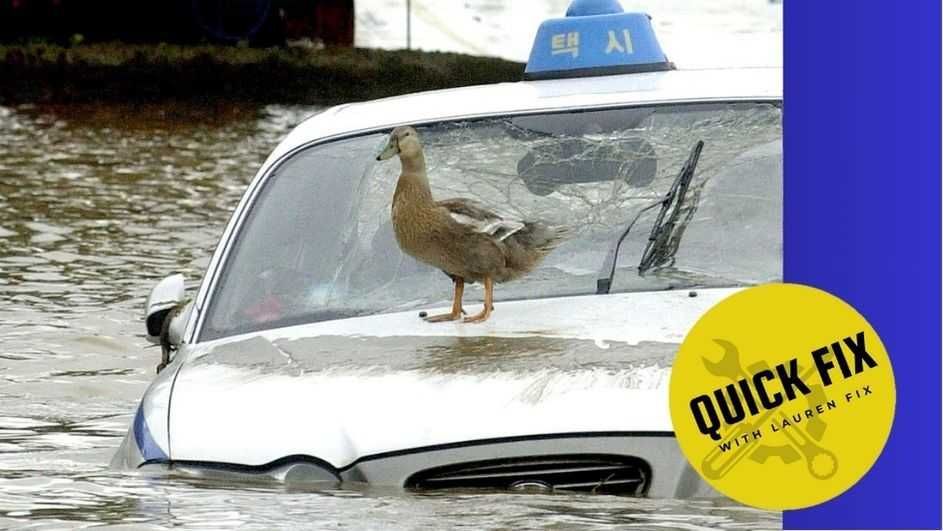
The third thing that people often fail to consider is the health hazards a flood-damaged car can present. If its in the ductwork, you're breathing it: anything from mold to mildew to E. coli.

Think about it: You don't know where the car was. It was underwater, yes, but was it salt water? Sewer water?

Now — if you suspect a car you're looking at is flood-damaged, the best thing to do is take it to an ASE-certified technician. If he confirms the damage, walk away. No matter how good the deal may seem, you do not want that car.

Even without a mechanic, there are a few tell-tale signs to look for.

  • Excessive air freshener: If they've doused the car with perfume in the interior ... yeah, that's a clue they're covering something up.
  • Rust in weird places: Rust is never good, of course, but in some places on a car it's understandable. In other places — on the hood hinges, for example — it's a very bad sign.
  • Moisture in the fuse box: If you see any signs that water's gotten under that plastic cover, that means it's been in a flood.

Finally, watch out for "washed" titles. Unscrupulous sellers will move a title from state to state to try to hide flood damage or a car's totaled status. Don't rely on the title alone; companies like Carfax can help protect.

Ultimately, its better to trust your gut than to snap up a too-good-to-be-true deal. Flood-damaged cars are nothing to play around with, and they can be very dangerous.

Got a car-related question? Email me at getquickfix@pm.me.

Quick Fix: What's the safest used car for my teenager?


Hi, I'm Lauren Fix, longtime automotive journalist and a member of the Society of Automotive Engineers. Welcome back to "Quick Fix," where I answer car-related questions you submit to me.

Today's question comes from Sarah in Tampa, Florida.

Hi Lauren:

We are helping our teenager buy his first car so he can drive himself to his job this summer. We want something safe, inexpensive, and reliable.

Can you 1) recommend where to look for such a car? And 2) suggest any makes or models that buyers tend to have good luck with?

Thank you!

Great question, Sarah — and I think I've got some good answers for you.

When it comes to buying a used car, dealers are always a good bet: buy a certified pre-owned vehicle and you're protected by a warranty.

If you want buy from a private seller, I recommend you get the vehicle you're considering up on a lift so an ASE certified mechanic can look at. Have him or her give the car one of three rankings:

Green: This means "go," of course. It's well-maintained, no rust, the engine and brakes are in good working order. An easy decision to buy.

Yellow: Cars like this might have been in a minor fender-bender, or have some concerning but repairable issues to deal with. Worth a buy if you know what you're getting into.

Red: Avoid. This includes severe accidents, flood damage, a salvage title, and the kind of problems (transmission, for example) that can cost more than the value of the car.

As far as car safety goes, the Insurance Institute for Highway Safety (IIHS) maintains a wealth of ratings online.

Now for where the rubber meets the road. Here are a few of my car recommendations at different price points.

New

  • Kia K4
  • Mazda CX 30
  • Toyota Prius
  • Honda Civic

Used under 20k

  • 2017 Toyota RAV4
  • 2018 Mazda CX 5
  • 2017 Honda CR – V
  • 2021 Toyota Corolla

Used under 15k

  • 2018 Kia Sportage
  • 2019 Kia Soul
  • 2017 Toyota Corolla
  • 2018 Mazda3

And, for some real bargains (keep in mind, however, that with cars 10-15 years old you're sacrificing safety and/or reliability):

Used under 10k

  • 2009 Toyota RAV4
  • 2010 Honda element
  • 2011 Toyota Avalon

Much more information where that came from. Just click the video below:

Got a car-related question? Email me at getquickfix@pm.me.

Why used cars are getting so expensive — and what you can do about it


The dream of driving off in an affordable used car is slipping away fast.

If you’ve been browsing used car lots or checking online listings, you’ve likely noticed prices are climbing rapidly. According to Cox Automotive’s Manheim Used Vehicle Value Index, wholesale used car prices in April 2025 hit their highest level since October 2023, with the index surging 4.9% year over year to 208.2.

Even older cars are commanding higher prices, as buyers focus on value over low mileage.

That’s a 2.7% jump from March alone, far exceeding the typical 0.2% monthly increase.

Surge ahead

What’s driving this price surge? A combination of new auto tariffs, shrinking supply, and changing consumer behavior is shaking up the used car market.

The main trigger is a 25% tariff on new imported vehicles and parts, introduced in April 2025, which is impacting the entire auto industry.

While these tariffs don’t directly affect used cars, they’re pushing new car prices — averaging $48,000 — out of reach for many buyers. As a result, more Americans are turning to the used market, where prices average around $25,000.

Cox projects retail used car sales will reach 20.1 million in 2025, a 1.2% increase from 2024, partly due to consumers shifting to used vehicles. April’s retail sales were up 13% year over year, despite a 1.7% dip from March, showing strong demand for used cars.

This increased demand has dealers competing fiercely at wholesale auctions to stock their lots. As Cox Automotive’s Jeremy Robb, senior director of economic and industry insights, explains, “The ‘spring bounce’ usually ends by mid-April, but this year, wholesale appreciation trends continued for the entire month and were much stronger than we typically observe.”

The result is clear: Wholesale prices are soaring, and retail prices are following, with used car listings up 2% in just four weeks.

Price hikes

Let’s look at what this means for your budget. According to iSeeCars.com, the average used car now costs $31,400, a $317 increase from last month.

Their analysts calculated the potential impact of further price hikes on popular models: A 10% increase could add $1,700 to a Kia Forte or $5,000 to a Chevy Tahoe.

That’s a significant burden for families already dealing with inflation and high interest rates. ISeeCars.com compares this to the pandemic, when used car prices rose 8.95% in eight months due to supply chain issues.

Supply shortages are worsening the situation. A key issue is the decline in off-lease vehicles returning to the market. Many lessees are buying out their leases instead of returning their cars, leaving dealers with fewer vehicles to sell.

Higher mileage

Cox reports that wholesale inventory in April was at 41 days’ supply, down from 46 days a year ago. To fill the gap, dealers are selling higher-mileage vehicles — cars with over 90,000 miles are now common, as modern engineering allows vehicles to last up to 250,000 miles.

This means even older cars are commanding higher prices, as buyers focus on value over low mileage. Tariffs are cutting into new car margins, so dealers are raising prices across the board — used cars included. The data confirm this, creating a tough environment for bargain hunters.

Electric slide

One segment is avoiding this price surge: electric vehicles, or EVs.

While gas-powered used cars see steady price increases, used EV prices dropped by $3,865 year over year.

One reason for this exception is that used car buyers tend to prioritize cost-efficiency over environmental goals, reducing demand for EVs despite their increased presence on dealer lots. EVs made up 3.4% of Manheim’s auction sales in April. For EV enthusiasts, this could be an opportunity to find a deal, but for most buyers, the used car market is increasingly expensive.

Looking ahead, the future is uncertain. Cox economists predict a volatile summer, with high prices and interest rates possibly slowing sales. However, slower sales could lead to dealer incentives, which might boost demand again.

ISeeCars.com analysts are cautious, noting that even auto industry leaders like Elon Musk are avoiding firm predictions in this unpredictable market. One thing is certain: With limited supply and strong demand, used car prices are unlikely to drop soon. Cox expects less depreciation than usual in the second quarter, so buyers should prepare for higher costs.

Plan ahead

For those shopping for a used car, strategic planning is essential.

Consider less popular models or EVs to avoid the steepest price increases. Timing can also help — waiting for potential dealer incentives later this year might save money.

However, the low prices of a few years ago are unlikely to return. The Conference Board Consumer Confidence Index fell 8.4% in April, reaching its lowest level since 2009, as concerns about inflation and rising costs grow.

With gas prices down 13% year over year but still fluctuating, and inflation expectations rising to 6.7%, buyers are rushing to secure deals before prices climb further. This urgency is driving the price surge, with tariffs adding to the pressure.

The used car market in 2025 is a challenging landscape, shaped by tariffs, supply shortages, and shifting consumer priorities. Whether you’re looking for a reliable sedan or a rugged SUV, expect to pay more — and plan carefully. By staying informed and choosing wisely, you can still find value amid all the rising prices.

6 ways to boost your car's trade-in value


When it comes to used cars, it's still a seller's market.

Inventory is thin, which means that vehicle you're getting tired of could fetch a nice price. But don't rush off to the dealership unprepared. Follow these steps to boost your car’s trade-in value and negotiate the best price.

1. Do your homework

Knowing the current trade-in value your car is obviously important. You can find it using sources like Kelley Blue Book, True Car, and Edmunds. Remember, however, that this is just a benchmark; you should also be honest with yourself about repairs and your vehicle’s condition. You likely won’t get the current value as a car trade-in unless the car is in truly pristine condition.

Also keep in mind that you’ll get less for your trade-in than you would if you sell your car on your own. Many people think they are going to get the top value, but dealers taking in the trade need a margin of profit and will offer you less than the trade-in price listed on these sites.

2. Take care of known mechanical problems

The mechanical and physical conditions of your car are big drivers of value. So it’s best to resolve any issues that are relatively simple to fix. In general, minor repairs that don’t cost much out of pocket are still likely to increase the resale value of your vehicle. This might include small cosmetic fixes such as dents and scratches or replacing lights that are blown out.

Of the repairs that could increase the resale value of your car, you'll want to research which are most cost-effective. Sites like Repair Pal can give you a good idea of what a given repair will run you.

You should also check with the National Highway Traffic Safety Administration database for any vehicle recalls affecting your car. Recalled parts can be fixed free of charge, and the extra effort may also increase your car’s resale value.

Keep receipts for repairs and maintenance. These can prove to the dealer or buyer that you cared for the vehicle.

3. Make sure that your car looks its best

A clean and well-maintained car is most likely to get the highest trade-in value. This may sound obvious, but many people bring cars in for trade without bothering to do a simple cleanup. Detail your car the way you'd stage your home — curb appeal matters.

4. Shop around for trade-in value

It’s important to shop around for trade-in potential. Don't go to the dealer you plan to buy your next car from until you've gotten a few competitive quotes from CarMax as well as any major used car dealers in your area.

5. Negotiate trade-in value and purchase price separately

Negotiating your trade-in and purchasing separately ensures that you get the best trade-in value possible and the best price on the new vehicle you’re buying. Watch out for dealerships that try to combine the two transactions into one deal. They do this because there are more opportunities for a dealer to generate profits when working on two transactions at once.

It’s also a good idea to get the trade-in offer in writing separately. This protects you from the dealer changing or going back on the offer for any reason. A formal offer is especially important if you leave the dealership to shop around further and return to the same dealer later.

6. Time your trade-in

Trading in your car to buy another vehicle may work better some times of the year than others, depending on the year, make, and model of your vehicle. Weather conditions and other factors could also affect the offer you receive.

Timing is everything. All-wheel-drive SUVs would be in high demand during winter, and convertibles are best to sell in spring and summer weather.

The first two quarters of the year can also be a good time to trade in a vehicle because buyer demand tends to be higher. Dealers need more vehicles on their lots to meet the demand and may offer a higher price for your trade-in.

Timing also matters when it comes to your current car payments. Trading in your car may not be the right choice if you’re still paying off your car, particularly if you owe more than your car is worth. You may want to postpone your next car purchase or sell the car on your own to earn a higher price.

It's important to remember that any negative equity is rolled into the subsequent car loan, which will make your monthly payment higher.

The Federal Trade Commission cautions against using a dealership that promises to “pay off your loan no matter how much you owe.” While a dealership might pay off your old loan, it must make up the difference somewhere — and that “somewhere” will eventually catch up with you.

The bottom line

Ensuring you get the best trade-in value can help you get a lower price and monthly payment on the new or used vehicle you want. It’s well worth it to research, make much-needed repairs, spruce up your ride, and secure multiple quotes.

When it’s time to buy, use the same research skills to compare auto loans. A dealership you’re working with might offer in-house financing, but that doesn’t mean it’s the best deal. You may be able to get pre-approved for an auto loan online with better terms and use the loan offer as leverage when negotiating a deal on your next car purchase.