Why American culture still rules the world — and always will
The chorus has become deafening.
Op-ed pages and policy journals are saturated with self-appointed sages warning us that American soft power is finished, kaput, buried under the weight of Trumpism, tariffs, and the dismantling of USAID.
Soft power emerges from cultures people want to copy, and no teenager on earth is modeling himself on Xi Jinping Thought.
Foreign Policy’s Stephen Walt recently joined the funeral procession, lamenting that the Trump administration holds nothing but contempt for what his late colleague Joseph Nye called the power of attraction. Walt insists that hard power without soft power leaves America looking like Putin's Russia, with considerable muscle and all the magnetism of a DMV waiting room.
Scrambled eggheads
Walt writes from Cambridge, Massachusetts, where the consensus among the faculty lounge crowd is that Trump has dropped the soft-power crown — only to have Beijing pick it up. What utter nonsense. The lounge, perched so high in the ivory tower, has lost sight of the actual world below.
I came of age in Ireland in the early 2000s, where my brother and I consumed inordinate amounts of American television. We watched "Prison Break" religiously on Network 2, arguing about whether Michael or Lincoln was the smarter sibling. We debated whether Jack Bauer could plausibly go that long without sleeping. We watched "Entourage" and fought over whether Ari Gold was a maverick or a monster. We were far too young for any of it, but my parents, overworked and underpaid, couldn’t keep the remote out of our tiny hands.
We saved up to buy Abercrombie shirts that cost three times as much as they did in New Jersey. We learned American slang from "Friends" reruns and pretended we understood Thanksgiving. My cousin in Cork wore a Yankees cap for two years before learning baseball existed. The local chipper added "curly fries" to the menu because someone had seen them on a sitcom. American culture was the water we swam in, repeatedly and without hesitation.
RELATED: 'Tribalism' is healthy — and America should embrace it
Swift diplomacy
Twenty-five years after my Abercrombie phase, American culture still dictates global taste. Kids in Uganda quote Kendrick Lamar. Teens in Jakarta can't get enough of the UFC. The films Mumbai produces borrow from Christopher Nolan; the films Seoul produces dream of Oscars in Los Angeles.
Taylor Swift's Eras Tour pulled crowds in Tokyo, Sydney, Buenos Aires, and Singapore that no homegrown artist could ever muster. Netflix dominates streaming in 190 countries. Apple's logo carries more cachet in a Vietnamese teenager's pocket than any flag. American universities, despite their obvious failings, still receive applications from every corner of the planet, including from the children of the Chinese officials who publicly denounce them.
Yes, K-pop had a moment. BTS sold out arenas, "Gangnam Style" broke YouTube, and commentators declared a new cultural pole emerging from Seoul. Then the moment passed. "Squid Game" spawned imitators rather than a movement. South Korean culture spreads wide and runs shallow. It’s a garnish, a starter at best, but it never was and never will be the main course.
China viral
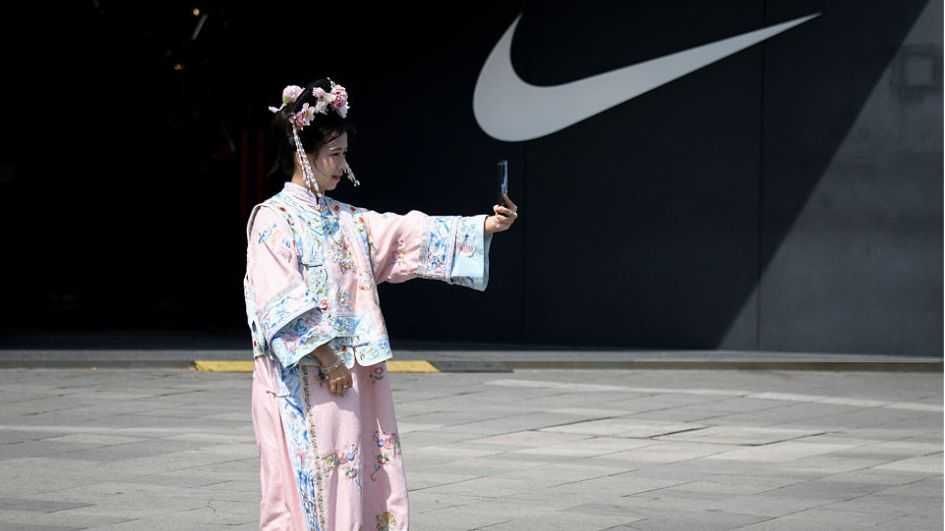
China presents the more entertaining case study. Beijing spends billions of dollars annually trying to manufacture soft power, opening Confucius Institutes, funding film studios, broadcasting CGTN into hotel rooms, where nobody watches. What did succeed was TikTok, a platform that broke through by hiding its Chinese origins and amplifying American content.
When was the last time a Chinese film conquered a multiplex in Berlin or Buenos Aires? When did a Chinese musician headline a festival in Mexico City? What Walt and the credentialed class miss is that soft power cannot be bought through state subsidy or willed into existence by Politburo memo. It emerges from cultures people want to copy, and no teenager on earth is modeling himself on Xi Jinping Thought.
If anyone deserves the soft power obituary, it's the country I know all too well.
London falling
Britain once exported culture by the truckload. Now it sends a parcel here and there.
The last British band to crack American consciousness was Coldplay, and even that is now like ancient history. British television still produces excellent dramas, watched by fewer Americans every year. The royal family generates tabloid fodder rather than genuine fascination, and the tabloids themselves are dying.
British fashion has lost its swagger, with London Fashion Week now an afterthought to Paris and Milan. British music charts are dominated by American acts, including country music acts.
No teenager in Lima or Lisbon is dreaming of a steak and kidney pie, while plenty are queuing for the new Shake Shack. No kid of sound mind in Manila is begging for a Cornish pasty, but many are heading to their local In-N-Out for a quick fix. American food, like American everything else, travels. British food sits at home, where it belongs.
Trump-proof
American soft power survives and even thrives in the Trump era for an unsexy reason that academics struggle to accept. It doesn't run on policy. It never has and never will. Instead, it runs on creativity, scale, language, and capital, all of which remain concentrated in American hands and American servers.
The presidency changes every four or eight years. Silicon Valley does not. The English language does not. American universities, American sports, American music, American food chains, and American technology platforms form an ecosystem so vast and self-replenishing that no single administration can dismantle it.
Walt's pessimism reflects a left-leaning gripe masquerading as a global issue. A teenager in Helsinki watching "Euphoria" on his iPhone, wearing Air Jordans, sipping a Coke, and biting into a Big Mac isn't thinking about China, the U.K., or any supposed contender. America's grip on the global imagination was never a government project. The funeral notices keep arriving, but the eulogies sound like the musings of people who hear "Drake" and picture a duck.
 The trend of China-based companies in Indiana has developed through centralized planning with the help of a CCP-linked nonprofit.
 www.theblaze.com